REVIEW · KATHMANDU
Private Half-Day Tour of Kathmandu Durbar Square and Swayambhunath Temple
Book on Viator →Operated by Pigeon Travel And Tours Pvt Ltd · Bookable on Viator
A good half day in Kathmandu means smart choices. This private tour strings together Kathmandu Durbar Square and Swayambhunath with a guide who explains what you’re seeing without rushing you. I like the private setup, including hotel pickup and drop-off, plus the fact that entrance tickets are built in.
What I also really liked is how the route mixes power and people: royal-palace-era Newar craftsmanship at Durbar Square, then the hilltop stupa and its multi-religion atmosphere at Swayambhunath. One drawback to think about is that it’s only about four hours total, so you’ll need to pace yourself if you want extra time for photos, prayer-wheel moments, and slower courtyard wandering.
In This Review
- Key highlights worth your time
- How a half-day hits the essentials in Kathmandu
- Stop 1: Kathmandu Durbar Square at Hanuman Dhoka
- The value of spending two focused hours here
- Stop 2: Swayambhunath and the climb to the hilltop stupa
- What you’ll actually see at Swayambhunath
- Watch-outs that are actually useful
- What makes the guide-driven format worth it
- Price and value: is $47 per person a good deal?
- Timing and logistics that matter on a half-day
- Who this tour fits best (and who might want a different plan)
- Small details to plan for before you go
- The best way to use this tour: your simple game plan
- Should you book this private half-day Kathmandu tour?
- FAQ
- What time does the Kathmandu Durbar Square and Swayambhunath private tour start?
- How long is the tour?
- Is hotel pickup and drop-off included?
- Are admission tickets included?
- What is included in the tour price?
- What is the cancellation policy?
Key highlights worth your time
- Private, flexible pacing between two top sites in about four hours
- Hotel or airport pickup and drop-off by private vehicle
- Admission included for both Durbar Square and Swayambhunath
- Local architecture and religion explained in plain, on-the-ground terms
- Half-day practicality with 2 water bottles per person included
- Hilltop views from Swayambhunath after a climb you control
How a half-day hits the essentials in Kathmandu
Kathmandu can feel like a lot at once. Noise, color, temples, statues, traffic that never seems to stop. So I like tours that help you connect dots fast—what you’re looking at, why it matters, and how the city’s layers fit together.
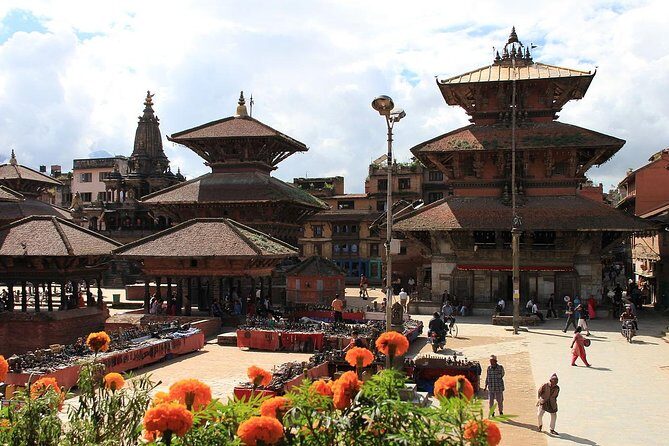
This one does that with a tight route: Kathmandu Durbar Square (Hanuman Dhoka) followed by Swayambhunath Temple. You get commentary on Kathmandu’s architecture, culture, religion, and history, delivered by an English-speaking local guide. The private transportation matters, too, because it keeps the day from turning into a search-and-wait exercise.
And it’s genuinely built for short stays. The tour is about four hours with a 10:00 am start, so you can still plan the rest of your day—shopping, another neighborhood, or just absorbing the city without feeling like you’re racing a clock.
You can also read our reviews of more private tours in Kathmandu

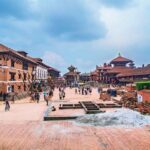
Stop 1: Kathmandu Durbar Square at Hanuman Dhoka
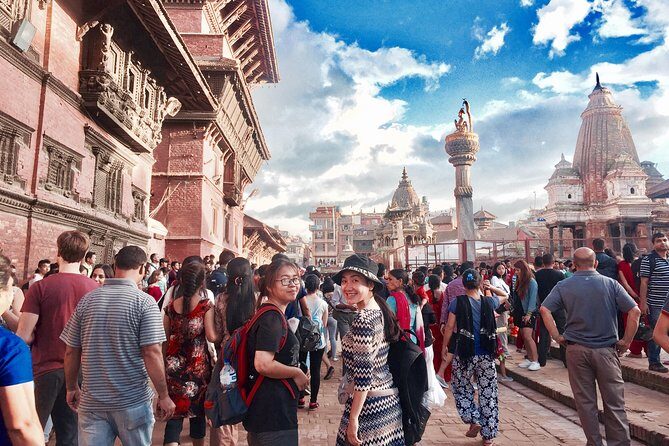
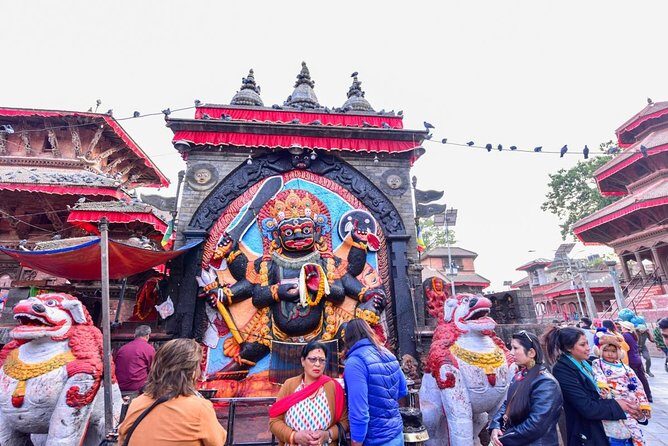
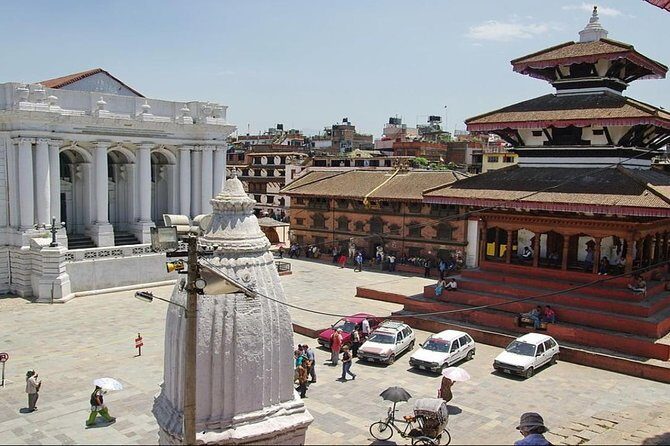
Kathmandu Durbar Square—also called Hanuman Dhoka Durbar Square—is the plaza in front of the old royal palace area of the former Kathmandu Kingdom. It sits within the UNESCO World Heritage context shared by three Durbar squares across the Kathmandu Valley. That UNESCO link matters because it’s one of the best ways to see how Kathmandu’s political power and religious life were intertwined in space.
Here’s what I’d watch for as you explore:
- Malla and Shah royal palaces: the square holds palaces associated with both Malla and Shah kings.
- Courtyard-and-temple layout: instead of a single grand hall, it’s built around quadrangles and enclosed spaces—courtyards that reveal temples and detailed architecture.
- Why it’s called Hanuman Dhoka: the name comes from a statue of Hanuman (the monkey devotee of Lord Ram) at the palace entrance.
A detail like that naming history is exactly what you want from a guide. If you only walk through a palace area without context, you miss why certain entrances matter and what symbolic references you’re actually seeing. With a good local guide, the place stops being just stone and becomes a story you can follow.
The value of spending two focused hours here
The tour plans around two hours at Durbar Square. For a first-time visitor, that’s enough to get your bearings and spot the major elements: the palace area, the courtyard rhythm, and the sense of royal-religious design. If you’re the type who wants to linger at every carved doorway, you may feel slightly rushed. But since the itinerary is private and flexible, you can usually slow down at the points you care about most.
Stop 2: Swayambhunath and the climb to the hilltop stupa
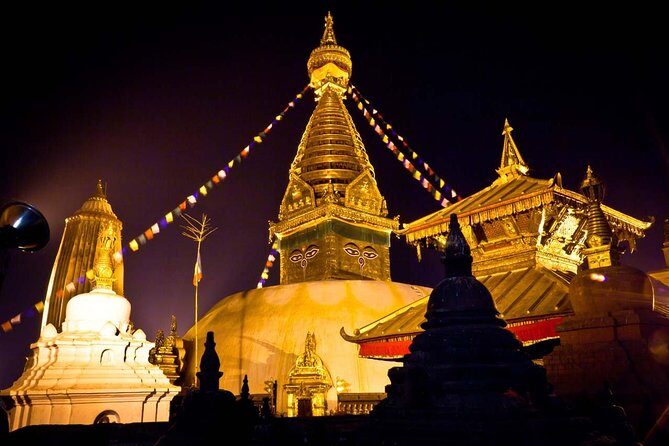
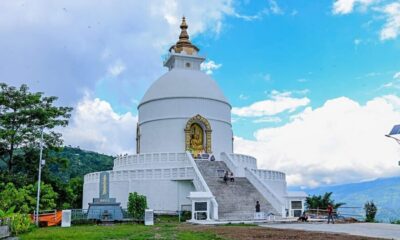
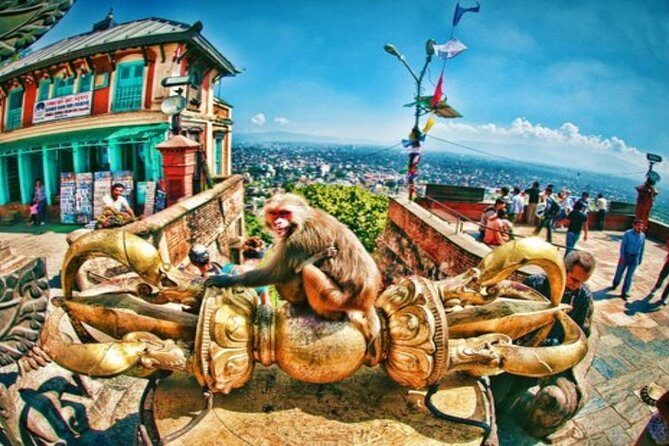
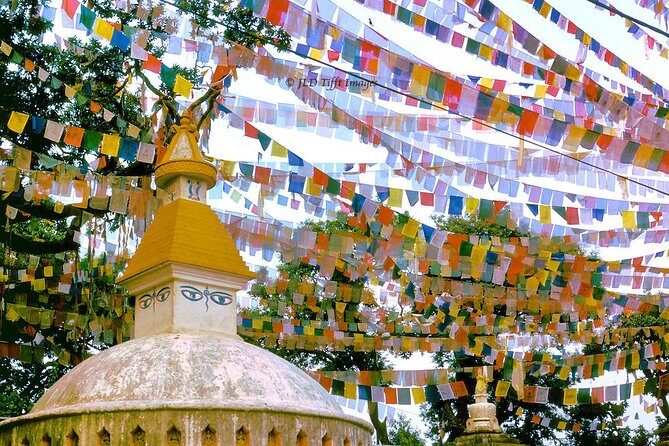
Next comes Swayambhunath, often nicknamed the monkey temple because of the monkeys that roam and guard the area. It’s perched on a hill, so yes—you’ll climb, but at a pace set by your group. That sounds simple, yet it’s a real quality-of-life upgrade. In a city like Kathmandu, being able to move according to your energy level beats the forced march feeling.
Swayambhunath is famous not just for views, but for what the stupa represents. It’s said to have evolved spontaneously when the valley was created from a primordial lake more than 2,000 years ago. Whether you take the story literally or not, it signals the temple’s long timeline and the way local belief systems explain the landscape.
What you’ll actually see at Swayambhunath
This is where the tour earns its keep through details you might not notice on your own:
- Huge prayer wheels: you’ll see the mechanisms that connect daily practice with temple design.
- Fine Buddhist paintings displayed in nearby monasteries.
- A large Buddha statue in the country.
- A worship mix with multi-religion harmony: the worshipers come from diverse ethical backgrounds, and the overall feel is one of shared sacred space.
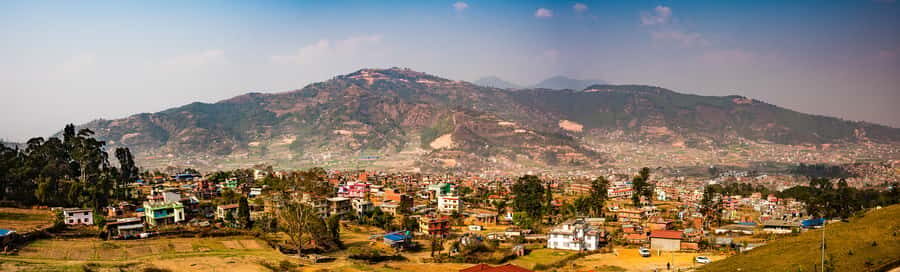
And then there are the practical perks. From the hilltop, you get a photo-worthy viewpoint over the Kathmandu Valley. Even if you don’t go crazy with photos, it helps you understand how Kathmandu sits—how the city spreads around sacred focal points rather than growing in a straight line.
A few more Kathmandu tours and experiences worth a look
Watch-outs that are actually useful
Monkeys are part of the experience. That nickname exists for a reason. Keep your stuff secure and be mindful, especially around food or anything that looks snackable. Also, because the tour does not include food or drinks, you’ll want to plan for your energy. The itinerary only gives you about two hours at Swayambhunath, so you’ll likely want to arrive prepared rather than spending time hunting.
What makes the guide-driven format worth it
A lot of sightseeing tours stop at facts and photos. This one aims for interpretation. The tour description promises commentary on architecture, culture, religion, and history, and that kind of guided context is what turns a checklist into understanding.
In one account, the guide was Bishnu, a Nepali national who grew up in Kathmandu. That type of local background often means you get clearer explanations of why buildings look the way they do and how religious practices influence what’s where. The guide style seems to include practical navigation, not just lectures.
You’ll also notice that the pace is not rigid. The itinerary is set, but it’s private. If you’re the kind of person who wants a slow look at carvings or a quick pause to watch how people use the space, you can usually do it without feeling like you’re holding up a big group.
One more small but real point: pickup and drop-off are included. That reduces friction, especially if you’re not staying right by the action.
Price and value: is $47 per person a good deal?
For $47.00 per person (with private transport, an English-speaking local guide, hotel/airport pickup and drop-off, and two bottled waters), the value depends on what you compare it to.
Here’s what you’re getting that people often end up paying extra for on DIY days:
- Admission tickets included at both stops
- Private vehicle for moving between sights
- A guide who explains what you’re seeing
- Hotel or airport pickup and drop-off
If you’re traveling with a small group, private transport often becomes cheaper per person than you’d expect because you’re splitting the car. The tour also notes group discounts and mobile tickets, which can add convenience if you’re coordinating.
Where the cost is less of a bargain is if you already have a solid plan to visit both sites on your own with self-guided materials. But for most people—especially first-timers—this tour saves time and makes the sights easier to understand without adding research work to your day.
Bottom line: at this price point, I’d treat it as good value if you want the sights plus real context, not just entry and photos.
Timing and logistics that matter on a half-day
The start time is 10:00 am, and the total duration is about 4 hours. That means you’re likely to cover both stops in daylight but before your evening plans get too complicated.
It also matters that the tour ends with drop-off either back to your hotel or at the airport. If you have a departure later, this can reduce stress. If you have plans after lunch, you’ll probably appreciate the early end.
Your group is the only one participating, since it’s private. You can also change your pace within reason, which helps when one site grabs you more than expected.
Who this tour fits best (and who might want a different plan)
This is a strong fit if you:
- Have limited time in Kathmandu and want two major sights handled in one go
- Like learning why places look the way they do, not just where they are
- Want a calmer, guided route rather than bargaining over every detail yourself
- Prefer having pickup and drop-off taken care of
It may not be ideal if you:
- Want to spend long hours at one site. This itinerary is structured for balance.
- Need food included. Since food isn’t part of the package, plan a lunch option for before or after.
One more practical note: the tour says most travelers can participate, which suggests it’s not an ultra-technical excursion. But you will climb as you go up to Swayambhunath’s hilltop, so if stairs are a concern for you, plan your pace accordingly.
Small details to plan for before you go
A few things are worth sorting out ahead of time:
- Bring a plan for food and drinks, since they’re not included.
- Expect a hilltop climb at Swayambhunath.
- Since entry tickets are included, you can focus on the experience instead of ticket-hunting.
- Wear something you’re comfortable moving in, because Durbar Square and the hilltop stupa area are walk-and-look type spaces.
Also, you’ll get two mineral water bottles per person. That’s helpful, but it’s still smart to consider whether you’ll need more depending on your day’s heat and how much you snack.
The best way to use this tour: your simple game plan
If you want the maximum value out of this half-day, I’d do three things:
- Decide what you want most: palace architecture at Durbar Square, or the hilltop religious atmosphere and views at Swayambhunath.
- Give the guide room to explain. If you ask quick questions as you go, you’ll get deeper than the standard scripted talk.
- Slow down at one “sticky” moment: a courtyard detail at Durbar Square, or the prayer wheel area at Swayambhunath. Doing that once prevents the whole day from feeling like you were sprinting between highlights.
The tour is designed to be flexible, so treat it like a guided walk with structure—not a rigid assembly line.
Should you book this private half-day Kathmandu tour?
I’d book it if you want an efficient, guided introduction to two of Kathmandu’s most important religious and historical places. The combination makes sense, the duration is realistic, and the included tickets and pickup/drop-off cut down on decision fatigue.
If you’re the kind of traveler who learns best through direct explanation, this is especially attractive. Durbar Square becomes much easier to read when someone connects palace areas, courtyards, and naming details like Hanuman Dhoka. And Swayambhunath becomes more than a viewpoint when you understand what the prayer wheels, paintings, and multi-religion worship add to the experience.
If you’re debating whether to go private, compare your alternatives. Paying for a guide can feel like a luxury—until you realize that entrances, pacing, and meaningful context are what you’re buying.
If you want a short Kathmandu win that still feels personal, this one is a solid choice.
FAQ
What time does the Kathmandu Durbar Square and Swayambhunath private tour start?
The tour starts at 10:00 am.
How long is the tour?
It lasts about 4 hours.
Is hotel pickup and drop-off included?
Yes. Pickup and drop-off from your hotel or airport are included.
Are admission tickets included?
Yes. Admission tickets are included for both Kathmandu Durbar Square and Swayambhunath.
What is included in the tour price?
Included items are pickup and drop-off, transport by private vehicle, an English-speaking local guide, and 2 mineral water bottles per person.
What is the cancellation policy?
You can cancel for a full refund up to 24 hours before the experience’s start time. If you cancel less than 24 hours before, the amount paid is not refunded.