REVIEW · KATHMANDU
Seven World Heritage Day Tour in Kathmandu Nepal
Book on Viator →Operated by Himalayan Planet Adventures · Bookable on Viator
Kathmandu packs seven UNESCO hits in a day. This tour strings together big-name sites like Swayambhunath and Pashupatinath, plus lesser-seen places such as Changu Narayan, all with a local guide and private vehicle so you spend less energy figuring out logistics.
I especially like the private vehicle with hotel pickup and drop-off (inside the Ring Road). You also get a real guide for context, and that matters when you’re bouncing between durbar squares, stupas, and temple complexes where every carving and courtyard has a reason.
The main tradeoff is the long stretch: expect roughly 10 to 12 hours, plus some stair climbing and close-up temple areas. Also, entrance fees are not included, and that can add up depending on what you choose for each site.
In This Review
- Key Points That Make This Tour Worth Your Time
- How This 10–12 Hour UNESCO Route Fits a Tight Kathmandu Schedule
- Price and Value: What $65 Covers (and What You Pay On-Site)
- Pickup, Private Transport, and the Pace Control You’ll Feel
- Swayambhunath and Amideva Buddha Park: Starting With Stupas and Giant Buddhas
- Kathmandu Durbar Square and Kumari Chowk: The City’s Living Center
- Patan Durbar Square, Krishna Temple, Golden Temple, and Patan Museum
- Bhaktapur Durbar Square: Nyatapola, Dattatraya, 55 Windows, and Siddha Pokhari
- Changu Narayan to Pashupatinath to Boudhanath: The Big Finale of Hindu and Buddhist Kathmandu
- Who This Tour Fits Best (and Who Should Choose a Shorter Plan)
- Should You Book It? My Practical Recommendation
- FAQ
- What is the duration of the Seven World Heritage Day Tour in Kathmandu?
- How much does the tour cost?
- What’s included in the price?
- What is not included?
- Are any entrance fees free for specific stops?
- Is the tour private?
- Do you get pickup from inside Kathmandu?
- Can I cancel and get a full refund?
Key Points That Make This Tour Worth Your Time
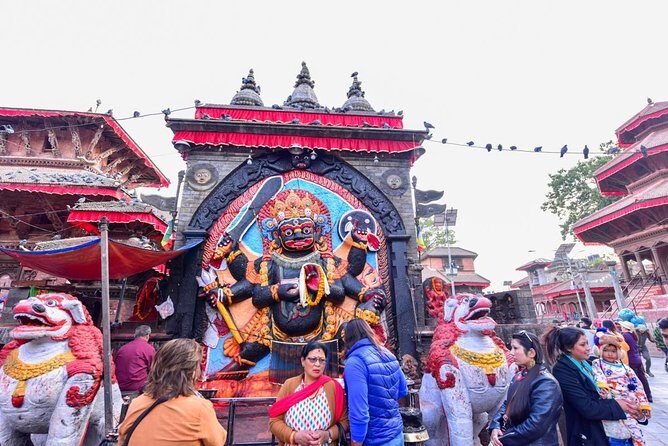
- Seven UNESCO World Heritage Sites in one route across Kathmandu, Patan, Bhaktapur, and out toward Changu Narayan.
- Pickup and drop-off inside the Ring Road, so you’re not losing time on vague meeting points.
- Multiple morning start times, which helps you match the day to your flight or other plans.
- A guide that adjusts pacing; guides such as Shanti Karki and Pankaj have been noted for working with guests on slower movement and reducing stair load.
- Short breaks inside the day, like Amideva Buddha Park and several Bhaktapur stop-offs that are quick but satisfying.
- Mobile ticket included, which keeps things simple when you’re moving fast.
How This 10–12 Hour UNESCO Route Fits a Tight Kathmandu Schedule
This is the kind of day trip that turns Kathmandu Valley into a checklist you actually finish. The goal is clear: hit all seven UNESCO World Heritage Sites tied to the Kathmandu Valley while keeping travel time predictable in a private vehicle.
You’ll move from hilltop Buddhist viewpoints to palace courtyards and temple complexes, then down into Bhaktapur’s monument zone, and finally end with the big Hindu and Buddhist magnets at Pashupatinath and Boudhanath. It’s not slow travel, but it’s efficient travel done with a guide and transport that reduce friction.
I also like that the tour offers multiple morning start times. If you’re trying to avoid the worst traffic or you want more daylight for temple photography, you’re not locked into one rigid departure.
You can also read our reviews of more historical tours in Kathmandu

Price and Value: What $65 Covers (and What You Pay On-Site)
At $65 per person, you’re paying for a full-day package built around time-saving. What’s included is the hotel pickup and drop-off (inside the Ring Road), a private vehicle, and a professional guide—these are the parts that cost money and effort if you try to DIY them in one sweep.
What’s not included is food and drinks, plus entrance fees for the heritage sites based on your choices. That means you should budget extra for tickets, and you should plan to buy snacks or meals as you go.
If you compare this to doing seven sites on your own with taxis, ticket lines, and repeated asking for directions, the value feels real. One long day with one guide is often cheaper than multiple fragmented half-day plans.
Pickup, Private Transport, and the Pace Control You’ll Feel
This tour is private in the sense that it’s only for your group, not a mixed crowd tour. That usually means fewer “stop, wait, regroup” moments and more consistent timing—especially helpful when you’re hopping between Kathmandu, Patan, and Bhaktapur.
Because pickup and drop-off are handled inside the Ring Road, you can start the day without a long commute to a meeting point. Once you’re in the vehicle, the route stays coherent: you’re not bouncing back and forth across the city.
Pacing is where the guide earns their keep. I like that you’re not treated like a passenger on rails. In prior trips, guides (including Shanti Karki and Pankaj) have been flexible—slowing down when needed and minimizing stair climbing so you can still enjoy the stops without feeling punished by the itinerary.
Swayambhunath and Amideva Buddha Park: Starting With Stupas and Giant Buddhas
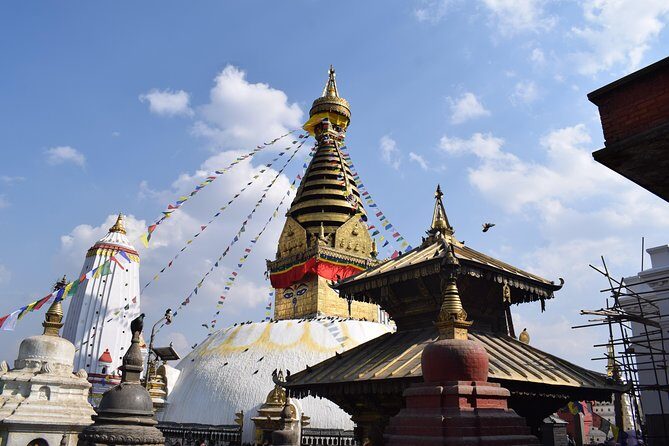
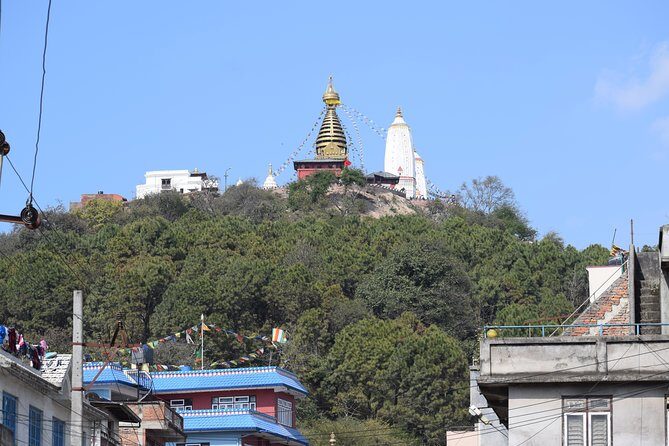
Your first big stop is Swayambhunath, a UNESCO-listed Buddhist pilgrimage site. You can access it via two entrances, including an inclined walk to the top, which is a small detail that can make the difference between a steady start and a sore start.
Swayambhunath is the kind of place where a short guide explanation pays off fast. Without that, you might just see stupas and crowds. With guidance, you start noticing the sacred layout and the meaning of what you’re standing in front of.
Right after, you’ll get a breather at Amideva Buddha Park. This stop is free and short, built around large statues of Shakyamuni Buddha plus smaller religious and architectural components. It’s a good palate cleanser between the hilltop climb and the palace courtyards later in the day.
Note the timing: Swayambhunath is about an hour, and Amideva Buddha Park is around 30 minutes. That’s long enough to look, but not long enough to get lost. If you’re the type who likes to linger, save that habit for the evening when you’re off the schedule.
Kathmandu Durbar Square and Kumari Chowk: The City’s Living Center
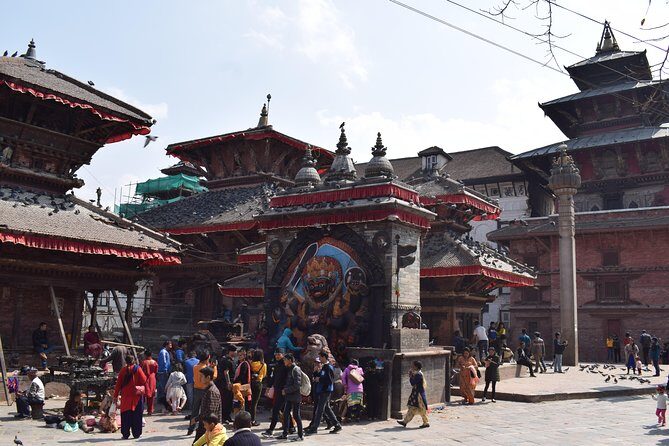
Next up is Kathmandu Durbar Square, another UNESCO World Heritage Site. Expect historical and architectural buildings, with some areas noted as under construction. Even with scaffolding around, this is still a strong place to understand how Kathmandu’s royal and religious life shaped the city.
The durbar square tells a different story than a single temple complex. It’s about courtyards, craft, and how people once gathered around power and worship. If you care about Newari architecture, this stop is one of your anchors for the whole day.
Then you’ll head to Kumari Chowk, where the living goddess resides. Kumari is a Newari girl chosen as the living god until she reaches puberty. The stop is very short—about five minutes—and entry is free, so treat it as a quick, meaningful snapshot rather than a long visit.
What you’ll take away: in Kathmandu, religion isn’t only found in buildings. It’s also in roles, ritual, and public space—right there in the courtyard.



Patan Durbar Square, Krishna Temple, Golden Temple, and Patan Museum
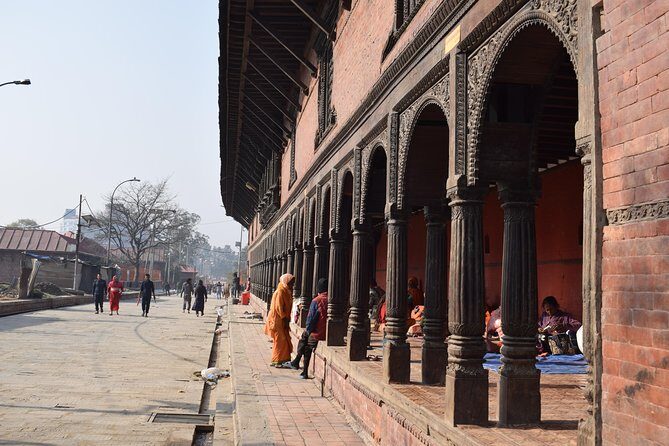
Patan’s turn is packed, and it’s one of the best sections of the day for architecture lovers. Patan Durbar Square is a Malla palace courtyard at Lalitpur, described as layered with crimson bricks and rich in Newari architecture. It’s also a great place to slow down visually, even if the schedule keeps you moving.
There’s also a quick stop for the Krishna temple stone architecture, where you can see 21 shrines with carvings tied to the Ramayana and Mahabharat. There’s a large bell near the temple too. These kinds of details are exactly where a guide helps: you’ll understand what you’re looking at instead of just admiring shapes.
Next comes the Golden Temple (Hiranya Varna Mahavihar), a 12th-century pagoda-style temple. It features bronze statues and silver and gold decorations. Even in a short visit (about 15 minutes), the color and metalwork create that wow factor you want in the middle of a long day.
Finally, you’ll wrap this block with Patan Museum at Keshav Narayan Chowk, about 30 minutes. The museum helps connect the dots by showing records of ancestors’ lifestyles and artifacts related to the sites you just saw. If you tend to forget details after seeing temples, this museum stop is the antidote.
Bhaktapur Durbar Square: Nyatapola, Dattatraya, 55 Windows, and Siddha Pokhari
If Kathmandu gives you the city-center feeling, Bhaktapur Durbar Square gives you the craft-and-courtyard feeling. You’ll hear it described as the City of Devotees and noted for indigenous Newari culture and architecture. You also get a longer time block here—about two hours—which helps compared to the faster stops earlier.
From there, the day adds a series of Bhaktapur highlights:
- Nyatapola Temple: a sculpted pagoda-style five-tier temple, over 30 meters tall. It’s free and about a 10-minute stop, but it’s big enough that even a short look feels worthwhile.
- Dattatraya Temple (Dattatreya Temple): also free, and described as built using the stem of a single tree. This is the kind of story you only appreciate when you’re told, so don’t skip the guide’s explanation.
- 55 Window Palace: another free stop, with exactly 55 windows carved in the palace, formed across courtyards linked together. Even if you’re not a “palace person,” the specific number makes it memorable.
- Siddha Pokhari: a human-made pond, 171 meters long and about 3 meters deep. It’s free and a short break (around 15 minutes), and it’s great for resetting your legs and your head in the middle of the day.
This Bhaktapur section is also where the pace matters most. You’re seeing multiple distinct monuments close together, and stair climbing is likely. If you’ve got mobility concerns, this is exactly the part of the route where a flexible guide helps you focus on what’s most important to see.
Changu Narayan to Pashupatinath to Boudhanath: The Big Finale of Hindu and Buddhist Kathmandu
After Bhaktapur, the route shifts toward the outer UNESCO sites that define the valley. First is Changu Narayan Temple, described as the least visited of the UNESCO World Heritage Sites. You’ll notice traditional Newari craftsmanship and carving work, which makes it feel different from the larger, more crowded sites.
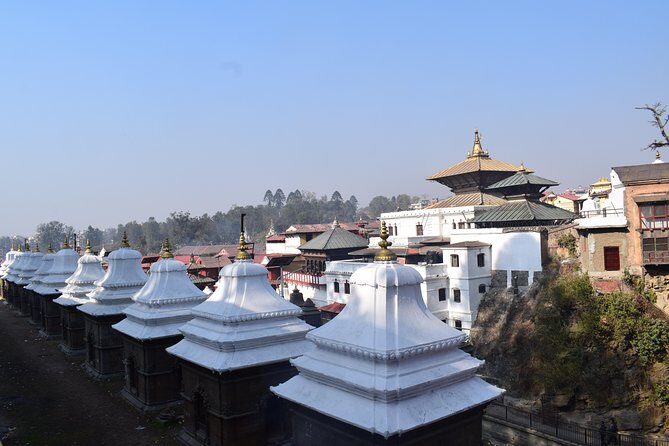
Then you’ll go to Pashupatinath Temple, one of Nepal’s biggest Hindu temple complexes. It’s said to home over 500 temples and shrines, covering about 0.64 hectares. This is a major place for Hindu devotion, and it’s likely to feel active and intense compared with the earlier courtyard stops.
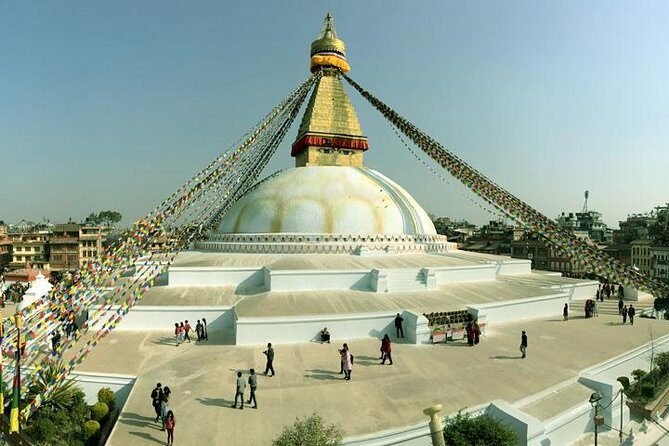
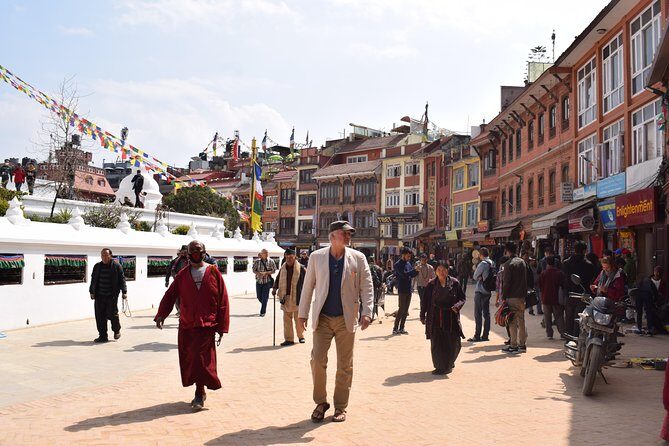
Finally, you’ll end at Boudhanath Stupa, a massive Buddhist pilgrimage site. It’s about 36 meters tall, with over 50 gompas built around it, and it’s described as an integral pilgrimage destination. If you’ve felt temples all day, Boudhanath is a good finish because the scale and the surrounding monasteries let you breathe and take in the religious rhythm.
This last sequence is also a smart way to end. You start with Buddhist stupa energy, then cover palaces and craftsmanship, and finish by contrasting Hindu devotion at Pashupatinath with Buddhist mandala-centered life at Boudhanath. You’ll get the full Kathmandu Valley spiritual spectrum in one day.
Who This Tour Fits Best (and Who Should Choose a Shorter Plan)
This tour is best for you if you want maximum value from limited time and you enjoy being guided through context. It’s also a great fit if you’re okay with a long day, because the route is designed for seeing a lot rather than lounging.
It’s especially appealing if you’re the type who likes to understand what you’re looking at—like why the living goddess matters, what makes a temple pagoda-style, or how carvings tie to major epics. The guide time is the hidden “extra” that makes the sites more memorable.
If you’re dealing with mobility limits, keep expectations realistic. Some stops involve stairs or hillside approaches, and the itinerary is long enough that fatigue can creep in. The good news is that guides like Pankaj have been noted for adapting pacing and minimizing stair climbing when possible, but you’ll still want to plan for a physically active day.
Should You Book It? My Practical Recommendation
I’d book this tour if you’re on a tight Kathmandu schedule and you want the full Kathmandu Valley UNESCO set without the hassle of coordinating taxis and timing yourself. The $65 price is mostly about buying a day of transport and guide support, and you get exactly that: pickup inside the Ring Road, private vehicle travel, and a professional guide.
Based on the very strong overall rating and the fact that guides have been praised for flexibility—especially around slowing down and stair management—I think it’s a solid choice for most visitors who can handle a long itinerary.
But if you’re more interested in slow temple wandering than structured site-hopping, you might prefer a shorter version focusing on fewer UNESCO locations. For everyone else who wants to see the seven UNESCO World Heritage Sites in one coherent day, this one is a practical winner.
FAQ
What is the duration of the Seven World Heritage Day Tour in Kathmandu?
The tour runs for approximately 10 to 12 hours.
How much does the tour cost?
The price is $65.00 per person.
What’s included in the price?
Hotel pickup and drop-off inside the Ring road, transport by private vehicle, and a professional tour guide are included.
What is not included?
Food and drinks are not included, and entrance fees for the heritage sites are not included (according to your choices).
Are any entrance fees free for specific stops?
Yes. Some stops list admission ticket as free, including Amideva Buddha Park, Kumari Chowk, Nyatapola Temple, Dattatraya Temple, 55 Window Palace, and Siddha Pokhari.
Is the tour private?
Yes. Only your group participates.
Do you get pickup from inside Kathmandu?
Pickup and drop-off are provided inside the Ring road.
Can I cancel and get a full refund?
Yes. You can cancel up to 24 hours in advance for a full refund. Cancellation within 24 hours is not refunded.