REVIEW · KATHMANDU
10 Days Annapurna Circuit Trek
Book on Viator →Operated by Himalayan Trekking · Bookable on Viator
Thorung La is the headline here. This trek strings together big mountain views, mountain villages, and some serious altitude work over roughly 10 days across the Annapurna massif, with Thorung La hitting 5,416m. If you like your days to change fast—forest, rivers, arid valleys, then holy sites—this route delivers.
I love the way the guiding team shows up in the details. On this circuit, names like Babo and Resham pop up for being warm, flexible, and genuinely helpful, with Rojit noted as a friendly porter who kept things running smoothly. I also like the steady rhythm of included meals and good accommodations, which matters when you’re climbing all day and don’t want to negotiate dinner plans at altitude.
One possible drawback to plan for is how unforgiving the high country can be. Altitude is real, and the approach to Thorung Phedi is described as tough with narrow paths and unstable slopes. Also, bottled water and alcohol aren’t included, so you’ll want to budget for hydration and the occasional treat.
In This Review
- Key highlights you’ll feel fast
- A route that mixes heights, villages, and big-name peaks
- Price and logistics: what $1,430 really covers
- From Kathmandu to Besisahar: a fast start with a temple stop
- Chame and the Paungda Danda moment: views that reward the climb
- Manang country: pine forests, close peaks, and Gangapurna Lake
- The rhythm from Manang to Yak-Kharka: Gunsang, Yak-Kharka, and Ledar
- Thorung La (5,416m) and Muktinath: the win and the reset
- Kali Gandaki descent, Jomsom position, and the flight to Pokhara
- What to pack and how to keep altitude from punching back
- Who this Annapurna Circuit is best for (and who should rethink it)
- Should you book this Annapurna Circuit trek with Himalayan Trekking?
- FAQ
- What is the duration of the Annapurna Circuit trek in this package?
- Where does the experience start, and what time does it begin?
- What is included in the price besides the trekking guide?
- What is not included?
- Is a domestic flight included?
- What is the highest point on the trek?
- How big is the group?
- Are admission tickets included for Thorung La Pass and Muktinath Temple?
- Is there free cancellation?
Key highlights you’ll feel fast
- Small group size (max 15) keeps the trek calm and manageable
- Thorung La at 5,416m gives you that big payoff day
- Gangapurna Lake with local interaction adds meaning beyond just walking
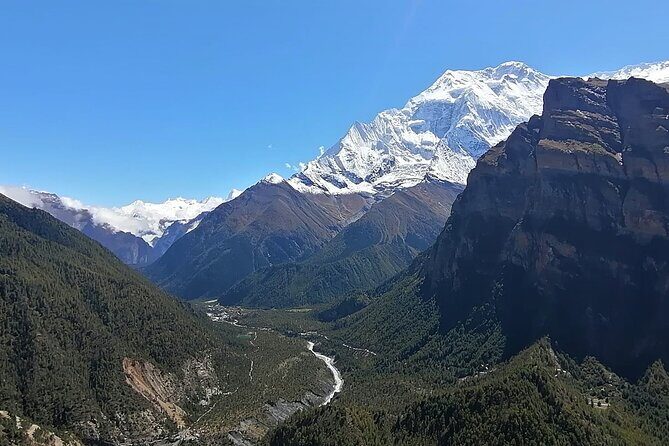
- Kali Gandaki Valley descent shifts you into arid, Tibetan-style village scenery
- Domestic flight plus Pokhara free time saves you from more long driving
- 1 porter per 2 people means you’re not lugging everything while you climb
A route that mixes heights, villages, and big-name peaks
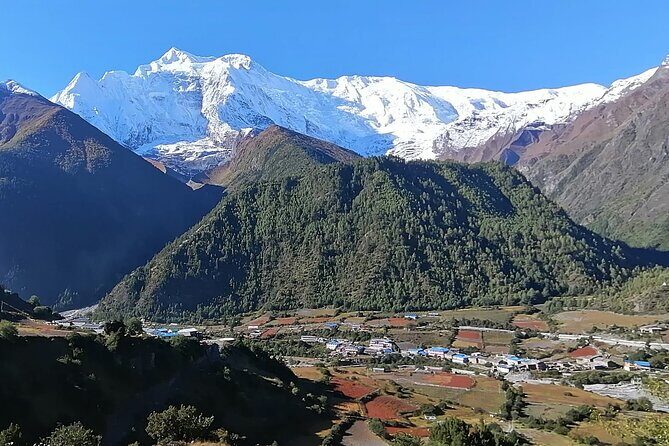
The Annapurna Circuit works because it moves you through very different “Nepal modes” without wasting days. You start in Kathmandu, then switch to road travel and gradually to foot travel, building from forest and river valleys into high passes and then into the Kali Gandaki region’s harsher, drier feel. That variety keeps the trek from blurring into one long mountain walk.
The scenery focus is straightforward: you’re surrounded by major Annapurna-area peaks along the way, including close views of Gangapurna and Annapurna II and III, plus other sharp profiles like Pisang Peak and Chulu East when the trail timing and visibility line up. On the pass day, the payoff is explicit: from Thorung La you can spot the Dhaulagiri range, which is the sort of moment that makes the whole earlier slog feel worth it.
And it’s not just mountains. Days in places like Manang give you time to interact with people and see how mountain life actually works at village level. That context can change how you see the trek—less “look at rocks,” more “you’re passing through real communities.”
You can also read our reviews of more hiking tours in Kathmandu


Price and logistics: what $1,430 really covers
At $1,430 per person, this isn’t a bare-bones, self-organized trek. What you’re paying for is a support system: guide + porters, meals, a sleeping bag, and transportation beats that add up quickly in Nepal.
Here’s what’s included in a practical sense:
- Guide and porters: 1 porter assigned for every 2 people
- Sleeping bag (so you don’t have to rent one)
- Meals: breakfast (11), lunch (10), dinner (10)
- Coffee and/or tea
- Private transportation and all fees and taxes
- Domestic flight from Jomsom to Pokhara
- A maximum of 15 travelers, so you’re not stuck in a giant herd
What’s not included:
- Bottled water
- Alcohol
- Air-conditioned vehicle (you shouldn’t expect A/C on the road anyway)
Value-wise, the biggest win is that you’re not coordinating guide, porter, meals, and flight connections yourself. That reduces stress, and on a trek with altitude pressure, “less to manage” can be as valuable as any scenic viewpoint.
From Kathmandu to Besisahar: a fast start with a temple stop
Your day begins with a pickup around 7:15am from the Himalayan Trekking meeting point in Kathmandu. From there, you’re looking at a major road day: about 7 hours and 185 km to reach Besisahar.
Along the way, there’s a stop at Manakamana Temple. Even if you’re not deep into temples, this kind of stop helps you reset from the city grind into mountain mode. Then you continue by road, with Besisahar set up as your launchpad into the circuit.
What I like about this opening is that it’s efficient. You don’t spend day one endlessly “getting started.” You ride out, shift gears, and then wake up with the trek actually beginning. The tradeoff is you’ll want to treat this as a travel-and-settle day, not a “let’s hike big” day. If you’re sensitive to long drives, plan to hydrate early and keep expectations realistic.
Chame and the Paungda Danda moment: views that reward the climb
Day two starts with a classic uphill rhythm: the trail climbs to Tyanja at 2,360m, then continues through forest to Kopar at 2,590m. Near rivers, trails in this zone often feel busy with sound—water, birds, and your own breathing picking up speed.
As you reach Chame, the headquarters of the Manang district, the trail starts paying you back with mountain views. The route description specifically calls out fine views of Annapurna II, which is the kind of “you earned this” skyline that makes the mid-trek grind feel less like punishment.
Day three continues in the same elevation neighborhood—forest first, then narrow valley walking, plus river crossings on long bridges. You pass at around 2,910m, then cross again closer to 3,040m, and that’s where the Paungda Danda rock face becomes more noticeable.
Possible consideration: bridge crossings and steep, narrow terrain mean footing matters. If you rush, your knees will remind you later. Go steady and keep your pack balanced.
Manang country: pine forests, close peaks, and Gangapurna Lake
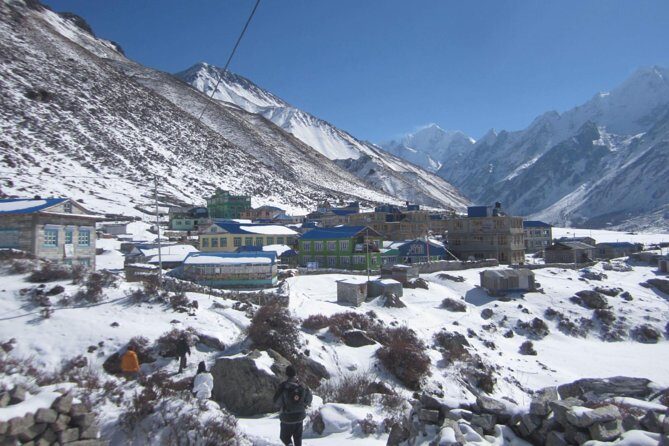
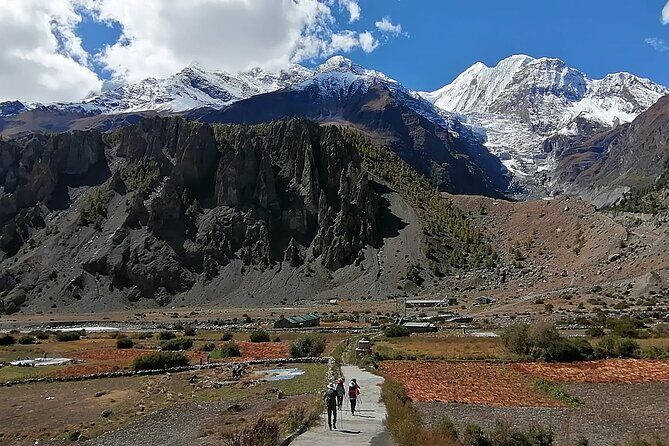
This trek gets more “close-up” around day four and five. The trail moves past aromatic pine forests, and as you near Manang, the descriptions turn visual and specific: close views of Gangapurna, Annapurna II and III, Tilicho, Chulu East, and Pisang Peak.
That kind of peak list might sound like a brochure thing, but the practical value is this: it signals that the viewpoints here tend to be frequent enough that you won’t feel like you walked for hours without seeing anything.
Day five adds a human element. You explore Manang village, interact with locals, and visit Gangapurna Lake. This is where your circuit stops being only physical and starts becoming cultural. A lake day can also be a smart pressure release mid-trek. You’re still moving, but you’re not just grinding up and down all day.
One thing to keep in mind: Gangapurna Lake is included as an activity with admission ticket listed as free. That suggests the lake visit itself won’t add costs for entry, which is useful when you’re budgeting the small stuff like water.






The rhythm from Manang to Yak-Kharka: Gunsang, Yak-Kharka, and Ledar
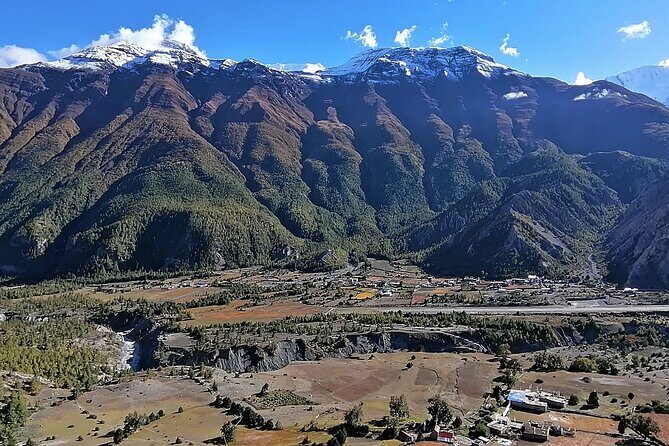
Leaving Manang behind can feel like a shift. Day six climbs toward the Marshyangdi valley. The route notes strenuous ascends that reach Gunsang village, then Yak-Kharka, with Ledar arriving before sunset.
Why this day matters: it’s the bridge between the comfortable village zone and the harsher, higher approach toward Thorung La. You’re moving through a network of settlements where the trail supports the journey, but you’re still climbing into cooler air and thinner comfort.
You can also think of day six as your “finish strong” day. If your legs tend to fade after a big climb, this is a good time to pace and drink consistently. The circuit works best when you treat each day like it will affect the next day’s recovery, not as a standalone effort.
Day seven continues the tough approach. You walk along the east bank of the Jorsang Khola and hike toward Thorung Phedi, and the route description flags that the trials are tough: narrow paths with unstable slopes. That’s your warning label. If you’ve got balance issues, trekking poles can help. Slow steps beat heroic strides.
Thorung La (5,416m) and Muktinath: the win and the reset
Day eight is the big one. You gear up for the hike to Thorung La (5,416m), described as the highest point of the trek. From the pass, you can spot the whole Dhaulagiri range, which is one of those skyline rewards that makes you forget the cold for a minute.
This is also the day you should treat like a “process day,” not a “race day.” The higher you go, the less your body cares about speed and the more it cares about steady breathing and careful footing. Even if conditions are clear, the thin air demands patience.
After the pass, you continue toward Muktinath Temple in the Mustang region. The route description marks admission ticket not included, and the stop is brief (10 minutes). That means you shouldn’t plan this as a deep sightseeing session. It’s more like a spiritual checkpoint on the way down.
Possible consideration: because Muktinath isn’t fully time-rich here, don’t expect a relaxed, lingering temple experience. If you want longer time, you might need a different schedule or extension.
Kali Gandaki descent, Jomsom position, and the flight to Pokhara
Day nine drops you into the Kali Gandaki Valley, through arid landscapes—quite a contrast from the earlier forest and wetter feel. The trail crosses Jharkot and Khingar, described as Tibetan villages, then follows the valley floor for most of the way until reaching the Jomsom area (which matters because the domestic flight is included from Jomsom to Pokhara).
This descent is dramatic in more ways than one. You’re lowering altitude, so your breathing often eases, but your knees get the work. Long downhills can turn into a stiffness problem if you stride too fast.
Day ten finishes with a practical win. After breakfast, you catch the morning flight to Pokhara. The flight is described as spectacular—especially flying above the Kali Gandaki Gorge, with views of Dhaulagiri and Annapurna ranges. Then you get free time in Pokhara, including the chance to boat on Fewa Lake.
That flight ending is more than a convenience. It’s a smart way to “cash in” on views while skipping additional trekking days. If you’re planning travel after Nepal, having this built-in finish helps you avoid scrambling for bus connections at the end of a physically demanding trip.
What to pack and how to keep altitude from punching back
Altitude is the big variable on this trek, especially because Thorung La sits at 5,416m. You can’t outsmart thin air with wishful thinking. What you can do is show up prepared and listen to your guide.
One useful note from past experiences with this operator: guides have been described as responsive when altitude trouble starts, including stepping in early when someone hit a stumbling block. That’s the kind of behavior you want in the mountains—calm, not panicked, and focused on safety and well-being.
Practical packing ideas based on what’s included and what’s not:
- Since a sleeping bag is included, focus on layers and warmth you can wear during the day and morning cold.
- Bring or budget for bottled water, because it’s not included.
- If you’re prone to cold hands, pack accordingly. High passes and early starts can get chilly quickly.
- For long descents, consider items that help your knees and ankles. Even if nothing is listed, your body will notice every steep step.
Also, remember the route includes narrow, unstable sections approaching Thorung Phedi. Comfortable footwear and steady pacing matter more than any last-minute gear trick.
Who this Annapurna Circuit is best for (and who should rethink it)
This trek is listed for people with moderate physical fitness. In real terms, that means you should feel comfortable hiking multi-hour days with elevation gain and loss, not just taking short walks.
It also helps if you can handle:
- Early mornings (the day starts with pickup at 7:15am)
- Long travel days (day one includes a 7-hour drive)
- Steep mountain walking and narrow trail sections
- Cold nights and altitude pressure
Who it suits well:
- First-time multi-day trekkers who want structure and support
- People who like guided context, not just “go point A to point B”
- Anyone who wants a balance of major peaks and real village time, including Manang and a lake visit
Who might rethink it:
- If you’ve struggled with high altitude before and don’t have a plan with a clinician
- If you can’t manage uneven footing and steep descents
- If you dislike the idea that a key stop (like Muktinath here) is brief rather than a long cultural day
Should you book this Annapurna Circuit trek with Himalayan Trekking?
If you’re looking for a guided Annapurna Circuit that handles the hard logistics—guide, porters, meals, sleeping bag, transportation, and the key Jomsom to Pokhara flight—this is a strong fit. The combination of a small group size (max 15) and a support ratio that includes 1 porter per 2 people can make a real difference when you’re tired and the trail turns technical.
I’d book this if you want:
- A trek with clear milestones, including Thorung La and the Dhaulagiri views from the pass
- Built-in cultural stops like Manang village and Gangapurna Lake
- A finish that doesn’t trap you in another long day of travel, thanks to the Pokhara flight and Fewa Lake free time
I’d hesitate if:
- You’re trying to avoid altitude exposure entirely
- You want lots of spare time for sightseeing stops (some key moments, like Muktinath, are short)
- You prefer to self-plan every detail
If you’re ready for a real mountain week—with real payoffs—this one looks like good value for the support level you’re getting.
FAQ
What is the duration of the Annapurna Circuit trek in this package?
The trek lasts about 10 days.
Where does the experience start, and what time does it begin?
It starts at Himalayan Trekking and Tours in Kathmandu, with a start time listed as 7:15am.
What is included in the price besides the trekking guide?
The package includes coffee and/or tea, a sleeping bag, private transportation, all fees and taxes, guide and porters (1 porter assigned for 2 people), the domestic flight (Jomsom to Pokhara), and meals (breakfast, lunch, and dinner).
What is not included?
Bottled water, alcoholic beverages, and air-conditioned vehicle are not included.
Is a domestic flight included?
Yes. A domestic flight from Jomsom to Pokhara is included.
What is the highest point on the trek?
Thorung La is the highest point, listed at 5,416m.
How big is the group?
The tour has a maximum of 15 travelers.
Are admission tickets included for Thorung La Pass and Muktinath Temple?
No. Admission tickets for Thorung La Pass and Muktinath Temple are listed as not included.
Is there free cancellation?
Yes. You can cancel up to 24 hours in advance for a full refund. If you cancel less than 24 hours before the start time, the amount paid will not be refunded.