REVIEW · KATHMANDU
Annapurna Base Camp Trek
Book on Viator →Operated by Green Valley Nepal Treks & Research Hub Pvt Ltd · Bookable on Viator
One mountain trip can change how you measure a day. This small-group Annapurna Base Camp trek is built around clear logistics, steady hiking, and big Himalaya moments without you getting lost in the details. I especially liked the way the plan bundles meals and teahouse stays so you can spend your energy on walking and views.
You’ll hike around 4 to 7 hours a day at a moderate high-altitude pace, with Kathmandu and Pokhara as warm-up stops. The one consideration is that you do need a solid fitness base and you should respect altitude and slow down when your body asks.
From the guide side, Green Valley Nepal Treks & Research Hub has been praised for professionalism and care, with guide names like Suvi, Tulsi, Krishna, and Arjun coming up in past group feedback (with porter support such as Sumon mentioned too). If you want hiking that feels managed but still human, that matters.
In This Review
- Key things that make this ABC trek work
- Kathmandu start: Thamel pickup and the calm before the trail
- Pokhara warm-up: bus ride, guesthouse night, and the route into the mountains
- Nayapool to Birethani: a gentle start that sets your hiking tempo
- Ulleri to Ghorepani: rhododendron forests and the first big viewpoint payoff
- The Poon Hill morning: why 45 minutes matters so much
- Tadapani to Chhomrong: forests, Gurung village life, and the climb into the core region
- Chhomrong to Sinuwa to Bamboo: bridges, steep pulls, and a rhythm that keeps going
- Dovan to Himalaya: the quiet stretch near a temple rule
- Chhomrong lunch stop and the hot spring reset in Jhinu Danda
- Malekhu lunch and the final descent back toward Kathmandu
- What you’re really paying for: logistics, meals, guiding, and time on the trail
- Guides and group size: small teams, more attention, easier problem-solving
- Who this trek is for (and who should think twice)
- Should you book this Annapurna Base Camp trek?
- FAQ
- How long is the Annapurna Base Camp trek?
- How many people are in the group?
- Where does the trek start?
- Is pickup included?
- What kind of accommodations will I stay in?
- Are meals included?
- How much hiking will I do each day?
- What’s the Poon Hill stop like?
- Is there a hot spring stop?
- What happens if weather is poor?
Key things that make this ABC trek work
- Max 10 travelers keeps the vibe small and the pace more personal.
- Meals and teahouses are largely handled, with dinner (10), breakfast (13), and lunch (10) included.
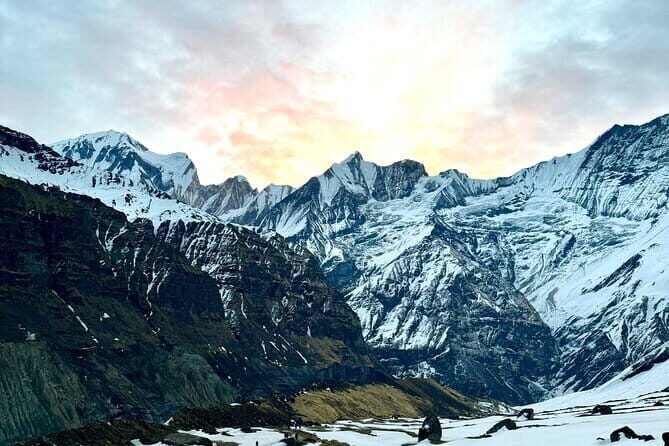
- Sunrise viewing is built into the return day, so you’re not just hiking for the peak photo.
- Poon Hill (3210m) gives you an early, rewarding viewpoint stop at the start of the Annapurna region.
- Hot spring recovery at Jhinu Danda adds a relaxing reset after summit-day efforts.
- Professional guiding plus transfers helps you focus on the trail instead of paperwork and logistics.
Kathmandu start: Thamel pickup and the calm before the trail
Day 1 begins in Thamel, Kathmandu’s well-known backpacker neighborhood. An airport representative meets you at Tribhuvan International Airport, then arranges a drop to your hotel by private tourist vehicle. You can rest, or stop by the office to get your trek details squared away.
What I like here is that you’re not thrown into chaos on day one. Even if you land tired, you still get that first moment of structure, which makes the next steps feel easier.
A practical tip: keep your essentials ready for a quick change of plans. In group feedback, guides were noted for being responsive, including helping someone arrange porter support when they weren’t feeling well the night before. That kind of flexibility can matter in the real world.
You can also read our reviews of more hiking tours in Kathmandu
Pokhara warm-up: bus ride, guesthouse night, and the route into the mountains
On Day 2, you travel from Kathmandu to Pokhara by tourist bus (about 200 km, roughly a six-hour ride, with lunch along the way). You overnight in a guesthouse in Pokhara.
This leg is more than just transit. It helps you shift from city rhythm to mountain rhythm while your body gets used to the travel day again. And since you’re still near services, it’s a comfortable staging ground before the trek proper starts.
On the “value” side, this is also where the trip’s included logistics pay off. You’re not coordinating transport, meal timing, and lodging basics on your own.
Nayapool to Birethani: a gentle start that sets your hiking tempo
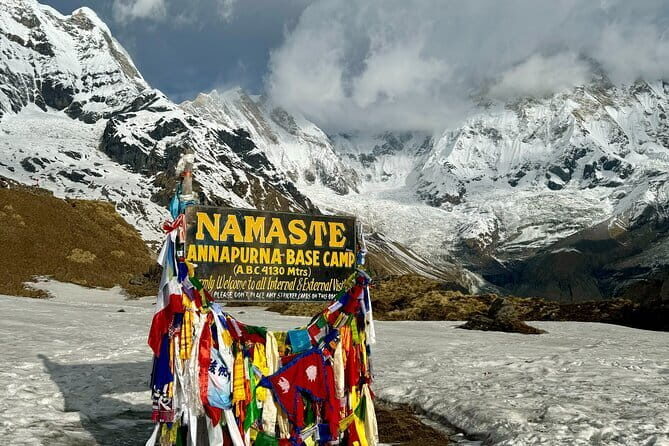
Day 3 launches from Nayapool (after driving from Pokhara about an hour). The day starts with a short walk along the banks of the Modi River, then continues to Birethani through villages and a trail lined with small teahouses.
This is a smart start day. You’re not pushed too hard, and you get time to learn your pace, your breathing rhythm, and how your legs feel once you’re truly on a trekking schedule.
Possible drawback: because teahouses are frequent here, it can be tempting to rush forward just to “get it done.” Don’t. Early days are for settling into the altitude challenge you’ll feel later.
Ulleri to Ghorepani: rhododendron forests and the first big viewpoint payoff
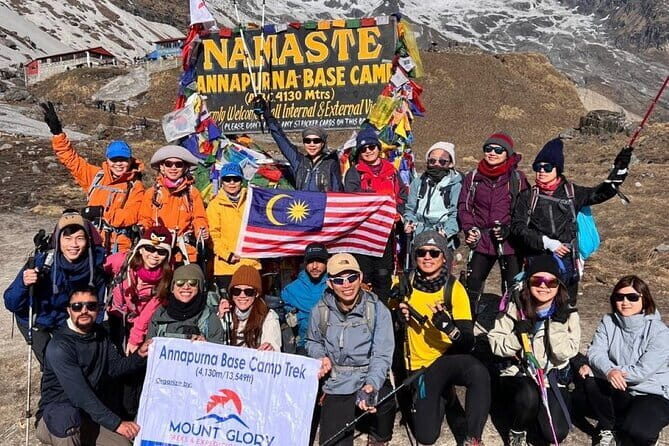
Day 4 starts from Ulleri and follows a gentle ascent. The trail moves through rhododendron and oak forests toward Banthanti, then continues to Ghorepani.
If you enjoy forests, this is where the trek starts to feel like a living hike instead of a straight climb. Even though the scenery changes as you go, this middle stretch is often where your walking becomes almost meditative.
Then on Day 5, you add the payoff: a short hike to Poon Hill. The route to the top takes about 45 minutes, reaching 3210m for viewpoints often called a photographer’s paradise.
The practical benefit of Poon Hill early: you get a strong view moment without waiting until the hardest section. That can boost morale when the trek gets steeper and slower later.
The Poon Hill morning: why 45 minutes matters so much
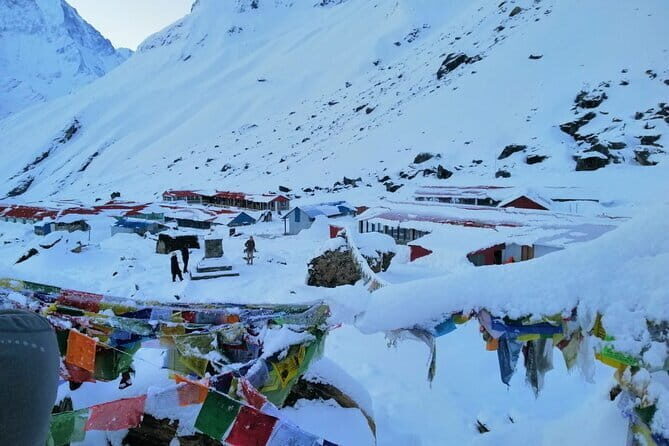
Day 5’s Poon Hill stop is short, but it’s one of the most efficient investments of your effort. You’re going up for a limited time, then you can settle into breakfast and continue with the day ahead.
I also like that this viewpoint sits on the overall ABC route, so it’s not a detour. It helps break up the trek mentally: you get rewarded along the way, not only at the end.
Logistics note: Poon Hill is an altitude viewpoint, so dress in layers and plan for cold. The itinerary’s structure keeps you close to teahouses, which helps you manage temperature better than an open-at-night hike.
Tadapani to Chhomrong: forests, Gurung village life, and the climb into the core region
Day 6 moves from Tadapani, gradually descending through rhododendron forests. You cross the Kimsung River, then ascend to a Gurung village called Gurjung, and from there climb to Chhomrong.
This is one of the trek’s best “culture-meets-views” transitions. You’re not just walking through empty space; you’re moving through villages and forest corridors, then stepping into a famous viewpoint area.
One thing to consider: Chhomrong is a point where you’ll likely feel the cumulative effort. If you pace yourself well earlier in the week, this day will feel challenging but doable.
Chhomrong to Sinuwa to Bamboo: bridges, steep pulls, and a rhythm that keeps going
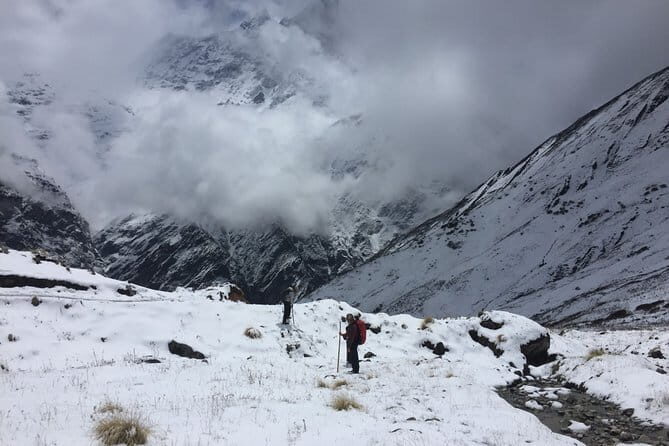
Day 7 starts with stone steps from Chhomrong dropping you toward Chhomrong Khola, where you cross a suspension bridge. Then you face a steep climb to Sinuwa, and after a short walk through jungle and a more easy downhill, you reach Bamboo.
This day is important because it teaches your body the trek’s pattern: descend to a crossing, climb to regain height, then transition into a flatter-feeling segment. You’re repeating that rhythm over and over on this kind of trek, so getting it right early can make later days easier mentally.
The good news: the route includes both climbs and downhills. That can help you keep a steady output, rather than suffering through one long grind without relief.
Dovan to Himalaya: the quiet stretch near a temple rule
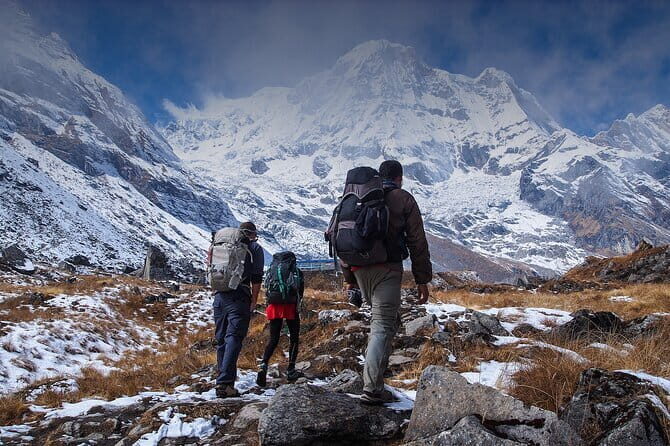
Day 8’s walk from Dovan to Himalaya is described as a quiet route, specifically noting that big noises aren’t allowed in the jungle near a temple on the way. The trail first comprises bamboo forests, then shifts into rhododendron forests.
This is one of those details that makes a trek feel respectful rather than extractive. You’re moving through a place where local practice shapes how hikers behave, and the result is often calmer hiking. It’s a nice reminder that this is not just a “view machine.”
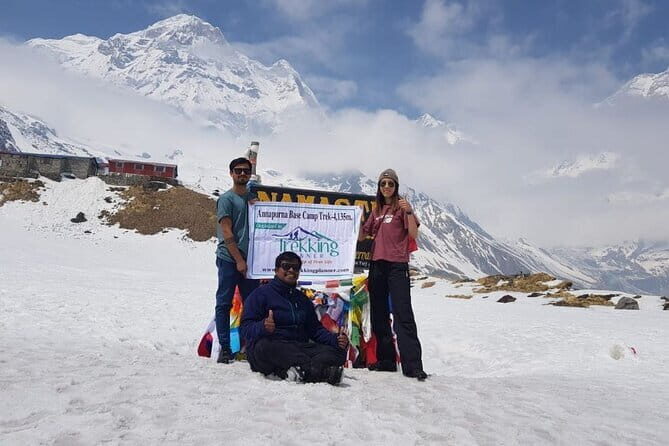
Day 9 continues the momentum: from Deurali the trail passes through a river bed and includes a tedious climb to Machhapuchhre Base Camp. You’re surrounded by major peaks in all directions, including mentions of Annapurna, Machhapuchhre, Gangapurna, and Himchuli.
Then on Day 10, the plan turns into celebration and recovery: sunrise viewing from ABC, followed by heading back mostly downhill along MBC, Deurali, Himalaya, and Bamboo to Sinuwa.
That structure matters. You’re not just pushing upward and leaving. You get a return segment that’s mostly easier on your legs, which is a smart way to reduce fatigue after the hardest visual day.
Chhomrong lunch stop and the hot spring reset in Jhinu Danda
Day 11 brings you back to Chhomrong, with time for lunch in Chhumrung and continued time in the village area. The stop is brief, but Chhomrong’s hillside view set is part of what makes the Annapurna region so memorable.
Day 12 is one of the most enjoyable “you earned this” days: Jhinu Danda and the natural hot spring. You’ll stop for the chance to soak in hot spring ponds next to the Modi River, about a 20-minute walk from your hotel in Jhinu Danda.
This is recovery in a Himalayan setting. It can help you feel more human when your legs are tired and stiff. I’d treat it as part of the trip’s design, not just a side activity.
Malekhu lunch and the final descent back toward Kathmandu
On Day 13, you reach Malekhu for a lunch stop about 30 minutes long, noted as a place famous for various fish species and its products. Then you continue onward.
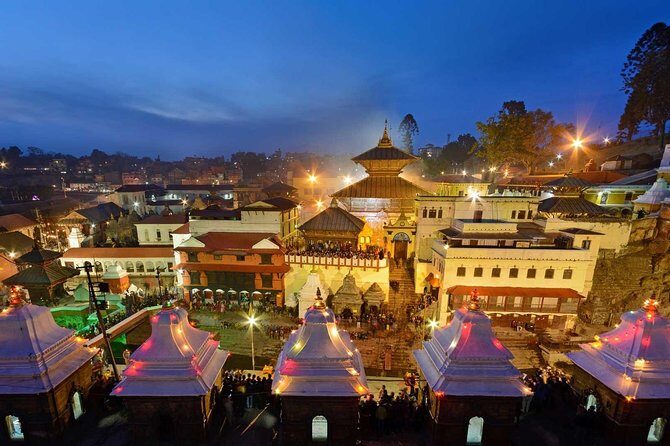
Finally, Day 14 includes a drive via Pashupatinath Temple for a short photo stop (about five minutes), before your trip wraps.
This last day matters because you get a final cultural punctuation mark. It’s not an extra climb or a bonus hike. It’s a moment to land back in the Kathmandu Valley feeling—still moved by the trek, but not stuck in “trail mode” until the end.
What you’re really paying for: logistics, meals, guiding, and time on the trail
At $925 per person, this trek isn’t just a ticket for a route. You’re paying for a bundle of things that would otherwise eat hours of planning: a professional guide, round-trip shared transfers, and a set meal and lodging plan.
Here’s how it breaks down from the included items:
- Accommodation is handled along the itinerary: teahouses on the trek and hotels/teahouses in Kathmandu and Pokhara.
- Meals on the trek are included: dinner (10), breakfast (13), and lunch (10).
- Some meals outside trek days are not included: lunch & dinner in Kathmandu and Pokhara.
So the real value is not just that meals are included. It’s that your day-to-day decisions get simplified. When you’re hiking at altitude, you don’t want to be negotiating where to eat or scrambling for good rooms.
Also, this is designed as a moderate high-altitude trek for active travelers. That matters for how the schedule feels. You’re hiking long enough to be meaningful, but not an all-day grind every single day. If you’re active and enjoy structure, that balance is a big part of the appeal.
Guides and group size: small teams, more attention, easier problem-solving
The group limit is max 10 travelers, which can make a noticeable difference. In a smaller group, you’re more likely to get timely adjustments—especially if someone needs to slow down, take an extra rest, or switch plans.
Past group feedback highlights a strong emphasis on professionalism and care, with guide names like Suvi, Tulsi, Krishna, Arjun, and Anil mentioned. Porters were also included in examples, such as Sumon. You shouldn’t expect a specific person, but the repeated themes point to an operator that pays attention to how trekkers are supported.
The practical result: if something goes off-script—like you’re not feeling well on arrival—there’s a better chance the plan adapts instead of ignoring reality.
Who this trek is for (and who should think twice)
This is a good fit if:
- you’re active and comfortable with daily hikes roughly in the 4–7 hour range
- you want a guided trek with lodging in place so you can focus on walking and scenery
- you like the idea of early viewpoint payoff at Poon Hill, then a major effort day, then a calmer return
You might think twice if:
- you want a fully independent trek with maximum freedom and no schedule support
- you’re not ready for altitude travel (the trek is described as moderate high-altitude)
If you fall somewhere in the middle, that’s still workable. The itinerary includes both longer view moments and calmer “reset” days like Jhinu Danda.
Should you book this Annapurna Base Camp trek?
I’d book it if you value hands-on planning and want your effort to go into the trail instead of arranging meals, rooms, and transport. The included teahouses and meal structure reduce the daily friction that can drain energy at altitude.
I wouldn’t book it if you dislike guided structure or if you’re looking for a purely self-directed adventure. This trek is built to be managed: small group, clear route progression, and built-in viewpoints.
If you want a strong balance of mountain grandeur, recovery breaks, and practical support, this Annapurna Base Camp plan with Green Valley Nepal Treks is a solid choice.
FAQ
How long is the Annapurna Base Camp trek?
The duration is listed as 14 days (approx.).
How many people are in the group?
It’s a maximum of 10 travelers, keeping it a small-group trek.
Where does the trek start?
The start point is Tribhuvan Airport, Kathmandu, Nepal.
Is pickup included?
Yes. Pickup is offered, and an airport representative meets you at Tribhuwan International Airport and arranges a drop to your hotel.
What kind of accommodations will I stay in?
You’ll stay in teahouses and hotels. Teahouses are used on the trek, and hotels/teahouses are included in Kathmandu and Pokhara.
Are meals included?
Yes. The trek includes all meals on the trek, plus some in Kathmandu/Pokhara. Included meals listed are dinner (10), breakfast (13), and lunch (10). Lunch & dinner in Kathmandu & Pokhara are not included.
How much hiking will I do each day?
The trek is described as having hiking between 4 and 7 hours each day, with a moderate high-altitude pace.
What’s the Poon Hill stop like?
There’s an early hike to Poon Hill. It’s about a 45-minute walk to the viewpoint at 3210m.
Is there a hot spring stop?
Yes. On Day 12 you’ll stop at Jhinu Danda to visit natural hot spring ponds near the Modi River.
What happens if weather is poor?
This experience requires good weather. If it’s canceled due to poor weather, you’ll be offered a different date or a full refund. Cancellation is free up to 24 hours in advance for a full refund.