REVIEW · KATHMANDU
Annapurna Circuit Trek in Nepal (9 Days)
Book on Viator →Operated by Recreation Holidays Pvt. Ltd. · Bookable on Viator
A high pass. Real village life. One smart plan. This 9-day Annapurna Circuit trek blends classic Himalayan trekking with hands-on cultural stops along the route, from Tibetan-influenced villages to the Muktinath area after Thorong La. You get a structure that keeps you moving, but not rushed, and a team that handles the logistics so you can focus on the trail.
I especially like the pickup and transport setup on day 1, plus the tea house accommodation and meals included for the trekking days. In practice, that means fewer decisions after a long day of walking, and more energy for the important stuff: pacing, hydration, and enjoying the scenery changes as the altitude rises.
The main drawback is the altitude challenge, especially the early push for Thorong La Pass (5,416 m). If you’re not comfortable with slower walking, early mornings, and the reality of breathing a little harder, this trek can feel demanding even on a good weather day.
In This Review
- Key moments that make this Annapurna Circuit plan worth your attention
- Kathmandu to Pokhara, the “arc” you actually feel on your legs
- Day-by-day Annapurna Circuit: what happens when, and what to watch
- Tea houses and included meals: the quiet win for altitude treks
- Guides, permits, first aid, and why organization changes the whole trip
- Price and value: what $880 covers, and what you must budget for
- Fitness, timing, and altitude reality checks you should not ignore
- Who should book this Annapurna Circuit trek, and who should reconsider
- Should you book Recreation Holidays for this 9-day Annapurna Circuit?
- FAQ
- What time does the Annapurna Circuit trek start in Kathmandu?
- Is accommodation included during the trekking days?
- Are meals included, and which ones?
- Are trekking permits included?
- Is transportation included from Kathmandu to the trek and back to Pokhara?
- Can I hire a porter for this trek?
- What altitude is Thorong La Pass, and when do you cross it?
- Is this tour private, and what about cancellation?
Key moments that make this Annapurna Circuit plan worth your attention
- Early start logistics: pickup around 6–7 AM and overland connections designed to get you into trekking mode fast
- Licensed English-speaking guide: a real person in charge of route guidance, pacing, and safety routines
- Tea house comfort built in: 8 nights with twin-sharing lodging, plus 8 breakfasts, 8 dinners, and 9 lunches
- Acclimatization day in Manang: a scheduled buffer day before the hardest segment
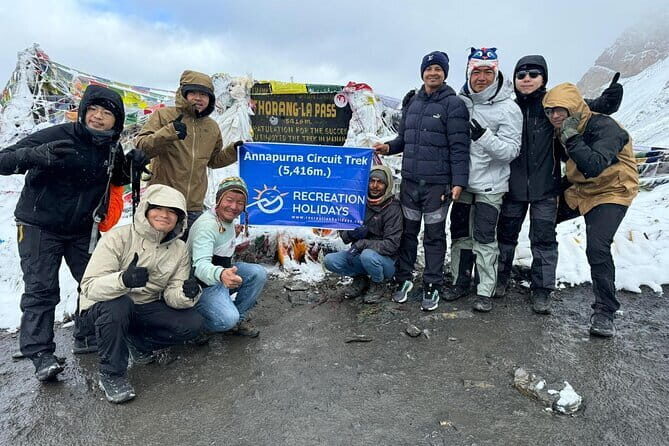
- Thorong La timing: an early departure (around 3 AM) to cross the pass efficiently
- Muktinath to Pokhara descent: you transition from the high point to lower elevations with a scenic drive
Kathmandu to Pokhara, the “arc” you actually feel on your legs
This trek is built as a journey across the Annapurna region rather than a single-point hike. You start in Kathmandu (with a stated start time of 6:15 AM and pickup offered from your Kathmandu hotel area) and eventually end in Pokhara after coming off the Muktinath side.
The overall rhythm matters. You’re not just walking uphill every day. You’ll start with long travel and a first day that transitions you from the city to the trek zone, then move through Chame, Manang, Yak Kharka, and Thorong Phedi, before the big altitude crossing at Thorong La. After that, the final day shifts into a much easier mode: a jeep or bus ride down toward Pokhara, where the elevation drops and your body can finally exhale.
That structure is a value point for you. It reduces the “what now?” stress that can otherwise eat up mental energy. And because meals, permits, and trekking lodging are included, the plan keeps you focused on the trail and the small village details you’ll notice along the way.
You can also read our reviews of more hiking tours in Kathmandu


Day-by-day Annapurna Circuit: what happens when, and what to watch
Day 1: Kathmandu morning ride to the trek zone
You start early, with pickup around 6–7 AM from your Kathmandu hotel area, then take a scenic bus ride toward Bhulbhule via Besisahar. After reaching Bhulbhule, you transfer to a shared jeep to continue toward the trekking start area (the day is essentially about getting you positioned and oriented).
What I like here is that you don’t lose your whole first day to chaos. The route is planned to move you from road travel into trail readiness.
Watch for: an early morning before you’ve warmed up. Even if the rest of the trek has steady days, day 1 asks you to get moving before your body feels ready.
Day 2: Chame and the cooler-alpine shift
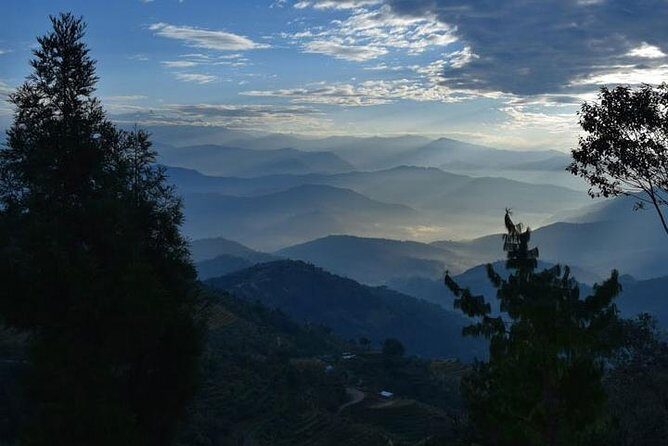
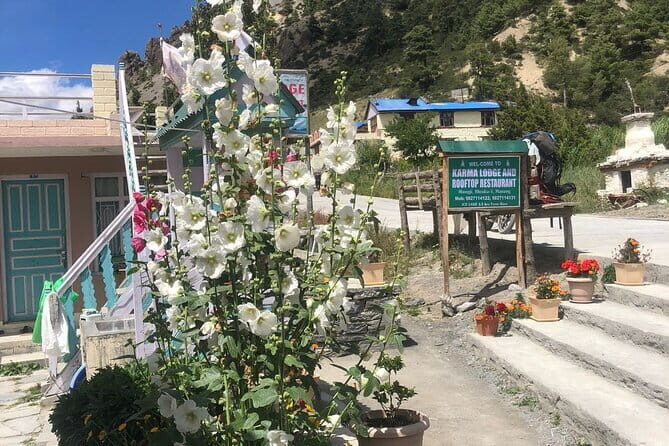
This day leads you into cooler alpine terrain and introduces more cultural texture. You’ll walk through villages with Tibetan influence such as Bagarchhap and Danakyu, and you’ll notice apple orchards dotting parts of the route.
Chame is often where the Annapurna Circuit starts to feel more “high and real.” You’ll see how the environment and architecture shift as you gain altitude.
Watch for: the slower feeling that comes with altitude. Even when the trail looks manageable on paper, your body may want more breaks.
Day 3: Rhododendron and pine forests, suspension bridges, Paungda Danda
Today’s walking goes through dense rhododendron and pine forests, then moves across meadows and steep ascents. You cross multiple suspension bridges, and the day ends at Paungda Danda, described as a majestic curved rock face.
This is a day that often gives hikers a sense of Nepal’s variety in one stretch: forest smell, open views, and the rhythmic sway of bridge crossings.
Watch for: steep segments after long periods of forest walking. Keep an easy pace and don’t try to “make up time” if your breathing slows.
Day 4: Manang highlight day with Humde and big Annapurna views
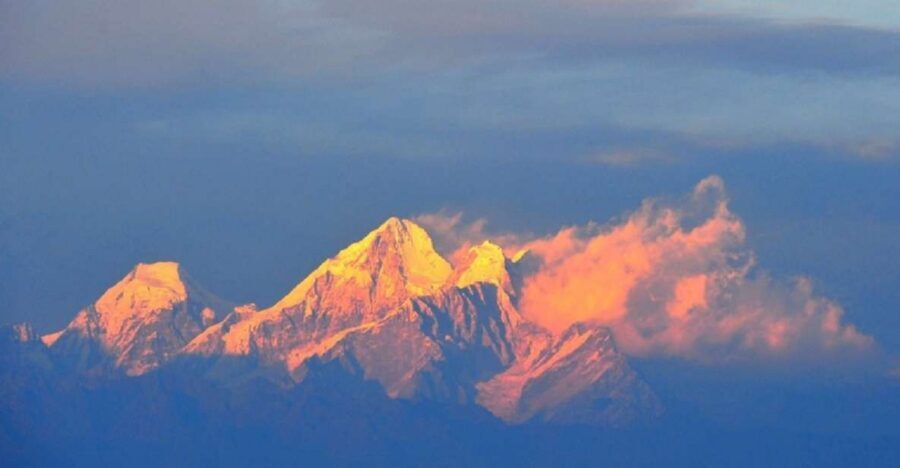
After breakfast you head toward Manang, one of the key highlights of the Annapurna Circuit route. The day starts with flatter terrain, then transitions into a gradual ascent to Humde, with panoramic views mentioned for Annapurna II, Annapurna III, and Annapurna I.
This is also where the trek starts to feel more like a high-altitude corridor. Manang is a hub area, so you’ll likely feel the change in energy—more teahouse life, more trekkers, and more shops and talk around the next passes.
Watch for: the combination of views and altitude. It’s easy to get distracted taking photos and forget to drink water consistently.
Day 5: Acclimatization in Manang (the day you’ll be glad you have)
You’re not sent straight upward again. Instead, you get an acclimatization day in Manang. The plan includes options like exploring Manang village, hiking up to glacial lakes at the base of Gangapurna, or visiting local monasteries.
This day is strategically valuable for you. It’s built to help your body adjust before the pass day. If you’ve ever regretted pushing too hard too soon, you’ll appreciate that this trek doesn’t treat your lungs like they’re magic.
Watch for: overdoing it on the acclimatization hike. Go for a steady walk and save your energy for later.
Day 6: Yak Kharka and the steady ascent through farms and settlements
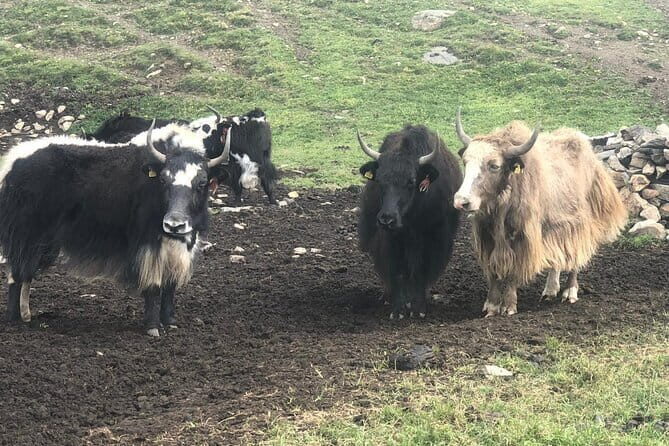
You trek to Yak Kharka, passing local settlements and cultivated farmlands. The ascent is described as steady but moderate, giving you time to acclimate, and you cross another suspension bridge.
Yak Kharka is a classic transition stop. The scenery feels harsher than lower villages, but you still see signs of human life—farms, homes, and the practical rhythm of highland communities.
Watch for: wind and temperature drops as you gain height. Even if the sun is bright, it can cool quickly at these elevations.
Day 7: Thorong Phedi day with a slow, steady climb
Today’s hike to Thorong Phedi takes about 4–5 hours with a gradual incline. Altitude makes the pace slower, and the plan encourages taking breaks, hydrating, and going at a realistic rhythm.
This is your “prep day” in walking form. Thorong Phedi is positioned so you can rest and organize yourself for the pass.
Watch for: trying to speed up because you feel good. Save your legs. Your pass start time is early the next day.
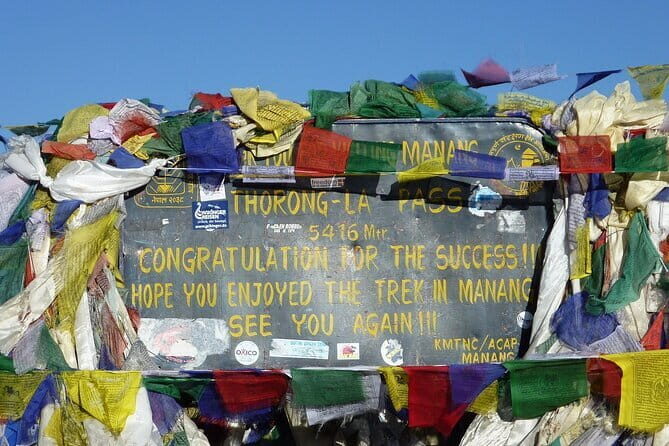
Day 8: Thorong La Pass at 5,416 m and the Muktinath side
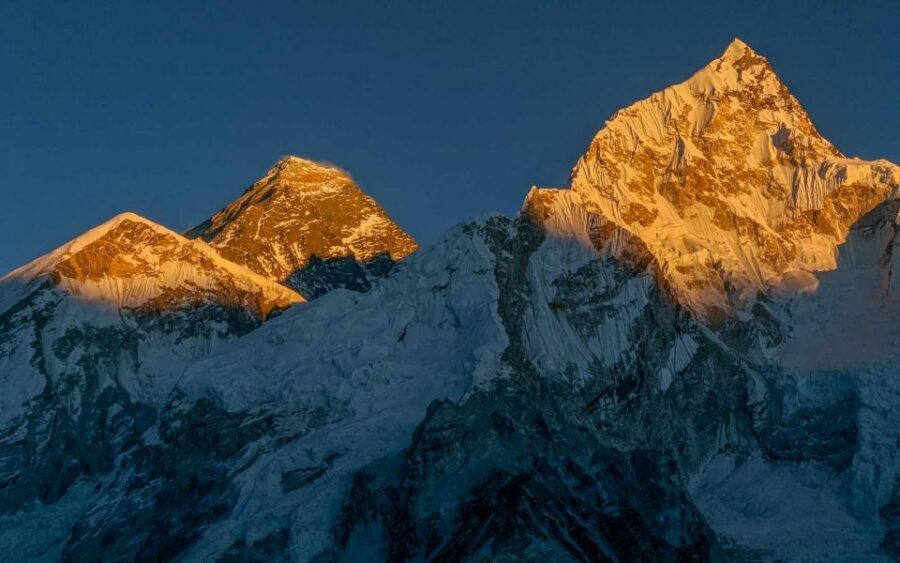
This is the trek’s big moment. You start early, around 3 AM, to conquer Thorong La Pass, listed at 5,416 meters (the highest point on this circuit route). After the pass, you continue onward toward Muktinath, including the Muktinath temple stop.
The timing is everything on pass day. Early departures reduce the risk of poor conditions later and help you cross when visibility may be better. The plan also builds in the reality that you’ll be moving slowly up high.
Watch for: cold. Even if your body is working hard, the temperature around pass crossings can feel brutal. Dress in layers you trust.
Day 9: Muktinath to Pokhara by jeep or bus, then real rest
After a well-deserved recovery period, you travel from Muktinath to Pokhara by jeep or bus. The drive offers scenic views of the lower Mustang Valley as you descend, and the day ends with the satisfaction of completing the circuit.
This final day is a value moment. You don’t have to negotiate the transition from trekking to city life. You get a planned descent and a clear landing in Pokhara.
Watch for: lingering fatigue. Even though you’re not climbing, your body may still feel “tired heavy” from the last day.
Tea houses and included meals: the quiet win for altitude treks
This trek includes 8 nights of tea house accommodation (twin sharing) during the trekking portion. It also includes 8 breakfasts, 8 dinners, and 9 lunches. That’s not glamorous in a marketing way, but it’s hugely practical for you on a route like this.
Here’s why it matters: at altitude, every decision has a cost. If you’re hunting for the right place to eat, or waiting for a menu you can’t read easily, your energy drains in the background. With meals included, you keep your schedule predictable, and you can focus on consistent eating and drinking.
Tea houses are typically basic, but that’s part of the point. You’re not paying for luxury; you’re paying for reliable shelter and warmth at night so you can hike again in the morning.
Practical tip: if you’re the type who forgets to eat until you’re starving, use the included meals as your structure. Don’t wait for hunger to remind you.
Guides, permits, first aid, and why organization changes the whole trip
You’ll travel with a licensed, English-speaking guide, plus an assistant guide if the group size is 8+ (with food, accommodation, salary, and insurance covered). The package also includes all necessary trekking permits and a first-aid medical kit.
This is one of the strongest value pillars of the trip. On the Annapurna Circuit, the route isn’t hard just because of physical distance. It’s hard because conditions can change and altitude doesn’t care about your plans. A guide who knows pacing and timing makes a real difference in how you feel day to day.
There’s also emergency evacuation support, and it’s described as covered by your travel insurance. That means the system is prepared, but you still need to have the right kind of insurance lined up.
And yes, there’s a human element too. In the provider’s public responses, Hari (the founder) shows up by name, which signals accountability and a real company culture rather than a distant brochure voice.
Price and value: what $880 covers, and what you must budget for
The price is listed at $880 per person for this 9-day experience. For many trekkers, the biggest question is what that number includes versus what you’ll pay separately.
What’s covered in the package:
- Tea house lodging for 8 nights (twin sharing)
- Meals: 8 breakfasts, 8 dinners, 9 lunches
- Licensed guide (English-speaking) and assistant guide when group size is 8+
- Trekking permits and all fees and taxes
- Local transport from Kathmandu to the trek zone and from Muktinath to Pokhara
- Luggage storage during the trek
- First-aid kit and emergency evacuation support (via travel insurance)
What’s not included:
- Nepal entry visa
- International airfare
- Travel and medical insurance
- Accommodation in Kathmandu and Pokhara (night(s) before and after the trek are on you)
- Private transportation
- Optional porter services at $240 per porter if you want help (not required, but available)
Value takeaway: $880 is most compelling when you want a handled plan. You’re buying logistics (permits, guide, tea house coordination, and meal scheduling) rather than paying for a random “go figure it out” trekking approach. If you already have your own guide and you don’t need the structured meals and transfers, it might not feel like a bargain. But if you want the mountains with less administrative work, this package reads as solid.





Fitness, timing, and altitude reality checks you should not ignore
The description calls for moderate physical fitness. That’s fair, but don’t interpret it as easy. The Annapurna Circuit is all about managing effort over multiple days, and the itinerary includes long hiking days (often around 12 hours on several legs), plus major altitude events.
The biggest reality check is how the trek handles the altitude:
- You get a scheduled acclimatization day in Manang
- You build toward the pass with a trail sequence that gradually increases altitude
- You cross Thorong La very early (around 3 AM)
For you, the practical strategy is simple: keep your pace slow enough that you can breathe steadily. Don’t treat the route like a race. Also, plan your layers for cold morning starts and windy ridgelines.
And because you’re in tea house rhythm, you’ll likely be walking with packs that feel heavy or light depending on how you manage your gear. If you’re worried about carrying too much, the option for a porter exists at $240 per porter (with a stated rule of roughly 1 porter for every 2 trekkers). That can be a sanity saver.
Who should book this Annapurna Circuit trek, and who should reconsider
This trek fits best if you:
- Want a structured plan with meals and tea house stays included
- Appreciate cultural village stops like Bagarchhap and Danakyu, plus the Muktinath temple area
- Prefer traveling with a licensed guide rather than planning route logistics yourself
- Can handle early starts and want acclimatization built into the schedule
You might think twice if you:
- Hate early mornings (the pass day starts around 3 AM)
- Know you struggle with altitude even on acclimatization days
- Don’t want to budget for insurance, visa, and pre/post-trek hotels in Kathmandu and Pokhara
Should you book Recreation Holidays for this 9-day Annapurna Circuit?
If you want the Annapurna Circuit experience with less friction, I’d say this is a good match. The strongest reasons are the licensed English-speaking guide, the included permits, the tea house lodging plus meal plan, and the thoughtful timing around Manang and Thorong La.
Just be honest about the one deal-breaker: altitude. When you book a trek that includes a 5,416 m pass, you’re signing up for slow pacing, cold mornings, and careful self-management. If that sounds doable for you, this itinerary looks like a well-organized way to do the circuit without turning your trip into logistics work.
FAQ
What time does the Annapurna Circuit trek start in Kathmandu?
The stated start time is 6:15 AM in Kathmandu, with pickup offered around 6–7 AM from your hotel.
Is accommodation included during the trekking days?
Yes. The trek includes 8 nights of tea house accommodation, with twin sharing during the trek.
Are meals included, and which ones?
Yes. The package includes 8 breakfasts, 8 dinners, and 9 lunches during the trekking portion.
Are trekking permits included?
Yes. The tour includes all necessary trekking permits.
Is transportation included from Kathmandu to the trek and back to Pokhara?
Local transport is included: from Kathmandu to the trek route area (listed as Dharapani) and from Muktinath to Pokhara. Private transportation is not included.
Can I hire a porter for this trek?
Porter services are available upon request for $240 per porter, with a guideline of 1 porter for every 2 trekkers.
What altitude is Thorong La Pass, and when do you cross it?
Thorong La Pass is listed as 5,416 meters (the highest point on the route). The plan has you starting early, around 3 AM, to cross.
Is this tour private, and what about cancellation?
This is described as a private tour/activity, meaning only your group participates. There is free cancellation up to 24 hours in advance for a full refund.