REVIEW · KATHMANDU
Everest Base Camp Trek – 16 Days
Book on Viator →Operated by Nepal Intrepid Treks · Bookable on Viator
One of Earth’s toughest view days is here. This Everest Base Camp trek pairs big scenery with real structure: acclimatization days, planned rest, and practical support in the Khumbu. I like the way the tour handles the jump from Kathmandu to the mountain life with airport pickup and a comfortable 3-star hotel base. I also really appreciate the included trek support details like meals, guesthouse stays, and loaner cold-weather gear, because they cut down the stress of packing.
The one drawback to watch is altitude and weather reality. The itinerary depends on flights to Lukla (or an alternate like Ramechhap), and conditions can change; plus, you’ll need to take acclimatization seriously because pushing too hard is when things get risky.
In This Review
- Quick things to know before you go
- Kathmandu Setup: Pickup, a 3-Star Base, and a Calm Start
- Kathmandu to Lukla: The Flight That Sets the Tone for Everest
- Phakding to Namche Bazaar: Sagarmatha National Park and Two-Level Bridge Energy
- Namche Acclimatization Day: Slow Gains and Everest View Hotel Cred
- Namche to Tengboche: Forest Walking, Big Views, and a Monastery Morning
- Tengboche to Dingboche: Prayer Flags, Mani Stones, and Slower Progress
- Dingboche Acclimatization: Nagarsan Hill at 5,100 Meters
- Dingboche to Lobuche: Khumbu Glacier Territory and a Cemetery Moment
- Everest Base Camp Day: Gorekshep, Prayer Flags, and Changri Glacier
- Kalapatthar Sunrise from Pheriche: When Light Turns the Peaks Gold
- The Return to Namche and Beyond: Same Route, Different Feel
- Value and logistics: what’s included that actually matters
- Who should book this trek (and who should reconsider)
- Book it or pass? My straight answer
- FAQ
- Does the trek include airport pickup and drop-off in Kathmandu?
- Are the flights to Lukla included?
- What’s included for food during the trek?
- Are permits included?
- What gear is provided, and what do I need to bring myself?
- Is accommodation included?
- Is oxygen included?
- What’s the cancellation policy if weather cancels the trek?
Quick things to know before you go
- Private group, max 14 people: you won’t be shuffled into a giant crowd on the trail.
- Two-to-one porter help: the tour runs with guide plus a porter setup (listed as 2 travelers to 1 porter), which matters on steep days.
- Gear loan included: sleeping bag and a down jacket are provided during the trek.
- Thoughtful altitude pacing: you get a real acclimatization day in Namche and another around Dingboche (Nagarsan Hill).
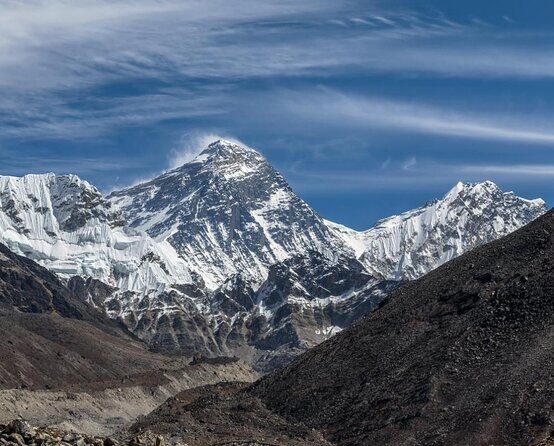
- Everest Base Camp isn’t the end: the route builds in Gorekshep and the Kalapatthar sunrise option for peak views.
- Oxygen is extra: oxygen cylinder and mask are available on request, but not included.
Kathmandu Setup: Pickup, a 3-Star Base, and a Calm Start
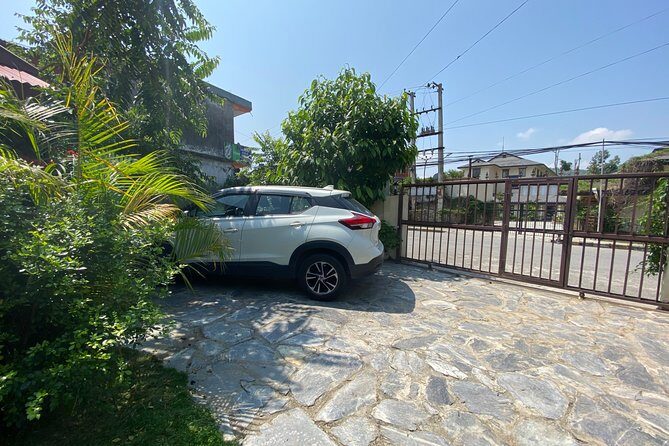
Most Everest treks live or die on how smoothly you handle the first 48 hours. This one starts with a straightforward Kathmandu arrival: you land at Tribhuvan Airport, get met by Nepal Intrepid Treks, and ride in a private vehicle to your hotel. Your stay includes room and breakfast for two nights in 3-star Kathmandu, which is a big deal when you still have jet lag and airport logistics in your brain.
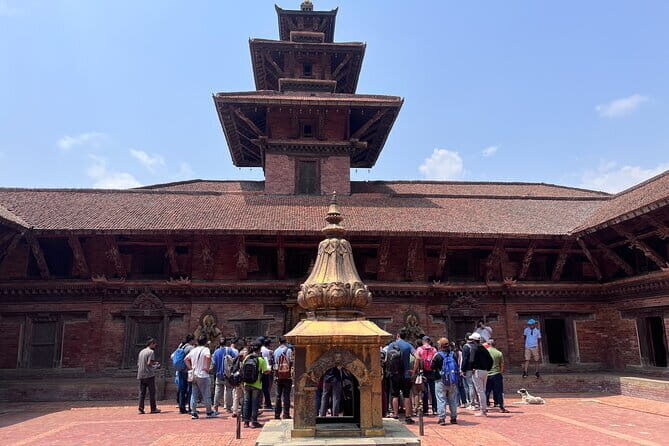
Day 2 is your buffer: a preparation day plus a stroll around Kathmandu. I like having this kind of downtime before the famous mountain flights. You can get your bearings, sort out last-minute trekking items, and adapt to local rhythm without feeling like you’re already “behind.”
One practical note: trekking clothing you bring still matters. The tour provides a sleeping bag and down jacket, but it also says clients must arrange personal trekking equipment, so don’t assume this is a full gear-swap package.
You can also read our reviews of more hiking tours in Kathmandu


Kathmandu to Lukla: The Flight That Sets the Tone for Everest
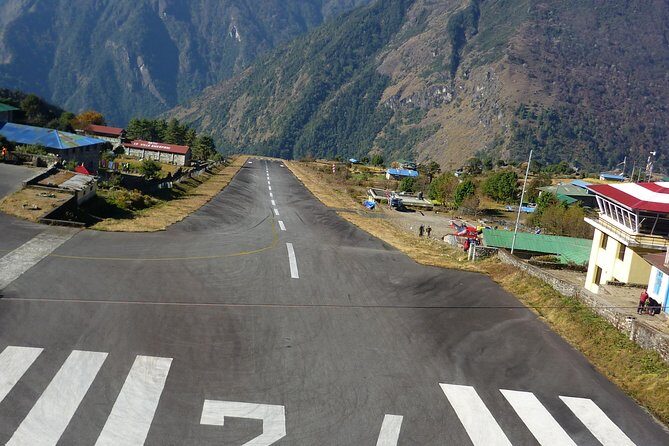
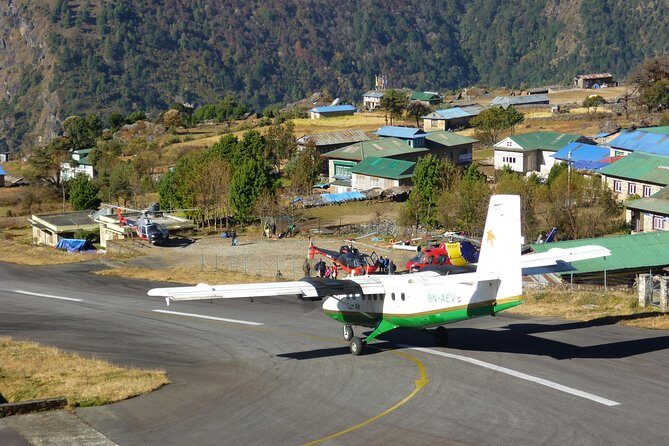
Day 3 is when the trek properly begins. You take a domestic flight from Kathmandu to Lukla, with stunning views during the flight—mountains laid out like a thorny line. Lukla is famous for its location and drama, so expect adrenaline before your first long walk.
Once you land, your guide starts you along the trail through classic Khumbu details: prayer wheels you can spin clockwise, and the first suspension bridge crossing. Then you descend toward the Dudh Koshi River and continue to Phakding for the night. This early section is a good “warm hand” to get your rhythm: you’ll walk, breathe hard, and learn quickly what carrying your pack feels like in real altitude.
Where this trek can challenge people is also where it teaches. Early days are easier only on paper. In practice, your legs will feel the altitude and the pack weight from day one, so take it slow and don’t treat the distances like road miles.
Phakding to Namche Bazaar: Sagarmatha National Park and Two-Level Bridge Energy
The jump to Namche Bazaar is one of the signature “welcome to the Khumbu” days. You’ll follow a trail that weaves up and down through villages and rhododendron forests, passing donkeys, yaks, and Sherpa porters carrying heavy loads because roads don’t reach the trail network.
You enter Sagarmatha National Park (UNESCO listed), which gives the whole walk extra meaning beyond views. Along the route, you’ll cross two swinging bridges—one higher and one lower—making it a fun photo moment and also a real test of steady steps. Then you reach Namche, the main hub for the region.
What’s special here is not just Namche’s position. It’s the transition you feel: the trail starts to look more “Everest.” You see more gear, more trekking traffic, and more signs that you’re near the world’s highest mountains. Drawback? By the time you reach Namche, you’ll likely feel the altitude in your breathing even if you didn’t “walk that far.”
Namche Acclimatization Day: Slow Gains and Everest View Hotel Cred
Day 5 is your acclimatization day in Namche Bazaar, and that pacing is one of the smartest parts of this plan. The tour offers either a short hike or a more relaxed wander day in town. There’s a practical reason for that advice: moving a little helps your body adapt without overexerting you.
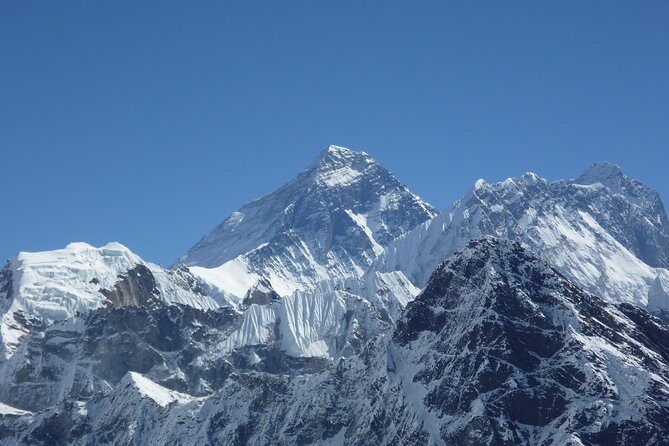
If you choose the active option, there’s a walk to The Everest View Hotel—described here as the world’s highest-placed hotel—where you can see Mt. Everest, Mt. Ama Dablam, and other major peaks. I like that this option isn’t just about checking a box. It gives you a legitimate “this is real” moment before you go deeper.
If you prefer to stay relaxed, you can still build a win by taking short walks around Namche and keeping your day light. The best acclimatization day is the one you don’t turn into a second summit push.
Namche to Tengboche: Forest Walking, Big Views, and a Monastery Morning
Day 6 climbs and drops as you head toward Tengboche, and the text is honest that it’s tiring—but the payoff keeps you moving. You walk through pine and rhododendron forests, cross rolling hills and pasture areas with yak herders, and eventually reach Tengboche.
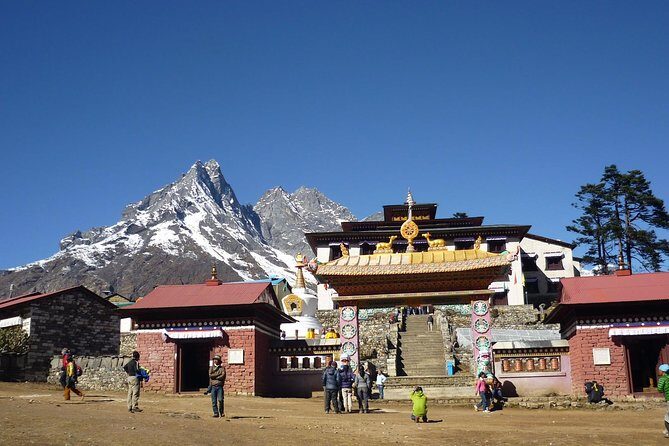
Tengboche is about two things: mountains and the monastery. The monastery is noted for its artistic setting, and there’s even the possibility of monks playing football near the village center. If timing lines up, early sunrise views over Mt. Ama Dablam with Everest peeking in the background can be unforgettable.
Reality check: this is a day where cold can show up fast once clouds move or evening hits. The good news is the trek provides a down jacket for the trip, so you aren’t trying to “borrow warmth” from your own clothes while you’re already fighting thin air.





Tengboche to Dingboche: Prayer Flags, Mani Stones, and Slower Progress
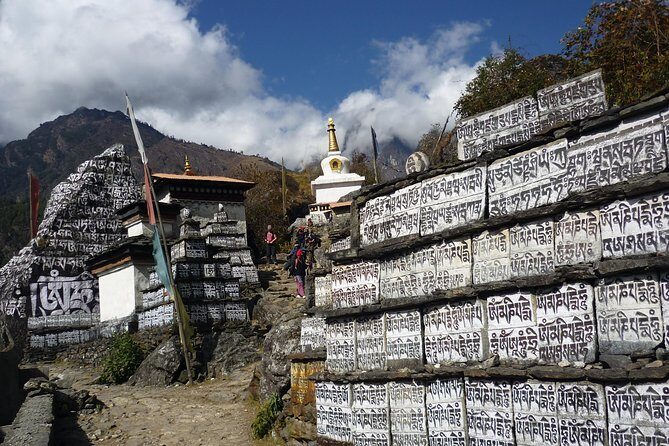
On Day 7 you add a sunrise-and-wander moment: you get to walk around after sunrise and revisit Tengboche Monastery details, including wooden prayer wheels and prayer flags representing five Tibetan Buddhist elements. Then you continue by slowly descending toward Deboche and crossing onward through forests to Pangboche, including mani stones and prayer flags along the way. You end in Dingboche for the night.
What I like about this section is that it’s not purely about altitude. It’s also about learning the trail culture. When you notice prayer flags, mani stones, and the way the trail is set up, you stop treating the trek like a checklist and start seeing it like a lived place.
The drawback is still physical. Even if the day is “slow,” you’re building fatigue, and fatigue makes altitude sickness more likely. Drink water, pace yourself, and don’t use ego as your engine.
Dingboche Acclimatization: Nagarsan Hill at 5,100 Meters
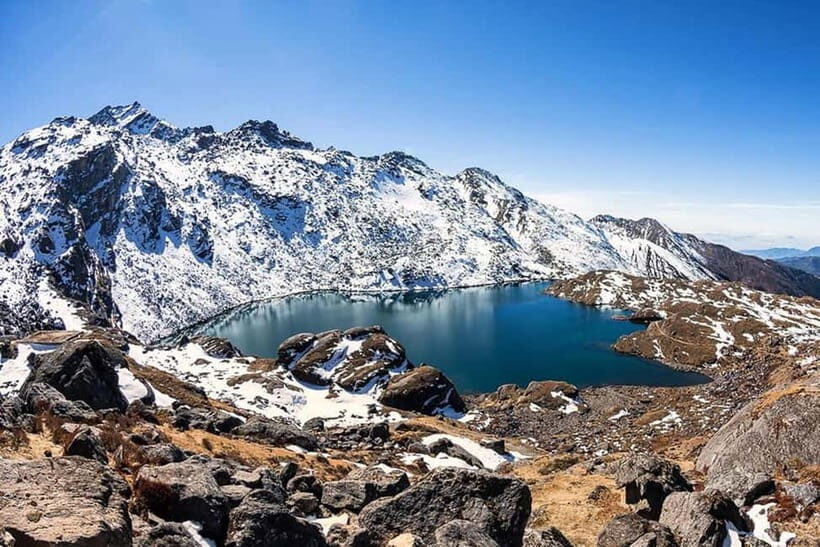
Day 8 is another altitude adaptation block. The tour has you hike up to Nagarsan Hill at 5,100 meters, which is high enough to change how you feel your breathing. You’ll likely notice the thinning air on the climb, but the view is the reward: Island Peak, Mt. Ama Dablam, Mt. Lhotse, Mt. Makalu, Mt. Nuptse, and others.
I like that this is not positioned as a “hardest day” challenge. It’s presented as a purposeful acclimatization hike, and the route includes the feeling of relief when you turn downhill again.
If you’ve struggled at altitude before, this is the day you lean into discipline: slower steps, steady breathing, and no heroic pacing.
Dingboche to Lobuche: Khumbu Glacier Territory and a Cemetery Moment
Day 9 pushes you toward Lobuche, moving closer to the sections that feel more “high-stakes” than earlier walking. You continue along the valley floor past Dugla and leave the Khumbu glacier behind as you go, and you start seeing more stark, high-altitude terrain.
One of the most emotionally heavy stops on the route is the cemetery where climbers who lost their lives during their Everest attempts rest. You’re meant to pause there quietly for a moment. This matters because Everest is not just a view. It’s also a reminder of risk and the cost behind the dream.
Physically, the tour emphasizes going slow here because the air is thinner and the effort can spike. If you take anything from this day, take that: the correct pace is part of safety, not something optional.
Everest Base Camp Day: Gorekshep, Prayer Flags, and Changri Glacier
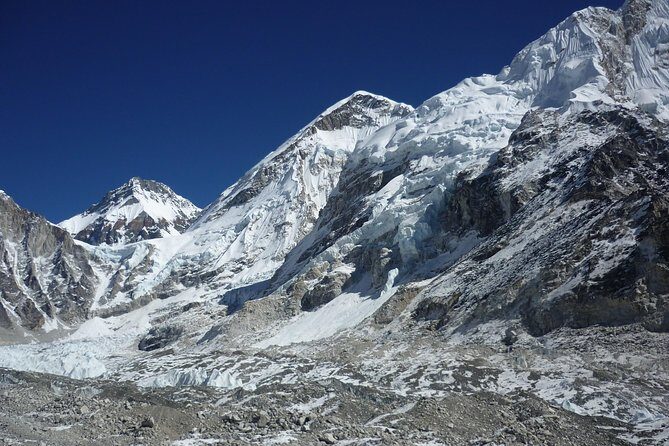
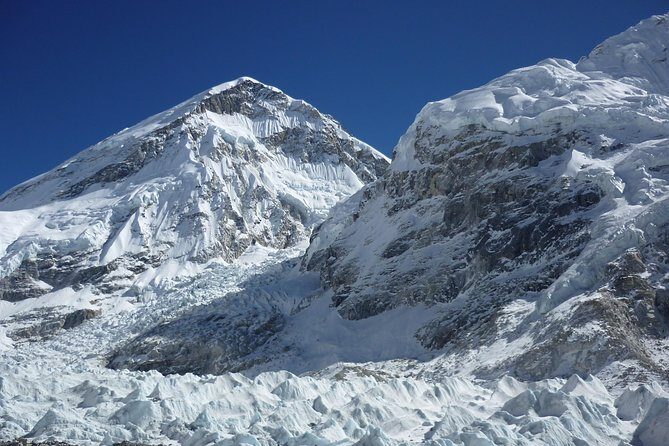
Day 10 is the main event: you reach Everest Base Camp. The day includes a steep climb up the Changri glacier, and the trail keeps opening into huge views of Mt. Pumori, Mt. Lingtren, Mt. Khumbutse, and Mt. Nuptse along the way. You’ll also see Kalapatthar appear before you arrive at Gorekshep.
From Gorekshep you walk through a frozen world of glaciers and frozen rivers, then the final stretch brings you to the prayer flags at Everest Base Camp. This is the kind of moment where words don’t help much. Your body is working hard, your eyes can’t stop scanning, and your brain keeps trying to turn the scene into something it can understand.
The drawback to plan for: Everest Base Camp day is long and demanding at altitude. Even when you’re excited, treat the pace like you’re driving in ice—smooth, careful, and controlled.
Kalapatthar Sunrise from Pheriche: When Light Turns the Peaks Gold
Day 11 is about sunrise and photos, centered on Kalapatthar. It’s an early rise, then you climb into pre-dawn cold to watch the sun appear behind white-capped peaks. The description here calls Kalapatthar the best spot for stunning sunrise photos, and it’s easy to see why: the light hits the mountains and the whole high region looks like it’s been turned up a notch.
After that, you descend to Pheriche and stay overnight. This is also a day that tests comfort. Cold and wind are common themes at high elevations, so the down jacket loan is genuinely useful here.
The Return to Namche and Beyond: Same Route, Different Feel
Day 12 starts your retrace. You walk back via the same path toward Namche Bazaar, arriving with the feeling of returning home. Walking in reverse changes the view cues and the way your legs experience the climb.
Day 13 continues the return to Lukla, again along the trail you already know, with the Dudh Koshi River and suspension bridges echoing your earlier days. This is where I think people get the most satisfied. You’re not just surviving the mountains anymore. You’re absorbing them.
Then Day 14 ends the high trek phase with a flight from Lukla back to Kathmandu. You’re escorted to your hotel, and the rest of the day is yours. Day 15 adds another Kathmandu free day—optional day trips, a massage idea, shopping, and simple roaming. Day 16 is the goodbye: pickup from your hotel and transport to the airport.
Value and logistics: what’s included that actually matters
This tour includes a lot of the stuff that usually turns into “surprise bills” later.
You get:
- Round-trip flights Kathmandu–Lukla–Kathmandu (or Ramechhap–Lukla–Ramechhap)
- Hotel nights in Kathmandu on a room-and-breakfast basis
- Three meals a day during the trek (breakfast, lunch, dinner) plus tea or coffee
- Best-available guesthouse stays on twin sharing during the trek
- All trekking permits and paperwork
- A guide and staffing setup listed as an experienced English-speaking guide plus 2 travelers to 1 porter
- Sleeping bag and down jacket during the trek
- A trek achievement certificate
The reviews you shared also point to real people support. I saw praise tied to guides like Bheg and Shiva on an EBC trek, and Hem with porter Ram for a solo attempt, plus Santa and Kamal being mentioned for guide leadership. Even when things went wrong—like flight cancellations due to poor weather or a chest infection mid-trek—the pattern in the feedback is that the team adapted and kept care moving.
One important caution: oxygen is listed as available on request with extra charge. So if altitude is a concern for you, plan ahead and ask about availability and procedures before you go.
Who should book this trek (and who should reconsider)
This is a great fit if you:
- want the classic EBC route with proper acclimatization stops in Namche and Dingboche
- appreciate structured daily pacing instead of “just walk harder”
- like having meals handled and sleep options arranged in advance
- are okay with shared rooms (twin sharing) during the trek
You should think twice if you:
- have mobility limits for steep uphill and long walking days
- don’t handle cold well and don’t plan personal layers (the down jacket helps, but you still need layers)
- aren’t prepared for flight uncertainty around Lukla weather
Also, note the group size: max 14 people, private group. It’s not a solo, and it’s not a giant trek circus either.
Book it or pass? My straight answer
I’d book this trek if you want a well-paced Everest Base Camp experience with included meals, permits, and cold-weather gear, plus a team setup built around guide attention and porter support. The itinerary’s big win is the two acclimatization moments: Namche for altitude adjustment and Nagarsan Hill near Dingboche for a controlled, purposeful push higher.
I’d pause before booking if you’re nervous about flight disruption to Lukla or you’re risk-sensitive about altitude. In that case, talk to your doctor, build a realistic fitness plan, and double-check how flexible your travel dates are.
If you like the idea of pairing unforgettable Everest scenery with practical logistics—hot showers mentioned for Lukla, Phakding, and Namche, plus a clear Kathmandu base—this is a strong option.
FAQ
Does the trek include airport pickup and drop-off in Kathmandu?
Yes. The tour includes airport picks up & drops off with a private vehicle in Kathmandu, plus hotel escorts during arrival and after your return.
Are the flights to Lukla included?
Yes. The tour includes round-trip flights Kathmandu–Lukla–Kathmandu or Kathmandu–Ramechhap–Lukla–Ramechhap, depending on routing.
What’s included for food during the trek?
Meals are included three times daily with cup of tea or coffee: breakfast, lunch, and dinner.
Are permits included?
Yes. All trekking permits and necessary paperwork are included.
What gear is provided, and what do I need to bring myself?
The tour provides a sleeping bag and a down jacket during the trek. Personal trekking equipment is not included, so you’ll need to arrange your own.
Is accommodation included?
Yes. You get 2 nights in Kathmandu at a 3-star hotel on a bed-and-breakfast basis, and guesthouse accommodations during the trek on a twin sharing basis (with attached bathroom and hot shower rooms in Lukla, Phakding, and Namche as listed).
Is oxygen included?
Oxygen cylinder and oxygen mask are available on request, but they are listed as extra charge.
What’s the cancellation policy if weather cancels the trek?
There is free cancellation up to 24 hours in advance for a full refund. The experience requires good weather; if it’s canceled due to poor weather, you’ll be offered a different date or a full refund.