REVIEW · KATHMANDU
Annapurna Circuit Trek
Book on Viator →Operated by Adventure Bound · Bookable on Viator
Thorong La is real altitude work. This guided Annapurna Circuit trek is interesting because it takes you from Nepal’s lower valleys up into classic high-country passes, with a private guide handling the logistics so you can focus on walking and acclimatizing. I especially like the tea-house accommodation along the way, because it keeps the rhythm steady instead of hunting for lodging. The one drawback to plan for: cold nights and big altitude days can be hard even when everything is well organized.
What makes this route worth your time is the mix. You get cultural stops, long views, and a proper “climb and earn it” feel, including crossing Thorong La (5,416m). I also like that you’re not left guessing: you’ll follow a supported schedule with permits, meals during trekking, and first-aid support. Still, you need moderate fitness and the right mindset for long hours on your feet.
In This Review
- Key Highlights You’ll Feel on the Ground
- How the Annapurna Circuit Trek Actually Flows in 14 Days
- Kathmandu to Jagat, then Dharapani: your first long day and first real climbs
- Dharapani to Chame to Pisang: forests, waterfalls, and towns that feel lived-in
- Manang Acclimatization Day: why you stop at 3,540m
- Manang to Yak Kharka to Thorong Phedi: getting ready for the pass day
- Crossing Thorong La to Muktinath: the hardest day, explained in plain terms
- Muktinath to Jomsom to Tatopani: trade the pass for a recovery rhythm
- Ghorepani and Poon Hill: the final climbs, then Pokhara
- Price and Value: what you get for $1,175 on the Annapurna Circuit
- Weather and Altitude Reality Check: cold nights and frozen bottles
- Who Should Book This Annapurna Circuit Trek (and who shouldn’t)
- Should You Book This Adventure Bound Annapurna Circuit Trek?
- FAQ
- Where does the Annapurna Circuit Trek start and end?
- How long is the Annapurna Circuit Trek?
- What is the highest altitude on this trek?
- Are tea house accommodations included?
- What’s included in the trek meals?
- Is travel or rescue insurance included?
- Is this a private group experience?
Key Highlights You’ll Feel on the Ground
- Thorong La at 5,416m: the route’s big altitude moment, not just a line on a map
- Manang acclimatization day: one full day in the middle so your body can adjust
- Tea houses and standard meals included: less decision fatigue at the end of each hiking day
- Guide support with real names showing up in past trips: Rabin, Santosh, Sandip, Ganesh Ji, Chakra (Ck), plus porter help like Ramesh Ji
- Tatopani hot springs: a practical reset after the harder trek segments
- Classic endgame: Poon Hill sunrise-style hiking to Nayapul, then taxi to Pokhara
How the Annapurna Circuit Trek Actually Flows in 14 Days
This trek is built around steady movement, not sprinting. Your days mix driving and hiking, with tea-house lodging during the trekking portion. I like that the structure matters: you’re hiking long enough to get that Himalayan walking satisfaction, but you’re not constantly doing map puzzles or route research at night.
Logistics are also part of the value. Pickup is offered in Kathmandu, you get a mobile ticket, and you’ll use ground transportation for key stretches (Kathmandu to Jagat and Jomsom to Tatopani), plus a private transfer from Nayapul to Pokhara. That means fewer moving parts in your travel day.
The itinerary is also altitude-smart on paper: you climb gradually, then you pause in Manang to acclimatize, then you push over Thorong La. The biggest practical takeaway for you: the circuit punishes shortcuts. It rewards patience. And that patience is easier when someone licensed and experienced is steering the day-to-day plan and pacing.
You can also read our reviews of more hiking tours in Kathmandu


Kathmandu to Jagat, then Dharapani: your first long day and first real climbs
Day one is mostly a long drive: Kathmandu to Jagat (about 8–9 hours) via Besisahar, dropping you into the trek at around 1,100m. This isn’t glamorous, but it’s useful. Getting out of the city early helps you start the hiking phase when the trip is still fresh and your legs aren’t yet tired from a trail that day.
Jagat is a calm on-ramp. From there, day two is your first trekking test: Jagat to Dharapani (about 6–7 hours), reaching roughly 1,960m. I like this leg because it starts building the rhythm you’ll need later. You’ll learn how quickly you get winded when the altitude starts to nibble, and you’ll figure out your pace before the big pass.
A consideration for you: day two is not a stroll. The hours are long, even if the elevation gain feels manageable compared to later. If you tend to go out fast, watch that habit here.
Dharapani to Chame to Pisang: forests, waterfalls, and towns that feel lived-in
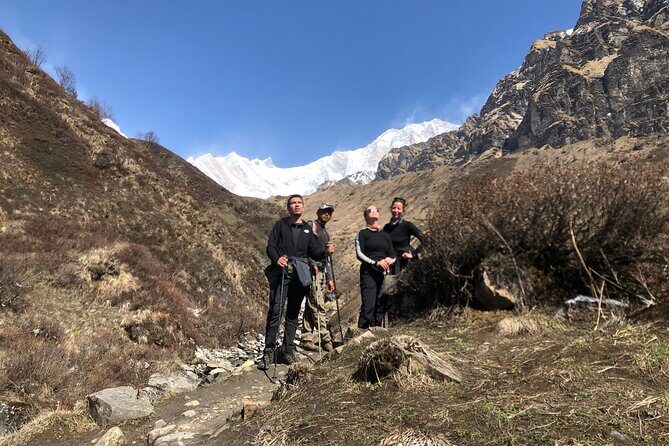
After Dharapani, the route rises again to Chame (about 2,710m) in roughly 5–6 hours. This part is where the trail starts to feel more “classic Nepal”: more visible water, more greenery when you’re in the right zone, and more of that hillside path that demands attention for your footing.
Then you keep climbing to Pisang (about 3,300m) in around 5–6 hours. Pisang sits high enough to feel noticeably different. The air gets thinner, and the scenery starts to shift toward the harsher, drier feel you’ll associate with higher Himalayan zones.
One thing I appreciate about this mid-slope stretch is how it teaches you trail discipline. You’ll be in motion for hours, but it’s not the single hardest day of the entire trip. It’s the training ground for your legs and your breathing strategy.
Potential drawback: these are long days back-to-back. If you sleep poorly at night, you’ll feel it the next morning. That’s also why tea-house routines and consistent meal timing matter.
Manang Acclimatization Day: why you stop at 3,540m
You reach Manang (around 3,540m) after Pisang (roughly 6–7 hours). Then you get a full acclimatization day at Manang. I consider this a key feature, not a spare day.
Why? Thorong La is at 5,416m. That’s a long jump from the heights you’ve already climbed, even if you gained elevation gradually. Acclimatization is your chance to adjust—slow down, rest, and let your body catch up to the schedule your brain already wants to outrun.
What you do on the acclimatization day isn’t spelled out here, but the purpose is clear: you’re meant to stay smart while your body recalibrates. In practice, this day can decide whether the big pass feels like a slog or a battle.
If cold night temperatures hit while you’re in the region, your comfort can also swing fast. One past trekker noted a night drop to around -20°C and wind around 20km/hr, with water freezing even in a normal bottle. That’s not guaranteed every night, but it’s a good warning sign: pack for cold.
Manang to Yak Kharka to Thorong Phedi: getting ready for the pass day
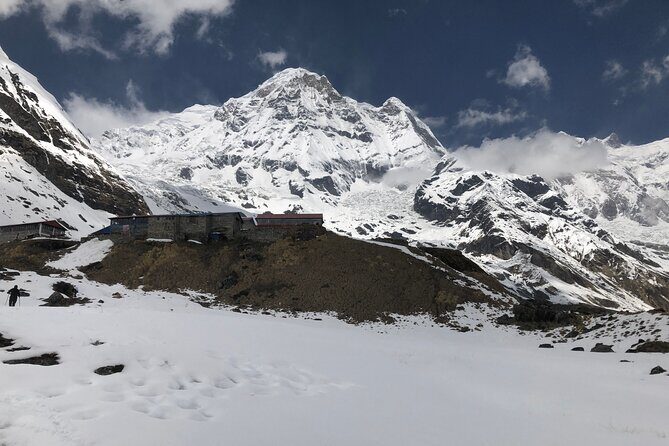
After Manang, the next hiking legs are shorter by time but higher by impact.
Manang to Yak Kharka takes about 4–5 hours, reaching roughly 4,120m. Yak Kharka feels more high-altitude than village. The terrain and air start to make every decision about pace matter. You’ll want steady effort, not bursts.
Then Yak Kharka to Thorong Phedi is about 4–5 hours, rising to roughly 4,450m. Thorong Phedi is where your mind starts focusing on the next day, because you’re now close enough to the pass that you’ll feel it in your breathing and energy planning.
Practical tip: treat this period as preparation, not achievement time. Your guide’s job here is huge—helping you keep plans realistic, timing breaks, and staying aware of the pass conditions.
Past trip feedback often praises guides by name for this kind of attention. Rabin, for example, was specifically credited for staying involved in decisions step-by-step. Santosh was praised for keeping people informed about what came next. Ganesh Ji earned strong mentions for patience and encouragement while crossing Thorong La. And Chakra (Ck) was highlighted for being professional and helpful with traditions and trail talk.
That’s not just “nice.” It’s safety. On the hardest day ahead, the difference between rushed and controlled can be the difference between grinding and managing.






Crossing Thorong La to Muktinath: the hardest day, explained in plain terms
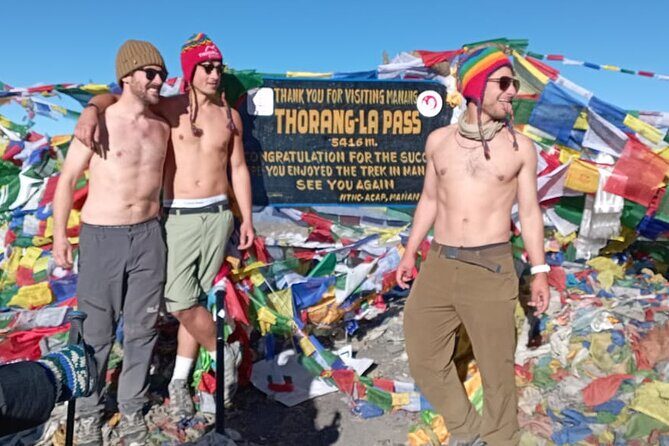
Thorong La is the headline because it’s the highest point on this route: about 5,416m. The climb is part physical, part mental, and part weather-driven. You hike from Thorong Phedi to Muktinath in about 7–8 hours, and the route goes over the pass before descending to roughly 3,802m at Muktinath.
The big thing for you to understand is this: even after you reach the pass, you’re not done. You still have hours of descending, and you’ll likely be tired. Your legs can get cranky late in the day, especially if you move fast on the descent.
So why is Muktinath such a strong finish to that day? Because it’s a big cultural stop at altitude, not just a random checkpoint. You’re arriving with a sense of earned effort, then getting to shift into a new focus once you’re lower.
The weather reality check: cold can be brutal up high. One trekker described -20°C nights and strong wind that froze water. Even if you don’t hit those exact conditions, you should assume it can get very cold very fast at high elevation. Dress for wind. Protect your hands and head. Keep an eye on water and how quickly it freezes when temperatures drop.
Muktinath to Jomsom to Tatopani: trade the pass for a recovery rhythm
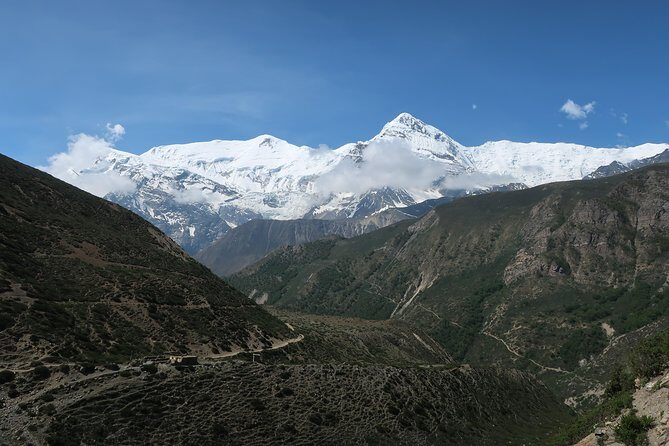
After the pass day, the route goes from Muktinath to Jomsom in about 5–6 hours, dropping to around 2,743m. This descent phase matters. It’s not just easier physically. It’s also where you reset your energy and start feeling like you can enjoy the day again.
Jomsom to Tatopani is then done by drive, around 4–5 hours, dropping to about 1,290m. Tatopani is a great reward because it’s known for natural hot springs, giving you a practical way to soothe tired muscles.
I like that the plan includes this kind of downshift. If you’ve been climbing and breathing hard for days, you need more than rest. You need a physical reset.
Consideration: in a trek like this, you’ll still be tired even when the elevation drops. If you’re prone to overdoing it after hard days, remind yourself that recovery is part of the itinerary.
Ghorepani and Poon Hill: the final climbs, then Pokhara
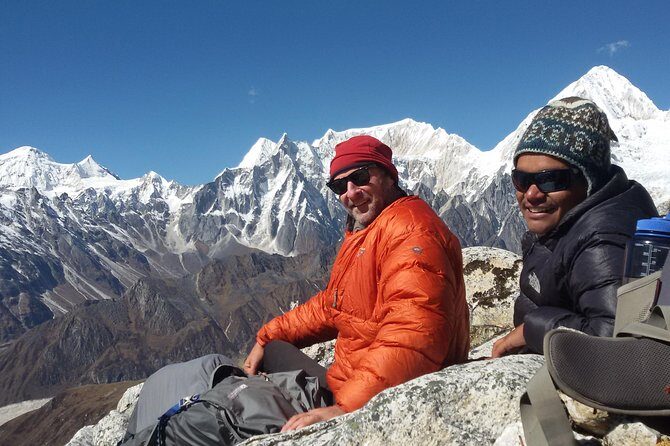
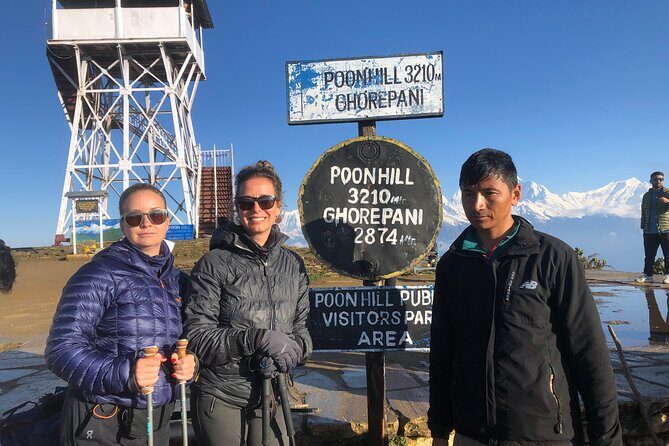
Tatopani to Ghorepani takes about 7–8 hours, rising back to roughly 2,750m. This is a longer walking day and can feel like it sneaks up on you because you’re coming off a hot spring day. The payoff is that Ghorepani is positioned well for the classic final viewing moment.
Then comes the early morning push: hike up to Poon Hill (about 3,210m) and then trek down to Nayapul (around 2,070m) in about 7–8 hours total for the day. After that you taxi to Pokhara.
This is a strong ending because it combines two travel styles: early-morning effort and then an easy transition to comfort. Pokhara is where you finally exhale. Day fourteen is then a drive from Pokhara back to Kathmandu (around 8 hours isn’t stated, but it is the final transfer), closing the loop after the circuit.
Practical advice for you: treat Poon Hill as a sunrise-style climb if that’s what you care about. You’re hiking early, so your sleep and layering matter even more than usual.
Price and Value: what you get for $1,175 on the Annapurna Circuit
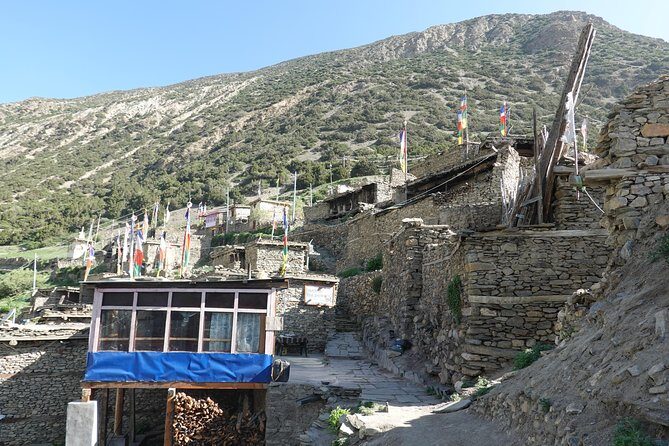
At $1,175 for roughly 14 days, the key question isn’t the number. It’s what’s wrapped into that number.
Included items you’ll actually feel:
- Bus transportation from Kathmandu to Jagat and from Jomsom to Tatopani
- Private transportation from Nayapul to Pokhara
- Tea house accommodation during the trek
- A government-licensed, experienced guide plus first aid kit support
- Annapurna Conservation Area permits and TIMS fee
- Trekking map
- Three standard meals per day during trekking (breakfast, lunch, dinner)
- Government tax
- Pickup offered and mobile ticket
Those included costs add up fast. Permits and TIMS are not optional extras you want to scramble for. Meals remove a chunk of budgeting and decision-making when you’re hungry and tired. Tea-house lodging keeps you moving instead of searching.
What’s not included (and you should plan for):
- Travel and rescue insurance
- Personal expenses (phone calls, laundry, bar bills, battery recharge, extra porter, shower, bottle or boiled water)
- Tips for guides and porters
- Porter if required
This is where I’d urge you to be honest with your budget. If you’re excited about the trek but don’t want surprises, add insurance and a realistic tip amount before you book. If you don’t want to carry much, ask about porter options early since it’s not automatically included.
Weather and Altitude Reality Check: cold nights and frozen bottles
The Annapurna Circuit can make you feel tough. It can also make you grateful for basics like gloves and windproof layers.
Past trek experience included a warning about night drops to around -20°C and wind around 20km/hr, with water freezing even in a normal bottle. That’s a vivid clue: the cold is not just daytime comfort. It’s nighttime survival comfort.
Here’s what matters most for you:
- Layering beats one thick coat
- Wind protection matters as much as warmth
- Hand and head warmth can be the difference between enjoying the day and rushing the end of it
- Water planning is real—freezing temperatures change how long your liquids stay usable
Also, even when things are going right, altitude can slow your body down. That’s not failure. That’s physiology. Your guide’s pacing and the acclimatization day at Manang are there for a reason.
Who Should Book This Annapurna Circuit Trek (and who shouldn’t)
This trek suits you if:
- You have moderate physical fitness
- You’re okay with long hiking days, generally around 5–8 hours
- You want planning taken off your shoulders: guide, permits, meals, lodging, and key transfers are handled
- You like the idea of a classic Nepal route that mixes culture and high-country walking
It may not be ideal if:
- You want very short days or lots of free time with no schedule
- You hate cold-weather camping-style comfort (tea houses are comfortable compared to tents, but high altitude still gets cold)
- You have health limits that make high altitude risky and you cannot get medical clearance
Because it’s a private tour/activity, you also need to like the idea of doing the whole trek with your group’s rhythm and timing.
Should You Book This Adventure Bound Annapurna Circuit Trek?
I’d book it if you want the classic Annapurna Circuit experience with real support and fewer logistical headaches. The strongest reason is value in day-to-day comfort: tea-house lodging, standard meals, permits, a licensed guide, and planned transportation legs. You’re paying for less stress when you’re tired and cold.
I’d think twice if you’re not ready for the altitude realities. Thorong La at 5,416m is the center of gravity for the whole trip. The route also climbs high enough that cold can get serious, with at least one past trekday including -20°C and strong wind.
If you’re the kind of traveler who likes a guided plan but still cares about authentic mountain days, this is a good match.
FAQ
Where does the Annapurna Circuit Trek start and end?
It starts with pickup and travel from Kathmandu to Jagat, and it ends with a drive from Pokhara back to Kathmandu after the final trek down to Nayapul.
How long is the Annapurna Circuit Trek?
It’s listed as 14 days approximately.
What is the highest altitude on this trek?
The highest point is Thorong La, at about 5,416m.
Are tea house accommodations included?
Yes. Tea house accommodation is included during the trek.
What’s included in the trek meals?
Three standard meals during trekking are included: breakfast, lunch, and dinner.
Is travel or rescue insurance included?
No. Travel and rescue insurance is not included.
Is this a private group experience?
Yes. It’s described as a private tour/activity, with only your group participating.