REVIEW · KATHMANDU
Everest Chola Pass Trek-17 Days
Book on Viator →Operated by Himalayan Adventure Treks and Tours Pvt Ltd · Bookable on Viator
You get a classic Everest circuit, then you cut through it in a smarter way. This Everest Chola Pass Trek (17 days) strings together Gokyo Lakes, the high viewpoint of Gokyo Ri, the big mountain crossing at Chola Pass, and then lands you at Everest Base Camp plus Kala Patthar. Add in the practical touches—hotel nights in Kathmandu, included flights to Lukla, and a guide plus porter—and the trip feels focused, not chaotic.
What I like most is the way the route earns its views. You’re not just walking to one postcard; you’re moving through Sagarmatha National Park and Sherpa villages, then climbing viewpoints that actually change what you see (especially Gokyo Ri and Kala Patthar). The second big win for me is value: your permits, meals during trekking, and the Kathmandu–Lukla flight are included, which removes a lot of the guessing.
One consideration: this is not a casual trek. You’ll hit high elevations, cold exposure, and long days—especially around the Chola Pass and the days leading into Lobuche and Gorakshep—so you’ll want strong fitness and a calm pace.
In This Review
- Key Highlights That Matter in the Real World
- Where This Trek Fits for Your Everest Dream
- Price and Value: What $2,100 Buys You (and What It Doesn’t)
- Day-by-Day Walkthrough: What You’ll Do Each Day
- Day 1: Arrive Kathmandu, Get Your Bearings
- Day 2: Fly to Lukla, Trek to Phakding
- Day 3: Phakding to Namche Bazaar via Monjo
- Day 4: Namche Acclimatization and the Hotel Everest View Hike
- Day 5: Namche to Dhole
- Day 6: Dhole to Machhermo (Elevation Up to 4470m)
- Day 7: Machhermo to Gokyo Lake (4470m)
- Day 8: Climb Gokyo Ri (5360m) and Spend the Day in the Valley
- Day 9: Gokyo Valley to Thagnag
- Day 10: Chola Pass 5368m to Dzongla (The Signature Day)
- Day 11: Dzongla to Khumbu Glacier (Lobuche Cold Factor)
- Day 12: Lobuche to Gorakshep, then Everest Base Camp
- Day 13: Kala Patthar View Day to Pangboche
- Day 14: Pangboche to Namche Bazaar (Back Toward Civilization)
- Day 15: Lukla Approach Day (Sandy and Strenuous)
- Day 16: Fly to Kathmandu, Farewell Dinner
- Day 17: Transfer to the Airport
- The Best Parts, Based on What’s Worked for People
- Lodges, Meals, and the Pace You’ll Likely Keep
- Logistics You’ll Appreciate (Especially on Weather Days)
- Should You Book This Everest Chola Pass Trek?
- FAQ
- Do I get picked up from the airport in Kathmandu?
- Are flights to Lukla included?
- What’s included for permits and park fees?
- Are meals included during the trek?
- Is a vegetarian option available?
- Will I have a guide and porter?
- Can I cancel for a full refund?
Key Highlights That Matter in the Real World
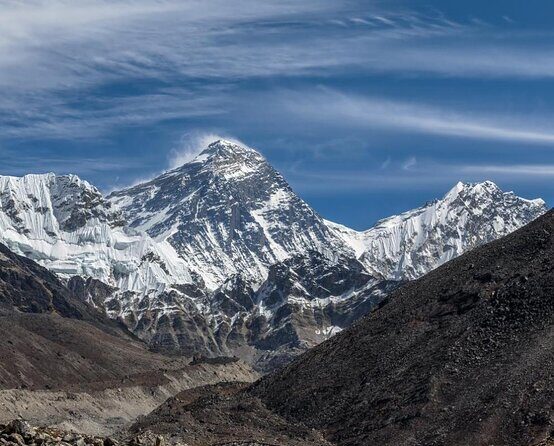
- Gokyo Lakes into Gokyo Ri: clearer, wide mountain views early in the trek, before the harder pass day
- Chola Pass 5368m: the route’s big altitude moment, with a packed panorama from the top
- Everest Base Camp via Gorakshep: you reach the EBC area from the right side, then return to Gorakshep for the night
- Kala Patthar close-up angles: a late-trek viewpoint designed for Everest’s sharpest views
- Private-group format: only your group participates, with an assigned guide and porter support
- Flights and permits handled: Kathmandu transfers, Lukla flights, and TIMS/Khumbu fees are included
Where This Trek Fits for Your Everest Dream
The Everest region is famous for two things: altitude and logistics. This trek tackles both in a way that feels practical. You start with Kathmandu acclimation time (Namche Bazaar plus a guided hike), then you gradually build altitude. Later, you take on the more serious terrain—Gokyo Ri, then Chola Pass, then Everest Base Camp—without the trip feeling like nonstop suffering.
Also, the route choice matters. Instead of staying stuck on only the usual Everest trail, this circuit threads through the Gokyo Valley and the Chola Pass crossing. For many people, that’s the real charm: you get different scenery blocks, different valleys, and different angles on the same giant peaks.
Finally, the company’s included support makes a difference. You’re not just handed a map and wished luck. You get transfers, lodge stays, meals during trekking, permits, and rescue/travel arrangements. In a region where weather can slow flights and conditions can change quickly, that level of planning is the difference between stressful and manageable.
You can also read our reviews of more hiking tours in Kathmandu


Price and Value: What $2,100 Buys You (and What It Doesn’t)
At $2,100 per person for about 17 days, the value is in what’s already included. From the data you provided, you’re getting:
- Airport pickup and hotel transfers in Kathmandu by private vehicle
- Two nights in a 3-star hotel in Kathmandu with breakfast
- Kathmandu–Lukla flights (and flights via Ramachap if needed, per the included list)
- TIMS permit/Khumbu Valley fees
- Lodges/tea houses on twin share during the trek
- Meals during trekking (breakfast/lunch/dinner counts are listed)
- Guide and porter support (with 1 porter for 2 clients)
- Duffle bag service (returned after the trek) and a couple branded items (T-shirts)
- Travel and rescue arrangements plus a first-aid kit
- A farewell dinner in Kathmandu with cultural performance
What isn’t included is equally important:
- Nepal visa fee
- International flights
- Extra Kathmandu hotel nights if your dates change
- Meals in Kathmandu (beyond what’s included in the trek)
- Any extra mountain costs if you get delayed by weather
- Travel/rescue insurance
- Personal expenses (hot shower charges, phone calls, laundry, battery recharge, bottled/boiled water, and tips for guide/porter)
My take: this price feels fair if you want a guided, organized trek where the big moving parts are handled. If you’re the type who enjoys building your own itinerary and negotiating every detail, you might find cheaper options elsewhere—but you’ll be giving up the planning safety net that matters on routes like this.
Day-by-Day Walkthrough: What You’ll Do Each Day
I’m going to describe what each day feels like, not just where you sleep.
Day 1: Arrive Kathmandu, Get Your Bearings
You land at Tribhuvan International Airport and meet a company representative who transfers you to your hotel. This matters more than it sounds. On Everest treks, your first job is resting and keeping your routine simple.
That evening is for meeting the group and getting a quick sense of who you’ll be trekking with. You’ll also have a chance to sort gear questions before the flights.
Day 2: Fly to Lukla, Trek to Phakding
You take a scenic flight to Lukla (under 40 minutes, with mountain and river-valley views). Then you hike for 3–4 hours to Phakding.
This is a great warm-up day. The elevation shift is real, but the walking is gentle enough to start syncing your pace. You’re also on the Dudh Koshi corridor early, which sets the tone: you’re not just chasing altitude; you’re moving through a working river valley.
Possible drawback: some people find the Lukla flight a bit mentally intense. If you’re anxious around flying, plan a calm, low-stress day around it.






Day 3: Phakding to Namche Bazaar via Monjo
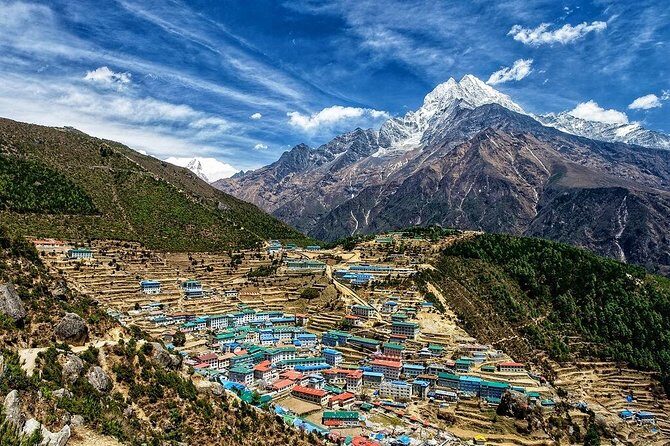
You trek to Namche Bazaar along the Dudh Koshi riverside. The route passes through pine, oak, and rhododendron forest, and you reach Monjo, the entrance area for Sagarmatha National Park.
This day has two jobs: keep moving steadily, and start absorbing the “Everest zone” reality. The giant peaks feel closer here, and the number of trekkers in view reminds you you’re not alone in chasing this dream.
Day 4: Namche Acclimatization and the Hotel Everest View Hike
You stay in Namche for acclimatization. Then you hike up to Hotel Everest View, which is a classic altitude-friendly way to see the Khumbu region.
You also explore the local community on the way. This is useful because it changes your mindset. Instead of thinking only about summits, you notice how Sherpa life is woven into the trek economy—shops, teahouses, guides, and the rhythms of people who live with these mountains every day.
Day 5: Namche to Dhole
You hike out following the trail toward Dhole, then stop trekking after you reach it. Dhole is a quieter stop, and that helps. You’ll have time to explore the area and settle into the tea-house rhythm.
Practical note: spend energy on pace, not speed. You’re building your engine for the later pass days.
Day 6: Dhole to Machhermo (Elevation Up to 4470m)
You climb toward Machhermo, ascending up to around 4470m. The route includes superb mountain scenes and glaciated areas.
You stay overnight in Machhermo and have free time to walk around the village. This is one of those days where you benefit from having a porter. Even if you don’t feel overloaded, it’s the little fatigue that stacks up when the air gets thinner.
Day 7: Machhermo to Gokyo Lake (4470m)
You trek to Gokyo Lake through rocky ascent. The lake sits at around 4470m, and the views are described as crystal clear, with mirror-like reflections of mountains.
That “stop breathing for a moment” effect is real in high places. Even if you’re a strong hiker, the combination of air and light can make everything feel extra sharp.
Day 8: Climb Gokyo Ri (5360m) and Spend the Day in the Valley
You climb Gokyo Ri to about 5360m and enjoy mountain views that include Mt. Everest, Makalu, Cho Oyu, and many other peaks.
Then you do a full day excursion around the Gokyo area and sleep by the lakeside.
This is a big day, but it’s also your payoff day. If you’re feeling tired earlier, this is the moment when the whole circuit starts to click.
Day 9: Gokyo Valley to Thagnag
You trek to Thagnag. The route continues through snowfields and includes some challenges.
You can treat this as a transition day: less about “one big viewpoint,” more about conditioning yourself for the pass. Expect cold air and careful footing.
Day 10: Chola Pass 5368m to Dzongla (The Signature Day)
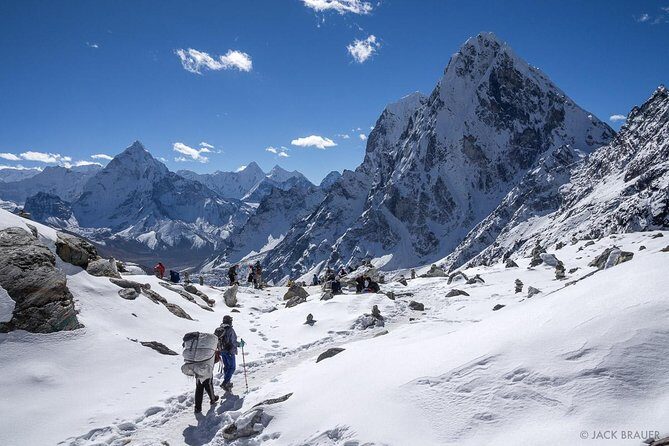
This is the day that defines the whole itinerary. You climb up to Chola Pass (5368m) and descend to Dzongla.
From the pass, you get sweeping views that include Everest, Ama Dablam, Cho Oyu, Lhotse, Nuptse, Makalu, Cholaste, Tawache, Gyachung Kang, and more. That’s not just impressive; it’s motivating. After days of incremental effort, you finally step into the panorama.
In the evening, you explore Dzongla and stay overnight.
Possible drawback: cold and weather exposure around high passes can be serious. Even with a guide and planned logistics, you’ll want layered clothing and a steady, conservative approach.
Day 11: Dzongla to Khumbu Glacier (Lobuche Cold Factor)
You begin climbing from Dzongla toward the Khumbu Glacier. You’ll see standout views of Tawache and Cholaste, and you’ll feel the altitude and cold—especially when you reach Lobuche.
This is one of those days where “how you walk” matters. Take short steps, keep moving, and don’t panic if you feel the chill quickly.
Day 12: Lobuche to Gorakshep, then Everest Base Camp
You trek from Lobuche to Gorakshep, then visit Everest Base Camp.
Being at the foothill area of the world’s highest mountain is hard to describe in words, but you’ll feel it. It’s busy, it’s high, and it’s both humbling and oddly grounded: you’re surrounded by the infrastructure of ambition—routes, gear, and the ongoing rhythm of climbing seasons.
Afterward, you descend back to Gorakshep for overnight.
Day 13: Kala Patthar View Day to Pangboche
You trek to Kala Patthar for close-up glacier-and-peak views, including Everest, Ama Dablam, and Pumori. Then you continue to Pangboche, a smaller settlement.
This day helps reset your perspective. You go from the massive, iconic EBC moment to a more village-based rhythm, where you can breathe a little and enjoy the quieter side of Khumbu life.
Day 14: Pangboche to Namche Bazaar (Back Toward Civilization)
You trek back to Namche Bazaar. The distance and constant mountain views can feel endless, but it’s also satisfying because you’re moving on familiar terrain now.
When you arrive, WiFi is mentioned as available, so this is a decent day to send messages, upload photos, and reconnect with home.
Day 15: Lukla Approach Day (Sandy and Strenuous)
You follow a sandy path toward Lukla. It’s described as strenuous, but the scenery stays strong, and you have time to explore Lukla Bazaar and shop local items.
You can celebrate your finish with drinks, then enjoy the village evening before sleeping in Lukla.
Day 16: Fly to Kathmandu, Farewell Dinner
You fly to Kathmandu in the morning. The short scenic flight can feel nostalgic, with snow peaks visible through the plane windows.
Then you transfer to your hotel, have leisure time, and can do final sightseeing or shopping. In the evening, there’s a farewell dinner at an authentic Nepalese restaurant with cultural performance.
This is a nice close: food, community, and the moment where the trek stops feeling like a list of days and starts feeling like a memory.
Day 17: Transfer to the Airport
You’re taken to the airport about 3 hours before your scheduled flight, with time to plan your next adventure.
It’s an efficient end to an intense journey.
The Best Parts, Based on What’s Worked for People
A couple elements show up as consistently powerful in how the trip is experienced.
First, the guide support. In feedback, the trek is praised for being guided well and handled with care, including friendly, capable support from guides like Ang Pemba. Even if your guide isn’t the same person, the key lesson is clear: this trek runs smoothly when you have someone who knows the altitude game and the route details.
Second, the company’s responsiveness around logistics. Multiple accounts highlight punctual airport pickup and transfers—things that matter on flights where missing a connection can snowball into delays.
Finally, the route design itself. The mix of Gokyo Ri, Chola Pass, Everest Base Camp, and Kala Patthar spreads your “wow moments” across the trek. You get more than one peak viewing day, which is how you avoid the classic letdown of reaching one big sight and then walking mostly to get back down.
Lodges, Meals, and the Pace You’ll Likely Keep
During the trek, you’ll sleep in lodges/tea houses on twin sharing. Meals are included during the trekking days, with breakfast/lunch/dinner coverage listed across the schedule.
On a route like this, food matters because it affects how you feel the next morning. If you have dietary needs, the info you provided says vegetarian options are available if you request them during booking. This is worth doing early.
For pacing: think steady, not heroic. The higher you climb, the less you want to “prove something.” The trek’s structure already supports acclimatization days and gradual elevation increases, but your body still decides how it feels.
Logistics You’ll Appreciate (Especially on Weather Days)
This trek includes multiple flights connected to Lukla, and Lukla is famously weather-sensitive. That’s why your included rescue/travel arrangements are more than paperwork. Also, your package includes permits (TIMS and Khumbu Valley fees), so you’re not scrambling for forms at the last minute.
You also get a duffle bag that’s returned after the trek. That’s useful because you can travel lighter day to day while keeping your gear organized.
One more point: because it’s a private tour with only your group participating, you don’t have to share the chaos of decision-making with strangers. In the Everest region, fewer “group management” headaches can mean more attention on your own pace.
Should You Book This Everest Chola Pass Trek?
Book it if you want:
- A guided, organized Everest circuit that includes the big-view stops: Gokyo Ri, Chola Pass, Everest Base Camp, and Kala Patthar
- Support that handles permits, meals during trekking, flights, and lodge planning
- A route that spreads out the big days instead of clustering everything into one intense stretch
Skip or reconsider if:
- You’re not ready for cold exposure and high pass terrain
- You’re looking for a beginner-friendly walk with minimal altitude strain
- You don’t want to deal with weather-linked variability that can affect flight timing and costs
If you’re fit, prepared, and you like the idea of seeing Everest from multiple angles instead of just one, this trek is a strong match. It’s demanding, but it’s built like a “go in smart, then go high” plan.
FAQ
Do I get picked up from the airport in Kathmandu?
Yes. The package includes pickup from Tribhuvan International Airport and transfer to your Kathmandu hotel by private vehicle.
Are flights to Lukla included?
Yes. Flights from Kathmandu to Lukla are included, and the included list also mentions flight routing via Ramachap to Lukla.
What’s included for permits and park fees?
TIMS Permit and Khumbu Valley fees are included.
Are meals included during the trek?
Yes. Meals during trekking are included, with lunch/dinner/breakfast coverage listed across the trek days. Meals in Kathmandu are not included beyond what’s specified in the hotel stay.
Is a vegetarian option available?
Yes. Vegetarian meals are available if you advise the provider at booking.
Will I have a guide and porter?
Yes. An experienced guide and porter are included, with the plan stated as 1 porter for 2 clients.
Can I cancel for a full refund?
Free cancellation is available up to 24 hours before the experience’s start time for a full refund.
If you want, tell me your hiking background (recent altitude, total days trekking, and whether you’ve done any passes). I can help you sanity-check whether your training matches a Chola Pass style route.