REVIEW · KATHMANDU
Kathmandu City Tour
Book on Viator →Operated by Creative Adventure Nepal Pvt. Ltd · Bookable on Viator
Temple stops, neatly stitched together.
Kathmandu’s “city of temples” feeling is real, but it can get chaotic fast. This guided route keeps you moving through UNESCO World Heritage highlights like Swayambhunath, Boudhanath, and the Durbar Squares, with a comfortable air-conditioned vehicle and a plan that covers both classic Hindu and Buddhist landmarks.
I especially like two things: first, the comfort and simplicity—pickup, bottled water, and an AC ride mean you spend less energy figuring out logistics. Second, the lineup hits different spiritual vibes in one day: monkey-temple energy at Swayambhunath, then the calmer rhythm of Tibetan pilgrimage at Boudhanath, then the royal-palace atmosphere of Kathmandu Durbar Square and Patan Durbar Square.
The main drawback to plan around is that entrance fees aren’t included, and lunch isn’t included either, so your total spend depends on what you pay at each site and how you handle breaks during a long, 7-hour day.
In This Review
- Quick Hits Before You Go
- The Big Idea: Why This Kathmandu City Loop Works
- Stop 1: Swayambhunath Temple and the View From the Hilltop
- Stop 2: Boudhanath Stupa and the Best Part—The Kora Rhythm
- Stop 3: Kathmandu Durbar Square, Hanuman Dhoka, and Royal Courtyards
- Stop 4: Patan Durbar Square and the Newari Art Trail
- Price and Logistics: What $100 Per Group Really Buys
- The Guide and the Calm Factor (Ramesh’s Role)
- Timing Tips for a 7-Hour Day
- Who This Tour Suits Best
- Should You Book This Kathmandu City Tour?
- FAQ
- How long is the Kathmandu city tour?
- What time does the tour start?
- Is pickup included?
- What ticket options are included?
- Are entrance fees included?
- Is lunch included?
- What’s included in the tour price besides the guide?
- How big is the group?
- Is the tour okay for everyone in the group?
Quick Hits Before You Go
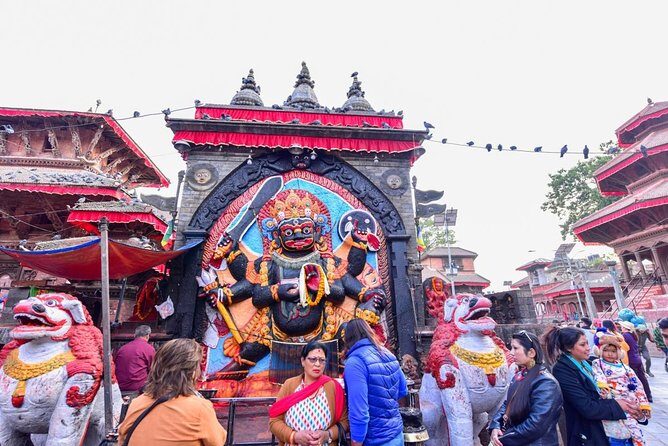
- UNESCO in one day: Swayambhunath, Boudhanath, Kathmandu Durbar Square, and Patan Durbar Square
- Small-group feel: a listed group cap of up to 4 travelers keeps the day from turning into a cattle chute
- AC comfort + bottled water: helpful when Kathmandu traffic and heat slow you down
- A guide who can adjust: Ramesh is singled out for handling changing travel needs with patience
- Timing that matches atmosphere: Boudhanath is best when you join pilgrims during morning or evening koras
The Big Idea: Why This Kathmandu City Loop Works
If you’re short on time, you want two things from a tour: clear sequencing and less time lost between sites. This itinerary gives you both. You start at 9:00 am, then you work through four landmark clusters—Swayambhunath, Boudhanath, Kathmandu Durbar Square, and Patan Durbar Square—each with a set time block that keeps the day moving.
I like the balance here. You’re not only doing temples as photo stops. You’re also seeing how Kathmandu’s sacred spaces tell different stories: Buddhist cosmology up on the hilltop at Swayambhunath, Tibetan devotion around the stupa at Boudhanath, and royal power expressed through palace courtyards and temple architecture at the Durbar Squares.
You’ll also appreciate the “human” part of the tour. In real life, plans shift—schedules, availability, and even pace. The operator’s guide support shows up in the way they handled disruptions (Ramesh was specifically praised for navigating changing needs). That matters, because Kathmandu days rarely go perfectly on the first try.
You can also read our reviews of more city tours in Kathmandu
Stop 1: Swayambhunath Temple and the View From the Hilltop
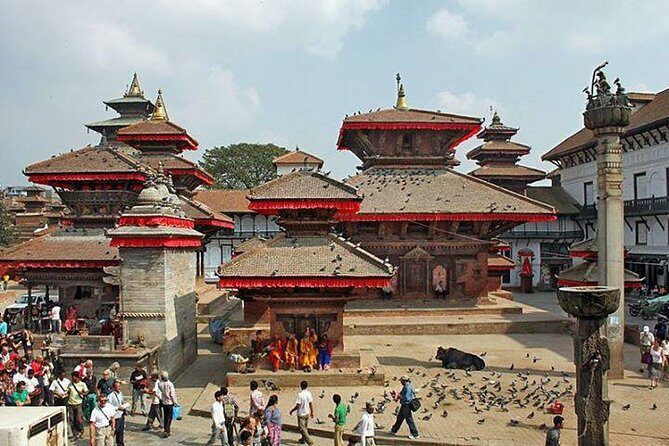
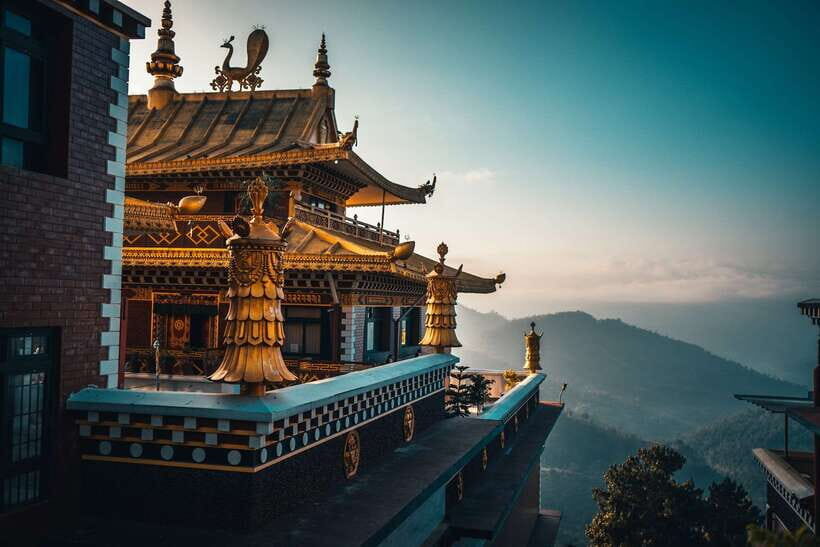
Swayambhunath is one of those places where the journey is part of the show. You’ll go up to this UNESCO World Heritage Buddhist temple perched above Kathmandu, commonly called the Monkey Temple because of the monkeys you’ll likely encounter around the area.
What makes it special is the mix of Buddhist and Hindu iconography. Instead of one clean, single-style experience, Swayambhunath feels like a layered belief system you can literally see. And because it sits on a lofty hilltop, you also get that sweeping sense of the city underneath you.
How to think about your time here: you have about 1 hour 30 minutes. That sounds like plenty until you factor in crowd flow and the reality that people move at different speeds in temple areas. If you’re traveling with anyone who needs extra time, it helps to treat this stop as both a sightseeing block and a decompression break.
One more thing to watch for: admission tickets aren’t included for this stop. So plan on paying on-site if you want full entry.
Stop 2: Boudhanath Stupa and the Best Part—The Kora Rhythm
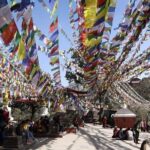
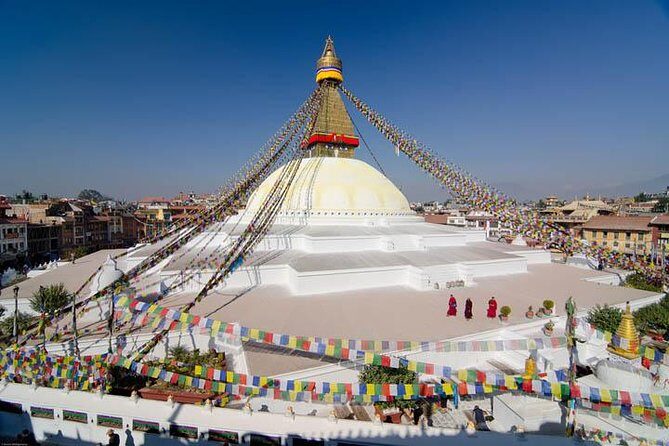
Boudhanath is famous for its strong sense of proportion and calm. The stupa’s design starts with a whitewashed dome and rises to a gilded tower, including the well-known all-seeing eyes. It’s also described as a rare match for grace and purity of line compared to other stupas in Nepal.
Historically, the stupa’s roots go back to after AD 600, tied to the Tibetan king Songtsen Gampo’s conversion to Buddhism. Even if you don’t go deep into dates, you’ll feel the long timeline in the sheer presence of the monument.
The best atmosphere comes when you join the Tibetan pilgrims on their morning and evening koras—the circumambulation circuit around the stupa. This matters because it turns the visit from “look at the monument” into “watch a living practice.” The soundscape, movement, and focus around you feel purposeful.
You’re given about 1 hour 30 minutes here too, which is enough time to walk the perimeter, pause for photos, and settle into the rhythm. And again, entrance fees aren’t included, so budget for ticket costs at the stupa.
Stop 3: Kathmandu Durbar Square, Hanuman Dhoka, and Royal Courtyards
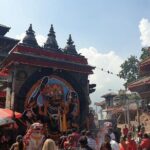
Now you shift from stupa pacing to palace storytelling. Kathmandu Durbar Square, also called Hanuman Dhoka Durbar Square, is the plaza in front of the old royal palace of the Kathmandu Kingdom.
The name comes from a statue of Hanuman at the palace entrance—Hanuman being the monkey devotee of Lord Ram. That little detail is worth remembering because it connects the setting to a very specific Hindu figure you’ll see right where you enter.
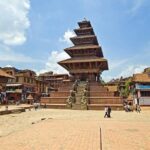
This is also where the tour explains the UNESCO context clearly: Kathmandu Valley has multiple Durbar Squares, and they’re all listed as UNESCO World Heritage Sites. At Kathmandu Durbar Square, you’ll find palaces of the Malla and Shah Kings, plus quadrangles with courtyards and temples.
What to expect in practical terms: the square is full of structures, so the time block of 1 hour 30 minutes is helpful. You won’t need to “see everything” to get the point—you just need to notice how the space is arranged around power, worship, and movement through courtyards.
Admission tickets also aren’t included here, so it’s smart to carry cash or be ready to pay on arrival.
Stop 4: Patan Durbar Square and the Newari Art Trail
Most Kathmandu days focus tightly on Kathmandu. This one adds Patan Durbar Square, which gives you variety without forcing you to add another long travel leg.
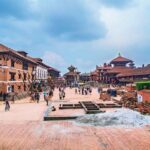
Patan is often called the City of Art, and the stop matches that label. The tour takes you through the heart of the UNESCO World Heritage site to explore the royal palace area, temples, museum space, and the surrounding neighborhoods.
If you enjoy craft and design, the Patan Museum part of the experience is especially useful. The Newari people are known for their artistic ability, and the museum features rare works of art. Even if you’re not the kind of person who reads every panel, the setting helps you understand why these temples and palaces look the way they do—built by communities with serious artistic traditions.
You get another 1 hour 30 minutes here. That’s enough to get oriented, spot key temple groups, and decide what you want to focus on. Since admission fees aren’t included, treat museum entry or extra temple access as something you’ll likely pay for separately.
Price and Logistics: What $100 Per Group Really Buys
This tour is priced at $100.00 per group (listed up to 10). At the same time, the activity also lists a maximum number of travelers, so I’d assume it’s kept small in practice—small enough that you get attention without the day feeling like a moving bus schedule.
What you actually get for the price is a lot more than “transportation.” You get:
- pickup offered (so you don’t waste time arranging taxis before your day starts)
- an air-conditioned vehicle
- bottled water
- a route that covers four major UNESCO-designated areas with set time blocks
- a mobile ticket system
What you should plan for separately:
- entrance fees (not included)
- lunch (not included)
So the real value equation is simple: if you’re the type who hates negotiating transit between sites or you want a guide to help keep the day on track, this is a solid use of money. If you’re traveling ultra-budget and enjoy DIY temple-hopping, you could do similar stops on your own—but you’d be trading away the “someone has organized it” benefit.
The Guide and the Calm Factor (Ramesh’s Role)
A good guide turns a tough day into an easy one. In this case, Ramesh is explicitly praised for being an excellent guide and for handling changes when travel plans were disrupted.
That shows up in the way the tour supports you during the day. The focus isn’t just on driving you from site to site. It’s on making sure you know what you’re looking at, and it includes practical advice—things like how to handle darshan-related moments, what to consider for purchases, and how to spend time outside the main stops in a way that works for your group.
I also like that the operator’s office support shows up in the details. Seniors from the office reportedly checked in, called, and asked if there were problems. That’s the kind of “quiet support” that you only notice when you’ve needed it.
Timing Tips for a 7-Hour Day
Because each stop is roughly 1 hour 30 minutes, your schedule is structured, but Kathmandu still throws curveballs: traffic, crowds, and the pace people want to walk at temples.
Here’s how you can make it smoother:
- arrive ready for a long, active day starting at 9:00 am
- treat each stop as a “good coverage” visit, not a slow, deep research trip
- keep a flexible mindset—if you slow down at one sacred place, you can’t always “buy back” time at another
Also, note that the experience requires good weather. If weather is poor, you may get a different date or a full refund. That’s worth respecting since temple days can feel miserable when the weather turns.
Who This Tour Suits Best
This is a strong choice if you:
- want big-name UNESCO sites without planning each segment yourself
- appreciate a small-group pace
- value guide support for navigating complex days (especially when plans shift)
- prefer comfort during transit with an AC vehicle and bottled water
It may be less ideal if you want long stays at a single monument or you’re traveling with a very tight budget that can’t handle separate entrance fees at multiple stops. The time blocks are helpful, but they do mean you won’t have an all-day crawl through every corner of every palace.
Should You Book This Kathmandu City Tour?
I’d book it if your priorities are clear: see major UNESCO highlights, cover both Buddhist and Hindu spaces, and avoid spending your day working out logistics. The small-group setup and the fact that pickup and AC are included makes the day feel simpler than DIY.
I’d skip or reconsider if you already know you want to linger for hours at one site, or if you’re determined to avoid any additional costs beyond the base price. Since entrance fees and lunch aren’t included, your final spend can rise depending on what you choose to enter.
If you do book, go in with a smart mindset: you’re not buying time, you’re buying focus. This route uses the time you have to give you a real cross-section of Kathmandu’s sacred architecture and city identity—then gets you back without turning the day into a chaotic mess.
FAQ
How long is the Kathmandu city tour?
It’s approximately 7 hours.
What time does the tour start?
The start time is 9:00 am.
Is pickup included?
Pickup is offered.
What ticket options are included?
You’ll receive a mobile ticket. Admission tickets for the listed stops are not included.
Are entrance fees included?
No. Entrance fees are not included.
Is lunch included?
No. Lunch is not included.
What’s included in the tour price besides the guide?
The tour includes an air-conditioned vehicle and bottled water.
How big is the group?
The price is listed per group (up to 10), and the activity also lists a maximum number of travelers.
Is the tour okay for everyone in the group?
Most travelers can participate, and service animals are allowed. Good weather is required for the experience.