REVIEW · KATHMANDU
Manaslu Circuit Trek
Book on Viator →Operated by Alpine Luxury Treks Pvt Ltd · Bookable on Viator
A big mountain loop with room to breathe. The Manaslu massif trek takes you through quiet villages and ends with the high Larkya La crossing at 5,160m. It’s classic Nepal trekking, just pulled into a more remote, less rushed feeling.
I love that you travel with an English-speaking government-licensed guide plus a porter setup (one porter for every two trekkers), so the logistics don’t steal your energy. I also like the pacing: there’s an acclimatization day at Samagaon before you push higher.
One thing to weigh: it’s priced like a full-service trek, and the operator is clear that it needs good weather, with the experience listed as non-refundable.
In This Review
- Key highlights that make this trek work
- Manaslu Circuit Trek in plain terms: why people want this loop
- Price and value: what $2,300 buys you (and what it doesn’t)
- Kathmandu warm-up: arrival, sightseeing, and getting ready (Days 1–2)
- Trek Days 3–9: from Sotikhola’s low start to Samagaon’s higher world
- Day 3: Drive to Sotikhola, then trek to Sotikhola area (700m)
- Day 4: Sotikhola to Machha Khola (869m)
- Day 5: Machha Khola to Jagat (1,340m)
- Day 6: Jagat to Deng (1,860m)
- Day 7: Deng to Namrung (2,630m)
- Day 8: Namrung to Lho (3,180m)
- Day 9: Lho to Samagaon (3,520m)
- Day 10 acclimatization in Samagaon: the rest day that makes the pass safer
- Trek Days 11–12: Samdo and Larkya Phedi, gearing up for 5,160m
- Day 11: Samagaon to Samdo (3,875m)
- Day 12: Samdo to Dharamsala (Larkya Phedi) (4,460m)
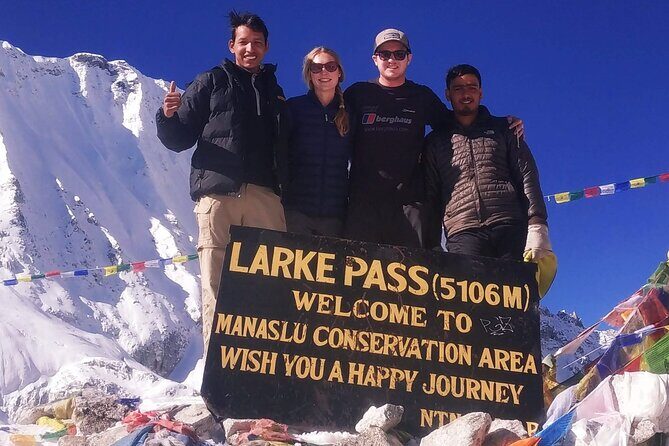
- Day 13: Larkya La (5,160m) to Bimthang—where the trek earns its reputation
- Day 14: Bimthang to Dharapani (1,963m)—a long descent with a caveat
- Day 15–16: the drive out to Besisahar, then back to Kathmandu
- Day 15: Dharapani to Besisahar via drive
- Day 16: Drive back to Kathmandu (1,334m)
- Day 17: fly home—what you carry from the trip
- Guides and porters: why names matter for your experience
- Food, gear, and daily comfort: the practical stuff you’ll feel
- Altitude reality check and fitness: who should say yes
- Should you book this Manaslu Circuit Trek?
Key highlights that make this trek work
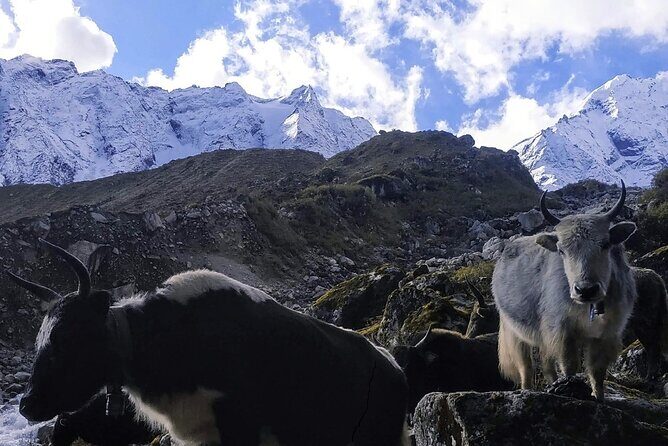
- Larkya La at 5,160m: the famous high point, reached after a built-in climb and rest day
- Acclimatization day in Samagaon: extra time at altitude before the higher camps
- Small group size (max 10): easier rhythm with your guide and smoother day-to-day flow
- Teahouse lodging every night on trek days: no need to plan your own camps
- Down jacket + sleeping bag provided: you pack smarter and travel lighter
- Support that reduces friction: guide, porter, medical kit, and included meals on trek days
Manaslu Circuit Trek in plain terms: why people want this loop
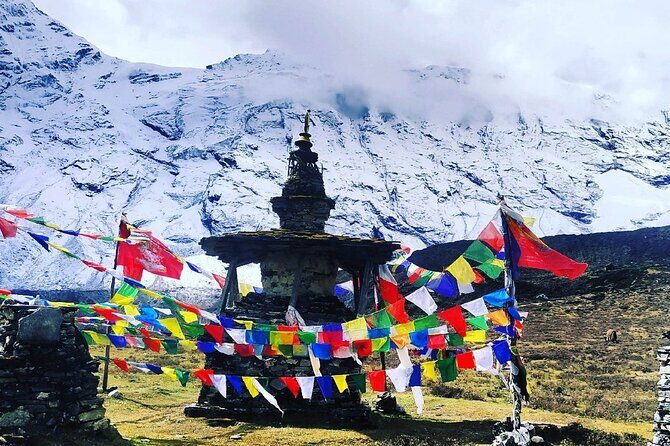
The Manaslu Circuit Trek is a full “walk around the mountain” itinerary in Nepal’s Manaslu region. You’re not just chasing one view. Day by day, you build toward bigger scenery, higher villages, and that long day over the pass.
What makes this route appealing is the mix of challenge and structure. You’ve got steady trekking blocks (often 6–8 hours on most walking days), then deliberate altitude management—especially with that acclimatization day at Samagaon. And when you reach the top of the loop, the high pass day (Larkya La) feels earned because the trek already put you above 3,000m and trained your lungs a bit.
If you like trekking that feels remote and human—villages, monasteries, and local life—you’re in the right place. If you want a resort-style trip with lots of downtime, you’ll likely find it too active.
You can also read our reviews of more hiking tours in Kathmandu


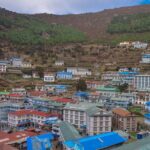
Price and value: what $2,300 buys you (and what it doesn’t)
At $2,300 per person for about 17 days, this trek is not a budget option. But it’s also not “pay for the guides only.” Your package covers a lot of the expensive-to-organize parts of a Himalayan trek.
Here’s what stands out as good value for the money:
- Private airport transfers in Kathmandu and the key drives into and out of the trekking region
- Down jacket and sleeping bag included (to be returned after the trek)
- Permits and paperwork handled
- 3 meals a day during the trek (breakfast, lunch, dinner)
- Teahouse accommodation throughout the walking days
- A government-licensed, English-speaking guide plus a porter (one porter per two trekkers)
- Welcome and farewell dinners, plus a medical kit
- Kathmandu hotel (3-star, breakfast included) and Kathmandu Valley sightseeing
What you still need to budget for:
- Nepalese visa fee
- International airfare
- Tipping
- Personal expenses like phone calls, WiFi charges, and laundry
For many people, the key value isn’t the price tag—it’s that you don’t have to coordinate gear, permits, meals, and lodging while trying to manage altitude and a long route. That matters more on a remote circuit than on an easy “teahouse stroll.”
Kathmandu warm-up: arrival, sightseeing, and getting ready (Days 1–2)
Your trek starts with a Kathmandu reset.
Day 1: You arrive (Kathmandu is at about 1,334m) and transfer to your hotel in the Thamel area. This is your day to rest, hydrate, and get your gear sorted—especially since you’ll rely on provided cold-weather items during the trek.
Day 2: Kathmandu Valley sightseeing plus a preparation day. You’ll also be inside the rhythm of a guided trip: meeting your guide, going over logistics, and getting ready for the long travel into the mountains.
A practical note: plan for altitude and time zones even before you hit the trail. Kathmandu can make you feel sluggish if you jump straight into exertion.
Trek Days 3–9: from Sotikhola’s low start to Samagaon’s higher world
This is where the circuit starts building itself.
Day 3: Drive to Sotikhola, then trek to Sotikhola area (700m)
You spend part of the day on the road—then begin walking at low elevation, about 700m. The trek time is listed at 6–7 hours. This day is mostly about settling into hiking mode and learning your pace with full trekking days ahead.






Day 4: Sotikhola to Machha Khola (869m)
Another 6–7 hour day. Elevation rises, but the climb is gradual. That matters because your body needs time to adjust before the higher villages start stacking up.
Day 5: Machha Khola to Jagat (1,340m)
Now you’re climbing meaningfully. The day is longer—7–8 hours—and the route measures about 15 km. Expect your effort to feel bigger than the earlier days even if the scenery is similar. This is normal.
Day 6: Jagat to Deng (1,860m)
A 6–7 hour trek around 12 km. You’re approaching the “steady uphill” feel that characterizes a lot of circuit trekking. Breaks become your friend; keep them short but regular.
Day 7: Deng to Namrung (2,630m)
Now it’s clearly uphill-country: 6 hours around 12 km. At higher elevations, even moderate gradients can feel steep. This is a good day to keep your pace controlled and avoid the urge to speed up for the views.
Day 8: Namrung to Lho (3,180m)
Listed as 4–5 hours for about 9 km. This is one of the “shorter” days on the route—still demanding, but a useful step toward the higher altitudes without stacking fatigue.
Day 9: Lho to Samagaon (3,520m)
Again 4–5 hours for about 8 km. This is also where the trip starts turning into a proper high-altitude circuit experience. You’ve reached the stage where the air feels different even when you’re not climbing aggressively.
Why Samagaon is a turning point: Samagaon sits at 3,520m, close to the sweet spot where acclimatization becomes important, not optional.
Day 10 acclimatization in Samagaon: the rest day that makes the pass safer
Day 10: An acclimatization day at Samagaon.
This matters because your next steps go higher quickly:
- Day 11 to Samdo (3,875m)
- Day 12 to Dharamsala/Larkya Phedi (4,460m)
- Day 13 over Larkya La (5,160m)
On an acclimatization day, the goal is not to exhaust yourself. It’s to let your body adjust while maintaining a trekking rhythm. If you treat this day like a vacation, you still win. If you treat it like a race, you risk turning the high pass day into a struggle.
Trek Days 11–12: Samdo and Larkya Phedi, gearing up for 5,160m
Day 11: Samagaon to Samdo (3,875m)
Listed as 4–5 hours for about 8 km. This is a step higher and a shorter distance day, which is a smart way to move toward altitude without piling on extra miles.
Day 12: Samdo to Dharamsala (Larkya Phedi) (4,460m)
A 4–5 hour trek for about 8 km. This is your staging area before the pass day. Expect cooler conditions as you approach 4,460m, and take the cold seriously—your provided sleeping bag and down jacket can make a real difference here.
Practical tip: the pass day is long and exposed. Treat your evening in Larkya Phedi as setup time—layer planning, water planning, and sleep planning.
Day 13: Larkya La (5,160m) to Bimthang—where the trek earns its reputation
Day 13: Larkya Phedi up and over Larkya La at 5,160m, then continue to Bimthang (3,590m). It’s listed as 6–7 hours for about 12 km.
This is the toughest day profile on the itinerary: higher elevation, long effort window, and a classic pass crossing. Even if you’re comfortable hiking, altitude changes everything—your breathing, your appetite, even your decision-making. Go slow here. The pass is not a place to prove fitness.
Why Bimthang matters after the pass: you’re dropping down from the high point to a lower camp. That gives your body a chance to recover while you still stay in the circuit rhythm.
Day 14: Bimthang to Dharapani (1,963m)—a long descent with a caveat
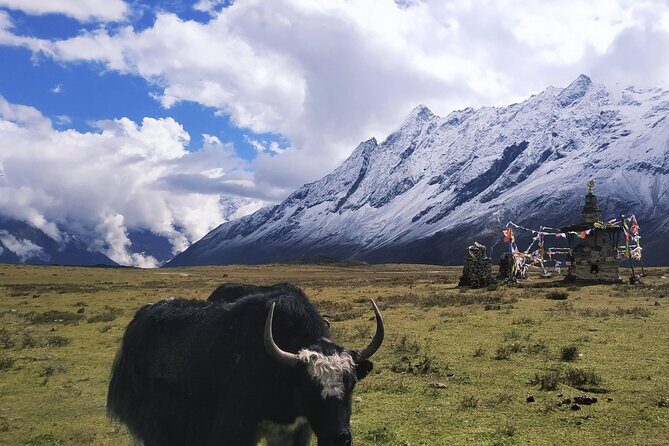
Day 14: Bimthang to Dharapani at 1,963m, listed as 7–8 hours for about 15 km.
This is a substantial altitude drop. That’s good news for oxygen, but it can be hard on knees and ankles. If you tend to get sore on descents, this is where you’ll feel it. Short step technique and consistent foot care pay off.
Also, when you drop in altitude, your appetite often returns. Enjoy that, but don’t celebrate with reckless eating—you still have a couple of big travel blocks ahead.
Day 15–16: the drive out to Besisahar, then back to Kathmandu
Day 15: Dharapani to Besisahar via drive
Trek ends here; you drive to Besisahar (760m). The plan lists 5–6 hours drive for about 80 km. This is a real transition day: less walking, more getting back into vehicle rhythm.
Day 16: Drive back to Kathmandu (1,334m)
You return to Kathmandu by vehicle, about 6–7 hours for roughly 150 km. After a circuit trek, this day can feel slightly surreal—your body is tired, but you’re no longer climbing.
Day 17: fly home—what you carry from the trip
Day 17: Fly back home. It’s the final punctuation mark.
What you’ll likely remember most isn’t just the altitude numbers. It’s the combination of:
- steady mountain days you can plan for
- a clear acclimatization structure
- a high pass day that feels decisive because you prepared for it
Guides and porters: why names matter for your experience
This operator includes an English-speaking, government-licensed guide and a porter system (one porter for every two trekkers). That setup is worth taking seriously because it affects your daily stress level.
In past trips, guides such as Ram, Mingma, Jeet, and Madhav were praised for making the mountains understandable and the journey smoother. Porters like Keshap, Shiv, and Keshap (named in different feedback) were also credited with hard work that keeps your pack manageable.
You don’t need to be a mountain expert before you go. A good guide helps you read the day—when to push, when to slow, and how to keep safety in mind without killing the fun.
Food, gear, and daily comfort: the practical stuff you’ll feel
During trek days, the package includes three meals and teahouse accommodation. That means you’re not hunting for food after a long day, and you’re not worrying about where you’ll sleep each night.
Gear support is another underrated win. You get a down jacket and sleeping bag during the trek, with the understanding they’re returned after. That reduces your packing load and removes guesswork about what insulation you truly need for 4,000m+ nights.
And since a medical kit is included, your guide isn’t just leading; they’re prepared for the reality of trekking health in high terrain.
Altitude reality check and fitness: who should say yes
The itinerary tops out at 5,160m (Larkya La) and includes multiple long trekking days, some listed at 7–8 hours. You also have a dedicated acclimatization day, which helps, but it doesn’t replace fitness.
This trek is best for you if:
- you already hike regularly and can handle steep, slow days
- you’re okay with basic lodging in teahouses
- you don’t mind that a pass day is hard and cold
This trek might not fit if you:
- want mostly easy walks with short days
- struggle with consistent uphill effort
- don’t like exposure to high-altitude conditions
Should you book this Manaslu Circuit Trek?
If you want a classic Himalayan circuit with a high pass, and you value structure—guide, permits, meals, teahouse lodging, and acclimatization built in—this is a strong match. The $2,300 price makes sense if you’re looking for a “someone else handles the mountain logistics” experience.
I’d book it if your priority is:
- a remote, meaningful circuit
- a well-planned altitude progression
- a high level of included support
I’d hesitate if you’re:
- highly sensitive to cold and don’t want a long pass day
- on a tight budget where extra costs like visa, tipping, and airfare matter
- traveling without flexibility, since the trip is noted as needing good weather to operate smoothly
If you’re the type who likes earning your views with steady effort, Manaslu is the kind of trek you remember for years.