REVIEW · KATHMANDU
Kathmandu City Tour: TOP Highlights of the Kathmandu Valley
Book on GetYourGuide →Operated by Breakfree Adventures Pvt. Ltd. · Bookable on GetYourGuide
Three sacred stops, one smooth day. The highlights hit fast: Boudhanath Stupa for big Buddhist calm and a relaxed pace with an English-speaking guide who answers questions.
Plan on entrance fees topping up the ticket price, and wear your walking shoes—the route includes steps and temple wandering.
In This Review
- Key things I’d bet on
- A 6-Hour Kathmandu Valley Loop That Actually Feels Manageable
- Boudhanath Stupa: Big Buddhist Peace in a Place People Use Daily
- Pashupatinath Temple on the Bagmati: Shiva, Wood-Carved Detail, and River Rituals
- Bhaktapur Durbar Square: Newari Architecture You Can Walk Through
- Getting Around: Pickup, Traffic Timing, and a Pace That Doesn’t Rattle You
- Price and Entrance Fees: What $39 Really Buys You
- What to Bring and How to Dress for Temples and Weather
- Who This Tour Suits Best (and Who Should Skip It)
- Should You Book This Kathmandu Valley Highlights Tour?
- FAQ
- What sites are included in the Kathmandu City Tour?
- How long does the tour take?
- Is hotel pickup and drop-off included?
- Are entrance fees included?
- Are meals included?
- What language is the guide?
- Is this tour private?
- What should I wear or bring for religious sites?
Key things I’d bet on
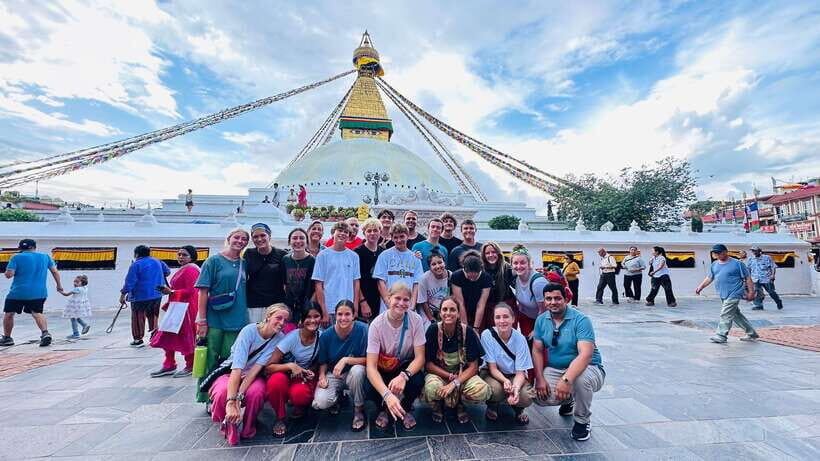
- Boudhanath’s scale: one of the largest Buddhist stupas in the world, with monasteries and prayer-wheel ritual
- Pashupatinath by the Bagmati River: Shiva temple plus daily worship and Hindu cremation ceremonies along the riverbanks
- Bhaktapur as a living Newari city: cobblestones, artisan activity, and medieval square energy
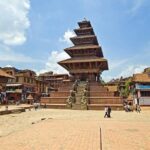
- Nyatapola Temple: Nepal’s tallest pagoda and a real craftsmanship stop, not a quick photo op
- A pace that stays human: you move at a comfortable speed, with time for questions (guides can include Neeraj)
- Entrance fees are extra: monuments entrance fee is 3,400 Nepali Rupees per person
A 6-Hour Kathmandu Valley Loop That Actually Feels Manageable
This tour strings together three of the Valley’s biggest cultural and spiritual landmarks: Boudhanath Stupa, Pashupatinath Temple, and Bhaktapur Durbar Square. The trick is that it does it in one day without turning it into a sprint. You get hotel pickup, private transport, and an English guide to stitch the stories together as you go.
You should think of this as a “greatest hits with context” day. The places are famous, yes, but what makes the experience worth your time is how each site teaches a different side of Nepal: Buddhist practice at Boudhanath, Hindu devotion and river rituals at Pashupatinath, then Newari city life and medieval architecture in Bhaktapur.
The main trade-off is predictable: the entrance fees add cost, and you will walk some uneven surfaces and stairs. If you’re planning on wearing sneakers and keeping your expectations realistic about temple crowds and crowds of meaning, you’ll be happy.
You can also read our reviews of more city tours in Kathmandu
Boudhanath Stupa: Big Buddhist Peace in a Place People Use Daily
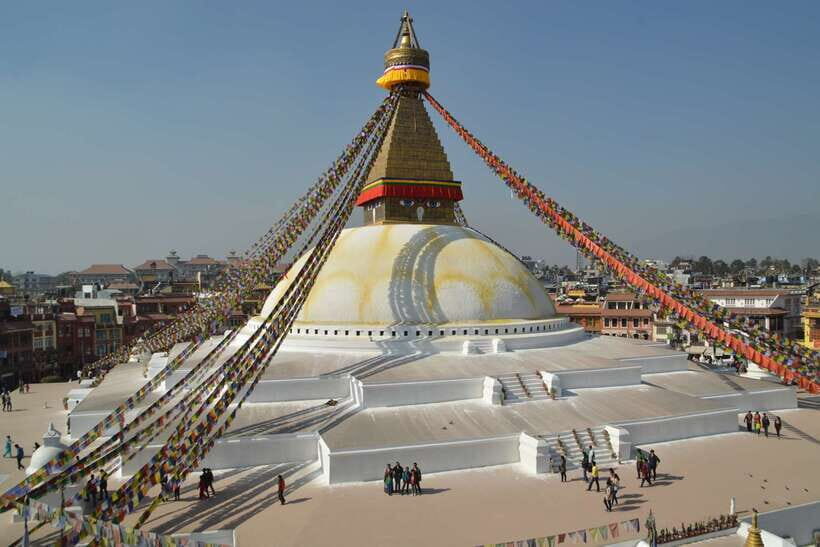
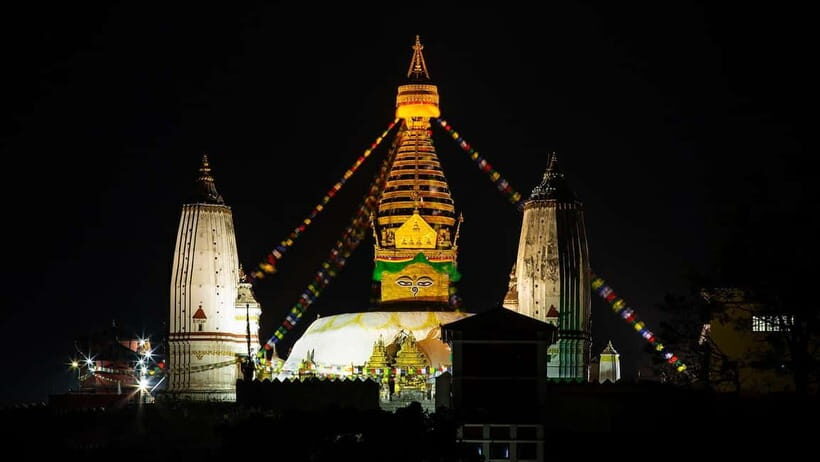
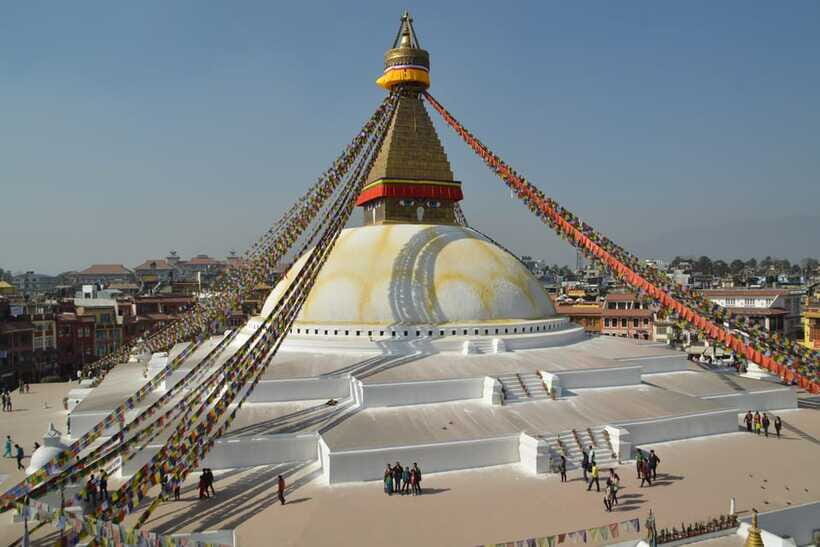
Boudhanath is one of the world’s largest Buddhist stupas, and the first thing you notice is how physical it is. The white dome with a golden spire is impossible to ignore, and the surrounding monasteries and everyday movement give it more life than a “view from the outside” stop.
Here’s what makes it special for your day: you’re not just looking at monuments. You’re walking the perimeter where pilgrims and locals keep up daily habits—prayer wheels turning, chants in the background, and quiet focus in people’s faces. If you’ve seen Buddhist art in museums, Boudhanath feels more grounded. It’s practice, not display.
Practical tip: expect to want more time than you think, especially if you pause for photos or want to watch the rhythm of the prayer-wheel route. Photography rules can apply around religious areas, so it’s smart to ask your guide before you shoot.
What you’ll love most: the way scale turns into calm. It’s the kind of stop where the noise of the city fades to the edges and you start seeing the stupa as a center of daily devotion.
Pashupatinath Temple on the Bagmati: Shiva, Wood-Carved Detail, and River Rituals
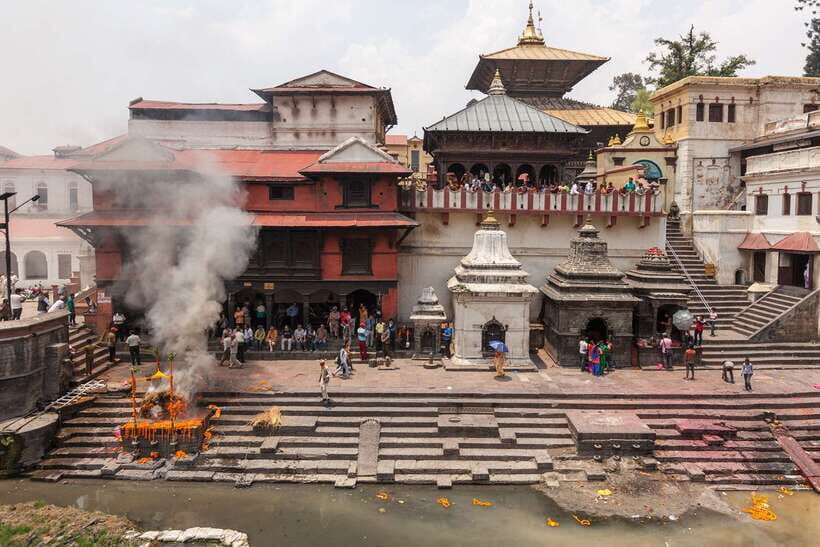
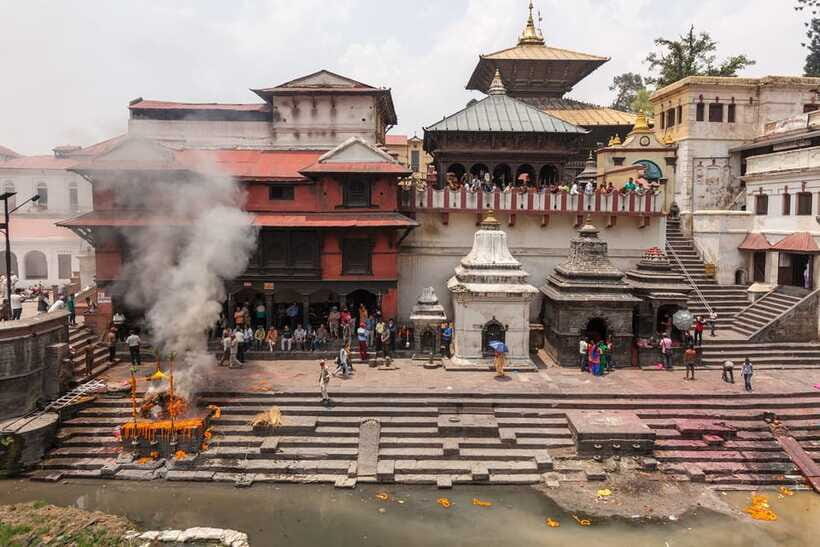
Next comes Pashupatinath, one of Nepal’s most sacred Hindu temples, dedicated to Lord Shiva. It sits on the Bagmati River, so the setting isn’t just pretty—it’s part of the spiritual logic of the place. The temple complex mixes pagoda-style architecture, gold-toned details, and a feeling of constant movement: worship, prayers, and ceremonies happening in the same vicinity.
This is also where your guide’s stories matter. Pashupatinath isn’t only architecture; it’s a cultural hub. You can witness daily spiritual rituals and, at the riverbanks, Hindu cremation ceremonies. That last part can be emotionally heavy, even when you know it’s part of belief and tradition. If you’re sensitive to ceremonies involving death, you’ll want to prepare yourself mentally before you go.
Architectural note that helps you notice more: look for the intricate craftsmanship. The pagoda-style design with carved elements and golden roofs is not random decoration—it’s craftsmanship you can feel in the details when you slow down for a minute.
Dress matters here. Plan on modest clothing, covering shoulders and knees, because you’re entering a working religious space.
Also, photography can be restricted. Your guide can help you figure out where it’s okay and where it’s best to let the moment be what it is.
Bhaktapur Durbar Square: Newari Architecture You Can Walk Through
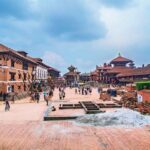
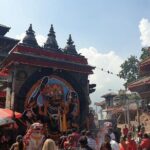
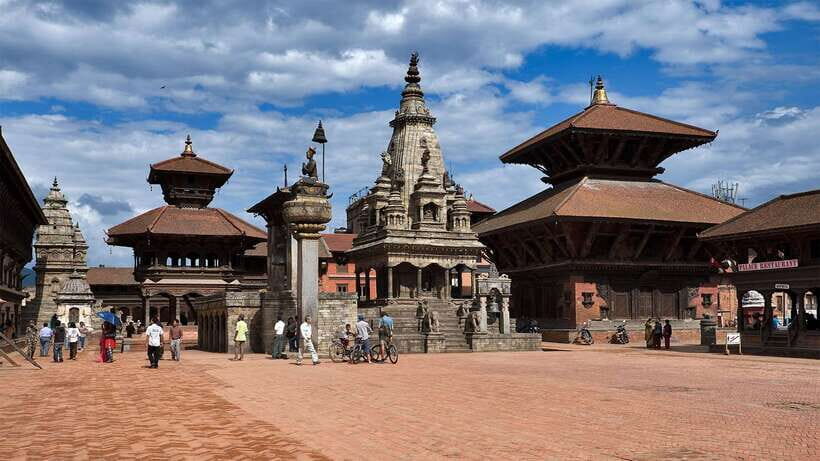
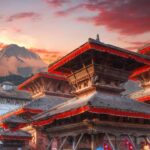
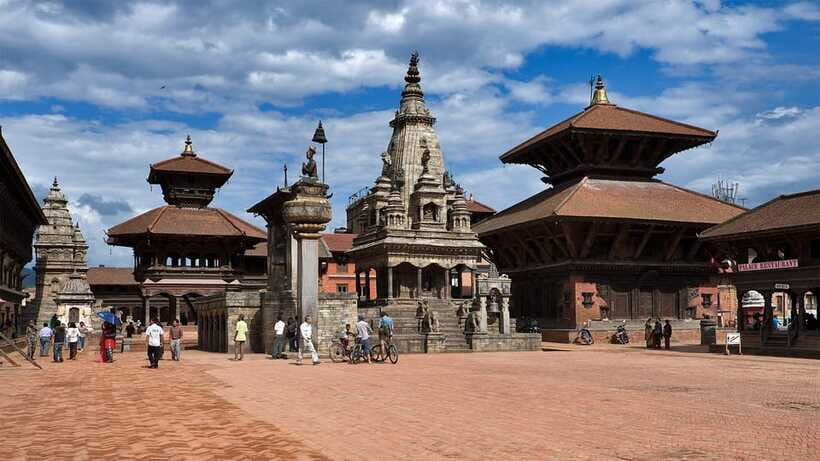
Bhaktapur Durbar Square feels like stepping into a medieval city that’s still alive. The Newari architecture isn’t only preserved; you can sense its usefulness in the way the city functions around the monuments. This is why it’s such a strong third stop: the day’s first half is major religious pilgrimage. The second half shifts to a city’s built culture—streets, courtyards, artisans, and old structures that still matter.
What you’ll see and why it clicks:
- 55-Window Palace: a signature Newari facade that’s instantly recognizable once you’re looking at it
- Vatsala Temple: another example of how Hindu architecture shows up in Newari style
- Nyatapola Temple: Nepal’s tallest pagoda, and a true highlight for craftsmanship
Nyatapola deserves special attention because it’s tall in a way that changes how you view everything around it. You can’t really treat it like a quick photo stop; it pulls your attention upward, and that helps you understand why it’s considered a masterpiece of Newari construction.
One more practical detail: Bhaktapur’s streets are often cobbled. That’s charming for photos, but it also means slower steps. If you bring good shoes, you’ll feel more steady and you’ll enjoy the walking instead of fighting it.
Getting Around: Pickup, Traffic Timing, and a Pace That Doesn’t Rattle You
The tour runs about 5–7 hours, starting with hotel pickup. In real life, Kathmandu timing depends on traffic, so your start time might shift a bit. The good news is that private transport and a private guide keep you from losing time to group logistics.
Your ride depends on group size, using a car, van, jeep, Hiace, or bus. That matters because comfort matters in a city where stop-and-go can wear you down. You’re also not navigating between distant zones on your own, which is a huge value add if you’re short on time.
One of the best parts of this setup is that it’s designed for a comfortable pace. In practice, that means you get time for questions and you’re not constantly yanked onward. That relaxed rhythm is what turns a list of famous sites into an actual day you’ll remember for the right reasons.
And yes: there’s walking and stairs at the temples and in Bhaktapur. Your best move is planning for that, not pretending it won’t happen.
Price and Entrance Fees: What $39 Really Buys You
The tour price is listed at $39 per person, and it includes several things that usually cost you extra if you book components separately: hotel pickup and drop-off, private transportation, a professional guide, and taxes/service charges.
The big add-on is the monuments entrance fee: 3,400 Nepali Rupees per person. Meals and drinks are not included, so you’ll likely spend a bit for water and snacks (and possibly a meal depending on your timing).
How to think about value:
- If you want a guided, efficient route across three major UNESCO World Heritage sites, you’re paying for planning and interpretation, not just transportation.
- The entrance fee is standard for many heritage stops in the Valley. If you calculate it upfront, the total becomes easier to swallow.
- The guide’s job is not just narration; it’s pacing, context, and helping you follow temple etiquette and any photo limits.
So, the true question isn’t whether the tour is cheap. It’s whether you value having an English guide explain what you’re seeing while someone else handles the driving.
What to Bring and How to Dress for Temples and Weather
Kathmandu weather can shift fast. The tour operates in all weather conditions, so you should come ready. A simple kit makes the day smoother.
Bring:
- Umbrella
- Rain gear
- Camera (with the expectation that some areas restrict photography)
- Comfortable walking shoes
- Water
- Sunscreen and a hat
Dress code is not a suggestion at religious sites. For Pashupatinath especially, plan modest clothing and cover your shoulders and knees. If you’re the kind of traveler who loves form-fitting travel outfits, this is the day to swap in something looser.
Small but important move: carry your patience. You’re walking into spaces where people are actively worshiping and practicing. Even when a ceremony is hard to watch, respect is part of the experience.
Who This Tour Suits Best (and Who Should Skip It)
This tour works best if you want an organized introduction to the Kathmandu Valley’s major spiritual and historic landmarks, without having to arrange logistics yourself. It’s also a good fit if you like walking at a human pace and you enjoy asking questions.
It’s especially suitable for:
- First-time visitors who want the “big three” sites in one day
- Travelers who care about how religion and daily life connect
- People who like architecture and Newari craftsmanship details
Not suitable:
- Pregnant women (listed as not suitable)
If you’re nervous about cremation ceremonies, you’re not wrong to feel that way. This tour includes viewing of Hindu cremation ceremonies along the Bagmati Riverbanks, so you’ll want to decide in advance whether that’s okay for your comfort level.
Should You Book This Kathmandu Valley Highlights Tour?
If you want a day that mixes major UNESCO heritage, clear guidance, and a pace that stays relaxed, I think this is a solid choice. The three stops are famous for a reason, and the guide component is what turns them from postcards into understanding.
Book it if:
- You’re okay paying the separate 3,400 Nepali Rupees entrance fee
- You can handle some walking and temple stairs
- You want an English-speaking guide to explain what you’re seeing, not just take you from A to B
Skip or reconsider if:
- The idea of riverbank cremation ceremonies feels too difficult for you
- You’re expecting a fully accessible, low-walking itinerary (there are stairs and uneven surfaces)
- You’re traveling without modest clothing for religious sites
One last practical note: try to bring a rain-ready kit. Kathmandu can change its mind quickly, and nothing ruins a great cultural day faster than soaking wet shoes and slick steps.
FAQ
What sites are included in the Kathmandu City Tour?
The tour includes three Kathmandu Valley highlights: Boudhanath Stupa, Pashupatinath Temple, and Bhaktapur Durbar Square.
How long does the tour take?
The tour is listed as 6 hours, and in practice it lasts about 5 to 7 hours including hotel pickup. Traffic can affect timing.
Is hotel pickup and drop-off included?
Yes. Your guide/driver picks you up from your Kathmandu hotel and returns you afterward.
Are entrance fees included?
No. Monument entrance fees are not included and are listed as 3,400 Nepali Rupees per person.
Are meals included?
No. Meals and drinks are not included.
What language is the guide?
The tour is guided in English. Other languages may be available for an extra cost.
Is this tour private?
Yes. It’s described as a private group with private transportation based on group size.
What should I wear or bring for religious sites?
Wear modest clothing, especially at Pashupatinath Temple, covering shoulders and knees. Bring comfortable walking shoes plus an umbrella and rain gear, since the tour operates in all weather conditions.