REVIEW · KATHMANDU
KATHMANDU FULL DAY SIGHTSEEING TOUR (6-hrs)
Book on Viator →Operated by Vyas Treks & Expedition · Bookable on Viator
Kathmandu in six hours is a fast lesson in faith and architecture. This half-day private sightseeing tour strings together big-ticket landmarks—Pashupatinath Temple, Swayambhunath, Patan Durbar Square, and Boudhanath Stupa—while an English-speaking guide helps you read the symbolism instead of just snapping photos.
I especially like the private air-conditioned vehicle for the whole route, because Kathmandu traffic can be a test of patience. I also like how the guide keeps the day practical—what to notice, how the sites fit together, and where to focus your time. The main drawback to plan for: entrance fees are extra, and Swayambhunath’s 365 steps are not a casual stroll.
In This Review
- Key things to know before you go
- What you’re really getting from this Kathmandu half-day tour
- Private A/C transport and an English guide: why it changes the day
- Stop 1: Pashupatinath Temple—where the courtyard pagoda grabs your attention
- Stop 2: Swayambhunath Stupa—365 steps, monkeys, and viewpoints that pay off
- Stop 3: Patan Durbar Square—Newar temple details in a palace-square setting
- Stop 4: Boudhanath Stupa—Buddhist cosmos in a huge stone mandala
- Price and value: is $40 a good deal once you add fees?
- Timing and routing: how to make six hours feel like more
- What to wear, what to bring, and what to plan around
- Who this tour is best for (and who should consider another option)
- Should you book this Kathmandu full day sightseeing tour?
- FAQ
- How long is the Kathmandu sightseeing tour?
- What is the meeting time?
- Is pickup included?
- Does the tour include entrance fees?
- What is included in the tour price?
- Is the tour affected by weather?
Key things to know before you go
- Private A/C transport all day (about 6 hours), so you’re not waiting around for shared rides.
- Four major sacred stops that cover Hindu and Buddhist traditions in one route.
- Swayambhunath = 365 steps, plus monkeys and lots of small temples along the way.
- Entrance fees are not included, so budget about $26 total for the typical listed fees.
- Lunch isn’t included, and you’ll likely spend around $3–$6 per meal depending on where you eat.
- English-speaking guide and taxes included, which makes the $40 price feel more like a service than a basic transfer.
What you’re really getting from this Kathmandu half-day tour
This is the kind of Kathmandu tour that works because it has structure. You’re not free-rolling across the city with vague instructions. Instead, you’re guided through a sequence of recognizable landmarks where each stop has a different feel—temple courtyards, a hilltop stupa, a palace-square of Newar architecture, and a huge Buddhist mandala-like monument.
The private format matters. You’ll have transport dedicated to your group, and you’re with an experienced English-speaking guide. That means you can move at the pace that makes sense for you, especially when crowds, queues, or photo stops pop up.
You also get a simple, honest setup: entrance fees are extra, and the tour clocks in at about six hours. That’s a useful expectation for Kathmandu, where one slow detour can swallow time fast.
A few more Kathmandu tours and experiences worth a look


Private A/C transport and an English guide: why it changes the day
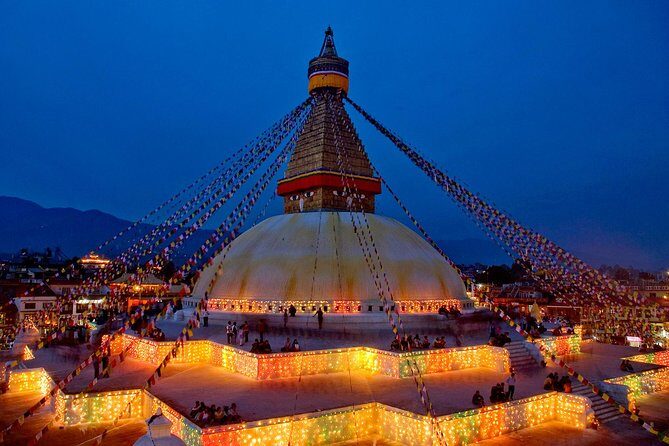
Kathmandu traffic is real, and it can sap energy. This tour protects you from a lot of that by keeping you in a private air-conditioned vehicle the entire time. Even if you’re comfortable in heat, you’ll likely appreciate the reset between temples.
What makes the guide more than just a translator is the way the day is explained. You’re not only shown where to stand. You’re guided through what the symbolism means—how Hindu and Buddhist ideas show up in the architecture and layout.
In one experience style described with this tour setup, the guide (including an engaging guide named Dip) was more than good for facts. He was also good at keeping the day flowing and helping with decisions—what to look at first, what you can skim, and what’s worth slowing down for. Pair that with a driver who handles routes safely through the busy streets, and the whole tour feels less stressful.
Small but important practical point: a restroom on board is not included. So if you’re someone who needs facilities on a tight schedule, it helps to plan quick bathroom breaks before you leave each site area.
Stop 1: Pashupatinath Temple—where the courtyard pagoda grabs your attention
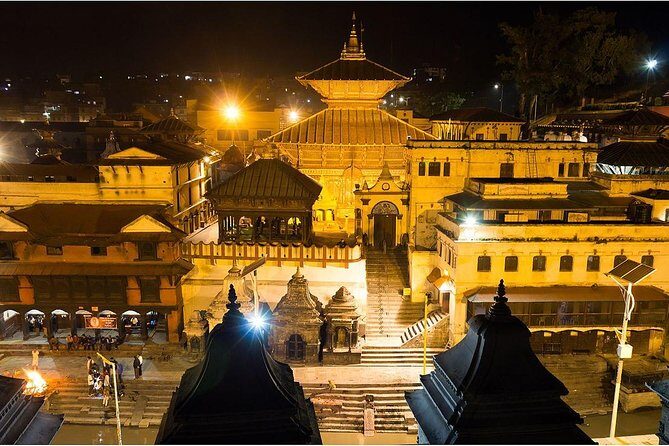
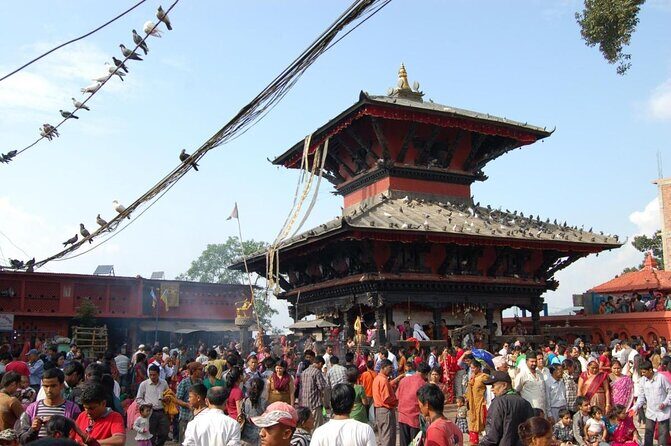
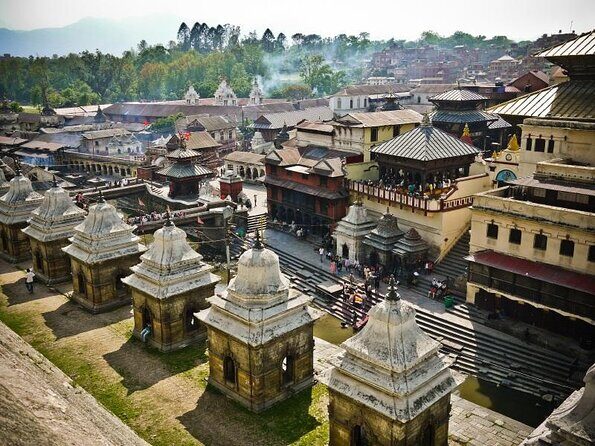
Your day starts at Pashupatinath Temple, in Deopatan. This place feels like it has a life of its own, built around an open courtyard setting. The temple itself is described as a square, two-tiered pagoda style on a single-tier plinth.
Why that matters: you’re not just looking at a big building. You’re seeing a specific form and layout that makes sense in its setting. And because the temple stands in an open courtyard, the experience is more than walls and roofs. It’s the sense of space—how the temple reads from different angles, and how the courtyard frames the scene.
You’ll spend about two hours here, and admission is not included in the tour price. That time is a sweet spot. Long enough to circle your attention across the courtyard and details, but not so long that the day falls behind.
Practical notes for this stop:
- Wear comfortable shoes. Stone and temple-area surfaces can be uneven.
- Expect a strong focus on reverence. Keep your pace respectful and don’t treat it like a quick sight.
Stop 2: Swayambhunath Stupa—365 steps, monkeys, and viewpoints that pay off
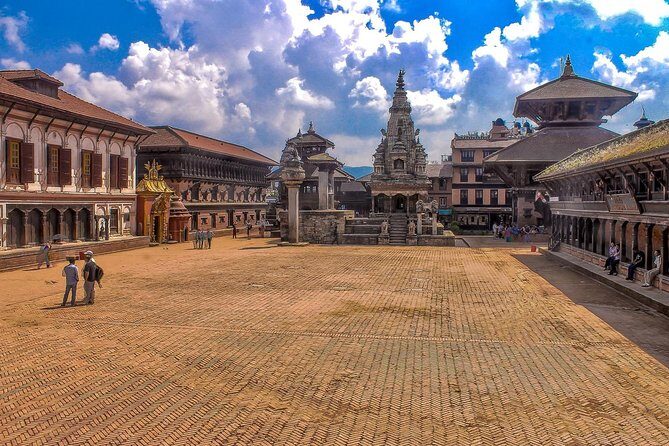
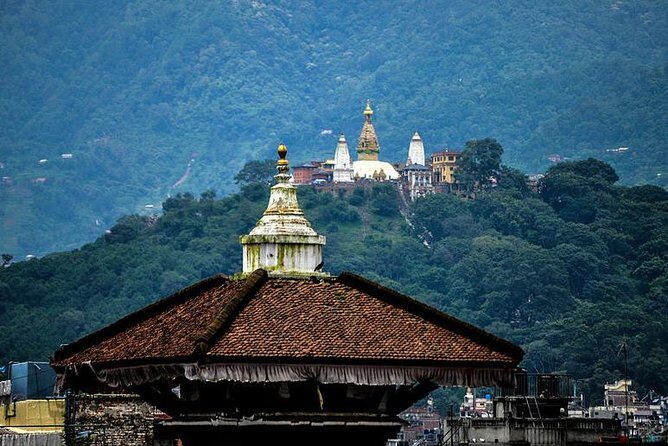
Next comes Swayambhunath Stupa (often just called Swayambhu). The big headline is the climb: a full 365 steps to reach the top.
This is the stop where you’ll feel the tour’s “half-day but still real” nature. If stairs are a concern, you can still do this with smart pacing—take breaks as needed and don’t force a sprint. The way the route works also helps: you’re not trudging only for a single reward at the end. Along the way you’ll pass small stupas and temple areas, plus monkeys that can be entertaining from a distance.
At the top, you’ll want to notice the ritual behavior: you circle the stupa at the very top clockwise. That direction matters because it matches how people move through the sacred space.
Then there are the smaller temples and details around the hilltop area. This is one of those places where you’ll see more the slower you are. Even if you’re not a devotee, you can appreciate how the whole hill becomes a platform for symbol, sound, and movement.
Why this stop is worth budgeting time for: it’s a viewpoint + a living religious practice in one. You get the hilltop moment and also the “how people actually use the place” feeling.
Stop 3: Patan Durbar Square—Newar temple details in a palace-square setting
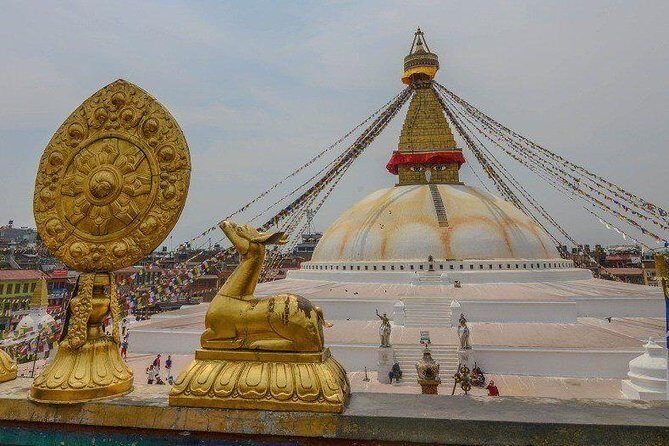
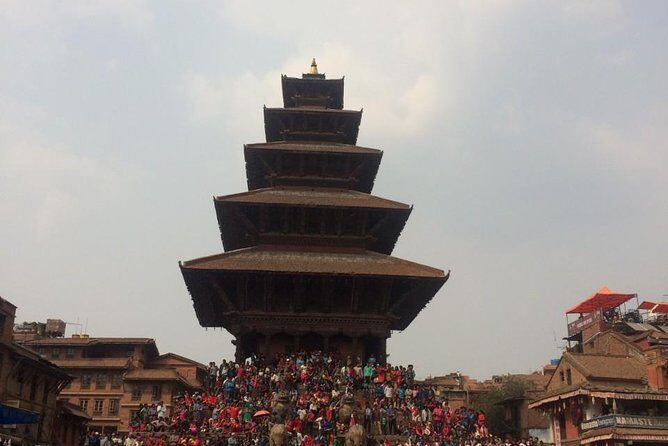
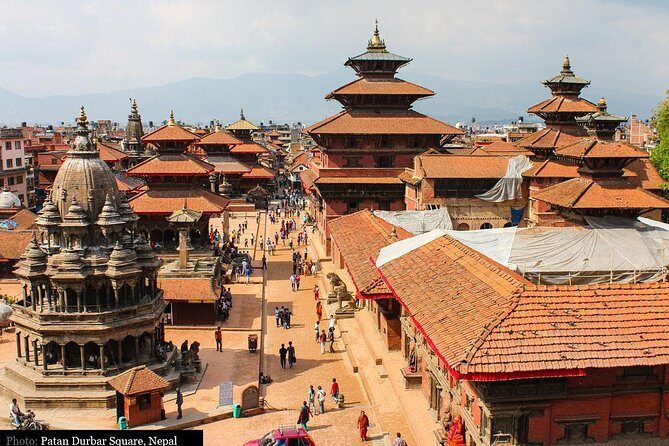
After the hilltop, you shift into the more urban, architectural mood of Patan Durbar Square. You start your journey from the left side of Patan, watching temples first before moving deeper toward the city center of the square.
This stop is planned for about two hours. That’s helpful because a durbar square is packed with details. The “where to look” guidance from your guide makes a big difference. Without it, it’s easy to bounce around and miss the structure that makes the place meaningful.
A specific temple detail mentioned for the early part of this route is Chyasin Dewal, described as the first temple you’ll see on this side. That kind of sequence tip is the real value in a guided visit—someone helps you read the order, not just the inventory.
What to expect from Patan Durbar Square:
- A concentration of temples and stonework where small design changes tell bigger stories.
- A square layout that rewards walking slowly and checking angles.
- A mix of religious meaning and craft skill, where you can see how communities shaped their shared spaces.
The tour notes that admission tickets are not included. Plan for that, and keep in mind you may want to spend a little more time if you get caught reading the carvings or watching the everyday movement around the square.





Stop 4: Boudhanath Stupa—Buddhist cosmos in a huge stone mandala
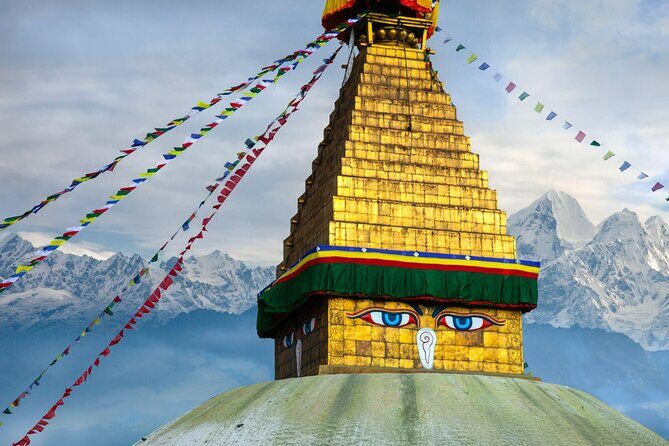
The final major stop is the Boudhanath Stupa (the tour calls it Buddha Stupa). This is a classic Kathmandu landmark. From above, it’s described as looking like a giant mandala—a diagram of the Buddhist cosmos.
The symbolism goes further. Four Dhyani Buddhas mark the cardinal points. That’s a useful idea to keep in mind as you’re standing at the site. You can literally look for directional cues in how people orient themselves and how the stupa’s geometry organizes attention.
You’ll spend about one hour here. In a six-hour day, one hour at a site like this is just right. It gives you time to take in scale, watch how pilgrims move, and absorb the meaning of the mandala design without turning the day into a marathon.
What makes this stop feel satisfying at the end:
- It closes the route with Buddhist monument energy rather than shifting back to smaller details.
- It’s a place where it’s easy to slow down and just watch people doing their thing.
As with earlier stops, admission is extra.
Price and value: is $40 a good deal once you add fees?
The tour price is $40 per person and includes:
- Air-conditioned vehicle and comfortable private ground transport
- An experienced English-speaking tour guide
- All government taxes
Entrance fees are not included. The typical extra fees listed are about $10 + $10 + $4 + $2, which adds up to roughly $26 in additional costs for the set of sites.
So you’re really budgeting closer to about $66 total for the tour + the typical entrance costs, plus your own food.
Lunch and dinner aren’t included, but typical meal costs are listed around $3–$6 per meal depending on where and what you eat. That’s not a huge amount compared to the tour cost, so the meals won’t blow your budget. Still, because a restroom on board isn’t included, it’s smart to plan food stops tied to temple breaks rather than grabbing something at random and losing time.
Where the $40 feels most valuable:
- Private, dedicated transport for the group reduces waiting and reshuffling.
- The guide explanation saves you from the confusion of trying to interpret symbolism on your own.
Where you might feel the sting:
- Entrance fees add up fast. If you show up thinking the tour price covers everything, you’ll be surprised.
My practical take: this is good value if you care about understanding what you’re seeing and want a smooth route through major landmarks. If you’re the type who only wants quick photos, you’d probably spend less DIY. But if you want meaning, the guide is the point.
Timing and routing: how to make six hours feel like more
A six-hour Kathmandu route isn’t huge, but it’s enough to connect the dots between sites. The day starts at 9:30 am, which is useful because you get in before the afternoon rush tends to feel worse.
The pacing is also built around travel time between locations and fixed site times (around 1–2 hours each). That matters because in Kathmandu, it’s easy to overpack your schedule. This route chooses fewer stops, then gives each one an appropriate block of time.
One thing to expect in this kind of city tour: you’ll spend some time waiting for the day to unfold naturally—line movement, photo pauses, and small adjustments based on how people flow through the temple areas. With a good driver, that waiting feels shorter because the vehicle stays ready and the route stays organized.
If you’re prone to fatigue, the order of stops can help. You start with a temple courtyard, move to a climb, shift into a palace-square where walking is flatter, and finish at a big monumental stupa where you can slow down and just absorb.
What to wear, what to bring, and what to plan around
This tour involves temple areas and a hilltop climb. So pack like you’re doing a mix of city sightseeing and light trekking.
I recommend:
- Comfortable shoes with solid grip.
- A light layer for sun and shade swings.
- A small day bag so you can keep hands free for photos and temple entry procedures.
Since there’s no restroom on board, plan bathroom timing around each stop. Also, entrance fees are extra, so keep some cash or be ready with whatever payment method you’ve been told is used for these sites. The tour uses a mobile ticket, which helps for the tour portion itself, but it won’t cover your entrance fees.
And because good weather is required, have a backup mindset. If conditions are rough, the tour may be moved or refunded.
Who this tour is best for (and who should consider another option)
This tour works well for:
- First-timers who want the key Kathmandu landmarks in one organized route.
- People who prefer a private setting over joining a big group.
- Anyone who likes temple symbolism and wants the meaning explained in plain English.
It’s also a solid choice if you value safe, confident driving through Kathmandu traffic. That combination—good transport + strong guidance—comes through clearly in how people describe the experience.
You might want to think twice if:
- You know you struggle with stairs, because Swayambhunath’s 365 steps are central to the route.
- You don’t want to pay extra entrance fees and prefer an entirely budget-contained plan.
- You’re hoping for a very relaxed day with long breaks. This route is paced to fit four major sites into six hours.
Good news: the tour says most travelers can participate. So even if you’re not a hiking person, you can still approach it with slower pacing and smart breaks.
Should you book this Kathmandu full day sightseeing tour?
I’d book it if you want a practical, guided way to connect Kathmandu’s major sacred sites—without the hassle of figuring out routes, timing, and what to notice.
This one makes sense when:
- You care about understanding the sites, not just checking boxes.
- You want the comfort of private air-conditioned transport.
- You’re okay budgeting entrance fees on top of the $40.
I’d skip or switch tours if:
- Stairs and extra site costs would stress you out.
- You want a totally unstructured day where you can stop whenever you feel like it.
If you do book, keep your expectations realistic: it’s about four landmark stops in about six hours, and the entrance fees are part of the deal. With a good guide and a steady driver, it’s a fast, satisfying way to get the Kathmandu meaning rather than just the postcard view.
FAQ
How long is the Kathmandu sightseeing tour?
The tour runs for about 6 hours.
What is the meeting time?
The start time is 9:30 am.
Is pickup included?
Pickup is offered.
Does the tour include entrance fees?
No. Entrance fees are extra.
What is included in the tour price?
It includes an air-conditioned vehicle, comfortable private ground transport, an experienced English-speaking tour guide, and all government taxes.
Is the tour affected by weather?
Yes. It requires good weather, and if it’s canceled due to poor weather you’ll be offered a different date or a full refund.