REVIEW · KATHMANDU
Kathmandu Sightseeing Tour by Private Vehicle
Book on Viator →Operated by Himalayan Social Journey · Bookable on Viator
One half-day can feel like a lot in Kathmandu. This tour strings together four major UNESCO- and world-famous stops with air-conditioned transport and city context. You’ll move efficiently, then spend your time where it counts.
I like the hassle-free hotel pickup and drop. You don’t have to wrestle with finding cars between sites, and the ride is in a clean, air-conditioned vehicle. I also like that you get explanations from your English-speaking driver about the religious and cultural meaning behind what you’re seeing.
One thing to consider: the tour focuses on getting you to the sights. Entrance fees are extra, and if Patan Durbar Square is inaccessible on the day, your itinerary may adjust.
In This Review
- Key highlights to know before you go
- Kathmandu in Half a Day: what this private-vehicle tour really delivers
- Price and value: why $60 is mostly about transport
- Pickup at 9:15 and time management for four big sites
- Patan Durbar Square: UNESCO-style architecture with a “street-wander” feel
- Swayambhunath: the Monkey Temple and the valley-view payoff
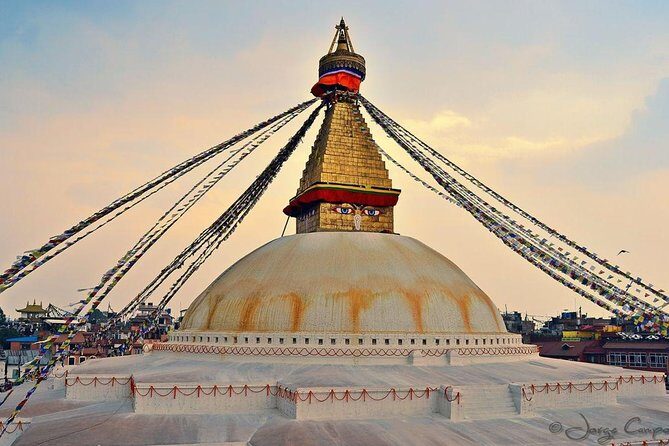
- Boudhanath Stupa: Tibetan devotion at one of the world’s largest stupas
- Pashupatinath Temple: major Hindu site and why it’s a must-see
- The driver commentary: where the tour earns its keep
- Transportation and small-group comfort you’ll actually feel
- Potential downsides: entrance fees, itinerary shifts, and limited time
- Who should book this tour, and who should look elsewhere
- Should you book Kathmandu Sightseeing by Private Vehicle?
- FAQ
- What’s the duration of the Kathmandu sightseeing tour?
- What time does the tour start?
- What sites are included in the itinerary?
- Is transportation included in the price?
- Are admission fees included?
- Is there a tour guide included?
- Is this tour a private car for only me?
- Is confirmation provided at booking?
- Are service animals allowed?
- What is the cancellation policy?
- Is this tour generally open to most travelers?
Key highlights to know before you go
- Hotel pickup and drop: less time coordinating, more time looking around
- Small-group ride (max 15): easier than a huge bus if you just want a calm flow
- Four major sites in 5–6 hours: Patan, Swayambhunath, Boudhanath, and Pashupatinath
- Admission fees not included: you’ll pay separately at monuments
- English-speaking driver: built-in commentary on cultural significance
- Mobile ticket and group discounts: simple planning, fewer last-minute hassles
Kathmandu in Half a Day: what this private-vehicle tour really delivers
The title says private vehicle, and in practice what you’re buying is straightforward: transport by air-conditioned car with hotel pickup and drop, plus commentary from your English-speaking driver. It’s also described as a sharing basis tour, with a maximum of 15 travelers, so you should expect you’ll ride with a small group, not with total privacy.
This format is actually a good match for a first trip to Kathmandu. Four stops can sound like a sprint, but the plan is paced as a series of visits rather than one long drive. Expect about 5–6 hours total, and plan your morning around a 9:15 am start.
The most valuable part is that the tour helps you connect the dots. Kathmandu’s religious sites can feel overwhelming if you’re reading guidebooks alone. With a driver who explains what you’re seeing, you get a sense of why these places matter to locals and visitors—before you start taking photos or wandering.
You can also read our reviews of more private tours in Kathmandu


Price and value: why $60 is mostly about transport
At $60 per person, the big question is what you’re actually paying for. The tour includes:
- Air-conditioned vehicle
- English-speaking driver
- Hotel pickup and drop
- Small-group sharing basis
What’s not included:
- Monuments entrance fees
- Tour guide (so don’t count on a dedicated, separate guide)
In other words, this is not a full-service guided excursion where someone handles every ticket and spends hours on interpretation at each site. It’s a smart transport-and-context package. For many travelers, that’s excellent value because it removes the logistics headache—getting between sites in Kathmandu can be the tricky part.
A practical tip from experience: admission fees can add up across multiple locations. One account you might want to factor in is that foreigners were asked to pay an entrance fee range (reported as 200–1000 Nepali rupees) at each location. I’m not saying every site charges the same, but when you’re planning a day that includes four stops, you should budget for ticket lines and separate payments.
Pickup at 9:15 and time management for four big sites
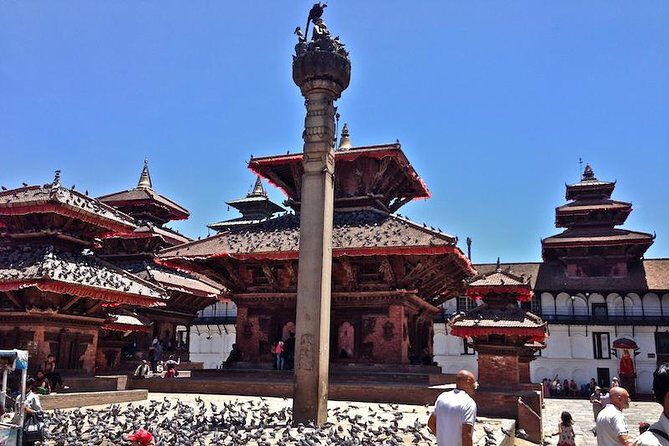
This tour runs about 5–6 hours, starting at 9:15 am, with four main stops. Each stop is listed as about 1 hour, which tells you how the day is structured: you’ll have enough time to see the highlights, but not enough time to do a slow, detailed crawl at every corner.
That timing matters. If your priority is spending 2–3 hours in one place, you might find this format too tight. If your priority is to hit the top sites without losing half your day to travel, it’s a good compromise.
Also keep in mind this is a hotel pickup and drop tour. That makes it easier for you to commit to the morning—no need to decide where to meet or how to get back. The downside of tight schedules is that you’ll want to be on time at each stop so the driver can keep the route moving.
Patan Durbar Square: UNESCO-style architecture with a “street-wander” feel
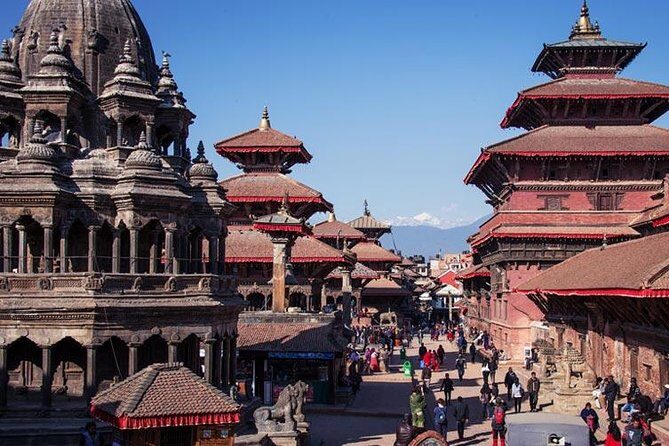
Stop 1 is Patan Durbar Square, in Lalitpur (Kathmandu Valley). It’s one of the three Durbar Squares in the valley and is part of the UNESCO World Heritage group. For me, this stop works because it mixes major monuments with everyday streets—so the area feels like a living historic district, not just a single object in a field.
You’ll spend about 1 hour here, and the tour includes time to wander small streets with your guide/driver. That matters because Patan Durbar Square can be easy to skim if you only look at the big-ticket structures. Walking the nearby lanes helps you notice the shapes and carvings that make Durbar Squares feel distinct.
Admission fees are not included, so you’ll likely be stepping aside briefly for tickets. Plan for the fact that this stop is sometimes the one with the most “admin time” because it’s a major heritage site.
One more consideration: there is at least one reported disappointment tied to Patan not being visited. That doesn’t mean it will happen to you, but it’s smart to treat Patan as a priority when your day starts, and to confirm with your driver on the morning that the plan includes it.
Swayambhunath: the Monkey Temple and the valley-view payoff
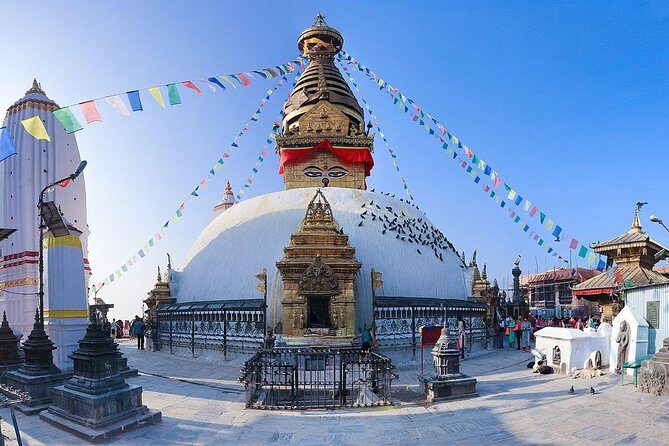
Stop 2 is Swayambhunath Temple, a Buddhist stupa about 2,600 years old. It’s also called the Monkey Temple because of the monkeys you’ll see around the area. The big promise here is the view: Swayambhunath looks over the entire Kathmandu valley.
This is the kind of stop that changes how you understand the city. After Patan’s historic square, Swayambhunath gives you the “big picture.” Even if you only spend around an hour, being at a high viewpoint is one of the quickest ways to orient yourself to Kathmandu’s geography.
You’ll also get cultural context from your English-speaking driver—Swayambhunath is described with meaning behind the name self-existent god, which is the sort of detail that makes the symbolism click while you’re standing there.
Entrance fees are extra, just like the other stops. That means your best move is to come in ready to pay on arrival and not let ticketing disrupt your momentum too much.



Boudhanath Stupa: Tibetan devotion at one of the world’s largest stupas
Stop 3 is Boudhanath Stupa, considered one of the largest stupas in the world and a major site for Tibetan communities and visitors. The tour description ties Boudhanath to wisdom and notes its long timeline, with construction dating back to the 4th century.
This stop has a different feel than the Durbar Square. Durbar Squares can be architecture-heavy and crowded with heritage visuals. Boudhanath, by contrast, is about the shrine and the devotional atmosphere around it. If you’ve ever wished a trip would slow down for a moment, this is often the place that does it—just by the nature of a stupa-centered visit.
The tour assigns about 1 hour here, which should be enough to:
- see the stupa as the focal point
- notice how the area functions as a pilgrimage-style destination
- absorb the explanations about what the site represents
Admission fees apply again, so treat it as a paid stop rather than a “quick look.” If you only plan for transport, this is where your day can surprise you at the checkout counter.
Pashupatinath Temple: major Hindu site and why it’s a must-see
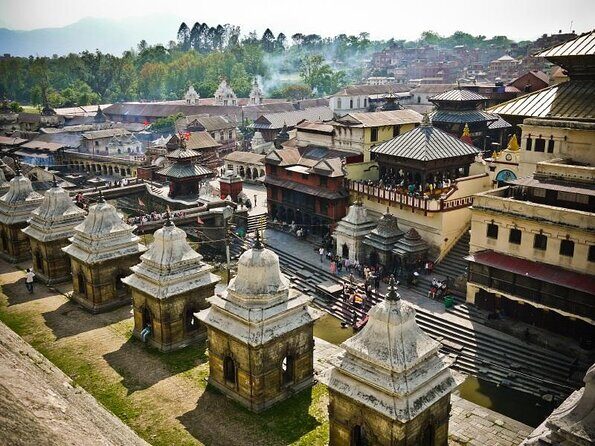
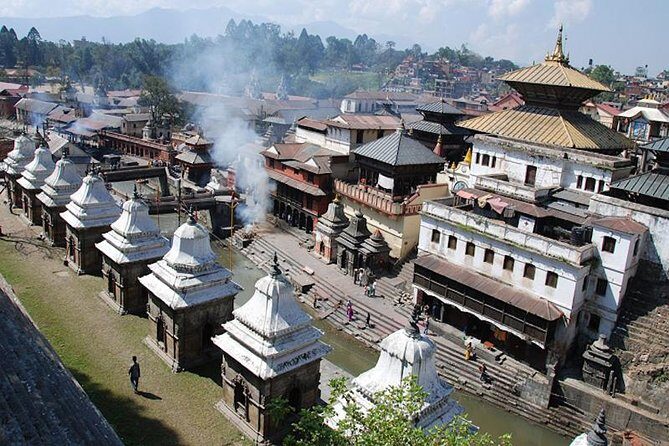
Stop 4 is Pashupatinath Temple, a legendary Hindu temple with huge visitor numbers every year. The name is explained as meaning the god of animal lives, and the site is described as welcoming millions of visitors.
This is your “big faith” stop. It’s not just about seeing a temple structure. It’s about understanding why the place draws people in such high numbers and how it fits into Hindu practice and culture. Your driver is expected to share religious and cultural significance at each location, and Pashupatinath is the moment where those explanations can help most.
The temple is noted as being located on the bank of a river (the text cuts off after bank o, but the river setting is clearly part of the description). That river-adjacent setting is one reason this place feels distinctive from other temple complexes.
Because this is the last stop in the circuit, it’s also the one you’ll likely remember most at the end of the day. If you want crisp photos and calm attention, it helps to arrive mentally ready rather than thinking about the ride back immediately.
The driver commentary: where the tour earns its keep
The itinerary includes religious and cultural significance at each site, and the tour includes an English-speaking driver. Even though the listing doesn’t list a tour guide as an included item, the driver is positioned as the person helping you understand what you’re looking at.
That’s a big deal in Kathmandu. Many visitors arrive with a photo plan but not a meaning plan. When someone explains why a stupa is tied to wisdom, why a site is called by a symbolic name, or why a temple draws so many worshipers, your time at the stop becomes more than “I was there.”
I’d especially value this if:
- you want cultural context without hiring separate guides for each stop
- you’re short on time and want a single morning solution
- you’re okay with an overview rather than a deep, hours-long lecture at one site
Transportation and small-group comfort you’ll actually feel
A quiet benefit of this tour is the car ride quality. You get an air-conditioned vehicle, and you’re picked up and dropped off at your hotel. In Kathmandu traffic and heat, that can make the difference between “I’m glad I did this” and “I just want to escape the car.”
The tour is also small-group with a maximum of 15 travelers. That matters because you’re more likely to keep a steady group flow at stops rather than being shuffled like a number on a large bus.
And yes, the day includes a mobile ticket and mentions group discounts, which are both small touches that reduce friction.
Potential downsides: entrance fees, itinerary shifts, and limited time
There are three practical watch-outs:
First, entrance fees are extra at monuments. This tour is transportation-first. If you go in assuming everything is covered, you’ll end up doing math at each stop.
Second, the tour is time-boxed. With around 1 hour per site, you’re choosing between breadth and depth. You’ll likely leave with a solid overview of the top four, not with the kind of deep familiarity you’d get from a slower, site-by-site exploration.
Third, be aware that an itinerary change can happen. One shared account includes missing Patan entirely. I can’t promise it won’t happen to you, but it’s a sensible reason to treat Patan as a priority at the start and to communicate with your driver if any access issues come up.
Who should book this tour, and who should look elsewhere
Book this tour if you want:
- a simple, guided-by-explanations day
- hotel pickup and drop
- to hit four major sites in one half-day window
- to keep costs predictable by understanding that entrance fees are separate
Skip it or consider a different option if you want:
- a dedicated tour guide (since that isn’t listed as included)
- long time at a single site
- an all-inclusive day where tickets are handled for you
This is a good fit for many first-timers and also for travelers who’ve been in Kathmandu before but want a fast “greatest hits” loop without adding logistics stress.
Should you book Kathmandu Sightseeing by Private Vehicle?
If you’re the type of traveler who values efficient planning and clear sight-by-sight movement, I think it’s worth booking. The combination of air-conditioned transport, hotel pickup/drop, and an English-speaking driver who explains what you’re seeing is a practical package.
Just go in with two mental adjustments:
- budget for entrance fees at each stop
- accept that time is limited at every site, so this is an overview tour
If Patan Durbar Square is your top must-see, I’d pay extra attention to how the day is confirmed when you book, and I’d ask your driver right at pickup whether the plan includes Patan.
FAQ
What’s the duration of the Kathmandu sightseeing tour?
It runs about 5–6 hours.
What time does the tour start?
The start time is 9:15 am.
What sites are included in the itinerary?
You visit Patan Durbar Square, Swayambhunath Temple, Boudhanath Stupa, and Pashupatinath Temple.
Is transportation included in the price?
Yes. You get an air-conditioned vehicle with hotel pickup and drop.
Are admission fees included?
No. Monuments entrance fees are not included.
Is there a tour guide included?
No. The tour lists an English-speaking driver, but a separate tour guide is not included.
Is this tour a private car for only me?
It’s described as sharing basis with a maximum of 15 travelers, so you’ll ride with a small group.
Is confirmation provided at booking?
Yes, confirmation is received at the time of booking.
Are service animals allowed?
Yes, service animals are allowed.
What is the cancellation policy?
Free cancellation is available. You can cancel up to 24 hours in advance for a full refund.
Is this tour generally open to most travelers?
Yes, most travelers can participate.