REVIEW · KATHMANDU
Kathmandu UNESCO World Heritage Tour
Book on Viator →Operated by Deepak Kushwaha · Bookable on Viator
Kathmandu UNESCO in one busy day. This 9-hour circuit strings together seven UNESCO World Heritage Sites with multilingual male/female guides and pickup, plus a mobile ticket you can show on the go. I love how the guides connect what you’re seeing to daily rituals and the deeper meaning behind each site, not just dates. I also like that the pace gives you real time at major stops. One catch: admission tickets and meals are not included, and the tour doesn’t list an air-conditioned vehicle.
If this is your first trip to Kathmandu, this is a smart way to get your bearings fast. You’ll hit the big icons most visitors miss when they try to plan everything alone, and you’ll do it with a guide system that aims for clear explanations across languages.
It’s also a good choice if you want variety in one day: Hindu temples like Pashupatinath, Buddhist landmarks like Boudhanath, and hilltop views from Swayambhunath. Just plan for a long day on your feet and budget for entry fees on the spot.
In This Review
- Key highlights worth your time
- What the $99 Kathmandu UNESCO tour covers in one day
- Kaiser Library pickup and the day-flow you’ll feel on your feet
- Kathmandu Durbar Square: royal courtyards and temple-form details
- Patan Durbar Square: craft work you can actually notice in an hour
- Bhaktapur Durbar Square and the Vatsala Temple focus
- Changu Narayan Temple: a calmer stop for older architecture
- Pashupatinath Temple and Boudhanath Stupa: two faiths, one day plan
- Swayambhunath viewpoint: finishing with Kathmandu from above
- Guide quality: why Deepak and Rabina-style commentary changes the day
- The practical stuff you should plan for before you go
- Should you book this Kathmandu UNESCO World Heritage Tour?
- FAQ
- FAQ
- How long is the Kathmandu UNESCO World Heritage tour?
- Is pickup included, and where does the tour start?
- Does the tour include admission tickets?
- Is lunch or dinner included?
- What type of ticket do I receive?
- Are guides multilingual, and are there both male and female guides?
- What is the maximum group size?
- What is the cancellation policy?
Key highlights worth your time
- Seven UNESCO sites in one 9-hour run across Kathmandu Valley classics
- Pickup included and the day ends back at the same starting point (Kaiser Library)
- Multilingual guide options, including both male and female guidance
- Real stop-by-stop attention with time to look around and take photos
- Admission tickets not included, so you’ll want to budget for entries
- Max group size up to 100, so ask about your exact group feel when you book
What the $99 Kathmandu UNESCO tour covers in one day
For $99 per person, you’re paying mainly for logistics and guided interpretation. You’re not just buying tickets to a pile of monuments—you’re buying an organized flow through Kathmandu’s most iconic UNESCO sites, with a guide who handles the hard parts like timing and context.
The day is about 9 hours, and the tour is structured so you get roughly an hour at each major stop. That matters because Kathmandu sites aren’t museum “walk-throughs.” Many have courtyards, steps, and layered details where your eyes need time to adjust.
A small but important value point: the tour includes pickup and a mobile ticket. That reduces hassle, especially if you’re trying to coordinate with traffic and tight schedules in the center of town.
One more practical note: the tour doesn’t include lunch or dinner. Also, an air-conditioned vehicle is not listed. Translation: bring your patience for Kathmandu’s road conditions and your stamina for a full day.
You can also read our reviews of more historical tours in Kathmandu


Kaiser Library pickup and the day-flow you’ll feel on your feet
The meeting point is Kaiser Library on Kanti Path (Kathmandu). The tour ends back at that same meeting point, which makes planning easier when you have dinner elsewhere later.
Because the tour is near public transportation, you’re not stuck if you’re running a bit late or if you want to make your own way to explore before or after. It’s still a guided day, but the location is not isolated.
Group size can be up to 100 people. That doesn’t mean you’ll be overwhelmed every minute, but you should expect some ebb and flow—more people at the famous photo angles, less at side lanes and temple edges.
The best way to use a 9-hour day like this is to treat it as a guided set of “anchor stops,” then slow down on your favorite one later. Your guide will set the context now, so you’ll recognize what you’re seeing even after you walk away.
Kathmandu Durbar Square: royal courtyards and temple-form details
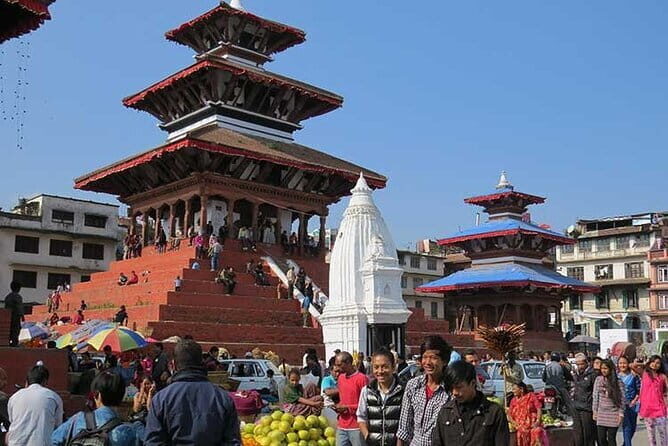
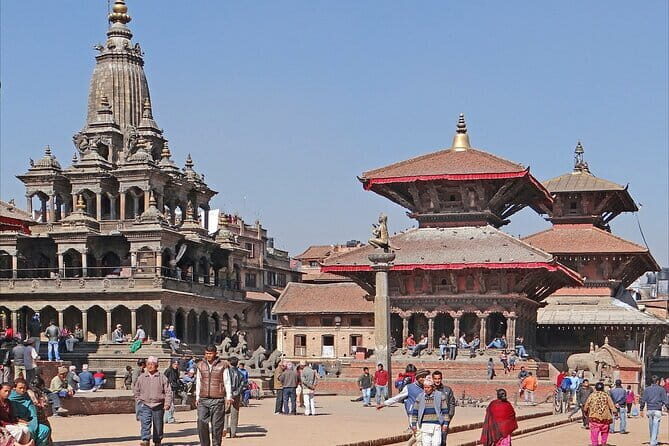
Kathmandu Durbar Square is your first major “wow,” and it’s a strong opener because it shows the royal complex style of the city. You’ll see how the architecture organizes space—courtyards, temple structures, and the feeling that this was once the center of power.
You get about an hour here, and that’s enough time to do two things well: notice the overall layout and then zoom in on the craftsmanship. Durbar Squares reward people who look up, not just straight ahead.
The guide element really matters at this stop. Without interpretation, it’s easy to see “old buildings.” With a good guide, you can connect the structures to how religious and civic life used to overlap.
My advice: start with a slow circuit first, then return to the detail areas. If you rush, you’ll lose the visual rhythm that makes Durbar Square special.
Patan Durbar Square: craft work you can actually notice in an hour
Patan Durbar Square brings a different flavor from Kathmandu’s center. The focus here is on fine craftsmanship—temples, palaces, and courtyards that show how much skill went into the stone and woodwork.
You’ll be there for about an hour, which is ideal if your goal is to walk, look, and ask questions. Patan’s details are easier to appreciate when you understand what the spaces were meant to do.
One clue to watch for: the stop listing highlights the Mahabouddha area. If you hear the guide explain what that section represents, you’ll start seeing the whole square as more than separate buildings—it’s a coordinated set of religious and ceremonial spaces.
If you’re the type who likes photos, Patan is a great place to grab them after you’ve listened. You’ll know what to frame, instead of shooting random corners.
Bhaktapur Durbar Square and the Vatsala Temple focus
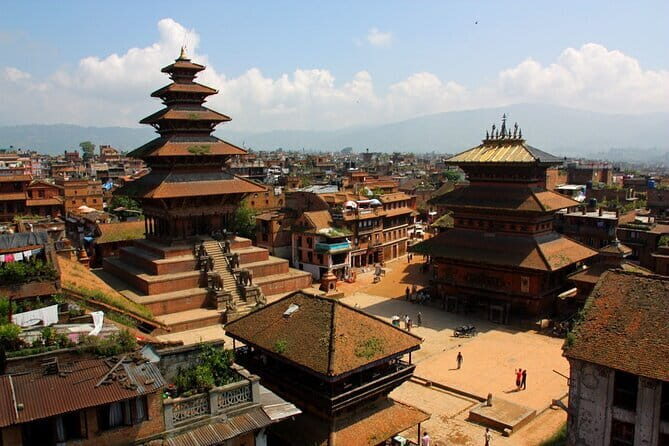
Bhaktapur Durbar Square is where medieval-city atmosphere feels more tangible. It’s another UNESCO royal complex, but the feel here leans toward intricate temples and the sense of a town built around sacred space.
Expect about an hour. That’s enough to catch the big icons and still notice smaller sculptures and architectural patterns that you’d otherwise miss.
The tour description calls out Vatsala Temple. That’s useful because it gives you a mental anchor. When you know which highlight to look for, the whole square becomes easier to read.
Bhaktapur is also a good test of how you’re handling the day. If you’re feeling your legs, take a slower pace here and use the guide’s pacing to catch breath without feeling like you’re falling behind.




Changu Narayan Temple: a calmer stop for older architecture
Changunarayan Temple is one of those sites where you feel the difference right away. The key point here is that it’s described as Nepal’s oldest Hindu temple, which automatically makes it worth your attention.
You’ll get about an hour, and this stop’s value is in the texture of the place—older architecture, and an atmosphere that’s less about spectacle and more about presence.
Since the tour is guided, you’re not just walking among stone. You’re hearing what makes this temple historically significant and how it fits into the broader Kathmandu Valley story.
My advice: treat this as a “quiet looking” hour. If you’re constantly moving and taking video every five seconds, you’ll miss the subtle details that make ancient temple sites rewarding.
Pashupatinath Temple and Boudhanath Stupa: two faiths, one day plan
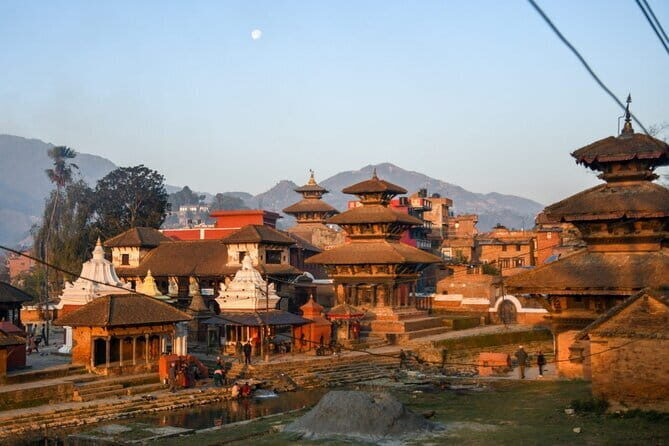
Pashupatinath Temple is one of Nepal’s most revered Hindu temples. This is the kind of place where you’ll sense the pull of faith and daily ritual even if you’re not fluent in the local customs.
You’ll spend about an hour. The tour guide’s role becomes extra important here because sacred sites can look similar to outsiders—what changes is the meaning of the space, the traditions around it, and the behavior expected inside.
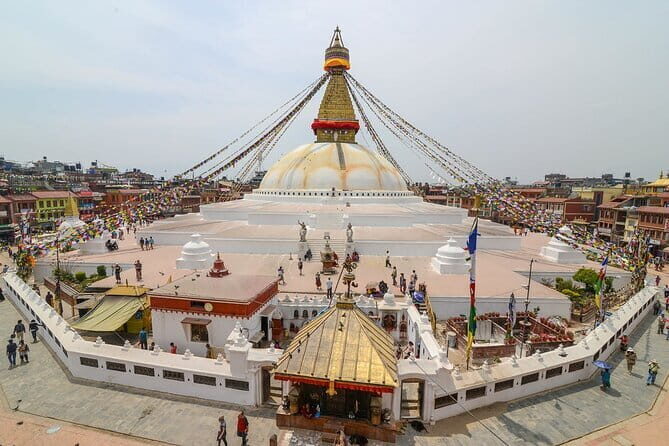
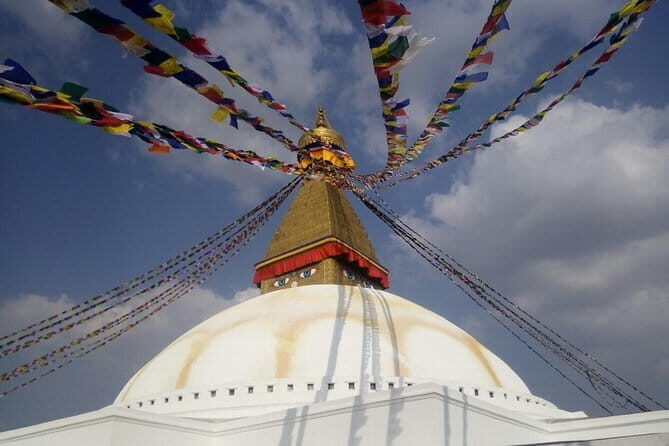
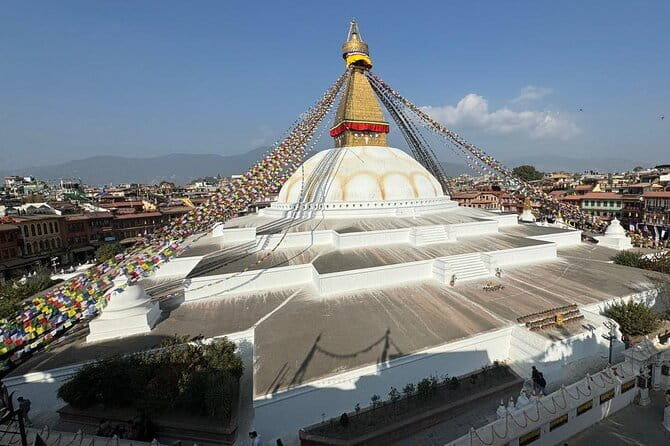
Then you shift from Hindu focus to Buddhist significance at Boudhanath Stupa, one of Nepal’s most important Buddhist monuments. This is a different kind of sacred atmosphere—stupa scale, ritual movement around it, and the feeling of layered devotion.
Your hour at Boudhanath is the best time to slow down. Stupas work like magnets for attention: people naturally watch how others move, how rituals unfold, and how the space holds sound and silence differently than temples.
If you want to connect the dots across faiths, this pairing is valuable. You’ll see how Kathmandu carries religious life in different architectural forms, not as separate worlds but as overlapping parts of the same city rhythm.
Swayambhunath viewpoint: finishing with Kathmandu from above
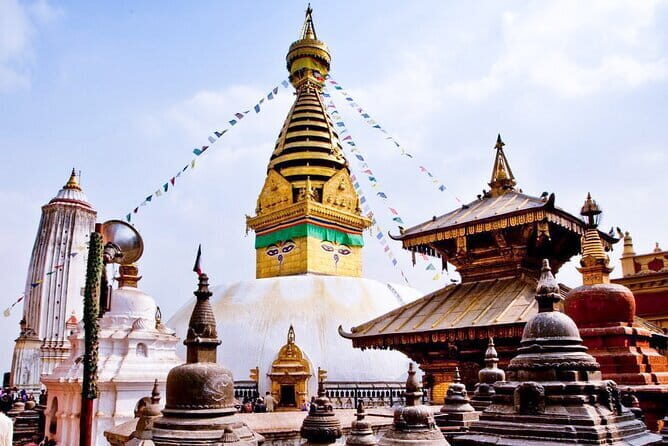
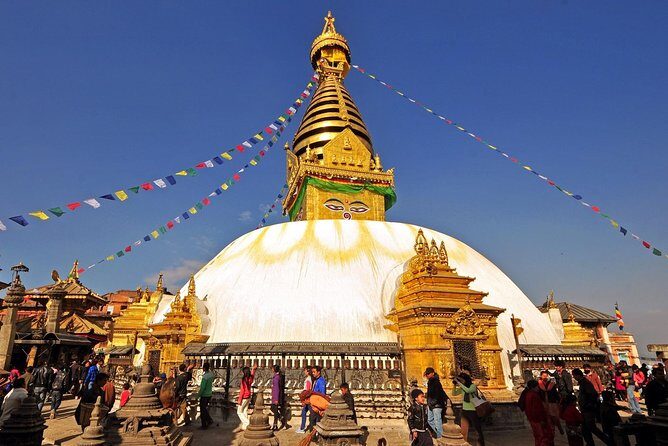
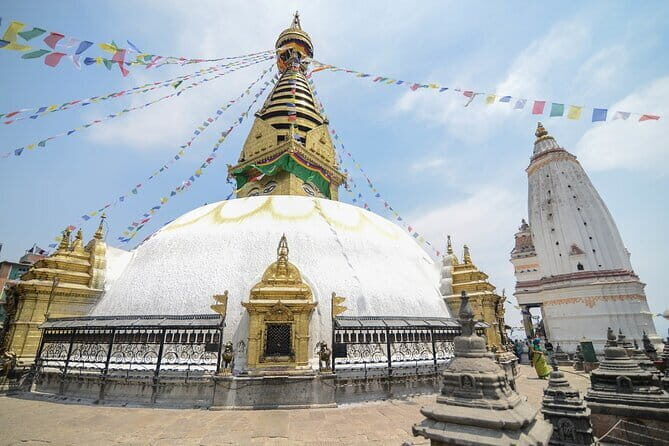
Swayambhunath is the hilltop capstone. The main reason it’s a highlight is the panoramic viewpoint over Kathmandu, which turns your day of temples and squares into a “map in your head.”
You’ll get about an hour here, and that time is crucial. The viewpoint is the obvious attraction, but you also want time to understand the stupa’s history and architecture so you don’t treat it like just a scenic overlook.
The tour description specifically frames Swayambhunath as a UNESCO World Heritage Site and emphasizes the stupa’s rich history. With a guide, you’ll know what to notice—how the stupa sits in the landscape and why people treat the hill as more than a viewpoint.
My advice: save your best walking for the end. If you pace yourself earlier, you’ll enjoy Swayambhunath more instead of treating it like a checkpoint.
Guide quality: why Deepak and Rabina-style commentary changes the day
This tour is powered by multilingual guides, and that’s not a small detail. When someone can explain what you’re looking at in more than one language, you spend less time guessing and more time understanding.
The experience is associated with Deepak Kushwaha as the provider, and the standout theme from the guidance style is clarity plus a grounded tone. In multiple accounts, Deepak is praised for turning each stop into something you can feel, not just memorize.
There’s also mention of a female guide, Rabina, who’s noted for strong knowledge of Nepal history. What I like about that for your decision: the tour isn’t locked to one voice or one approach. Some people prefer a more conversational style, and some prefer a structured explanation.
You’ll also want time to enjoy at each location, not just sprint for photos. The descriptions and ratings suggest the guide approach includes room for personal wandering and checking out what catches your eye.
The practical stuff you should plan for before you go
Here’s what you need to know so the day goes smoothly:
- Admission tickets are not included for the UNESCO stops.
- Lunch and dinner are not included, so plan food timing around a long day.
- Tips or gratuities aren’t included.
- Personal expenses aren’t included.
- Air-conditioned vehicle service is not listed, so expect regular transport conditions.
None of that is a deal-breaker. It just means you should treat this as a guided sightseeing day with some on-the-spot spending, not an all-inclusive bundle.
The tour is often booked about 13 days in advance on average. If you’re traveling during a busy period, you may want to plan a little earlier than the average, especially if you care about the guide option you get.
With pickup at Kaiser Library and a start/end at the same place, logistics are fairly friendly. You’re not coordinating multiple neighborhoods on your own.
Should you book this Kathmandu UNESCO World Heritage Tour?
Book it if you want a structured day that covers the big UNESCO hitters without you building the route from scratch. I think it’s especially strong for first-timers who want context at Durbar Squares, clear explanations at temple sites, and a satisfying end with Swayambhunath’s viewpoint.
Skip or reconsider if you hate long days, you’re sensitive to heat and transport conditions, or you don’t want to budget extra for admission tickets and meals. Also, if you prefer total freedom with no guided rhythm, you might find the fixed stop pattern limits your pace.
If you fall somewhere in the middle—curious, active, and willing to plan food and entry fees—this is good value. For $99, you’re paying for guided navigation through seven UNESCO sites in about 9 hours, with pickup and a mobile ticket to keep the day from turning into paperwork.
FAQ
FAQ
How long is the Kathmandu UNESCO World Heritage tour?
It runs for approximately 9 hours.
Is pickup included, and where does the tour start?
Pickup is offered, and the tour starts at Kaiser Library on Kanti Path, Kathmandu.
Does the tour include admission tickets?
No. Admission tickets are not included for the listed stops.
Is lunch or dinner included?
No. Lunch and dinner are not included.
What type of ticket do I receive?
The tour includes a mobile ticket.
Are guides multilingual, and are there both male and female guides?
Yes. The tour includes multilingual male/female guides.
What is the maximum group size?
The tour/activity has a maximum of 100 travelers.
What is the cancellation policy?
You can cancel for a full refund up to 24 hours in advance. If you cancel within 24 hours of the start time, the amount paid is not refunded.