REVIEW · KATHMANDU
Kathmandu Valley Sightseeing
Book on Viator →Operated by Travel Pinto · Bookable on Viator
Ancient temples and street-level detail all day. This Kathmandu Valley sightseeing tour strings together major UNESCO stops with an English-speaking guide and the comfort of a private car, so you spend more time looking and less time figuring things out. I especially love how the stops build on each other: you go from royal architecture at Kathmandu Durbar Square to hilltop views from Swayambhunath, then down into the incense-heavy world of Boudhanath and Pashupatinath. One more thing I like is practical pacing, with set time at each site so you get the highlights without turning it into a nonstop sprint.
The main thing to watch is respect and expectations at Pashupatinath Temple: entry inside the main temple is prohibited for non-Hindus, and the area around cremation activity is present. If you’re not comfortable with that, you might want to plan your visit to focus on the other parts of the complex.
In This Review
- Key Highlights You’ll Actually Feel During the Tour
- Kathmandu Valley in One 6-Hour Loop (And Why That Works)
- Price and What You’re Really Paying For
- Morning Start: How to Prepare for an 8:15 Departure
- Stop 1: Kathmandu Durbar Square and the Feeling of Royal Power
- Stop 2: Swayambhunath Hilltop Views Without the Guesswork
- Stop 3: Boudhanath Stupa and the Incense World of Buddhist Devotion
- Stop 4: Pashupatinath Temple and How to Visit Respectfully
- The Real Value of an English Guide (Especially for Temple Days)
- Private Car Comfort: When It Matters in Kathmandu
- Best Fit: Who This Tour Suits
- Small Logistics That Impact Your Day
- Should You Book Kathmandu Valley Sightseeing?
Key Highlights You’ll Actually Feel During the Tour
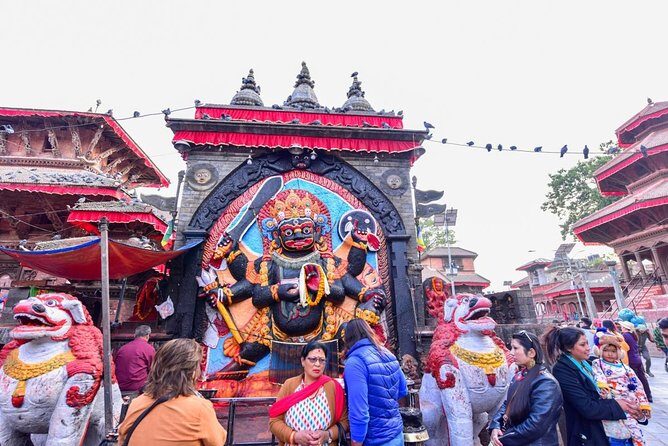
- Kathmandu Valley UNESCO cluster in one efficient route across three historic city centers
- English-speaking guide who helps you connect symbols, names, and rituals
- Hilltop Swayambhunath viewpoint for fast orientation over Kathmandu
- Boudhanath stupa details like the octagonal Mandala with 108 images
- Prayer-flag and lamp moments at Boudhanath to make the visit feel personal
Kathmandu Valley in One 6-Hour Loop (And Why That Works)
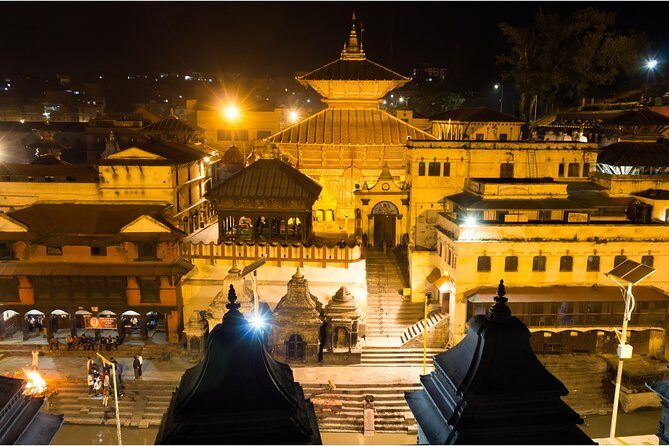
Kathmandu Valley is famous for more than big-name temples. It’s a tight set of places where you can watch religion, art, and architecture overlap: Kathmandu, Lalitpur (Patan), and Bhaktapur each bring their own style, and within the same general area you’ll find seven UNESCO-listed heritage sites.
This tour is built for people who want meaning, not just photos. Instead of scattering you across the valley with lots of extra travel, it focuses on four “anchor” sites that give you a clear map of what makes the valley special. You start at Kathmandu Durbar Square, shift up to Swayambhunath for a city overview, then move into the two spiritual magnets—Boudhanath and Pashupatinath—where you’ll see how Hindu and Buddhist traditions share space and visual language.
The other smart move is the time structure. It runs about 6 hours, and each major stop is given its own window. That matters in Kathmandu, where traffic and crowds can stretch your day if you’re winging it.
You can also read our reviews of more tours and experiences in Kathmandu.



Price and What You’re Really Paying For
The tour is $80 per person for a roughly 6-hour day. On paper, that’s not a cheap city tour price, but you’re buying two things that add real value: an English speaking guide and a private car. In Kathmandu, those two items can be the difference between spending your energy navigating and actually understanding what you’re seeing.
Entrance fees are not included, so budget extra for tickets at each stop. Still, the base price covers the work of connecting the sites for you: why they matter, what you’re looking at, and how to move through each location respectfully.
You also get group discounts and a mobile ticket. If you’re traveling with others, group pricing can help bring the cost down. And a mobile ticket is one less headache when you’re already juggling time and time zones.
Morning Start: How to Prepare for an 8:15 Departure
You’ll start at 8:15am from Travel Pinto Kathmandu 44600, Nepal, and the tour ends back at the meeting point. That “back where you started” layout is underrated in a city where distances can feel longer than they look on a map.
Because the tour is weather dependent, plan to treat the day like a real outing, not a loose idea. If weather turns poor, the tour can be canceled and you’ll be offered a different date or a full refund—so keep your schedule flexible if possible.
What I suggest you bring:
- Comfortable walking shoes (temples and stupa areas usually involve uneven stone and some stairs)
- A light layer for morning air shifts
- Modest clothing basics for temple areas
- Small cash for small purchases like prayer flags or souvenirs
And a quick practical tip: start your day with water and a light breakfast. Even when you don’t notice hunger while you’re walking, it shows up fast once you’re done and ready to move on.
Stop 1: Kathmandu Durbar Square and the Feeling of Royal Power
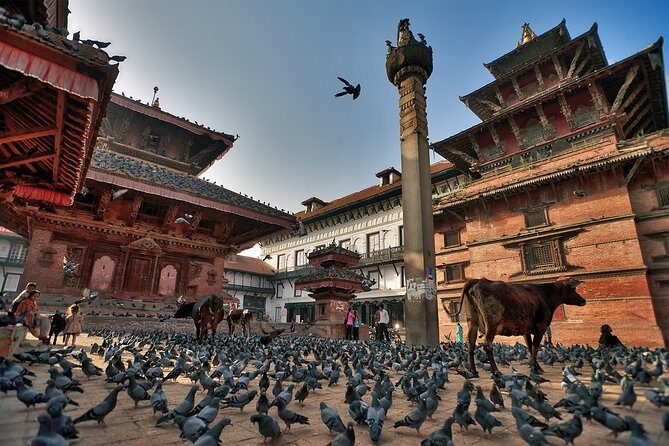
Kathmandu Durbar Square is the opening act for a reason. It’s where you see the kind of architecture that makes people call Kathmandu a city of art. The square is tied to royal history and the way power used to be expressed through stone, carving, and sacred space.
I love this first stop because it gives you a baseline. Once you’ve seen Durbar Square’s mix of ornate detail and monumental forms, everything else on the route makes more sense. Your brain starts recognizing patterns: how buildings are decorated, how entrances and courtyards create movement, and how the city’s heritage is displayed in public.
The time here is about 45 minutes. That’s enough for a careful walk around the most important areas without rushing. If you’re the type who wants to read every sign, you’ll still have time to slow down—just don’t plan on standing still for too long, because you’ve got a long day ahead.
One caution: admission tickets aren’t included in the tour price. If you show up without planning, you’ll either lose time at the ticket counter or you’ll feel rushed while waiting. Budget for entrance fees and you’ll keep the day smooth.
Stop 2: Swayambhunath Hilltop Views Without the Guesswork
After Durbar Square, the tour rises up to Swayambhunath Temple. This stop is short—about 30 minutes—but it hits a key purpose: orientation. Swayambhunath sits on a hill, and from the top you can take in views over Kathmandu. Even if you only glance around, you’ll start to understand where major areas sit relative to each other.
I like hilltop stops because they break the day up physically and mentally. You go from detailed ground-level heritage to a viewpoint that helps you “read” the city like a map.
This is also a temple setting, so plan on a respectful pace. You’ll likely move through areas with worshippers and religious activity happening around you. A guide helps here because they can point out what you’re seeing and what to look for without turning the visit into a lecture.
Again, entrance fees are not included. Make sure you treat this as a guided highlight, not an all-inclusive pass.



Stop 3: Boudhanath Stupa and the Incense World of Buddhist Devotion
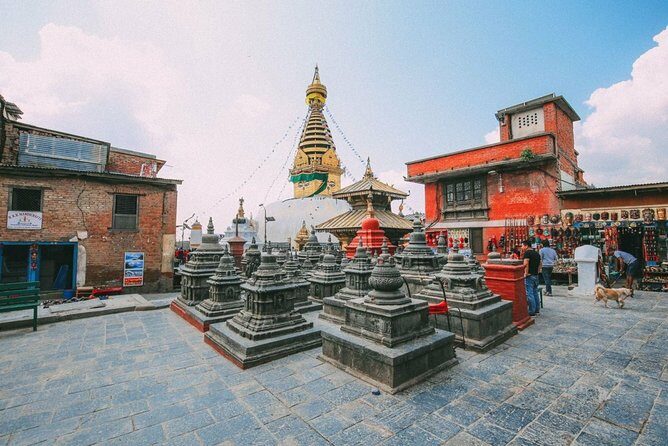
Then comes the emotional center of the day: Boudhanath Stupa. This is one of the most recognizable forms in the Kathmandu Valley—so much so that the first sight often makes people stop mid-walk just to take it in.
The tour gives you about 45 minutes here, and it’s a good amount of time if you want to do more than just stand and stare. You can light lamps, buy prayer flags, and pick up a small souvenir. Those small actions matter. They move you from tourist mode into participant mode—quietly, respectfully.
I also love one specific detail that makes Boudhanath feel unusually “designed.” The stupa’s octagonal Mandala features 108 images, and the whole area is surrounded by incense fragrance. That combination of symbolism and sensory atmosphere makes the stupa feel alive rather than static.
Where Boudhanath can be challenging is the practical side: you’ll be in a high-interest, high-activity religious zone. Keep your belongings secure, watch where you step, and don’t expect wide, easy walking space everywhere. Your guide helps you find a sensible route and keep your timing.
Entrance fees are also not included here, so don’t forget to budget.
Stop 4: Pashupatinath Temple and How to Visit Respectfully
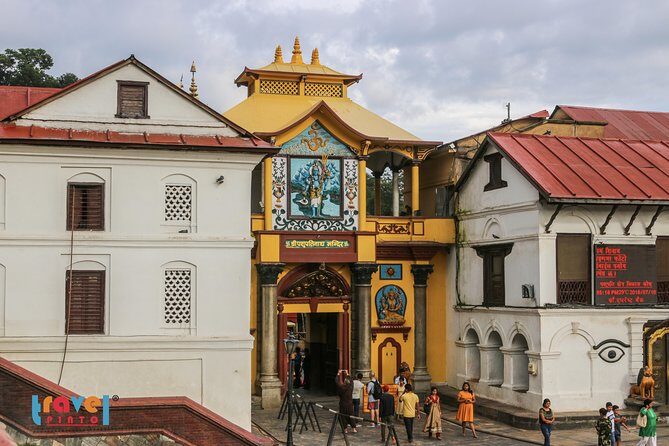
Pashupatinath Temple is the last major stop, about 45 minutes. It’s one of Nepal’s holiest Hindu shrines, and it sits on the banks of the Bagmati River, which helps explain why the site feels so spiritually grounded.
There’s a very practical rule you should know before you go: entry inside the main temple is prohibited for non-Hindus. You can still visit other sites within the larger Pashupatinath area, and you should. Even without main-temple entry, you can understand the scale, the rituals, and the sacred layout.
There’s also an emotional expectation to consider. The tour notes that if you’re not friendly with crematorium activity, this stop is not suggested. That means you may see cremation-related practices or be near areas connected to them. If that makes you uncomfortable, plan what you’ll do in advance—either shorten your time in sensitive areas or consider whether this stop fits your comfort level.
I think Pashupatinath is powerful when you treat it as a functioning religious site, not a sightseeing “attraction.” The guide’s role here is essential because they help you avoid mistakes that come from misunderstanding local norms.
Entrance fees are not included, so add that cost to your day.
The Real Value of an English Guide (Especially for Temple Days)
It’s easy to underestimate the value of a good guide until you’re standing in front of something old and complicated. At these sites, symbols matter. Rituals matter. Even simple direction—where to stand, what area is respectful, what you’re seeing—changes the whole experience.
With an English-speaking guide, you can ask basic questions on the spot and get answers that make the next stop clearer. The day becomes a chain of understanding instead of four separate photo sessions.
Based on prior experiences with this operator, guides like Uddhav, Ram, Dave, and Dev have been praised for clear English and professional explanations. You can’t guarantee a specific guide, but you can feel confident that English support is part of the standard offering.
Private Car Comfort: When It Matters in Kathmandu
A private car isn’t just about convenience. In Kathmandu, it’s about keeping your day intact. Without it, you’re negotiating traffic, finding meeting points, and dealing with the friction of repeated directions.
With the private car, you get a smoother flow between stops. That’s especially helpful for temple days when you’ll be stepping in and out of multiple areas and likely want to avoid arriving stressed. The tour also notes it’s near public transportation, but the structure is clearly designed for road travel.
There’s one consideration: if you have strong motion sickness or prefer minimal time in vehicles, it’s still a 6-hour day with multiple drives. It’s not just a walk-only heritage loop.
Best Fit: Who This Tour Suits
This tour fits well if:
- You want major UNESCO sites in a single day without planning chaos
- You’re traveling after a trek and need a culture reset (a common pattern after the high mountains)
- You like temple and stupa architecture and want help interpreting it
- You want an organized day with a clear start at 8:15am and an easy return
It may not fit as well if:
- You’re sensitive to crematorium-related activity at Pashupatinath
- You’re only interested in quick photo stops and don’t want to navigate temple rules
- You need everything to be fully all-inclusive, since entrance fees are not included
Small Logistics That Impact Your Day
This tour uses a mobile ticket, and confirmation is provided at the time of booking. Those two details reduce last-minute uncertainty. It’s also described as most travelers can participate, and it’s a private tour/activity, meaning only your group participates.
The big practical reminder is: entrance fees, personal expenses, and anything not listed as included are on you. If you handle that upfront, the day runs smoothly.
Also keep in mind: the tour is non-refundable and cannot be changed for any reason. If it’s canceled due to poor weather, you’ll be offered a different date or a full refund. In other words, treat it as a real plan, then let weather be weather.
Should You Book Kathmandu Valley Sightseeing?
I’d book this tour if you want a focused Kathmandu Valley day with clear organization, a guide to translate the meaning behind what you’re seeing, and a private car to reduce the hassle. It’s especially good for first-timers because the route hits the valley’s key spiritual landmarks—Durbar Square, Swayambhunath, Boudhanath, and Pashupatinath—so you leave with a better sense of where Kathmandu’s heritage lives.
Skip or think twice if cremation activity at Pashupatinath would make you uncomfortable. And do budget for entrance tickets, because that’s the one cost surprise that can pop up fast.
If you get the balance right—comfort with the religious sites, realistic expectations about entrance fees, and a weather-aware schedule—you’ll get a day that feels coherent, not scattered.