REVIEW · KATHMANDU
Manaslu Circuit Trek
Book on Viator →Operated by Base Camp Adventure Pvt. Ltd. · Bookable on Viator
A trek where culture and altitude both demand attention. The Manaslu Circuit trek pairs big views of Mt Manaslu (8163m) with a trail that moves from Hindu Nepali life toward Tibetan Buddhist influence. It’s also part of the Great Himalaya Trail, so the route feels like a real corridor, not a theme park.
I love how practical this trek is for first-timers who want to be challenged without being stranded. Two things really stand out: an English-speaking, licensed guide (people have praised Prakash for being professional and Shiva for guiding well), and a strong support setup that includes a porter, permits, and even key cold-weather gear. You’ll feel cared for, especially on the long pass day.
One consideration: this isn’t a “stroll.” You’ll be walking rocky, sometimes slippery trails, and there’s a high pass crossing at Larkya La (5160m). If you don’t handle altitude well, you’ll want to take acclimatization seriously and keep your pace slow.
In This Review
- Key highlights worth planning for
- Day-by-day: What it feels like on the Manaslu Circuit Trek
- Day 1: Kathmandu to Soti Khola, dirty roads and a gentle start
- Day 2: Budhi Gandaki basin roughness, waterfalls, and Machha Khola’s suspension-bridge moment
- Day 3: Narrow cliff trails to Jagat, slate streets, and Budhi Gandaki’s cascades
- Day 4: Salleri to Philim and up toward Larkya La country
- Day 5: Mani walls and the long cultural ramp toward Namrung
- Day 6: Lihi’s 360° views, Lho gompa, and Shyala’s stone-and-wood density
- Day 7: Sama Gaon rest day, plus the places you’ll want to see slowly
- Day 8: Birendra Tal up high, yak pastures, long Mani walls, and Samdo’s herding focus
- Day 9: Down from Samdo to Larke Phedi area, juniper, and first gorge surprises
- Day 10: Larkya La (5160m) crossing, frozen lakes, and a big panorama reset
- Day 11: Bimthang’s south trail, prayer flags, fir forests, and Yak Kharka lunch
- Day 12: The off-road jeep to Beshisahar, then Syange and Gharmu Phant
- Day 13: Drive back to Kathmandu and the 5-star recovery night
- Price and logistics: what $1,950 really buys you
- Guides, pace, and why the support system matters on Manaslu
- Altitude and fitness: how to make the Larkya La day safer for you
- Places you’ll remember most (and why they work)
- Who should choose the Manaslu Circuit Trek
- Should you book this Manaslu Circuit Trek with Base Camp Adventure?
- FAQ
- What time does the Manaslu Circuit Trek start?
- Where is the meeting point for the trek?
- Does the trek include pickup or transfers?
- How many days is the trek?
- What’s included in the price?
- What is not included in the price?
- Is this a private group?
- What kind of fitness level do I need?
- Are service animals allowed?
- What if weather is poor or I need to cancel?
Key highlights worth planning for
- Manaslu-to-Annapurna panorama from Larkya La: the pass day is long, but the views are a major reward.
- The Budhi Gandaki corridor: waterfalls, gorges, and suspension bridges keep the trail interesting from day to day.
- Cultural shift on the circuit: you go from slate-paved village streets to gompas, Mani walls, and Tibetan Buddhist sights.
- Sama Gaon acclimatization day: a built-in rest day lets you adjust before higher ground and harsher weather.
- Support that reduces logistics stress: down jacket, sleeping bag, duffel bag, and an oxymeter are included.
- Private group experience: you share the trek only with your own group, which can make the days feel smoother.
Day-by-day: What it feels like on the Manaslu Circuit Trek
This trek is shaped by the Budhi Gandaki River valley and the way the trail steps up and around the Manaslu region. Expect a mix of quiet village mornings, forest sections, and big weather changes as you climb. The best days are the ones where you stop fighting the terrain and start reading it: stone paths, suspension bridges, and switchbacks that slowly reveal new angles of the Himalaya.
You can also read our reviews of more hiking tours in Kathmandu


Day 1: Kathmandu to Soti Khola, dirty roads and a gentle start
You’ll leave Kathmandu early, heading toward Soti Khola. The drive starts rough—roads can be dirty and difficult—but it’s also when Nepal’s everyday scenery hits you: rice fields, waterfalls, and greenery sliding by through village after village.
On the walking day itself, the trail north from Arkhet Bazaar has a real old-market feel. You pass lodge buildings and local houses with slate roofs, and the Arkhet Khola area is a strong early visual moment. Soti Khola is small and green, and the first overnight there helps you settle into the trek rhythm.
What to watch: the first day can feel deceptively easy. Your legs are fresh, but the day-to-day walking pace later will be more about endurance than speed.
Day 2: Budhi Gandaki basin roughness, waterfalls, and Machha Khola’s suspension-bridge moment
Day 2 pushes you into the Budhi Gandaki basin, where the trail becomes bumpy and rocky. You’ll cross waterfalls and navigate sections that feel more physical than pretty postcards.
Along the way, Liding offers a camping site area, and Lapubesi sits on a lush hill. Then it’s up-and-down trail work on slippery rocks, with tropical vegetation breaking up the monotony. One of the most memorable segments is the suspension bridge crossing to reach Machha Khola, where you feel the river power close by.
Machha Khola itself is a hillside village with different lodging options, plus a medical clinic if you need it. That’s the kind of practical detail that matters later on in the trek.
What to watch: slippery rocks are a real theme on this route. Walking carefully, not quickly, saves energy and ankles.
Day 3: Narrow cliff trails to Jagat, slate streets, and Budhi Gandaki’s cascades
You’ll hike along narrow trails between Budhi Gandaki and a cliff line, which makes the day feel active right away. After reaching Dobhan, you continue past Shyaule Bhatti and arrive at Yaru with dramatic scenes of Budhi Gandaki descending rapidly in cascades.
Then the pace shifts toward Jagat, where you’ll find slate-paved streets and basic lodging/campsite options. Jagat is also a place where people earn through tourism, agriculture, education, and government services—so you’re seeing a community that’s adapted to the trek economy.
What to watch: cliff-hugging trails tend to be mentally tiring. Give yourself extra time for slow footing and steady breathing.
Day 4: Salleri to Philim and up toward Larkya La country
Day 4 is a classic “riverbank-to-high-mood” transition. You start by walking up the riverbed, then climb over rocky points to reach Salleri, which offers views of Shringi Himal (7187m). It’s a good reminder: Manaslu gets the headlines, but the surrounding peaks are impressive too.
From there, you follow the left bank of Budhi Gandaki, ascend to Philim, then continue through thick forest toward the narrowing valley that eventually leads in the direction of Larkya La (5160m). The day includes stops like Ekle Bhatti and a crossing high above a gorge with pine trees.
You finish in Deng, after a gradual climb above Budhi Gandaki Gorge. Deng is where you feel the altitude shift in the air quality—cleaner, colder, and drier as you go.
What to watch: forest trails can hide uneven ground. Don’t rely on memory; keep your eyes on the trail.





Day 5: Mani walls and the long cultural ramp toward Namrung
You’ll cross Budhi Gandaki River on a suspension bridge, then climb toward Rana and Bihi. From there, the day becomes a sequence of gorges and crossings, including crossing Serang Khola of the north and circling into Ghap.
This is where Mani walls start showing up in a way that makes the trail feel spiritually layered—carvings of Buddhas in meditation appear along the route. Then you enter a fir forest with birds and a wooden bridge crossing a narrow canyon, before arriving in Namrung.
Namrung feels like a reward town after the climbing effort. It’s picturesque and sits where villages start to look more “Manaslu circuit” than “lower Nepal river valley.”
What to watch: the mix of gorge crossings and climbs can turn your day into a full-body workout. Take water breaks before you feel thirsty.
Day 6: Lihi’s 360° views, Lho gompa, and Shyala’s stone-and-wood density
The trail from Namrung runs through Bhanzam, with barley fields and stone houses. Then you enter Lihi, and you get a 360-degree view of surrounding mountains, including Manaslu (8163m). This is one of those moments where you pause because your brain needs time to process what you’re seeing.
After that, you cross Hinang Khola to reach Lho, which is dominated by a large gompa on the slopes above the village. The vantage point from the top is described as undisturbed and wide-open for Manaslu views.
The trail then climbs through compressed forest toward Shyala, a place with many stone and wood houses packed closely together. It has an eccentric feel—like you’re walking into a dense cluster that’s been built for mountain winters.
What to watch: as you climb, you may feel the fatigue earlier in the day. This is normal. Keep pace steady, not aggressive.
Day 7: Sama Gaon rest day, plus the places you’ll want to see slowly
Today is a proper acclimatization rest day in Sama Gaon. This is one of the best design decisions of the itinerary. Your body needs time up here—especially before you approach frozen or higher ground later.
You can spend the day exploring around Sama and visiting Birendra Tal, Manaslu Base Camp, PemaChyolingLhakang, and Punggen Gompa. With Manaslu looming above, the mood is calm but not lazy. It’s a chance to learn the rhythm of the village and let your breathing settle.
What to watch: rest days can turn into “I walked too much” days. If you feel good, keep it moderate. Your goal is to arrive fresher for the higher section.
Day 8: Birendra Tal up high, yak pastures, long Mani walls, and Samdo’s herding focus
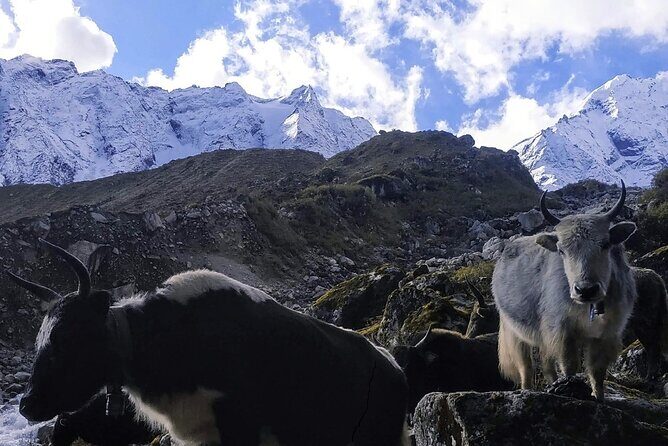
You move uphill past Birendra Tal (3450m) under the Manaslu Glacier. Then you walk across yak pastures where you’ll see long Mani walls and likely spot marmots popping up around burrows.
From a ridge, the trail drops to cross Budhi Gandaki on a wooden bridge, and after a bit you reach a white chorten area. Then the key stop is Samdo, a village dedicated to yak herding. It’s described as having more animal and hay shelters than human accommodation, which gives it a raw, functional feel.
Overnight in Samdo helps you prepare for the colder, more exposed terrain ahead.
What to watch: high-altitude walking can feel deceptively slow. Build rhythm early and keep your turns controlled.
Day 9: Down from Samdo to Larke Phedi area, juniper, and first gorge surprises
Day 9 begins with descent past Samdo on a wide trail. You’ll cross the reduced Budhi Gandaki River and move through areas where the path to Tibet is on the right and the main route continues left past a Mani wall.
Juniper and marmots reappear in the scenery. Then you hit two gorges on thin tracks before arriving at Dharamsala, also called Larke Phedi. Dharamsala is described as a stone hut with three rooms and an almost integral roof. It’s simple, which is exactly what you want before a pass day.
What to watch: thin tracks and gorge edges mean you should stay focused. No rushing for “just a few minutes.”
Day 10: Larkya La (5160m) crossing, frozen lakes, and a big panorama reset
This is the pass day that changes your mental map. You climb gradually behind Dharamsala and beside the large adjacent Larke Glacier moraine. The climb is long and runs through rocky terrain.
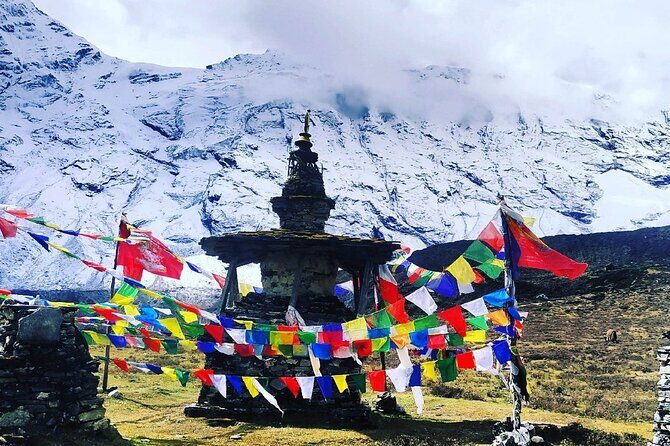
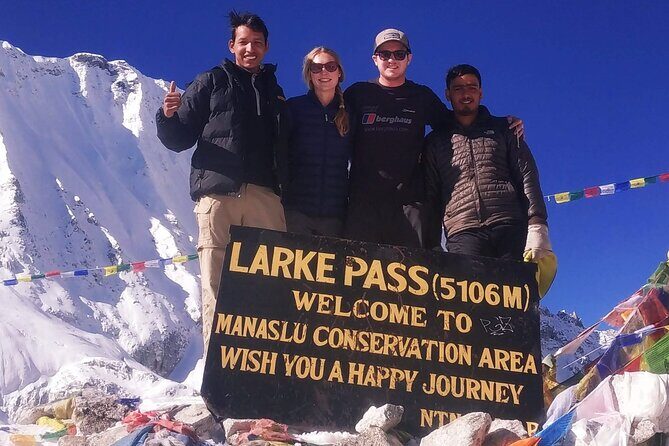
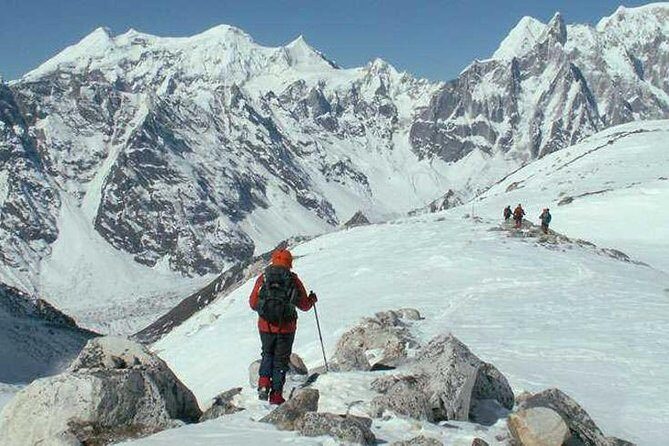
After descending past four frozen lakes, you make a final climb to Larkya La (5160m) marked with prayer flags. From the top, you can see a wide panorama of the Manaslu Himal Range and Annapurna Range. It’s one of those moments you’ll remember when you’re back in Kathmandu traffic.
After the pass, you incline down the moraine to the west and gently drop toward Bimthang for your overnight.
What to watch: cold plus altitude is a real combo. Dress for it, and don’t wait until you’re cold to adjust layers.
Day 11: Bimthang’s south trail, prayer flags, fir forests, and Yak Kharka lunch
The south trail from Bimthang is described as mesmerizing, with lush vegetation and the trail crossing the foot of Bimthang Glacier. You walk toward a spot decorated with prayer flags where mountains surround you, with Manaslu Himal Range in view to the south-east.
Then you move into an enchanted forest rich with firs. Eventually, you reach a lonely house in Yak Kharka where lunch is served. The day continues through deep forest until reaching Goa, for the night at Dharapani.
What to watch: forests can be chilly in the shade. Even on bright days, the temperature can shift fast.
Day 12: The off-road jeep to Beshisahar, then Syange and Gharmu Phant
You take an off-road jeep for about four hours to Beshisahar. This breaks the trek into a “trail-to-road” transition day.
The next steps are a gradual descent toward Syange village, then you walk up to Gharmu Phant before descending again to Beshisahar. It’s a last walking day that feels like wrapping the story up without exhausting you.
What to watch: jeep days can be bumpy. Hydrate and keep loose layers handy.
Day 13: Drive back to Kathmandu and the 5-star recovery night
From Beshisahar you drive back to Kathmandu through lush hills and wide river networks. When you arrive, you’re transferred to a 5-star hotel for your overnight stay.
This hotel night matters more than you’d expect. Your feet need normal beds, warm showers, and time to be human again—not just “back from the trek.”
What to watch: don’t plan anything ambitious the same night. Treat it like recovery time.
Price and logistics: what $1,950 really buys you
At $1,950 per person, this trek isn’t cheap. But the package includes a lot of the stuff that usually makes budget treks turn expensive after booking.
Here’s what you get that directly affects your comfort and planning:
- Accommodation in guest houses during the trek (mostly twin sharing).
- A local government licensed English-speaking trekking guide.
- Porter support: one porter for two trekkers.
- Permits and entry fees.
- Cold-weather trekking gear: down jacket, sleeping bag, and a duffel bag.
- An oxymeter to check pulse and oxygen saturation (plus heart rate).
- First aid medical kits.
- A route map.
- Surface transfers from and back to Kathmandu.
- Meals: 11 lunches, 12 dinners, 12 breakfasts listed in the package.
Now, what’s not included is also clear: travel insurance, international airfare, alcohol and drinks, laundry, personal equipment, and tips for trekking staff.
In plain terms: you’re paying for less uncertainty. Instead of scrambling to rent gear in Kathmandu, you’re arriving with key items already covered. Instead of having to organize permits and support staff yourself, your guide and team handle it. For many people, that’s where the value lives.
One more note: the tour is described as a private tour/activity, meaning it’s only your group. That can be a real quality-of-day factor when the weather shifts or when the group needs to move at a pace that feels sustainable.
Guides, pace, and why the support system matters on Manaslu
This trek depends on steadiness. The terrain isn’t always dramatic at first glance, but it’s consistently physical: rocky trail days, narrow cliff edges, suspension bridge moments, and the long pass crossing where fatigue can snowball.
That’s why I like that the package includes an oxymeter. It’s not magic, but it gives you concrete numbers when you’re trying to judge whether you should slow down, drink more, or adjust your pace. Your guide’s job is more than route knowledge—on this kind of trek, they also read the day’s conditions and your energy level.
The reviews also point to strong guidance: Prakash is praised for professionalism, and Shiva for being supportive and helpful while keeping the trek authentic. So you’re not just following a checklist—you’re getting people who help you understand what you’re walking through.
Practical advice for you: follow the guide’s pace. On altitude treks, the fastest group isn’t the group that finishes best.
Altitude and fitness: how to make the Larkya La day safer for you
You’ll reach 5160m at Larkya La, and you also pass high sections like Sama Gaon (rest day area), Samdo, and Birendra Tal (3450m). The itinerary includes a rest day in Sama Gaon, which is a big deal.
The package says it’s suited for travelers with moderate physical fitness. That sounds reassuring, but here’s the translation: moderate fitness is about consistent hiking, not sprinting.
To enjoy this trek (and to reduce the odds of feeling wrecked on the pass day), focus on:
- keeping a slow, even pace on climbs
- taking rest when offered, especially on the acclimatization day
- dressing in layers so you’re not fighting the cold later
- using the oxymeter checks as feedback, not as a test of toughness
Also, the route includes a mix of rocky terrain and forest sections. Your fitness plan should prepare you for lots of time on uneven ground.
Places you’ll remember most (and why they work)
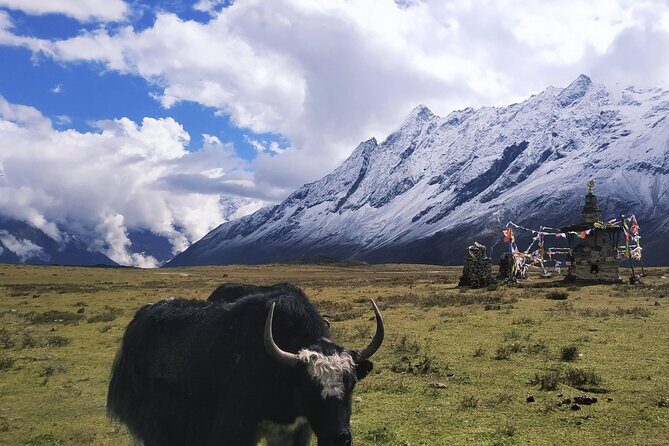
If you’re trying to pick what to “look forward to,” I’d anchor on three moments.
First is Larkya La. The climb is long and rocky, but the pass view is described as seeing both Manaslu and Annapurna ranges. That’s the kind of visual that makes the whole circuit feel worth it.
Second is Sama Gaon. The rest day isn’t filler. It’s where you slow down and visit key cultural sites around the Manaslu base camp area and gompas listed in the trek.
Third is the culture ramp from villages like Jagat into spaces like Lho with its big gompa and the Mani walls around Ghap. You feel the shift from Hindu Nepali village life into Tibetan Buddhist influence as the trek continues.
Who should choose the Manaslu Circuit Trek
This trek fits best if you:
- want real mountain villages and a gradual build toward higher altitude
- enjoy walking long enough for it to feel like a journey, not a quick hike
- like cultural stops as part of the trek story, not as add-ons
- want guided support that handles permits, gear, and logistics
It may feel like too much if you:
- get nervous about high passes or you struggle at altitude
- prefer trails with minimal rough footing and minimal cold exposure
It’s also a private tour, so if you’re the type who likes your group to move together without blending into a mixed crowd, this format can feel good.
Should you book this Manaslu Circuit Trek with Base Camp Adventure?
If you want a Manaslu Circuit trek that takes the logistics headache off your plate, I think this one is a strong option. The included gear (down jacket, sleeping bag, duffel bag), plus the guide/porter setup and permits handled for you, makes the trip feel more “doable” from the start. The oxymeter is another practical touch that signals they’re thinking about safety, not just route planning.
The only thing I wouldn’t downplay: the route includes rocky, narrow, sometimes slippery sections and a high pass crossing at Larkya La (5160m). If you’re realistic about that—and you use the acclimatization day—you’re set up for a memorable, authentic circuit.
FAQ
What time does the Manaslu Circuit Trek start?
The start time is 6:00 am, with the ticket redemption at Tridevi Sadak, Kathmandu 44600, Nepal.
Where is the meeting point for the trek?
The meeting point listed is Tridevi Sadak, Kathmandu 44600, Nepal.
Does the trek include pickup or transfers?
Pickup is offered, and the package includes surface transfer from and to Kathmandu.
How many days is the trek?
The duration is 13 days (approx.).
What’s included in the price?
Included items are guest house accommodation during the trek, a licensed English-speaking trekking guide, a porter (1 porter for 2 trekkers), trekking permits and entry fees, down jacket, sleeping bag, duffel bag, an oxymeter, first aid medical kits, a route map, surface transfers, and meals (11 lunches, 12 dinners, 12 breakfasts).
What is not included in the price?
Not included are travel insurance, international airfare and airport departure tax, alcohol and hot/cold drinks, laundry, personal trekking equipment, tips for trekking staff, and any other expenses not listed.
Is this a private group?
Yes. It’s described as a private tour/activity, and only your group will participate.
What kind of fitness level do I need?
The requirement is moderate physical fitness level.
Are service animals allowed?
Service animals are allowed.
What if weather is poor or I need to cancel?
The experience requires good weather. If it’s canceled due to poor weather, you’ll be offered a different date or a full refund. There is free cancellation up to 24 hours in advance for a full refund.