REVIEW · KATHMANDU
Monkey Temple – Swayambhunath Tour – Private/Small Group
Book on Viator →Operated by Amazing Kathmandu Tours · Bookable on Viator
Monkey Temple is a lesson in Kathmandu by foot. This small-group Swayambhunath tour mixes myths, legends, and the origin stories behind the Kathmandu Valley while you move through the surrounding neighborhoods.
I like that it’s paced for a small crowd (max 5), so your guide can actually answer questions as you go. I also like the mix of stops: you’re not only climbing to the hilltop stupa, you’re also seeing the smaller temples and shrines that explain how Hindu and Buddhist practice overlap here. One thing to consider: this area is stair-heavy (the main approach begins with 365 steps), so if you have knee issues or breathing problems like severe asthma, you’ll want to skip or double-check with your doctor first.
In This Review
- Key things to know before you go
- Why Swayambhunath feels like Kathmandu’s spiritual GPS
- Meeting in Thamel and easing into the climb at Bhagwan Pau
- The pre-stairs stops: Indrayani/Luti Ajima and Bijeshwori
- Inside Swayambhu: stupa time, neighborhood stories, and ceremony context
- Harati Ajima, World Peace Pond, and Manjushree’s viewpoint
- Amideva Buddha Park and Shova Bhagawati: the Hindu-Buddhist mix in one loop
- Price and logistics: $15 worth it, plus one cash ticket
- Pace, safety, and who this walking tour suits
- What the guide adds: clear explanations and story-first temple time
- Should you book the Monkey Temple – Swayambhunath tour?
- FAQ
- Where does the tour start?
- How long is the tour?
- How much does it cost?
- Is this a private tour?
- Do I need to pay an entrance fee?
- Is the guide English speaking?
- What’s the meeting-time route like?
- Is there a youth/student rate?
- What physical condition do I need?
- How do tickets work?
- What if I need to cancel?
Key things to know before you go
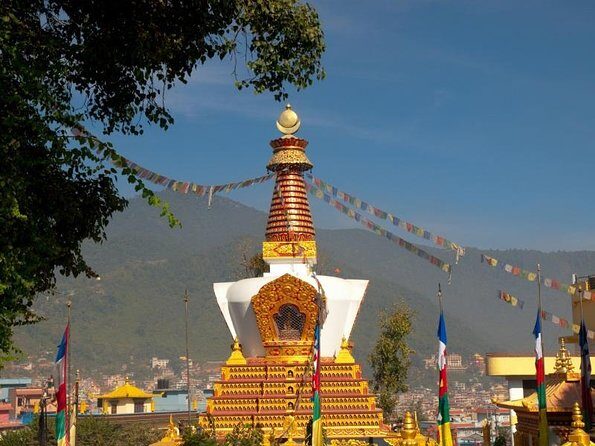
- Max 5 people means less waiting and more time for your guide’s explanations
- 365 stairs start at Bhagwan Pau, so wear supportive shoes
- Swayambhunath ticket is extra (200 rupees paid in cash at the temple)
- You’ll see both traditions across Buddhist and Hindu shrines in one route
- Big viewpoints, short time: about 3 hours total, with panoramic moments built in
Why Swayambhunath feels like Kathmandu’s spiritual GPS
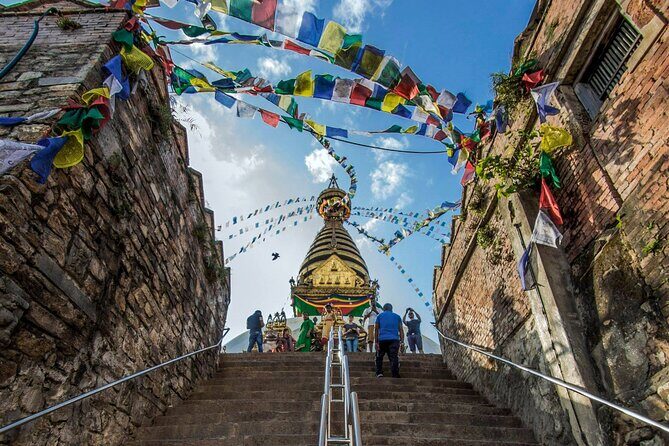
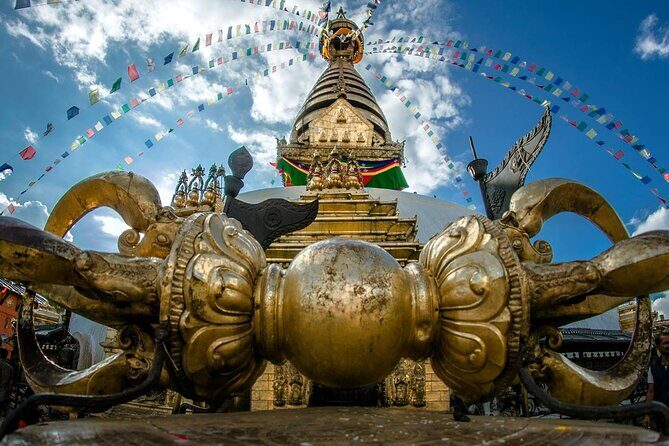
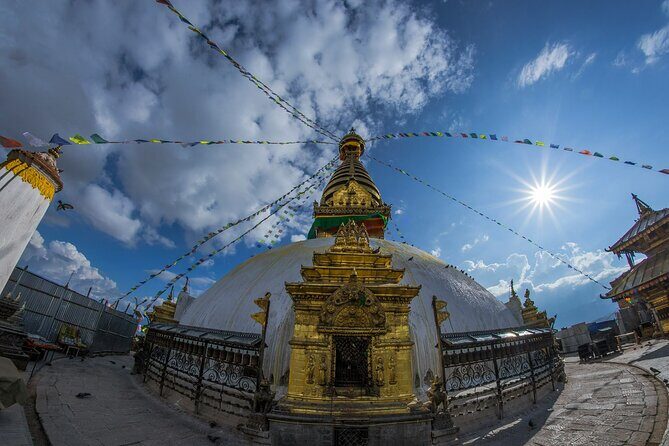
Swayambhunath is one of Nepal’s most important Buddhist stupas, sitting on a hilltop right inside Kathmandu’s urban sprawl. The best part isn’t just the stupa itself—it’s how the stories connect you to the city around it.
This tour follows the threads people use to explain where things came from. You’ll hear the legend of Swayambhunath’s origin (the temple is described as self-originated) and the broader mythology behind the Kathmandu Valley—turning a place you might otherwise treat like a landmark into a lived-in spiritual map.
And yes, you’ll likely notice monkeys in the mix. But the route is really about meaning, not sightseeing checklists. If you like when temples feel like living places—especially when ceremonies are happening—this is a strong fit.
You can also read our reviews of more private tours in Kathmandu
Meeting in Thamel and easing into the climb at Bhagwan Pau
Your morning starts at Pumpernickel Bakery in Thamel, Kathmandu’s central backpacker neighborhood. From there, the plan includes time to reach Bhagwan Pau, the base area at the bottom of the Swayambhunath hill.
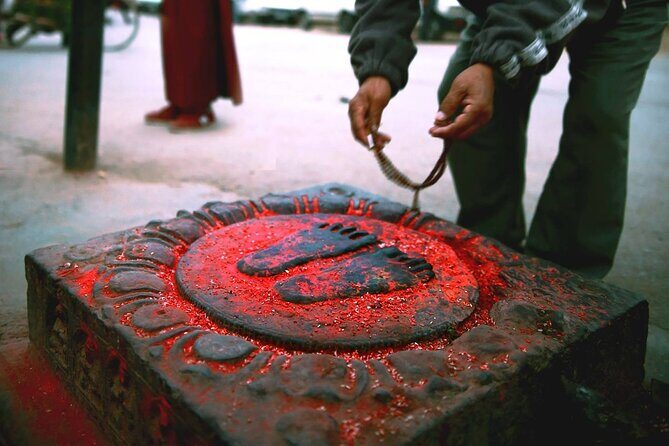
Bhagwan Pau matters because it’s where the approach begins. This is where the name points to the feet of Lord Buddha, and this area is tied directly to the famous stair route. Before you start climbing, you get a short break—enough time to grab water and get your legs ready.
If you’re traveling solo, I like that the start point is easy to find in Thamel. It also helps that the tour is designed for a small group, not a big bus herd. You’re not fighting for space with strangers on narrow paths.
The pre-stairs stops: Indrayani/Luti Ajima and Bijeshwori
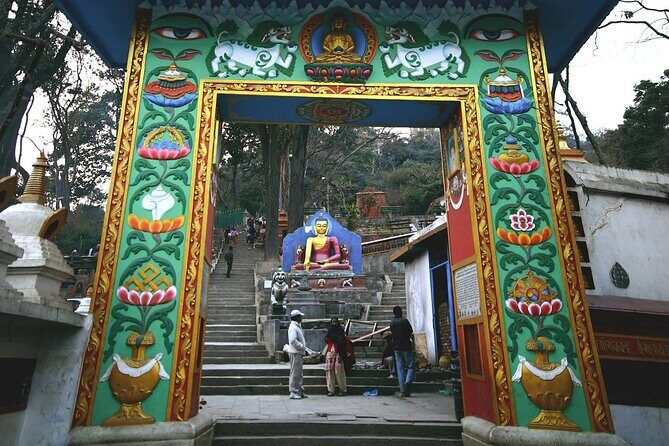
Before you hit the hilltop, you’ll pass through temples that explain why this area is sacred on multiple levels.
One stop is the Indrayani / Luti Ajima temple, linked to Kathmandu’s early founding myths. The story goes back to the 13th century and Licchavi King Gunakamdev, who established eight Matrikas said to be shaped like a Khadga (a ceremonial dagger). This stop gives you a historical spine: not just where people worship today, but how the old stories try to explain why these specific forms of worship were placed across the valley.
Another highlight is Bijeshwori Temple, described as sacred to both Hindu and Buddhist followers. It’s a significant pilgrimage place for Tibetan Buddhists, and the affiliation is tied to Buddhism. The temple also draws Hindu disciples. That overlap is the theme of the day: the same city, different routes to the same reverence.
These stops are shorter than Swayambhunath, but that’s the point. They act like your preface chapter, so when you reach the big stupa, you understand the symbols you’re seeing instead of just staring at them.
Inside Swayambhu: stupa time, neighborhood stories, and ceremony context
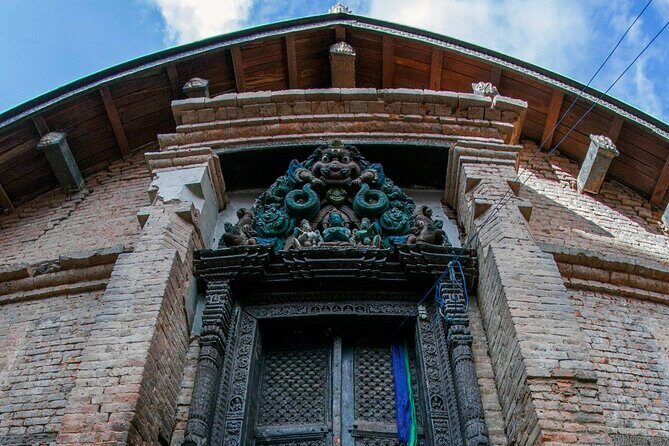
Now you’re at the main event: the Swayambhunath temple complex. This is the hilltop site you came for, and it comes with a real neighborhood feel. You’re not just standing in front of something; you’re walking through the surrounding area with a guide who ties the legends to what’s around you.
You’ll spend about 40 minutes exploring, with time allocated to learn about the origins of Swayambhunath and the Kathmandu Valley. Expect explanations of the lore and how the practices here make sense as part of both Buddhist and Hindu life.
One practical bonus: your guide will also help you make sense of religious ceremonies if they’re taking place. Temples can feel confusing when you don’t know what you’re watching. Having someone explain the timing and meaning turns you from a photo-hunter into an attentive observer.
Also, plan for altitude-in-the-mind even if it’s not a high-altitude trek. The hill is steep, and the stairs are continuous once you start. Pace yourself. Rest when your guide suggests. The goal is to enjoy it, not sprint it.
Harati Ajima, World Peace Pond, and Manjushree’s viewpoint
After the stupa area, the route keeps moving through smaller stops that are easier to miss if you come alone.
Harati Ajima Temple is a short but memorable stop. You’ll see the unique Nepalese pagoda-style architecture, and more importantly, you’ll hear the story of Harati—the demon who became Mother Harati. This stop gives the “character backstory” feeling that makes the day more than architecture appreciation. People worship her for a reason, and your guide connects that reason to the way devotion works here.
Then there’s World Peace Pond on the western side of the Swayambhunath Temple area. In the center of the pond is a brass statue of a Buddha on a lotus flower. There are also words on the wall in English, which can be a relief when you’re tired and want something you can quickly read without squinting at tiny script.
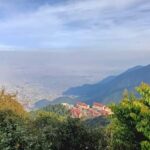
Next up: Manjushree Temple, a small shrine dedicated to Maha Manjushree. This stop ties directly back to the Kathmandu Valley origin legend—how the valley became a city from a great lake. You’ll also get a panoramic view looking toward the western side, so you can switch from story mode to scenery mode for a minute.
Amideva Buddha Park and Shova Bhagawati: the Hindu-Buddhist mix in one loop
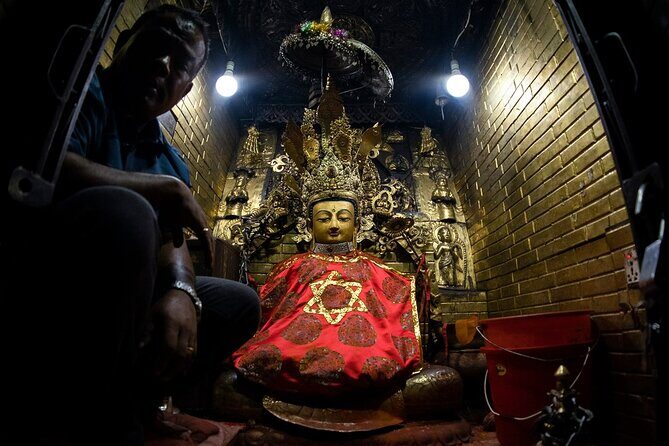
The route doesn’t treat Buddhism and Hinduism as separate boxes. It shows how both traditions share space in Kathmandu’s spiritual routine.
At Amideva Buddha Park, you’ll walk around a set of huge idols: Amitabha Buddha (Amideva) in the center at about 67 feet, with Chenrezig and Padmasambhava on the sides at about 64 feet each. The scale is the first thing you’ll notice. The stories your guide shares while you walk are what make the scale meaningful instead of just loud.
Then you’ll head to Shova Bhagawati, a shrine devoted to the goddess Bhagwati on the bank of the Bishnumati River. This temple is described as one of the four major Bhagwati temples in Kathmandu. Even if you’re only there briefly, it’s a helpful reminder: the Kathmandu Valley isn’t only about one hilltop monument. The spiritual geography runs through the river edges and neighborhood shrines too.
Price and logistics: $15 worth it, plus one cash ticket
The headline price is $15.00 per person for a small-group tour of about 3 hours. That includes an English-speaking guide and a mobile ticket.
What’s truly good value here is that the route isn’t just a “walk to the main attraction and leave.” Some admissions are built in along the way. For example, Bhagwan Pau has admission included, and Harati Ajima Temple, Manjushree Temple, and Amideva Buddha Park also have admission listed as included.
The one entrance you should expect to pay separately is Swayambhunath: 200 rupees, about $1.50, paid directly in cash to temple authorities. If you plan ahead with a little Nepalese rupee, it stays painless.
There’s also a youth option for students with a student card, which can make the tour even more cost-friendly if you qualify.
Bottom line on money: for a guided, meaning-focused hilltop circuit (with multiple temple stops), $15 feels reasonable. The extra cash ticket is small, but it’s still your responsibility to have the currency on you.
Pace, safety, and who this walking tour suits
This tour is listed for people with moderate physical fitness. The reason is simple: you’re dealing with stairs, including the approach that starts at Bhagwan Pau and the well-known 365-step connection to the main entrance area.
If you have severe asthma or knee problems, you’re advised not to join. I’d take that seriously. Even if you can handle one or two flights of steps, this is a hilltop temple day, and the climbing adds up quickly.
The good news for solo travelers: the tour is small, and the route stays structured. In a couple of experiences shared about the day, people specifically noted feeling safe as a solo female traveler and appreciated that the guide took time to explain what they were seeing.
If you want an easy morning plan that still feels like you understand the place, this works. If you want a slow, museum-style crawl with no climbing, you might find it too active.
What the guide adds: clear explanations and story-first temple time
The most praised aspects are consistent: people loved the walking, the explanations, and the way the guide turned temples into stories they could follow.
One guide name that comes up is Santosh. In the experiences shared, Santosh is described as taking people through the neighborhood on the way up, explaining both Hindu and Buddhist ideas, and showing care for questions. That matters because Kathmandu’s religious sites can feel layered and confusing if you only have a map and a short attention span.
If you enjoy when a guide slows down to explain symbols—why a temple matters, what a legend is saying, how traditions overlap—this tour delivers. And if you’re short on time, it’s especially useful because the route packs multiple meaningful stops into a tight three-hour window.
Should you book the Monkey Temple – Swayambhunath tour?
If you want a short, guided way to understand Swayambhunath beyond the postcard, I’d book this. The small group size, English-speaking guidance, and the mix of Buddhist and Hindu shrines make it a good “first-time Kathmandu temples” choice.
Skip it if stairs are a hard no for you, or if you need a very low-impact outing. Also, bring a bit of cash in rupees so the extra Swayambhunath ticket isn’t a last-minute scramble.
If you’re ready for a morning walk with meaning—temple stories, viewpoints, and a hilltop circuit—this tour is a solid way to spend your time in Kathmandu.
FAQ
Where does the tour start?
The tour starts at Pumpernickel Bakery on Paryatan Marg in Kathmandu, and it ends back at the meeting point.
How long is the tour?
The tour lasts about 3 hours (approximately).
How much does it cost?
The price is $15.00 per person.
Is this a private tour?
It’s a small-group tour with a maximum of 5 travelers.
Do I need to pay an entrance fee?
Yes for Swayambhunath: 200 rupees paid in cash to temple authorities. Other stop admissions are listed as included.
Is the guide English speaking?
Yes, the tour includes an English speaking guide.
What’s the meeting-time route like?
You start in Thamel at Pumpernickel Bakery, then head toward Bhagwan Pau, where the main entrance approach begins before you reach the main Swayambhunath area.
Is there a youth/student rate?
Yes. The youth price is for students with a student card.
What physical condition do I need?
The tour is listed for travelers with moderate physical fitness. Severe asthma and knee problems are not advised.
How do tickets work?
The tour uses a mobile ticket.
What if I need to cancel?
Free cancellation is available up to 24 hours in advance for a full refund. Less than 24 hours before the start time is not refundable.