REVIEW · KATHMANDU
Walking tour of real Kathmandu through back streets.
Book on Viator →Operated by Anil Manandhar · Bookable on Viator
Markets first. Temples next. That’s Kathmandu. This walking tour is a smart way to see real Kathmandu through side streets and everyday routines, not just postcard stops. You’ll move through a classic cluster of sights including Kathmandu Durbar Square and the Ason area, then continue toward Indra Chowk and the famous Freak street vibe.
I especially like how it mixes Ason bazaar (an open-air market scene) with major temple and palace stops in one compact route. And I really like that the guide is Anil Manandhar, a long-time Nepal guide with strong local context and a style that helps you understand what you’re actually seeing, from public courtyards to sacred spaces. One consideration: entrance tickets are not included, and the walking route can be tiring on uneven lanes, especially if the weather turns.
In This Review
- Key things you’ll notice on this Kathmandu walk
- Why this route feels like day-to-day Kathmandu
- Meeting at Garden of Dreams, then stepping into side streets
- Kathmandu Durbar Square: temples, courtyards, and the feeling of continuity
- The possible drawback at Durbar Square
- Indra Chowk and the street rhythm you can’t get from a taxi ride
- Ason bazaar: the open-air super market of Kathmandu
- What to watch for at Ason
- Hanuman Dhoka Palace and the Pachali Bhairav dance moment
- The Freak street contrast: why that last stretch matters
- Price and value: what $68 per group really buys you
- Timing: how to make a 3-4 hour walk work for you
- A small planning note
- What I’d pack (so the walk stays fun)
- Weather and comfort: the one thing that can change your day
- Should you book this Kathmandu walking tour?
- FAQ
- Where does the tour start and end?
- How long is the walking tour?
- How much does the tour cost?
- What is included in the price?
- Are entrance fees included?
- What main places does the tour cover?
- Is this a private tour?
- What are the tour hours?
- Do I get confirmation when I book?
- What happens if the weather is bad?
Key things you’ll notice on this Kathmandu walk
- Ason bazaar as your market anchor, where the city’s daily shopping energy is the main show
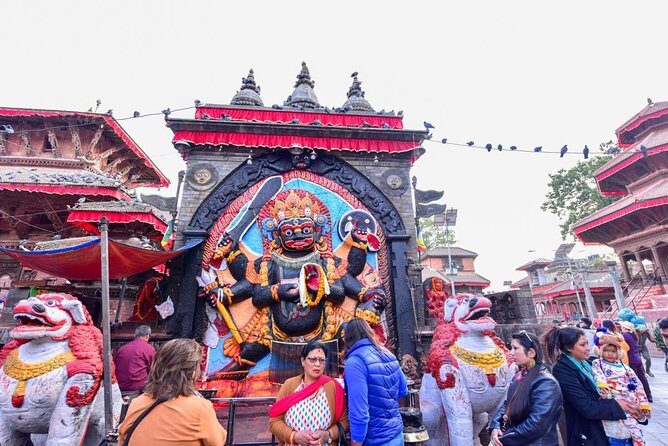
- Kathmandu Durbar Square sights grouped together, so you don’t waste time hopping around
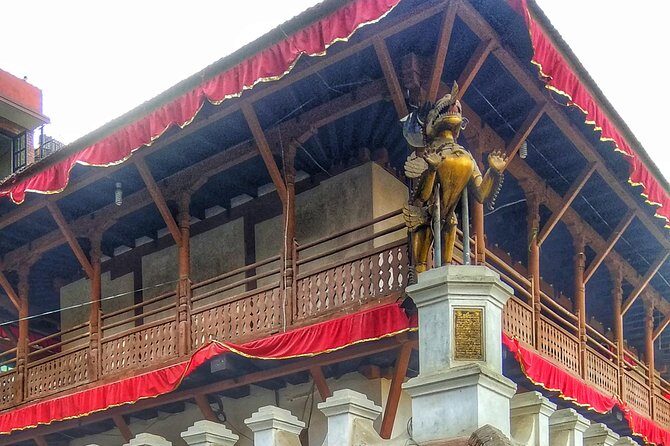
- Hanuman Dhoka Palace and Kumari temple area stops, giving you both architecture and cultural focus
- Indra Chowk as a street-level waypoint, not just a name on a map
- A Freak street-style stretch, adding contrast to the more formal sacred spaces
Why this route feels like day-to-day Kathmandu
Kathmandu can be a lot at first. Loud streets, dense lanes, temple fronts at every angle. This tour helps you slow down without getting stuck in museum mode.
The key is the pacing. It’s designed as a 3 to 4 hour walk, which is long enough to see how neighborhoods function, but short enough to stay cheerful instead of slogging. The group size is small too: it’s a private setup for up to 10 people, led by a licensed guide. That matters in places like this, where knowing where to look saves time and makes the sights feel less random.
You’re also not just following a checklist. The route is built to connect places people use—courtyards, public areas, and market corridors—to the big iconic names like Durbar Square and the Kumari temple zone.
You can also read our reviews of more walking tours in Kathmandu

Meeting at Garden of Dreams, then stepping into side streets
You start at the Garden of Dreams, on Tridevi Sadak in Kathmandu (the tour ends back at the same meeting point). I like this start because it gives you a calm reference point before the city noise and lane density take over.
From there, the walk shifts into backstreet mode. Expect lots of turns, small storefronts, and people moving through the same spaces you’re seeing. This isn’t “stand here for photos” tourism. It’s more like: walk, look, listen, then walk again.
Also note the daily schedule window shown for the activity: 9:15 AM to 2:15 PM. That’s useful for planning. If you hate early starts, this is still late enough to sleep in. If you prefer softer lighting for temple details, mid-morning is often a decent bet.
Kathmandu Durbar Square: temples, courtyards, and the feeling of continuity
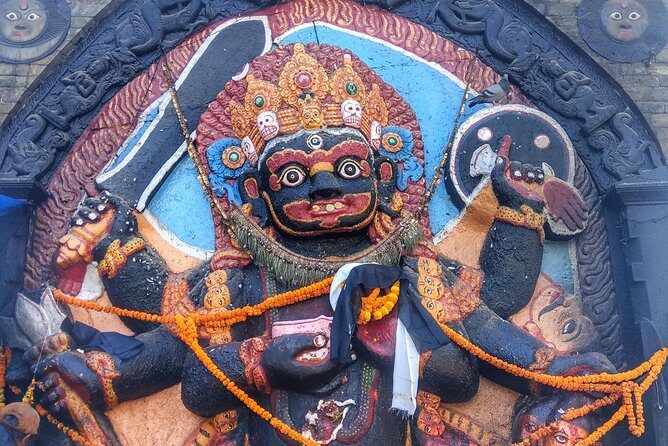
One of the strongest parts of this tour is the way it begins in the Kathmandu Durbar Square area. You’re not stuck with one building. You get a cluster of linked spaces that reflect how Kathmandu organizes sacred and public life.
During this stop, you’ll see a mix of features: a Buddhist stupa, a Hindu temple, and public courtyards. That blend is important. It helps you understand that religion here isn’t just something behind ropes. It shows up in shared spaces where people pass by, pause, and observe.
You also visit the Kumari temple area and Hanuman Dhoka Palace. Even if you don’t know every name beforehand, the guide’s role is to put meaning to what you’re seeing—why these courtyards feel designed for both reverence and everyday movement.
The possible drawback at Durbar Square
Durbar Square is a ticketed zone, and the tour notes that entrance fees are not included. So while the walking itself is included, you should budget extra for admission tickets at the places where they apply.
Indra Chowk and the street rhythm you can’t get from a taxi ride
After Durbar Square, the walk continues toward Indra Chowk. I like this kind of stop because it’s not just a sight; it’s a street rhythm checkpoint.
Indra Chowk gives you a different texture than the more formal sacred architecture. Here, you’re shifting from temple geometry to street-level flow. That contrast helps the whole tour click. It’s one thing to see famous landmarks. It’s another to understand how the city carries on around them.
If you’re someone who wants Kathmandu in layers—spiritual places plus everyday commerce—this stop helps. It’s the hinge between “I’m sightseeing” and “I’m watching how the neighborhood works.”




Ason bazaar: the open-air super market of Kathmandu
Then comes the highlight market segment: Ason bazaar. This is billed as Kathmandu’s traditional and ancient market place and, in practice, it’s the kind of place that teaches you fast.
You’re there for the mix: vegetable and grocery markets, plus the overall market energy that makes Ason feel like the city’s day-to-day hub. This is one of those spaces where you see categories of goods, repeat shoppers, and stall patterns that look consistent even when the faces change.
What you’ll likely enjoy most is that Ason isn’t presented as a “look but don’t touch” scene. It’s a working market. Your guide’s job is to keep it understandable and less overwhelming—so you’re not just walking through smells and sounds with no idea what you’re seeing.
What to watch for at Ason
- Use the time here to slow down. The best moments are often in the small details: how people arrange items, how they move between stalls, and what’s being carried around.
- If you’re interested in food ingredients, this is the stop where you’ll feel that Kathmandu is a real food-and-grocery city, not only a temple city.
Hanuman Dhoka Palace and the Pachali Bhairav dance moment
Another standout piece from the trip feedback is the chance to see Pachali Bhairav dance at the palace area. That’s not something I’d promise will happen every day, because performances depend on timing and local schedules. But it’s a meaningful reminder that this tour isn’t only about buildings.
When something like that is happening, it adds a layer that photographs can’t fully capture—because the palace becomes a performance space, not only an architectural landmark.
If you’re traveling with anyone who loves culture that’s alive right now, not just preserved, keep your eyes open during the palace portion. The guide will help you notice what’s relevant when these moments occur.
The Freak street contrast: why that last stretch matters
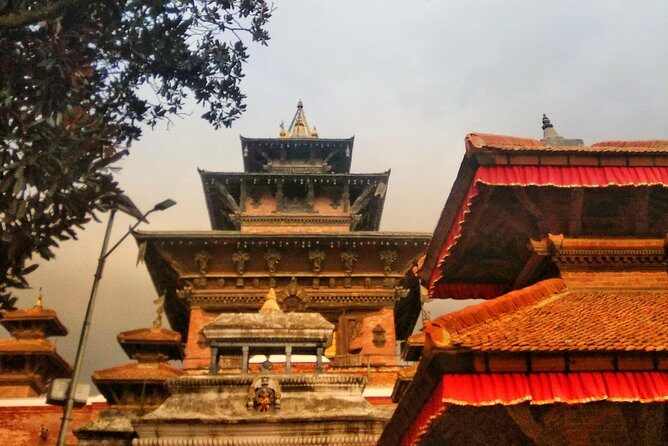
The tour also includes the famous Freak street area. This stop matters because it changes the tone of the walk.
After temples, courtyards, and markets, Freak street gives a different kind of Kathmandu story—more informal, more street-oriented, and often tied to the city’s travel legend. You get contrast, and contrast is what turns a “nice tour” into a “I get the city now” experience.
You don’t need to treat it as a separate attraction. Think of it as the final mood shift. The route is basically saying: Kathmandu has more than one identity, and you can feel them in the streets.
Price and value: what $68 per group really buys you
The price is $68 per group (up to 10 people). That’s a per-group rate, so the cost works best when your group has a few people. If you’re traveling solo, it’s still reasonable because you’re buying a licensed guide plus the structured route—but your per-person value depends on how many you share with.
Here’s the value angle that matters: you’re paying for a guided walk that connects major sights in a single flow—Durbar Square, Kumari temple area, Hanuman Dhoka Palace, Indra Chowk, and Ason bazaar—without you needing to figure out logistics minute by minute.
Also, this is a small private setup. With a group of this size, you’re more likely to ask questions and get real explanations instead of being rushed along by a crowd.
Just remember: entrance fees are not included, so your total trip cost may be a little higher once you add those tickets.
Timing: how to make a 3-4 hour walk work for you
The tour runs about 3 to 4 hours. That duration is perfect for active travelers who don’t want to spend half a day on sidewalks.
In practical terms, here’s how I’d think about the time:
- Durbar Square and the nearby palace/temple focus gives you your cultural anchor.
- Indra Chowk is your street rhythm transition.
- Ason bazaar is your sensory peak.
- Freak street gives you the final contrast before you head back to the start.
A small planning note
Bring water. Wear shoes you can walk in for hours. And if you’re sensitive to crowds or noise, the market segment is the moment to take breaks and let your guide know if you need a slower pace.
What I’d pack (so the walk stays fun)
You don’t need a gear list, but this is the short list that makes Kathmandu back streets easier:
- Comfortable walking shoes (uneven ground is likely)
- Water
- Light sun protection
- A small cash stash for entrance tickets and small purchases (since the tour itself doesn’t include them)
If you’re taking photos, keep in mind that some sacred spaces can have rules about where you stand or what you photograph. Your guide can point out what’s fine as you go.
Weather and comfort: the one thing that can change your day
The activity requires good weather. If it’s canceled due to poor weather, you’ll be offered a different date or a full refund.
This matters in Kathmandu because rain can make surfaces slick and because market lanes don’t always dry quickly. If you’re scheduling around monsoon-style uncertainty, keep your plan flexible.
Should you book this Kathmandu walking tour?
I’d book this tour if you want Kathmandu in a human scale: temples and palace spaces paired with a real market stop. It’s also a good choice if you like guides who can explain what you’re seeing without turning it into a lecture.
Book it with extra awareness if:
- You dislike walking on uneven streets.
- You don’t want to add any entrance ticket costs on top of the tour price.
- You’re visiting during weather that might disrupt outdoor time.
Given the route mix—Durbar Square, Kumari temple area, Hanuman Dhoka Palace, Indra Chowk, Ason bazaar, and Freak street—and the guide-led focus, this is a strong way to get grounded fast in Kathmandu.
FAQ
Where does the tour start and end?
It starts at the Garden of Dreams, Tridevi Sadak, Kathmandu 44600, Nepal, and it ends back at the same meeting point.
How long is the walking tour?
The duration is about 3 to 4 hours.
How much does the tour cost?
The price is $68.00 per group, up to 10 people.
What is included in the price?
A licensed guide service is included.
Are entrance fees included?
No. Entrance fee(s) are not included.
What main places does the tour cover?
The tour includes Kathmandu Durbar Square area (including Kumari temple and Hanuman Dhoka Palace), Indra Chowk, Ason bazaar, and the Freak street area.
Is this a private tour?
Yes. It’s private, and only your group participates.
What are the tour hours?
The activity window listed is Monday to Sunday, 9:15 AM to 2:15 PM.
Do I get confirmation when I book?
Confirmation will be received at the time of booking.
What happens if the weather is bad?
The experience requires good weather. If it’s canceled due to poor weather, you’ll be offered a different date or a full refund.