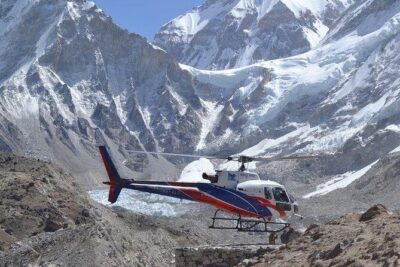
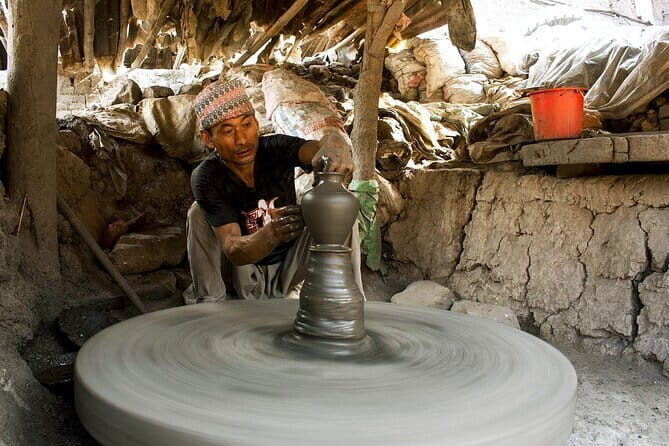
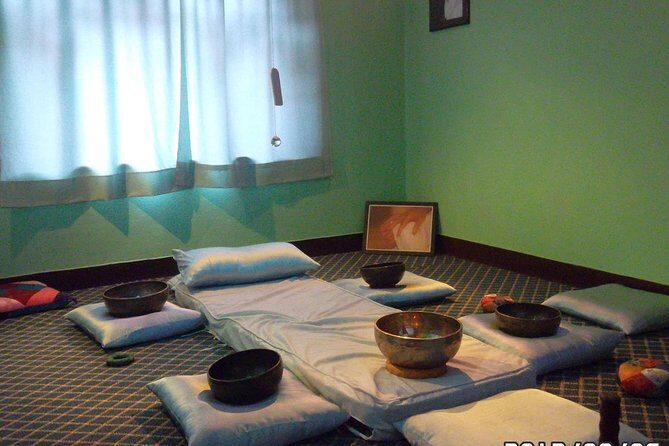
The sky over Nepal is a quiet flex. This short trek is a smart way to catch Poon Hill sunrise views while also meeting real Annapurna communities, not just hitting a viewpoint and rushing off. I like that it’s built for first-timers: guided, paced in day-walk blocks, and heavy on mountain time.
You also get an English-speaking, government-licensed guide plus three meals a day on the trek (with fresh fruit in the evening), which removes a lot of stress. The one thing to plan for is the cold: mornings near Ghorepani can feel sharp, and some days involve repeated up-and-down paths that you’ll feel in your legs.
In This Review
- Key Things I’d Prioritize on the Poon Hill Panorama Trek
- Why Poon Hill Still Works as Your First Annapurna Goal
- Price and Logistics: What $1,024.36 Buys You (and What It Doesn’t)
- From Tribhuvan Airport to Ghandruk: Your Trek’s First Real Day
- Banthanti: Forest Paths, Pastures, and a Steady Climb Feel
- Ghorepani: The Colder Corner and the Rhododendron Switch-Up
- Poon Hill at Sunrise: The Peak Views Portion You’ll Remember
- Tikhedhunga Descent and the Long Walk-Then-Rest Day
- Back to Nayapul, Pokhara, and Kathmandu: Ending on a Smoother Note
- Guides, Group Size, and the Comfort Details You’ll Notice
- Packing and Pace: How to Make 6 Days Feel Like a Win
- Should You Book the Poon Hill Panorama Trek?
- FAQ
- Where does the Poon Hill Panorama Trek start and end?
- What time does the experience start?
- How long is the trek?
- What meals are included during the trek?
- What accommodation is included?
- Is airport pickup and drop-off included?
- Do I need travel or medical insurance?
- Is free cancellation available?
Key Things I’d Prioritize on the Poon Hill Panorama Trek
- Poon Hill sunrise timing: early starts so you can watch the snow peaks light up.
- Village feel in a short window: stops like Ghandruk (Gurung settlement) give culture alongside views.
- Guided logistics: airport transfers by private vehicle and coordinated rides/drives keep you from wrestling schedules.
- Meals that keep you steady: breakfast/lunch/dinner daily during the trek, plus evening fruit.
- High-reward, moderate duration: multiple peak views in just about 6 days from Kathmandu to Kathmandu.
Why Poon Hill Still Works as Your First Annapurna Goal
Poon Hill is famous for a reason, and this trek is built around that moment. One early morning walk brings you to a panorama where the Annapurna region feels huge: snow-capped tops stretch out in layers, and the light shifting over peaks is the main event.
What I like most for your first time is that you’re not only chasing a photo. You’ll walk through green and arid stretches, cross forested sections, and get a sense of how people live at different elevations. The route also threads through places like Ghandruk and Ghorepani, so the days feel like travel, not just exercise.
The Annapurna region is the most visited area in Nepal for a reason, but you still get authentic village rhythms. Morning fields, forest paths, and tea-house-style stops keep it grounded while the mountains do the big show.
You can also read our reviews of more hiking tours in Kathmandu



Price and Logistics: What $1,024.36 Buys You (and What It Doesn’t)
At $1,024.36 per person, the real question is value: are you paying for coordination, food, lodging, and guide support—or only for a name on a webpage. Here, a lot of the heavy lifting is included.
Your package covers a professional guide (government license holder), all airport pick-ups and drop-offs by private vehicle for your group size, one night in Kathmandu in a 3-star hotel with breakfast, and your accommodations during the trek. During trekking days you also get three meals a day (breakfast, lunch, dinner) plus fresh fruit in the evening.
It also matters that flights and road legs are part of the plan: you’ll fly between Kathmandu and Pokhara and then use drives/jeeps to connect to the hiking route. Those internal logistics are usually the part that creates chaos when you try to DIY.
What’s not included is straightforward: travel/medical insurance, personal expenses (phone calls, alcoholic drinks, and similar), and tips for guides and porters. The best “budget” move here is to bring a solid travel policy anyway, because trekking is active and the mountains have their own rules.
From Tribhuvan Airport to Ghandruk: Your Trek’s First Real Day
This starts at Tribhuvan Airport in Kathmandu, with an early start time listed as 6:00 am. After arrival, you’re transferred into your Kathmandu hotel premises, which is a nice setup because it gives you time to get organized before the trek gears up.
Your arrival evening is on your own for meals, but you’ll have breakfast at your hotel. That’s a good balance: you’re not forced into a schedule while you’re still adjusting, yet you’re fueled before you head out.
Then you move toward the Annapurna foothills. The plan is early travel to Pokhara by flight, followed by a drive to the trail area near Bhirethanti, and then a short descent to the river before you climb up toward the village side across the ModiKhola. From that region, you’ll transfer by jeep to Ghandruk, where you spend the night.
Ghandruk is a Gurung settlement, and this is where the trek starts to feel human-scale. Even if you’re mainly there for scenery, these village stops help you understand why people keep choosing this region year after year.
Consideration: this is a “travel day plus walking,” so don’t treat it like a lazy warm-up. You’ll be on the move—road, jeep, short trail, then into the village.
Banthanti: Forest Paths, Pastures, and a Steady Climb Feel
The next walking day is about 5 hours and designed to build rhythm. You’ll pass through pastures, then the trail descends and later ascends through forest sections. It’s not one long grind; it’s more like a series of leg-turning transitions.
By the time you reach Banthanti, the setting is described as densely forested. There’s a note that it’s best in spring, which makes sense in a place where vegetation changes fast through the seasons. Even if you trek outside spring, the forest experience tends to be one of the more pleasant parts because it breaks up the open views with shade and footing variety.
This day is valuable because it sets your legs up for what comes next. Ghorepani can be colder and a bit harder-feeling, and this forest-and-pasture mix helps you settle into the pace.
Quick drawback check: forest trails can mean more slippery surfaces after rain and more uneven footing than you might expect from a “short trek.” Good shoes matter more than you think.
Ghorepani: The Colder Corner and the Rhododendron Switch-Up
Ghorepani is your base for the build-up to Poon Hill, and this day is described as one of the harder walks. Expect about 6 hours with several up-and-down sections to reach the village.
You’ll cross paths that move repeatedly between rises and dips, so it’s not just “walk uphill.” It’s more stop-start for your legs, especially when the air feels cooler. The temperature is noted as getting colder, and you’ll also notice a change in vegetation as the trek shifts through rhododendron forests.
Ghorepani is also practical. It’s described as being well equipped, with features like a post office and a health post, which can be reassuring for planning and peace of mind. It’s the kind of place where you can handle small needs without turning it into a scavenger hunt.
What to love here: the walk sets you up for the main sunrise day by giving you the right kind of effort. Ghorepani is also where you can mentally switch into mountain mode—less greenery drama, more altitude clarity.






Poon Hill at Sunrise: The Peak Views Portion You’ll Remember
This is the big one: scaling Poon Hill for that world-famous panorama. You start early so you can catch the sun rising over snow-clad peaks, and the goal is clear: see the mountains wake up.
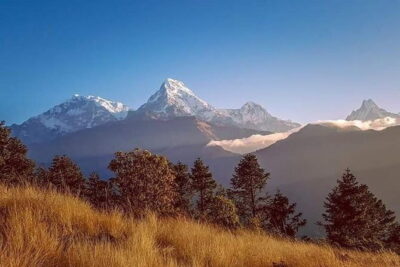
The views are described with specific names, which is great because you can actually look for landmarks as light fills the sky. You’ll be watching over Annapurna I, Gangapurna, Dhaulagiri, and Macchapucchre, plus other peaks in the region.
I love how this moment gives you a “high payoff” without committing to a full-on multi-week trek. In about a 6-day plan, you get the main visual signature of the Annapurna region.
A small but important point: sunrise viewing depends on visibility and weather, so your best strategy is to go with flexible expectations. You can still have an unforgettable morning even when conditions aren’t perfect, but clear skies make it extra dramatic.
Tikhedhunga Descent and the Long Walk-Then-Rest Day
After sunrise, you’ll head toward Tikhedhunga. This is the day where descents start to do their own kind of work on your knees, and it’s listed as a longer trek at about 7–8 hours.
The descent gradually intensifies, reaching its climax with a straight two-hour stone-paved path from Ulleri to Tikhedhunga. That detail matters because stone paving can feel firm and jarring when you’re already tired from a cold morning and a summit push.
Tikhedhunga is where you get your reset. After a longer day on the trail, it’s a relief to arrive somewhere that turns your energy back toward food and rest.
What I’d watch: take your time on the stone sections. Short steps and trekking poles (if you use them) can make a big difference. This is the part of the trek where good pacing keeps the next day from feeling harder than it needs to.
Back to Nayapul, Pokhara, and Kathmandu: Ending on a Smoother Note
The last full stretch is a combination of early morning travel and getting back to sea-level-ish comfort. You’ll depart Tikhedhunga to Nayapul by jeep, then drive to Pokhara, and finally fly back to Kathmandu.
This closing plan is smart because you don’t end with one more brutal mountain day. You get the satisfaction of finishing the hike, then the ride legs help you recover while still keeping the trip moving.
Once you return to Kathmandu, the activity ends back at the meeting point, which is listed as Tribhuvan Airport. That clean ending matters if you’re planning onward flights or tight connections.
One extra practical benefit: you’re not left figuring out regional transport on your own. When a trek is short, coordination becomes part of the experience quality.
Guides, Group Size, and the Comfort Details You’ll Notice
This is described as a private tour, meaning only your group participates. That usually translates to a calmer pace and fewer awkward “catch-up” moments when you’re trekking in changing weather.
The guide aspect is where multiple past experiences seem to land strongly. The program specifies a government license holder who speaks English and comes with support for salary, food, drinks, accommodation, transportation, and insurance. In plain terms: you’re not just getting directions; you’re getting someone accountable, trained, and responsible.
I also like that you get more than just “mountain talk.” People mention guides like Joi, Ghan, Shailesh, and Ganesh with the same theme: detailed care, reliability, and making the whole experience feel easy. That kind of human reliability is a big deal on a trek where your comfort depends on small choices: the timing of departures, the way meals are handled, and how quickly you get answers when something feels off.
Food is another comfort layer. You’ll have three meals a day during the trek, and the evening includes fresh fruit. It sounds small until you’ve walked all day in cool air. Then you’ll appreciate not having to search for something decent when you’re tired.
Packing and Pace: How to Make 6 Days Feel Like a Win
With a trek structured around multiple walking days—about 5 hours, 6 hours, and 7–8 hours—you don’t need to be a mountain athlete. You do need to be prepared to walk on uneven paths and manage cold mornings.
Pack for cold early starts. The trek description explicitly notes temperature getting colder around Ghorepani, and sunrise mornings can be extra chilly. Layers beat one “miracle jacket,” and gloves/hat are often the difference between tolerable and miserable.
Shoes should be built for trail footing. Stone-paved sections are mentioned, and that’s when poor footwear can turn into ankle and knee fatigue.
Also plan for a routine that includes plenty of travel legs—flights and jeeps. Bring a small day pack for your essentials, and keep your “morning gear” easy to access. When you’re moving early, rummaging slows you down.
Finally, remember tipping is not included. If you think of it as part of respectful trekking culture, you’ll avoid the last-day awkwardness.
Should You Book the Poon Hill Panorama Trek?
I’d book it if you want a short trek that still delivers the classic Annapurna payoff: Poon Hill sunrise, village life, and a guided plan that handles the moving parts. It’s especially attractive for first-timers because the schedule fits a week, includes meals and lodging, and gives you a real guide instead of vague instructions.
I’d think twice if you’re highly sensitive to cold mornings or if you hate repetitive up-and-down walking. This route isn’t a single gentle stroll. It includes a harder-feeling day to Ghorepani and a long descent day toward Tikhedhunga.
If you’re the type who wants mountain views without turning the trip into a logistics project, this one is a solid choice.
FAQ
Where does the Poon Hill Panorama Trek start and end?
It starts at Tribhuvan Airport in Kathmandu, Nepal, and it ends back at the meeting point.
What time does the experience start?
The start time is listed as 6:00 am.
How long is the trek?
The duration is listed as 6 days (approx.), running Kathmandu to Kathmandu.
What meals are included during the trek?
During the trek you get breakfast, lunch, and dinner each day. Fresh fruit is included in the evening.
What accommodation is included?
You get one night in Kathmandu at a 3-star hotel with breakfast, plus all accommodation during the trek.
Is airport pickup and drop-off included?
Yes. All airport pick-ups and drop-offs are included by private vehicle for your group size.
Do I need travel or medical insurance?
Travel/medical insurance is not included, so you’ll need to arrange it yourself.
Is free cancellation available?
Yes. You can cancel up to 24 hours in advance for a full refund.