REVIEW · KATHMANDU
Traditional Kathmandu Day Tour with History and Mystery
Book on Viator →Bookable on Viator
Few places show Kathmandu beyond the postcard sites. This day tour trades the usual crowd for Kirtipur lanes and lake calm, with a guide who adds history and mystery as you move. I like the mix of Hindu and Buddhist stops plus village time, and you’ll get to see quieter Newar communities that feel more lived-in than the main heritage circuit. One drawback: entrances are not included, and the tour availability can be inconsistent on some dates—so a quick same-day confirmation is smart.
What makes this feel different is the structure: a full morning start, then a chain of smaller places with short walks, temple viewing, and cultural sights, ending back at the meeting point. I also like the social angle of this being a friendship tour with a maximum group size of 30, so solo travelers usually don’t feel stuck in “just me and my phone” mode. Still, it’s a group itinerary—if you’re hoping for total freedom or long, slow photo breaks, you may find the pace a bit set.
In This Review
- Key highlights to notice before you go
- Price and what you actually get for $32
- The best part: a Kathmandu day that follows the Newar story
- Stop 1: Bagh Bhairab Temple in Kirtipur
- Stop 2: Chilancho Bahal and temple-walk lanes
- Stop 3: Khokana village life and the no-chicken oddity
- Stop 4: Bungamati Museum, Macchendranath Temple, and craft
- Stop 5: Taudaha Lake, fish-feeding, and winter ducks
- Getting the most out of a 5 to 7 hour format
- Social vibe: a friendship tour that helps solo travelers
- Should you book this Kathmandu traditional day tour?
- FAQ
- What is the duration of the Traditional Kathmandu Day Tour?
- What does the tour cost?
- Where is the meeting point and what time does it start?
- What is included in the price?
- Are entrance tickets included?
- Is bottled water or food included?
- How big are the groups?
Key highlights to notice before you go
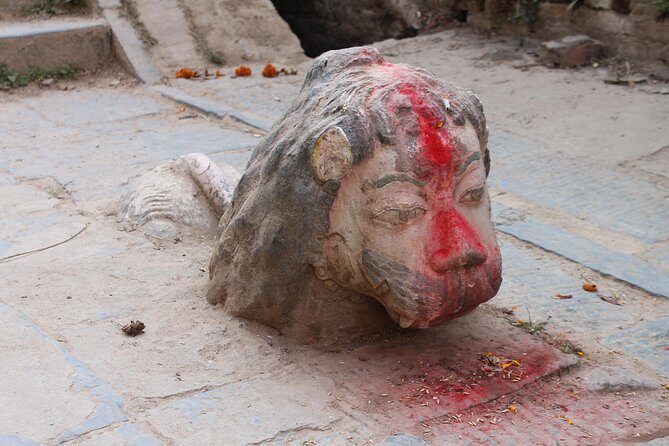
- Newar villages over the main sites: Kirtipur, Khokana, and Bungamati/Macchendranath get more time than you’d expect on a short day.
- Temple variety in one loop: Hindu views at Bagh Bhairab, Buddhist stops in Kirtipur, then onward to Newar temple culture.
- Taudaha Lake with myths and birds: peaceful walking, fish-feeding, and winter migration timing for Siberian ducks.
- Short, walkable stretches: narrow alleys and cultural lanes rather than marathon hiking.
- Group size capped at 30: easier to chat, easier to keep track of where you’re going.
- Air-conditioned vehicle + guide commentary: comfort for transfers, and context to make the stops click.
Price and what you actually get for $32
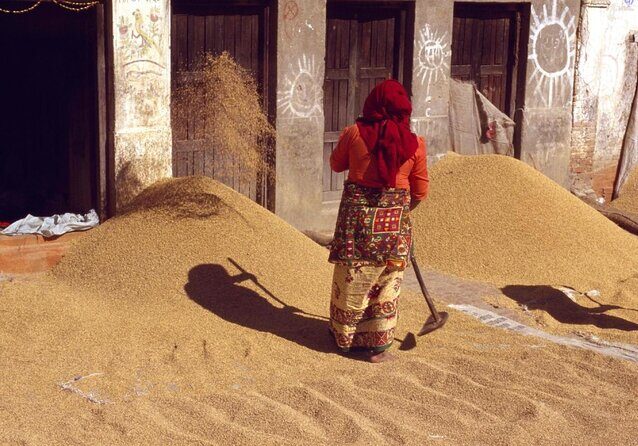
At $32 per person for about 5 to 7 hours, this tour is priced like a value day rather than a premium private experience. The big reason it can work at this price point is that it includes the air-conditioned vehicle, a government certified English-speaking guide, and all service charges and taxes. In other words, you’re paying for the time, the transport, and the interpretation.
What you should budget for separately is anything tied to entrances/tickets. The itinerary explicitly notes some spots as free and others as not included, and you’ll want to handle those small costs on the day. Also, no bottled water and no meals/drinks are included, so plan to bring your own water or be ready to buy along the way. If you’re the kind of traveler who snacks constantly (totally reasonable in Kathmandu), pack a few easy options and you’ll enjoy the day much more.
One more practical note: this is a mobile ticket experience and starts at 9:45 am from Leknath Marg, Kathmandu. That matters because Kathmandu traffic can be unpredictable—starting on time is a quiet superpower.
You can also read our reviews of more historical tours in Kathmandu

The best part: a Kathmandu day that follows the Newar story
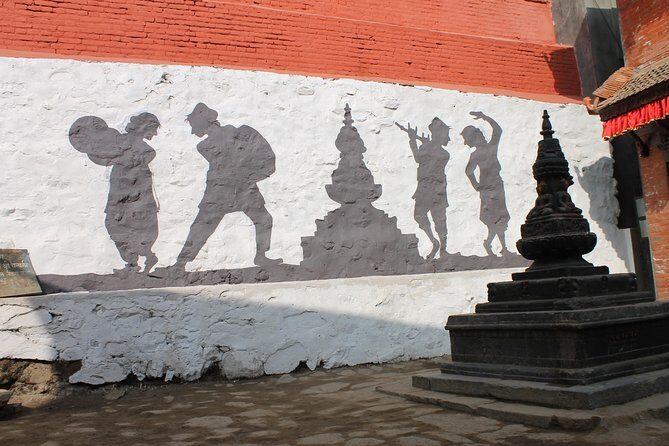
This itinerary is built around a theme you can feel as you move: Newar culture in neighborhoods and village areas that don’t get the same spotlight as the big heritage core. You’ll hear commentary that connects temples, community life, and local beliefs. That’s what makes these stops more than a checklist.
I like how the day includes both “look at the view” moments and “watch how people live” moments. For example, Bagh Bhairab Temple is a foothills location where you can take in a view of the Kathmandu Valley. Then later, you shift to places like Khokana and Bungamati, where the focus turns to daily rhythm, craft, and temple life. If your goal is to understand Kathmandu as a living city rather than an open-air museum, this direction is a good fit.
The group angle is also real. With a max of 30 travelers, there’s enough variety in who you’ll meet, but it shouldn’t feel like you’re stuck in a crowd. As a solo traveler, that can make the day feel lighter—especially when you’re moving through narrow alleys where it’s useful to stay near your guide.
Stop 1: Bagh Bhairab Temple in Kirtipur
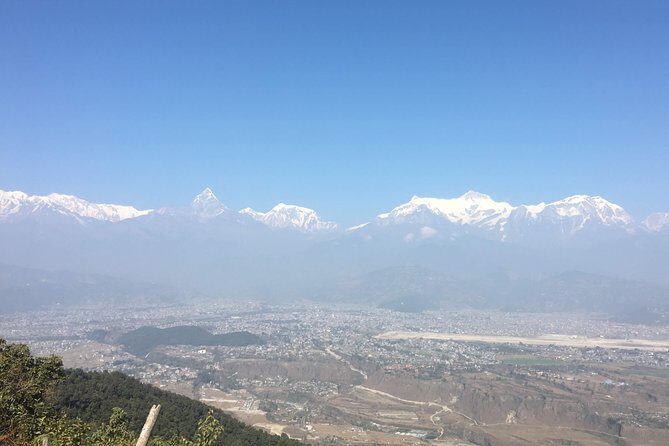
You start in Kirtipur, a town known for its indigenous Newar community, set in the foothills to the south of Kathmandu. The first stop is Bagh Bhairab Temple, and it’s not just about the temple itself. The real draw is the setting: from here, you can enjoy the topographical view of Kathmandu Valley.
Why this works early in the day: views are easier when you’re fresh and the morning light is still cooperative. Also, temple sites in Kirtipur often come with local legends, and this stop is framed as a place with stories and mysteries the guide shares along the way. Even if you’re not the type to get swept up in myth, hearing how locals connect sacred places to the land makes the rest of the day easier to follow.
Practical note: the itinerary says the 30-minute admission ticket is not included. That usually means you should arrive with some flexibility—small cash or a simple payment method can help.
Stop 2: Chilancho Bahal and temple-walk lanes
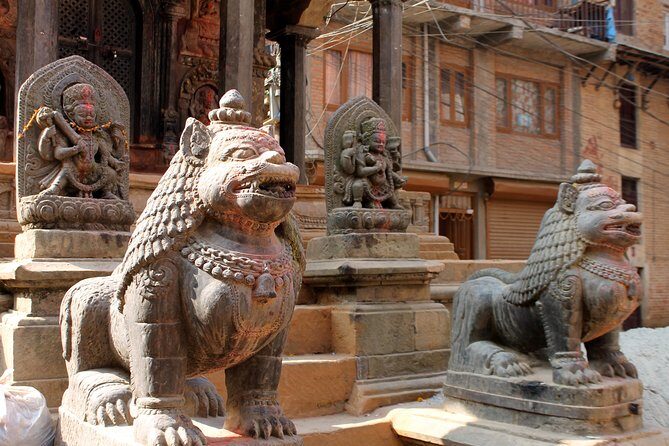
Next you move through Kirtipur on foot. The stop here is Chilancho Bahal, described as a popular Buddhist temple. What’s really valuable isn’t only what you see at the temple—it’s the walk between sites. The route passes places like Uma Maheshwar Temple and then continues into narrow alleys.
This is one of those stops that feels “small” on paper and then turns into the good part of the day. Narrow lanes are where you catch how life actually looks: the scale of buildings, the closeness of neighbors, and the way temple courtyards fit into a working community.
The itinerary gives a clear timing target: about 1 hour, and admission is free here. If you’re trying to keep your day budget predictable, this is one of the easier segments.
Stop 3: Khokana village life and the no-chicken oddity
Then the tour shifts to Khokana, a traditional Newar town area often framed as less visited than the more famous heritage zones. The stated timing is about 1 hour, and admission is free.
Here’s the detail that makes this stop memorable: the tour notes that you will not see any chicken in this village. That’s unusual enough that it sparks curiosity, and it’s also a good reminder that local customs shape what you see in daily life. I’d treat that as an observational curiosity, not a guaranteed photo prop—still, it’s exactly the sort of thing that makes a visit feel different from the typical temple circuit.
Why Khokana is worth your time: you’re stepping into livelihood and traditional house styles rather than standing only in landmark squares. This stop seems designed for people who enjoy the slower side of travel—listening, noticing, and watching how a community functions.
The possible drawback: since it’s described as a hidden, less-visited place, your ability to buy snacks might be limited depending on the day and timing. If you’re sensitive to low-food-options, bring a few items with you.





Stop 4: Bungamati Museum, Macchendranath Temple, and craft
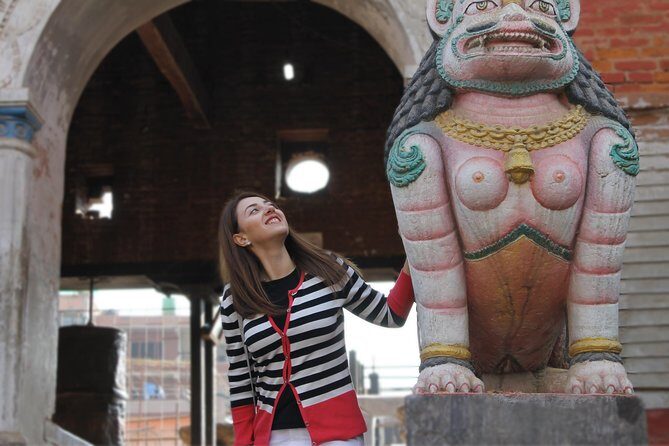
From there, you head to Bungamati Museum and the Macchendranath temple area. The timing again is around 1 hour, with admission marked as free.
This part of the day is culture with a practical angle. You can expect traditional Newar lifestyle context, and you’ll also see local art and crafts. One specific craft detail in the itinerary: wood carving, including masks carved by locals. There are also traditional ponds mentioned as part of the area you’ll see.
I like this stop because it gives your brain a break from constant walking. You can look, ask questions, and connect what you saw earlier (temple and alleys) to something tangible: handmade objects, crafts, and the idea that community identity expresses itself through art.
What to watch for: museum-style stops can vary in how much English explanation you get on the fly. Since your guide is included, you should be able to get context, but if you’re hoping for deep artifact info, ask a question or two as you go.
Stop 5: Taudaha Lake, fish-feeding, and winter ducks
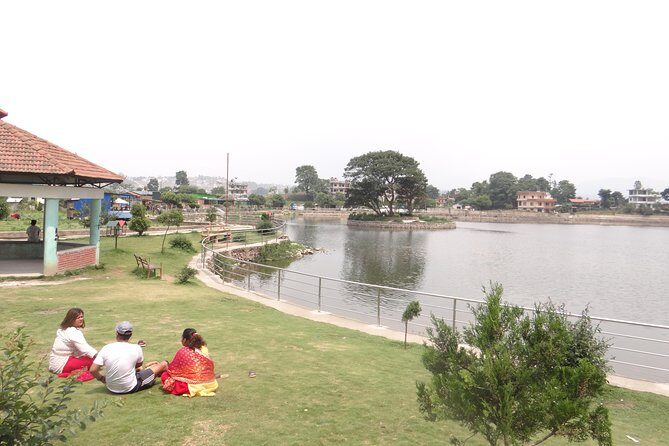
Now for the calm section. Taudaha Lake sits south of Kathmandu, about 10 km from the city. The tour sets this stop at about 1 hour, and admission is not included.
Taudaha is framed as a “unique lake” with historical and religious importance, plus local myths and beliefs. One of the most specific details you’ll hear is that it’s tied to a popular snake called Karkotatk Naag. Whether you take myths literally or as cultural storytelling, this kind of naming connects the landscape to belief systems. That connection is what turns a simple stroll into a richer experience.
There’s also a wildlife note that can genuinely affect what you see: in winter, Siberian ducks visit the lake during migration. If your trip is seasonal, this is the kind of detail that helps you time things. Even when ducks aren’t visible, the idea signals that Taudaha has an ecosystem rhythm worth noticing.
And yes, you can do something lightly active: a walk around the lake is described as peaceful, and there are plenty of fish where you can feed a fish. This is often the easiest segment for photos and reflection because you’re not pushing through crowds—just enjoying a slower pace.
Two practical considerations:
- Bring patience for the one-hour timing. Lake walks are easy to stretch, and the schedule may keep you moving.
- Since bottled water isn’t included, hydrate before you arrive at the lake.
Getting the most out of a 5 to 7 hour format
This tour is long enough to feel like a real day but short enough that you can still do something else the same evening. To make it enjoyable, plan your day around the constraints that are built in.
Here are my key “do this, not that” ideas:
- Wear closed shoes you can trust on uneven ground and narrow alley steps.
- Bring a light snack even if you’re not a big eater. With no meals included, hunger can steal your attention at the wrong time.
- Pack a small amount of cash for entrance fees that are not included at some stops.
- Ask your guide for one story at each stop, not ten. This keeps things flowing and helps the day feel connected instead of like random facts.
Also, because this starts at 9:45 am and ends back at the same meeting point, you’ll want to keep your evening plans flexible. If Kathmandu traffic is slow, you may arrive back a little later than you expected.
Social vibe: a friendship tour that helps solo travelers
One of the strongest selling points here is that it’s designed as a friendship-style group day. With a cap of 30 travelers, you’re not likely to feel completely anonymous. For solo travelers, that can be the difference between tolerating a group itinerary and enjoying it.
You’ll also be meeting people while moving between stops—temple courtyards, village lanes, and lake paths are natural “break points” to chat. If you like travel conversation, this format fits well.
The only caution: in any group, personalities vary. If you’re very introverted, you might prefer to keep your interactions light and focus on your own pace at each stop. The good news is that the itinerary has enough physical movement that you won’t be forced into constant conversation.
Should you book this Kathmandu traditional day tour?
I’d say yes, with two smart conditions.
Book it if you want:
- A Newar-focused day beyond the most famous heritage sites
- Temple variety plus village life, craft, and a peaceful lake walk
- A guided day that feels structured but not rushed into only major monuments
- A social format that can work for solo travelers
Skip or reconsider if:
- You need guaranteed availability on your exact date. A small number of reports flag that the tour may not run as expected on some days, so treat confirmation seriously.
- You’re sensitive to entrance costs and you don’t want to pay extra. Since some stops are not included, you’ll likely spend a bit more on the day.
- You hate group pacing. This is a guided loop with set stop times.
If you do book, do one thing that reduces risk: confirm the tour is operating the morning of your departure and keep your first meeting point plan simple. Then show up ready to walk, listen, and enjoy Kathmandu where the stories live outside the main squares.
FAQ
What is the duration of the Traditional Kathmandu Day Tour?
It runs for about 5 to 7 hours, depending on the day and timing between stops.
What does the tour cost?
The price is $32.00 per person.
Where is the meeting point and what time does it start?
It starts at Leknath Marg, Kathmandu 44600, Nepal and the start time is 9:45 am. It ends back at the meeting point.
What is included in the price?
The tour includes an air-conditioned vehicle, a government certified English speaking guide, and service charges and taxes.
Are entrance tickets included?
Entrances are not included overall. Some stops are listed as free, while others note admission not included.
Is bottled water or food included?
No. Bottled water is not included, and no meals or drinks are included.
How big are the groups?
The tour has a maximum of 30 travelers.