REVIEW · KATHMANDU
Annapurna Base Camp Trek
Book on Viator →Operated by Ace the Himalaya · Bookable on Viator
This trek hits hard, then rewards fast. You’ll walk from Kathmandu to Pokhara and then into the Annapurna Sanctuary, climbing to Annapurna Base Camp at 4,130 m with daily mountain views plus real village life along the way. What I like most is how much of the heavy lifting is handled for you, including airport pickups in Kathmandu and the organized vehicle transfers to start the trail.
I also like the shape of the route: it builds in real moments of payoff. Your early start for Poon Hill is one of those Nepal classics where sunrise turns the peaks on like a switch, and you come back for a hot breakfast before continuing onward.
One thing to plan carefully: this is an altitude trek, and travel insurance that covers emergency high-altitude rescue and evacuation isn’t included, even though the trek reaches over 4,000 m and depends on weather. You’ll want your coverage to match the risk you’re taking.
In This Review
- Key points that make this trek worth your time
- From Tribhuvan Airport to Your First Sleep in Kathmandu
- Price and Logistics: What’s Included in the $1,350 Package
- The Pokhara Launch: Lakeside Calm Before the Climb
- Days 3 to 5: Tikhedhunga, Ghorepani, and Poon Hill Sunrise
- Days 6 to 7: Chhomrong, Rhododendron Forests, and the Khuldighar Stretch
- Days 8 to 10: Machapuchhre Base Camp, Annapurna Base Camp, and Jhinu Hot Springs
- Days 11 to 13: Bamboo Walk Back, Fewa Lake Boat, and Kathmandu Farewell
- Training, Altitude, and Group Size: Making It Feel Manageable
- Should You Book Ace the Himalaya for Annapurna Base Camp?
- FAQ
- What’s the duration of the Annapurna Base Camp Trek?
- Where does the trip start and end?
- What’s included in the price?
- What is not included?
- How high does the trek reach?
- Can I get a full refund if I cancel?
Key points that make this trek worth your time
- Poon Hill sunrise with a straightforward early-morning hike and hot breakfast back in Ghorepani
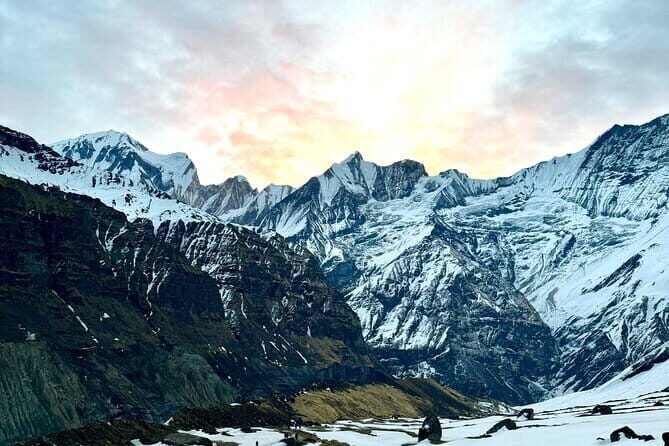
- Annapurna Sanctuary views from ABC (4,130 m) surrounded by Annapurna I, Annapurna South, Machapuchhre, and Hiunchuli
- A porter setup of 1 porter for every two clients, plus an included duffel/kit bag and sun hat
- Altitude pacing that includes big scenery days, like Machapuchhre Base Camp before reaching ABC
- Jhinu Danda hot springs for an actual body reset on the way out
- Small group size (max 15), which usually keeps things calmer on narrow trails
From Tribhuvan Airport to Your First Sleep in Kathmandu
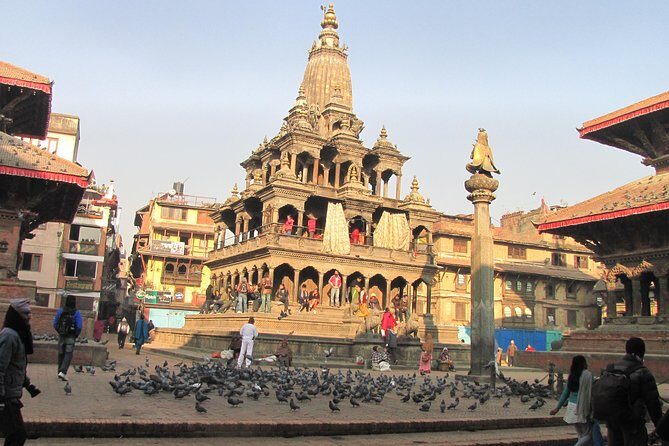
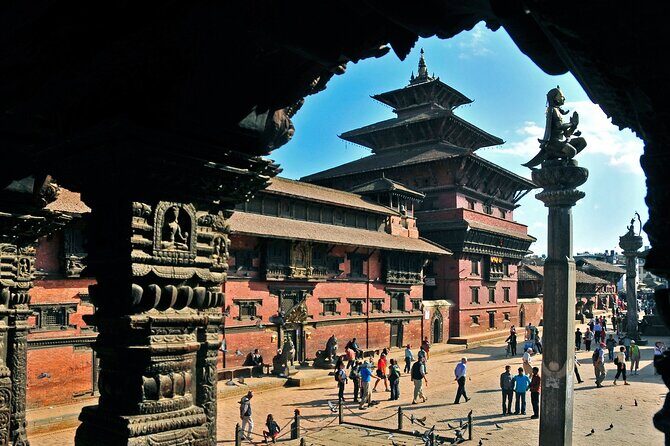
Your trek starts in Kathmandu, not on the trail. An airport representative meets you at Tribhuvan International Airport, and you’re transferred to your Kathmandu hotel in a private tourist vehicle. You’ll also get a pre-trip meeting either on Day 1 or Day 2, and that meeting is more useful than it sounds because it covers your trek leader/guide introduction and the paperwork they need (passport details, a readable copy of your travel insurance policy, and passport-size photo copies).
If you like clear steps, you’ll appreciate the way this trip is laid out. Day 1 also sets a practical baseline: you check in, rest, and get ready for the next big move to Pokhara. Since you’re traveling in Nepal on shared buses or private vehicles depending on the leg, being organized from Kathmandu helps everything feel easier later.
You can also read our reviews of more hiking tours in Kathmandu


Price and Logistics: What’s Included in the $1,350 Package
$1,350 per person is not cheap, so I treat this like a value question: what are you buying with your money? You’re paying for the main trip infrastructure—licensed English-speaking trekking guide, permits, park/official fees, and the “how do we get you there” parts (airport transfers, tourist bus between Kathmandu and Pokhara, and vehicle between Pokhara and Nayapul).
A standout inclusion is the porter arrangement: 1 porter for every two clients. That can matter more than you think because you’re not just walking uphill—you’re managing your pack weight every day. The fact that the trek also includes a duffel/kit bag and sun hat helps you start with the right basics, too.
Meals and lodging are also built in for most of the trek: you get hotel rooms in Kathmandu (2 nights) and Pokhara (2 nights), plus guesthouse accommodation for 8 nights on the trek. Food is largely covered as well, with breakfasts included across the trek period and lunches/dinners included for set days. What’s not included is the kind of stuff that can surprise people, especially in the capital cities: lunch and dinner in Kathmandu and Pokhara aren’t included, and tips for drivers and trekking staff are expected.
Bottom line: if you want a “show up and hike” experience, the package fits that. If you’re the type who wants to manage everything independently, you might feel you’re paying extra for the structure.
The Pokhara Launch: Lakeside Calm Before the Climb
After your Kathmandu setup, the trip shifts gears toward Pokhara. On Day 2, trekking staff pick you up at 6:30 am and escort you to the tourist bus station, with the bus leaving around 7:30 am. The ride to Pokhara is part transport, part anticipation: you’re moving into a slower rhythm, and the scenery out the window helps.
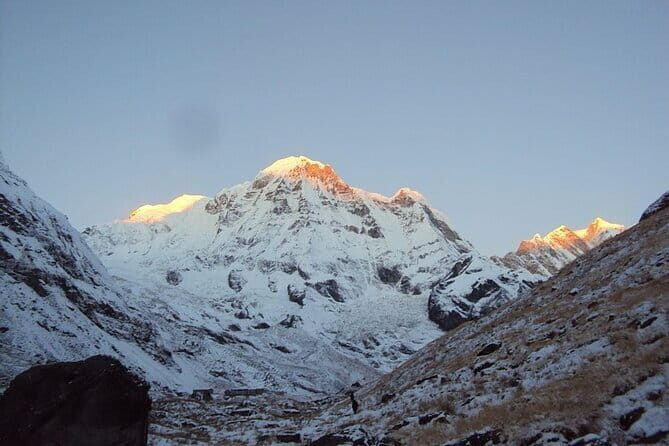
Pokhara itself is described as smaller and less hectic than Kathmandu, and that’s exactly why it’s a great staging point. It sits on the banks of Phewa Lake and acts like a visual appetizer for the Himalayas. You’ll get views toward Annapurna and Machapuchhare in the north, Dhaulagiri in the west, and other peaks in the east, which helps you connect your first day’s hiking dreams to what you’ll actually see on the trail.
This matters because Annapurna Base Camp can feel abstract before you’re there. Pokhara turns the route into something physical. Even if you don’t hike much that day, you’re getting oriented to the mountain “map” before your first climb begins.
Days 3 to 5: Tikhedhunga, Ghorepani, and Poon Hill Sunrise
Days 3 through 5 are your runway. They’re also where you start learning how the Annapurna trekking day really feels: constant ups and downs, frequent stair climbing, and trails that switch between village edges and forested stretches.
Day 3 begins with a drive from Pokhara to Nayapul, then a short walk along the Modi Khola before you reach Birethanti (1,015 m). From there, the path follows the north bank of the Bhurungdi Khola, climbs steadily, and ends at Tikhedhunga (1,570 m). It’s a short-feeling opener meant to get your legs moving without crushing you.
Day 4 continues the climb, pushing toward Ulleri, then through oak and rhododendron forests toward Banthanti and Nangethanti. You finish in Ghorepani at 2,840 m. This day matters because it teaches you patience: you’ll start noticing how quickly you can burn energy when you go too fast. Slow steps win here.
Then comes Day 5 and the classic move: a very early hike to Poon Hill (3,210 m). The payoff is the sunrise view—unobstructed, big, and dramatic—followed by hot breakfast back in Ghorepani. After that, you climb along ridges through pine and rhododendron forests toward Deurali, then descend to Banthanti and turn off to Tadapani.
Practical tip: train for stairs before you go. The route has a way of turning “one more climb” into a staircase marathon, and your fitness plan should match that reality.
Days 6 to 7: Chhomrong, Rhododendron Forests, and the Khuldighar Stretch
Day 6 shifts you into the rhythm of deeper forest and village stepping stones. From Tadapani you descend through rhododendron forests, then it eases as you reach Gurjung and walk to Chomrong at 2,140 m. Chomrong is one of those places where you feel like you’ve arrived at the Annapurna “world,” not just passed through it on the way up.
Day 7 continues with a drop toward the Chomrong Khola and another climb. You’ll reach Khuldighar at 2,380 m, where there used to be an ACAP check post, then you move through a mix of forest edges and steep trail sections. The route runs through bamboo and rhododendron forests, always keeping to the west side of the river for long stretches, and the day ends at the Himalayan Hotel.
These two days are about two things: scenery variety and energy management. You’ll see different trail textures—rock banks, forest tunnels, bamboo areas—and it keeps the trek interesting. It also keeps your mind busy, which helps when fatigue shows up.
One thing I appreciate about this design is how it sets you up for Day 8. You’re not just “walking up”; you’re being moved into position for the sanctuary-style big day.






Days 8 to 10: Machapuchhre Base Camp, Annapurna Base Camp, and Jhinu Hot Springs
Day 8 is the emotional highlight for most people, and for good reason. The trail climbs past Hinko Cave and Deurali, then toward Machapuchare Base Camp. Important nuance: it’s called a base camp, but climbing Machapuchhre is not permitted, so it’s more of a viewing and staging area than a true mountaineering base.
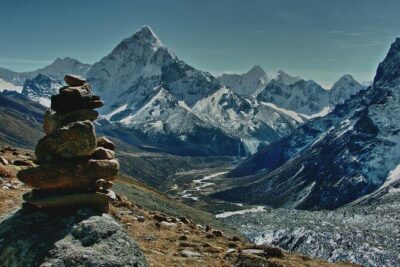
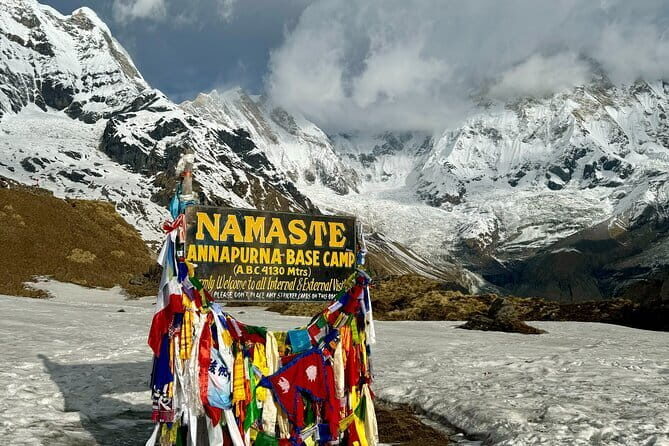
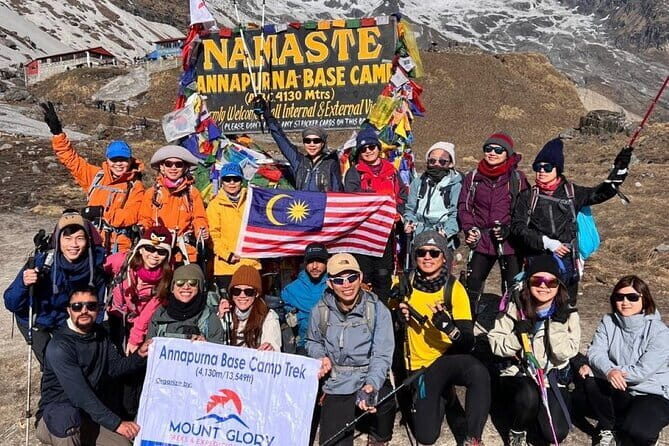
From there, a further two hours of trekking brings you to Annapurna Base Camp at 4,130 m. This is where the Annapurna Sanctuary idea turns real. You’re surrounded by mighty peaks, including Annapurna I, Annapurna South, Machapuchhre, and Hiunchuli, with views that are both vast and close enough to feel personal.
Day 9 takes the wind out of your sails in a good way: it’s a descent day. You follow the same trail down, dropping by about 1,700 m to Modi Khola’s bank and continuing to Bamboo at 2,345 m where teahouses/lodges are available. A smart strategy on a day like this is to focus on steady footing rather than speed. Descents can be harder on knees than the climbs feel in your lungs.
Day 10 brings you to Jhinu Danda, with another return route via Chomrong and Khuldighar. After passing Khuldighar you may notice an experimental sheep farm, and the trail continues through rhododendron and bamboo fields. Then you get the payoff: a very steep descent to Jhinu, where you can bathe in natural hot springs.
That hot springs moment is not just a perk. It’s a practical recovery tool, and it gives you one more reason to feel like the trek is working for you instead of against you.
Days 11 to 13: Bamboo Walk Back, Fewa Lake Boat, and Kathmandu Farewell
By Day 11, the trek starts giving you back your time. From Jhinu you walk along the right side of Modi Khola for about 4.5 hours to Birethanti, which is described as one of the best and most relaxing walks of the whole trek. Then you reach Nayapul and drive back to Pokhara for a hotel check-in.
In the afternoon or evening, you head to Fewa Lake for a boating trip to Barahi Temple. This is a nice contrast day. After days of altitude and trail dust, you’re back on calm water, and it makes the transition to city life feel smoother.
Day 12 brings you back to Kathmandu in the morning. You get a farewell dinner in a traditional Nepalese restaurant with cultural performances. That’s a good moment to slow down and look at what you did, not just tick it off your list.
Day 13 is straightforward: an airport representative drops you at Tribhuvan International Airport for your departure.
If you like trips that don’t end abruptly, this pacing helps. You don’t get dumped back into travel mode the second you finish your last hike.
Training, Altitude, and Group Size: Making It Feel Manageable
This trek is best for people with moderate physical fitness. “Moderate” doesn’t mean easy. You’re walking at multiple altitudes and reaching base camp at 4,130 m, with long days that include steep climbs and repeated stair-like sections.
You’ll also want to train your legs for frequent elevation changes. The best prep is simple: do plenty of stairs and practice walking uphill, not just going to the gym and calling it done. If you can, practice carrying the kind of daypack you’ll actually use. Even if a porter shares the load, you’ll still have your essentials.
Group size is capped at 15, which can help keep the experience more personal and less chaotic on narrow paths. You’ll be trekking with a licensed guide and a porter team setup, which is useful if you need help with pacing or route questions.
Finally, remember the practical “big no”: don’t overpack. With porters for half the load, it’s still smart to keep clothing and gear lean. The less you carry, the more energy you can spend on stepping forward.
Should You Book Ace the Himalaya for Annapurna Base Camp?
Book it if you want a well-structured Annapurna Base Camp trek that handles the hard logistics: transfers, permits, meals, accommodation, and a guide plus porters. The included airport transfers, Kathmandu/Pokhara lodging, and on-trail staffing mean you can focus on the main thing: walking up into the sanctuary and earning those ABC views.
Skip (or rethink) if you’re not ready to plan for high altitude. This trip reaches 4,130 m, and the provider doesn’t include travel insurance that covers emergency high-altitude rescue and evacuation. If your insurance doesn’t match that risk, fix it before you commit.
If you want a trek where the payoff is clearly timed—Poon Hill sunrise, ABC at 4,130 m, then Jhinu hot springs—you’ll likely like this route and the way it’s organized.
FAQ
What’s the duration of the Annapurna Base Camp Trek?
The trek is listed as 13 days approximately.
Where does the trip start and end?
It starts at Tribhuvan International Airport in Kathmandu and ends back at the same meeting point in Kathmandu, with an airport drop-off on the final day.
What’s included in the price?
The package includes airport transfers, three-star hotels in Kathmandu (2 nights) and Pokhara (2 nights), guesthouse accommodation during the trek, a licensed English-speaking trekking guide, permits for trekking, tourist bus and vehicle transfers, porter support (1 porter for every two clients), a free duffel/kit bag and sun hat, and most meals (breakfasts plus set lunches and dinners). It also includes all government taxes and official expenses.
What is not included?
Not included items are travel insurance (including emergency high-altitude rescue and evacuation coverage), international airfare, Nepal entry visa, alcoholic and other drinks, personal trekking equipment, and tips for trekking staff and drivers. Lunch and dinner in Kathmandu and Pokhara are also not included.
How high does the trek reach?
Annapurna Base Camp is at 4,130 m (13,549 ft).
Can I get a full refund if I cancel?
You can cancel up to 3 days in advance for a full refund. If you cancel less than 3 full days before the experience start time, the amount paid won’t be refunded.