Annapurna Base Camp is the kind of trek that keeps grabbing your attention. You start with Kathmandu-to-Pokhara travel, ease into the Annapurna region via Hille and Ghorepani, then hit the big moments: Poon Hill for that classic sunrise and Annapurna Base Camp at 4,130m.
What I like most is the balance. You’re hiking at altitude, yes, but the route is paced with stops like Tadapani, Sinuwa, and Deurali so you’re not just rushing upward day after day.
One consideration: this trek is still a mountain trek. Some days are long (think 6–7+ hours), and weather can be unpredictable at higher elevations, including cold surprises.
In This Review
- Key highlights to look for
- Entering Annapurna: why this region matters
- Your 14-day route: Kathmandu to base camp, then back down
- Day 1: arrive in Kathmandu (1,350m) and set your pace
- Day 2: drive to Pokhara (860m) and transition into trekking mode
- Days 3–5: Hille, Ghorepani, and the Poon Hill payoff
- Days 6–7: Sinuwa and Deurali, where the air gets thinner
- Day 8: Annapurna Base Camp (4,130m) is the main event
- Day 9: Bamboo (2,050m) brings a welcome change
- Day 10: Chomrong route and Jhinu-Danda (1,700m) hot-springs reward
- Days 11–12: trekking out to Nayapul, then back to Pokhara and Kathmandu
- Day 13: a real rest day in Kathmandu (don’t skip it)
- Price and logistics: what $769.24 buys you
- The guide factor: where Damu and the team add real worth
- Weather and surprises: plan for cold, not just sunshine
- What to expect on the trail: hours, altitude, and real pacing
- Meals, water, and comfort: budget what you’ll actually buy
- Who should book Annapurna Base Camp, and who should reconsider
- Should you book this Annapurna Base Camp Trek?
- FAQ
- How long is the Annapurna Base Camp Trek?
- Where does the trek start and end?
- What’s included in the price?
- What’s not included?
- What fitness level is needed?
- Is free cancellation available?
Key highlights to look for
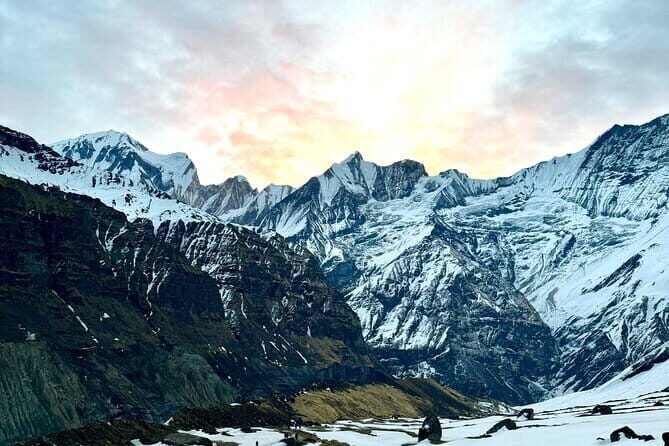
- Poon Hill sunrise makes the first real wow moment happen early
- A clear route progression from lower villages up through Ghorepani and Deurali
- Annapurna Base Camp at 4,130m is the main altitude milestone
- Jhinu-Danda hot springs are a satisfying reset after the descent
- Private group format means you hike with just your people
- Guide support is a major theme, with Damu (Damodar) often mentioned by name
Entering Annapurna: why this region matters
The Annapurna region isn’t just famous for views. It sits inside the Annapurna Conservation Area, which means the trail passes through a landscape shaped by conservation rules and local livelihoods.
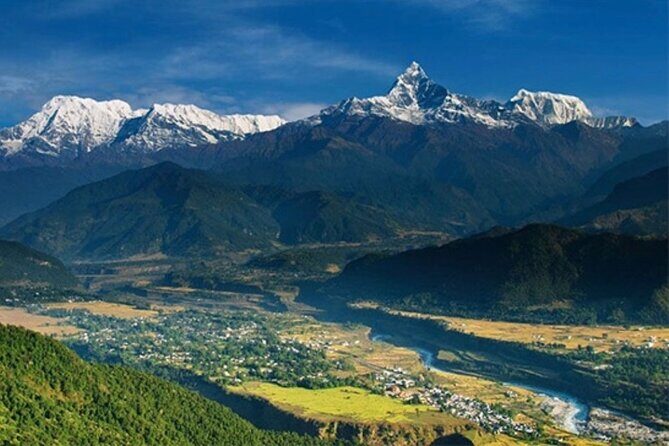
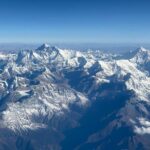
I also like the geography of this trek. Even before you reach the high points, the dramatic Himalayan skyline starts showing up through the Annapurna range and nearby peaks like Machhapuchhre (the Fish Tail) when conditions are clear. That “you’re really in the mountains” feeling tends to build instead of arriving all at once.
And then there’s the human side. This route passes areas associated with Gurung communities—so your days don’t feel like you’re only moving through rocks and snow. You’re hiking through places where people live, farm, and run tea houses along the way.
You can also read our reviews of more hiking tours in Kathmandu
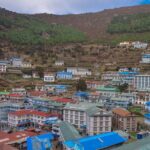
Your 14-day route: Kathmandu to base camp, then back down
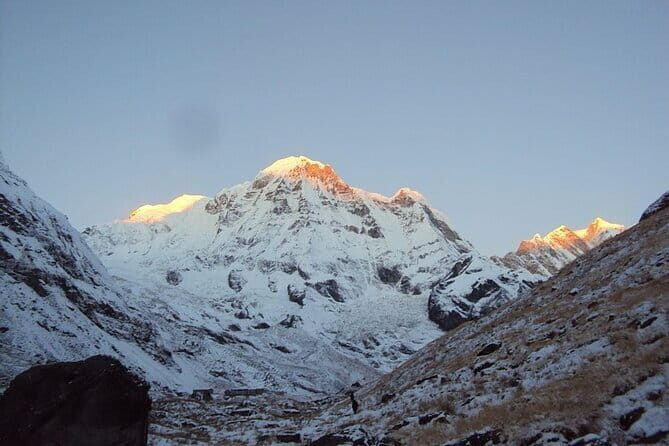
This trip is designed as a full loop of sorts: Kathmandu travel days bookend the trekking, with a rest day in Kathmandu later to recover after the mountains. The overall duration is listed as about 14 days, and you’ll spend a lot of time in the “in-between” parts that most people forget to plan for—drives, walking days, and recovery time.
The trek starts in the Kathmandu area (meeting point in Kathmandu) and then moves you toward Pokhara, where the trekking access usually begins via Nayapul. From there, you’ll work your way upward through villages and viewpoints, then reverse course for the descent back toward Nayapul.
Because this is a private tour/activity, you’re not juggling a big crowd pace. That matters on a mountain trek, where one fast group can either steamroll your rhythm or force you to match someone else’s decisions.
Day 1: arrive in Kathmandu (1,350m) and set your pace
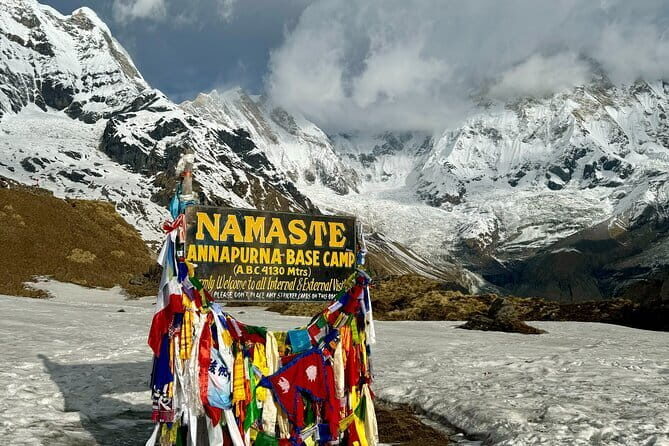
Day 1 is arrival in Kathmandu at 1,350m. This is a useful start because you’re not jumping immediately to huge altitude. Instead, you use the first day to get oriented, eat normally, and keep your hydration on track.
You’ll also want to be smart about logistics. With a trip like this, it’s easy to spend day one doing tiny tasks—buying snacks, checking your gear, and confirming what you’ll need for the trek—so build time for that. A smooth day one usually makes the first trekking days feel calmer.
Day 2: drive to Pokhara (860m) and transition into trekking mode
On Day 2, you’ll drive to Pokhara, about 220 km and roughly 6 hours. Pokhara sits much lower than Kathmandu, so it’s a big altitude drop, and that can help your body settle before the hiking starts.
This is also the moment where your mind shifts. Kathmandu days often feel busy and chaotic; trekking days feel simple but demanding. The drive is where you mentally switch gears: get your layers ready, plan your daypacks, and resist the urge to pack everything “just in case.”
Days 3–5: Hille, Ghorepani, and the Poon Hill payoff
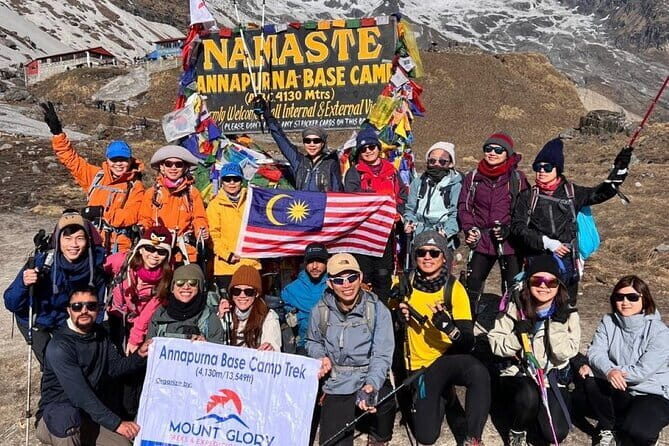
Day 3 is a trek from Nayapul to Hille (1,496m), taking about 4 hours. This is a gentle start that helps you feel your legs wake up without pushing toward the highest elevations immediately.
Day 4 takes you to Ghorepani (2,840m) over about 7 hours. Ghorepani is one of those “you’ll understand why people rave about it” stops once you’re walking in the higher air. Expect long steps, steady effort, and the kind of fatigue that feels normal for trekking—if you pace well.
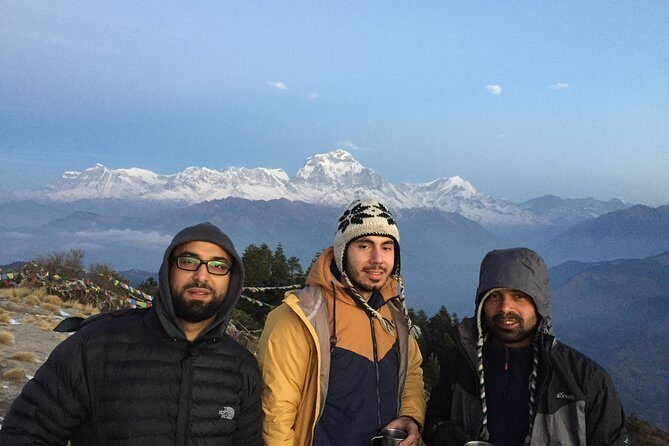
Then Day 5 includes a morning hike to Poon Hill before trekking on to Tadapani (2,520m) for about 5 hours. Poon Hill is famous because you get a prime viewpoint window in the early hours. Even if the weather isn’t perfect, you’re still going to feel the shift from hiking-town routine into peak-mountain scenery.
Practical tip: start slow on the way up for Poon Hill. Early hikes are often where people overdo it, especially when they’re excited for sunrise.
Days 6–7: Sinuwa and Deurali, where the air gets thinner
Day 6 brings you to Sinuwa (2,340m) in about 5 hours. That’s not the highest day, but it’s a meaningful one because it helps you keep moving while staying closer to a workable altitude.
Day 7 takes you to Deurali (3,230m) in about 7 hours. This is where the trek starts to feel more “serious.” Longer efforts plus thinner air can turn a good day into a tough day if you race your pace. If you want an experience that feels enjoyable rather than punishing, you’ll benefit from walking slower than you think you should.
This is also the stage where guide choices matter. If your guide is attentive—setting pace, checking how you’re breathing, and adjusting decisions—you’ll feel it immediately.
Day 8: Annapurna Base Camp (4,130m) is the main event
Day 8 is the big one: trekking to Annapurna Base Camp at 4,130m in about 4 hours. The duration sounds short, but the altitude does the heavy lifting. A few hours up high can still feel like a full day if you don’t move steadily.
This is where the trek earns its reputation. You’re finally at the “base camp” point people come for, surrounded by the towering presence of the Annapurna region. Even if your legs feel heavy, the moment you arrive is usually the kind of milestone you remember for years.
One thing I’d watch for: comfort at high altitude. Even if you feel okay, your energy can dip quickly, so keep sipping water and keep your breathing controlled.
Day 9: Bamboo (2,050m) brings a welcome change
Day 9 treks to Bamboo (2,050m) for about 6 hours. This is a drop from the base camp height, which helps many people reset physically and mentally.
Bamboo is a reminder that the trek isn’t only about going up. The descent days are often where you start feeling how your knees handle repeated downhills. Good walking shoes and trekking pole use (if you have them) can make a huge difference here.
Day 10: Chomrong route and Jhinu-Danda (1,700m) hot-springs reward
Day 10 takes you to Jhinu-Danda (1,700m) via Chomrong, about 6 hours. This is a classic trekking “flow” day where you can get dramatic views and also feel the reality of descending steadily.
And then comes the reward: Jhinu-Danda is known for hot springs. While the exact timing will depend on your pace and conditions, having a warm-water option after a day of walking is the kind of treat you appreciate more as you get older.
This is also a day to protect your feet. Your legs may feel tired, but your attention to small things—dry socks, careful footing on uneven sections—keeps you feeling human.
Days 11–12: trekking out to Nayapul, then back to Pokhara and Kathmandu
Day 11 includes trekking to Nayapul and then driving to Pokhara, totaling about 8 hours. This kind of day can be tiring because it blends hiking effort with travel time.
Day 12 is a drive back to Kathmandu. On a trek, the road back can feel like both relief and fatigue at the same time. You’ll likely appreciate a real shower, a proper bed, and a meal without counting calories or chewing slowly.
Day 13: a real rest day in Kathmandu (don’t skip it)
Day 13 is listed as a rest day in Kathmandu. I’m a big fan of this. After days at altitude and long walking stretches, muscles need recovery time even if you think you’re fine.
This is where you can do practical recovery: hydrate, stretch gently, and avoid the temptation to add big city sightseeing right away. You’ve already done the hard part; let your body catch up.
Day 14 is the final departure day.
Price and logistics: what $769.24 buys you
The price is listed at $769.24 per person for this private trek package. What’s included here is meaningful: breakfast, an air-conditioned vehicle, and all fees and taxes.
What’s not included matters for your budgeting: lunch, dinner, snacks, bottled water, and coffee or tea are on you. Alcohol is also not included. That means your daily spending won’t be huge, but it’s not zero—especially when you’re buying enough water and warm drinks to keep yourself comfortable at altitude.
Value-wise, the biggest “hidden” benefit is the private structure. You’re not trying to stay aligned with a faster or slower hiking group. That makes the trek more about your rhythm and less about matching other people’s pacing decisions.
Also look at what’s mentioned as tour details: you’ll use a mobile ticket, your group stays private, and service animals are allowed. If you’re traveling with a service animal, this kind of clarity helps.
The guide factor: where Damu and the team add real worth
One of the most praised aspects in the experiences people shared is the guide experience—especially Damu (Damodar), often described as owner and guide connected to Mission Summit Treks and Expedition.
The comments point to a few practical strengths:
- He’s responsive in planning and itinerary questions
- He’s experienced with the trail and answers questions patiently
- He uses clear English and keeps the mood friendly
- Punctuality and organization show up as repeat themes
In at least one trek, a porter named Mr Bahta was part of the team. If your package includes a porter, it can reduce the mental load of carrying everything, especially as fatigue builds near higher elevations.
Even if you don’t know the trail, a good guide helps you make small decisions that prevent big problems. That’s where value lives on a mountain trek.
Weather and surprises: plan for cold, not just sunshine
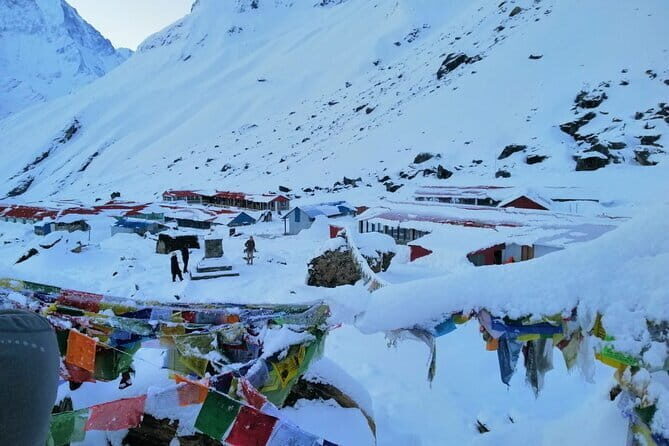
In real life, the Annapurna region can hit you with abrupt weather changes. One experience included unexpected snow and cold during a time people expected better conditions.
So here’s my advice: pack for the possibility of cold, and treat weather as something you manage—not something you ignore. That means warm layers, gloves, a hat that actually covers, and a plan for staying dry when conditions turn.
If you’re thinking, this sounds obvious, great. The point is that “obvious” gear choices are often the ones people fail to bring until they’re already uncomfortable.
What to expect on the trail: hours, altitude, and real pacing
The trekking days range from around 4 hours to about 7 hours, with several days in the 5–7 hour band. Those time windows aren’t just about distance; they’re about how your body feels as altitude changes.
Here’s what that pattern means for you:
- Early days help you warm into trekking effort (Hille, Ghorepani)
- Mid days bring sustained climbs (Deurali)
- The base camp day is short by hours but serious by altitude (4,130m)
- Descent days are often tougher on knees and feet even when they feel faster (Bamboo, Jhinu-Danda)
If you want the trek to feel like an achievement instead of a grind, your best tool is pace. Walk slower than you think you need to, especially on uphill sections and during thinner-air climbs.
Meals, water, and comfort: budget what you’ll actually buy
Because lunch, dinner, snacks, and bottled water aren’t included, you’ll manage your own refuel plan day by day. On a trek, you’ll want enough calories and warm fluids, not just a few quick bites.
You should expect to buy things like water and hot drinks along the way. Since coffee and tea also aren’t included, plan on those costs and treat warm beverages as part of staying functional in cold air.
Also remember: the higher you go, the more comfort matters. You might feel hungry later than usual, your appetite can shift, and you’ll benefit from consistent eating rather than waiting until you’re truly drained.
Who should book Annapurna Base Camp, and who should reconsider
This trek is recommended for travelers with moderate physical fitness. That’s a good sign for many people who’ve done hiking before but aren’t ultra-distance athletes.
You’ll likely love this if you want:
- A well-known, high-value trail with big scenery goals
- A route that includes a famous sunrise viewpoint (Poon Hill)
- Time to recover, including a rest day back in Kathmandu
- A private format that keeps the experience calmer
You might reconsider if you:
- Struggle with long walking days or downhill fatigue
- Hate cold-weather conditions and don’t pack for it
- Need a fully seamless luxury experience, since you’re hiking, buying meals, and working around mountain conditions
Should you book this Annapurna Base Camp Trek?
If you’re looking for a classic Annapurna itinerary with Poon Hill sunrise, a genuine high-point goal at Annapurna Base Camp (4,130m), and a private setup, this is a strong option. The value improves if you’ll appreciate the guide planning, since Damu’s name shows up repeatedly for organization, clarity, and a steady hand on the trail.
Book it if you’re ready to hike 4–7 hour days, pace yourself on altitude, and budget for meals and drinks. Skip it only if you’re expecting an easy stroll or you’re unwilling to pack for cold and weather changes. In the mountains, preparation is what turns a trek from survival into a story you want to tell.
FAQ
How long is the Annapurna Base Camp Trek?
The duration is listed as about 14 days.
Where does the trek start and end?
It starts in Kathmandu (with the meeting point in Kathmandu) and ends back at the meeting point.
What’s included in the price?
Included items are breakfast, an air-conditioned vehicle, and all fees and taxes.
What’s not included?
Lunch, dinner, snacks, bottled water, coffee and/or tea, and alcoholic beverages are not included.
What fitness level is needed?
The experience is designed for travelers with a moderate physical fitness level.
Is free cancellation available?
Yes. You can cancel up to 24 hours in advance for a full refund. If you cancel less than 24 hours before the start time, the amount paid is not refunded.