REVIEW · KATHMANDU
Annapurna Base Camp Trekking
Book on Viator →Operated by Travel Max Guide · Bookable on Viator
One of the great things about Nepal is gravity. This 14-day Annapurna Base Camp trek strings together classic mountain villages, forests of oak and rhododendron, and a serious finish at the Annapurna Base Camp (about 4130m). You also get a built-in Kathmandu and Pokhara warm-up, so you’re not just parachuting into the trail.
I love the way the route gives you multiple big-picture viewpoints, not just one. Poon Hill for panoramic mountain views and the village lookouts at Chhomrong and Ghandruk help you build excitement day by day, with time to explore along the way.
One consideration: this is a trekking plan for moderate fitness, not a stroll. You’ll do long walking days, frequent stairs, and a steep-feeling approach on the way toward the sanctuary, so plan on moving at a steady pace and taking breathers seriously.
In This Review
- Key things I’d circle before you go
- Price and value: what your $1,600 really covers
- Kathmandu to Pokhara: the setup that makes the trek feel easier
- Trek Day 4 to 6: Ulleri stairs, Ghorepani views, and the Poon Hill moment
- Trek Day 7 to 8: Chhomrong and Ghandruk, Gurung villages, and the steps factor
- Day 9 to 10: Into the Annapurna Sanctuary and back down through Bamboo
- Day 11 to 12: Jhinu Danda hot spring and a Gurung culture stop in Ghandruk
- Day 13 and 14: Back to Kathmandu, farewell dinner, and an airport drop
- Lodging, meals, and comfort level on the trail
- The team behind the trek: guides, permits, and planning you can trust
- Who should book this Annapurna Base Camp trek
- Should you book? My take on whether the experience is worth it
- FAQ
- What’s the duration of the Annapurna Base Camp trek in this package?
- Where does the tour start and end?
- Is Kathmandu Valley sightseeing included?
- How are meals handled during the trekking portion?
- What permits are included for trekking?
- Is there any time for Poon Hill views?
- What should I know about tips and travel insurance?
Key things I’d circle before you go
- Poon Hill payoff: a viewpoint morning stop with broad views across the Annapurna and Dhaulagiri ranges
- Village culture stops: Gurung villages like Chhomrong and Ghandruk, plus a small culture-focused museum visit
- Full-board meals: breakfast, lunch, and dinner included during the trek, with tea/coffee
- Permits handled: ACAP permit and TIMS/Trekkers Information Management System card included
- Hot spring moment at Jhinu Danda: an easy-reward day after the main base camp push
- John Shrestha is singled out: one past guest specifically praised John’s help with equipment and staying on top of needs
Price and value: what your $1,600 really covers
At $1,600 per person for a roughly 14-day trek, you’re paying for more than a route on a map. You’re getting the whole machine: Kathmandu and Pokhara lodging, transportation between cities, a trekking guide, guesthouse stays during the hike, and full-board meals with tea/coffee. That matters because the cost of time, logistics, and guidance adds up fast in Nepal, especially when you want things to run on schedule.
You’re also covered for the essentials that most hikers end up budgeting separately: ACAP permits and the TIMS card for trekking. Those aren’t flashy expenses, but they’re necessary, and it’s nice when a company keeps the paperwork straight instead of you juggling documents on your own.
The honest part: your money doesn’t include your international flights, your Nepal entry visa, or travel and rescue insurance. Tips for the guide and porter are also expected. If you hate the idea of tipping, know that you’ll need to budget for it early, not at the last day.
You can also read our reviews of more hiking tours in Kathmandu


Kathmandu to Pokhara: the setup that makes the trek feel easier
Your trek doesn’t start with a leap into altitude. Day 1 places you in Kathmandu with an airport pickup and hotel drop-off, with time in Thamel if you land in daylight. That small buffer helps you get oriented fast—gear sorted, shoes checked, and food figured out without rushing.
Day 2 is Kathmandu Valley sightseeing with a city guide from TMG. The focus is on UNESCO World Heritage sites—stupas, temples, and palaces—and the route is personalized to your interests. It’s a good use of time because it gives you cultural context right at the start, and it keeps the day from turning into random taxi hopping.
Day 3 moves you to Pokhara by tourist bus, with a scenic drive through towns, villages, terraced farmland, and rivers. Once there, you check into a hotel and can walk around Phewa Lake in the evening. I like this pacing because Pokhara is where many people feel the trek shift from idea to reality—especially after a long bus ride.
One practical note: the itinerary includes guided Kathmandu sightseeing, while the trekking days lean on local trekking guidance. So you get both kinds of help—city navigation on day 2, and trail navigation later—without paying for extra separate tours.
Trek Day 4 to 6: Ulleri stairs, Ghorepani views, and the Poon Hill moment
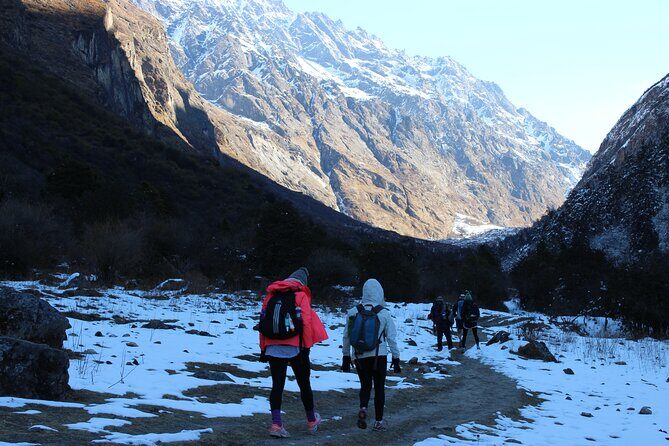
Day 4 is your first real walking day, starting with a drive from Pokhara to Naya Pul and then a trek through oak and rhododendron forest. You’ll wind along the Ulleri Stairs, and the trail includes steps, boulders, cliffy bits, bridges, and village sections. This is the day that sets your rhythm—short bursts of uphill, then rolling sections, with the forest changing as you gain elevation.
You reach Ulleri in the afternoon, which gives you time to settle into guesthouse life and not just collapse after a nonstop hike. You also pass Tikhedunga on the way, which is the kind of village anchor that makes early trekking feel grounded instead of abstract.
Day 5 brings you to Ghorepani via Banthanti and Nangethanti. The walk stays in oak and rhododendron forests, with lunch in Nangethanti. Ghorepani is a classic base for early mountain viewing, and it’s where you start to notice how often the Annapurna region changes mood depending on cloud cover.
Day 6 is the Poon Hill payoff day. First you go to the viewpoint for panoramic views that include Dhaulagiri, Annapurna, and Manalsu (as listed in your itinerary). Then you hike onward to Tadapani, with uphill and downhill walking in the forest and along rocky steps.
If you’re worried about whether it’s worth getting up early, this is the reasoning: you get a planned viewpoint stop that’s baked into the walking schedule, not something you scramble to reach on your own.
Trek Day 7 to 8: Chhomrong and Ghandruk, Gurung villages, and the steps factor
Day 7 heads to Chhomrong, following a trail that includes downhill sections and rhododendron and oak forests. You arrive in the afternoon and get time to explore Chhomrong, which is a Gurung village on the lap of the Annapurna massif. That afternoon window matters because villages are where you slow down: you can watch daily life, notice how guesthouses work, and take photos without feeling rushed.
Views are a major part of the appeal here. From Chhomrong, you can see Annapurna South and Machhapuchhre, and that’s exactly the kind of landmark moment that makes a trek feel like more than endurance.
Day 8 is the step-heavy day in the middle of the trek. You walk on about 2500 steps, descend toward the Chhomrong Khola, then climb again up toward Khuldighar (listed at 2,380m) and Sinuwa. There are steep trekking sections and a gorge area, then bamboo appears—damp and cold—before you push back up through rhododendron forest to the Himalaya Hotel area for glacier views.
This is where I’d tell you to manage expectations: yes, it’s gorgeous, but it’s also physically demanding. The upside is that the effort is rewarded with variety—forest floor, bamboo shade, then more open mountain sightlines as you climb.
Day 9 to 10: Into the Annapurna Sanctuary and back down through Bamboo
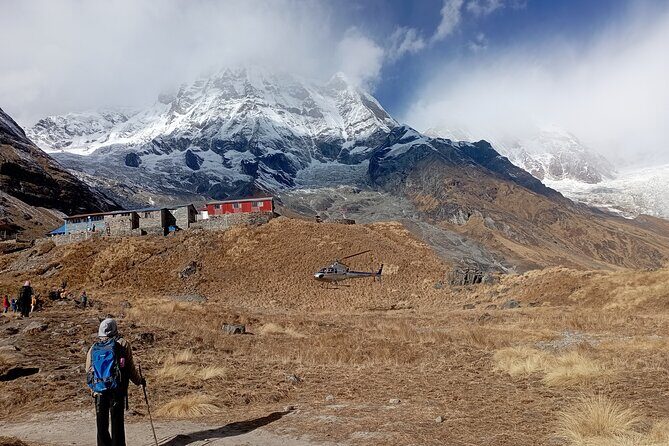
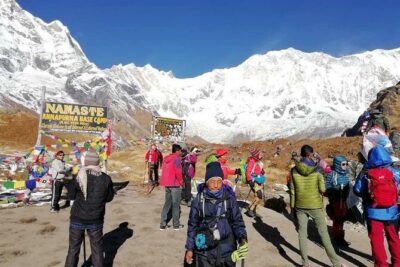
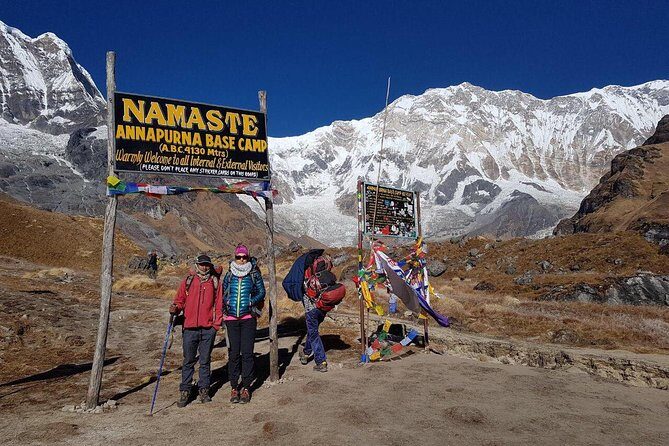
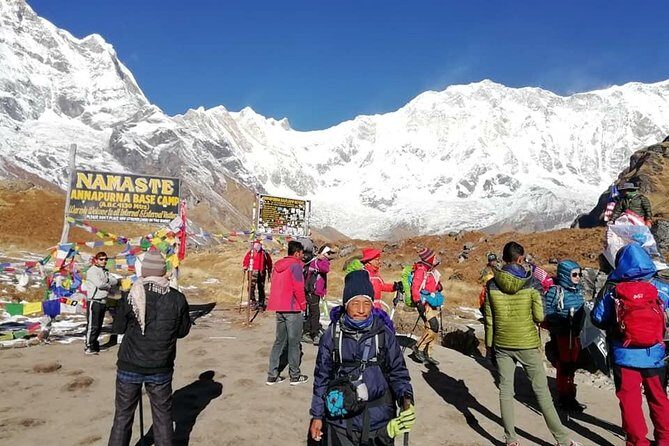
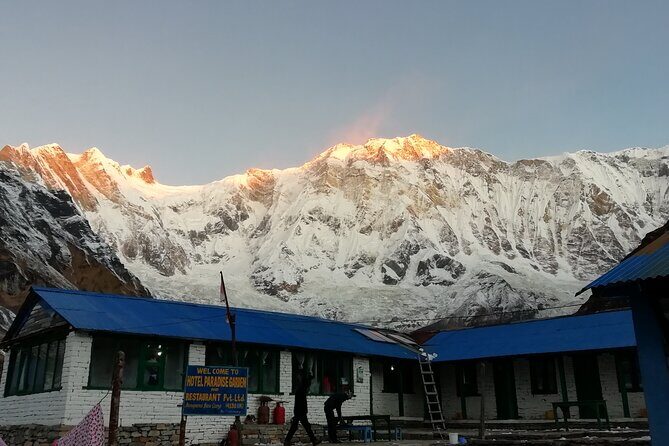
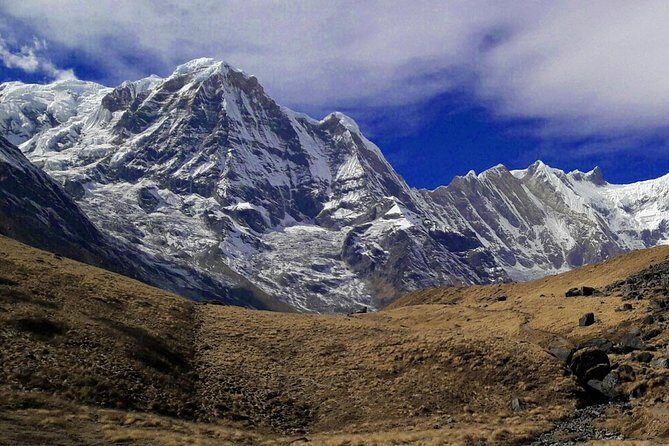
Day 9 is the big day: you reach the Annapurna Sanctuary and ultimately Annapurna Base Camp at around 4130m. The trek goes up past Hinko Cave, Deurali, and the Machapuchare Base Camp area. Vegetation thins as you gain elevation, and the uphill trail includes valley views and waterfalls along the way.
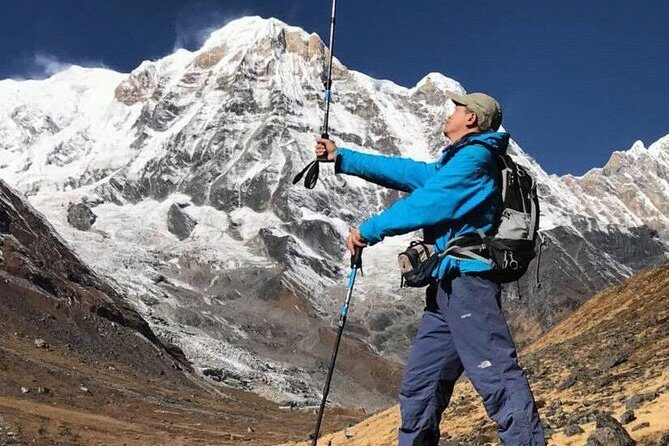
The schedule described here suggests a key transition: after about two hours from the Machhapuchhre Base Camp area, you reach Annapurna Base Camp. Once there, your views are framed around major peaks: Machhapuchhre, Annapurna South, Annapurna I, Hiunchuli, and more, with the itinerary emphasizing an unobstructed view of Machhapuchhre and Annapurna South among others.
The mental benefit is real. When you finally arrive at the base camp, you’re not just checking a box—you’re experiencing a quieter, higher-elevation feeling that the route is designed to build toward.
Then comes Day 10: the return toward Ghandruk by going downhill. You retrace your route past Bamboo and through bamboo, rhododendron, and oak forest sections. This is the day you treat as recovery without being passive. Descents can be easier on your breathing but tough on your knees, so slow down and step carefully.




Day 11 to 12: Jhinu Danda hot spring and a Gurung culture stop in Ghandruk
Day 11 retraces the trail again, moving from Bamboo uphill to Chhomrong Khola, then downhill to Jhinu Danda. The highlight here is a chance to dip into hot springs. It’s not a luxury spa setup in an airport sense; it’s more like a trail-earned reset for tired legs after base camp altitude.
Day 12 takes you back toward Pokhara. You trek downhill through Ghandruk, then visit the museum where you learn about Gurung culture and tradition. After that, you continue on an easier down trail to Kimche and onward to Nayapul, then head to Pokhara by jeep or bus.
This day is valuable because it blends two things people often separate: physical progress and cultural understanding. The museum visit gives the trek meaning beyond photos, and it helps you understand why these settlements matter in the broader Annapurna story.
Day 13 and 14: Back to Kathmandu, farewell dinner, and an airport drop
Day 13 returns you to Kathmandu via scenic road travel, with changing scenery from lush forest to less vegetated areas. You cross rivers and streams and move through hilly terrain, then check into your hotel. In the evening, you get a farewell dinner at a typical Nepali restaurant with Nepali dance.
That dinner is more than a send-off meal. It’s a way to close the trek loop—sitting, eating well, and letting the trek settle in your mind before you fly.
Day 14 is straightforward: a company representative drops you to the airport in a private vehicle. It’s a clean finish, which is exactly what you want after two weeks of walking, early mornings, and guesthouse routines.
Lodging, meals, and comfort level on the trail
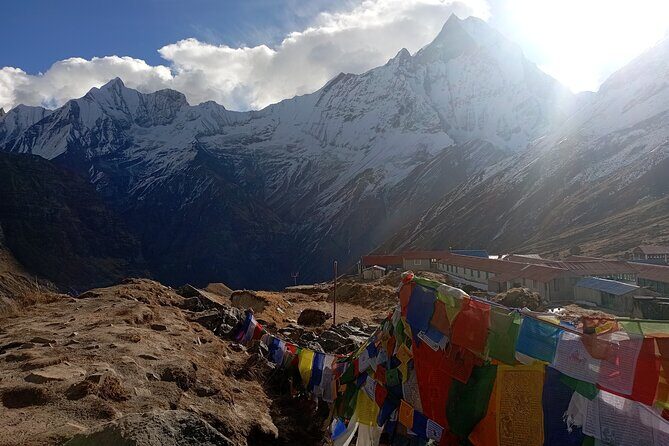
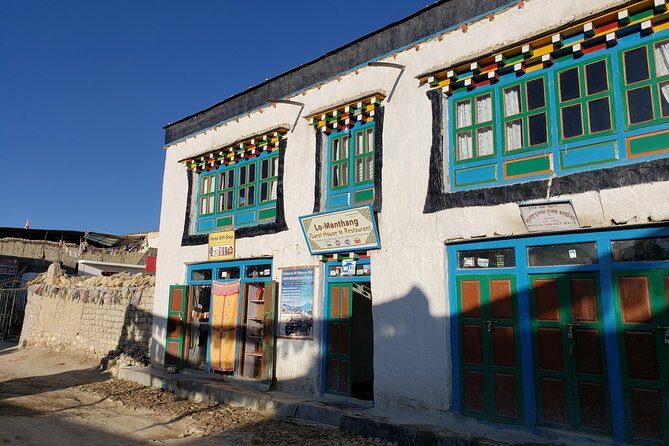
The itinerary includes twin sharing accommodation with breakfast plans in Kathmandu and Pokhara, then twin sharing guesthouse stays during the trekking days. Guesthouse trekking is a big part of Nepal’s charm, and it also affects comfort. Rooms are basic, but meals and heating options can vary by stop and season.
Food is handled with full-board meals: breakfast, lunch, and dinner during trekking, with tea/coffee. This is one of the best value features because it prevents you from scrambling for meals when you’re tired. It also means you can focus on hiking, not budgeting every stop.
You’re also provided a comprehensive medical kit, which is reassuring when you’re far from major hospitals. And the local trekking guide is Nepal Government certified and English speaking, which helps a lot when altitude, weather, or pacing needs a quick adjustment.
The team behind the trek: guides, permits, and planning you can trust
One detail that signals a serious approach is the inclusion of insurance for guides, including meals, salary, lodging, and transportation. That doesn’t affect your day-to-day view, but it usually reflects a company that builds support into the plan instead of treating guides like afterthoughts.
Permits are also included: the ACAP permit and the TIMS card. When you’re trekking through protected areas, paperwork is part of the system, and it’s worth having handled.
Local support matters, too. In one past account, John Shrestha was credited for meeting in Kathmandu, helping get the right equipment, and checking in to make sure things were going okay throughout the stay. You can’t count on every trip having the same exact person, but it’s a helpful signal that the company’s outreach can be proactive, not just transactional.
Who should book this Annapurna Base Camp trek
This trek fits best if you want the classic Annapurna route experience with structured support. The itinerary is built for moderate physical fitness, includes guided city time, and provides full-board meals during the hike, which is great if you’d rather not plan meals and logistics each day.
It’s also a solid choice for couples, friends, or solo travelers who want a private setup for their group while still having a guide and meals organized. The trip is listed as private, meaning your group participates together, not in a shared crowd with strangers.
If you’re very sensitive to stairs and steep sections, pay attention to the step-heavy segments and expect some days to feel like more work than sightseeing. And if you have limited knee tolerance, you’ll want to take the downhill days seriously and keep your pace slow and careful.
Should you book? My take on whether the experience is worth it
I’d book this if you want a well-structured Annapurna Base Camp trek that handles the key moving parts: permits, guides, meals, and the Kathmandu/Pokhara setup. The included full-board meals and the two-city warm-up (Kathmandu temples, then Pokhara lake time) make the whole trip feel smoother than a DIY attempt.
I’d also like your chances if you’re drawn to variety: forest trails, Gurung villages, a planned Poon Hill viewpoint morning, and a hot spring reset at Jhinu Danda. It’s not just one long grind toward a single destination.
I’d hesitate only if you dislike trekking stairs, or if your budget doesn’t allow for the items not included—especially travel insurance, Nepal visa, and tips. If you can handle those basics, this is a classic, value-forward way to reach Annapurna Base Camp while keeping your travel day stress low.
FAQ
What’s the duration of the Annapurna Base Camp trek in this package?
It’s listed as 14 days (approximately).
Where does the tour start and end?
It starts at Tribhuvan International Airport in Kathmandu and ends back at the same meeting point.
Is Kathmandu Valley sightseeing included?
Yes. Guided Kathmandu Valley sightseeing is included in Kathmandu on day 2.
How are meals handled during the trekking portion?
Full board meals are included during trekking, with breakfast, lunch, and dinner. Tea and coffee are also included during the trek.
What permits are included for trekking?
The itinerary includes the ACAP permit and the TIMS permit card for trekking.
Is there any time for Poon Hill views?
Yes. A Poon Hill viewpoint stop is included before reaching Tadapani.
What should I know about tips and travel insurance?
Tips for your guide and porter are expected but not included. Travel and rescue insurance is also not included, so you’ll need to arrange it separately if you want coverage.