REVIEW · KATHMANDU
Annapurna Circuit Trek
Book on Viator →Operated by Ace the Himalaya · Bookable on Viator
Thorong La can change how you measure distance. This small-group Annapurna Circuit packs Tatopani hot springs into the middle of the climb and keeps things organized with a licensed English guide and included gear.
I also like that you get real time in Nepal beyond the trail, with Kathmandu temples, Bhaktapur Durbar Square, and Pokhara’s caves and falls. The one drawback to plan for is altitude and weather at Thorong La, which can mean a cold, windy, slow day starting before sunrise.
In This Review
- Quick hits before you commit
- Entering The Trip: Airport pickup, pre-trek meeting, and what you must bring
- Kathmandu temples on an efficient loop: Pashupatinath, Boudhanath, and Bhaktapur Durbar Square
- From Kathmandu to Besisahar and Syange: the long travel that sets the pace
- Tal and Danakyu: your first real trek rhythm along the Marsyangdi River
- Chame to Upper Pisang to Ngawal: forests, meadows, and the first big mountain moments
- Manang and acclimatization: why this rest day is more than a break
- Yak Kharka and Thorong Phedi: the altitude shift you can feel
- Thorong La pass day: a long start, possible snow/wind, and the payoff
- Crossing into Mustang-style terrain: Jomsom, Kali Gandaki, and the deep gorge feeling
- Tatopani hot springs: the rest day your body quietly begs for
- Ghorepani and Poon Hill: the sunrise views that close the loop
- Pokhara finish: temples, caves, falls, and a Tibetan refugee camp stop
- Kathmandu farewell dinner and the way the trip ends
- Price and logistics: what $2,240 buys you (and what you still pay for)
- Trek difficulty fit: who should say yes, and who should rethink
- The human factor: why the guide and porters matter here
- Should you book this Annapurna Circuit trek with Ace the Himalaya?
- FAQ
- Is the group limited in size?
- Do airport transfers include pickup from Tribhuvan International Airport?
- What trekking permits are included?
- Are rooms and most meals included?
- Do you get any trekking gear?
- Is there porter support?
Quick hits before you commit
- Small-group trekking (max 15) with a trekking guide and porter support built into the plan
- Tatopani hot springs gives your legs a real reset day, not just a sleep-in
- Manang acclimatization day (plus short walks) helps you handle the higher country better
- Gear is included: down jacket and sleeping bag for the trek (returned at the end)
- Kali Gandaki descent + deep gorge vibes once you cross Thorong La into Mustang country
- City time is built in: Kathmandu (temples) and Pokhara (falls, cave, Tibetan camp)
Entering The Trip: Airport pickup, pre-trek meeting, and what you must bring
You start with airport help at Tribhuvan International Airport in Kathmandu, then transfer to your hotel by private tourist vehicle. Either Day 1 or Day 2 includes a pre-trek meeting in the operator’s office, where you’ll meet your trekking leader/guide and confirm the paperwork.
Bring your passport, three copies of passport-size photos, and a readable copy of your travel insurance policy. You’ll also clear any remaining balance (if needed) and sign the trip form plus a non-liability disclaimer.
You can also read our reviews of more hiking tours in Kathmandu



Kathmandu temples on an efficient loop: Pashupatinath, Boudhanath, and Bhaktapur Durbar Square
Your first sightseeing day hits three big places in the Kathmandu Valley that feel different from each other. At Pashupatinath, you can’t enter the main temple, but you can watch the riverfront activity from the eastern bank of the Bagmati River, with the pagoda-style structure clearly visible.
Next is Boudhanath Stupa, one of the most important Buddhist sites in Kathmandu. You’ll see pilgrims walking around the stupa and spinning prayer wheels, which is one of those things that’s hard to fake with a photo caption.
Then you’ll go to Bhaktapur Durbar Square, the royal residential quarter of Bhupatindra Malla, with famous temple spots like the five-storied Nyatapola-style Nyatapola pagoda. Bhaktapur also tends to feel slower and more traditional than central Kathmandu, which is a nice palate cleanser before you head into hiking mode.
From Kathmandu to Besisahar and Syange: the long travel that sets the pace
Day 3 is mostly travel: a public bus from Kathmandu to Besisahar (about 6 hours), then a shared 4WD to Syange (about 2 hours). You’re also driving through rivers and waterfalls along the way, so it’s not dead time even when you’re sitting.
This matters because it teaches your body how the trip will feel: lots of movement, some sitting, and then a climb. If you’re prone to stiff knees or back pain on long rides, pack a simple warm layer and something to support your hips and shoulders.
Tal and Danakyu: your first real trek rhythm along the Marsyangdi River
Day 4 starts your walking gradually, following the Marsyangdi River. You’ll pass waterfalls and spend the night in Tal, which works well as an entry point because it’s not the hardest day on the circuit.
Day 5 pushes you onward to Danakyu, leaving the Marsyangdi Valley behind. You’ll keep seeing Annapurna II and Pisang Peak from different angles while trekking through older villages and countryside scenes, which gives you a sense for how people live in the hills between the big mountain views.
Chame to Upper Pisang to Ngawal: forests, meadows, and the first big mountain moments
Day 6 is an easier day into Chame, the headquarters of Manang. After about 4 hours you reach a town with more services than the earlier stops, so showers, charging, and food options usually feel more convenient than Day 4 and 5.
Day 7 takes you to Upper Pisang after walking through dense forest and along the Marsyangdi River. You’ll also get your first clear look at Paungda Dada, a curved rock face that looks like a bowl from the trail, plus you’ll rest in a spot with strong sightlines toward Annapurna II.
Day 8 starts early for sunrise, then you hike toward Ngawal, about 400 meters higher than the lower route. This is one of those days where the uphill pays off quickly: better views, more high-altitude flora and fauna potential, plus deep gorges in the mix.






Manang and acclimatization: why this rest day is more than a break
Day 9 brings you to Manang, after about 6 hours through hills, jungle, and wetlands. You’ll pass stupas and even a lama school area, so you’re not only hiking through scenery—you’re also moving through places with daily life.
Then you get a full acclimatization day in Manang (Day 10). You’ll do some shorter walks and sightseeing, including a monastery visit and a walk toward Gangapurna Glacier Lake. This kind of structured rest day matters on the Annapurna Circuit because it helps you adjust before you climb toward the pass.
Yak Kharka and Thorong Phedi: the altitude shift you can feel
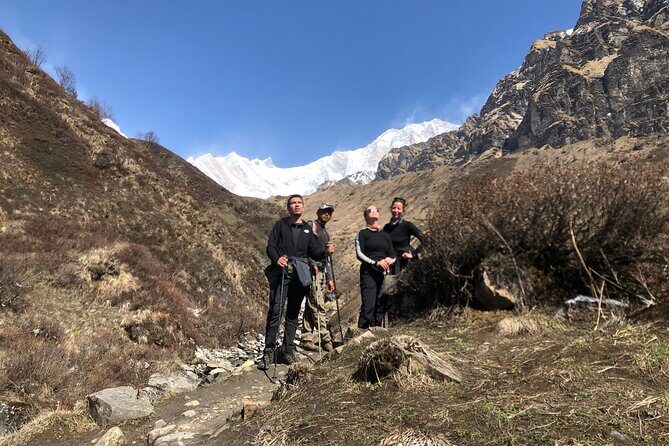
Day 11 takes you to Yak Kharka around 4,000 meters, with about 500 meters of ascent. Herds of yaks and thinner vegetation start to appear, and that visual change is often the first real warning that the air has less oxygen.
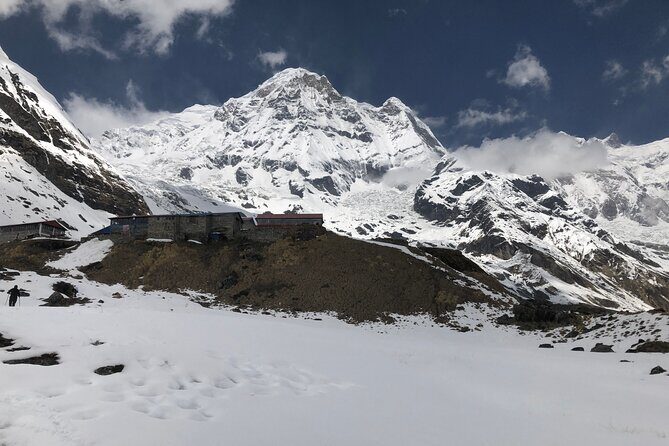
Day 12 climbs to Thorong Phedi at about 4,450 meters after a couple hours up and a river crossing at about 4,310 meters. Guesthouses are built here, so you’re not sleeping in the wild, but you should expect colder nights and more wind exposure depending on weather.
A practical tip here: keep your pace steady and avoid sprinting to “make up time.” The pass day punishes people who overdo it the day before.
Thorong La pass day: a long start, possible snow/wind, and the payoff
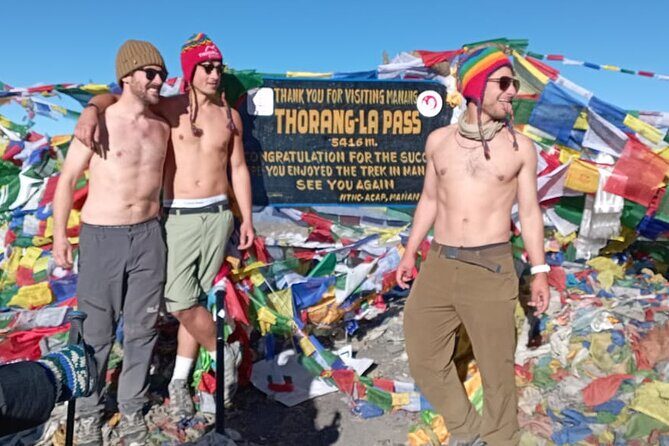
Day 13 is the big one: you start as early as 4 am and aim to reach the pass by about 9–10 am. The route is described as steep but easy to follow, yet the challenge is weather and altitude, especially if there’s snow or strong winds.
At the pass, you’ll be surrounded by chortens and prayer flags and then rewarded with stunning views from the top. After that, you walk for another few hours to Muktinath, a holy town where the name itself means place of nirvana.
If you want the best outcome on this day, plan for cold hands, cold feet, and slow breathing. Also, trust the guide’s timing. The pass is the kind of place where “fast” and “safe” don’t always mean the same thing.
Crossing into Mustang-style terrain: Jomsom, Kali Gandaki, and the deep gorge feeling
Day 14 heads to Jomsom, starting on the other side of Thorong La. The land becomes drier and more desert-like, and you’ll trek along the Kali Gandaki River bank, with many stupa views and old traditional houses nearby.
Day 15 drops into Tatopani, with a highlight stop in the Kali Gandaki gorge area near Kopchepani, described as the world’s deepest gorge between mountains. This part of the trek often feels dramatic because the valley walls feel close and the river route keeps pulling you onward.
Tatopani hot springs: the rest day your body quietly begs for
Days 15 and 16 are your Tatopani focus. After long trekking hours, you rest, shower, and dip into natural hot springs, with local food and drinks available.
This is not just a comfort stop. It’s also a smart recovery tool: warm water can help your muscles loosen, and having a full day reduces the risk of “hike today, regret tomorrow” energy.
Ghorepani and Poon Hill: the sunrise views that close the loop
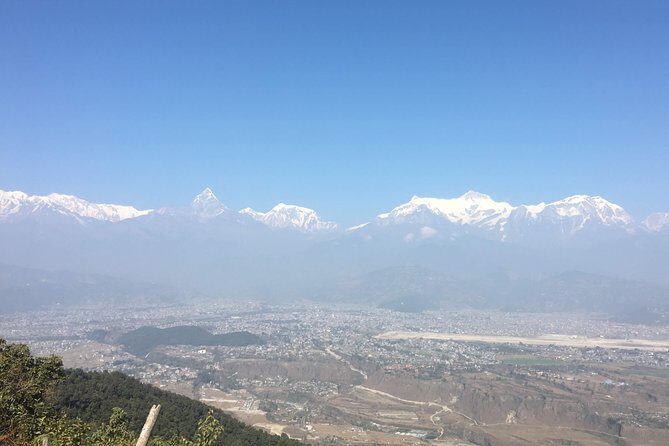
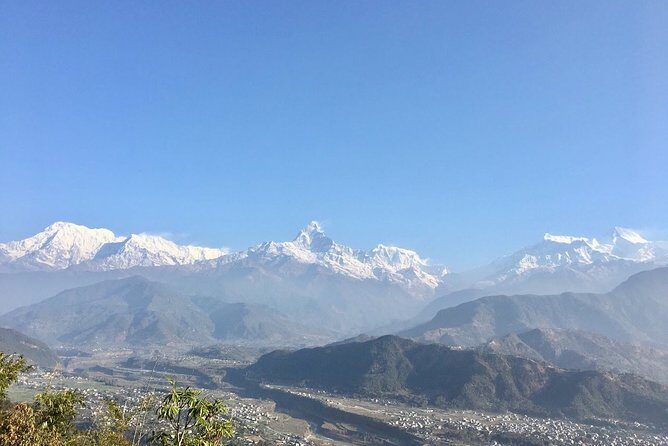
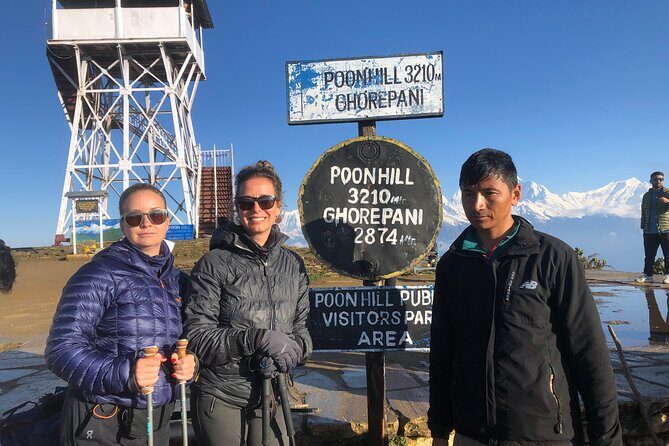
Day 17 takes you to Ghorepani, about 7 hours of walking with around 1,620 meters of ascent. You’ll be moving past Magar and Gurung villages, and when you arrive you get views of Annapurna South, Himchuli, and Tukuche Himal.
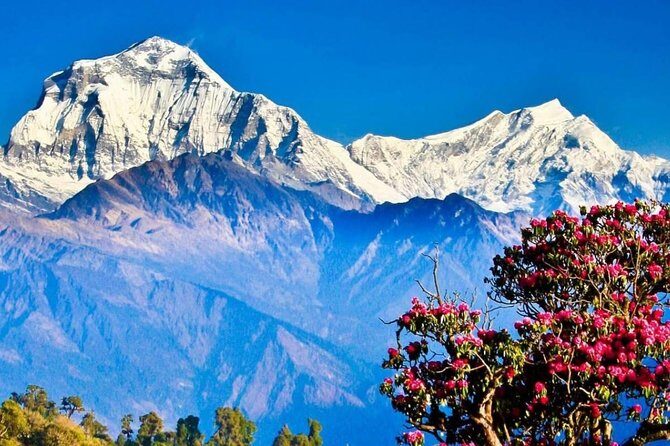
Day 18 is the classic early start for Poon Hill at about 3,210 meters. You’ll hike about an hour up, spend around an hour at the viewpoint, then return for a hot breakfast before trekking down toward Tikhedhunga through ridges and rhododendron forests.
This day is a nice contrast to Thorong La: less about extreme altitude stress and more about timing for sunrise and then enjoying the downhill rhythm.
Pokhara finish: temples, caves, falls, and a Tibetan refugee camp stop
By Day 19 you reach Nayapul (around 1,010 meters) and then drive about an hour to Pokhara. Day 20 is a sightseeing pack that helps you come down from trekking mode: Shree Bindhyabasini Temple, Devi’s Fall, Gupteshwor Mahadev Cave, Seti River gorge viewpoints, and a stop at the Tibetan Refugee Camp (Tashi Ling) known for woolen carpet production and handicrafts.
These stops are compact, so wear shoes you can walk in comfortably even if the cave passages get tight. Also note that some cave sections require crawling on all fours, so plan to keep your core and knees ready.
Kathmandu farewell dinner and the way the trip ends
Day 21 brings you back to Kathmandu, followed by a farewell dinner at a traditional Nepalese restaurant with cultural performances. Day 22 ends at Tribhuvan International Airport, with an airport representative drop-off for your departure.
It’s a smooth landing after a trek because you get one last social night before flights.
Price and logistics: what $2,240 buys you (and what you still pay for)
At $2,240 per person for about 22 days, the value is mostly in the structure. You’re not just buying a trek route; you’re buying airport transfers, Kathmandu and Pokhara hotel nights (3 nights in Kathmandu and 2 nights in Pokhara), guesthouse stays during the trek (16 nights), a licensed English-speaking guide, porter support (1 porter for two clients), and trekking permits (ACAP and TIMS).
You also get a lot of practical items that can save you money and hassle: a down jacket and sleeping bag for the trek (returned afterward), plus a free duffel/kit bag and sun hat. Transport is handled across multiple legs too—public bus, shared 4WD, a tourist vehicle, and a tourist bus.
What’s not included matters for budgeting: international airfare, Nepal entry visa, travel insurance for emergency high-altitude rescue and evacuation, and tips. Lunch and dinner in Kathmandu and Pokhara are also not included, and alcohol plus soft drinks are your call.
Trek difficulty fit: who should say yes, and who should rethink
This is best for people with moderate physical fitness who can handle long walking days and big altitude moments. You’ll spend several days climbing, with a critical pass day and potential snow/wind risk.
You’ll also be in tea-house style guesthouses with twin-share and dormitory rooms, so if you need private, quiet lodging every night, this format might feel challenging. On top of that, you’ll do long travel segments by bus and shared 4WD, so motion sickness or stiff-joint issues should be managed early.
The human factor: why the guide and porters matter here
The most praised pattern from past teams is consistent support when conditions get tough—especially around acclimatization and the Thorong La crossing. Guides such as Aamod, Madan, Ram, Ganesh Khanal, and Nimesh show up in the operator’s history, and the common thread is planning, pace control, and an emphasis on safety during the hard hours.
Porters matter too. When you share a porter (1 porter for two clients), you’re not carrying everything yourself, and that can turn a difficult trek into a manageable one—especially when you’re tired and the trail gets steep.
Should you book this Annapurna Circuit trek with Ace the Himalaya?
If you want a guided Annapurna Circuit that includes Kathmandu and Pokhara sightseeing, plus real recovery in Tatopani, this is a strong fit. The included permits, transport, guide, and trek gear reduce the stress of planning, and the Manang acclimatization day is a smart, built-in check.
I’d hesitate only if you’re not comfortable with cold, altitude, and a demanding pass day that can be affected by weather. If that part feels scary, do the honest work of asking yourself whether you can handle the early wake-up and the risk of snow or wind.
If you’re a steady hiker who wants the full circuit experience without juggling logistics, this is the kind of plan that lets you focus on the trail and the views that come with it.
FAQ
Is the group limited in size?
Yes. The maximum group size is 15 travelers.
Do airport transfers include pickup from Tribhuvan International Airport?
Yes. Airport transfers are included, and the trip starts with pickup at Tribhuvan International Airport in Kathmandu and ends with a drop-off at the same airport.
What trekking permits are included?
Your trek permits are included, including ACAP and TIMS.
Are rooms and most meals included?
Yes. You’ll have hotel rooms in Kathmandu (3 nights) and Pokhara (2 nights), and guesthouse accommodation during the trek (16 nights). Breakfast is included for 21 days, dinner for 17 days, and lunch for 16 days, while lunch and dinner in Kathmandu and Pokhara are not included.
Do you get any trekking gear?
Yes. A down jacket and sleeping bag are included for the trek and are to be returned after. You also receive a free duffel/kit bag and sun hat.
Is there porter support?
Yes. The tour includes 1 porter for two clients. Tips for trekking staff and drivers are expected.