REVIEW · KATHMANDU
Annapurna Circuit Trek
Book on Viator →Operated by The Great Adventure Treks & Expedition - Private Day Tours · Bookable on Viator
Few treks hit so many icons.
This circuit stacks big moments: crossing Thorong La at 5,416 meters and paying your respects at Muktinath (a Shakti Peeth) around 3,410 meters, while you also get a real human touch from the guiding team, including names like Sudam who were described as patient and caring. The tradeoff is obvious once you read the route: steep, rocky trails and thin air will test your physical and mental strength.
What I like is how the trip takes care of the paperwork and logistics you do not want to scramble for. Your ACAP permit and TIMS card are included, and you start with airport pickup, a Kathmandu hotel at a 3-star level, plus sightseeing by car.
One thing to plan around: lunch and dinner in Kathmandu and Pokhara are not included, and there are no drinks included. Also, the trek depends on good weather, since poor conditions can trigger a date change or a full refund.
In This Review
- Key highlights you should know
- Kathmandu Setup: Pickup, 3-Star Sleep, and Permits Already Handled
- Scenic Bus to Besisahar: Trading City Air for Mountain Air
- Manang, Marpha, and ACAP Country: Where Wildlife Protection Feels Real
- Ghorepani and Poon Hill Sunrise: The Mountain Show You Earn
- Muktinath Temple at 3,410m: A Shakti Peeth Stop That Changes the Mood
- Crossing Thorong La (5,416m) and Facing Kali Gandaki’s Deep Cut
- The Return Down: Tatopani, Tikhedhunga, Ulleri, and Nayapul
- Pokhara Valley Finish: Your Reward for Staying With It
- Price and Value: What $1,074.88 Covers (and How to Budget the Rest)
- Who This Trek Suits (and Who Should Think Twice)
- Should You Book This Annapurna Circuit Option?
- FAQ
- How long is the Annapurna Circuit Trek?
- Where does the trek start and how do you travel to the trailhead?
- What is the highest point on the trek?
- Do you visit Muktinath Temple?
- What permits are included?
- Is airport pickup and transfer included in Kathmandu?
- How many travelers are in the group?
- What is included in Kathmandu besides the trek?
- Are meals and drinks included?
- What happens if weather is poor?
- Is cancellation free?
Key highlights you should know
- Thorong La top point at 5,416m: the highest moment of the trek
- Muktinath Temple visit (3,410m): a sacred Shakti Peeth stop during the climb arc
- ACAP permit included: route goes through the Annapurna Conservation Area Project
- Poon Hill sunrise: classic early-morning mountain views in the Ghorepani region
- Kali Gandaki Gorge: you get a front-row look at the world’s deepest gorge
- Small group (up to 10): easier to coordinate with your guide and keep the pace sane
Kathmandu Setup: Pickup, 3-Star Sleep, and Permits Already Handled
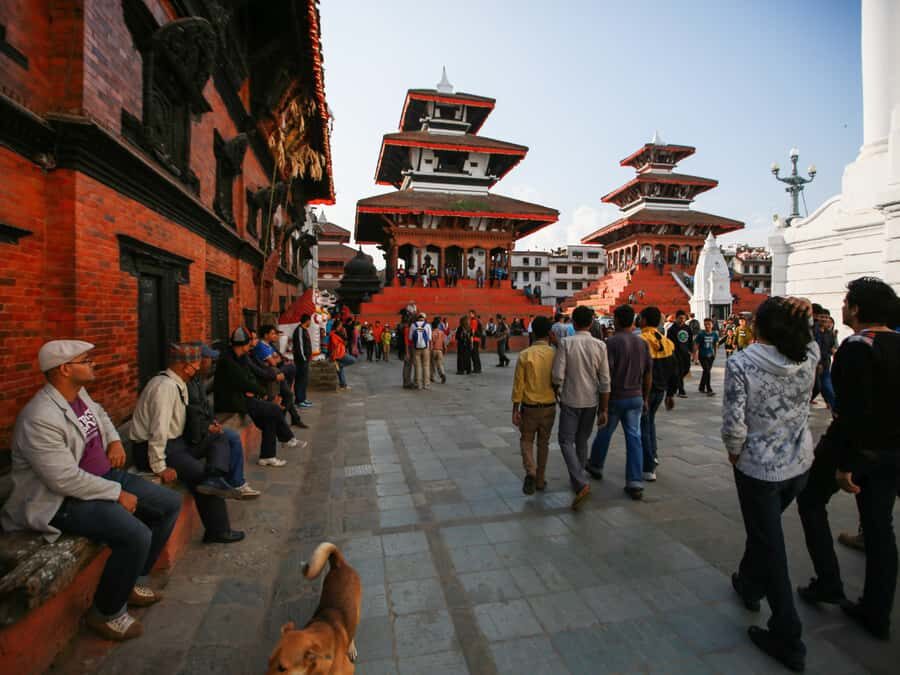
Your journey starts in Kathmandu, and the practical side is covered. You get picked up at the airport and transferred to a 3-star hotel. Then you get Kathmandu sightseeing by car, which is a nice way to get your bearings without burning trekking time later.
The big value is administrative. You receive the Annapurna Conservation Area Project permit (ACAP) and the TIMS (Trekkers Information Management system) card as part of the package. That matters because permits can be one of those things that derail your schedule if you arrive and hope to sort it out later.
If you are the type who likes to travel light mentally, you will probably appreciate that the experience is described as having an organized flow, with confirmation at booking and a mobile ticket provided. The group is kept small, with a maximum of 10 travelers, which generally makes it easier for the guide to manage pacing and questions.
You can also read our reviews of more hiking tours in Kathmandu



Scenic Bus to Besisahar: Trading City Air for Mountain Air
Before your boots ever hit a trail, you transition from Kathmandu to the trekking region via a scenic bus ride to Besisahar. This is not just transport. It is your first slow shift from traffic sounds to wide, open scenery.
Why this matters: you are going from 1) arrival stress and 2) city walking to 3) higher elevation preparation. A bus day gives you time to settle in, organize what you need for the trail, and mentally gear up for longer days.
Also, Besisahar is a common starting point for this circuit style of route, and it sets you on a path that later connects to places like Manang and Marpha. In other words, you are not doing a random trek loop. You are doing a route that is famous for a reason.
Manang, Marpha, and ACAP Country: Where Wildlife Protection Feels Real
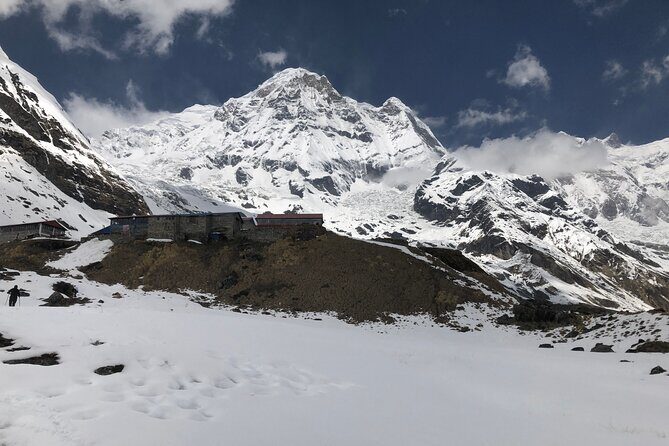
Once you are trekking, the circuit brings you through key villages that many people think of as the Annapurna story itself: Manang and Marpha show up early in the journey. You also move through regions associated with the Annapurna Conservation Area Project (ACAP).
ACAP is not only a permit stamp. It is tied to conservation of the area’s wildlife, and you may have chances to spot animals that ACAP helps protect, such as snow leopards, musk deer, and Himalayan tahr. Real talk: you cannot plan your whole day around seeing those animals. But knowing you are moving through a protected landscape gives the hike a bigger purpose than just scenery.
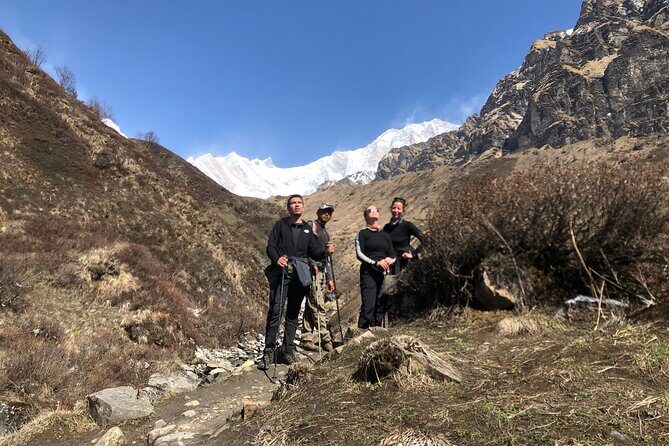
This part of the trek tends to feel like the transition from cozy valley trekking to higher, more dramatic mountain country. You’ll likely spend days steadily gaining elevation and walking between villages where local life is shaped by the seasons and the mountains above them. If you want your trek to include more than just photo stops, this is where it starts to feel like a true travel experience.
Ghorepani and Poon Hill Sunrise: The Mountain Show You Earn
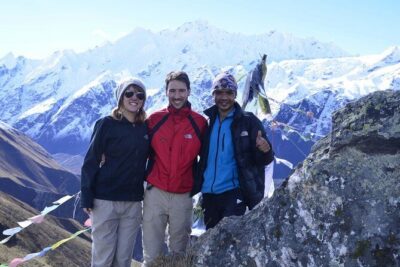
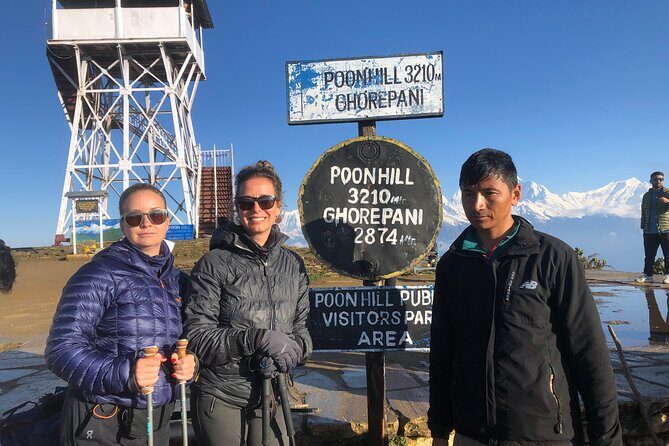
If there is a single reason people love this section, it is the chance for mesmeric sunrise from Poon Hill. You are not just waking up early for the sake of it. You are chasing clear morning light, when peaks tend to look sharp and dramatic.
You visit Ghorepani as part of the route, and this is where the sunrise plan makes logistical sense. You get the early start, you watch the mountains glow, and then you continue on while you still have that clean, post-sunrise energy.
One of the smartest things you can do here is treat sunrise as a momentum-building ritual. You are about to enter one of the trek’s biggest challenges later on, so you want your body and mind awake and ready.
Also, you will likely see a mix of people on the route: local community members, and travelers who have come from all over to do the Annapurna Circuit. That cultural mix is part of what makes the hike feel alive instead of isolated.
Muktinath Temple at 3,410m: A Shakti Peeth Stop That Changes the Mood
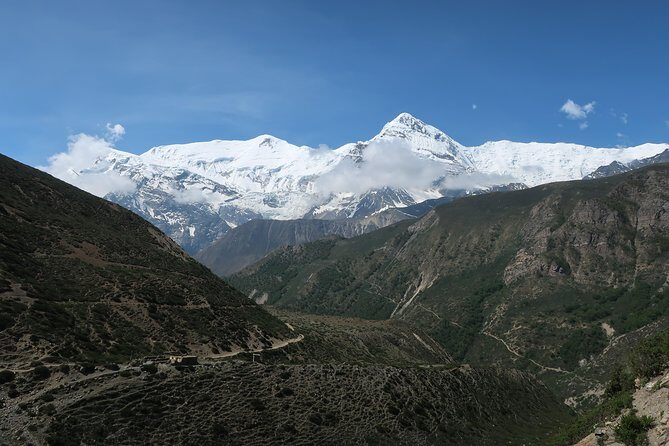
Muktinath is one of the most meaningful waypoints on this trek. You visit the holy temple at an altitude around 3,410 meters near the Thorong La pass area. It is described as a Shakti Peeth, connected with primordial energy sources.
This matters for your experience because it breaks up the trek from being only about altitude and distance. You get a moment of spiritual focus in the middle of the circuit’s most demanding stretch. You also get a chance to slow down, observe, and remember that this is not a theme park view. People come here for reasons that go far beyond hiking.
From a practical standpoint, it is a spot to regroup mentally before the big crossing ahead. Whether you are religious or not, it is a powerful pause in the middle of your effort.






Crossing Thorong La (5,416m) and Facing Kali Gandaki’s Deep Cut
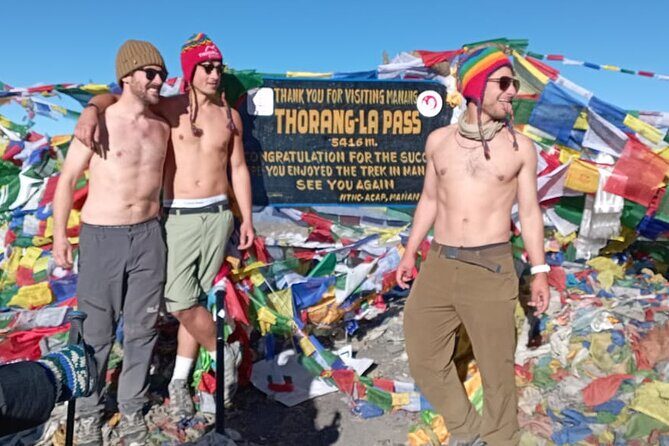
Thorong La is the headline: the highest point in this trek at about 5,416 meters. This is where the route stops being gentle and starts asking for grit.
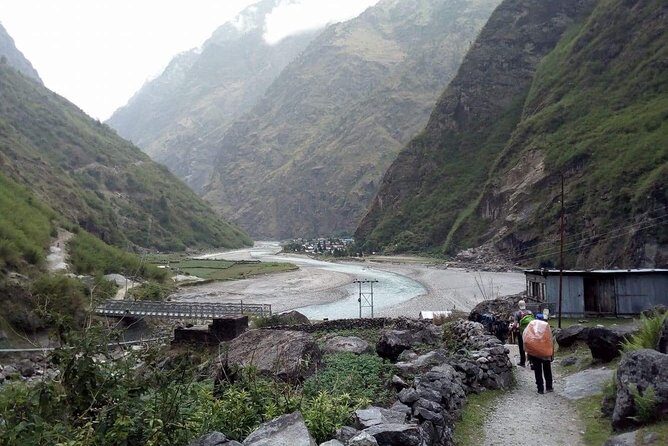
You cross the pass, and after that the trek offers a world-famous geological payoff. You reach the Kali Gandaki Gorge, described as the world’s deepest gorge. The gorge gives you that rare combination: huge scale, strong visual contrast, and a feeling of being in a place that shaped the entire region over time.
What to expect emotionally here: the pass is mentally loud. Every few steps are a reminder you are working in high altitude conditions. That can be intimidating at first, especially on steep or rocky trail sections.
But the circuit is built to deliver a payoff. Once you get over Thorong La and see what the terrain reveals next, the effort starts to feel like it had direction.
A helpful note drawn from how the guiding team has been described: having a guide who stays calm matters. People associated with the expedition team, including guides such as Binod and Pasang in other Annapurna circuit journeys, were described as supportive and attentive. When you are pushing through difficult sections, that kind of steadiness can help you focus on the next step instead of the whole mountain.
The Return Down: Tatopani, Tikhedhunga, Ulleri, and Nayapul
After the big crossing, the circuit turns back toward lower elevations and the villages most people associate with the broader Annapurna trekking region. You return through places including Tatopani, Ghorepani, Tikhedhunga, Ulleri, and Nayapul.
This return route has two benefits for you:
- You get variety. The trek is not one long climb. It becomes an emotional swing from hard altitude effort back toward village life.
- You likely get more opportunities to notice changes in vegetation, trail texture, and the pace of daily life in each settlement.
Tatopani is often associated with the relief feeling of being back on easier terrain, while Tikhedhunga and Ulleri can feel like classic stepping-stone villages along the way. Nayapul acts like the handoff point from trekking to travel logistics.
As you move through this stretch, you also keep running into international trekkers you met earlier. That social thread is not required, but it makes the days feel less lonely when fatigue shows up.
Pokhara Valley Finish: Your Reward for Staying With It
Once you finish the trek, you reach Pokhara. The package describes getting to the beautiful Pokhara valley, which is the perfect final contrast after mountain days.
You will come down from the altitude and into a place where you can do normal human stuff: slow meals, easy conversations, and catching your breath. The only caution is budgeting. Lunch and dinner in Pokhara are not included, and drinks are not included either.
If you are the kind of traveler who likes to decompress with a bit of scenery, Pokhara works. You get a smooth landing after a trek that is anything but smooth.
Price and Value: What $1,074.88 Covers (and How to Budget the Rest)
At $1,074.88 per person for an 18-day trek, the big question is value. Here is what is clearly included:
- Airport pickup and transfer to your Kathmandu hotel
- 3-star accommodation in Kathmandu
- Kathmandu sightseeing by car
- ACAP permit and TIMS card
- Drop to the airport at the end
- All program details as per the itinerary
What is not included:
- Lunch and dinner in Kathmandu and Pokhara
- Any drinks (soft or hard)
So you are paying for more than a walking route. You are paying for the back-office pieces that matter in Nepal: permits, coordination, and the Kathmandu start and finish. For many trekkers, that is the difference between a trip that feels organized and a trip that feels like a scavenger hunt.
What you still need to plan for is food and drinks during Kathmandu and Pokhara days. The data does not specify trekking meals, so I cannot tell you what is included on-trail beyond what is listed. The safe approach is to assume you’ll buy food at some point during the trip unless your operator confirms meal inclusions for the trekking days.
Who This Trek Suits (and Who Should Think Twice)
This circuit is rated for travelers with moderate physical fitness. That is a useful clue, but do not let it trick you into thinking it is low effort. Moderate fitness can still mean days of steep walking, long hours, and altitude stress.
You will want to consider this trek if:
- you can handle steep, rocky trail sections
- you accept that you might feel mentally tested at high altitude
- you want a mix of cultural stops (villages and Muktinath) and major natural set pieces (Thorong La and Kali Gandaki)
You might want to reconsider if:
- altitude already makes you feel unwell fast
- you are not comfortable with early starts like the Poon Hill sunrise plan
- you cannot commit to steady walking days with limited downtime
One more practical point: weather matters. This experience explicitly requires good weather, and if it is canceled due to poor conditions, you will be offered a different date or a full refund.
Should You Book This Annapurna Circuit Option?
If you want an Annapurna Circuit that is strong on the big-ticket moments—Thorong La, Muktinath, Poon Hill sunrise, and the Kali Gandaki Gorge—this package fits the bill. The inclusion of ACAP and TIMS is a genuine convenience, and the small group size (up to 10) should help keep your trekking day manageable.
I also like that the company’s team is described as professional and flexible in schedule handling in other Annapurna circuit experiences. Names tied to those smooth trips include Sudam, Binod, Jayaram, Pasang, and porters like Dinesh and Majhi. When you are in the thick of tough terrain, having a guide who stays patient and a porter team that keeps things running matters more than people expect.
Book it if:
- you want an organized start-to-finish flow from Kathmandu to Pokhara
- you are ready for altitude and long trekking days
- you want the cultural and spiritual stop at Muktinath included, not treated as an optional detour
Skip it if:
- you need fully included drinks and Kathmandu and Pokhara meals
- you are very sensitive to weather changes and cannot shift plans if conditions force a different date
FAQ
How long is the Annapurna Circuit Trek?
The duration is listed as 18 days approximately.
Where does the trek start and how do you travel to the trailhead?
It starts in Kathmandu, and you take a scenic bus ride from Kathmandu to Besisahar.
What is the highest point on the trek?
Thorong La pass is the highest point, at an altitude of 5,416 meters.
Do you visit Muktinath Temple?
Yes. You visit Muktinath Temple, described as a Shakti Peeth at an altitude of 3,410 meters.
What permits are included?
The Annapurna Conservation Area Project (ACAP) permit and the TIMS card are included.
Is airport pickup and transfer included in Kathmandu?
Yes. Airport pickup and transfer to your Kathmandu hotel are included, and there is also a drop to the airport at the end.
How many travelers are in the group?
The experience has a maximum of 10 travelers.
What is included in Kathmandu besides the trek?
You get accommodation in Kathmandu in a 3-star level hotel, plus Kathmandu sightseeing by car.
Are meals and drinks included?
Lunch and dinner in Kathmandu and Pokhara are not included, and any kinds of drinks (soft and hard) are not included. The provided details only specify those non-inclusions.
What happens if weather is poor?
This experience requires good weather. If it is canceled due to poor weather, you will be offered a different date or a full refund.
Is cancellation free?
Yes. You can cancel up to 24 hours in advance for a full refund.