REVIEW · KATHMANDU
Annapurna Circuit Trek
Book on Viator →Operated by Outfitter Nepal · Bookable on Viator
The pass at Thorung La hurts—in a good way. This 12-day guided Annapurna Circuit-style trek is interesting because you mix remote mountain villages with smart transport from Kathmandu, then finish with major viewpoint time around Pokhara.
What I especially like is the human team behind the trek. Names keep popping up in the operator’s guide network (like Bala/Balaram, Jitu, Indra, Kapil, Hom, and Raj), and the common theme is simple: they manage logistics and keep you moving safely, not just walking for a photo.
I also like the pacing that builds in real breathing room. You get a rest and acclimatization day in Manang, plus a Kathmandu day that covers UNESCO-listed sights before you hit the trail. That means you’re not just dropped into a trek; you get context for the country and the route.
One drawback to plan for: this is serious altitude trekking. The schedule includes crossing Thorung La (5416m), plus steep descents that can crank your knees on day 9. If you’re not used to hiking with a day pack and moving uphill for hours, start training now and don’t treat altitude like a side quest.
In This Review
- Key highlights worth knowing
- Why This Annapurna Circuit Trek Feels More Local Than Typical
- Kathmandu UNESCO Sights, Then Real Mountain Travel
- Days 1–4: Chamje to Chame with River Valleys and Forest Steps
- Manang’s Rest Day: Oxygen Reality Check and Real Choices
- Yak Kharka to Thorung Phedi: The Trail Gets Steeper, Not Just Higher
- Thorung La (5416m) to Muktinath: Dramatic Views and Knee-Pounding Truth
- Muktinath to Tatopani by Jeep, Then Ghorepani Rhododendrons
- Poon Hill Sunrise Into Pokhara: Your Big Finale
- Price and What Makes This One Feel Like Value
- Who Should Book This (and Who Should Rethink It)
- Should You Book This Annapurna Circuit Trek?
- FAQ
- What time does the tour start?
- Is pickup included?
- What meals are included during the trek?
- Do I need a visa for Nepal?
- Is there porter support?
- What’s the cancellation deadline for a full refund?
Key highlights worth knowing
- Small-group format (max 10 travelers): easier coordination, less crowding on narrow trail sections.
- Manang acclimatization day: time to adjust before the Thorung La crossing, with optional walks.
- Thorung La views are the real payoff: pass prayer flags, Kali Gandaki valley, and Mustang hills in one long morning.
- Muktinath + Tatopani change the mood: religion and views in the morning, then a jeep ride down the Kali Gandaki corridor.
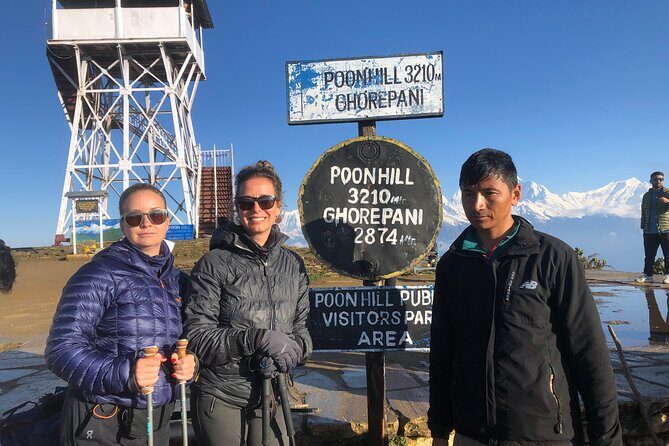
- Pokhara finale with sunrise: early trip to Poon Hill for a peak-filled dawn panorama.
- Porter support for main luggage: you hike with a day pack while porters handle heavier bags (about 20kg per two trekkers is the stated approach).
Why This Annapurna Circuit Trek Feels More Local Than Typical
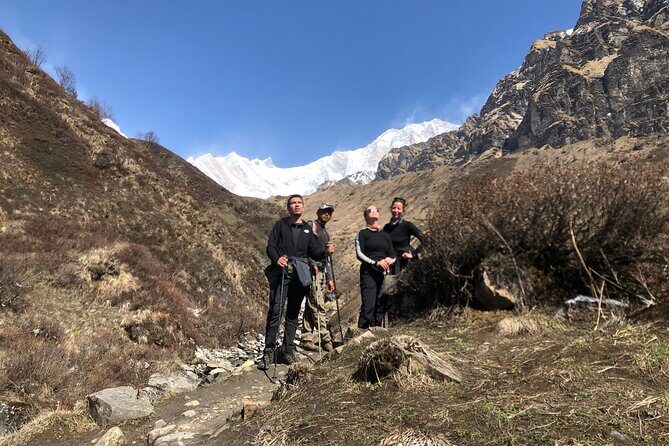
The Annapurna Circuit has a reputation for big scenery, but what makes this version stand out is how much it feels like Nepal is running the schedule—not tourism. You start with Kathmandu to Besisahar travel, then shift into the rhythm of daily village trekking: suspension bridges, terraces, prayer flags, oak and pine forest, and that constant sense of scale as you gain altitude.
I like that the trekking is guided in a way that’s practical. On this route, the trail is more than a line on a map. You’re crossing rivers, negotiating steep bits, and moving through areas where weather can change your plan quickly. The operator’s guide teams get repeated praise for staying on top of logistics and safety, and you see real-world names in that pattern—Bala/Balaram, Ram, Jitu, Indra, Kapil, Hom, Sanjaya (with assistant Lok), and Rabi. That matters because good guidance is what keeps the trip smooth when the route gets tough.
The human factor also shows up in flexibility. Several groups highlight how their guide adapted to their needs—handling shoe issues, adjusting pace, and keeping the vibe positive. You still do the classic highs and lows of the Circuit, but you’re not stuck grinding alone.
You can also read our reviews of more hiking tours in Kathmandu


Kathmandu UNESCO Sights, Then Real Mountain Travel
Even before boots hit trail, you’re not just waiting around. The program includes a full day of pre-hike sightseeing in Kathmandu covering UNESCO-listed attractions. It’s not a “quick glance and rush” day. You get a chance to understand the culture and history of the places you’re seeing, which makes the rest of the trip feel more grounded.
Then comes the push toward the mountains. Your day begins early—pickup from your hotel around 7 AM is noted, and you’ll connect to Kathmandu’s bus system via a bus terminal for the ride to Besisahar. The road portion follows the Kathmandu–Pokhara highway corridor along the Marshyangdi River. Past Dumre, the ride gets thrilling, so if you get motion sick, plan accordingly.
By the time you reach Besisahar, you switch to a local jeep to Chamje for the overnight stop. That combination—bus stability, then jeep practicality—sets the tone. You’re moving efficiently, but you’re also using local transport like you’d expect in this part of the country.
One more timing detail you should know: the overall start time is listed as 6:15 am. Plan for an early day, both in Kathmandu and during trek mornings.
Days 1–4: Chamje to Chame with River Valleys and Forest Steps
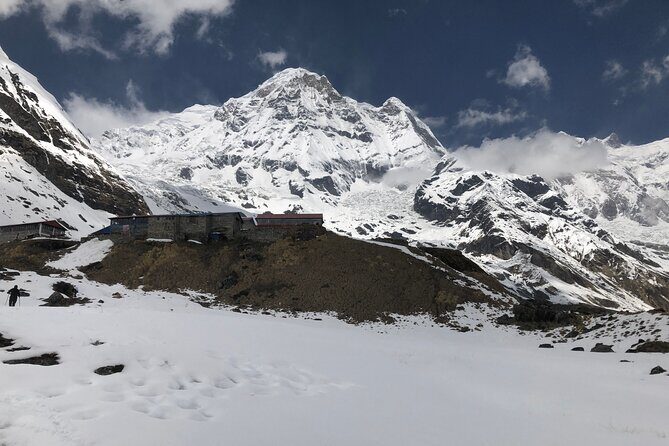
Day 1 gets you into the trek zone. Chamje is your first overnight base after the long but manageable transfer day. It’s a good “wake up and start” entry point. The goal here isn’t heroics; it’s to get your legs ready for the steep parts coming fast.
On Day 2, you start descending to the river and cross another suspension bridge—classic Circuit start energy. Then the route turns into climbing on a steep path with zigzags that can make you feel like your footing is doing half the work. You’ll pass through areas like Sattale (around 1550m) and the plain of Tal (1700m), and you get that “valley narrows, trail gets higher and winding” feeling that keeps happening throughout the Circuit.
Day 3 brings you toward Chame (with overnight there). You’ll pass the Dudh Khola area, and Annapurna II is mentioned as becoming visible ahead. Bagarchhap appears as a Bhote village with prayer flags around a Buddhist monastery—small detail, big meaning. Even at trekking pace, those moments help you feel the communities you’re walking through. Pine and oak forest show up too, plus stops like Danaque (2210m), then a wooden bridge and a steep ascent toward Timang, before the trail becomes flatter into Chame.
Day 4 is a scenic ramp toward Manang. Lamjung Himal shows in the morning sun, and you’ll trek through apple orchards and then into fir and pine forest. The valley gets steep-sided in parts, and you’ll do a lot of careful trail walking along cliffy terrain. You also cross wooden bridges at key points (like near Bhratang around 2950m in the described day), which is a reminder that this route is as much about navigation and footing as it is about views.
Practical note: these early days are not short. Expect long hours even when the elevation doesn’t look insane on paper.
Manang’s Rest Day: Oxygen Reality Check and Real Choices
Manang is where the route asks you to slow down. You spend time in town and you get a proper rest and acclimatization day before the big pass. This is one of my favorite parts of the whole trek structure because it’s honest about altitude.
You have optional day walks based on what you want. The schedule lists ideas like:
- crossing the river to see an Annapurna icefall
- climbing above town for broad range panoramas
- visiting an Himalayan Rescue Association aid post (HRA)
- walking to Ganagapurna Glacier Lake
This matters because it’s not just “rest because rest.” It’s rest with purpose. You’re giving your body time to adjust, while still getting meaningful experiences that don’t feel like wasted days.
Also, this is where you can learn your own limits. If you’re feeling strong, you can choose a higher walk. If you’re tired, you can keep it lighter. A good guide will read that quickly and help you pick the right option for the next stage.
Yak Kharka to Thorung Phedi: The Trail Gets Steeper, Not Just Higher
After Manang, Day 7 climbs gently all the way to Yak Kharka, passing through Gunsang (3960m). The description says the trek can feel short, but it will still feel tiring because you’re higher and the air is thinner. That’s one of those details that matters: at altitude, your effort doesn’t scale linearly with the number of miles. You pay in breath, not just legs.
On Day 8, you ascend to a ridge and then descend toward the headwaters, crossing via a covered wooden bridge. The trail then includes a narrow section across an unstable spree slope—so you’re moving carefully, not speed-walking. After a short climb on the right bank, you descend to Thorung Phedi for overnight.
Thorung Phedi is where the trip turns from “tough trekking” into “big expedition mode.” Even if you’re physically fit, the logistics and fatigue stack up here. This is the point where a calm, steady guide team matters more than bravado.






Thorung La (5416m) to Muktinath: Dramatic Views and Knee-Pounding Truth
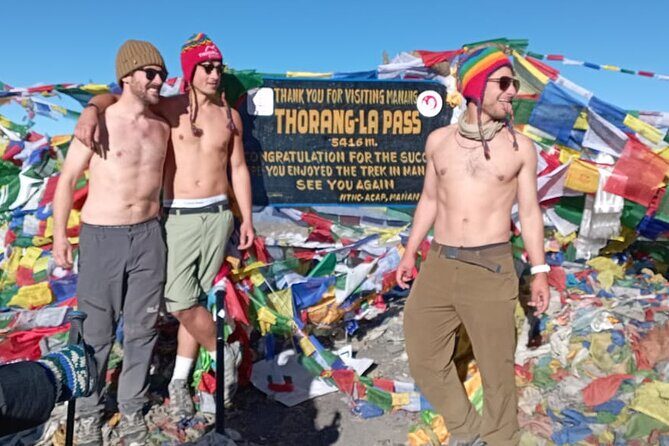
Day 9 starts early and it’s the centerpiece: crossing Thorung La (5416m). The route becomes steep immediately leaving camp, but the trail is described as well-defined because local people have used it for hundreds of years.
After around four hours of steady climbing, you reach the chorten and prayer flags of the pass. The views are described as dramatic, including snow-covered peaks above and a huge view down into the Kali Gandaki valley. The Mustang hills show out too, with their brown and purple tones.
Then comes the part that many people underestimate: the descent to Muktinath is knee pounding, described as about 1600m down. It’s a long way on your joints. You’ll feel it even if you’re strong.
But the payoff is real. The descent includes excellent views of Dhaulagiri as you head toward Muktinath, where the spiritual and scenic elements combine.
Muktinath to Tatopani by Jeep, Then Ghorepani Rhododendrons
Day 10 shifts gears. You pray at Muktinath in the morning, then head back for breakfast. After that, you take a jeep ride from Muktinath to Tatopani along the Kali Gandaki River.
This jeep segment is a smart change of pace. After a steep descent, you get time to sit. You also get a different perspective on the valley corridor—less “footpath focus,” more “line-of-the-river focus.”
Day 11 moves you toward Ghorepani through villages and rhododendron forest. The trail starts on flatter ground, then climbs steeply for at least one hour. You pass through villages like Phalate and Chitre. The route description also notes that many people serve in Gorkha Regiment and Indian Regiment, which adds a human layer to what you’re seeing.
Rhododendron forest shows up again, and you might spot wildlife like monkeys and birds. You’ll arrive at Ghorepani for overnight at a lodge, setting you up for the sunrise portion.
Poon Hill Sunrise Into Pokhara: Your Big Finale
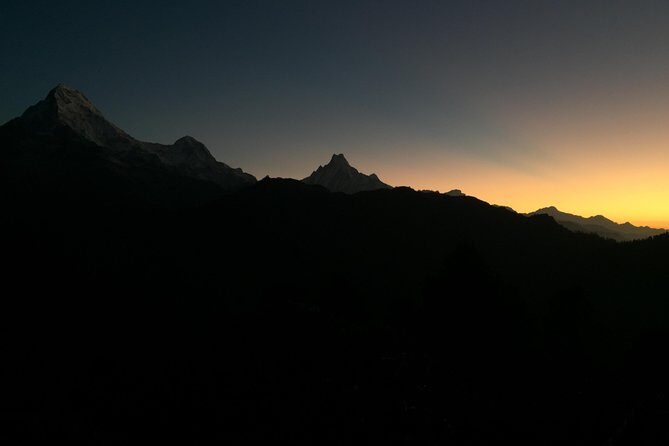
Day 12 begins early with a trip to Poon Hill (3232m) for sunrise views. The list of peaks mentioned is the kind of sight you don’t forget: Dhaulagiri, Tukuche Peak, Nilgiri, Varaha Shikhar, Annapurna I, Annapurna South, Annapurna III, Machhapuchhre, and several more.
This is also where the trek becomes a celebration of what you already earned. You spent days moving up and down; now you get a wide-angle moment where the whole region feels visible at once.
After sunrise, you return to the lodge for breakfast. Then the day continues with gradual descent through rhododendron and oak, reaching Banthanti for a pause with hot and cold drinks. The described day continues with further descent toward Pokhara.
Pokhara is more than a transit stop here. Since the program is designed around Kathmandu-to-Pokhara movement and includes sightseeing elements, you’ll likely use this time to decompress after the trek grind.
One extra option you may encounter through the operator: they organize a Sarangkot Dhampus hike for solo travelers (up to 14 at a time, split into subgroups if needed). It’s a nice way to add another viewpoint day without turning your schedule upside down.
Price and What Makes This One Feel Like Value
The price is $994 per person. On its face, that’s not cheap. But when you line it up with what’s included, it starts to make sense.
You get:
- all lodge/tea house accommodations during the trek
- government taxes, VAT, and service charges
- an experienced guide and support staff (including stated porter arrangements for main luggage)
- ground transportation from Kathmandu to the trek start area, plus key transfers like Muktinath to Tatopani and Hile to Pokhara
- meals during the trek window: dinner (11), lunch (12), and breakfast (12)
- insurance for the guide (not blanket insurance for you—your own travel insurance is listed as required)
What’s not included:
- city meals while you’re in Kathmandu/Pokhara
- alcohol, non-alcohol drinks, and dessert
- international airfare and departure tax
- Nepal entry visa fee (you can issue it on arrival, and you’ll need 2 passport photos)
- tips for guide and porter
- your travel insurance (compulsory)
- porter add-on cost is listed at $20/day if you need one
I think the value comes from reducing decision fatigue. You’re not negotiating transfers, sorting lodging at every village, or trying to guess how the timing will work at altitude. For many people, that’s worth real money.
Just be honest about the season and your fitness. If you’re going to struggle, guidance helps—but it can’t make altitude disappear.
Who Should Book This (and Who Should Rethink It)
This trek is a strong fit if you want:
- a guided, structured route on a famous trail
- a rest day in Manang (not just “walk harder” planning)
- a final payoff that includes Poon Hill sunrise views
- small-group energy (max 10 travelers is stated)
It’s also a good match if you like the idea of walking through real communities—Gurung villages and terraced farmlands are part of the program’s described experience, and the day-to-day route includes villages and monastery prayer flags along the way.
Rethink it if:
- you’re not ready for steep descents (day 9 is the knee test)
- you need a lot of rest or short days
- you’re new to altitude trekking and haven’t trained your hiking stamina
If you go in with basic strength, good footwear, and a realistic pace, you’ll likely find this trip hits that rare combination: challenging enough to feel meaningful, organized enough to feel safe.
Should You Book This Annapurna Circuit Trek?
If you’re aiming for the classic Annapurna Circuit feel—Manang to Thorung La to Muktinath to Pokhara sunrise—and you want the logistics handled by a proven Nepali team, I’d say yes. The big signal here is the guide reputation: repeated praise for safety, smooth running, and flexibility (with names like Bala/Balaram, Jitu, Indra, Kapil, Hom, and Raj showing up in feedback).
Book it if you’re excited to earn your views and you can handle early starts and long days.
Maybe choose a different option if you want an easy walk, or if you’re not comfortable with altitude and steep downhill strain. This route doesn’t do gentle by default.
FAQ
What time does the tour start?
The tour start time is listed as 6:15 am.
Is pickup included?
Pickup is offered. You’ll be picked up from your hotel around 7 AM on the way to the transport to Besisahar, and airport or hotel pickup is mentioned as part of the all-inclusive adventure.
What meals are included during the trek?
During the trek, dinner is included for 11 days, lunch for 12 days, and breakfast for 12 days. Meals in Kathmandu and Pokhara are not included.
Do I need a visa for Nepal?
Yes, you’ll need a Nepal entry visa fee. The information says you can issue the visa upon arrival at Tribhuvan International Airport in Kathmandu and you’ll require 2 passport size photos.
Is there porter support?
The program includes porter arrangements for main luggage (with the approach described as about 20 Kg per porter, shared across trekkers). If you need a porter, there’s also a listed cost of $20 per day.
What’s the cancellation deadline for a full refund?
You can cancel up to 6 days in advance of the experience for a full refund (cancel at least 6 full days before the start time).