REVIEW · KATHMANDU
Around Manaslu Trek
Book on Viator →Operated by Tourist Link Treks Expedition Pvt. Ltd · Bookable on Viator
Manaslu starts feeling personal fast. This circuit mixes Buddhist and Hindu culture with rhododendron forests, river canyons, and protected wildlife, then forces you to earn your views at Larkya La Pass (5,116m). I love how the trip keeps things organized end-to-end, from Kathmandu sightseeing to private ground transport. I also like that you get a real sense of the region’s culture along the way, with monasteries and villages rather than just scenery.
The main thing to plan for is effort and basic comfort: you’re trekking daily at altitude, and lunch and dinner are not included (plus drinks and hot shower are extra). If you’re expecting easy days and full-board meals, you’ll need to adjust your budget and routines.
In This Review
- Key things to know before you go
- A circuit that earns its views: Manaslu, Larkya La, and the cultural mix
- Kathmandu: your first altitude-proofing step (and your cultural warm-up)
- Day 1: Gorkha driving day—long, but worth it for the launch
- Days 2–4: Budhi Gandaki river life—forests, bridges, and constant movement
- Days 5–8: Gompas, forests, and the Manaslu view coming into focus
- Days 9–11: toward base camp and the glacier valley build-up
- The Larkya La crossing experience: your 5,116m turning point
- Days 12–13: Tilije to Syange—rhododendron forests and a softer finish
- Day 14: Besi Sahar return and Manakamana Temple—ending the loop
- Price and value: what $1,840 buys you (and what it does not)
- What you’ll love most (and how to get the best version of this trek)
- Who should book this Manaslu circuit?
- Should you book it?
- FAQ
- How long is the Manaslu Around Trek?
- Where does the tour start and end?
- What is the highest point on the trek?
- Is pickup included?
- What’s included in the price?
- Are lunch and dinner included during the trek?
- Do I need special documents for the trek?
Key things to know before you go
- Larkya La is the big ticket: a high pass day with glacier views and mountain panoramas
- You get real village trekking: suspension bridges, stone stairs, and river crossings along the Budhi Gandaki
- Permits are handled for you: you’ll submit paperwork with three passport-size photos
- Lodges are twin-sharing: best available during the trek, with breakfast included
- Kathmandu setup is built in: Monkey Temple, Pashupatinath, Boudhanath, and Durbar Square with a 3-star hotel stay
A circuit that earns its views: Manaslu, Larkya La, and the cultural mix
If you want a mountain trek where the scenery is dramatic but the route also teaches you something, the Manaslu circuit hits that sweet spot. You’ll move through places shaped by both Hindu and Buddhist traditions, and you’ll see it in the way people live around temples and monasteries. Rhododendron forests, wildflowers, and stretches of protected habitat add color to a trek that could otherwise feel like a straight climb toward a single summit view.
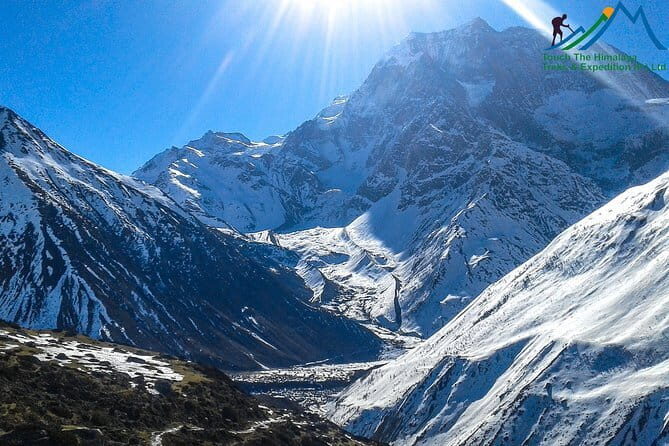
The real headline is crossing Larkya La Pass. At 5,116 meters, it’s not just another high day; it’s your hinge moment. Before you reach it, the trail has already been training your legs with river valleys and ups-and-downs. After it, the landscape and the sense of scale change as you head toward glacier country and the views widen into classic Himalaya drama.
You can also read our reviews of more hiking tours in Kathmandu
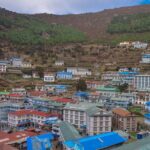
Kathmandu: your first altitude-proofing step (and your cultural warm-up)
Your trip starts in Kathmandu with two nights in a 3-star hotel with breakfast. That base matters because it buys you time to settle in, sort out your paperwork, and take in the city’s spiritual sites before you head for the mountains.
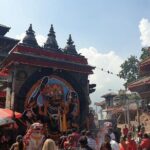
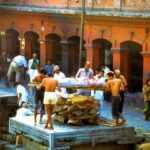
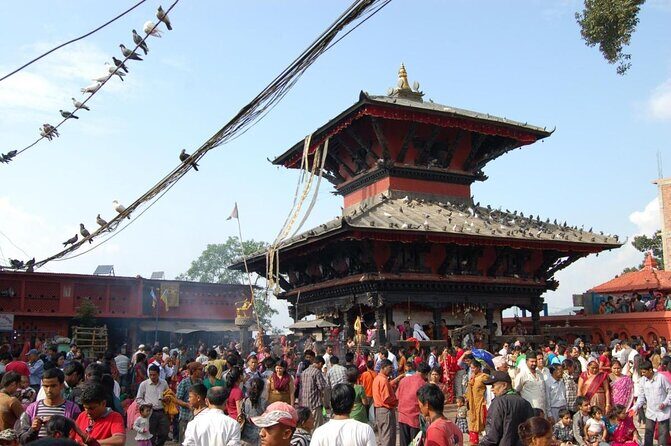
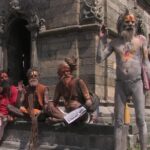
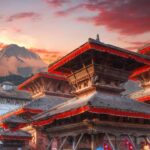
You’ll also do Kathmandu Valley sightseeing with stops at Monkey Temple, Pashupatinath, Boudhanath, and Durbar Square. This isn’t just box-ticking. Even a short visit helps you understand why the trekking towns feel the way they do: temples, prayer flags, and spiritual symbolism show up again in the trekking landscape. It’s like getting the reading glasses before you start the hike.
Logistics are handled in a practical way. Pickup is offered, ground transportation is by private vehicle, and you’ll receive a mobile ticket. You’ll be in a private tour format, so only your group participates—useful when your schedule needs to be flexible for timing and comfort.
Day 1: Gorkha driving day—long, but worth it for the launch
Day 1 is mostly travel. You drive from Kathmandu toward Dhading Bensi on paved road, then continue on rough roads to Sotikhola. The total time is about 7 to 8 hours, and this is your first reminder that Nepal treks often start with a road that tests patience.
You do get a meaningful first stop: Gorakha Nath Temple in Gorkha. That’s a good way to break up a long transit day. It gives you a real sense of the region you’re heading into, beyond just arriving with tired legs.
If you’re sensitive to motion or rough roads, pack what you need for the car day—this is the one day where you’ll feel the journey more than the mountains.
Days 2–4: Budhi Gandaki river life—forests, bridges, and constant movement
From the start of the trek, you’ll be walking alongside the Budhi Gandaki corridor. The route alternates between forest sections, cliffside trail, and rocky passages. Expect a pattern of up-down effort that feels more “hike rhythm” than “single steep push.”
On Day 2, you start in a Sal forest region and move through a ridge above rapids on the Budhi Gandaki. You’ll pass waterfalls on a steep, rocky trail clinging to the mountain side, then reach the Gurung village area around Labubesi. The day ends with a suspension bridge and a walk to Maccha Khola. These bridges and river crossings matter because they keep the trek active and varied; you’re not just trudging forward—you’re negotiating terrain.
Day 3 leans into that same character. You’ll tackle a narrow trail with minor challenges crossing Tharo Khola and a suspension bridge on Yaru Khola, then climb stone stairs to Tharo Bharyang. You finish by moving toward the famous Jagat village area. There’s something satisfying about days like this: you gain altitude without feeling like every step is the same.
Day 4 is quieter and more straightforward. You walk across the valley, pass bamboo forests, and reach Deng Khola and the village of Deng for an overnight. It’s a “settle into the trek” day—still walking time, but less of that cliffside intensity.
Days 5–8: Gompas, forests, and the Manaslu view coming into focus
As the trek continues, the number of cultural touchpoints increases—especially monasteries (gompas). On Day 5, you cross the Budhi Gandaki many times and see large numbers of gompas along your route. The trail runs upstream through dense forest, then becomes less dense as you move beyond a narrow gorge. You finish with a steep climb up to Namrung.
This day is a big deal for two reasons. First, the frequent river crossings keep your attention on foot placement, not daydreaming. Second, the gompas make it feel like you’re inside a living culture rather than passing through a scenic corridor.
Day 6 focuses on that “now the mountains are real” feeling. You’ll pass Lho village and get extraordinary views of Mt. Manaslu, plus a visit to the Ribung Gompa. If you care about the spiritual side of trekking, this is one of the days where the route stops being only physical.
Day 7 is an eye-opening day as you move away from Lho toward the Samagaon area. You’ll cross paths near landmarks like Himal Chuli and Peak 29, with glaciers and snow summits visible in different directions. The route pulls you toward Ganesh Himal and ends at Samagaon.
Days like this are also acclimatization in action. You’re not just going higher; you’re training your breathing and learning how your body handles repeated altitude exposure.
Day 8 is described with a stop around the Gorkha district area and continues the trek with lodge stays and a steady pace. In practice, this kind of day functions as a buffer—use it to rest, hydrate, and keep your body calm so the pass later doesn’t surprise you.
Days 9–11: toward base camp and the glacier valley build-up
By Day 9, the trek turns more serious. You descend toward the Budhi Gandaki, then follow it northward. The leftward trail leads toward Manaslu base camp, and you’ll pass mani walls as the valley widens. You’ll drop across a shelf to cross Budhi Gandaki on a wooden bridge, climb between forks in the river, and continue on toward Samdo.
This section is where the trek shifts in mood. The terrain becomes more stark, and the views tend to feel larger and colder. It’s the kind of day where you’ll want to keep a steady pace and not burn energy too fast.
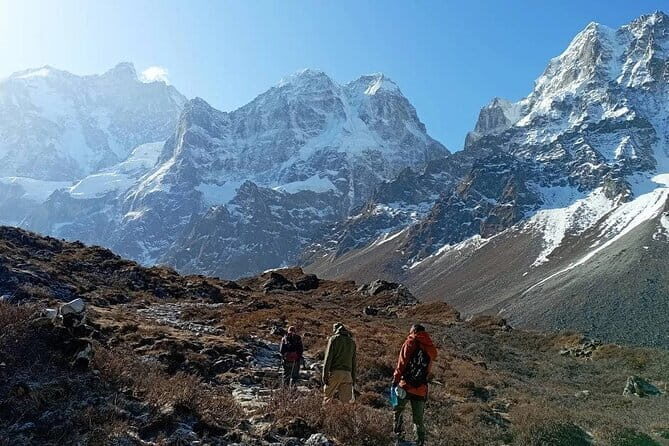
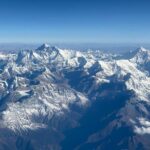
On Day 10, you climb to reach the Larkya or Dharamsala glacier valley. Here, you get stunning views of Larkya Peak and Cho Danda. Even if you’re tired, this is the moment where you understand why people talk about the pass like it’s a whole event. The glaciers change how light hits everything, and the mountain silhouettes start to feel immediate rather than distant.
Day 11 builds the final stretch toward the high crossing. You walk across moraines and gradually ascend, then the climb becomes steeper toward the pass. You’ll have outstanding views of Cheo Himal, Himlung Himal, Kangguru, and Annapurna II. Finally, you reach Bimtang.
If you only take one practical lesson from Days 9–11, it’s this: your pass day success depends on how you treat energy before you get there. Eat, hydrate, and keep your effort consistent.
The Larkya La crossing experience: your 5,116m turning point
The itinerary has you reaching the glacier valley area and then moving over the pass route built around moraines and steepening trails. That means the Larkya La day is more than a single climb—it’s the result of careful pacing and good acclimatization.
On the ground, here’s what you can realistically expect based on the trek design: glacier conditions, colder air, and a trail that asks for careful footing. The promise is clear—snowcapped peaks and glacier views—but the way you get them is by staying disciplined in movement and breath.
The best strategy is simple: go slower than you think you need to. At high altitude, “faster” usually means “more wasted effort,” and you’ll want every bit of stamina saved for the descent or next day’s walking rhythm.
Days 12–13: Tilije to Syange—rhododendron forests and a softer finish
After the high point, the trek shifts into recovery mode. Day 12 is about continuing the trail around 4 to 5 hours to Tilije. Along the way you’ll see scenic rhododendron forests and green fields, then face a steep climb. It’s not “easy,” but it feels more manageable because the big altitude stress has passed.
Day 13 moves toward Chyamje village, crossing Marshyangdi Khola, and then descending from rhododendron and pine forests to Syange. This is the part of the trek where you start to notice the trail is different: you’re not just chasing altitude drama. You’re walking through a more varied forested environment, which can feel like your body understands it’s safe to relax a little.
Day 14: Besi Sahar return and Manakamana Temple—ending the loop
Your final day is a travel day again. You cover about 800 meters to Besi Sahar, then return to Kathmandu. The time on the calendar is around 9 hours, and it’s a common rhythm in Nepal: once the trek ends, you transition quickly into long-distance road travel.
You also stop at Manakamana Temple along the way back. It’s a fitting final cultural note—another reminder that even when the trek has been about mountain achievement, the trip remains grounded in spiritual places and local routes.
Price and value: what $1,840 buys you (and what it does not)
At $1,840 per person for a roughly 14-day circuit, the value comes from how much the logistics handle for you. You get all ground transportation on a private vehicle, Kathmandu sightseeing, two nights at a 3-star hotel with breakfast, and a twin-sharing lodge setup during the trek (with breakfast included each day). You also get a helpful, experienced guide, plus local taxes and special permits managed as part of the package.
You’re also covered on the “administrative weight.” You’ll submit paperwork with 3 passport-size photographs, and the trip includes the necessary special permits. That reduces the chance of delays from missing forms, and it keeps you focused on training, packing, and acclimatization.
Where you should adjust expectations is food and comfort extras. Drinks, hot shower, snacks, lunch, and dinner are not included. Personal expenses like laundry, phone calls, and bar bills are also extra. You’ll want to budget for these, and you might find that carrying some of your usual snacks is smart, especially on colder days.
If you’re wondering about risk management: helicopter emergency services aren’t included. The data says it would be paid by your travel insurance company, so your policy matters. Also, the experience requires good weather, and if weather cancels the trip, you’d be offered a different date or a full refund.
What you’ll love most (and how to get the best version of this trek)
The most praised parts of this style of operation show up in the way the whole trek feels run: smooth setup and a guide who stays attentive. Past feedback highlights organization by the owner named Hom and guided support from people like Nabin and Promod pangeni on Manaslu-related treks. That matters because Manaslu logistics can be complex: permits, transport timing, and lodge coordination must line up.
Here’s how you can make the trek feel like a win:
- Plan your money for real meals: since only breakfasts are included, you’ll want a simple plan for lunch and dinner spending.
- Pack for cold and basic lodges: hot shower isn’t included, so think about how you’ll handle hygiene comfortably.
- Take your acclimatization seriously: the pass day is the hardest physical moment, and your earlier pacing affects how you handle it.
- Use the guide: ask about trail pacing and how to manage effort on steep or rocky stretches. It’s usually the small coaching that keeps you steady.
This trek fits best if you like trekking that mixes culture and big-mountain terrain. You’ll enjoy it if you’re okay with daily walking hours around 5 to 7 and you can handle one long road-and-trek transition day at the start and the long drive back at the end.
Who should book this Manaslu circuit?
Book this trek if you want:
- A classic high-pass experience with Larkya La
- Cultural stops with monasteries and village life, not just mountain views
- A private, organized format where transportation and permits are handled
- Lodge stays with breakfast included, while you manage lunch and dinner on the trail
Consider skipping or choosing a different option if you:
- Want all meals and drinks included (this doesn’t include lunch/dinner)
- Struggle with high-altitude hiking or repeated steep sections
- Expect frequent comforts like included hot showers
Should you book it?
If you’re ready for a real Himalayan trek and you like the idea of earning glacier views at 5,116m, this is a strong choice. The value feels best when you treat it as a full logistics package: Kathmandu sightseeing, private transport, permits, and guide support are taken care of, so you can focus on the walking and the altitude.
One simple decision rule: if you’re comfortable budgeting for lunch/dinner and you’re training for the pass, you’ll likely feel glad you booked. If you want everything included and stress-free comfort, you’ll probably feel annoyed by the extras and the physical demands.
FAQ
How long is the Manaslu Around Trek?
The trek lasts about 14 days.
Where does the tour start and end?
It starts in Kathmandu and ends with a return to Kathmandu after reaching Besi Sahar on the last day.
What is the highest point on the trek?
The itinerary includes crossing Larkya La Pass at 5,116 meters.
Is pickup included?
Yes, pickup is offered.
What’s included in the price?
Included items are private vehicle ground transportation as per the itinerary, Kathmandu Valley sightseeing (Monkey Temple, Pashupapati Temple, Boudhanath, Durbar Square), two nights with breakfast in a 3-star Kathmandu hotel, twin-sharing lodge accommodation during the trek, an experienced guide, local taxes and permits paperwork, a farewell dinner, and breakfast for all 14 days.
Are lunch and dinner included during the trek?
No. Lunch and dinner during the trek are not included, and you’ll also pay for drinks and other snacks.
Do I need special documents for the trek?
Yes. You’ll need 3 passport-size photographs for the paperwork and special permits.