REVIEW · KATHMANDU
Everest Base Camp Trek
Book on Viator →Operated by Travel Pinto · Bookable on Viator
Everest Base Camp feels bigger than you expect. This 14-day trek from Kathmandu brings you to 5,365 m without mountaineering gear, led by a professional guide and supported by porters. You get structure where you want it, plus freedom to shape the rest of your time in Nepal.
I especially like the day-by-day licensed guidance. It matters at this altitude, when you need good pacing and smart acclimatization, not guesswork. I also like the practical logistics in Kathmandu—transfers, a real pre-trip meeting, and clear instructions on what to bring and what gets handled for you.
One possible drawback: you are still exposed to altitude risk and weather. Even with acclimatization built in, you might feel rough on steep days or get slowed down if conditions are tough.
In This Review
- Key things to know before you go
- Kathmandu prep: the meeting that helps your trek start calm
- What the Manthali-to-Lukla flight change means in peak season
- Following the Dudh Koshi: Phakding to Namche Bazaar’s big shift
- Acclimatize like a pro: Namche pause, Sherpa Museum, and viewpoint climbing
- Tengboche monastery day: culture, ceremony, and mountain drama at 3,860 m
- Dingboche: slowing down to avoid altitude hits
- Lobuche and the memorials: when the trail turns serious
- Everest Base Camp at 5,365 m: the day you actually picture
- Kala Patthar: the toughest day for the biggest payoff
- Returning to Namche: the descent that still keeps working your legs
- Lukla to Kathmandu: one last flight and room to extend Nepal
- Price and value: why $1,600 can be worth it here
- The itinerary’s rhythm: what each day teaches your body
- Guides and porters: the support you’ll feel on hard hours
- Altitude reality check: plan for slow, not for speed
- Who should book this Everest Base Camp trek
- Should you book this Everest Base Camp trek with Travel Pinto?
- FAQ
- How long is the Everest Base Camp trek?
- Where does the trek start and what time does it begin?
- Will I have help in Kathmandu when I arrive?
- Are flights included for getting to Lukla and back?
- Do I get a porter, and for how long?
- Is the trekking guide included?
- Are permits included?
- Are meals and water included on the trek?
- What’s not included that I should plan for?
Key things to know before you go
- Licensed, English-speaking guide support with first-aid trained leadership and emergency evacuation arrangements
- Porter support for 11 days (1 porter for every 2 clients), which is a big deal on long hauling days
- Lukla flights may route through Manthali in peak congestion windows (March–May, October–November)
- Built-in acclimatization stops in Namche and Dingboche, plus a dedicated climb day toward viewpoints
- You’ll pass through major Sherpa hubs like Namche Bazaar and Tengboche, not just “move fast to the next bed”
- Hot meals and filtered water matter here, and this trek includes standard meals plus a Katadyn Pocket filter
Kathmandu prep: the meeting that helps your trek start calm
Your trek really starts the day you land in Kathmandu. An airport representative meets you at Tribhuvan International Airport with a Travel Pinto signboard, then you’re taken to your Kathmandu hotel in a private tourist vehicle. If you arrive after 4 pm, your pre-trip meeting happens right that evening; if you arrive earlier, it takes place at the office that same day. Either way, you’ll meet your trek leader/guide and get your questions answered before the mountain starts testing your patience.
Bring what they ask for: your passport, three copies of passport-size photos, and a readable copy of your travel insurance policy. You’ll also clear any due balance and sign the trip form plus a non-liability disclaimer. It’s not the fun part of the trip, but it’s the part that helps the rest of the days run smoothly.
You’re staying in 3-star twin-share accommodation in Kathmandu for two nights, with breakfast included. That’s a good balance: you don’t have to sleep in chaos while your body is still on “city mode.”
You can also read our reviews of more hiking tours in Kathmandu


What the Manthali-to-Lukla flight change means in peak season
Most Everest Base Camp treks include a Lukla flight, and this one does too—but with an important reality check. In peak trekking seasons, flights to and from Kathmandu can be shifted away from the congested Kathmandu airport to Manthali Airport (Ramechhap district). That means an early morning start for the scenic flight segment to Lukla.
You fly about 35 minutes from Kathmandu’s side to Lukla (2,804 m) and land at Tenzing and Hillary Airport. Once you touch down, the guide briefs you and introduces porters before you start trekking toward Phakding. This transition day is all about getting moving gently after the flight—walking is described as easy, and that’s exactly what you want on day two.
If you’re the type who hates surprises, this is the surprise you’ll want to know upfront. You’re still doing the same trek, but you’re doing it from a different airport access route depending on the season and congestion.
Following the Dudh Koshi: Phakding to Namche Bazaar’s big shift
After Lukla, you head toward Phakding (2,610 m) along the Everest region trail. The route starts with a descent toward the Dudh Kosi River, then you join the main trail to Namche Bazaar. This part matters because it’s your first sustained rhythm: hike, cross, pause, eat, repeat.
You’ll cross the Dudh Koshi on suspension bridges hung with prayer flags—small cultural details that add up. When you enter Sagarmartha National Park, the trail becomes steeper, and that’s when Namche starts to feel like a destination rather than just a town.
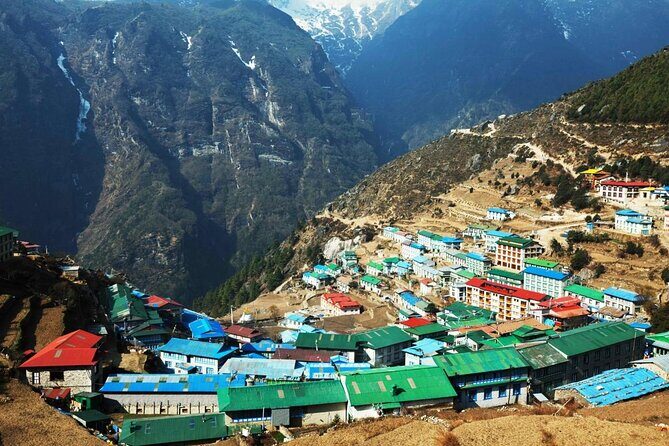
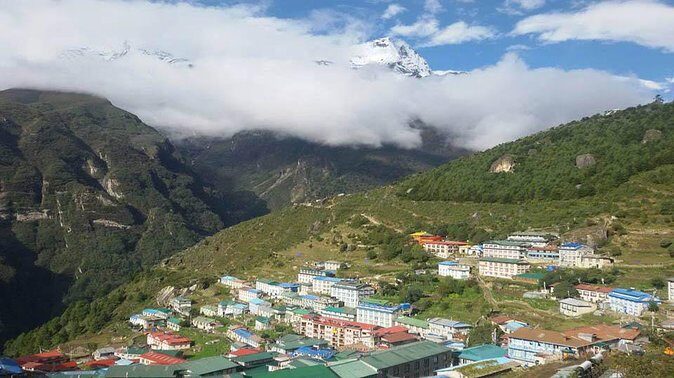
Namche Bazaar is a hub: you’ll find restaurants, lodges, shops, money exchange services, and internet cafes. It’s also the biggest Sherpa settlement along the Everest trail, which you’ll feel in how the town works and who you’ll run into.
A big plus here is time. You aren’t sprinting through Namche. You’re building your base for what’s next.
Acclimatize like a pro: Namche pause, Sherpa Museum, and viewpoint climbing
Day four is your acclimatization and adjustment day in Namche Bazaar. This is where the trek becomes smart, not just ambitious. You hike a short distance to the Sherpa Museum, then continue up toward Syangboche Airport and the Everest View Hotel—one of the highest-placed hotels in the world.
From that high point, you can see rewarding Himalayan views, including Mt Everest if the weather cooperates. Even if cloud rolls in, the takeaway is the same: you’re training your body to handle altitude while keeping your effort controlled.
You’ll also be visiting the Sherpa Museum, which focuses on traditional customs and local life. It’s a chance to slow down, understand the culture you’re walking through, and remind yourself that this trek is more than a checklist.
Tengboche monastery day: culture, ceremony, and mountain drama at 3,860 m
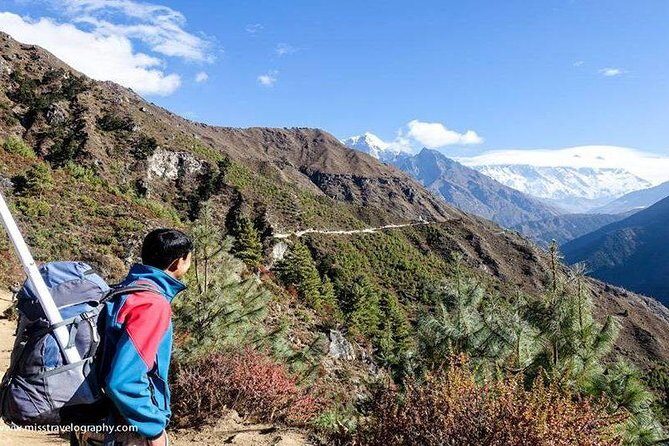
From Namche, you continue along the Dudh Kosi with glacial-water views and repeated mountain scenery. Eventually you reach Tengboche at about 3,860 m. This is a big altitude jump in a day, but the walking is staged so you can arrive and absorb the moment.
The main draw here is Tengboche Gompa, with ornate wall hangings and religious art. The trek includes time to observe a prayer ceremony either in the evening or morning depending on the day’s schedule. That rhythm—walk in, arrive, settle, then witness local ceremony—gives you something more meaningful than just photo stops.
This day also tends to be “mountain drama” time: the air is thinner, the views are sharper, and the fact that you’re among people who know this altitude becomes clear. It’s easy to feel humbled here.





Dingboche: slowing down to avoid altitude hits
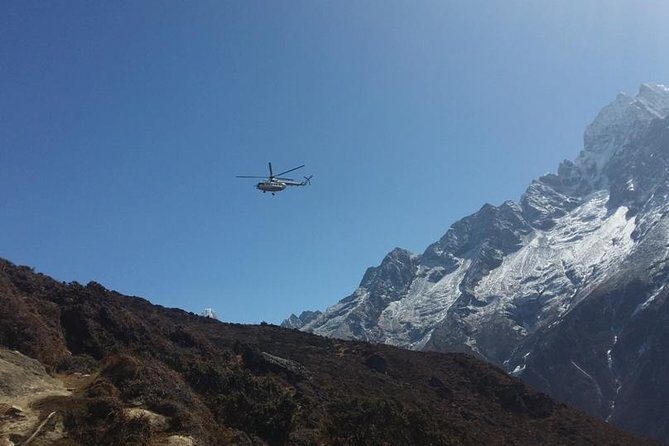
From Tengboche, the route drops toward Debuche, crosses another suspension bridge over the Imja Khola, and climbs through Pangboche’s mani stones to Dingboche. You take your time to reduce altitude strain, and it shows in how the day is planned.
Dingboche sits with views of peaks like Lhotse, Island Peak, and Ama Dablam. You’ll feel the “how high is this?” moment when the valley starts to look more like a map than a place you could drive to.
Day seven is your acclimatization day, and it’s a key difference between a good trek and a risky one: you don’t push toward Everest Base Camp on this date. Instead, you hike to Nangkartshang peak just above Dingboche for a viewpoint, especially known for Ama Dablam views when weather is clear. Then you get the rest of the afternoon to rest or stroll around the village.
That built-in recovery time is exactly what helps you finish strong, even if you feel a bit slow at first.
Lobuche and the memorials: when the trail turns serious
As you climb higher, you reach Lobuche, walking along the lateral moraine of the Khumbu Glacier. The trail passes by stone memorials for climbers who have perished on nearby summits. This is the part of the trek that quietly shifts your mindset. You’re still trekking, but you’re also remembering that mountains have rules.
The day is more demanding, and some breathing problems may arise due to altitude. If you’ve ever underestimated altitude before, this is where you’ll quickly learn to respect it. The good news is that the trek has already staged your acclimatization, so you’re not walking into this stage cold.
Everest Base Camp at 5,365 m: the day you actually picture
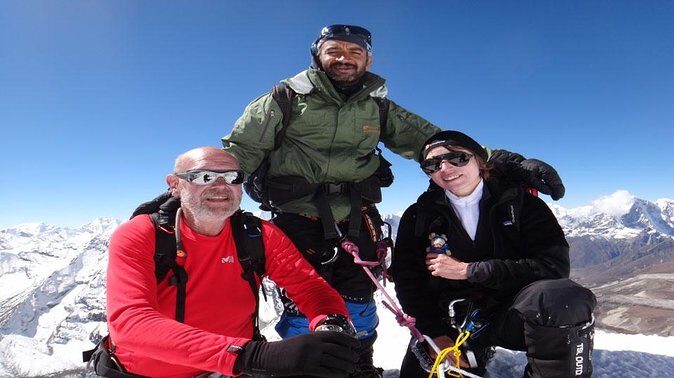
Day nine is the big one. You’ll do a challenging walk along the Khumbu Glacier and up to Everest Base Camp at 5,365 m—the closest you can get to Mt Everest without mountaineering equipment.
This is where spring often brings expedition teams preparing for summit attempts. Base Camp gives you that “this is the real battlefield” feeling: Khumbu Icefall views stand out, and the scale of the ice world hits you.
You’ll spend time at Base Camp, then return to Gorak Shep for the night. The return matters because your energy is your safety. Trekking up high is one thing; trekking back down tired is another. Having a guide who can manage pacing helps you avoid the classic mistake of going too hard too fast.
Kala Patthar: the toughest day for the biggest payoff
If there’s one day that tends to become the highlight of the whole trek, it’s Kala Patthar. Day ten is described as one of the most difficult yet rewarding days. You’ll climb Kala Patthar (5,555 m) in the morning, and this ascent is demanding—but it’s also where the mountains open up.
The panorama is the point: Everest towers ahead, and other giants—Nuptse, Pumori, Chagatse, Lhotse, and more—loom around you. After the viewpoint time, you descend back to Gorak Shep and have hot breakfast, then trek down toward Pheriche.
This day is hard mainly because you’re already high. Even if you’ve done well so far, expect your breathing and energy to feel different. Going slow is not optional here.
Returning to Namche: the descent that still keeps working your legs
After Base Camp and Kala Patthar, your body wants to celebrate. You still have work to do, just in a different direction.
Day eleven is the descent away from the high Everest zone. You leave the mountains behind as you return through Pangboche and Tengboche, then continue to Namche Bazaar, arriving in the afternoon. This part is mentally rewarding because you’re heading back down—but you’ll still feel it in your knees and quads. A guide and a group can help keep you steady and not rush downhill.
Then day twelve returns you to Lukla. You’ll reflect as a group and celebrate personal achievement. The afternoon is free, and there’s time to wander, relax, and enjoy a hot shower. Evening drinks and dancing with trek-mates are part of the plan, which is a nice way to close the circle when the mountains stop being your whole schedule.
Lukla to Kathmandu: one last flight and room to extend Nepal
Your final trekking day is followed by the return to Kathmandu on day thirteen. You’ll get the last glimpse of the mountains in the morning before the scenic 35-minute flight back. Once you land, you’re met and transferred back to your starting hotel in Kathmandu.
Day fourteen ends at Tribhuvan International Airport, with an airport representative drop-off for your departure. If you want to extend, the operator notes options like Chitwan jungle safari, river rafting, Kathmandu shopping tour, mountain biking, and other activities. That’s a smart move for many people: you get the mountain high, then you recover in Nepal’s lower-elevation life.
Price and value: why $1,600 can be worth it here
At $1,600 per person for an approximately 14-day package, you’re not paying for a simple guided walk. You’re paying for the whole system that makes an Everest trek workable: staffing, permits, food, logistics, and altitude support.
Here’s where the value shows up:
- Guide and staffing: a government licensed, first-aid trained English-speaking trekking guide plus porter service for 11 days (1 porter for 2 clients). Carrying less on steep days can be the difference between enjoying the trek and suffering through it.
- Permits and fees: Sagarmatha National Park entry permit and Pasang Lhamu Rural Municipality fee are included.
- Flights and taxes in the Lukla sector: Kathmandu–Lukla–Kathmandu airfare and airport departure tax are included.
- Meals and basics on the trail: standard meals (breakfast, lunch, dinner) across trekking days are included, plus seasonal fruits.
- Water and safety: filtered water via a Katadyn Pocket Water Filter, a comprehensive first-aid kit, and arrangements for emergency medical evacuation in the worst scenario.
- Your comfort baseline in Kathmandu: 3-star twin-share accommodation for two nights with breakfast.
Not included items are mostly what you should control yourself: personal trekking equipment, tips for guide and porter (tipping is expected), alcoholic drinks, and lunch/dinner in Kathmandu. Also not included is travel insurance that covers emergency high-altitude rescue and evacuation, which is critical for this kind of altitude.
If you’re comparing this to DIY-style trekking, this package reduces the stress of coordinating permits, staffing, and day-by-day pacing. On Everest routes, stress can turn into poor decisions.
The itinerary’s rhythm: what each day teaches your body
This trek is built around a core idea: go up, then stabilize, then go up again. You’ll see that pattern repeatedly.
- Early days (Lukla to Phakding to Namche) focus on movement and easy walking while you transition from city elevation to trail elevation.
- Namche day includes a viewpoint climb and cultural stop, then you return for proper rest.
- Tengboche adds monastery culture and a meaningful altitude step.
- Dingboche slows down again with an acclimatization day that includes a targeted viewpoint hike.
- Lobuche sets a more serious tone with glacier terrain and memorials.
- Base Camp day gets you to the Everest doorstep without needing mountaineering gear.
- Kala Patthar day is your altitude reality check and payoff day.
- The final days keep you moving downhill safely and get you back to Lukla and Kathmandu.
It’s not just “days on a map.” It’s a system for managing your body and your expectations.
Guides and porters: the support you’ll feel on hard hours
From the trip experiences shared with this operator, the most praised aspect is how smoothly the team handles the journey when you’re tired, cold, or under pressure. Names that come up include guides like Dave, Devendra, Mohan, Suraj, and Uddhav. The consistent theme is responsiveness—being helpful when plans shift at the last minute, and keeping people calm when altitude or discomfort shows up.
You’ll also notice the porters in what people remember: friendly, smiling support, and being part of the trek’s human texture, not just hidden labor.
That matters for value. A trek can be identical on paper and feel completely different in practice depending on how the guide manages pace and how the team handles emergencies. This operator emphasizes first-aid training, a first-aid kit, and emergency evacuation arrangements—details that become important the day things don’t go perfectly.
Altitude reality check: plan for slow, not for speed
This itinerary repeatedly warns you indirectly: some days may bring breathing problems, and the toughest days are naturally the ones at higher altitudes (especially Everest Base Camp day and Kala Patthar).
If you like to push hard, you’ll have to adjust. This trek’s success depends on controlled effort. The acclimatization days in Namche and Dingboche are not optional; they’re the backbone of the plan.
Also expect cold. One note from trip experiences is that rooms can be very cold, so don’t treat “tea house trekking” like a comfortable hotel stay. Bring appropriate warm layers and plan for low temperatures even when the weather looks fine in town.
Who should book this Everest Base Camp trek
This trek is a strong fit if you:
- Want an experienced licensed guide and porter support, but still want control of your overall Nepal plan
- Prefer a structured day-by-day approach instead of DIY permit and staffing chaos
- Like groups and want camaraderie as you hike, acclimatize, and celebrate at the end
It may not be your best choice if:
- You’re looking for a fully cushy experience with minimal discomfort (this is high-altitude trekking)
- You need a trek with no weather dependence at all (the operator notes the experience requires good weather)
Should you book this Everest Base Camp trek with Travel Pinto?
Yes, if you want the classic Everest Base Camp route done with real support. The package is priced for people who don’t want to wrestle logistics on their own: guide, porters, permits, flights, meals, filtered water, and safety planning are all included.
I’d especially recommend it if you value consistent pacing and a team that’s been praised for being helpful when situations change. The presence of guides like Dave, Devendra, Mohan, Suraj, and Uddhav in past experiences is a reassuring sign that you’re likely getting serious mountain experience, not just a generic escort.
One final call: bring good insurance that covers high-altitude rescue and evacuation, pack for cold, and commit to walking slow when your body asks you to. Do that, and Everest Base Camp stops being a dream and starts feeling like a real achievement.
FAQ
How long is the Everest Base Camp trek?
The trek is listed as 14 days approximately.
Where does the trek start and what time does it begin?
It starts in Kathmandu. The start time is listed as 7:00 am.
Will I have help in Kathmandu when I arrive?
Yes. You’ll be met at Tribhuvan International Airport and transferred to your hotel. You’ll also have a pre-trip meeting where you meet your trek leader/guide and go over details and required documents.
Are flights included for getting to Lukla and back?
Yes. Airfare for the Kathmandu–Lukla–Kathmandu sector, including airport departure tax, is included. In peak congestion seasons, flights may be shifted to Manthali Airport.
Do I get a porter, and for how long?
Yes. Porter service is included for 11 days, with 1 porter for 2 clients.
Is the trekking guide included?
Yes. A professional guide is included, described as a first-aid trained, government licensed English-speaking trekking guide.
Are permits included?
Yes. Everest/Sagarmatha National Park entry permit and the Pasang Lhamu Rural Municipality fee are included.
Are meals and water included on the trek?
Yes. Standard meals during the trek are included (breakfast, lunch, dinner), and filtered water is provided using a Katadyn Pocket Water Filter.
What’s not included that I should plan for?
Personal trekking equipment, tips for guide and porter, alcoholic drinks, and lunch/dinner in Kathmandu are not included. Travel insurance covering emergency high-altitude rescue and evacuation is also not included.