REVIEW · KATHMANDU
Everest Base Camp Trek from Salleri (Overland)
Book on Viator →Operated by Mount Mania Treks Expedition P. Ltd. · Bookable on Viator
Everest Base Camp without the first flight stress is the point. This Salleri overland route uses road access to get you into the Everest region, then settles into the classic high-altitude rhythm toward Everest Base Camp and Kalapathar. I especially like that you get a government-licensed English-speaking trek leader and a porter setup that helps keep the trek manageable. One drawback: Day 2 is a long 8–9 hour drive from Kathmandu to Salleri, so if you hate long travel days, plan for it.
You’ll also feel the people-first guiding style that matters on a hard trip. Guides like Rupak, plus Binod and Ballaram, come up as supportive and motivating—exactly what you want when the air gets thin. Just be aware this is still a serious altitude trek, with days reaching 5,545m at Kalapathar, so you’ll want solid physical readiness.
In This Review
- Key highlights you’ll care about most
- Salleri Overland Access: Getting Into Everest Country Without a Lukla Flight
- The altitude game plan: pacing, acclimatization, and two hard days
- Day-by-day walkthrough: what each stage feels like
- Day 1: Arrive Kathmandu (1,320m)
- Day 2: Kathmandu to Salleri (2309m), 8–9 hours
- Day 3: Salleri to Nunthala (2190m), 5–6 hours
- Day 4: Nunthala to Puiyan (2300m), 6–7 hours
- Day 5: Puiyan to Phakding (2,652m), 6–7 hours
- Day 6: Phakding to Namche Bazaar (3,440m), 6–7 hours
- Day 7: Namche day hike (acclimatization)
- Day 8: Namche to Tengboche (3,880m), 4–5 hours
- Day 9: Tengboche to Dingboche (4,410m), 6–7 hours
- Day 10: Acclimatization day—hike to Nagarjun hill (5,080m), 4–5 hours
- Day 11: Dingboche to Lobuche (4,930m), 4–5 hours
- Day 12: Lobuche to Everest Base Camp, then back to Gorekshep (7–8 hours)
- Day 13: Early climb to Kalapathar (5,545m), then trek back to Pheriche (7–8 hours)
- Day 14: Pheriche to Namche (3,440m), 6–7 hours
- Day 15: Namche to Lukla (2,860m), 6–7 hours
- Day 16: Flight from Lukla to Kathmandu (about 35 minutes)
- Day 17: Final departure from Kathmandu (TIA)
- Guides, porters, and group feel: why the team matters on Everest
- Price and included value: what $1,500 per group really buys
- What’s not included: the budget gaps you should plan for
- Who this Everest Base Camp trek from Salleri fits best
- Should you book this Salleri Everest Base Camp (Overland) trek?
- FAQ
- Do I fly from Kathmandu to Lukla at the start of the trek?
- How long is the trek?
- What are the highest points on this route?
- Are meals included?
- What kind of lodging is included?
- Is airport pickup and drop-off included?
- Do I have a guide and porter?
- Is travel or rescue insurance included?
- Is the flight included, and how long is it?
- What’s the cancellation policy?
Key highlights you’ll care about most
- Jeep/road access to Salleri instead of flying to Lukla at the start
- Acclimatization built in (including a dedicated day hike to Nagarjun hill at 5,080m)
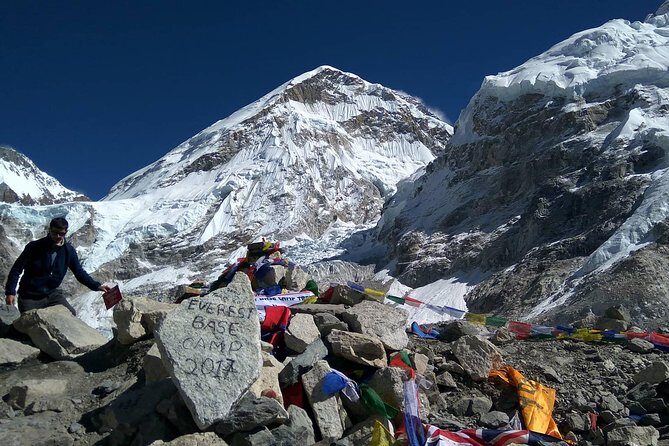
- Two big summit-style efforts: Everest Base Camp (5,364m) and early Kalapathar (5,545m)
- All meals included during the trek plus farewell dinners
- Porter support with a 2 trekkers to 1 porter ratio
- Flight only at the end: Lukla to Kathmandu takes about 35 minutes
Salleri Overland Access: Getting Into Everest Country Without a Lukla Flight
The big selling point here is simple: you don’t start with the Kathmandu-to-Lukla flight. Instead, you go overland from Kathmandu to Salleri on Day 2, reaching 2,309m after an 8–9 hour journey. That changes the vibe right away. You wake up in Kathmandu, handle check-in and orientation, then you slowly “tilt” upward into the Everest region rather than jumping straight into the Khumbu schedule.
This is also why I think the Salleri approach can feel more adventurous. The route is described as less touristic and closer to hillside, river, forest, and regional variety. In practical terms, that often means you spend more time moving through real settlements and rural terrain rather than only tracking the busiest sections of the classic trek. If you like your Everest with a little less crowd energy, this overland access style is a strong match.
On the logistics side, you’re not left to figure things out. You get private airport pickup and drop in Kathmandu, and the trek includes all ground transportation across the itinerary using a comfortable private vehicle. That matters because getting to the start of a trek is where many plans go sideways. Here, the plan is carried for you.
You can also read our reviews of more hiking tours in Kathmandu


The altitude game plan: pacing, acclimatization, and two hard days
Everest Base Camp trekking is mostly about timing and altitude management, not just willpower. The itinerary is built around that. It includes a day hike around Namche (Day 7) and a dedicated acclimatization day (Day 10) with a hike to Nagarjun hill at 5,080m. That’s not random sightseeing. It’s the kind of “go up, then manage your recovery” pattern that helps your body adapt.
Then you get hit with the two most demanding high points:
- Day 12: Everest Base Camp at 5,364m, then back down to Gorekshep (5,180m)
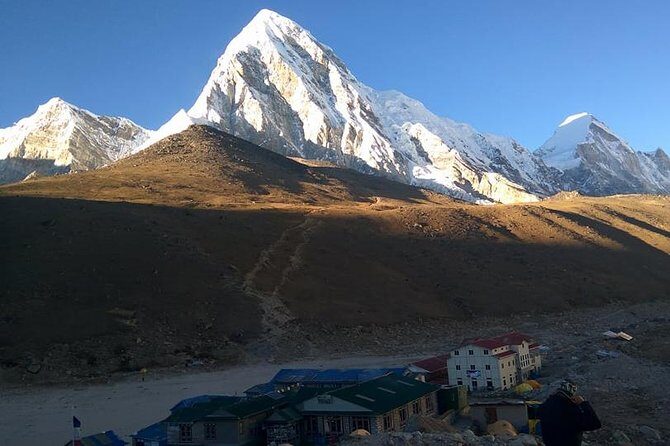
- Day 13: early climb to Kalapathar (5,545m), then trek back down to Pheriche (4,200m)
Those are long days (Day 12 is 7–8 hours, Day 13 is 7–8 hours), and they’re also altitude-heavy. The reward is the classic Everest feeling: big terrain, huge sky, and that sense you’ve finally reached the place you pictured months ago. The practical reality is that these days require you to move steadily and not sprint early. If you’ve ever tried to “prove fitness” on high-altitude hikes, you know how fast that can go wrong. This itinerary gives you a structure that’s designed to keep you moving intelligently.
One more thoughtful detail: after Kalapathar, the schedule brings you back down to Namche (Day 14) and onward toward Lukla (Day 15), which gives you a real descent phase before your flight day.
Day-by-day walkthrough: what each stage feels like
Below is the full flow, plus what each part is doing for you—beyond just reading hours and meters.
Day 1: Arrive Kathmandu (1,320m)
You land at TIA and go straight to your booked hotel. You also get breakfast included, which helps you start Day 2 with less stress. Kathmandu days can be chaotic; this one is kept simple.
Day 2: Kathmandu to Salleri (2309m), 8–9 hours
This is your “travel day that matters.” You’re moving from 1,320m to 2,309m by vehicle. It’s long. But the payoff is that you begin trekking at a higher baseline and you’re already inside the Everest region corridor when your first hiking days start.
Consideration: if you’re prone to motion sickness or you hate sitting still for hours, pack for comfort and plan short breaks.





Day 3: Salleri to Nunthala (2190m), 5–6 hours
This is a solid first trekking day. You’re not going extremely high; instead, you’re stepping into the routine: walking after a transition day, settling into your rhythm, and getting used to basic trail effort. It also helps your body start adapting before the bigger altitude climb later.
Day 4: Nunthala to Puiyan (2300m), 6–7 hours
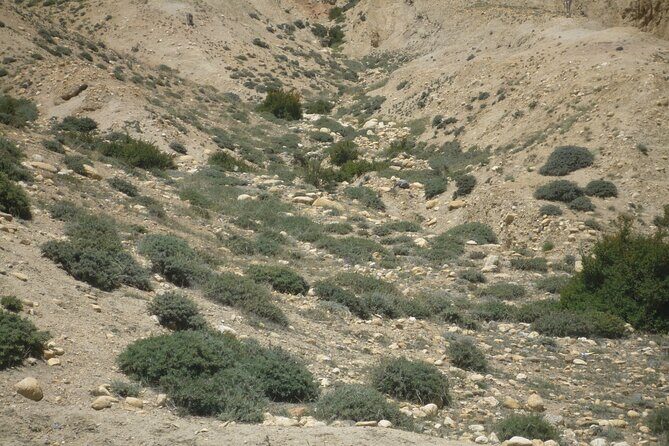
Another steady hiking day. You’ll likely feel the “Everest region” terrain here—hills, river-side passages, and forest sections as described. These middle days are good for building consistency.
Day 5: Puiyan to Phakding (2,652m), 6–7 hours
Phakding is a key early stop in the Khumbu orbit. At this point you’ll start noticing how the trek’s pace and elevation begin to tighten. The win is that you’re still not at the top levels yet, so your body has time to adapt without getting overwhelmed.
Day 6: Phakding to Namche Bazaar (3,440m), 6–7 hours
Namche is where Everest trekkers really “feel” the altitude and the bustle of the wider trek circuit. You’re gaining elevation fast enough that you’ll want an even, controlled hiking pace.
Day 7: Namche day hike (acclimatization)
This is a recovery-with-purpose day. A hike around Namche helps your body adjust without turning the whole day into a summit push. I like these days because they reduce the odds of arriving at later stages feeling flat.
Day 8: Namche to Tengboche (3,880m), 4–5 hours
A shorter walking day compared to some prior stages. Tengboche is a classic trekking-area stop, and days like this are useful because they give you energy to save for later hard days.
Day 9: Tengboche to Dingboche (4,410m), 6–7 hours
Dingboche sits higher, and the air feels noticeably different. This is a good day to focus on breathing and steady effort rather than speed.
Day 10: Acclimatization day—hike to Nagarjun hill (5,080m), 4–5 hours
This is the big acclimatization anchor in the plan. You go up high, then your day ends with a chance to recover before you climb higher still. If you’re tempted to treat acclimatization days like sightseeing only, don’t. Follow the leader’s pacing and keep it controlled.
Day 11: Dingboche to Lobuche (4,930m), 4–5 hours
You’re climbing again. Lobuche is where the trek starts feeling more “Everest-like,” because the terrain and altitude begin to tighten the margins.
Day 12: Lobuche to Everest Base Camp, then back to Gorekshep (7–8 hours)
This is the flagship day. You reach Everest Base Camp at 5,364m, then continue back to Gorekshep (5,180m). The route keeps the focus on the EBC goal while also setting you up for the next morning’s push.
Day 13: Early climb to Kalapathar (5,545m), then trek back to Pheriche (7–8 hours)
This is the other must-do day: Kalapathar first, then downhill to Pheriche (4,200m). Early starts are hard, but this is a great example of why your earlier acclimatization days matter. When your body adapts, you can handle big-effort mornings better.
Day 14: Pheriche to Namche (3,440m), 6–7 hours
A longer descent-style day. You’re easing back toward lower elevation, which helps your legs recover for the final movement toward Lukla.
Day 15: Namche to Lukla (2,860m), 6–7 hours
Your last long trek day. It’s also the day that reminds you this is a complete journey, not just a “reach and return” out-and-back.
Day 16: Flight from Lukla to Kathmandu (about 35 minutes)
You get back to Kathmandu quickly, which helps you recover without spending the whole day hiking. The flight is included, so you’re not hunting for transport when you’re already exhausted.
Day 17: Final departure from Kathmandu (TIA)
Departure day is kept clean with a final airport transfer to match your flight timing.
Guides, porters, and group feel: why the team matters on Everest
You’re not just buying trekking days. You’re buying the human system that keeps the trek safe and smooth.
Included in the package:
- An experienced, English-speaking, government-licensed trek leader
- Porter service (2 trekkers: 1 porter)
- A medical kit carried by the trek leader
That porter ratio is worth paying attention to because it can reduce fatigue when altitude and long days stack up. And the leader being English-speaking and licensed isn’t a small detail on Everest. Communication and decision-making are safety tools.
On the personal side, the guiding style seems to hit the right note. Rupak is described as treating trekkers like family, and guides Binod and Ballaram are called out as kind, supportive, and inspirational. That kind of guidance matters most on the days you feel average.
Also, this is a private tour/activity: only your group participates. That usually means less waiting, more flexible team pacing, and fewer group-management headaches than big mixed itineraries.
Price and included value: what $1,500 per group really buys
The price is listed as $1,500 per group (up to 15). The practical question for you is: how many people are actually in your group at booking time. If you get a full group, the cost per person drops a lot. If it’s only a couple of you, the price per person rises.
Here’s what’s included, and why it’s not just “nice to have”:
- Private airport transfers in Kathmandu
- 3-star hotel in Kathmandu with breakfast (Day 1)
- Teahouse accommodation during the trek
- All meals (breakfast, lunch, dinner) during the trek plus farewell dinners
- All ground transportation by private vehicle on the itinerary
- Domestic flight Lukla to Kathmandu
- Guide + porter support
- Taxes and local government fees
- Staff costs, equipment, insurance, food, accommodation
Where this can feel like good value is that food and core logistics are handled. If you’ve ever paid for a trek and then realized how expensive daily meals and transport add up, you’ll see why this package matters. You also avoid the tricky start flight, because you’re not doing the Kathmandu-to-Lukla hop at the beginning.
What’s not included: the budget gaps you should plan for
This trek has clear exclusions. I recommend you budget these early so your final total isn’t a surprise:
- Nepalese visa fee
- International airfare to/from TIA
- Excess baggage charges
- Lunch and dinner in Kathmandu (the included hotel breakfast covers only breakfast)
- Travel and rescue insurance
- Personal expenses like WiFi, phone calls, laundry, bar bills, battery recharge, bottle/boiled water, and showers
- Tips for guide(s), porter(s), and driver(s)
Insurance is a big one. A medical kit is carried by the leader, but travel/ rescue coverage is not included. For a high-altitude trek to EBC and Kalapathar, I’d treat insurance as essential rather than optional.
Who this Everest Base Camp trek from Salleri fits best
This is a good match if you:
- Want a more adventurous, less purely flight-based entry into the Everest region
- Prefer a structured itinerary with acclimatization days (Namche hike + Nagarjun hill)
- Like having meals and key logistics handled
- Can commit to moderate physical fitness for a multi-day high-altitude hike
It’s also explicitly not aimed at very young kids: it’s not recommended for children aged 10 and under. A current valid passport is required on the day of travel.
Because you do end with a Lukla flight (about 35 minutes), it’s also a good fit if you want to avoid a long final walking day all the way back to Kathmandu.
Should you book this Salleri Everest Base Camp (Overland) trek?
I’d book this if you want Everest with a calmer start and a more intentional altitude plan. The overland access to Salleri is the differentiator, and the itinerary doesn’t skip the acclimatization logic. With meals included, teahouse lodging covered, and a licensed English-speaking leader plus porter support, the trek feels like it’s built for people who want less hassle and more hiking time.
I would hesitate if you strongly dislike long travel days, since Day 2 is a full 8–9 hour road ride. Also, be honest about your fitness. This route hits Everest Base Camp (5,364m) and Kalapathar (5,545m), and those days are long.
If you’re deciding between doing a standard Lukla start versus this Salleri entry, think about what you value most: a flight-based jump right into trekking, or a slower overland build-up paired with structured acclimatization. This one leans hard toward the second choice.
FAQ
Do I fly from Kathmandu to Lukla at the start of the trek?
No. The itinerary goes by ground transport from Kathmandu to Salleri on Day 2, and the Lukla flight is only later, on Day 16.
How long is the trek?
The itinerary is about 17 days.
What are the highest points on this route?
You reach Everest Base Camp (5,364m) and you also climb Kalapathar (5,545m). The itinerary also includes a hike to Nagarjun hill (5,080m) for acclimatization.
Are meals included?
Yes. During the trek you get breakfast, lunch, and dinner, plus farewell dinners. Lunch and dinner in Kathmandu are not included.
What kind of lodging is included?
Kathmandu includes a 3-star hotel with breakfast, and the trek includes teahouse accommodation each night on the route.
Is airport pickup and drop-off included?
Yes. You get airport pickups and drops in a private vehicle in Kathmandu.
Do I have a guide and porter?
Yes. The trek includes an experienced English-speaking government-licensed trek leader and porter service with a 2 trekkers to 1 porter ratio.
Is travel or rescue insurance included?
No. Travel and rescue insurance is not included.
Is the flight included, and how long is it?
Yes. The domestic flight Lukla to Kathmandu is included and takes about 35 minutes.
What’s the cancellation policy?
You can cancel up to 24 hours in advance for a full refund. If you cancel less than 24 hours before the start time, you won’t get a refund.