REVIEW · KATHMANDU
Circle the Annapurna: A Life-Changing Trek Adventure
Book on Viator →Operated by Alpine Luxury Treks Pvt Ltd · Bookable on Viator
Altitude, tea houses, and big mountain awe. Circle the Annapurna delivers the classic Annapurna Circuit feel—plus local culture with Gurung and Thakali hospitality—while you walk the whole arc around the range. I like that the itinerary has a real acclimatization rhythm, with steady altitude gains and a scheduled rest day, not just a brute-force climb. I also like the human side of the trip: the support team matters, and names like guide Govinda and porter Purna show up in the kind of service people remember.
One consideration: this trek is weather-dependent and the high point is serious—Thorong La at 5,416m—so you’ll want strong fitness and a calm, patient mindset.
In This Review
- Key Things That Matter Most Here
- Circle the Annapurna Trek: What This 21-Day Loop Really Delivers
- Price and Logistics: Where Your $2,100 Goes
- Day by Day: The Trek Schedule, Plus the Real-World Feel
- Days 1–2: Arrive, Settle, and Get Ready in Kathmandu (1334m)
- Day 3: The Long Drive to Ngadi (890m) Before Your First Footsteps
- Days 4–6: First Trek Days—Jagat to Dharapani to Chame
- Days 7–8: Lower Pisang to Manang (and the Slow Build)
- Day 9: Rest in Manang (3,500m) for Acclimatization
- Days 10–12: Yak Kharka to Thorong Phedi to Thorong La (5,416m)
- Days 13–16: Down the Other Side—Kagbeni to Marpha to Ghasa to Tatopani
- Days 17–19: Ghorepani, Poon Hill, Ghandruk, and Nayapul Back to the Road
- Days 20–21: Kathmandu by Drive or Flight, Then Home
- Comfort, Food, and the Tea-House Reality
- Weather and the “Good Pass” Rule: Planning for Real Conditions
- Who Should Book This Trek (and Who Might Want to Rethink It)
- Should You Book Circle the Annapurna?
- FAQ
- How long is the Circle the Annapurna trek?
- What does the $2,100 per person price include?
- Where is the meeting point in Kathmandu, and what time does it start?
- Is pickup offered?
- What meals are included during the trek and in Kathmandu?
- What is the highest point on the route?
- How many people are in the group?
- How do you get back to Kathmandu near the end?
- What happens if the trek is canceled due to poor weather?
Key Things That Matter Most Here
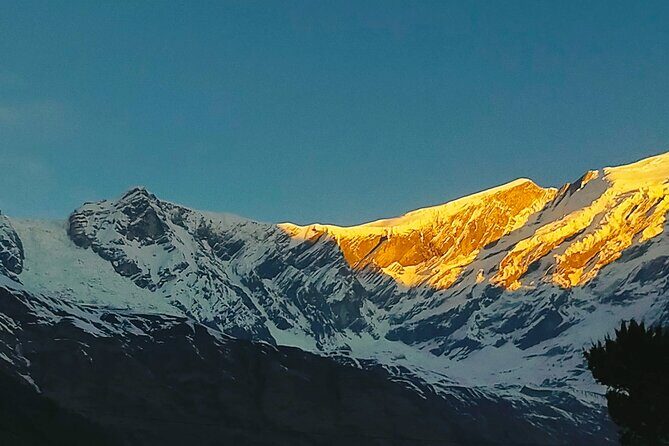
- A real acclimatization pause in Manang (Day 9) before the big pass
- Thorong La (5,416m) is the centerpiece, then you drop quickly to Muktinath
- Max 10 travelers, which keeps the pace and logistics more manageable
- Meals and trek lodging are included while you’re on the trail (big value)
- Tea-house style nights on the route are part of the experience for many people
- Two “mood-lifters” at the end: Ghorepani and the Poon Hill hike
Circle the Annapurna Trek: What This 21-Day Loop Really Delivers
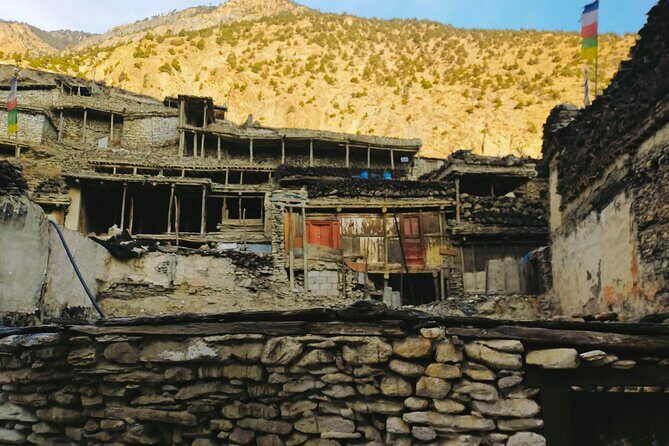
If you’re looking for one trek that feels like a full Nepal sampler—mountain days, village days, and rest days built in—you’ll probably like Circle the Annapurna. It’s designed as a loop around the Annapurna region, starting from Kathmandu and gradually moving you into the trekking zone with a long drive day and multiple gradual climbs.
What makes this route feel rewarding is the pacing. You don’t only gain altitude. You gain it, pause, and then push again. That matters, because the body reacts to altitude whether you want it to or not. A plan with a rest day in Manang (Day 9) is not “nice to have.” It’s a practical tool that can make the Thorong La crossing (Day 12) feel more like a challenge you can manage rather than a shock your system has to survive.
The other part people remember is the support crew. In the feedback connected with this experience, guide Govinda is praised for attentive care, and porter Purna is described as steady under pressure. Another set of experiences highlights guide Badri as the supervisor who stayed on top of details, and guide Dhruba with porter Keshab for humor and constant help. Those names matter because they suggest the trip’s strength isn’t just mountains—it’s the day-to-day human management that keeps you moving.
You can also read our reviews of more hiking tours in Kathmandu
Price and Logistics: Where Your $2,100 Goes
At $2,100 per person for about 21 days, the main value question is: what’s included that you would otherwise pay for yourself?
Here’s what the package clearly covers:
- 3 meals during the trek
- Overnight accommodations while on the trek
- Kathmandu accommodations (B/B)
- Office staff wages and staffing costs
- Travel & rescue fees of office staff
- All meals & accommodation of office staff
And here’s what you still need to budget separately:
- Lunch and dinner in Kathmandu
- International airfare
- Airport departure tax
- Personal equipment and extra services
- Travel and rescue insurance plus trip cancellation insurance
- Nepal visa fees
- Beverages
The best way to think about it: the trek days are mostly handled. You’re not juggling hotel hunting, meal planning, or trying to coordinate rescue logistics. You still must handle your own travel insurance and any Kathmandu meals outside what’s included, but the trekking core is taken care of.
Also note the group size: maximum 10 travelers. That tends to make schedules easier to follow and helps the guides manage pacing.
Day by Day: The Trek Schedule, Plus the Real-World Feel
Below is the route flow in plain language, using the elevations, trek lengths, and drive times to show you what each day is doing to you physically.
Days 1–2: Arrive, Settle, and Get Ready in Kathmandu (1334m)
Day 1 brings arrival in Kathmandu and a transfer to a hotel at 1,334m. This is your first altitude cue. Even though it’s not high, it’s higher than sea level, and you’re waking up in the mountain region.
Day 2 is Kathmandu valley sightseeing and preparation, with breakfast and dinner (B/D) included. This day is practical: you’re getting bearings, meeting your team, and prepping for the long travel day to the trailhead.
If you’re prone to travel-day soreness, plan to move a little on these first two days. Your body gets cranky faster once you start stacking big walking hours.
Day 3: The Long Drive to Ngadi (890m) Before Your First Footsteps
On Day 3, you drive from Kathmandu to Ngadi at 890m. It’s a long day: about 8–9 hours and roughly 200 km. The reason this matters isn’t just comfort—it’s timing. By the time you start walking, your legs are already “working,” even if you haven’t climbed yet.
If you’re the type who hates bus days, pack your patience. Also, be ready for the transition from city rhythm to trail rhythm happening quickly.
Days 4–6: First Trek Days—Jagat to Dharapani to Chame
You start trekking on Day 4 to Jagat (1,300m), about 4–5 hours and 7 km. This first stage sets your pace and posture. It’s not about suffering. It’s about getting used to walking consistently.
Day 5 moves you to Dharapani (1,860m) with a similar workload: 5–6 hours, 8 km. This is your first real climb in altitude terms. Expect your breathing to feel more noticeable than on flat ground.
Day 6 takes you to Chame (2,670m)—still 5–6 hours and 8 km. This is where the trek starts to feel like a “real trek” day, not just a gentle introduction.
A pattern you’ll feel across these days: the trek lengths stay fairly consistent, while elevation keeps rising. That’s the point.
Days 7–8: Lower Pisang to Manang (and the Slow Build)
Day 7 brings you to Lower Pisang (3,200m), around 4–5 hours and 7 km. Your body starts paying attention to altitude now, even if the distance doesn’t jump dramatically.
Day 8 to Manang (3,500m): 5–6 hours, 8 km. This day builds into the later rest strategy. Manang is high enough that the next day can be genuinely useful.
Day 9: Rest in Manang (3,500m) for Acclimatization
Day 9 is a rest day at 3,500m. This is one of the most important days on the whole trek, even though it’s the one you might feel tempted to skip. Rest doesn’t mean you do nothing. It means your body gets time to adapt before the push toward Thorong Phedi (4,525m) and the pass.
If you want to feel better on Day 12, this is the day that helps you earn it.
Days 10–12: Yak Kharka to Thorong Phedi to Thorong La (5,416m)
Day 10 goes to Yak Kharka (4,050m), about 4–5 hours and 7 km. This is a transition day: higher, but not wildly longer.
Day 11 to Thorong Phedi (4,525m): about 4–5 hours and 7 km. Thorong Phedi is essentially your staging point for the pass crossing. You’re building altitude in smaller steps so Day 12 isn’t a sudden wall.
Day 12 is the main event: you cross Thorong La at 5,416m, then trek down to Muktinath (3,800m). Expect 7–8 hours and 9 km total. This is the day where pace and energy management matter. You’re climbing to the top and then descending—your legs do two jobs in one long day.
One practical note: long days like this can feel mentally heavy. The best strategy is simple—keep moving steadily and don’t “win” the pass by sprinting early.
Days 13–16: Down the Other Side—Kagbeni to Marpha to Ghasa to Tatopani
After the high pass, the route drops to lower elevations.
Day 13 to Kagbeni (2,810m): 4–5 hours, 6 km. This is a recovery-style day in distance, though altitude changes can still make you feel “off” if you push too hard.
Day 14 to Marpha (2,670m): 5–6 hours, 8 km. The schedule keeps you walking, but you’re no longer dealing with the highest heights of the trip.
Day 15 to Ghasa (2,010m): 5–6 hours, 8 km. Lower elevation can feel like relief, but don’t treat it like an easy hike. Descending can be tough on knees.
Day 16 to Tatopani (1,190m): 5–6 hours, 7 km. This is one of the biggest drops on the route. Lower altitude often helps your breathing, but your body still has to adapt to the change in effort.
Days 17–19: Ghorepani, Poon Hill, Ghandruk, and Nayapul Back to the Road
Now the trek shifts toward the finale.
Day 17 to Ghorepani (2,860m): around 5–6 hours (8 km listed). You’re going back up. That’s common on this style of route: you trade one kind of recovery for a new set of views and village stops.
Day 18 is split:
- Hike to Poon Hill (3,210m) for about 1 hour and 2.5 km
- then trek to Ghandruk (2,600m) for 6–7 hours and 15 km
That’s a big day. You get a short top moment and then a longer stretch, so pacing matters. If you love a strong walking day, this delivers. If you prefer gentler finishes, plan for the long final segment.
Day 19 to Nayapul (950m): 4–5 hours, 7 km, then drive back to Pokhara (820m) for about 1.5 hours. This is the “you did it” transition. Your legs might feel better once you’re moving on roads, even if you’re still tired.
Days 20–21: Kathmandu by Drive or Flight, Then Home
Day 20 returns you to Kathmandu with either:
- 6–7 hours drive, or
- 30 minutes flight
Day 21 is the fly back home. So you get two options here—stick with the scenic land route, or save energy with the flight if that’s offered for your dates.
Comfort, Food, and the Tea-House Reality
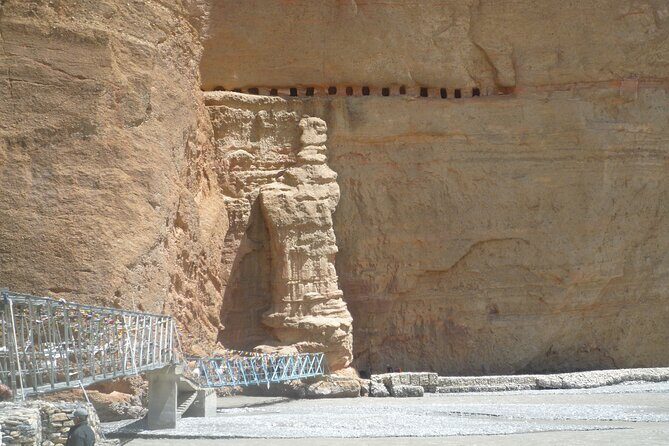
The itinerary includes 3 meals during the trek, plus overnight accommodations while on the trek. That’s a huge practical win. It means you don’t need to search menus at every stop or worry about finding dinner after a long walking day.
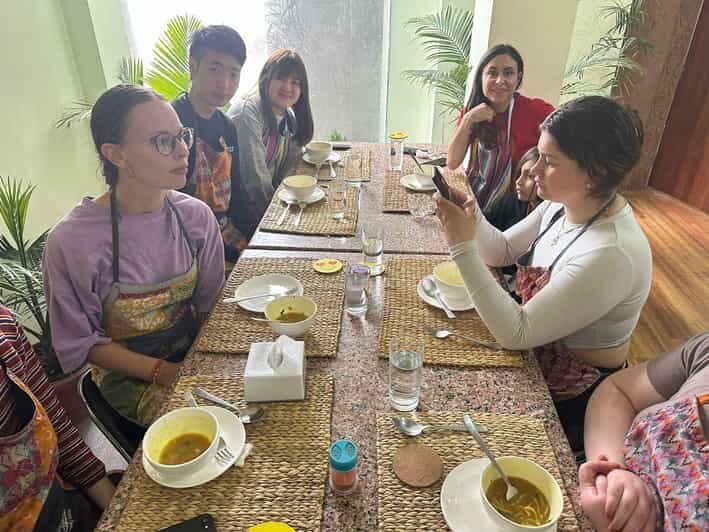
Based on the experiences shared with this route, nights are often in tea-house style lodging (with some people noting exceptions when they were in Pokhara or Kathmandu). Tea-house nights can be part of the charm: communal areas, simple meals, and a predictable routine that keeps you from overthinking logistics.
The trade-off is also simple: tea-house living is basic compared with a hotel. If you’re expecting luxury, you’ll be disappointed. If you want a grounded trek where daily rhythm matters more than comfort level, you’ll probably like it.
In Kathmandu, lunch and dinner are not included, so you’ll need to decide where to eat. Breakfast is included in your Kathmandu hotel stay (B/B), so you have at least one reliable meal without planning.
Weather and the “Good Pass” Rule: Planning for Real Conditions
This experience requires good weather, and the company notes that if it’s canceled due to poor weather you’ll be offered a different date or a full refund. That tells you the trek is sensitive to conditions—especially around the pass.
For your own planning, that means you should travel in a season when weather is more likely to cooperate. One of the experiences tied to this route praised November weather as perfect, which fits the overall idea that timing really matters on Annapurna.
Even with a good season, treat the mountains like the mountains: change is normal. Your best move is to be flexible and avoid building your trip around a single fixed “must-see” day.
Who Should Book This Trek (and Who Might Want to Rethink It)
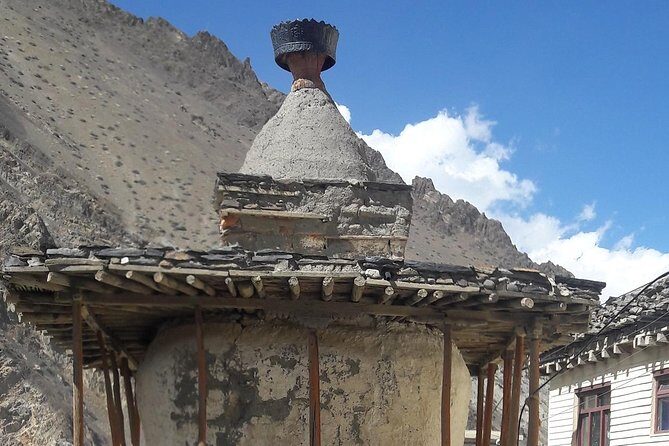
This trek is for people with strong physical fitness. That’s not marketing language—it’s the reality of stacking altitude and long walking days, including a 7–8 hour pass day at the peak altitude.
It’s also best for you if you:
- like steady, multi-day structure rather than spontaneous hiking
- can handle basic lodging and simple meal routines
- want the full circuit experience with a major altitude highlight at 5,416m
You might rethink it if you’re looking for a short trek, low-altitude walking, or a trip that’s easy on the joints. Day 18’s 15 km leg after a short Poon Hill hike is also a reminder that the final stretch can still be demanding.
Should You Book Circle the Annapurna?
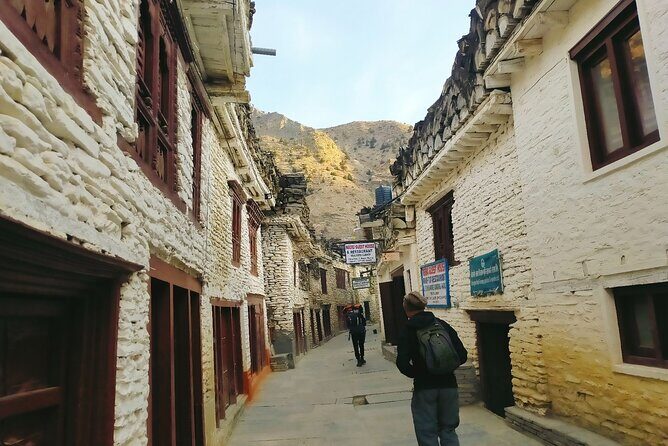
I’d book Circle the Annapurna if you want a classic Annapurna Circuit experience with real support, built-in acclimatization, and a route that keeps moving you through changing elevations until you finish near Pokhara and back to Kathmandu.
You should hesitate if you don’t have strong fitness for:
- multiple days in the 5–6 hour / 7–8 km range
- one 7–8 hour high-pass day
- altitude pressure that can’t be negotiated away
If you’re ready for that kind of challenge—plus the payoff of meeting Nepal at walking speed—this trek has a strong case for your time.
FAQ
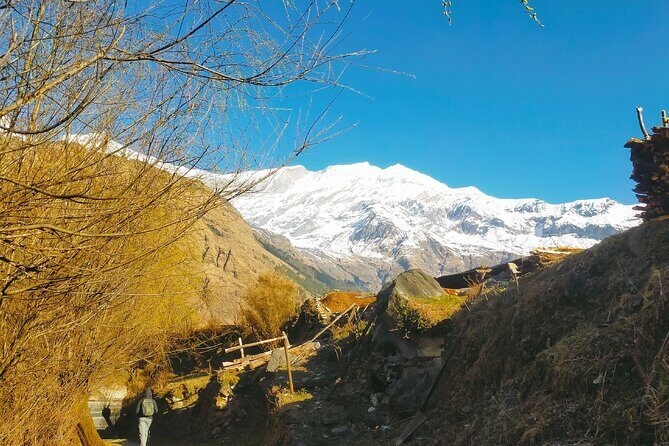
How long is the Circle the Annapurna trek?
It runs about 21 days.
What does the $2,100 per person price include?
It includes 3 meals during the trek, overnight accommodations while on the trek, Kathmandu accommodations on a B/B basis, and staffing costs including salaries and travel/rescue fees for office staff. International airfare, visa fees, beverages, and many personal expenses are not included.
Where is the meeting point in Kathmandu, and what time does it start?
The meeting point is Bagawan Bahal Marg 29, Kathmandu 44600, Nepal, and the start time is 6:15 am.
Is pickup offered?
Yes, pickup is offered.
What meals are included during the trek and in Kathmandu?
During the trek, you get 3 meals. In Kathmandu, lunch and dinner are not included (breakfast is included with the Kathmandu accommodation as B/B).
What is the highest point on the route?
The highest point is Thorong La at 5,416m.
How many people are in the group?
The maximum group size is 10 travelers.
How do you get back to Kathmandu near the end?
On Day 20 you either drive back to Kathmandu (about 6–7 hours) or fly back (about 30 minutes), depending on your option for that date.
What happens if the trek is canceled due to poor weather?
If it’s canceled due to poor weather, you’ll be offered a different date or a full refund. The experience is non-refundable and cannot be changed for any other reason.