REVIEW · KATHMANDU
Ghorepani Poon Hill Trek
Book on Viator →Operated by Outfitter Nepal · Bookable on Viator
Poon Hill delivers on the big views fast. This 10-day trip strings together Kathmandu UNESCO sightseeing, scenic drives to Pokhara, and a manageable trek to Poon Hill for sunrise over the Annapurna Himalaya, with guides like Amrit and Jitu earning real trust even when weather turns cloudy or rainy. The one drawback to plan for: you’re hiking at elevation on basic trails and tea houses, so you’ll feel it in your legs even if the overall commitment is short.
I like that it’s a small group (max 14) with an included guide and porters (1 porter for 2 people), which keeps the logistics simple. You also get a built-in rhythm: trek days with included meals, then city days where you can actually recover in Kathmandu and Pokhara. If you want everything to feel fully private and luxury-level, this isn’t that style.
In This Review
- Key highlights to know
- A short Himalayan trek that still feels like a real journey
- How the Kathmandu and Pokhara days make the trek easier
- Day-by-day: what each section of the trek gives you
- Day 1 and Day 2: arriving Kathmandu, then UNESCO sites
- Day 3: the Kathmandu to Pokhara drive
- Day 4: Pokhara to Tikhedunga, then a trekking start at the right pace
- Day 5: Tikhedunga to Ghorepani, with mountain village life along the way
- Day 6: Poon Hill hike for sunrise, then downhill to Tadapani
- Day 7: Tadapani to Ghandruk, a shorter hike that lands you in culture
- Day 8: Ghandruk to Nayapul, then back to Pokhara
- Day 9 and Day 10: Pokhara to Kathmandu, then flights out
- Poon Hill sunrise: planning for the morning that makes or breaks it
- Ghorepani and Ghandruk: village trekking with a cultural pulse
- Ghorepani: Magar villages and everyday trail energy
- Ghandruk: Gurung villages and a satisfying “arrive” feeling
- Lodges, meals, and what included support really means for you
- Guide and porters: the hidden value
- Provided gear: sleeping bag and down jacket
- Price and value: how the $700 fits a real itinerary
- Weather, elevation, and how to plan your body
- The team makes the difference: guide quality you can feel in the details
- Should you book the Ghorepani Poon Hill Trek?
- FAQ
- Where does the trek start, and what time should I be ready?
- How many days is the itinerary, and how much of it is trekking?
- Is this a small group tour?
- What’s included for meals during the trek versus in Kathmandu and Pokhara?
- Do I need to bring a sleeping bag or down jacket?
- What about altitude—how high do you reach?
- Is a Nepal visa required, and how do I get it?
Key highlights to know
- Poon Hill sunrise plan: morning hiking timing set up for a mountain-view payoff.
- Village walking, not just scenery: Ghorepani Magar settlements and Ghandruk Gurung culture.
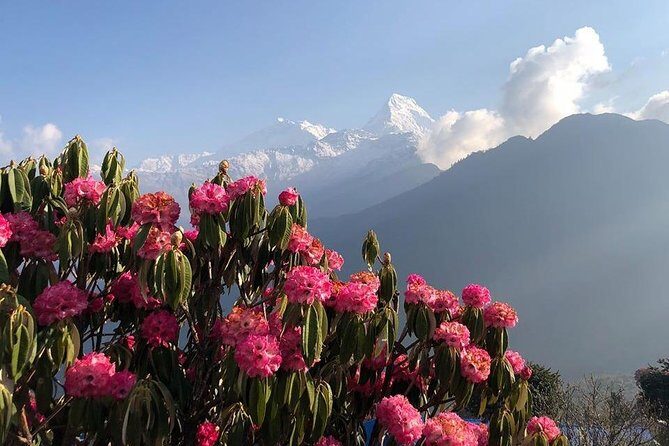
- Rhododendron forest day: a classic Annapurna-season trek feel when the flowers are in.
- Covers more than the trail: Kathmandu sightseeing plus Pokhara downtime built into the schedule.
- Support that matters: guide + porters, plus emergency helicopter arrangements through travel insurance.
A short Himalayan trek that still feels like a real journey
The Ghorepani Poon Hill Trek is the smart choice if you want Himalaya views without signing up for a month away from home. You’re not just walking for a photo and checking it off. You’re moving through farmland, forests, and village paths on foot, then easing back into city life in Kathmandu and Pokhara.
The structure is a big part of why it works. You start with Kathmandu, where you get cultural grounding and a buffer against jet lag. Then you travel to Pokhara and shift into hiking mode. The trek itself is graded as moderate, aimed at active travelers, and it stays short enough that most people can manage it with a steady pace.
And yes, you’re chasing a famous sunrise. But the trek earns its keep before that first light. The trail gives you repeated chances to see high peaks, changing weather, and daily village routines along the way.
You can also read our reviews of more hiking tours in Kathmandu


How the Kathmandu and Pokhara days make the trek easier
This trip is built around more than one kind of experience: trekking plus real sightseeing. You get three nights in Kathmandu with breakfast, and then two nights in Pokhara with breakfast, before and after the hiking.
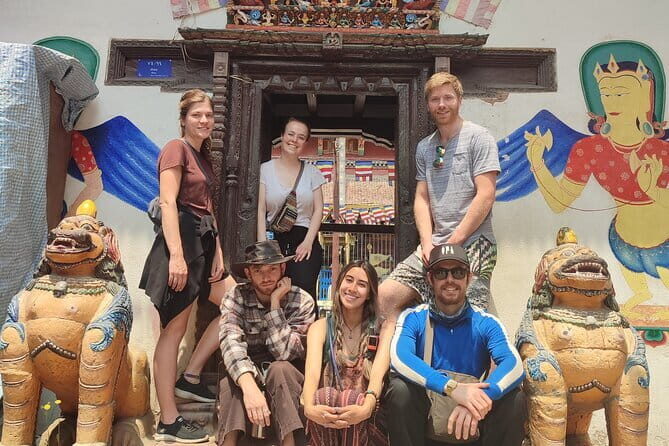
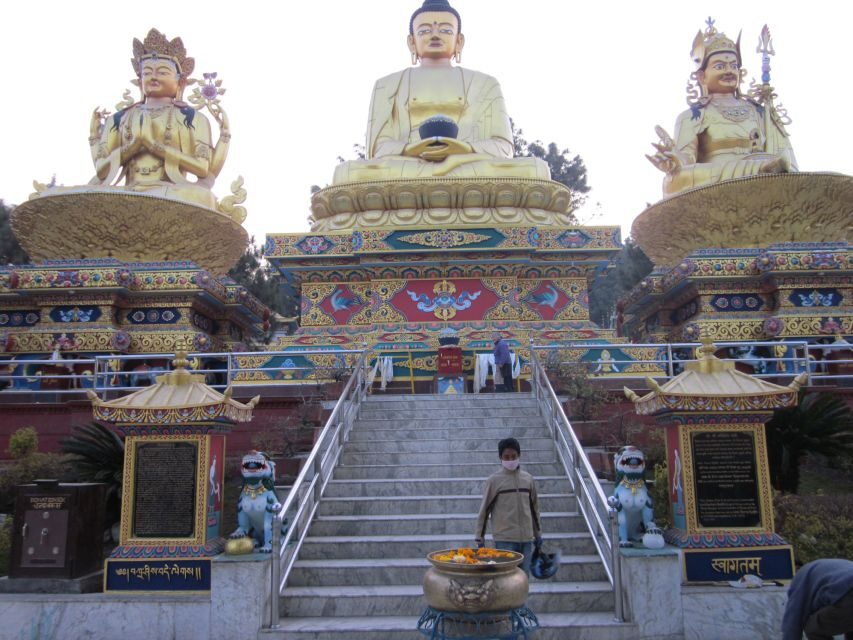
In Kathmandu, you’re not stuck with only one viewpoint. You have a full day to explore the Kathmandu valley’s major historical sites, which is valuable because it helps you understand why the Annapurna region trekking routes have such deep cultural meaning. You also get a practical benefit: a day in the city helps you adjust before the trail starts.
Pokhara is your recharge stop. You’ll get a scenic drive from Kathmandu, arrive in Pokhara, and spend time exploring the city before the trek begins and after it ends. Even if you’re mainly in “trek mode,” those two nights matter because they give you a chance to sleep well, eat normally, and reset your body for the next hiking stretch.
Day-by-day: what each section of the trek gives you
Here’s how the route plays out, and what to pay attention to.
Day 1 and Day 2: arriving Kathmandu, then UNESCO sites
You’ll be met at Tribhuvan Airport in Kathmandu and transferred to your hotel. The next day is dedicated to Kathmandu valley sightseeing, with a planned route that focuses on the key historical stops. This is one of the best ways to start, because you’re not jumping straight onto stairs and altitude the moment you land.
Day 3: the Kathmandu to Pokhara drive
You’ll take a drive to Pokhara that’s listed around six hours. This is often where you get your first taste of the wider Nepal geography. It’s long enough to feel like travel, but not so long that you arrive totally wrecked.




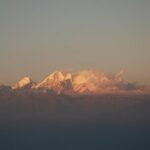

Day 4: Pokhara to Tikhedunga, then a trekking start at the right pace
The trek begins with a drive to Nayapul, then you hike to Tikhedunga. This day is about getting used to your rhythm: your legs wake up, you learn how quickly you warm up, and you find a pace you can keep for multiple days.
The elevation climb is noticeable, but it’s a “start smart” day rather than a punishing push.
Day 5: Tikhedunga to Ghorepani, with mountain village life along the way
You hike from Tikhedunga up to Ghorepani. Ghorepani is one of the iconic stops on this trek route, and the area is known for its Magar village communities. You’ll likely notice how the trail weaves through everyday life instead of feeling like a closed-off hiking corridor.
A big bonus here is the season feel. The route includes a rhododendron forest trek, and even if you’re not there when flowers are in full color, the tree cover and shaded sections make the walk more comfortable.
Day 6: Poon Hill hike for sunrise, then downhill to Tadapani
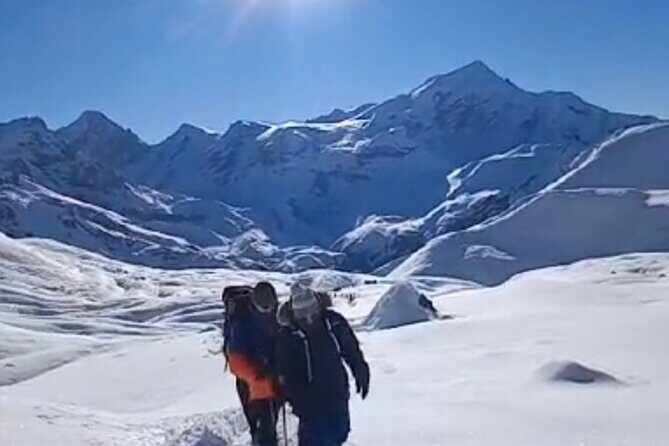
This is the day built around the headline moment. You’ll go for sunrise from the Poon Hill lookout, then continue trekking to Tadapani.
This is where you’ll feel the altitude most. Poon Hill itself is listed at about 3,180m, and the morning approach can be cold and steep even when the rest of the day is manageable. The payoff, though, is the reason people choose this short trek instead of something longer.
One practical detail: a sunrise day often means early starts and a slower breakfast pace. Pack your energy accordingly.
Day 7: Tadapani to Ghandruk, a shorter hike that lands you in culture
You’ll walk from Tadapani to Ghandruk in about three hours. Ghandruk is known for Gurung villages, so it’s not just a rest stop with views. It’s a community with a real sense of place, and the route tends to feel more like you’re arriving somewhere than just passing through.
Day 8: Ghandruk to Nayapul, then back to Pokhara
You’ll hike from Ghandruk to Nayapul, then drive to Pokhara. This is the day that closes the loop: you get a last look at the region on the way down, then you switch back into city comfort.
Day 9 and Day 10: Pokhara to Kathmandu, then flights out
You’ll drive back to Kathmandu and then transfer to the airport on day 10 for your final flight departure. It’s a clean exit plan, and it matters because it removes the uncertainty of last-minute coordination.
Poon Hill sunrise: planning for the morning that makes or breaks it
If you choose this trek for one reason, it’s the sunrise over the Annapurna Himalaya from Poon Hill. The route specifically schedules a hike to the lookout so you can be there for that early light.
Here’s the honest reality: sunrise views depend on weather. Your best move is to treat conditions as part of the plan, not a failure. One of the strong themes in guide feedback is safety and decision-making during cloudy and rainy weather. That’s reassuring because sunrise attempts can turn tricky fast when visibility drops or the trail gets slick.
What you should do while you’re there:
- Bring a layer for temperature swings. Early mornings at elevation can feel cold even when midday is mild.
- Start with a calm pace. You’re not racing—your job is to get your eyes ready for views, not to gas out on the climb.
- Expect that the best view can be brief. Clouds can clear; light changes quickly.
Even when weather isn’t perfect, Poon Hill still makes sense because the effort is manageable and the morning effort gets you out of the lodge early. You’ll also see how the mountains change as the sky brightens.
Ghorepani and Ghandruk: village trekking with a cultural pulse
A lot of shorter treks over-focus on the summit moment. This one keeps returning to villages, which changes the whole feeling of the walk.
Ghorepani: Magar villages and everyday trail energy
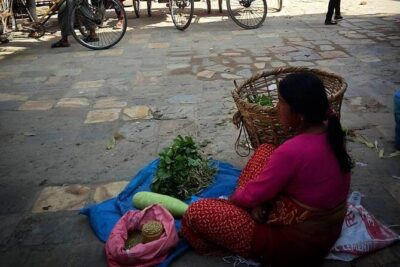
Ghorepani is tied to Magar communities. The trek passes through farmland, forests, and village paths, so you’re not just in wilderness. You’re moving through places where people live year-round and where tea houses and trails exist because of that flow.
One of the best ways to enjoy days like this is to slow down between climbs. Watch how the trail connects households to the broader route. And yes, the rhododendron scenery is a bonus, giving you those classic mountain-tree textures as you rise.
Ghandruk: Gurung villages and a satisfying “arrive” feeling
Ghandruk is listed as a typical Gurung village area. That matters because it tends to feel more settled and communal, especially as you finish the trekking loop and look toward Pokhara again.
This is also where you’ll appreciate having time to stop and look around. You’re not rushing toward another ridge line immediately. You’re absorbing a place that has meaning beyond the view.
Lodges, meals, and what included support really means for you
This trek uses lodges and tea houses during the hike, and accommodation and meals are included as part of the package. The details listed include breakfast, lunch, and dinner, plus the three Kathmandu breakfasts and two Pokhara breakfasts.
What that changes for you is simple: you don’t need to make decisions every day about where to eat or how to budget your meals. It reduces stress on a trek where your head space should be on pacing and hydration.
Guide and porters: the hidden value
The trip includes an experienced guide and porters, with a stated ratio of 1 porter for 2 people. That’s a big deal on a moderate trek because it protects your energy for walking and keeps the load manageable.
It also adds a layer of safety. In real-world conditions—like cloudy mornings or rainy stretches—having someone who can plan timing and manage risk makes a difference. Multiple guide names come up in the experience record, including Jitu and Amrit, and the theme is consistent: keeping people safe and moving smart when weather shifts.
Provided gear: sleeping bag and down jacket
You’re told that a sleeping bag and down jacket are provided if necessary (and you return them after the trek). You’ll also get a trekking map if needed. This matters if you’re traveling light and don’t want to rent or buy specialized cold-weather gear.
Price and value: how the $700 fits a real itinerary
The tour price is listed at $700 per person for a roughly 10-day experience. At first glance, that can seem like a lot for a “short trek.” But the value isn’t just the days on trail. The package includes:
- Three nights in Kathmandu (with breakfast)
- Two nights in Pokhara (with breakfast)
- Accommodation during the trek in lodges/tea houses
- A Kathmandu sightseeing tour
- Ground transport Kathmandu to Pokhara and back by tourist bus
- Airport transfers by private vehicle
- Guide and porter support (including their food, insurance, and accommodation in the package)
- Emergency helicopter service arrangements paid by your travel insurance
What’s not included is also spelled out: alcoholic and non-alcoholic drinks, dessert, entrance fees during sightseeing, tips, international airfare, visa fee, and your travel insurance. That’s normal for this style of trip.
So is it good value? For most active travelers, yes—because you’re paying for a complete operating system, not just the trail. If you were to organize it yourself, you’d still pay for guides, transport, and lodging. Here, it’s all bundled into one plan with a small-group cap of 14.
Weather, elevation, and how to plan your body
This trek is best for people with moderate physical fitness. That’s consistent with the route profile: you’re hiking several days with elevation gain, including reaching around 3,180m at Poon Hill.
You should plan for:
- Stiff legs after steep sections. The walking is short on paper but can feel solid on the ground.
- Cold mornings near the sunrise lookout.
- Potential rain or cloud cover, which can make trails slippery and views unpredictable.
The good news is that your schedule includes rest through the city days and shorter trekking segments (like the shorter walk into Ghandruk). The pacing is built for people who want the experience without needing technical mountaineering skills.
The team makes the difference: guide quality you can feel in the details
A lot of trekking companies look similar on paper. The difference shows up when the day gets inconvenient.
In this itinerary’s experience record, guides such as Jitu, Amrit, and Ravi are praised for professionalism, good English, and keeping trekkers safe in changing conditions. Porters are also highlighted, including named support like Baburam and Vimson in separate accounts.
Even if you’re an experienced hiker, you’ll feel the benefit of having someone who understands:
- when to push and when to hold pace
- how to read weather risk during early morning starts
- how to keep group dynamics calm in narrow sections
That’s not glamorous. It’s just smart.
Should you book the Ghorepani Poon Hill Trek?
Book it if you want a short, high-payoff Himalayan introduction: sunrise views from Poon Hill, village trekking through Ghorepani and Ghandruk, and the bonus of Kathmandu and Pokhara so you’re not living out of a backpack the whole time.
Skip it if you want a fully luxury experience, private transport for every transfer, or an itinerary where weather won’t affect your sunrise odds. And if you’re very sensitive to cold early mornings, plan to handle elevation chill with the provided gear and your own layers.
If you’re an active traveler with a moderate fitness level and you like the idea of mixing culture with trekking, this is a strong way to do it. You’ll come back with that rare combination: mountain effort plus real sense of place.
FAQ
Where does the trek start, and what time should I be ready?
The meeting point is Tribhuvan Airport in Kathmandu, Nepal. The start time is listed as 6:15 am.
How many days is the itinerary, and how much of it is trekking?
The duration is approximately 10 days. The schedule includes trekking days between the Kathmandu and Pokhara portions, with additional time for sightseeing in Kathmandu and hotel stays in Pokhara.
Is this a small group tour?
Yes. The tour/activity lists a maximum group size of 14 travelers.
What’s included for meals during the trek versus in Kathmandu and Pokhara?
During the trek, meals are included (breakfast, lunch, and dinner). The tour also includes breakfasts in Kathmandu and Pokhara, while lunch and dinner during Kathmandu and Pokhara are listed as not included.
Do I need to bring a sleeping bag or down jacket?
The tour notes that a sleeping bag, a down jacket, and a trekking map can be provided if necessary. You return these after the trek.
What about altitude—how high do you reach?
Poon Hill is listed at about 3,180m. Ghorepani and other trekking points are also at high elevations, and the activity is described for moderate physical fitness.
Is a Nepal visa required, and how do I get it?
The tour data says you can issue your Nepal entry visa upon arrival at Tribhuvan International Airport in Kathmandu. It also notes you’ll require 2 passport size photos.