REVIEW · KATHMANDU
Gokyo Lakes, Gokyo Ri Trekking Package – 10 Days
Book on Viator →Operated by Breeze Adventure Pvt Ltd · Bookable on Viator
Gokyo Ri turns altitude into art. This 10-day trek takes you off the more crowded Everest Base Camp track and into the quieter Gokyo Valley, where the blue-green lakes and high-mountain panoramas feel almost unreal. I like that the route is built with acclimatization in mind, not just marching upward, and that the itinerary layers in culture as well as big views. One thing to consider: the plan depends on weather and starts with flights in and out of the Everest region, so you’ll want a flexible mindset.
Two highlights I really appreciate are the Gokyo Lakes themselves and the early-morning push to Gokyo Ri (5357m / 17,575ft). The lakes day is paced around lake-to-lake hiking plus a visit to the Ngozumpa Glacier, and Gokyo Ri is a steep climb with a sunrise payoff featuring Everest, Lhotse, Makalu, and Cho Oyu. A possible drawback is that the toughest moments (especially Day 7) are time-and-schedule driven, so if you’re sensitive to early starts or fast altitude changes, prepare carefully.
I also like the human side of this trip: Breeze Adventure Pvt Ltd runs with a small group cap of 15, and feedback from past trips praises the team’s reliability and how smoothly they handle logistics. The route also gives you real trail moments—mani stones, suspension bridges, and Sherpa villages—so it feels like a journey, not just a checklist. The catch is that “comfortable” here means simple mountain lodges, with extra fees common for charging and hot showers.
In This Review
- Key things that make this trek worth your time
- Gokyo Lakes: the Everest region without the same crowd pressure
- Day 1-3: Lukla flight, Sagarmatha National Park, and Namche that helps you adjust
- Day 4-5: From Namche’s junction to Dole and Machhermo above the trees
- Day 6: Gokyo Lakes and a hike up toward the Ngozumpa Glacier
- Day 7: Gokyo Ri before sunrise—steep, short, and unforgettable
- Day 8-9: Down to Namche and then Lukla—finish strong, enjoy the last bridges
- Day 10: Lukla area to Manthali flight, then a drive into Kathmandu life
- Price and value: what $1,686.67 buys you (and what you still pay for)
- Guides, reliability, and why the small group size changes the vibe
- Accommodation and daily comfort: plan for simple, not luxurious
- How to match this trek to your fitness level
- Should you book the Gokyo Lakes and Gokyo Ri package?
- FAQ
- How long is the Gokyo Lakes and Gokyo Ri trek?
- What’s the highest point you reach?
- Does the package include transportation from Kathmandu’s airport?
- How large is the group?
- Are meals included during the trek?
- What’s not included in the price?
- What happens if weather is poor?
Key things that make this trek worth your time
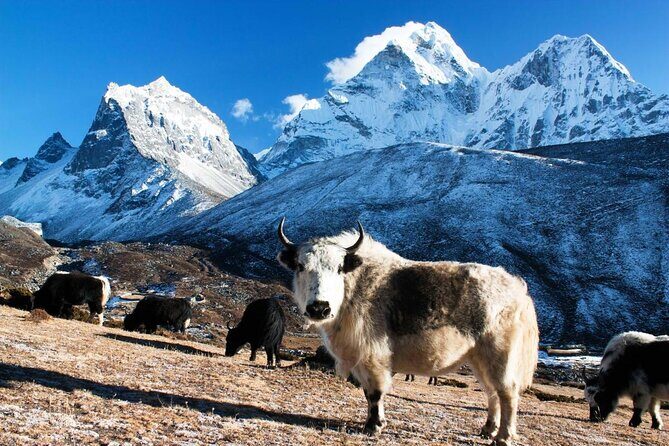
- Gokyo Ri sunrise: A steep, 600-meter climb timed for the light to hit the 8000-meter peaks
- Lakes over hype: First, second, and third lake segments plus time near the Ngozumpa Glacier
- Real acclimatization: Namche-based adjustment with a museum hike, Khumjung Village, and Everest Viewpoint time
- Trail details with stories: A section of path credited to Pasang Sherpa’s donations to build the gentler route toward Kyanjuma
- Wildlife odds: A strong chance to spot rare, majestic musk deer on the stretch between Phortse Thanga and Dole
- Small group pacing: Maximum 15 people, with guides and support that aim to keep everything moving
Gokyo Lakes: the Everest region without the same crowd pressure
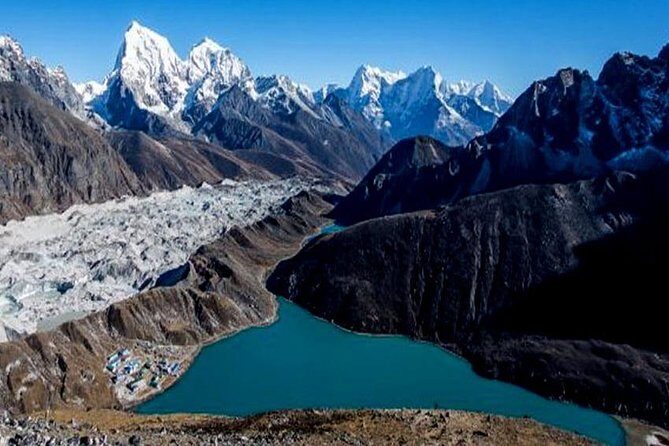
This trek is for you if you want the Everest-region feeling—big walls, high passes, Sherpa villages—and you’d rather spend your time on lake panoramas than the busiest footpaths. The Gokyo Valley gives you a different “shape” of mountain scenery: steep sides, glacier-fed water, and open views that feel broad even when the trails get narrow.
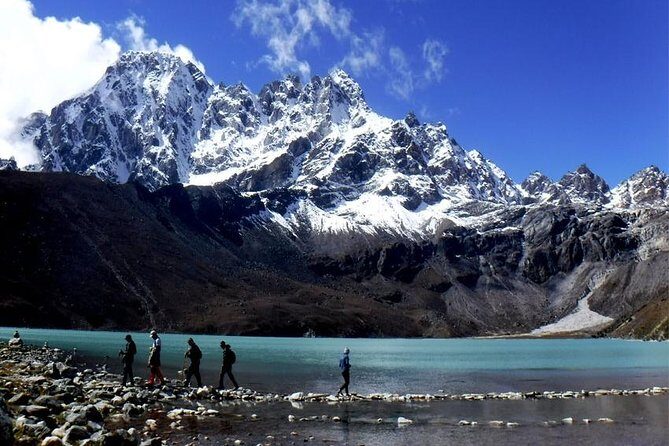
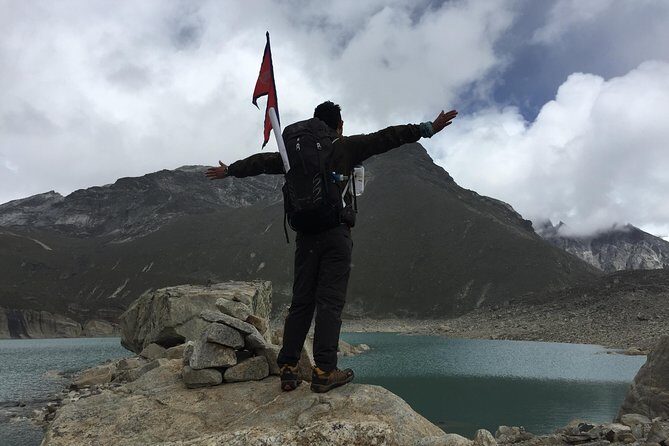
What I like most is the contrast. You’ll walk from riverbanks and forests into an above-tree-line world, and then the lakes arrive like a visual reset. Blue-green water sits under massive peaks, with the Ngozumpa Glacier nearby as a reminder that this is a living high-altitude system, not just a postcard scene.
You can also read our reviews of more hiking tours in Kathmandu


Day 1-3: Lukla flight, Sagarmatha National Park, and Namche that helps you adjust
Day 1 starts with the classic Kathmandu-to-Lukla flight, with airplane views that quickly make the trek feel real. Once you land, you move through Sherpa villages and pass mani stones and prayer wheels, then reach Phakding for your first night. This day is short on effort but strong on anticipation, and it’s a good on-ramp if you’re nervous about starting at altitude right away.
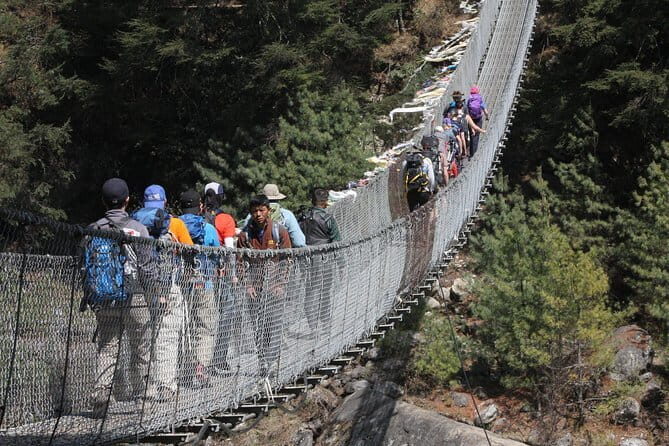
Day 2 builds your rhythm. You head toward Namche Bazaar with several suspension bridges and views of Thamserku along the way. You also pass small Sherpa villages as you follow the Dudh Koshi River bank, officially entering Sagarmatha National Park at Monjo. You’ll stop for lunch in Jorsalle, then keep going through pine forests and climb as you reach the Namche area, with an overnight in a guest house.
The Day 3 acclimatization day is where your body—and your plans—benefit most. You start in Namche with breakfast and a view of Mt. Kongde Ri, then hike higher to adjust before you go deeper into the Gokyo direction. The route includes the Sagarmatha National Park Museum and Khumjung Village, plus the Everest Viewpoint area and a memorable stop at a monastery with a supposed Yeti scalp. There’s also a practical comfort stop: the famous Everest Hotel for tea, which matters because it gives you a warm pause without losing altitude progress.
A note to take seriously: acclimatization days are not “free days.” Even if the schedule looks light, you’re walking at altitude, so hydrate and keep a steady pace.
Day 4-5: From Namche’s junction to Dole and Machhermo above the trees
Once you’ve done the Namche adjustment, Day 4 turns you toward the Gokyo Lakes side. After breakfast you gain some height again and reach the top of Namche for another Kongde Ri view. Then you hit a junction where the Gokyo route splits away from the Everest Base Camp trek, and the rest of the day feels like you’re finally committing to the quieter valley.
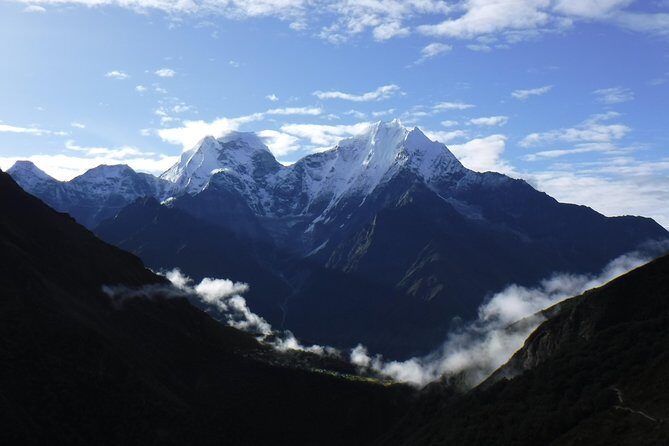
The trail to Mong La Danda is a big visual moment: you’ll see Ama Dablam and Thamserku with enough time to take photos and just stare. Later you descend to Phortse Thanga for lunch, and this stretch is one of your best odds for wildlife—especially musk deer—between here and Dole. Then you keep climbing through birch and juniper forests until you reach Dole, a smaller village with strong mountain views.
Day 5 is about getting higher and feeling the change in the environment. The walk from Dole to Machhermo takes about four hours on a gradual uphill path, and you may spot Cho Oyu after the first 15 minutes or so. There are two small villages between (Lafarma and Luza) where you can rest. By the time you reach Machhermo, you’re above the tree line and the scenery opens up in a way that makes the coming lake day feel inevitable.
Machhermo itself is quiet and close to a river. That matters because it gives you a calmer evening before the big push to the lakes and then Gokyo Ri.
Day 6: Gokyo Lakes and a hike up toward the Ngozumpa Glacier
Day 6 is the reason most people sign up. It begins early enough that you’re not rushed, and then it’s paced lake-by-lake rather than a single long slog. You stop in a village along the way for tea, and about an hour after that you reach the first lake. After another hour you see the second lake, then hike again for about an hour to reach the third lake.
These aren’t just “pretty stops.” The hiking sequence helps you see each lake setting in relation to the glacier walls around you, and it gives your eyes time to adjust to the scale of the scene. The water color—blue-green—stays striking against gray rock and bright sky, so you’ll feel the contrast as a constant theme.
You’ll have lunch here at the third lake area, then continue toward the Ngozumpa Glacier. Seeing it is a serious moment because it’s described as Nepal’s longest glacier, and you’re also reminded that it’s changing quickly due to climate change. That gives the day extra weight: this is not only a view, it’s a snapshot of a landscape in motion.
Then you continue on to Gokyo Village for the overnight. This is a good night to slow down, because the next morning demands early effort.
Day 7: Gokyo Ri before sunrise—steep, short, and unforgettable
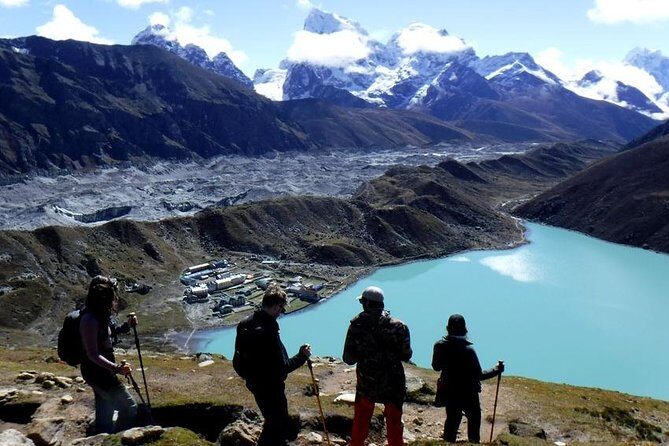
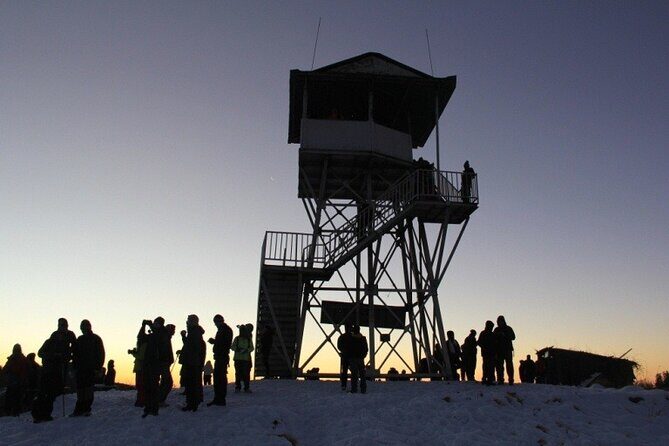
Day 7 is early start plus a steep climb. The goal is to reach Gokyo Ri (5357m / 17,575ft) before sunrise so you can watch the peaks glow. Expect a climb of about 600 meters, and yes, it’s a workout—short in time, heavy on effort. This is where having trained your legs and your breathing over the first days pays off.
Once you’re up there, you’re rewarded with views of four 8000-meter peaks: Everest, Cho Oyu, Lhotse, and Makalu. Even if you don’t know every mountain name, the sheer alignment of them is the point. This is the day where the trek’s “why” becomes obvious.
After the sunrise moment, you come back to Gokyo Village for breakfast. Then the schedule shifts back to trekking: you head toward Machhermo for lunch, which helps you settle into the final descent phase without feeling like you’re done too early.





Day 8-9: Down to Namche and then Lukla—finish strong, enjoy the last bridges
Day 8 is a descent day, and that’s a relief for your legs after the altitude work. You head down to Namche Bazaar through Dole, and the trail is mostly downhill except for a shorter climb—about 40 minutes—from Phortse Thanga to Mong La Danda. After that, the route becomes easier as you pass Kyanjuma and stop in Namche again.
Namche is your last bigger hub in the Everest region on this route. You’ll have time to explore, shop for souvenirs, and soak in the final atmosphere before you move away from the high-elevation trail network.
Day 9 is another big transition: you descend to Lukla with a morning start and gorgeous mountain views as you begin. The day includes crossing six suspension bridges and passing several Sherpa villages. You’ll walk down for stretches, stopping for lunch in Phakding after crossing the highest bridge, then continue onward to Lukla for your final night in the mountains.
This is the best time to go slower. Your body may feel tired, but your mind is often sharper here. Take time to look at how the valley changes once you’re leaving it, because those views feel different than the ones you had at your peak days.
Day 10: Lukla area to Manthali flight, then a drive into Kathmandu life
Day 10 starts with breakfast and a walk to Tenzing-Hillary airport. Then you fly to Manthali in the morning, followed by an about five-hour drive back to Kathmandu. This is a long day on roads, but it’s also how the trip closes—moving from high-altitude air into normal city movement.
You’ll drive through local villages for most of the way, which can be a welcome reset if you’re coming down from thin-air trekking.
Price and value: what $1,686.67 buys you (and what you still pay for)
This trek costs $1,686.67 per person, which is in line with a guided Everest-region package that includes planning, a support structure, and day-to-day meals. The included items matter: you get transportation to and from Tribhuvan Airport, a first aid kit, service charges and government taxes, and a post-trek celebration dinner in Kathmandu.
You also get a full meal plan during the trek: breakfast and lunch are included across the days, plus dinners for most of the trip. It’s not glamorous food, but it reduces stress and helps you maintain an energy schedule while you’re adjusting to altitude.
What isn’t included is equally important for budgeting. You’ll need to cover personal expenses and shopping, and guest house extras like shower and electronic charging fees during the trek. Also note that alcoholic drinks, chocolates, and tea/coffee aren’t included, so plan to spend some money on the small comforts that add up over ten days.
My practical take: the price feels most fair if you’re the kind of traveler who wants a reliable rhythm and doesn’t want to micromanage the logistics yourself—especially with flights in and out of Lukla involved.
Guides, reliability, and why the small group size changes the vibe
This experience caps at 15 travelers, which is a big deal on a busy mountain circuit. Smaller groups tend to move more smoothly, you’re less likely to feel lost in a crowd, and you get a better chance to ask questions without feeling like you’re holding up a line.
I also appreciate what Breeze Adventure Pvt Ltd is known for in past trips: quick responses and solid coordination. People have praised Kishwor in the office for keeping itinerary details running smoothly, and they’ve also highlighted guides like Lhakpa for caring support and good energy on the trail. Names like Sarki Sherpa and Pemba show up in past feedback too, which suggests they draw from experienced local staff. If you’re the type who likes to feel looked after—especially when altitude and weather are in play—this kind of support matters as much as the views.
Accommodation and daily comfort: plan for simple, not luxurious
The itinerary uses guest houses for overnights. That means you should expect basic mountain comforts: simple rooms, shared rhythms, and the reality that warm showers and charging are often paid extras. The good news is that these stops are functional and predictable, so you can focus on trekking instead of searching for amenities.
A small comfort tip that makes a difference: pack a plan for keeping your essentials powered (and dry), because charging fees can add up. Even if the service is there, you’ll want to control how much you use each day.
How to match this trek to your fitness level
The trek is listed for travelers with moderate physical fitness, but don’t misread that as easy. You’ll hike multiple days, climb repeatedly, and do a steep early ascent to Gokyo Ri. The route also includes acclimatization, which is good news, yet you still must treat altitude with respect.
If you’re comfortable doing long hikes with an elevation gain, and you can handle early mornings, you’re a solid match. If you’ve struggled in the past with timing, altitude headaches, or consistently slow walking days, you may want to build more acclimatization buffer before committing.
Should you book the Gokyo Lakes and Gokyo Ri package?
Book it if you want the Everest region’s drama with a quieter feel, and you care about getting lake-and-glacier views plus a sunrise viewpoint that puts major peaks in one frame. This trek is especially strong for photographers and scenery lovers who prefer open, high-mountain panoramas over the busiest tourist corridors.
Skip or reconsider if you know you dislike early starts, steep short climbs, or uncertainty from weather and flight timing. Since the experience requires good weather, having flexibility makes your trip smoother.
If you’re on the fence, ask yourself this: do you want your biggest memories to be lakes and sunrise peaks? If yes, then this route is one of the most direct ways to get there.
FAQ
How long is the Gokyo Lakes and Gokyo Ri trek?
It’s approximately 10 days.
What’s the highest point you reach?
You’ll go up to Gokyo Ri at 5357 meters (17,575 feet).
Does the package include transportation from Kathmandu’s airport?
Yes. Transportation to and from Tribhuvan Airport is included, and pickup is offered.
How large is the group?
The tour has a maximum of 15 travelers.
Are meals included during the trek?
Yes. Breakfast is included for 10 days, lunch for 10 days, and dinner for 9 days, plus a post-trek celebration dinner in Kathmandu.
What’s not included in the price?
International airfare is not included, and personal expenses like shopping. Shower and electronic charging fees at guest houses during the trek are also not included. Alcoholic drinks, chocolates, tea, and coffee are not included.
What happens if weather is poor?
The experience requires good weather. If it’s canceled due to poor weather, you’ll be offered a different date or a full refund.