REVIEW · KATHMANDU
Kanchenjunga South Base Camp Trek – 13 Days
Book on Viator →Operated by Breeze Adventure Pvt Ltd · Bookable on Viator
Small-group trekking in a place that feels remote and real. This Kanchenjunga South Base Camp route pairs stunning Himalayan scenery with a longer stretch of trail where you’ll likely see fewer trekkers than the big-name camps. I also like that the team leans into the region’s living culture, from Rai and Limbu communities to Tibetan influences you’ll notice in daily routines.
What really makes this trip special is the mix of valley walking and high-view moments, including the Yalung Glacier area and a base-camp-style excursion toward the south wall. I especially value the steady pacing and real guidance, and in past trips the guide Galje was praised for adjusting to a slower pace and suggesting smart add-ons like the Sunpati Peak idea when conditions fit.
The main thing to consider is simple: this is a remote trek. Above areas like Yamphudin, you should expect fewer facilities, and that means you’ll want good fitness habits, sensible pack weight, and realistic expectations about comfort.
In This Review
- Key Highlights Worth Noting
- Kanchenjunga South Base Camp: a quieter Himalayan big-view trek
- Price and Logistics: what your $2,095.34 really covers
- Small group, real guiding: how Galje’s style changes the trek
- Day-by-day: Ilam and the long roads that set the tone
- Trek days 3–6: rice fields, suspension bridges, and forest magic
- Days 7–8: rhododendrons, Yalung Glacier, and the Ramche choice
- Day 9: the South Base Camp excursion and the mountain’s south wall
- Days 10–12: heading back via teahouses and an old trade route
- Day 13: the drive back to Kathmandu and the farewell dinner effect
- What to expect on the ground: comfort, food, and real altitude habits
- Should you book this Kanchenjunga South Base Camp trek?
- FAQ
- Where is the meeting point for this trek?
- How long is the Kanchenjunga South Base Camp trek?
- What physical condition do I need?
- How many people are in the group?
- Are permits included?
- Does the trip include a guide and porters?
- What meals are included during the trek?
- Are Kathmandu meals included?
- What is the cancellation rule?
- What is included in the accommodation?
Key Highlights Worth Noting
- Fewer trekkers feel: the route is known for a quieter vibe than the busiest Himalayan base camps.
- Guide support that adjusts: Galje’s style stood out for pacing and smart optional suggestions.
- Wildlife and bird chances: Himalayan tahr, black bear, musk deer, snow leopard, red panda, snow cock, and pheasant may show up depending on conditions.
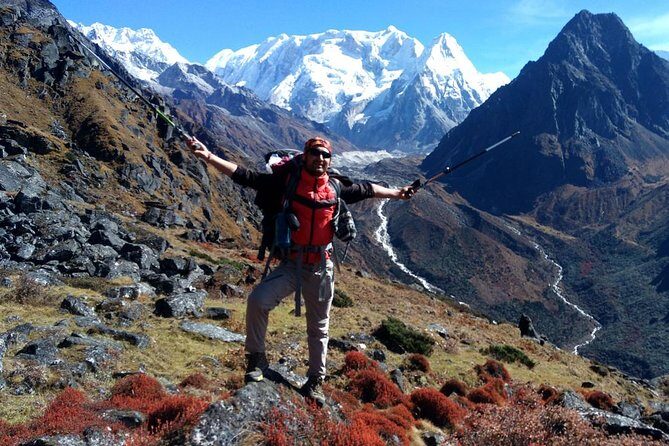
- Yalung Glacier scenery: thick rhododendron forests, a small lake hike, and glacier viewpoints add variety.
- Ramche night flexibility: depending on group size, you may sleep in a teahouse or in a tent.
Kanchenjunga South Base Camp: a quieter Himalayan big-view trek
Kanchenjunga is the kind of mountain that makes you understand why Nepal is still a magnet for serious trekkers. It sits above the far corner of eastern Nepal, and the South Base Camp side gives you a view of the mountain’s south wall that feels dramatic without the crowds you may associate with other famous base camps.
One of the best parts of this trek is that it’s not just about altitude. You’ll move through communities tied to the Rai and Limbu cultures, plus Tibetan-influenced traditions in this borderland region. Even if you don’t know every ritual, you’ll feel it in village rhythms, local paths, and the way the trail connects people to daily work.
Then there’s the natural side. This area is described as home to animals like Himalayan tahr, Himalayan black bear, musk deer, snow leopard, and even red panda. Birding chances include snow cock and pheasant. You shouldn’t count on any single sighting, but if you like wildlife, this trek gives you more chances than a route that’s mostly just a corridor between lodges.
You can also read our reviews of more hiking tours in Kathmandu


Price and Logistics: what your $2,095.34 really covers
At about $2,095.34 per person for 13 days, this is not a cheap trek. But it’s also not a “barebones” one. Your cost includes key items that matter on a remote route: a government-authorized guide and porters, the Kanchenjunga Conservation Area permit (plus government taxes), and organized road transport linked to the trek start and finish.
Meals are another value point. During the trek you get hygienic meals, including breakfast, lunch, and dinner. You also get two nights in 2–3 star hotels in Kathmandu with breakfast included. On a long itinerary with teahouse nights, that can save you from the constant decision-making that turns into budget creep.
One more practical detail: the operator offers pickup and you’ll receive a mobile ticket. That sounds small until you’ve done enough countries to know how often “simple logistics” become your job. Here, the plan is more hands-on.
What’s not included matters too. International airfare is on you, and meals in Kathmandu beyond breakfast aren’t listed as included. Alcohol, chocolates, and the everyday add-ons like tea and coffee are also not included. Finally, personal insurance is specifically noted as not included, even though insurance for guides and porters is part of the package—so you’ll want to plan for your own coverage.
Small group, real guiding: how Galje’s style changes the trek
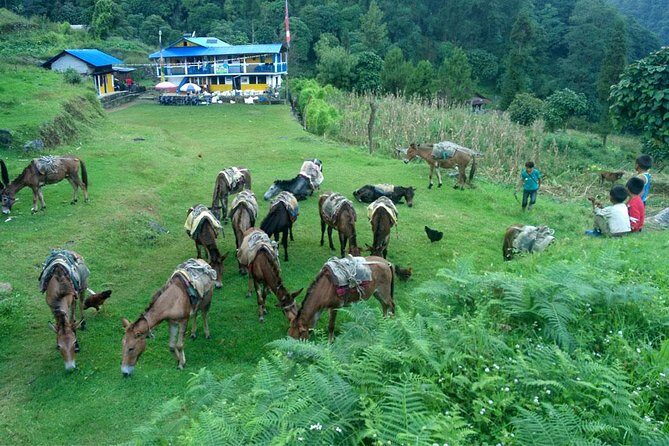
This trip caps at a maximum of 7 travelers, which is a big deal on a narrow mountain trail. Fewer people usually means less waiting at tea houses, less crowd pressure on viewpoints, and a better chance your guide can keep an eye on pacing and comfort.
The guidance quality shows up in real examples. In one past experience, the guide Galje was praised for staying consistently positive and for matching a slower pace with practical suggestions, including an idea like climbing Sunpati Peak when it suited the group and the day. That’s the kind of guidance you feel immediately: you don’t just get directions, you get options that make sense.
If you like to move at your own tempo rather than “tour-group fast,” that pacing flexibility is a core benefit. It also helps on days where the hiking includes short steep pushes, like the climb toward Pumpe Dada, or the sustained uphill segments along the Kabeli Khola.
Day-by-day: Ilam and the long roads that set the tone
The trek starts with a Kathmandu day. You’ll begin with sightseeing around UNESCO World Heritage Sites using a private vehicle. This is a good way to get your bearings fast before the mountains take over your schedule.
Then you head out toward Ilam. Day 1 includes breakfast, sightseeing, and an overnight bus to Ilam. Ilam is Nepal’s tea country, and that’s exactly why it fits here: it’s a gentle transition from city noise into the hill rhythms you’ll carry into trek logistics.
Day 2 brings another long drive toward Taplejung. This day is about rest and acclimation-by-time rather than altitude gains on foot. The drive also gives you a first look at villages and terraced agriculture, which helps the trek feel like it belongs to the landscape instead of dropping you into it abruptly.
Trek days 3–6: rice fields, suspension bridges, and forest magic
Day 3 is where the trek identity clicks in. You’ll descend through millet and rice fields, cross a suspension bridge over the Phewa Khola, and then move toward Sinchebu Bhanjyang. This is also where you get early big-mountain moments: you may catch your first glimpses of Kanchenjunga and Kyabru. Even though it’s early in the itinerary, those views often reset your energy.
After that, the trail includes a pass, then a descent toward Khesewa for the night in a teahouse. The pattern is important. You get enough hiking to feel like you’re earning the scenery, but not so much that day 1–2 logistics wreck you.
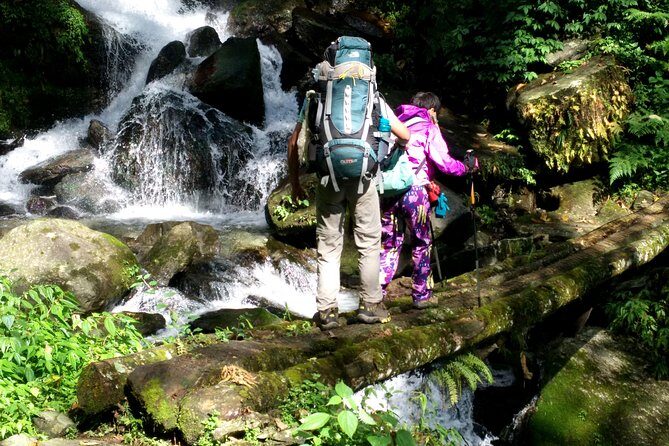
Day 4 keeps momentum with a move through mixed forests toward the Kabeli Khola. You’ll see small waterfalls that make the day feel lively, and you’ll stop for lunch at Yangpang with views toward Mt. Jannu. The day ends with a short but steep uphill push toward Pumpe Dada. It’s the kind of climb that’s quick enough to manage, but steep enough to remind you that your legs are your main transportation.
Day 5 follows the Kabeli Khola on mostly uphill but easy terrain. You’ll cross suspension bridges, pass small settlements, and reach Yamphudin. Day 6 starts by noting that above Yamphudin, facilities are limited. That’s your cue to trust the planning: provisions are arranged, but you should still keep your hydration and snacks organized.
Day 6 also delivers a memorable forest moment. In addition to climbing from Amje Khola, you may see grazing yaks at Chitre, then walk through a forest draped with Spanish moss—described as movie-like. If you like the “in-between” parts of trekking, this is one of those days where the scenery is mostly not about the summit. It’s about the trail itself.





Days 7–8: rhododendrons, Yalung Glacier, and the Ramche choice
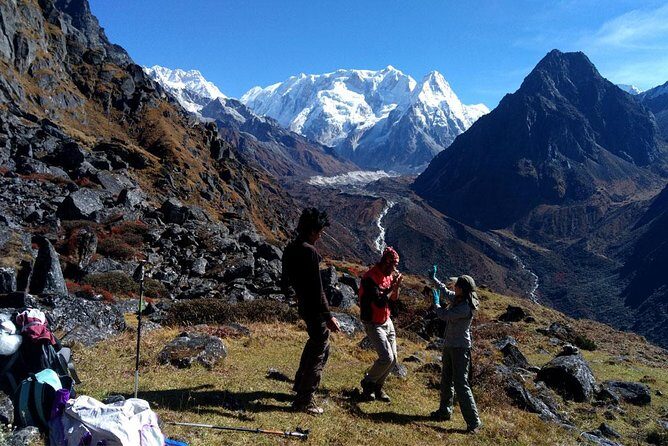
Day 7 starts with a gradual climb from Tortong to Tseram. The trail tracks along the Simbuwa Khola and runs through Lalung valley scenery with Tuplung peak watching your progress. You’ll spend time in thick rhododendron forest, then reach views linked to the Yalung Glacier.
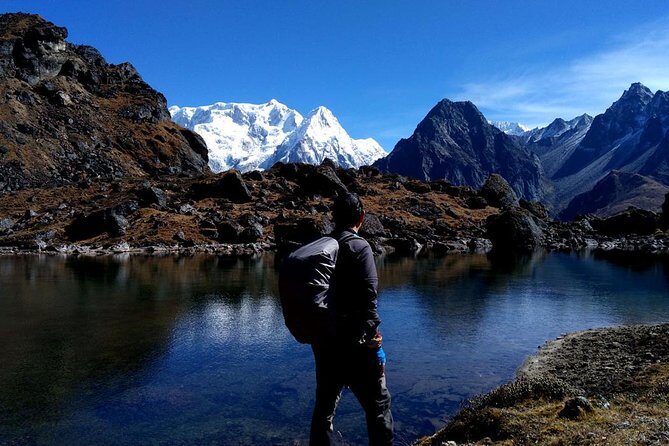
Once you reach Cheram village, lunch and then a hike to a small lake for 1–2 hours is one of the itinerary’s best “reward movements.” The combination of the lake and glacier views can be especially satisfying on clear weather. If sunset is available, the schedule even offers a chance for that last light look from the mountains before heading down to Tseram.
Day 8 shifts shorter and more direct. You ascend for a bit, reach the start of the Yalung Glacier, and walk along a valley path past places like Lapsang. Then you reach Ramche, described as the last teahouse on the trek.
Here’s the practical part: Ramche can have a wide open area, and if there’s a big group you might sleep in a tent instead of in the teahouse. That’s not something you should panic about, but it’s worth mentally preparing for variable comfort and a night sky that’s often more visible when you’re not boxed in.
Day 9: the South Base Camp excursion and the mountain’s south wall
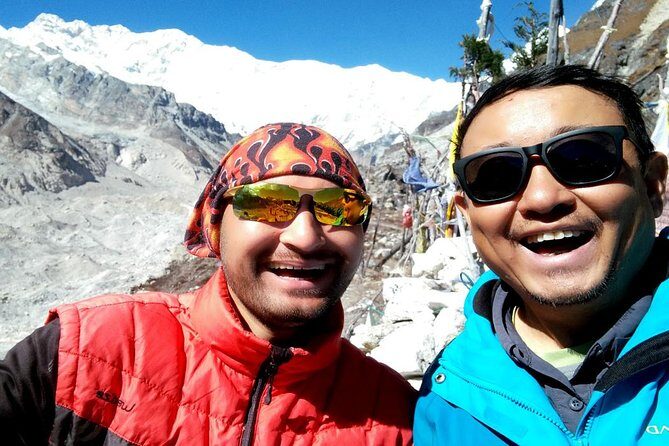
Day 9 is your big day around Kanchenjunga South Base Camp. It’s planned as an early start with a packed lunch, and the route follows the valley curve toward the mountain’s vast southern wall.
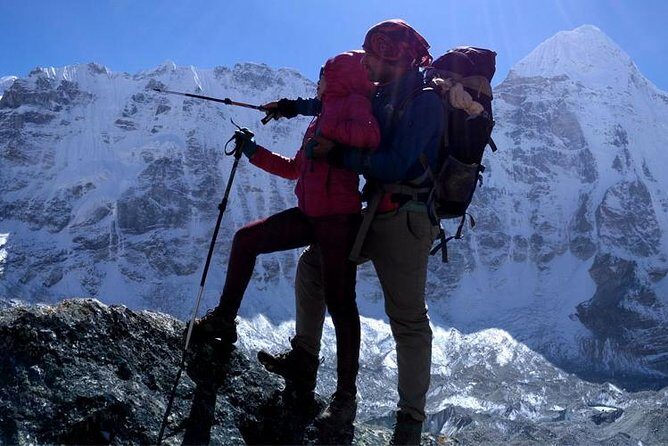
This is where the mountain detail matters. Along the ridge exist the main Kanchenjunga summits at roughly 8420 meters, 8586 meters, and 8474 meters. Even without standing on a summit ridge, seeing how those points jut into the clouds gives you a real sense of why this mountain is legendary.
The plan then continues toward a place labeled Oktang, with a glacier descent and traversal to a viewpoint area described as below the ridge. Because weather can change what’s safe, treat this as a “go with the guide” day. You’re there for proximity and views, not check-the-box heroics.
Days 10–12: heading back via teahouses and an old trade route
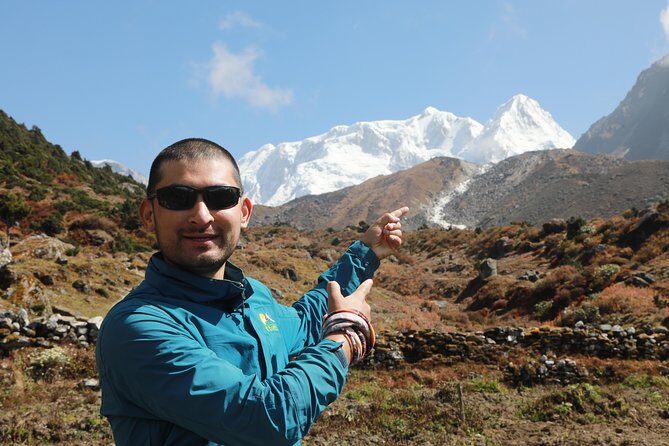
After the excursion, Day 10 is a return to Tseram. It’s described as long but easy. That combination is common in mountain travel: your legs work for you, but the scenery does the emotional heavy lifting. You’ll likely feel the difference between uphill effort day-to-day and the long, steady down-valley movement.
Day 11 shifts to something historically interesting. You’ll follow an ancient trade market route that once connected India to Tibet. With roads now developed, the trail isn’t the main link it used to be, but this trek route uses that heritage path to make travel easier and shorter. The key point is that taking this route to Ranipul helps you save days and skip a long downhill walk toward Yamphudin.
By Day 12, the hiking part is over. You wake up for a celebratory breakfast in the teahouse, then start a scenic drive through rolling terraced hills and villages. You stop for lunch in Taplejung and then continue on to Ilam, where you spend the night in a hotel.
Day 13: the drive back to Kathmandu and the farewell dinner effect
Day 13 brings the long drive back to Kathmandu. After weeks of trekking, that’s when the mind goes a little quiet—then suddenly you feel proud, even tired. The itinerary includes a farewell dinner in the evening and an overnight hotel stay in Kathmandu, so you end with a proper wrap-up instead of a random drop-off.
If you’ve been building your identity around footwork and weather forecasts, the shift back to city life can feel strange. A planned dinner gives you a buffer. It turns the finish into a moment rather than an ending you rush through.
What to expect on the ground: comfort, food, and real altitude habits
This trek is designed for moderate physical fitness, which is a useful way to frame effort. You should expect days with long walking and a mix of uphill and downhill. Some days are described as easy with mostly maintained trails, while other segments are “relentless climbs,” especially earlier in the trek. The best mindset is consistency: pace yourself so you finish each day with enough energy left to sleep well.
Teahouses are part of the experience, and the itinerary clearly accounts for reduced facilities as you go higher. That’s why the operator emphasizes planned provisions and why you’ll want to keep small items accessible. When food and drink options get limited, you’ll feel it instantly if you packed poorly.
Food is included during the trek, with hygienic meals listed. That’s good news for comfort on a long route, but you should still expect some basic variation in what’s available in teahouses. Plan to be flexible.
Also, remember that altitude doesn’t only hit you on summit days. It can affect sleep and appetite even on lower-lying walking segments. Drink water steadily and move in control. If you ever feel off, tell your guide early. That’s a small action that prevents big problems later.
Should you book this Kanchenjunga South Base Camp trek?
I think this is a strong choice if you want serious mountain scenery on a quieter route, and you value a small group with a guide who can match your pace. The itinerary hits the key scenery beats you care about—fields and suspension bridges, Kabeli Khola forests, rhododendrons and the Yalung Glacier zone, then the south wall excursion near Kanchenjunga South Base Camp.
Book it if you’re comfortable with long days, teahouse-style nights, and the reality that facilities thin out above certain villages. Also book it if you like the idea of a historic trade route on the way down, because it adds character beyond just hiking.
You might choose a different trip if you’re chasing maximum comfort or you don’t want any uncertainty in the “teahouse vs tent” possibility at Ramche. If variable lodging would stress you out, that’s the one part I’d think hard about.
If you do book, I’d recommend confirming your personal insurance coverage for the trek, packing layers for early-morning starts, and planning to enjoy the slower rhythm of an out-of-the-way region instead of counting every view like a checklist.
FAQ
Where is the meeting point for this trek?
The start and end point is at Breeze Adventure Pvt. Ltd, Thamel Marg, Kathmandu 44600, Nepal.
How long is the Kanchenjunga South Base Camp trek?
The duration is 13 days (approx.).
What physical condition do I need?
The tour is for travelers with moderate physical fitness.
How many people are in the group?
The maximum group size is 7 travelers.
Are permits included?
Yes. The Kanchenjunga Conservation Area Permit and government taxes are included.
Does the trip include a guide and porters?
Yes. It includes a government-authorized experienced guide and porters.
What meals are included during the trek?
During the trek, the package includes hygienic meals: breakfast, lunch, and dinner.
Are Kathmandu meals included?
Meals in Kathmandu besides breakfast are not included.
What is the cancellation rule?
Free cancellation is offered up to 24 hours in advance for a full refund.
What is included in the accommodation?
You’ll use local guest house accommodation during the trek and two nights in 2–3 star hotels in Kathmandu with breakfast included. There is also an overnight in Ilam hotel near the end of the trek.