REVIEW · KATHMANDU
Kathmandu: 14-Day Everest Base Camp with Kala Patthar Trek
Book on GetYourGuide →Operated by Welcome Nepal Treks P.Ltd · Bookable on GetYourGuide
Everest starts with a ticket and a dare. This 14-day trek from Kathmandu into the Khumbu mixes Sherpa villages with big-mountain days, then tops it off at Kala Patthar for the high-altitude view that trekkers chase. If you like your adventure with real culture stops—not just photo stops—this route is built for you.
I especially like the way the itinerary treats acclimatization as part of the plan, not an afterthought. You’ll spend time resting in Namche Bazaar and later acclimatizing in Dingboche, which matters once you’re climbing above 3,000 meters. I also like the small-but-important details: you’re flying Kathmandu–Lukla–Kathmandu, your Sagarmatha National Park permits are handled, and you’ll have an experienced English-speaking guide (names you may hear include Anjan and Padam).
The main drawback to consider is the high-altitude workload plus the reality of Lukla flights. Day hikes can feel long (often 5–7 hours), and the Lukla airstrip can be weather-sensitive, which can force changes if flights don’t line up.
In This Review
- Quick take: what makes this trek worth your time
- The big draw: culture days plus Everest payoff
- Day-by-day: from Kathmandu arrival to Lukla’s small-airport challenge
- Phakding to Namche Bazaar: your first taste of Khumbu life
- Tengboche and Dingboche: the view climb with a slower breath
- Lobuche to Everest Base Camp: the high-altitude walking day
- Kala Patthar in the thin air: the view run you’ll remember
- Price and value: what you’re paying for (and what you still handle)
- Guides, permits, and the English-speaking comfort factor
- Lodges, food, and the reality of warm comfort at altitude
- What to bring: the packing list that actually matches this route
- Health and suitability: when this trek is a bad match
- Logistics reality check: flights to Lukla and flexible timing
- Should you book this 14-Day Everest Base Camp with Kala Patthar Trek?
- FAQ
- What is the duration of the trek?
- What is the starting point and where does the trek go?
- What are the flight details included in the package?
- Are park permits included?
- Will I have a guide, and what language do they speak?
- Is hot water or hot showers included during the trek?
- What should I bring for the trek?
Quick take: what makes this trek worth your time
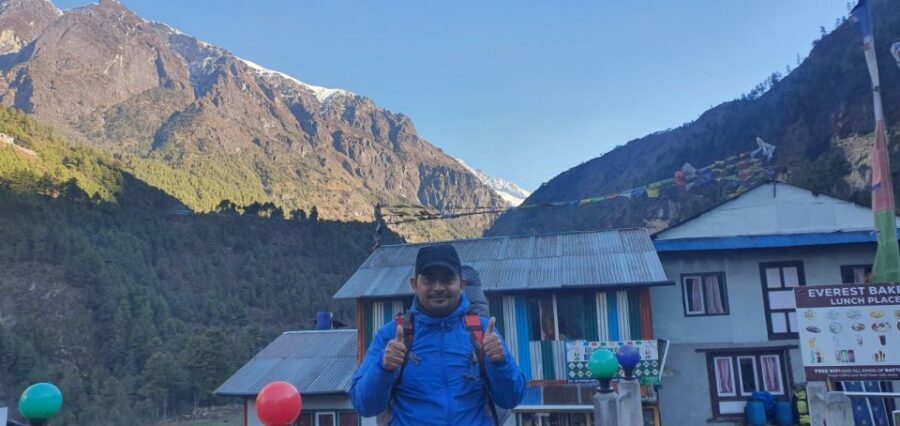
- Sherpa heartland at the right pace in Namche Bazaar, with an acclimatization day and a short excursion
- Real altitude rhythm through Tengboche and Dingboche so you’re not climbing blindly
- Everest Base Camp plus a return to Gorak Shep, instead of rushing one-way
- Kala Patthar at 5,545 meters for panoramic mountain views, then a descent toward Pheriche
- Guide support that’s practical, with English available throughout (and well-reviewed coordination by staff like Hari)
The big draw: culture days plus Everest payoff
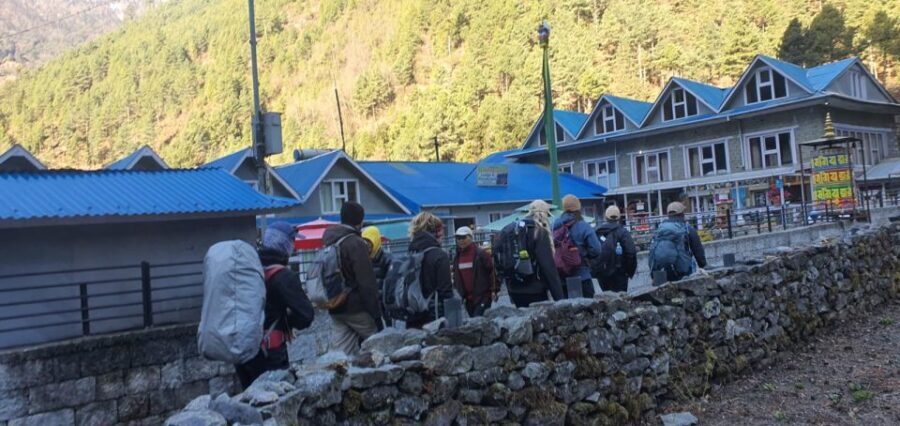
This is not just a “walk to a number on a map” trek. The route uses Kathmandu as a launch pad, then quickly shifts you into Khumbu life—stone paths, tea houses, prayer flags, and the Sherpa way of moving through altitude. The itinerary hits the places most people dream about, but it also builds in those slower moments where you actually feel like you’re living in the mountains for a bit.
Two parts in particular make it feel special. First, Namche Bazaar is where the trek becomes more than breathing and hiking; it’s a real hub, and you get a rest day there with a 2–3 hour excursion. Second, the route keeps your “big view” days anchored by stops like Tengboche and Kala Patthar, so you’re not waiting until the end to see why this trek exists.
And yes, you’ll still do the hard part: long walking days, cold mornings, and the constant reminder that altitude is working in the background. But the structure helps. You’re not thrown from lower valleys straight into the highest sections without a chance to catch your rhythm.
You can also read our reviews of more hiking tours in Kathmandu


Day-by-day: from Kathmandu arrival to Lukla’s small-airport challenge
Day 1 is straightforward: you arrive at Tribhuwan International Airport, get met by a representative, then transfer to your Kathmandu hotel. You’ll have two nights in Kathmandu with breakfast, which gives you a buffer for settling in, buying any last items, and adjusting to the pace before you head up to the airfield world.
The trekking really begins the next day with a flight to Lukla at 2,850 meters. This is where the trek’s reputation comes from. Lukla is often described as one of the most extreme airports on earth, and the key for your planning is simple: weather can affect flights. In practice, that means you should keep your schedule flexible and expect that your “day” can start earlier or slip later depending on air conditions.
After Lukla, you walk to Phakding (2,640 meters) in about 4–5 hours. This lower start is good for warming up your legs and getting used to trekking on uneven ground. It’s also where you’ll start learning your personal altitude routine: how fast you hike, how often you stop, and how you manage water and snacks when the air gets thinner.
Phakding to Namche Bazaar: your first taste of Khumbu life
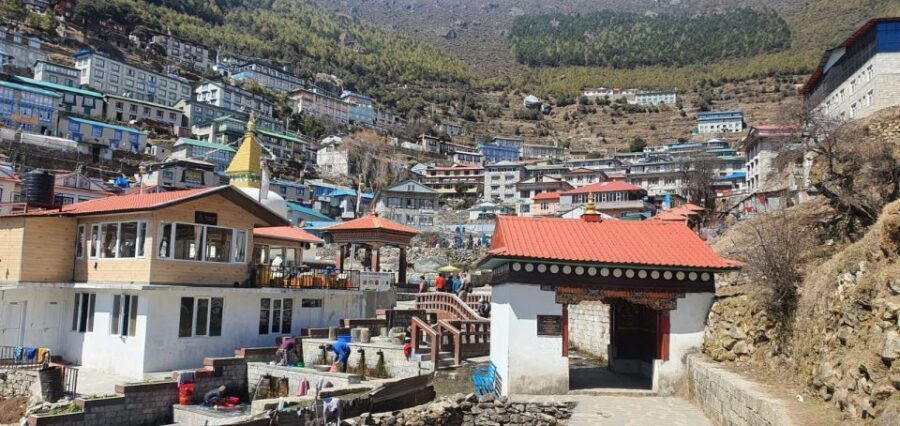
Day 2–3 are your climb into the Sherpa network. The trek from Phakding to Namche Bazaar (3,440 meters) takes 6–7 hours, so it’s a real hiking day, not a scenic stroll. You’ll pass through villages and watch the trail become busier as you move upward—more traders, more lodge activity, and more signs of how tourism has blended with daily life.
Then comes a key quality moment: Day 4 is rest and acclimatization in Namche Bazaar, plus a 2–3 hour excursion. This is one of the biggest reasons to pick a 14-day plan rather than a faster version. In altitude country, rest days aren’t wasted time. You’re giving your body time to adapt while still getting movement, views, and orientation.
You also get practical familiarity here. You’ll learn what gear actually feels good at this height, what tea house rhythm you prefer, and how cold mornings start to matter for packing and sleep. By the time you leave Namche, you’re not starting the higher parts as a total newcomer to the experience.
Tengboche and Dingboche: the view climb with a slower breath
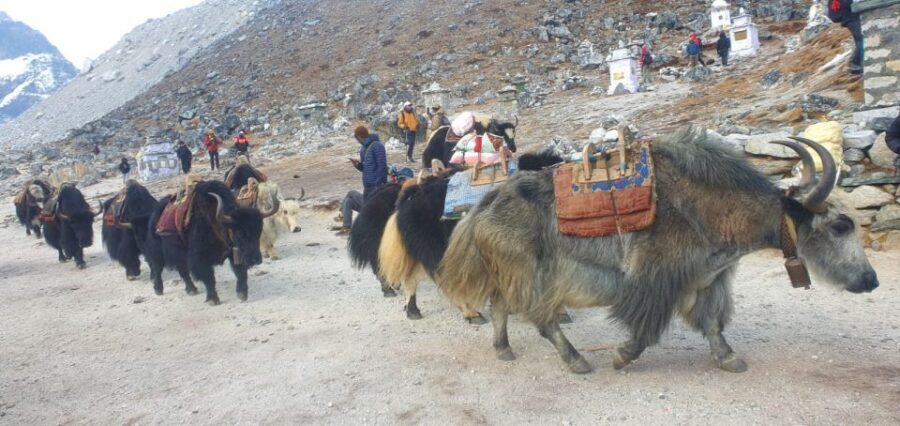
Day 5 moves from Namche to Tengboche (3,870 meters) over 5–6 hours. Tengboche is often the place people connect the trek to religious and cultural rhythm as much as to mountain drama. You’re higher now, and the air has less patience. The trail tends to demand steady pacing more than speed.
Day 6 continues to Dingboche (4,410 meters) in 5–6 hours. This stretch is where you’ll feel the altitude shift more clearly. The “easy parts” of walking—flat-ish ground, short breaks, and comfortable steps—matter more because they conserve energy. You’ll probably notice that stops are no longer just for photos. They’re for breathing control.
Day 7 is another acclimatization day in Dingboche. Again, the goal isn’t to sit still all day; it’s to give your body the time it needs before you push higher. This is also where the trek begins to feel like a sequence of small tests: can you sleep well, can you hydrate, can you keep your pace calm and steady. If you’ve ever heard people say altitude is mental as well as physical, this is where you’ll understand why.
Lobuche to Everest Base Camp: the high-altitude walking day
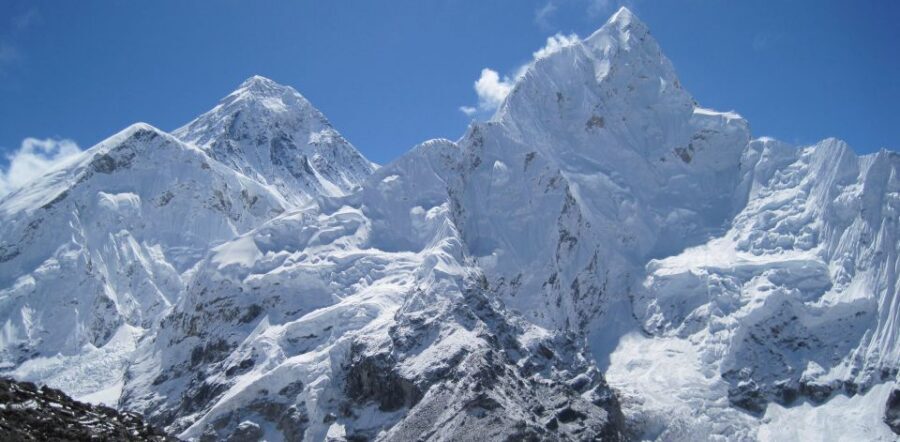
Day 8 takes you from Dingboche to Lobuche (4,940 meters) in 5–6 hours. Now you’re in the higher zone, where every decision—when you eat, how you move, whether you warm up slowly—affects how you feel later.
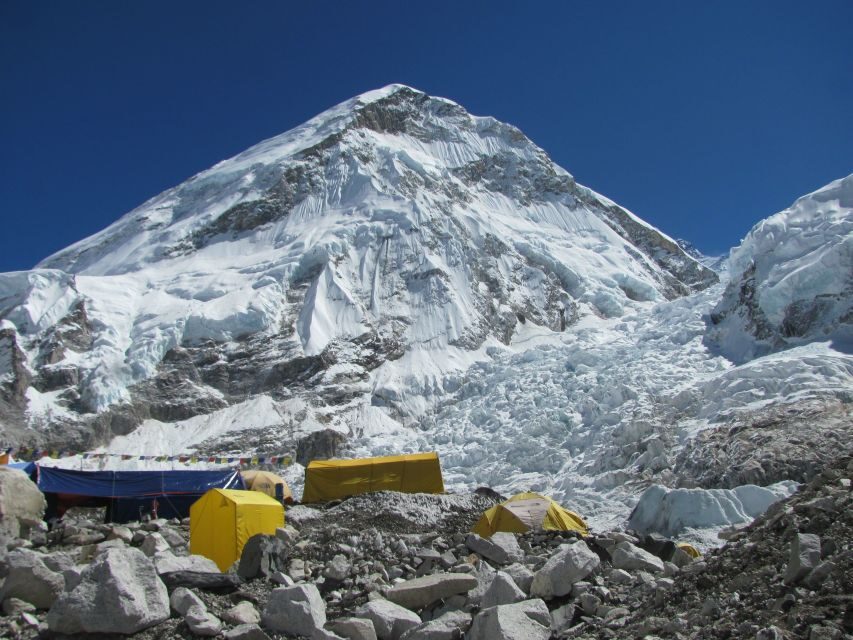
Day 9 is your big summit-like day, even though it’s not a climb to a peak. You’ll trek from Lobuche to Gorak Shep (5,170 meters), then hike up to Everest Base Camp (5,364 meters) before returning back to Gorak Shep. This is a long and demanding day because you’re stacking effort: travel upward first, then another push to Base Camp, then descent to your overnight point.
Why this structure works: Base Camp is often the headline, but your legs still need to be ready for the next day. By returning to Gorak Shep the same day, you keep your plan intact for the Kala Patthar push that follows. Expect cold conditions and a feeling of exposure—because at these heights, there’s less shelter from wind and chill.
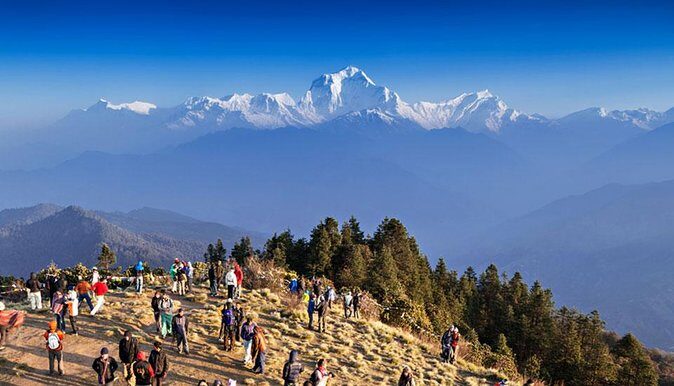
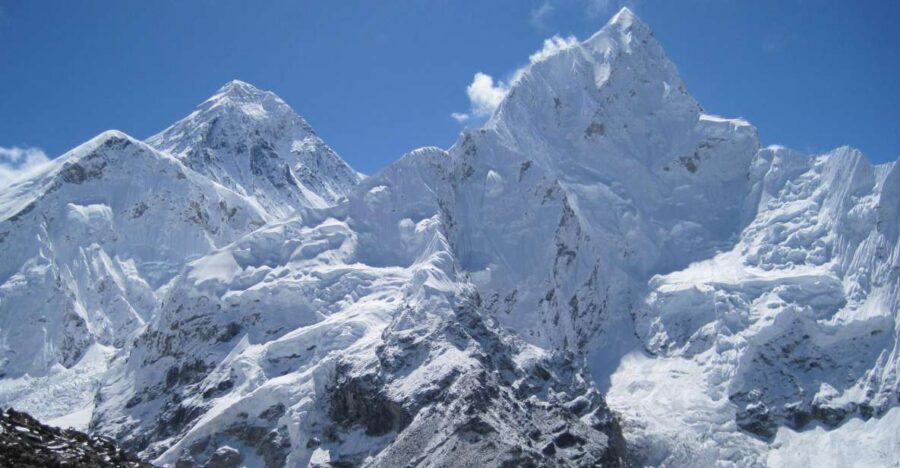
Also, you’ll get unforgettable mountain views here: Everest’s range doesn’t politely wait until the final day. When the sky is clear, you’ll see the bigger system of peaks—Everest, Lhotse, Nuptse, and often Ama Dablam in the mix. Even when clouds roll through, the changing visibility is part of the drama.






Kala Patthar in the thin air: the view run you’ll remember
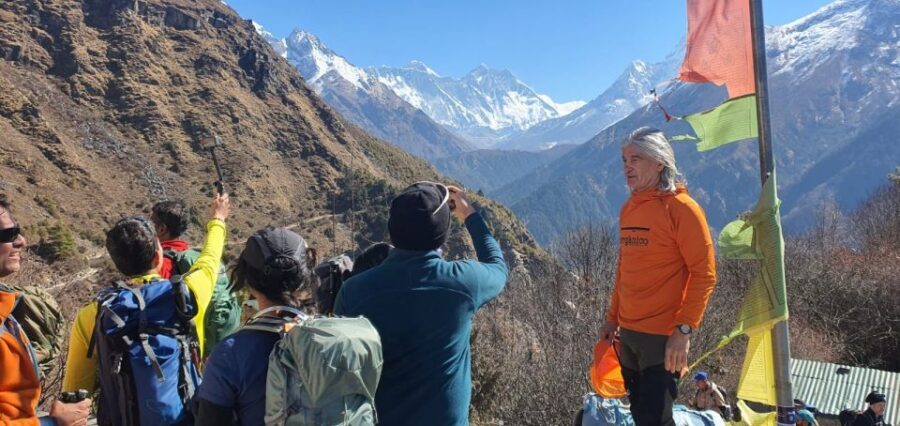
Day 10 brings the reason this trek is often booked twice—because people want to see Everest again, but from the angle that really changes how massive it feels. You’ll hike from Gorak Shep up to Kala Patthar (5,545 meters), then descend to Pheriche (4,371 meters).
Kala Patthar is the trek’s “high point” experience. At this altitude, you’re not just climbing for distance; you’re climbing for clarity. The reward can be jaw-dropping panorama if weather cooperates, with the Everest region appearing like a wall of rock rather than a distant postcard.
Then comes the smart part of the plan: you don’t stay at the top all day. After Kala Patthar, the trek shifts into descent toward Pheriche, where you get lower air and more stable day comfort. It’s still hard walking, but it’s easier walking than the high-zone work.
Days 11–12 are continued descent, and on Day 13 you return to Kathmandu with a final evening before departure the next day. That ending matters. You’ll have time to come down from the altitude mindset and reset.
Price and value: what you’re paying for (and what you still handle)
The stated price is $1,296 per person for a 14-day program. For Everest treks, that number is best understood as a package of major costs, not just “a guide and some walking.”
Here’s the value logic based on what’s included:
- Transfers in Kathmandu plus domestic airport pickup/drop-off
- Flight ticket for Kathmandu–Lukla–Kathmandu
- Two nights in Kathmandu with breakfast
- All accommodations during the trek in lodges/tea houses
- Sagarmatha National Park entry permits and fees
- An experienced English-speaking guide
- Logistics support for the guide and porter team (salary, food, drinks, accommodation, transportation, and insurance are covered)
What you should budget separately:
- Meals during the trek (breakfast/lunch/dinner are not included), plus lunch and dinner in Kathmandu
- Porters are listed as not included, with guidance of 1 porter for 2 people
- Alcohol and drinks are not included
- Hot showers during the trek are not included
This mix is very typical for lodge treks in Nepal. The big win here is that you’re not managing permits and domestic flight coordination yourself. You still need to plan for food, warmth, and porter costs, but the framework is set up to reduce friction.
If you want the comfort of knowing permits and guides are handled, this value works. If you want everything, including meals and showers, you’ll need to look at an upgraded package elsewhere.
Guides, permits, and the English-speaking comfort factor
An Everest trek lives and dies on timing and communication. This package includes an English live tour guide throughout, and multiple reviews point to guides speaking English very well. Names showing up in real-world feedback include Anjan and Padam, and one coordination contact named Hari is mentioned as easy to reach and responsive.
That matters on an Everest route because the details add up:
- deciding when to push
- keeping you on acclimatization rhythm
- handling practical issues at tea houses
- communicating about gear and daily conditions
You’ll also get important paperwork and national park entry permits handled as part of the trip. That’s not glamorous, but it saves stress in a country where rules and trail access are real.
Lodges, food, and the reality of warm comfort at altitude
You’ll stay in lodges/tea houses on the trek. That’s the right style for this area. It’s not luxury, but it’s functional. Expect cozy rooms, basic beds, and shared dining spaces where you’ll see other trekkers rotate in and out.
One major practical note: hot showers are not included. You can still stay reasonably clean, but you should be mentally ready for cold water or limited washing options during the trek. On a high-altitude itinerary, warmth is the priority: dry socks, a warm layer, and decent sleep often matter more than one hot shower.
Food is another budget-and-energy point. Since lunch and dinner during the trek aren’t included, you’ll order meals as you go. The upside is that tea houses usually have tried-and-true menus (think warm carbs and soups). In thin air, simple food that sits well beats “adventurous” eating. Bring an appetite for slower digestion and smaller portions.
What to bring: the packing list that actually matches this route
The tour gives a shopping list style of guidance, and you’ll want to follow it closely because you’re going into cold altitude conditions and using lodges rather than hotels.
Bring:
- Sunglasses and a hat (sun and glare are real at height)
- Hiking shoes and socks
- Sunscreen and insect repellent
- Long pants plus shorts
- A mix of T-shirts (you’re advised to bring 2 t-shirts)
- Toilet paper
- Sunglasses, sunscreen, hat, mosquito repellent, and trekking shoes are all called out
Also note: if required, you may be provided with a jacket, sleeping bag, and duffle bag to use. That’s a helpful safety net if you’re traveling light. Still, don’t count on miracles—check your own needs and how cold you personally run.
Packing trick that helps on Everest routes: keep your “daily access” items (sunscreen, lip balm, snacks, hat, gloves if you use them) easy to reach, because you’ll be opening bags multiple times a day. Cold mornings make everything slower.
Health and suitability: when this trek is a bad match
This trek is not suitable for:
- pregnant women
- people with heart problems
- people with mobility impairments
That list is important and non-negotiable. Even with acclimatization days, you’re walking at altitudes that can stress the body. If you have any heart or breathing concerns, you should talk to a medical professional before considering this route.
If you’re mobile and generally healthy, the 14-day pacing can be a good compromise between effort and adaptation. But “healthy” still means you’re willing to walk hard some days and accept that weather and fatigue can change the feeling of each day.
Logistics reality check: flights to Lukla and flexible timing
This tour depends on flying into Lukla at 2,850 meters. While the trek schedule is laid out day by day, the one variable you can’t fully control is flight timing. Lukla flights can be affected by weather, and if planes don’t line up, your hiking days can shift.
So I’d plan like this:
- Keep your Kathmandu buffer days as real buffer days (you’ve got two nights before trekking, which helps)
- Avoid rigid pre- or post-trip commitments
- Pack with the assumption that you might wait in the system more than you expect
Your guide’s job includes staying on top of day-to-day timing. With an experienced English-speaking team, you’re better set up to handle changes calmly rather than panic.
Should you book this 14-Day Everest Base Camp with Kala Patthar Trek?
Book it if you want:
- Everest views plus Sherpa cultural stops like Namche Bazaar
- a schedule that includes acclimatization days rather than racing upward
- a guided trek with permits and key logistics already arranged
- the specific goal of adding Kala Patthar to your itinerary, not just stopping at Base Camp
Skip it or rethink it if:
- you need predictable, low-effort walking days
- you’re not comfortable with cold nights and high-altitude physical strain
- you can’t manage the possibility of Lukla flight timing changes
- you fall into the listed health or mobility categories
If you’re fit, patient, and you want a classic Everest route with smart pacing, this one hits the right combination of culture, challenge, and payoff.
FAQ
What is the duration of the trek?
The trek runs for 14 days.
What is the starting point and where does the trek go?
You start in Kathmandu, fly to Lukla, then trek through Phakding, Namche Bazaar, Tengboche, Dingboche, Lobuche, Gorak Shep, Everest Base Camp, Kala Patthar, and Pheriche before returning to Kathmandu.
What are the flight details included in the package?
The package includes the flight ticket for Kathmandu–Lukla–Kathmandu, plus domestic airport pickup and drop-off by car.
Are park permits included?
Yes. Sagarmatha National Park entry permits and fees are included.
Will I have a guide, and what language do they speak?
Yes. An experienced, helpful, English-speaking guide is included.
Is hot water or hot showers included during the trek?
No. Hot showers during the trek are not included.
What should I bring for the trek?
You’re advised to bring sunglasses, a hat, hiking shoes, sunscreen, insect repellent, T-shirts, long pants, shorts, and socks. You’re also advised to bring toilet paper and trekking shoes. A jacket, sleeping bag, and duffle bag may be provided to use if required.