REVIEW · KATHMANDU
Helicopter Return Everest Base Camp Trek, KTM-LUKLA & Gorakshep-KTM by Heli
Book on Viator →Operated by Himalaya Holiday service Pvt. Ltd.(HHS) · Bookable on Viator
Everest Base Camp, plus a helicopter back option. You get the big Kala Patthar payoff and a helicopter return alternative that can save hours on the descent. The trade-off is the helicopter legs are priced separately, and weather can still shake up flight plans around Lukla.
What I like most is the way Himalaya Holiday Service keeps the trip organized through the thick of it. Their team includes Buddhi (planning and communication), and a top mountain guide named Dipak who keeps the trekking days smooth and understandable. One thing to watch: this is a high-altitude trekking schedule, so even with good planning, you’ll need to take acclimatization seriously.
In This Review
- Key highlights worth your attention
- Why this Everest Base Camp trek with helicopter return is a practical idea
- A quick reality check on expectations
- Day-by-day: Kathmandu to Lukla and into the Khumbu
- Day 2: Flight to Lukla, then Phakding
- Day 3: Up to Namche Bazaar
- Day 4: Rest day in Namche
- Days 5–6: Tengboche to Dingboche
- Day 7: Rest day in Dingboche
- Walking through Sherpa culture: monasteries, bridges, and the Khumbu “how it works” feeling
- Gorak Shep and Kala Patthar: the views that make the climb worth it
- Day 8: Lobuche
- Day 9: Gorakshep and Everest Base Camp
- Day 10: Kala Patthar (5,545m) and down toward Pheriche
- Helicopter return options: when to use them and what to budget
- One more practical note: weather can still win
- Tea houses, breakfast, and the altitude-food reality
- Your support team: guides, porters, and why small details matter
- Packing tips that match this specific itinerary
- Price and logistics: does $9,999 really make sense?
- Who should book this—and who should think twice
- Should you book this Everest Base Camp helicopter-return trek?
- FAQ
- What time is the meeting point?
- How long is the experience?
- Are permits included?
- Is breakfast included?
- Are lunch and dinner included?
- What are the helicopter costs if I want KTM to Lukla or Gorakshep to Kathmandu?
- Do I need to pay a porter?
- What is the cancellation policy?
Key highlights worth your attention
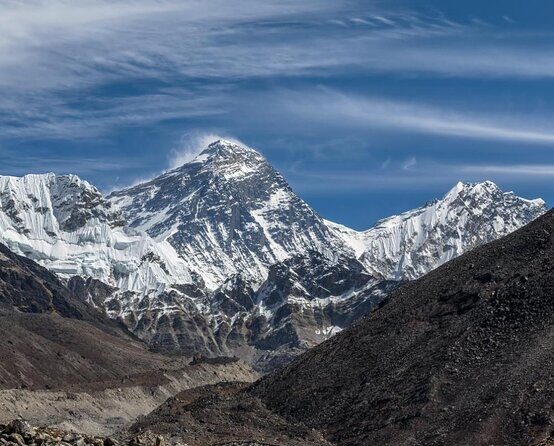
- Kala Patthar at 5,545m: the classic wide-angle Everest views, plus Khumbu Glacier and Icefall scenery.
- Acclimatization built into the route: rest days in Namche Bazaar and Dingboche to help your body catch up.
- Sherpa culture stops on the way: monasteries, prayer wheels, prayer flags, chortens, and suspension bridges along the Khumbu trail.
- Sagarmatha National Park walking: you’ll pass through scenery tied to the region’s protected landscape.
- A real support team: guides (like Dipak) and porters (Carmen and Desantis were cited in past trips) make daily logistics easier.
- Helicopter add-ons are flexible: sharing or private helicopter options are listed, with specific extra costs.
Why this Everest Base Camp trek with helicopter return is a practical idea
Everest Base Camp is famous for good reason: every day seems to rise in altitude and drama. But the hardest part for many people isn’t only the climb—it’s the long, slow feeling of going back down after you’ve already tasted the summit-level views.
That’s where this route’s helicopter option earns its keep. You’re trekking into the Khumbu the classic way—Lukla flight, tea houses, Sherpa villages, Namche’s busy rhythm, then Gorak Shep and Everest Base Camp—but you have a chance to shorten the finish using a helicopter return from Gorakshep to Kathmandu (priced separately). If you get tired of spending daylight hoofing downhill while your legs are already cooked, this kind of exit plan can be a big deal.
The itinerary also targets the places that matter. Namche isn’t just a stop for coffee—it’s a trading hub with shops, views, and a strong sense of Sherpa life. Tengboche and Dingboche bring in monastery and village culture at elevations where you’ll feel the air thin out. And Kala Patthar is scheduled at 5,545m, which is exactly where the Everest panorama becomes its own event.
You can also read our reviews of more hiking tours in Kathmandu


A quick reality check on expectations
This isn’t a comfort-only walk. It’s a teahouse trek, which means you’ll sleep in simple rooms and eat warm food that changes with altitude and availability. You’ll also be moving at 4,000m+ for multiple days. The good news: your schedule includes rest days for acclimatization, so you’re not just “walking to suffer.” You’re walking to arrive.
Day-by-day: Kathmandu to Lukla and into the Khumbu
Your trip starts in Kathmandu, where you’re at 1,350m. This day is mainly about landing, getting your bearings, and preparing for a quick jump to the high hills. Meeting time is set early—around 5:45 am—so be ready to move fast once your trek itinerary starts.
Day 2: Flight to Lukla, then Phakding
You fly to Lukla’s Tenzing-Hillary Airport (around 2,828m) and then trek to Phakding (about 2,780m). The walking time is roughly 3–4 hours.
This day matters more than it looks. That Lukla arrival puts you in the Everest region right away, but the hike to Phakding is short enough to let your body start adapting. You’ll also see how the trail is organized—prayer flags over bridges, tea house clusters, and the steady flow of porters and groups.
Day 3: Up to Namche Bazaar
Next is the jump to Namche Bazaar (about 3,440m). Expect 5–6 hours walking.
Namche is where the trek “feels real.” You’ll spend time crossing into the part of the route that’s packed with views and people. The altitude also becomes more noticeable. If you feel short of breath, that’s normal here. Don’t race. Keep your pace calm and steady.
A few more Kathmandu tours and experiences worth a look

Day 4: Rest day in Namche
Rest days aren’t “extra.” They’re a strategy. Namche’s rest day helps you acclimatize before higher villages. It also lets you explore at your own rhythm—shops, local food, and that busy Himalayan trading feel.
If you want practical guidance, this is when a good guide earns their pay. Dipak, for example, has been praised for planning and communication during past trips, and this is the kind of day where that planning shows up as smart, realistic choices.
Days 5–6: Tengboche to Dingboche
Day 5 brings you to Tengboche (around 3,850m) in about 4–5 hours. Tengboche is known for monasteries, so expect a mix of spiritual and scenic moments.
Day 6 continues up to Dingboche (about 4,350m) in another 4–5 hours. Dingboche sits at a higher altitude where rest becomes more important than ever.
Day 7: Rest day in Dingboche
This rest day is your second major acclimatization anchor. You’ll be gaining altitude anyway as you continue, so you want your body to absorb this one first. It’s also a good time to slow down, hydrate, and keep your pack weight manageable.
Walking through Sherpa culture: monasteries, bridges, and the Khumbu “how it works” feeling
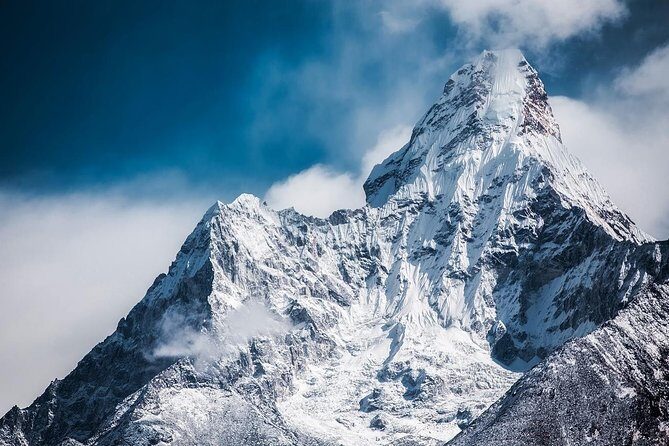
The Everest region isn’t only peaks. It’s also daily life—villages, trading routes, and religious landmarks threaded into the trail.
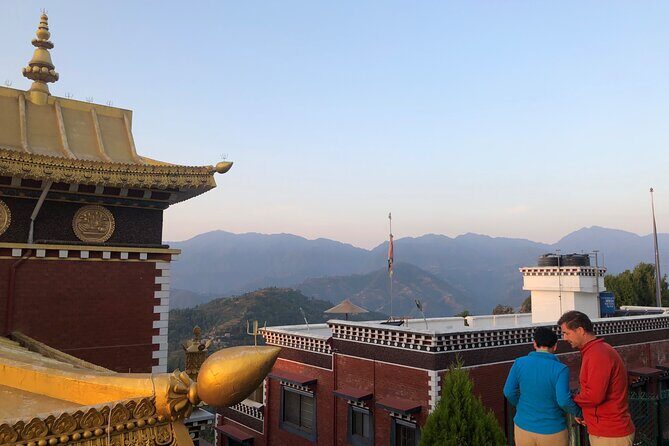
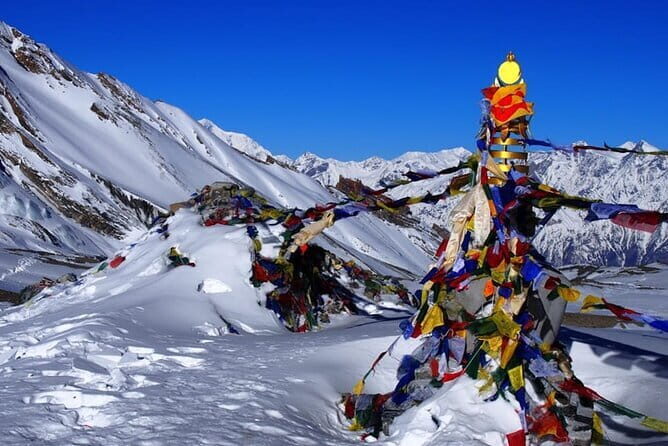
On this trek, you’ll repeatedly see religious expressions like prayer wheels and prayer flags, plus chortens and monastery stops. You’ll cross suspension bridges that often look like they were built for both travel and ceremony. These aren’t random decorations; they’re part of how people mark routes through tough terrain.
And you’ll be walking through places linked to Sagarmatha National Park, including stretches where the Dudh Koshi River (often called the Milky River) runs alongside the trail. That river detail matters because it gives the trek a sense of direction and movement—water always finds a way, and the path often follows.
What I especially like about routes like this is how the culture shows up during normal walking hours, not only at a single viewpoint. You’re always passing something meaningful: a monastery wall, a prayer-flag covered crossing, or a Sherpa village where people are living at high altitude without treating it like a special occasion.
Gorak Shep and Kala Patthar: the views that make the climb worth it
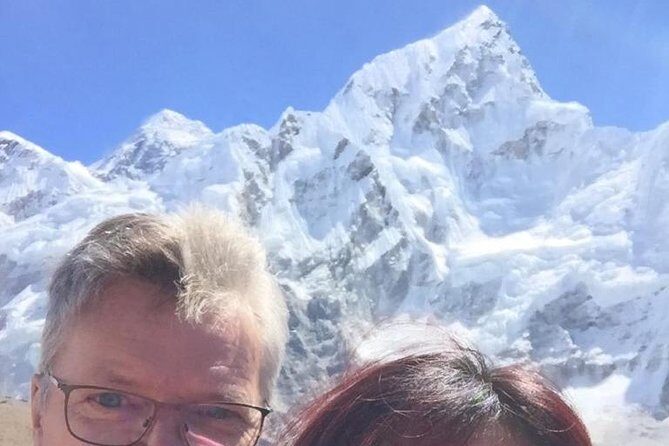
This is the part most people remember.
Day 8: Lobuche
You trek to Lobuche (about 4,910m) in 4–5 hours.
This is where you feel the altitude more strongly. Day 8 isn’t the top; it’s the runway for the top. You’ll want to keep effort controlled so your body isn’t fighting fatigue from bad pacing.
Day 9: Gorakshep and Everest Base Camp
You move to Gorakshep (about 5,180m) in 3–4 hours, then continue to Everest Base Camp (around 5,364m) for 2–3 hours.
This is your classic “arrive, feel small, take it in” day. Base Camp is a destination in its own right, even if you don’t climb Mount Everest. You’ll be in the gravity of the Khumbu Icefall area and surrounded by scenery that feels too large to be real.
Tea house logistics also get simpler and tougher here: the higher you go, the more you’ll rely on the basics—warm drinks, layers that work, and rest that actually restores you.
Day 10: Kala Patthar (5,545m) and down toward Pheriche
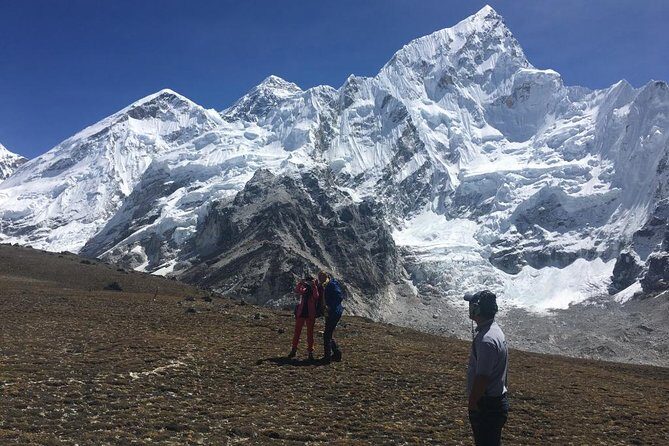
Day 10 brings the highlight: Kala Patthar at 5,545m. It’s 2–3 hours to reach the viewpoint, then you trek toward Pheriche (about 4,280m) for 5–6 hours.
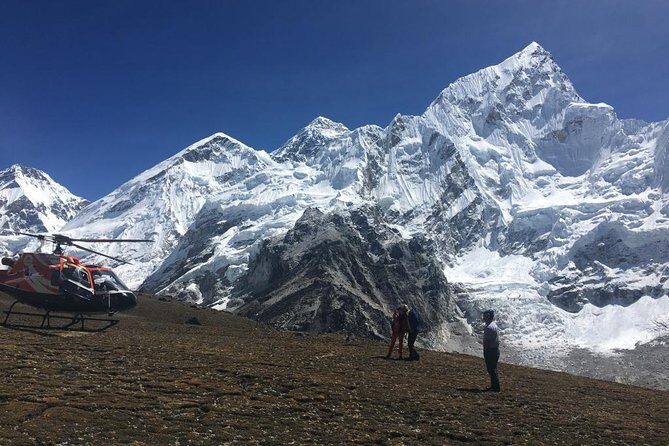
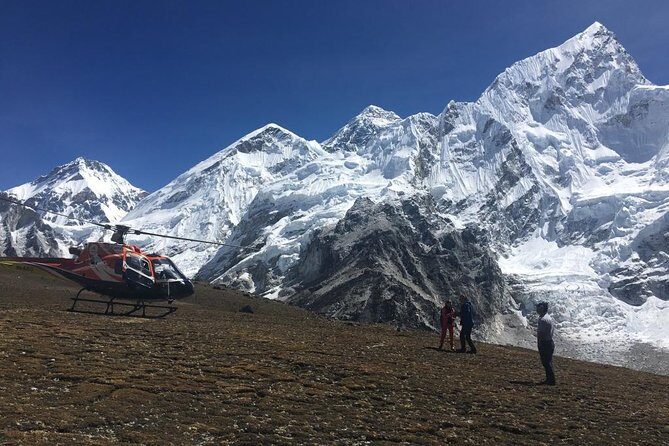
Kala Patthar is famous for glittering mountain views, including Everest, Nuptse, Pumori, Lhotse, and Changtse. You’ll also see the Khumbu Glacier, the Icefall, glacial rivers, and avalanche paths.
This is an intense altitude day—short on time, heavy on effort. If you want the best outcome, treat it like a slow-motion mission: steady steps, minimal stopping, no hero moments. Once you’re up there, you’ll understand why this trek is so commonly described as life-changing. The air is thin, but the reward is clear.
Helicopter return options: when to use them and what to budget
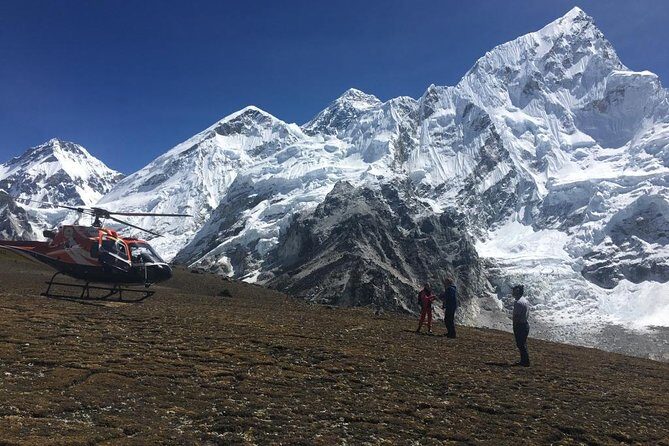
The key word here is option.
The tour information lists separate helicopter costs for these legs:
- KTM to Lukla by helicopter (sharing flight): USD 400 per person, listed for Oct, Nov, Mar, Apr, May
- Gorakshep to Kathmandu by helicopter (sharing): USD 999 per person, listed for Oct, Nov, Mar, Apr, May
- Private helicopter from Gorakshep to Kathmandu: USD 3,600 per heli
- Private helicopter from Kathmandu to Lukla: USD 2,000 per heli
So, if you’re choosing the helicopter return because you want a faster end, budget for that extra cost and confirm what your final routing looks like on your exact dates.
One more practical note: weather can still win
Lukla flights can be weather-sensitive. Past trip experience shared by guests includes a scenario where an original Lukla flight was canceled due to weather, and the team found a helicopter solution so the trip could continue. That’s exactly the kind of flexibility you’re paying for when you travel with a team that knows the local reality—not just the dream itinerary.
Still, don’t plan your Kathmandu schedule the way you’d plan a city weekend. Keep a buffer. High-altitude travel always has its own timetable.
Tea houses, breakfast, and the altitude-food reality
This trek uses tea houses, meaning you’re sleeping in simple places with meals available on the trail. The included list specifically calls out tea house in mountain and breakfast (9). Lunch and dinner are pay locally.
Here’s how to think about that:
- Breakfast is already handled for you, which reduces early-morning stress.
- Lunch/dinner pay locally gives you flexibility, but it also means you should expect prices and menu options to vary by location and season.
- Food at altitude is often about warmth and calories more than gourmet choices. You’ll likely do best with simple, filling items and plenty of fluids.
If you’re sensitive to altitude and appetite drops, this is another reason a guide matters. You’ll get reminders to eat and drink consistently rather than waiting until you feel empty.
Your support team: guides, porters, and why small details matter
This tour runs with a maximum group size of 15. In the Everest region, smaller groups generally help with pacing and logistics.
The guide role is built into the package: a trekking guide is included, and past trips highlighted Dipak as an excellent guide who makes the trekking portion enjoyable and informative. Buddhi is also praised for planning, attention to detail, and communication before and during the trek.
Porters are mentioned in the cost details: USD 30 per day, paid directly to the porter at Lukla. That’s worth planning ahead if you want help carrying gear, especially for colder days and high-altitude walking.
Also, if you’re hoping for smooth air travel connections, one more name shows up in past flight praise: pilot Deepak pun was credited for a smooth flight experience. That kind of calm, competent air handling matters when you’re trying to keep your day from unraveling.
Packing tips that match this specific itinerary
The provided packing list is solid, and you should treat it like a checklist, not a suggestion.
Key items you should not skip:
- Warm down jacket (the list says it’s a must for staying in a teahouse relaxed under 0C)
- Waterproof Gore-Tex layer for rain/wind protection
- Sun hat/cap, warm woolen cap, and hand gloves
- Glasses for high-altitude sun
- Water bottle (and plan to drink steadily)
- Trekking shoes plus sports shoes or sandals
- A 4-season sleeping bag is optional and can be provided, but it’s expected to be returned after the trip
For clothing layering, the list includes fleece/puffy options, thermal tops, and raincoat—so you should plan for cold mornings and windy ridgelines, even when the sun is out.
Also bring a proper day pack. You’ll use it constantly for viewpoint stops and shorter transfers, especially around high points like Gorakshep and Kala Patthar.
Price and logistics: does $9,999 really make sense?
At USD 9,999 per person, this isn’t an impulse deal. So I look at what you’re actually buying.
From the included items, your money covers:
- Trek guide support
- Entry permits and trekking permits
- Tea house lodging during the trek
- Breakfast (9)
What’s not included, and what you should mentally budget:
- Lunch and dinner (paid locally)
- Private transportation
- Helicopters (listed with separate costs, including sharing/private options)
- Porter fee (USD 30 per day, paid at Lukla)
So the value comes down to organization and risk management. In this region, the difference between a smooth trek and a stressful one is often how quickly problems get solved: flight disruptions, route timing, acclimatization pacing, and the ability to keep your team moving without confusion.
Because the helicopter costs are separate, I strongly recommend you confirm what’s included for your exact travel window. The title says helicopter return, but the pricing section lists helicopter legs as add-ons for specific months. Get that crystal clear before you pay.
Who should book this—and who should think twice
This trek is a good fit if:
- You want the full Everest region experience—Namche, Tengboche, Dingboche, then Gorak Shep and Kala Patthar.
- You like structured acclimatization with rest days built in.
- You want the option to reduce the time spent on the longer descent by using the Gorakshep to Kathmandu helicopter.
Think twice if:
- You’re not comfortable with cold teahouse nights and basic lodging.
- You get nervous at altitude and can’t stay calm while walking steadily at 5,000m+.
- You’re hoping for a fully predictable schedule in all weather. In this region, weather can affect Lukla and timing, and you’ll need flexibility.
Should you book this Everest Base Camp helicopter-return trek?
If your goal is Everest Base Camp with the classic cultural trail—and you want a smart way to manage the hardest part of the journey (the end days)—this is a strong match. The biggest pluses are the Kala Patthar viewpoint, the acclimatization structure, and a team that’s been praised for communication and on-the-ground problem solving (including arranging alternatives when flight conditions changed).
But it’s not a one-click “cheap Everest.” At $9,999, you should treat helicopter add-ons as a budget decision, not an afterthought. If you confirm which helicopter leg is truly part of your package (or if it’s an upgrade), you’ll feel much better about the total cost.
FAQ
What time is the meeting point?
The start time listed is 5:45 am.
How long is the experience?
The trek is listed as about 9 days, with additional days for return and final departure.
Are permits included?
Yes. Entry permits and trekking permits are included.
Is breakfast included?
Yes. Breakfast is included for 9 days.
Are lunch and dinner included?
No. Lunch and dinner are not included and you pay locally.
What are the helicopter costs if I want KTM to Lukla or Gorakshep to Kathmandu?
The listed helicopter add-ons are: KTM to Lukla by sharing flight is USD 400 per person (sharing). Gorakshep to Kathmandu by sharing is USD 999 per person (sharing). Private options are also listed: USD 3,600 per heli for Gorakshep to Kathmandu and USD 2,000 for Kathmandu to Lukla.
Do I need to pay a porter?
A porter fee is listed as USD 30 per day, paid directly to the porter at Lukla.
What is the cancellation policy?
You can cancel up to 24 hours in advance for a full refund. If it’s canceled due to poor weather, you’re offered a different date or a full refund.