REVIEW · KATHMANDU
Kathmandu UNESCO World Heritage Site Tour
Book on Viator →Operated by Himalayan Holyland Treks and Expedition · Bookable on Viator
Four UNESCO sites, one packed Kathmandu morning. This Kathmandu Valley World Heritage experience mixes Hindu and Buddhist sacred places in a single day, with a licensed guide and a private car to keep the logistics easy. If you like your culture with context—who built what, why it matters, and how to behave in active religious spaces—this route is a smart way to do it.
I like that you get a government-licensed English/French-speaking guide plus entrance fees for four UNESCO sites handled for you. The trade-off is simple: it’s an early start at 5:15am and lunch isn’t included, so you’ll want a plan to avoid getting snack-stuck mid-morning.
In This Review
- Key things to know before you go
- A 5:15am UNESCO circuit of Kathmandu Valley
- Pashupatinath Temple: Shiva’s major pilgrimage hub
- Swayambhunath Stupa (Monkey Temple): shrines on the hill
- Patan Durbar Square: architecture with both Hindu and Buddhist threads
- Boudhanath Stupa: 36 meters of Buddhist devotion
- Transport, guide style, and the value of included dinner
- Price and logistics: is $128 a good deal?
- Who this Kathmandu Valley UNESCO day tour is best for
- Should you book? My practical take
- FAQ
- What time does the Kathmandu Valley UNESCO tour start?
- Where is the meeting point?
- Is pickup offered?
- How long is the tour?
- Which UNESCO sites are included?
- What’s included in the price?
- What isn’t included?
- Is it a private tour?
Key things to know before you go
- Early start, packed day: A 5:15am meet at Tribhuvan Airport means a full schedule while Kathmandu is waking up.
- Clear UNESCO hit list: Pashupatinath, Swayambhunath, Patan Durbar Square, and Boudhanath in one day.
- Private car comfort: A private vehicle helps you move between temples without constant negotiating.
- Dinner included: Nepali cuisine is part of the package, so you’re not juggling where to eat after the temples.
- Respectful spiritual sites: You’re visiting living places of worship, not just quiet monuments.
- Guide language matters: Expect a licensed guide with English or French ability; Bijay is specifically praised in prior trips.
A 5:15am UNESCO circuit of Kathmandu Valley
Kathmandu Valley UNESCO sites are spread across the city, and doing four of them in a single day only works if timing and transport are handled well. This tour starts at 5:15am at Tribhuvan Airport, which is early by most standards, but it’s also the practical way to fit major stops into one day without turning the experience into a commute marathon.
This is a private tour, so it’s just your group in the vehicle, not a crowded bus shuffle. You’ll also get a mobile ticket, which is one less thing to keep track of in a day full of temples, stairs, and photo pauses.
For me, the big selling point is the balance: you’re not only looking at impressive architecture—you’re also getting the spiritual setting behind each place, from Hindu devotion at Pashupatinath to Buddhist practice at Swayambhunath and Boudhanath, plus Patan’s cultural mix at Patan Durbar Square.
You can also read our reviews of more historical tours in Kathmandu

Pashupatinath Temple: Shiva’s major pilgrimage hub
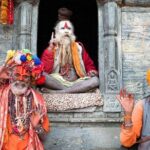
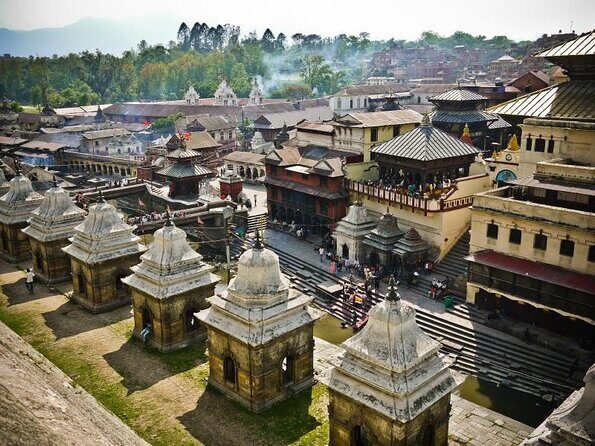
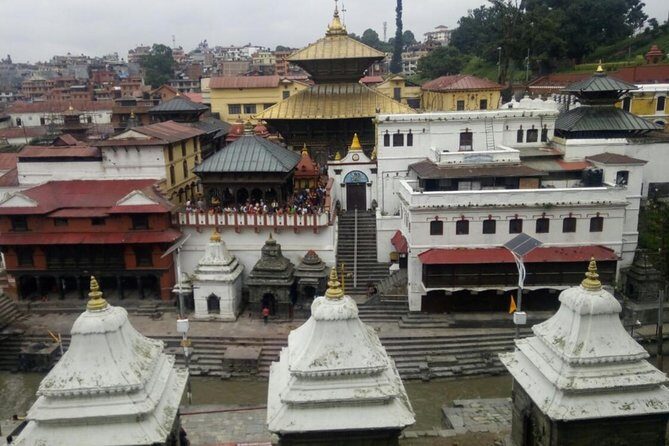
The day begins at Pashupatinath Temple, one of the most significant religious sites for devotees and disciples of Shiva in Asia. This is not a museum stop. It’s an active pilgrimage center, which means you’ll see how people live their faith around the temple complex—prayers, offerings, and the kind of daily rhythm that makes the stones feel less like scenery and more like a stage for real belief.
What makes Pashupatinath special on a guided day is interpretation. A good guide helps you understand what you’re seeing and what to do when you’re there—especially at places where visitors naturally want to photograph everything. Here, the “how to behave” piece matters. I’d treat Pashupatinath as a sacred workplace: keep your distance when ceremonies are underway and follow your guide’s cues for where it’s appropriate to stand and what angles are respectful.
A note from the spirit of the tour: one highlight people mention is witnessing a funeral ceremony at Pashupatinath. That doesn’t mean it’s guaranteed on your specific day, but it does underline the point: this is where life events are part of the religious landscape. If you catch anything ceremonial, keep it quiet, watch carefully, and don’t try to interrupt the moment.
Swayambhunath Stupa (Monkey Temple): shrines on the hill
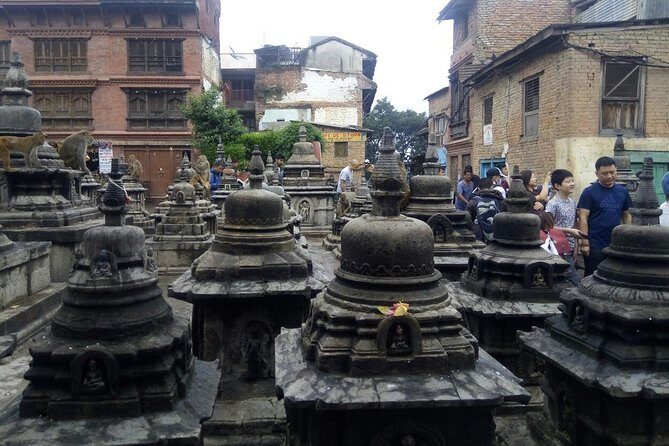
Next up is Swayambhunath Stupa, often nicknamed the Monkey Temple. This is one of Nepal’s most sacred Buddhist sites, and the atmosphere matches the reputation. The stupa area is described as full of shrines and monasteries, and it’s packed with religious details—so even when you’re taking photos, the best experience is slowing down enough to notice how the space is layered.
Swayambhunath is also a classic “look up and look around” stop. The tour information notes Nepal’s largest image of Sakyamuni Buddha sitting on a high pedestal on the west side of the stupa. You’ll also see the area filled by shrines, monuments, chaityas, and statues of Hindu and Buddhist deities such as Manjushri and Saraswati.
If you have limited mobility, plan conservatively. The stupa is on a hill, and you might find steps or uneven walking as you move between viewpoints and shrines. Your guide can help you keep the route manageable, but this is still a temple complex that rewards comfortable shoes.
One practical tip: bring something light for the morning. Even if the day warms up later, the early start and hill views can mean breezes and sudden temperature shifts.
Patan Durbar Square: architecture with both Hindu and Buddhist threads
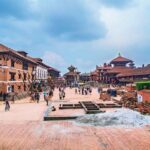
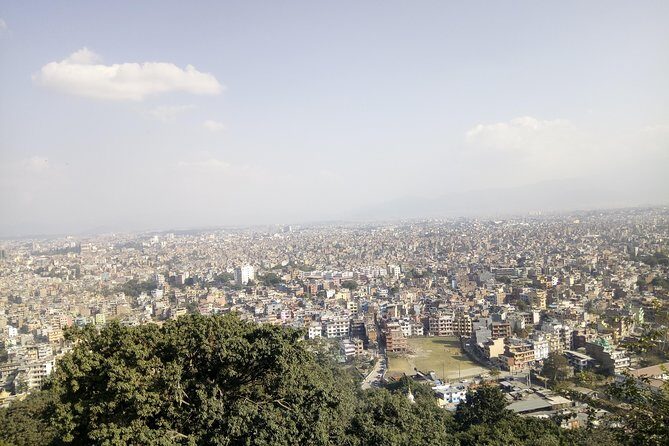
After Swayambhunath, the tour heads to Patan, with time at Patan Durbar Square and stops tied to major monuments. Patan is regarded as one of the oldest Buddhist cities in the world, and the experience here reflects that overlap between traditions.
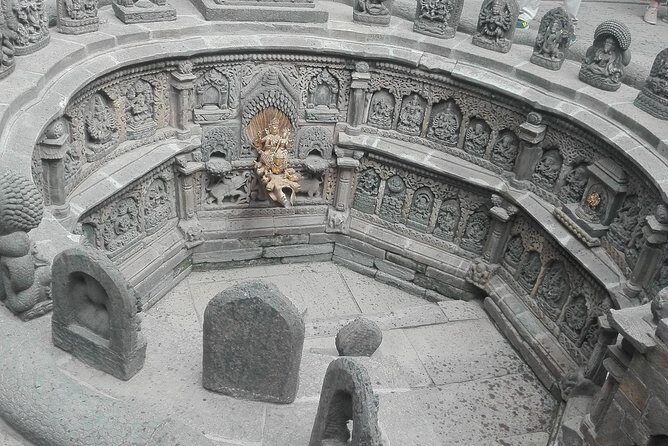
Patan Durbar Square is where the day gets especially “architectural.” The information emphasizes Hindu shrines, Buddhist monuments, and a lot of carved detail—so it’s a great counterbalance to the earlier stupa setting. This is also where the tour leans into museum time: you’ll visit the Patan Museum, described as one of the best museums in Asia, and it’s specifically noted for holding numerous bronze statues and religious objects.
There’s also mention of the Krishna temple in this Patan set of experiences. That matters because Patan isn’t just one building; it’s a system of courtyards, temples, and artworks that make sense best when you get context. A licensed guide helps you connect the dots between the carvings, the religious symbolism, and the overall layout.
The main drawback here is pace. Four UNESCO stops means you won’t linger for hours at every corner. If you love museums, I’d prioritize Patan Museum time and trust your guide to highlight what’s most important among the many objects on display.
Boudhanath Stupa: 36 meters of Buddhist devotion
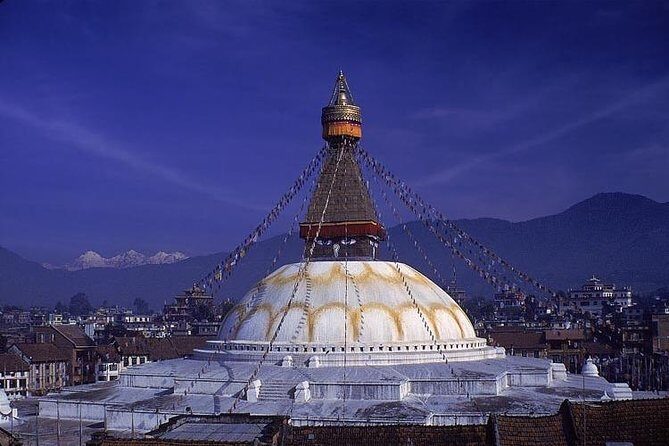
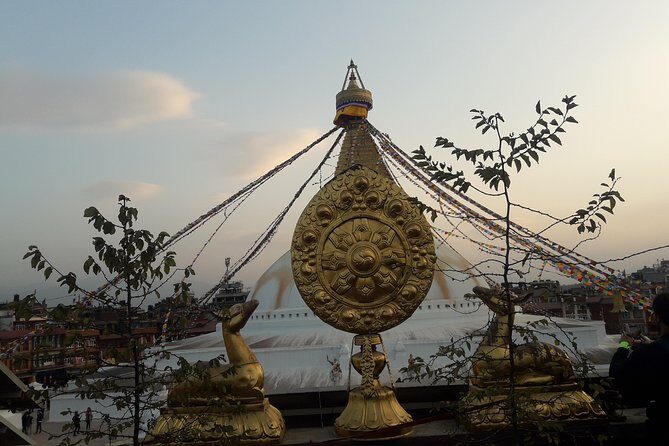
The final UNESCO anchor is Boudhanath Stupa, a massive site that dominates the skyline. The tour calls out the Buddha monument as about 36 meters high, and it notes that the stupa is also known as Chorten Chenpo, meaning Great Tower / Great Stupa.
Boudhanath is famous for atmosphere because it works like a daily hub. Pilgrims from India and China visit for ceremonies, and you’ll feel that long-distance devotional pull the moment you arrive. This stop is also a powerful place to stop and just watch. People circle the stupa in prayer, families pause, and monks may be in motion around the complex.
What you’ll love here is the combination of scale and symbolism. Early in the day you saw intimate temple life at Pashupatinath and shrine density at Swayambhunath. At Boudhanath, the vibe shifts to “big, shared, and steady.” That makes it a strong closing act before you return to your hotel.
Practical note: even if you don’t climb anything, Boudhanath still means time on your feet. Build in short breaks, and let your guide know if you need a slower pace.




Transport, guide style, and the value of included dinner
A private vehicle is a big deal on a day like this. It reduces decision fatigue: you’re not trying to map routes between four distant sacred sites, and you’re not timing taxis around a schedule that starts at 5:15am.
Your guide is also part of the value. The tour includes a seasoned, government licensed guide with proper English or French speaking skills. Multiple past experiences praised a guide named Bijay for being friendly, professional, and strong in French, and for knowing Nepal in a way that turns stops into stories instead of checkboxes.
One more included item that helps: bottled mineral water during the tour, plus entrance fees and government taxes for the four UNESCO sites. For many people, that’s where guided tours become a bargain—because you’re paying for time saved and hassle avoided, not just transport.
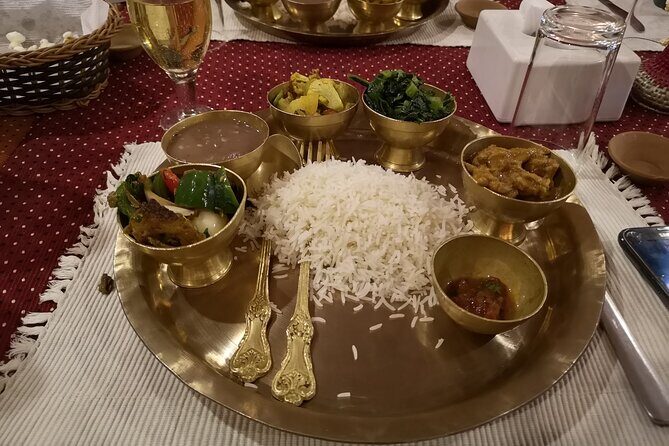
Food is where you’ll want to think ahead. The package includes dinner at a Nepali cuisine restaurant in Nepali style. But lunch isn’t included, and the tour also doesn’t list beverages or snacks beyond the water. So if you’re planning for a long morning on temple time, you’ll likely want to budget for lunch or snacks on the go.
At the end of the day, you’ll return to your hotel. If you still have energy, the tour info suggests adding a stroll and shopping in Kathmandu’s colorful bazaar area—an easy way to keep the day feeling real, not just ceremonial.
Price and logistics: is $128 a good deal?
At $128.00 per person for roughly a full day, this tour is priced like a “do it cleanly” option: you pay for the private vehicle, the licensed guide, the UNESCO entrance fees, taxes, and dinner. For a one-day plan, that can be better value than piecing it together yourself—especially if you’re not excited about coordinating tickets and guides across four major sites.
The value is strongest if:
- You want four UNESCO locations without juggling transport and admission.
- You value an English/French guide to explain what you’re seeing.
- You prefer to avoid lunch-planning stress by knowing dinner is already included.
The main consideration is time. This is a tight schedule. If you want slow wandering, long museum time, or lots of repeat visits to one site, you might feel the day is “moving.” Also, because lunch isn’t included, your real spend may creep upward for snacks.
So I see this as a good choice if your goal is one efficient, culturally grounded day in Kathmandu Valley UNESCO—with less friction than DIY.
Who this Kathmandu Valley UNESCO day tour is best for
This tour is described as suitable for people from children to busy adults and even for delicate elderly. That doesn’t mean it’s effortless—temples involve walking and stairs—but it does suggest the structure is flexible enough for different needs, especially with a guide coordinating the pace.
It’s a great fit for:
- Families who want a guided path through major sites.
- First-time visitors who want the big-name UNESCO locations in one day.
- People who care about religious meaning, not only architecture photos.
If you’re a hardcore “spend hours per site” type, you may prefer a longer itinerary. But for a first Kathmandu Valley day, this gives you strong coverage.
Should you book? My practical take
Book it if you want a single-day Kathmandu Valley UNESCO plan that’s efficient, guided, and fairly included—especially with entrances handled and dinner included. The early start can feel intense, but it’s the price you pay to hit Pashupatinath, Swayambhunath, Patan Durbar Square, and Boudhanath without turning your day into a logistics project.
Skip or reconsider if lunch timing is a dealbreaker for you or if you strongly dislike rushed temple hopping. In that case, you might do better with fewer stops and more hours at each one.
FAQ
What time does the Kathmandu Valley UNESCO tour start?
The tour starts at 5:15am.
Where is the meeting point?
The meeting point is Tribhuvan Airport, Kathmandu, Nepal.
Is pickup offered?
Yes, pickup is offered.
How long is the tour?
It’s listed as 1 day (approx.).
Which UNESCO sites are included?
The tour covers Pashupatinath Temple, Swayambhunath Stupa, Patan Durbar Square (including Patan Museum and Krishna temple), and Boudhanath Stupa.
What’s included in the price?
Included are entrance fees for four UNESCO sites and government taxes, a private vehicle, a government licensed guide who speaks English or French, bottled mineral water, and dinner (Nepali cuisine).
What isn’t included?
Tips for the guide and driver are not included, and lunch, beverages, and other snacks aren’t included.
Is it a private tour?
Yes. It’s described as private, meaning only your group participates.