REVIEW · KATHMANDU
Mardi Himal Trek
Book on Viator →Operated by Ace the Himalaya · Bookable on Viator
Mardi Himal feels quieter than the big trails. This trek sits south of the Annapurna Base Camp route, so you get long stretches with far fewer hikers, and I especially love the sense of quieter trekking. The payoff is the Mardi Himal Base Camp area, where the mountain views feel close enough to study.
One thing to plan for: mornings get cold fast, and higher ridges can hold snow depending on season, so pack for real temperature swings and keep an eye on the weather window.
In This Review
- Key highlights worth your attention
- Why Mardi Himal Trek Feels Quieter Than Annapurna Base Camp
- Price and Logistics: What Your $821.34 Really Covers
- Kathmandu Meeting Day and the Paperwork You Need Ready
- Kathmandu to Pokhara: The Long Drive That Sets the Rhythm
- Kande to Australian Camp: First Mountain Shock Above the City of Lakes
- Forest Camp and Deurali: Oak and Rhododendron Shade to Higher Cold Air
- Low Camp, High Camp, and Mardi Base Camp: The Climb That Pays
- High-Point Day, Descent to Sidhing, and Return to Kathmandu
- Guides, Porters, and the Small Comforts That Make It Work
- What to Pack and How Weather Can Change Your Comfort
- Should You Book the Mardi Himal Trek With Ace the Himalaya?
- FAQ
- Where does the experience start and end?
- What is the duration of the Mardi Himal Trek?
- How many people are in the group?
- What accommodations are included in Kathmandu and Pokhara?
- Which meals are included during the trek?
- What trekking gear is provided?
- Are permits included?
- What should I bring related to travel insurance?
- Are tips included?
- What is the cancellation policy?
Key highlights worth your attention
- A lesser-walked route near Annapurna Base Camp means you’re not constantly passing tour groups
- Forest-to-grass ridge hiking keeps the scenery changing as you gain altitude
- Camp-to-camp progression (Low Camp, High Camp, then the upper viewpoint) helps you acclimatize step by step
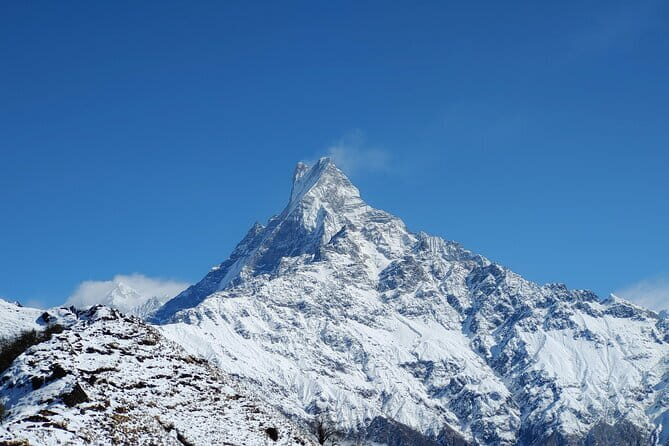
- Up-close views of Annapurna South and Machhapuchhre from the higher ridges
- Support that stays practical: licensed English guide plus a porter for every two clients
Why Mardi Himal Trek Feels Quieter Than Annapurna Base Camp
If you’re craving the Annapurna region but you don’t want the typical trail crowd, Mardi Himal is a smart pivot. It runs south of the more famous Annapurna Base Camp corridor, which translates into fewer people on the path—especially in the favorable trekking seasons. That changes the whole vibe. You hike, you stop, you look, and the mountains don’t feel crowded out.
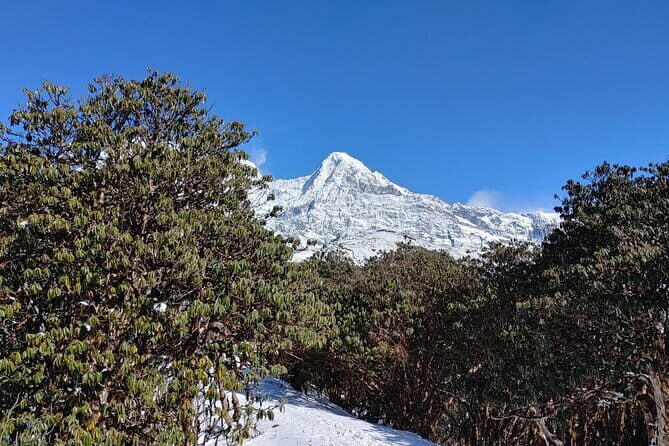
The route also gives you a real mix of trekking moods. Early on, you’re moving through a quiet jungle section with oak, maple, and rhododendron. Later, you’re on open ridges where the weather hits you more directly. That shift—shade to sun, forest floor to snowy-looking grass in winter—keeps the trek from feeling repetitive.
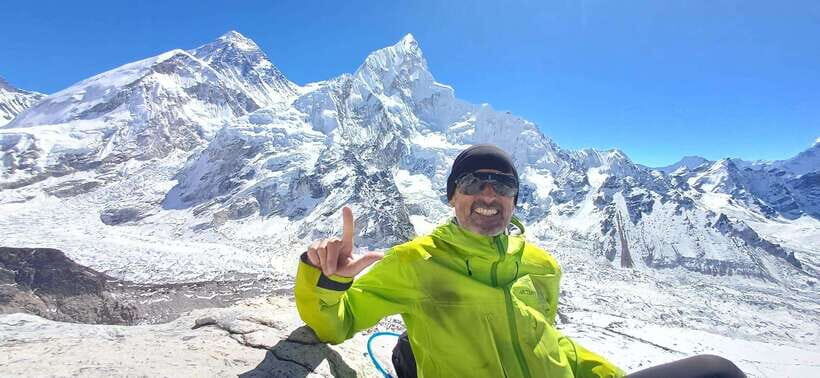
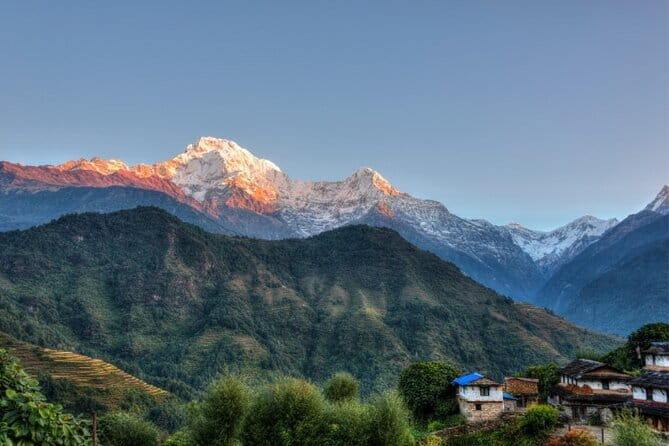
And when you finally reach the higher viewpoints, the scenery feels like you earned it. The big attraction isn’t just seeing the Himalaya. It’s getting close enough to catch clear sightlines: Annapurna South, Machhapuchhre (Fishtail), and a wide panorama from the upper viewpoint.
You can also read our reviews of more hiking tours in Kathmandu


Price and Logistics: What Your $821.34 Really Covers
At $821.34 per person, this trek is priced like a “guided and organized” Nepal package, not a bare-bones DIY plan. What you get matters for value: airport transfers, Kathmandu and Pokhara hotels, a licensed English-speaking guide, permits, and a porter (one porter for every two clients). You also get a lot of the day-to-day friction removed—transport between key towns, trail logistics, and support on the hill.
Meals are partially included during the trek: breakfast is included for 9 days, with lunch included for 6 days and dinner included for 6 days. You’re not constantly figuring out where to eat at the end of a long walking day.
You also receive trek gear support: a down jacket and a sleeping bag are provided (returned at the end). You get a duffel/kit bag and sun hat to keep.
Two practical considerations on the logistics side:
1) The package lists airfare from Kathmandu to Lukla and back. Your trek start described here runs through Pokhara to Kande, so you should confirm how the flight fits your exact date and routing.
2) Lunch and dinner in Kathmandu and Pokhara aren’t included, and tips for your guide and driver are expected.
Kathmandu Meeting Day and the Paperwork You Need Ready
Your first morning starts with a straightforward Kathmandu arrival flow. An airport representative meets you at Tribhuvan International Airport holding an Ace the Himalaya signboard, then you’re transferred by private tourist vehicle to your hotel.
On arrival day, plan on a pre-trek meeting. This is where you meet your trek leader/guide and get your questions answered. It also matters because you’ll handle paperwork: you’ll sign a legally binding trip form and a non-liability disclaimer. To do that smoothly, bring your passport, three copies of passport-size photos, and a readable copy of your travel insurance policy.
You’ll also receive trek basics here: a trek duffel bag and a cap. That’s one less thing to pack or buy before you get on the trail.
The start time is listed as 8:00 am, so treat the first day as an organized orientation day, not a casual wander-around-the-city day.
Kathmandu to Pokhara: The Long Drive That Sets the Rhythm
After Kathmandu, you head to Pokhara by tourist bus. It’s a long one—about 200 km and roughly 6–7 hours. The upside is you’re moving through varied terrain instead of sitting on one flat highway day after day. You’ll pass rivers like the Trishuli and Marshyangdi, plus smaller streams and tributaries along the way.
This transfer is more than just a road trip. It’s your transition from city pace to trekking pace. By the time you arrive, you can settle into Pokhara’s hotel and rest your legs before the first serious uphill.
From a planning standpoint, Pokhara is also where you’ll get your trekking rhythm locked in: tomorrow you go to Kande by jeep (about an hour), then the trek begins.
Kande to Australian Camp: First Mountain Shock Above the City of Lakes
Day three is where the trek “clicks” for most people. You start with the jeep ride to Kande, then you walk uphill toward Australian Camp.
That first trek segment is described as about 3 hours to Australian Camp. It’s a manageable warm-up: enough effort to feel you’re earning the altitude, but not so long that it crushes your energy for the rest of the journey.
Australian Camp is known for views on clear days. From there, you can look out toward the Annapurna range, Machhapuchhre, and the Manaslu range. The surrounding hills are green in season, which matters because it softens the mountains visually at first—then the scenery tightens as you keep climbing.
If you like that “first big view” feeling, this is the day it happens.





Forest Camp and Deurali: Oak and Rhododendron Shade to Higher Cold Air
Day four takes you through the quieter, greener side of this trek. You’ll aim for Forest Camp with a walk that takes around 6–7 hours. The trail isn’t just one steady climb; it has rhythm. It goes slightly downhill toward Pothana (1950 m), then rises again toward Deurali (2100 m). After that, you follow the path marked toward Forest Camp.
The key detail here is the environment. You’re walking through a quiet jungle section with oak, maples, and rhododendrons. This is when the trek feels most sheltered—great if you want a calmer day with less exposed wind.
Then, as you near Forest Camp, you can feel how the air changes. The temperature tends to drop as you gain elevation, and your body starts to understand that the rest of the trek will ask for early starts and slower breathing.
Forest Camp itself is a place where you arrive, get your bearings, and wait for the next weather window to open.
Low Camp, High Camp, and Mardi Base Camp: The Climb That Pays
This is the core of the Mardi Himal experience: a steady move upward with big view moments on the way.
Low Camp day (after the forest)
On day five, after a steep climb for a few hours, the trail comes out of the forest onto grassy ridges. Some seasons mean snow can sit on the ridge—so your footing and clothing choices matter. The mountains feel closer as you walk toward Low Camp. In the afternoon, you reach Low Camp, then you acclimatize with a tea break and soak in views of Annapurna South and Machhapuchhre.
High Camp day (above the tree line)
Day six starts early, with a sunrise-focused vibe. After breakfast, you walk grassy ridges that can be snow-filled in winter. The route ascends for 4–5 hours up to High Camp, and you’re described as walking above tree line. That’s where cold air hits harder, so this is one of the days where warm layers and pace control matter most.
Upper viewpoint and Mardi Base Camp (the accomplishment day)
Day seven is a payoff day. You wake early and walk for a few hours to the upper viewpoint or Mardi Himal Base Camp area. From here, the Annapurna Sanctuary can be seen, and the panorama includes the south face of Mt. Annapurna, Himchuli, and Machhapuchhre. You spend a few hours up top, then return to High Camp for breakfast. After lunch and rest, you walk down about 2 hours to Low Camp.
This structure is a smart one for comfort. You don’t just sprint from camp to camp. You go up, get your view time, then come back down to reset.
High-Point Day, Descent to Sidhing, and Return to Kathmandu
On the last trekking day, your body learns gravity. Day eight starts with descent down the trail to Sidhing village, and it’s noted as a drastic change in elevation. You walk for about 5 hours, stop for lunch in Sidhing, then return to Pokhara by 4WD jeep.
That change matters: it’s not just “end of trek.” It’s a controlled finish that gets you off the mountain before fatigue turns your steps into sloppy decisions.
Day nine is the long-but-easy return arc. You take a tourist bus back to Kathmandu (about 7 hours). The plan also includes a farewell dinner in a traditional Nepalese restaurant with cultural performances. It’s a nice way to land the trip, especially after multiple days of simple meals and early night.
Day ten is straightforward: you’re dropped at Tribhuvan International Airport for your departure.
Guides, Porters, and the Small Comforts That Make It Work
The practical magic of this trek is how the team supports your hiking days. Your guide is licensed and leads in English, and you’ll also travel with a porter allocation of 1 porter for two clients. That matters because it keeps your hike focused on walking, not hauling.
The guide names that show up repeatedly include Ishwor, Ramesh, Rajan (with sherpas Suka and Bizal), Deepak Neupane, Krish, and Ram, with porter Kismat also mentioned. I can’t predict which guide you’ll get, but the theme is consistent: people show up attentive and responsive, with a pace that feels safe and manageable.
This is also where the included gear support helps. A provided down jacket and sleeping bag means you’re not stuck buying winter-style equipment in Nepal. You’ll still need personal trekking gear, but the heavyweight items are handled.
Finally, the group limit is capped at 15 travelers. That size keeps things organized without turning the trek into a moving crowd.
What to Pack and How Weather Can Change Your Comfort
The trek runs through forests and then climbs above tree line. That means weather can swing your comfort quickly. The plan specifically notes snow on ridges in winter and cold temperatures as you get higher. So build your clothing system around layers you can adjust—something you can zip up early, then loosen as you warm during climbs.
You’ll have a down jacket and sleeping bag provided, but remember they’re to be returned, so don’t treat them like a keepsake item.
Also plan for the reality of a weather-dependent trek. The experience requires good weather, and if it’s canceled due to poor conditions, you’ll be offered a different date or a full refund. That doesn’t mean you should expect delays, but it does mean you should avoid tying the trek to an extremely rigid flight schedule.
Service animals are allowed, and the activity is described for moderate physical fitness. So if you’re comfortable with sustained walking and uphill days, you’re in the right zone.
Should You Book the Mardi Himal Trek With Ace the Himalaya?
I’d book this trek if you want:
- Fewer crowds than the classic Annapurna Base Camp trail area
- A route that changes character from forest walking to open ridges
- Real mountain time at Low Camp, High Camp, and the upper viewpoint / Mardi Himal Base Camp area
- A guided setup with a porter and included permits, meals during the trek, and key gear support
I’d think twice if:
- You dislike early mornings and cold air at altitude
- You need absolute certainty on weather-dependent mountain conditions
- You prefer to fully control your own logistics (because this one is built around organized transport, set accommodation, and included planning)
One last move that protects your trip: before you pay or finalize plans, confirm the routing details around the listed Kathmandu–Lukla airfare versus the described trail starting points (via Pokhara and Kande). That’s the only “watch this” area in the logistics picture.
FAQ
Where does the experience start and end?
It starts at Tribhuvan International Airport in Kathmandu, Nepal, with an airport representative meeting you there. The activity ends back at the meeting point.
What is the duration of the Mardi Himal Trek?
The trek runs for about 10 days (approx.).
How many people are in the group?
The maximum group size is 15 travelers.
What accommodations are included in Kathmandu and Pokhara?
You stay in twin-share or double rooms in three-star hotels in Kathmandu for 2 nights and in Pokhara for 2 nights. During the trek, you stay in guesthouses in twin-share and dormitory rooms for 5 nights.
Which meals are included during the trek?
Breakfast is included for 9 days. Lunch is included for 6 days, and dinner is included for 6 days.
What trekking gear is provided?
A down jacket and a sleeping bag are provided for the trek and are to be returned. You also receive a duffel/kit bag and a sun hat that you keep.
Are permits included?
Yes. Permits for trekking are included.
What should I bring related to travel insurance?
Travel insurance is not included, but you will be asked to provide a readable copy of your travel insurance policy at the pre-trek meeting.
Are tips included?
No. Tips for the guide and driver are expected.
What is the cancellation policy?
You can cancel up to 24 hours in advance for a full refund. If you cancel less than 24 hours before the experience’s start time, the amount paid is not refunded. The trek also requires good weather, and if it’s canceled due to poor weather, you’ll be offered a different date or a full refund.
If you want, tell me your travel month and fitness level, and I’ll suggest a packing checklist and a realistic daily pace for this kind of Mardi Himal route.