REVIEW · KATHMANDU
20 Days Private Kanchenjunga Circuit Trek
Book on Viator →Operated by Magical Nepal · Bookable on Viator
Kanchenjunga feels far from the usual trail. This private 20-day circuit in Eastern Nepal tracks through the Kanchenjunga Conservation Area, pushing you to both valleys’ base camps and several high passes with views of the world’s third-highest peak.
I like the way the route builds in real acclimatization time (you don’t just rush up and hope). I also like that you get organized logistics with a dedicated guide for 19 days, plus tea house accommodation and core meals handled for most of the trek.
One consideration: this is a serious high-altitude trek. You’re aiming for camps around 5,140 meters at Pangpema (North Base Camp), and the itinerary includes multiple high points and long travel legs, so you need strong fitness and a careful pace.
In This Review
- Key Highlights You’ll Feel on This Trek
- Why the Kanchenjunga Circuit Feels Special for People Who Like Remote
- Price and What You Actually Get for $2,560
- Getting There: Kathmandu to Bhadrapur to Ilam (Day 1)
- The Approach Legs: Ilam to Taplejung, Then Chirwa and Lelep (Days 2–4)
- Into the Trek Proper: Amjilosa, Gyabla, and the Push Toward Ghunsa (Days 5–7)
- Acclimatization Days That Make the Higher Camps Possible (Days 8–10)
- Lhonak and the North Base Camp at Pangpema (Days 11–13)
- Sele Le and Cheram: The High Pass Transition Toward the South (Days 14–15)
- The South Base Camp Day Trip and Why It’s Worth the Effort (Day 16)
- Torongding and Yamphudin: Villages That Add Texture to the Circuit (Days 17–18)
- Fikal and the Finish Into Kathmandu (Days 19–20)
- The Guide Factor: Why Narayan and Dil’s Flexibility Matters
- Accommodation and Meals: Tea Houses and Food You Can Count On
- Who This Trek Is Best For (And Who Should Think Twice)
- Should You Book the 20 Days Private Kanchenjunga Circuit Trek?
- FAQ
- Where does the tour start and end?
- How long is the trek?
- Is this a private trek?
- What’s included in the price?
- Are drinks included?
- Do you get pickup?
- What about food needs like vegetarian or vegan?
- Are there any accessibility or animal restrictions?
- Can I cancel for a full refund?
Key Highlights You’ll Feel on This Trek
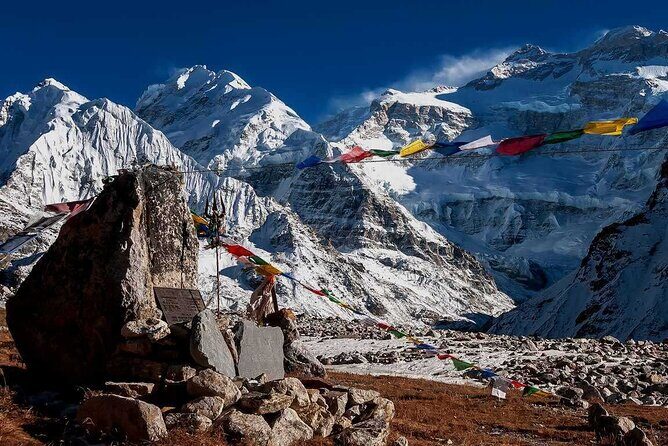
- North Base Camp at Pangpema (about 5,140m) with big views of the north face of Kanchenjunga
- A guided, private itinerary managed for weather and health realities, like the flexibility shown by guides Narayan and Dil
- Plenty of acclimatization nights in Ghunsa and Kangbachen/Kambachen before going higher
- Tea house rhythm with meals included for 19 days on the mountain side
- A true circuit feel: Chirwa → Lelep → north valley and then back through villages like Cheram, Torongding, Yamphudin, and Fikal
Why the Kanchenjunga Circuit Feels Special for People Who Like Remote
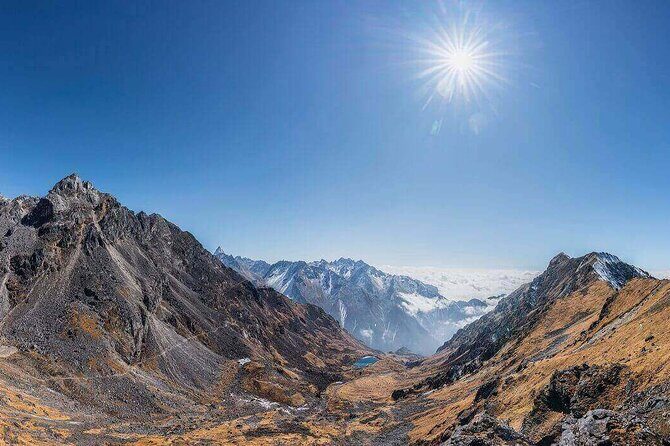
The Kanchenjunga Circuit isn’t a trek for checklist photos. It’s a trek for people who want fewer people, more time in small places, and a route that feels like you’re working through a remote region step by step. The big draw is obvious: you’re in the Kanchenjunga Conservation Area, and you’ll be close to the drama of glaciers and high country.
But what makes this itinerary compelling is how it targets both sides of the mountain story. You’ll go to Pangpema (Kanchenjunga North Base Camp) and later do a day trip to the South Base Camp from Cheram. That lets you experience two valleys and two different angles on the mountain, without turning the whole trek into nonstop rushing.
If you care about culture too, the villages on the way matter. Stops like Ghunsa, Yamphudin, and Fikal are where you’ll see how different ethnic groups live here, and in Yamphudin in particular, the mix includes Limbu, Sherpa, Rai, and Gurung.
You can also read our reviews of more private tours in Kathmandu
Price and What You Actually Get for $2,560
At $2,560 for about 20 days, you’re paying for a private trek with a guide and the paperwork that makes it possible. From the included items, the value looks strongest if you want fewer headaches and more consistent day-to-day structure.
Here’s what your price covers (based on the provided details):
- Flights between Kathmandu and Bhadrapur
- Ground transfers on public bus for key legs (including parts of the approach and later movement from Yamphuding toward Fikal)
- A guide for 19 days
- All required permits for the trek
- Tea house accommodation for 19 days on the trek
- Meals: breakfast (20), lunch (19), dinner (19)
What it does not cover:
- Hot and cold drinks on the trek
That last line is small but important for planning. On a long high-altitude walk, drinks add up, and you don’t want surprise costs when the days get colder.
Getting There: Kathmandu to Bhadrapur to Ilam (Day 1)
The trek begins with a short hop and then a longer overland push, which is a common pattern for getting into Eastern Nepal without wasting days. Day 1 includes a 45-minute flight from Kathmandu to Bhadrapur, then a drive of about 5 hours to Ilam, with an overnight in Ilam.
Why this matters: Ilam is a staging point. By the time you’re there, you’re already out of the Kathmandu intensity. It’s a good buffer day before you start facing longer travel segments and then the hiking days.
The Approach Legs: Ilam to Taplejung, Then Chirwa and Lelep (Days 2–4)
Day 2 moves from Ilam to Taplejung, about 240 km (150 miles), typically 9 to 12 hours depending on road conditions and traffic. This is the kind of long travel day that makes the trek feel more “real.” You’ll likely spend most of the day seated, watching the scenery change.
On Day 3 you reach Chirwa, described as a charming village with a few tea houses and lodges for trekkers. This is less about sightseeing and more about settling in—eating local food, walking a bit around the village, and getting your body into trek mode.
Day 4 brings you to Lelep, the headquarters of the Kanchenjunga Conservation Area. The Chirwa to Lelep segment is about 20 km (12.4 miles) and usually takes 6–7 hours. Lelep’s role is practical: it’s where the trek really feels tied to the conservation setting and the structured corridor of the area.
Into the Trek Proper: Amjilosa, Gyabla, and the Push Toward Ghunsa (Days 5–7)
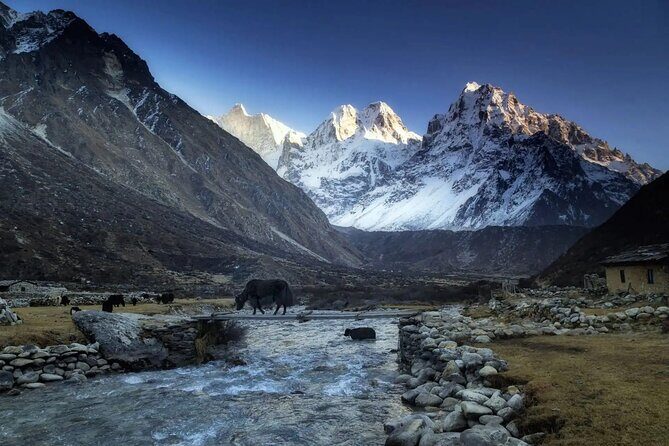
Day 5 heads to Amjilosa at about 2,310 meters. The Lelep to Amjilosa stretch is around 13 km, typically 6–7 hours. This is your first real rise where altitude starts to become a factor in how you breathe during movement, even if you’re still not at the highest camps.
Day 6 takes you to Gyabla, continuing deeper into the Kanchenjunga Conservation Area. The emphasis here is on transitions: the days connect villages and trail segments that gradually shift you away from lower-country patterns.
Day 7 lands you in Ghunsa. Ghunsa is described with traditional wooden houses and basic tea houses and lodges. It’s also positioned as a rest and acclimatization stop before the higher sections. For many people, Ghunsa is where the trek stops feeling like travel and starts feeling like trekking.
You can also read our reviews of more hiking tours in Kathmandu
Acclimatization Days That Make the Higher Camps Possible (Days 8–10)
Day 8 is an acclimatization day in Ghunsa at about 3,475 meters. This isn’t wasted time. Up high, small delays can save big problems later. The itinerary’s logic is clear: you build tolerance gradually before you push higher.
Day 9 takes you to Kangbachen. The route follows a trail through alpine meadows, moraines, and along the Ghunsa River, which is a helpful reminder that you’re crossing through different types of high-country terrain, not just climbing.
Day 10 adds another acclimatization night in Kambachen/Kangbachen, with an altitude around 4,050 meters. This second acclimatization stop is a strong sign you’re not being rushed. It’s especially valuable because the itinerary then sets you up for Lhonak and the higher base camp area.
Lhonak and the North Base Camp at Pangpema (Days 11–13)
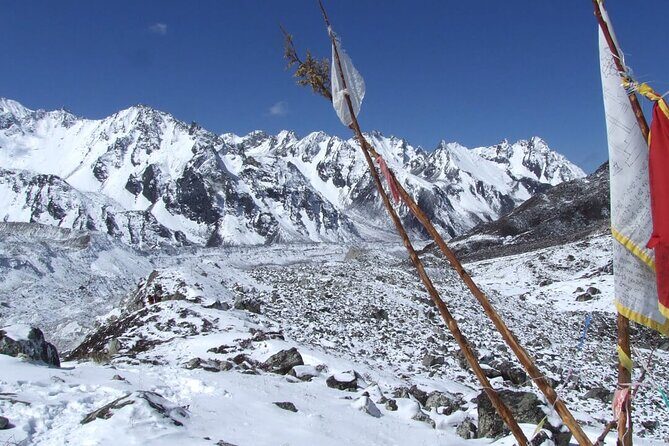
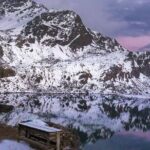
Day 11 brings Lhonak. It’s described as a stop for trekkers going to the Kanchenjunga base camps, with incredible views of mountains, glaciers, and high-altitude barrenness. Even though you may not stay long, this kind of camp acts like a “preview” of the high country you’re about to enter.
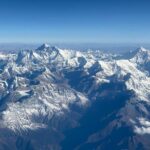
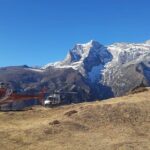
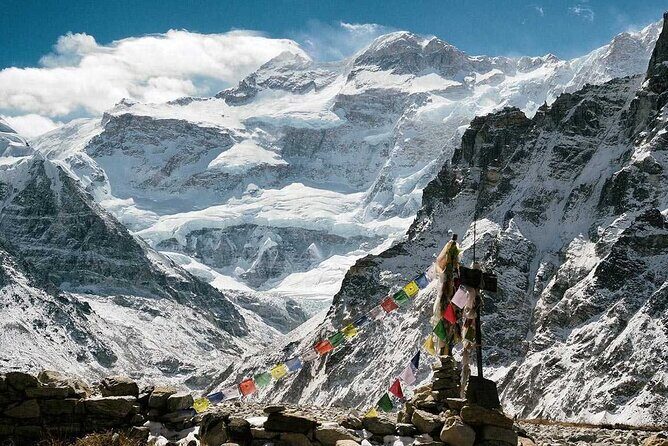
Day 12 is the big moment: Kanchenjunga North Base Camp (Pangpema) at about 5,140 meters. You’re set up at a high-altitude campsite, and the focus is views of the north face of Kanchenjunga (about 8,586 meters). This is where the trek earns its name. You’re not just in the region—you’re at the edge of it.
Day 13 returns you downward from Lhonak to Ghunsa, with an overnight in Ghunsa. That descent matters. Coming down is one of the smartest ways to reduce altitude stress after a high push.
Sele Le and Cheram: The High Pass Transition Toward the South (Days 14–15)
Day 14 puts you at Sele Le, described as a high-altitude campsite serving as a stopover en route to the south and north base camps via high passes including Sinion La, Mirgin La, and Sinelapche La. Even without exact pass elevations listed for you here, the takeaway is clear: this is where the route crosses the high divide.
Day 15 reaches Cheram at about 3,870 meters. The Sele Le to Cheram stretch is about 10 km, typically 7–8 hours. Cheram is a small village, and it becomes your base for the South Base Camp day trip. I like this structure: you get enough time at a workable altitude that the side mission to South Base Camp feels realistic.
The South Base Camp Day Trip and Why It’s Worth the Effort (Day 16)
Day 16 is a day trip to Kanchenjunga South Base Camp, then overnight back in Cheram. A day trip is often the right call here. It keeps the itinerary balanced: you don’t have to add more nights at the most demanding elevations, but you still get the payoff of reaching the South Base Camp area.
For readers who want both valleys, this is one of the itinerary’s best choices. It gives you breadth—north and south—without turning the second base camp into a whole extra expedition.
Torongding and Yamphudin: Villages That Add Texture to the Circuit (Days 17–18)
Day 17 moves you through forests, rivers, and small settlements down toward Torongding. The key point is the change in feel. After the high passes and base camp focus, you get more variety in the walking environment and the daily rhythm.
Day 18 reaches Yamphudin, described as culturally diverse, including residents from Limbu, Sherpa, Rai, and Gurung. This is the kind of stop that helps you understand the human side of the trek. You’re not just passing through altitude; you’re moving through communities with distinct backgrounds.
Fikal and the Finish Into Kathmandu (Days 19–20)
Day 19 brings Fikal (spelled Fikal/Fickle). You can drive from Yamphudin to Fikal. That short-circuit of road transfer is practical. It reduces extra trekking days near the end, which is exactly when your body wants less.
Day 20 returns you to Kathmandu. It starts with a 2-hour drive from Fikal to Bhadrapur, then an afternoon flight back to Kathmandu. The experience ends with a final goodbye at Tribhuvan International Airport.
The Guide Factor: Why Narayan and Dil’s Flexibility Matters
This trek is big on planning, but reality still happens: weather changes, bodies react differently, and conditions at higher elevations can shift. The guide role becomes crucial here.
From the feedback you shared, guide Narayan is described as highly proficient with the trail details and culturally strong storytelling. Guide Dil is praised for making plan adjustments when weather threatened the original plan and when health conditions of participants changed. That kind of flexibility is gold on a circuit trek, because the difference between a good and a hard day can be just a few hours of decision-making.
So if you’re the type who wants to feel safe and guided without turning the trek into rigid marching, this private format with a long guide presence is a real advantage.
Accommodation and Meals: Tea Houses and Food You Can Count On
Your trek includes tea house accommodation for 19 days and meals for almost all days: breakfast (20), lunch (19), dinner (19). That’s helpful because it reduces logistical friction. You can focus on walking and rest rather than negotiating meals from scratch every day.
One small planning note: drinks are not included, which can affect daily spending. If you rely on frequent hot tea or cold drinks during rests, budget for that early so it doesn’t nag you during the week that you’re most tired.
Who This Trek Is Best For (And Who Should Think Twice)
This is built for people with strong physical fitness. The itinerary includes significant altitude moments like Pangpema at about 5,140 meters, plus high passes and multiple trekking days connected with long approach transfers.
You’ll likely love it if:
- You want a private trek with a guide for most of the journey
- You care about going to both Kanchenjunga base camps
- You’re comfortable with acclimatization days and a slower, altitude-smart approach
You might want to reconsider if:
- You want a trip with low physical demands
- You prefer city-style comfort and don’t want tea house living
- You’re not ready for high-altitude risk management, since the trek explicitly reaches very high elevations
Should You Book the 20 Days Private Kanchenjunga Circuit Trek?
I’d book it if your top priorities are a remote circuit, serious base camp goals, and private guidance that handles the real-life variables of trekking. The inclusion list is also strong for value: permits, guide, tea house stays, and most meals are already built in, so you’re not piecing together the core logistics yourself.
If you’re booking, do it with your eyes open about altitude and the fact that drinks cost extra. Also, commit to the acclimatization rhythm. The trek’s structure is designed for that, and it’s one of the reasons this route can be both challenging and doable.
If you want a circuit that feels more like moving through a remote living region than chasing landmarks, Kanchenjunga is the right kind of hard.
FAQ
Where does the tour start and end?
The tour starts at Tribhuvan Airport, Kathmandu, Nepal and ends at Tribhuvan International Airport (Ring Rd, Kathmandu).
How long is the trek?
The duration is about 20 days.
Is this a private trek?
Yes. It’s listed as a private tour/activity, so only your group participates.
What’s included in the price?
Included items are guide for 19 days, all required trek permits, tea house accommodation for 19 days, and meals (breakfast 20, lunch 19, dinner 19), plus transport segments including flights between Kathmandu and Bhadrapur and public buses for certain legs.
Are drinks included?
No. All hot and cold drinks on the trek are not included.
Do you get pickup?
Yes. Pickup offered is listed as a feature.
What about food needs like vegetarian or vegan?
Vegetarian, Vegan, and Gluten-free food are available on request.
Are there any accessibility or animal restrictions?
Service animals are allowed. The tour also notes that you should have a strong physical fitness level.
Can I cancel for a full refund?
There is free cancellation. You can cancel up to 24 hours in advance for a full refund. Within 24 hours, refunds are not listed.