REVIEW · KATHMANDU
Annapurna Base Camp Trekking – 14 Days
Book on Viator →Operated by Annapurna Foothills Treks Expedition Pvt. Ltd. · Bookable on Viator
Fourteen days later, the Annapurna peaks feel close. This 14-day Annapurna Base Camp trek is designed for steady altitude gains, moving you from Kathmandu’s bustle into rhododendron and bamboo country, then up into a glaciated high basin around the 4,130m camp.
I especially like the built-in pacing that helps acclimatization feel realistic, with an itinerary that climbs, then gives you a chance to adjust. I also like the practical tea-house setup: you sleep in simple but comfortable lodges, with meals handled so your mind stays on the trail instead of logistics.
One thing to consider: this is still a full trek at altitude. Even with careful planning, you’ll be walking 4–7 hours on several days, and the higher you go, the more your body will demand slower steps and more rest.
In This Review
- Key Things That Make This Trek Worth Your Time
- Why Annapurna Base Camp Feels Like More Than a Hike
- Price and What You Actually Get for $1,250
- A Smooth Start: Kathmandu, Then the Drive to Pokhara
- Nayapul to Ghorepani: Terraces, Rhododendron, and the First Big Walking Days
- Chhomrung to Dovan: Views When You Earn Them
- Machhapuchre Base Camp to 4,130m Annapurna Base Camp
- The Descent via Bamboo and Jhinu Danda (Where Relief Still Feels Like Work)
- Back to Pokhara and Kathmandu: You’ll Appreciate the Downtime
- Guides, Porters, and the Tea-House Setup That Keeps You Moving
- Altitude, Water, and Health: The Practical Stuff That Matters Most
- Seasons and Weather: When the Timing Fits the Trek
- Who This Trek Suits Best
- Should You Book This 14-Day Annapurna Base Camp Trek?
- FAQ
- What level of fitness do I need?
- How high does the trek get?
- Are meals included on the trek?
- What’s included in the trek package besides lodging and meals?
- Is drinking water provided?
- Do I need travel insurance?
- Is this a private trek?
Key Things That Make This Trek Worth Your Time
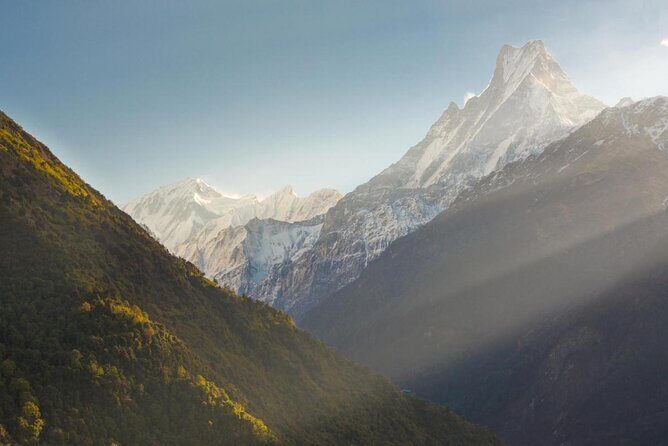
- Slow, altitude-aware itinerary that reaches Annapurna Base Camp (4,130m) with time to acclimatize
- Tea-house lodge trekking with full-board meals on the trail and twin-share rooms included
- Experienced Sherpa guidance and porter support, often highlighted in reviews as attentive and patient
- Thoughtful small extras like energy bars/snacks and fresh fruit during the trek
- All major permits and conservation fees handled, including TIMS and official documentation
- Practical drinking-water plan with Euro-guard filters and a clear hydration target
Why Annapurna Base Camp Feels Like More Than a Hike
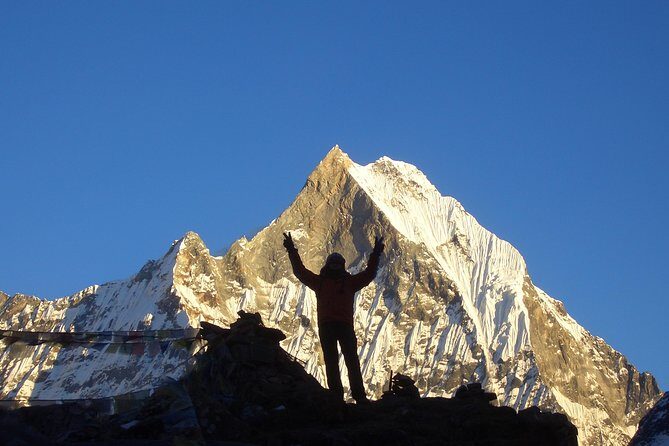
Annapurna Base Camp trekking works because it compresses a huge mountain story into a doable walk. You start in the Kathmandu Valley area, then move west toward Pokhara, and slowly climb through terraces and forests until you’re sitting at the base of big, glaciated walls.
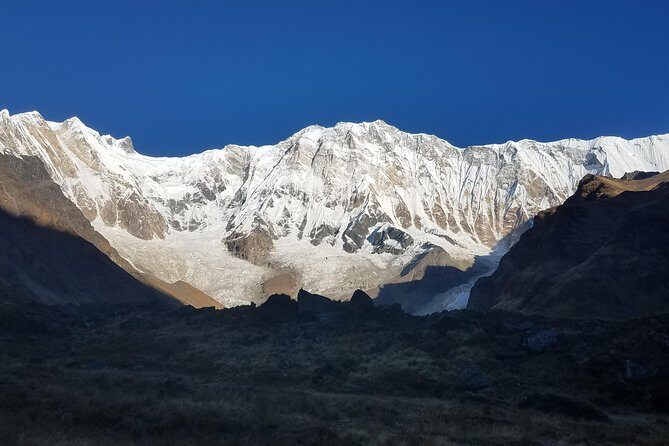
The best part is the feeling of proximity. At Annapurna Base Camp (a little over 4,000m, and specifically 4,130m on the itinerary day), you’re surrounded by a high glacial basin and multiple major peaks. Even if you’re not chasing summit ambitions, you get that close-to-the-mountains perspective that makes the whole effort feel worth it.
You can also read our reviews of more hiking tours in Kathmandu


Price and What You Actually Get for $1,250
$1,250 per person is not cheap, but it can be good value if you compare it to doing it yourself. This package covers air-conditioned ground transport, two nights each in Kathmandu and Pokhara (twin-share, bed and breakfast), plus full-board meals and lodge stays for nine trekking nights.
You also get the stuff that quietly costs time and money: an English-speaking Sherpa guide, a porter system (one porter for two trekkers), staff costs (salary, insurance, equipment, food, and accommodation), and official paperwork like the Annapurna Conservation Fee and TIMS permits. That’s a lot of friction removed.
What’s not covered matters too. Lunch and dinner in cities aren’t included, and beverages (including bottled water and soft drinks) are on you. Tips for guide/porters/drivers are also customary and not part of the package. If you’re the kind of traveler who already budgets for extra meals and tips, you’ll find the package pricing easier to swallow.
A Smooth Start: Kathmandu, Then the Drive to Pokhara
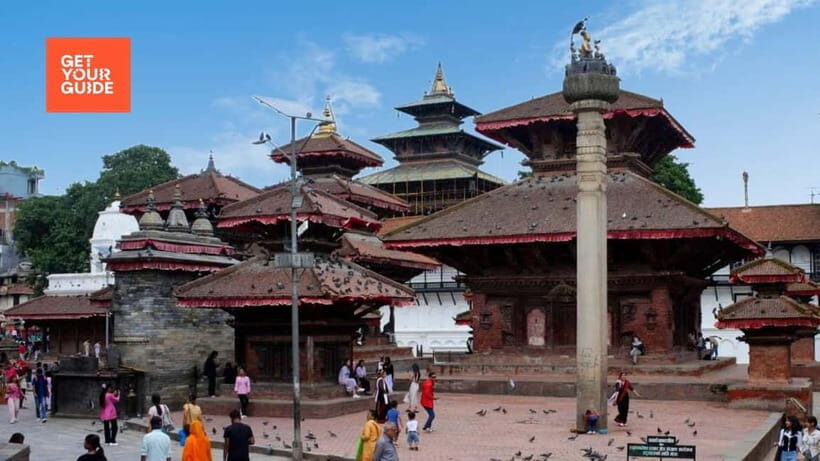
Day 1 is arrival in Kathmandu, and you’ll spend two nights total in the city at Hotel Holy Himalaya (twin-share, bed and breakfast). This matters more than people think. You’re not just landing; you’re also recovering from travel and getting organized before trekking starts.
Then comes Day 2: the drive to Pokhara (about 900m). Pokhara is a classic “gear reset” stop—banking hours before the walking begins, buying anything you forgot, and letting your body shift from city pace to mountain pace.
Day 3 keeps things moving. You drive to Nayapul, then start trekking to Hile (about 1,400m). This day is a gentle on-ramp, and that’s a good thing because it reduces the chance you’ll overdo it before the climb really starts.
Nayapul to Ghorepani: Terraces, Rhododendron, and the First Big Walking Days
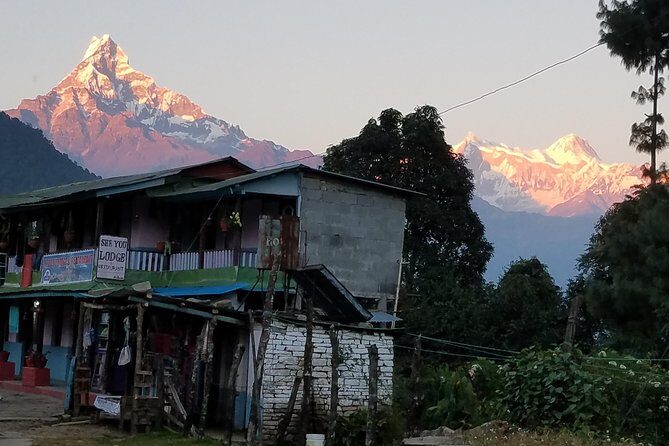
From Nayapul you head to Hile (around 3 hours), then Day 4 pushes higher to Ghorepani (about 2,855m) for roughly 6–7 hours. This stretch is where the trek shifts from foothills travel into proper mountain trekking rhythm.
Why Ghorepani is such a useful waypoint: it’s high enough to change the air and feel, but not yet the extreme altitude of base camp. The trail passes through the kinds of scenery Annapurna is known for—terraced fields, lush forests, and the rhododendron and bamboo mix mentioned for the region.
Day 5 continues the climb-to-stay pattern, moving to Tadapani (about 2,610m, roughly 5 hours). Tadapani tends to feel like a transition zone: you’re still working uphill, but you’re also moving deeper into the forested sections where the trek becomes quieter and more about steady steps than big views every minute.
Chhomrung to Dovan: Views When You Earn Them
Day 6 goes to Chhomrung (about 2,040m, around 4 hours). Chhomrung is a classic turning point on many Annapurna itineraries because it mixes human scale—stone pathways, village life—with dramatic mountain presence. You’ll feel like the route is tightening into real mountain terrain.
Day 7 to Dovan climbs again (to about 2,550m in roughly 4–5 hours). Dovan often feels like the trek’s “work and breathe” phase: dense surroundings, steady walking, and a gradual building toward the higher camps.
This is also where your guide’s pace choices start paying off. With altitude creeping upward, you want slow, consistent movement. The itinerary’s rhythm here is built to help your breathing stay calm rather than rushed.






Machhapuchre Base Camp to 4,130m Annapurna Base Camp
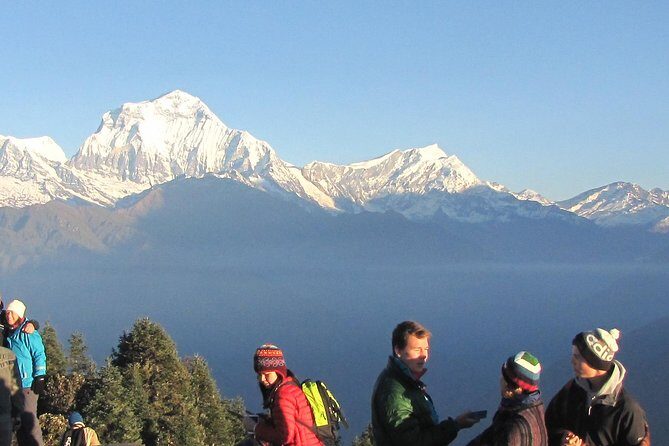
Day 8 is one of the big altitude days: trekking to Machhapuchre Base Camp (about 3,700m) in roughly 4–5 hours. This is a serious jump from the earlier elevations, and you’ll feel it in your legs and your breathing. The reward is that the mountains start behaving like mountains—larger, sharper, and closer than you expected.
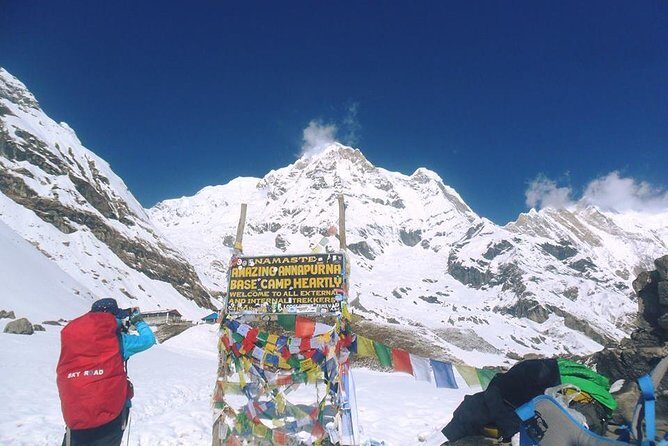
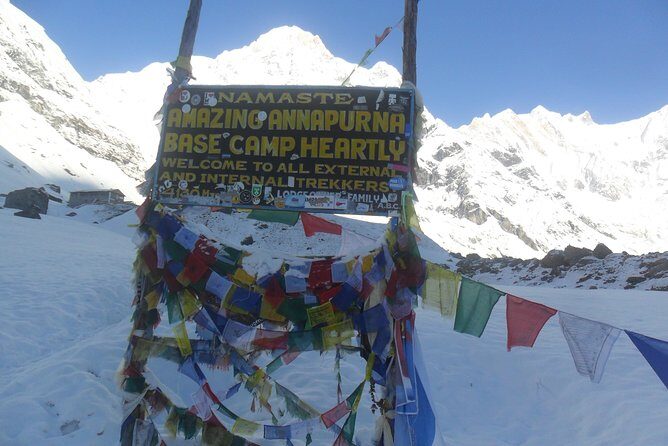
Day 9 is the summit-feel day without a summit. You head to Annapurna Base Camp (4,130m) in about 2–3 hours. That shorter walking time is a gift. It lets you arrive with more energy to enjoy the place rather than just collapsing from effort.
At base camp, you’re at the altitude where acclimatization really matters. This trek’s design reflects that: Annapurna Base Camp is a little over 4,000m, and the itinerary is planned with time for your body to adjust while still keeping the flow. The goal is to reduce risk from altitude issues by not racing uphill too fast.
If you’re curious what makes the experience special beyond altitude, look at the “where you are” feeling. You’re in a high glacial basin surrounded by multiple major peaks, and you get that sense of sitting at the foot of routes others chase with serious equipment and plans.
The Descent via Bamboo and Jhinu Danda (Where Relief Still Feels Like Work)
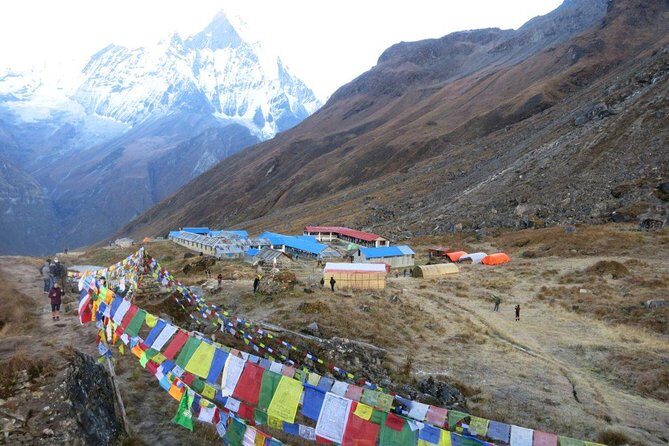
After base camp, the trek doesn’t end at the top—it teaches you the smart kind of relief. Day 10 goes to Bamboo (about 2,340m, roughly 4–5 hours). This descent can feel easier in theory, but don’t trust your knees. Uneven steps and long downhills can still fatigue you.
Day 11 heads to Jhinu Danda (about 1,780m, about 5 hours). This day brings you farther down into thicker-lower-country living. Even when you’re walking less high, the trail remains a full trekking day, so keep your hydration and snacks in mind.
Day 12 returns toward the trail’s start: Nayapul-Pokhara (about 5–6 hours). This is another “move with purpose” day, because it’s your transition back from mountain routine to comfort and city food.
Back to Pokhara and Kathmandu: You’ll Appreciate the Downtime
Day 13 is the drive back to Kathmandu (about 1,345m). After nearly two weeks, this is the day you stop counting altitude and start counting soft surfaces, warm showers, and meals that don’t require choosing between lodge options.
Your Day 14 departure closes the loop. You’re back at the same meeting point area in Kathmandu, which makes the end of the journey easier to manage.
One small practical note: your package includes ground transfers for Kathmandu–Pokhara and Nayapul–Pokhara and back. That’s one less thing to coordinate while you’re tired.
Guides, Porters, and the Tea-House Setup That Keeps You Moving
Annapurna Base Camp tea-house trekking sounds simple until you think about all the small decisions you’d face without help. Here, your guide handling the route and timing is a huge part of the value. The guide is described as English-speaking and Sherpa, with government training and licensing.
The porter plan is also practical: one porter for every two trekkers. That matters for comfort and safety because you can travel lighter, especially on the harder altitude days. It’s also easier to enjoy the scenery when you’re not carrying everything.
Support style comes through in the trek stories shared by past groups. Names like Ngima and Dawa show up as guides who were attentive, patient, and supportive—especially for amateur trekkers and groups that included teenagers. Mingma and Nima also appear in reviews connected to comfort and needs being met. I take that as a signal that the company’s teams focus on more than just walking forward; they focus on keeping people comfortable enough to actually enjoy the trek.
Lodging is tea-house based. Rooms are simple and typically twin-share with two narrow beds. During the trek, you’ll get full-board meals in local lodges. In Kathmandu and Pokhara, you get two nights each with bed and breakfast in a named hotel setup.
Altitude, Water, and Health: The Practical Stuff That Matters Most
This trek is built around acclimatization, because Annapurna Base Camp is high. The itinerary aims to avoid altitude problems by planning for your body to adjust rather than pushing to the highest point as fast as possible. The walk schedule also has a natural rhythm of climbs and partial descents.
You’re advised to drink at least 3 liters of water per day while trekking. Water is supported with Euro-guard filters in the Annapurna region, so you just need your own bottle to refill safely. This is a big practical advantage because buying water all day adds up fast and creates waste.
You’ll also have a first aid medicine kit in the group. Plus, the company strongly recommends specialized travel insurance that includes emergency evacuation and medical treatment coverage—important for remote trekking routes where costs and timelines can get serious.
Finally, remember the safety approach: if weather or health conditions make things risky, the guide team may change or cancel parts of the itinerary. That’s not a failure; it’s good decision-making in mountain country.
Seasons and Weather: When the Timing Fits the Trek
The best trekking seasons for the Annapurna region are spring (February to late April) and autumn (late September to late November). Winter trekking is also possible for some sections and destinations, but the comfort and conditions can vary.
If you’re flexible with timing, you’ll likely have a better experience because mountainous weather changes. The trek’s stated requirement is that it needs good weather, and if poor weather forces a change, you’ll be offered a different date or a full refund.
Who This Trek Suits Best
This one fits travelers with moderate fitness who want a guided, well-paced tea-house trek. If you’re an amateur trekker, this is a strong match because the itinerary is planned to help with acclimatization and it includes real human support.
It’s also a good option for families or groups who want structure. Reviews highlight that guide support can work well even when the group includes teenagers, because someone is watching comfort and pace—not just ticking off milestones.
If you’re a super-fast hiker who hates downtime, you might feel the pace is intentionally slow. But if your goal is to arrive at base camp feeling like you earned it, the pacing makes sense.
Should You Book This 14-Day Annapurna Base Camp Trek?
I’d book this trek if you want mountain access with low logistics stress. For the price, you’re paying for permits, transfers, a licensed guide, porter support, lodge stays, and full-board meals on the trek—exactly the parts that can turn a dream trip into a spreadsheet.
Skip it (or at least think hard) if your top priority is total freedom to change your own plan minute-by-minute. This is a structured itinerary, and it’s also weather-dependent, with safety-first adjustments decided by the guide team.
If you want a guided tea-house trek that takes acclimatization seriously and still gets you to Annapurna Base Camp at 4,130m, this is a solid choice.
FAQ
What level of fitness do I need?
The trek is recommended for travelers with moderate physical fitness. Expect several days of multi-hour walking, and plan to go slowly as altitude increases.
How high does the trek get?
The itinerary lists Annapurna Base Camp at about 4,130m. It also includes Machhapuchre Base Camp at about 3,700m.
Are meals included on the trek?
Yes. During the trek, local lodges provide full board meals for nine trekking nights. Lunch and dinner in Kathmandu are not included.
What’s included in the trek package besides lodging and meals?
You get an English-speaking experienced Sherpa guide, porter support (one porter for two trekkers), first aid medicine kit, energy supplies and fresh fruits on the trek, and permits including TIMS and the Annapurna Conservation Fee.
Is drinking water provided?
You’re advised to drink at least 3 liters of water per day, and Euro-guard filters are available in the Annapurna region. You should bring your own water bottle to refill.
Do I need travel insurance?
Nepalese remote areas can require evacuation and medical response, so specialized travel insurance is strongly recommended. The insurance should cover emergency evacuation, injury, lost baggage, liability, and medical treatment.
Is this a private trek?
Yes. This is described as private, with only your group participating.