REVIEW · KATHMANDU
Evening Photography Tour of Kathmandu
Book on Viator →Operated by Third Rock Adventures · Bookable on Viator
Kathmandu glows after dark, and this tour helps you see why. You’ll pair two of the city’s biggest spiritual landmarks—Boudhanath and Pashupatinath—with an English-speaking licensed guide who points you toward the exact moments worth photographing.
What I like most is that it’s built around real religious practice: butter lamps, chanting, and fire rituals, not just sightseeing. The other big win is the logistics—private transport from central Kathmandu and admission included—so you can focus on your camera instead of finding your own way.
One possible drawback: the pace is tight (about 3–4 hours), and if you expected a heavy technical photography class, this is more about positioning and timing than deep camera instruction.
In This Review
- Key Things I’d Book This For
- A Private Photo Walk Between Boudhanath and Pashupatinath
- Why Evening Photography Works So Well Here
- Stop 1: Boudhanath Stupa and the Parikrama Rhythm
- Stop 2: Pashupatinath Temple Aarti at Night
- Your Guide and Transport: What Makes It Feel Effortless
- Price and Value: What $102 Covers (and Why That’s Reasonable)
- Photography Tips That Fit the Real Tour Pace
- Who This Tour Suits Best
- Should You Book This Evening Photography Tour?
- FAQ
- How long is the Evening Photography Tour of Kathmandu?
- What stops are included in the tour?
- Is hotel pickup offered?
- Are admission tickets included?
- What costs extra besides the tour price?
- Is this a private tour or a shared group?
- Does the tour require good weather?
- What is the average booking lead time?
Key Things I’d Book This For
- Boudhanath parikrama at dusk: monks and devotees lighting butter lamps while the stupa is illuminated
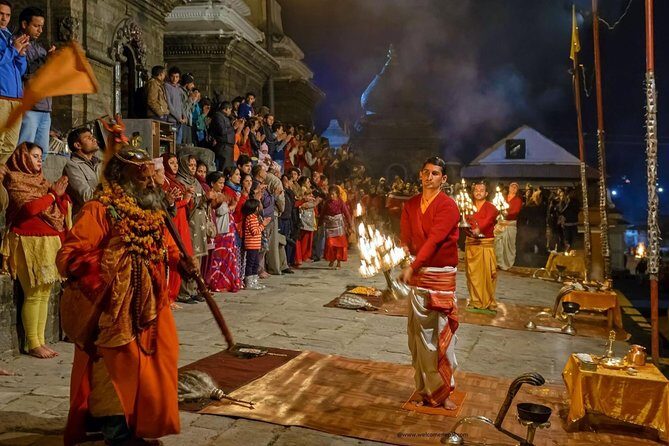
- Pashupatinath evening aarti: Vedic chanting, hymns, and fire rituals near the Bagmati River
- Private, camera-first experience: pickup from central Kathmandu plus guide-led framing
- Admission tickets handled: both stops include entry fees in the tour package
- Good weather matters: the operator notes it needs decent conditions for the tour to run well
A Private Photo Walk Between Boudhanath and Pashupatinath
This is a half-day evening photography tour designed for people who want Kathmandu’s spiritual life in motion. Instead of treating temples like museum stops, you’ll watch how devotion happens in real time: people circle Boudhanath, priests perform rituals at Pashupatinath, and the sound and light change as night settles in.
I also like that it’s private. Your group stays together, and you’re not trying to weave through a crowd while trying to line up a shot. That matters for night photography, because timing is everything: one good composition can be ruined by a wrong turn, a missed moment, or simply being in the wrong spot.
The stops are classic for a reason. Boudhanath is a major pilgrimage center for Tibetan Buddhism, while Pashupatinath is one of the most important Hindu shrines dedicated to Lord Shiva. Put together, you get two different traditions, both deeply visual, both intensely rhythmic at night.
You can also read our reviews of more evening experiences in Kathmandu
Why Evening Photography Works So Well Here
Daytime is great for landmarks. Night is different. At these sites, the big “photo moments” happen because the environment changes: lighting gets more dramatic, ceremonies run on a schedule, and people slow down because worship is the main event.
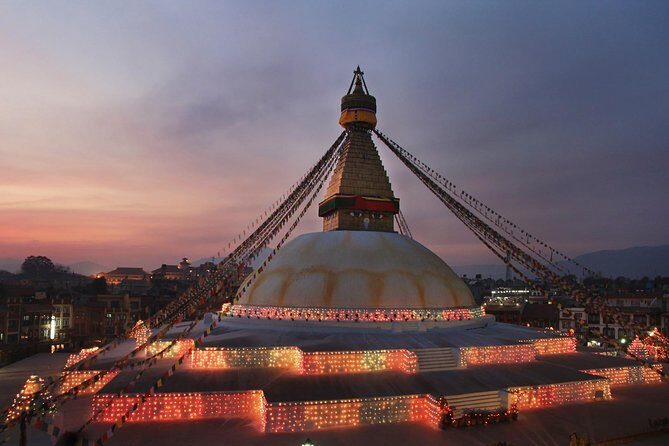
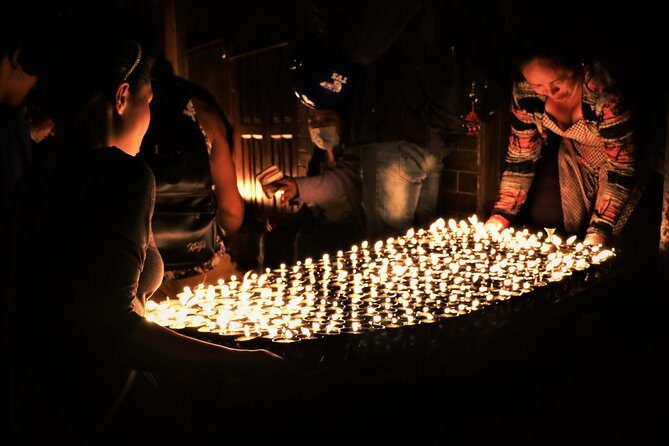
At Boudhanath, the stupa is beautifully lighted up and decorated in the evening. That means you’re not just photographing architecture—you’re photographing a living circle of devotion: monks and devotees moving around the stupa during parikrama and lighting butter lamps.
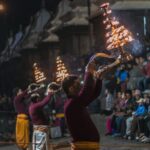
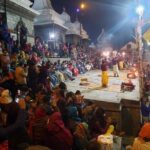
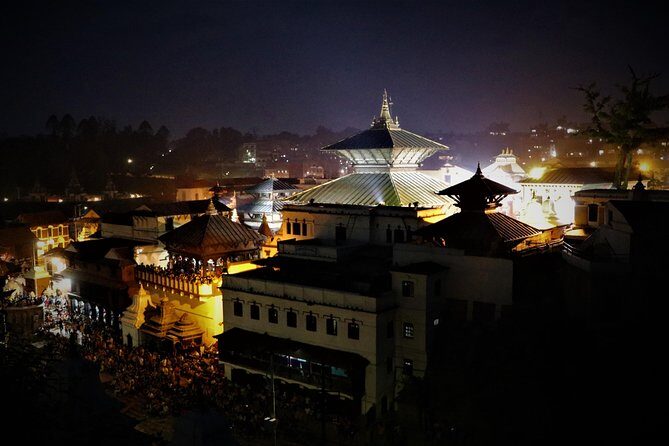
At Pashupatinath, the evening brings aarti, where priests offer light from flames while chants and hymns fill the space. The fire rituals create natural contrast against darker surroundings, which is exactly what makes religious night scenes feel cinematic on camera.
Practical tip for you: plan on low light. Bring a camera you can use comfortably at dusk, plus the usual basics like a charged battery and an extra memory card. If your device struggles at higher ISO, a faster lens (if you have one) can help—but the real advantage of this tour is that the guide steers you toward where the action happens.
Stop 1: Boudhanath Stupa and the Parikrama Rhythm
Boudhanath is one of Kathmandu’s most important pilgrimage hubs. The famous white domed stupa isn’t just pretty—it’s where people come to practice Tibetan Buddhism and where worship continues long after tourists move on.
During your hour here, you’ll see devotees doing parikrama, also called circumambulation: walking around the stupa in a shared loop. That walking path is a photographer’s friend. It gives you direction, repetition, and story in a single frame—perfect for sequences, too.
The evening lights make a difference. The stupa is illuminated and decorated, and monks and devotees light butter lamps as they pray for the well-being of all sentient beings and world peace. Those small flames are the key visual. They’re not just candle-like points of light; they also show devotion up close, which makes your photos feel human rather than purely architectural.
What to watch for while you shoot:
- The movement patterns as people circulate the stupa
- The moment lamps are lit and held steady
- Faces in profile as worshippers pass the lighted areas
- The way the illuminated stupa frames the circle of prayer
A consideration: this stop is about observation as much as photography. If you try to constantly move to new spots, you’ll miss the flow. Let your guide show you where to stand, then stay put long enough to capture the ritual rhythm.
Stop 2: Pashupatinath Temple Aarti at Night
If Boudhanath is about circling and flames on a stupa, Pashupatinath is about sound, chant, and fire ritual on the temple grounds.
This is an ancient Hindu shrine dedicated to Lord Shiva, and the name Pashupatinath is often explained as protector of all living beings. In the evening, the atmosphere becomes charged as sacred Vedic shlokas and hymns are sung. Then comes aarti, a ritual where priests offer light from a flame to the gods.
The visuals are dramatic: chanting and singing, priests performing the fire offering, and devotees seen dancing in trance. You also get a symbolic layer connected to Lord Pashupatinath’s association with the Tandav celestial dance.
For your photography, this stop is where you’ll feel the contrast between “easy shots” and “real moments.” The flames and dark background can look great, but the action is brief and the crowd may shift. You don’t need to chase every frame—your goal is to catch the ritual peak: the moment the flame is presented, the chant peaks, or a dancer’s movement turns.
One more practical note: if you’ve mostly done Kathmandu sightseeing in daylight already, this is still worth it. The nighttime energy is the whole point—firelight devotion and chants are the difference between seeing temples and photographing worship.
Your Guide and Transport: What Makes It Feel Effortless
This tour includes private transportation from central Kathmandu and a pickup option. That removes two big barriers for an evening plan: traffic/route confusion and wasting time before the best scenes start.
Your guide is an English-speaking licensed city guide, and the focus is on where to go to find the “settings and moments worth capturing.” That wording matters. It’s not just directions; it’s guidance on timing and vantage points so you can get the shots you’re actually imagining.
From past experiences with this operator, guides are often praised for being professional and for knowing Kathmandu and heritage sights in a practical way. Names that come up include Mr Bikash (praised for big knowledge and professionalism) and Deepa (credited with well-informed guidance that helps the ritual feel clear and powerful).
You can use that to your advantage: treat the guide like your timing tool. If they suggest a spot, stay close and let the ritual reach you. If they recommend a framing idea, don’t ignore it—night photos reward patience.




Price and Value: What $102 Covers (and Why That’s Reasonable)
At $102 per person, you’re paying for a compact but high-effort evening plan. The value comes from what’s included, not just the length.
Here’s what your money covers:
- Private transportation from central Kathmandu
- All fees and taxes
- A licensed English-speaking guide
- Admission tickets included for both Boudhanath and Pashupatinath
- A total time window of about 3 to 4 hours
What’s not included is simple: dinner, bottled water, and alcoholic beverages. You’ll want to plan your energy accordingly. Bring water if you can, or budget time to grab it before or after the tour. If you’re the type who tends to get hungry mid-plan, consider eating something earlier so you can focus on the ceremonies.
One more value point: average booking timing is about 12 days in advance. That suggests demand is real. If your trip is on the weekend or near peak season, booking earlier helps you lock in the schedule.
Photography Tips That Fit the Real Tour Pace
You don’t need special equipment to enjoy this tour, but evening worship changes the photography game. Keep your expectations realistic: ceremonies happen in cycles, and the best shots come from being in position when the action peaks.
A few photo-friendly moves that match this exact kind of evening:
- Use your camera’s night mode or higher ISO if you have it, but check results often
- Shoot sequences during ritual moments; one perfect frame is rarely the first one
- Watch the flame as your light source—fire scenes look better when the fire is sharp and the background supports it
- Be ready for changing crowds as people move during parikrama and aarti
Also, respect the setting. These are active religious spaces, so follow your guide’s lead on where to stand. If you’re unsure, ask. Good photos and good manners should coexist here.
Who This Tour Suits Best
This is a strong fit if you:
- Want religious culture at night, not just daytime monuments
- Enjoy photography and like getting help with where to be
- Prefer a private experience with pickup and included entry tickets
- Already saw Kathmandu by day and want a second angle on the same places
It’s less ideal if you:
- Want a long, slow tour or lots of free wandering time
- Are looking for a technical workshop style of instruction
- Plan to rely on the tour timing for dinner plans (because food isn’t included)
Should You Book This Evening Photography Tour?
Yes—if your priority is capturing Kathmandu’s spiritual traditions as they happen, not just collecting postcard images. The combination of Boudhanath butter lamps and Pashupatinath aarti fire ritual gives you two very different visuals in one efficient evening, with guide-led placement and private transport that keeps you from wasting time.
I’d book it especially if you like night photography but don’t want to figure out routing and ritual timing on your own. The price feels fair because admission tickets and transportation are included, and the tour stays focused on the moments that actually make your photos look alive.
If you’re sensitive to tight schedules or you mainly want step-by-step camera teaching, you might find the format a bit more watch-and-shoot than class-and-practice. Still, for most people wanting Kathmandu at night through a camera lens, it’s a smart, practical choice.
FAQ
How long is the Evening Photography Tour of Kathmandu?
It runs about 3 to 4 hours in the evening.
What stops are included in the tour?
You visit Boudhanath Stupa and Pashupatinath Temple.
Is hotel pickup offered?
Pickup is offered, and the tour includes transportation from central Kathmandu.
Are admission tickets included?
Yes. Admission tickets are included for both stops.
What costs extra besides the tour price?
Dinner and bottled water are not included, and alcoholic beverages are also not included.
Is this a private tour or a shared group?
This is a private tour/activity. Only your group participates.
Does the tour require good weather?
Yes. The experience requires good weather. If it’s canceled due to poor weather, you’ll be offered a different date or a full refund.
What is the average booking lead time?
On average, it’s booked about 12 days in advance.