REVIEW · KATHMANDU
Everest base camp flight over by Helicopter from Kathmandu
Book on Viator →Operated by Himalaya Holiday service Pvt. Ltd.(HHS) · Bookable on Viator
Everest in minutes, not months.
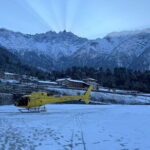
This is an early start helicopter excursion from Kathmandu that flies near Everest Base Camp and gives you a chance to step out at Kalapathar for photos, not just a blurry view from the air.
I especially like the 10-minute landing at Kalapathar—it’s short, but it’s real time on the ground where you can take clear, close shots. I also like how the experience is run with a big focus on coordination and safety, with a responsive organizer named Buddhi Bhatta (who’s been credited with keeping plans on track and even helping arrange a down jacket rental).
One drawback to consider: the headline price is only part of the story. You’ll also need to budget for national park and municipality fees paid locally, plus breakfast if you want it.
In This Review
- Key things I’d circle before you book
- What You Actually Get: Kalapathar Landing vs Base Camp Fly-Over
- Timing From Kathmandu: The Early Morning 4-Hour Rhythm
- The Helicopter Ride Details: Eurocopter 350 B3 and Shared Flights
- The Itinerary Stops That Matter (and What Each One Feels Like)
- Stop 1: Kathmandu pickup and transfer to the airport
- Quick fuel stop, then fly toward the Everest Base Camp area
- Fly over Base Camp only (no landing)
- Stop 2: Syangboche Marg with a breakfast-at-the-view option
- Return to Kathmandu
- Fees That Add Up: National Park + Municipality Charges
- What the Best Views Depend On (and How to Play It Smart)
- Down Jackets, Real Help, and the Human Side of Planning
- Safety and Pilot Skill: Why This Matters More Than It Sounds
- Price and Value: Is $1,598 Really Just a Helicopter Ride?
- Who This Flight Works Best For (and Who Should Skip It)
- Should You Book the Everest Base Camp Helicopter to Kalapathar?
- FAQ
- What time does the tour start?
- How long does the whole experience take?
- Do you land at Everest Base Camp?
- Is breakfast included?
- Are there additional fees beyond the tour price?
- What’s included in the price?
- What is the helicopter model?
- Is the experience wheelchair accessible?
- Is there a weight limit?
- FAQ
- Can the tour be canceled for a full refund?
- What should I expect if weather is bad?
Key things I’d circle before you book
- Kalapathar landing (about 10 minutes) for photos, not an all-day hike.
- Everest Base Camp is a fly-over only, with no landing at Base Camp itself.
- Optional breakfast stop at Syangboche Marg at an Everest view hotel for $32.
- Local fees on top of the tour price, including NPR 7000 per person.
- Small shared helicopter groups of about 5–6 people per flight.
- Weather decides everything, so you’re starting early with a plan that can shift.
What You Actually Get: Kalapathar Landing vs Base Camp Fly-Over
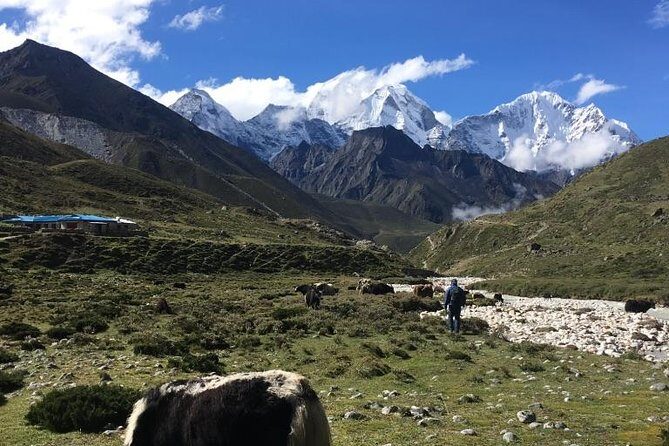
Let’s clear up the biggest point: this is not a helicopter drop at Everest Base Camp. You’ll fly near Everest Base Camp and you’ll see it from the air, but you won’t disembark there.
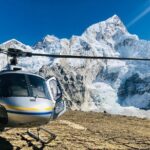
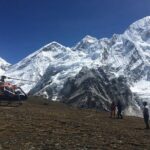
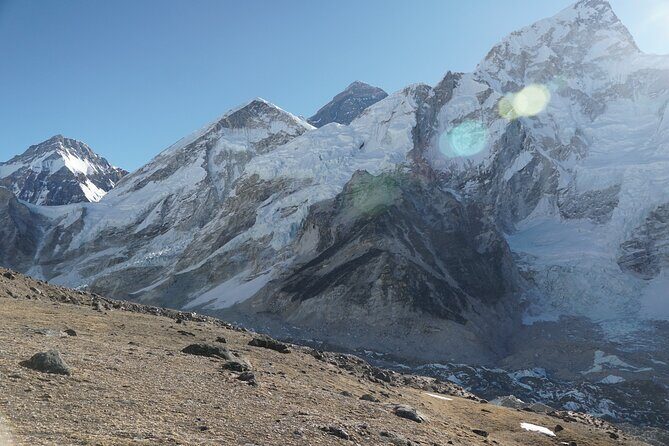
What you do get is a landing at Kalapathar (also spelled Kala Patthar), and that’s the moment most people care about. The operator will land you for roughly 10 minutes so you can get your photos and take in the scale. For many travelers, that feels like the closest thing to saying I stood near Everest without needing days of trekking.
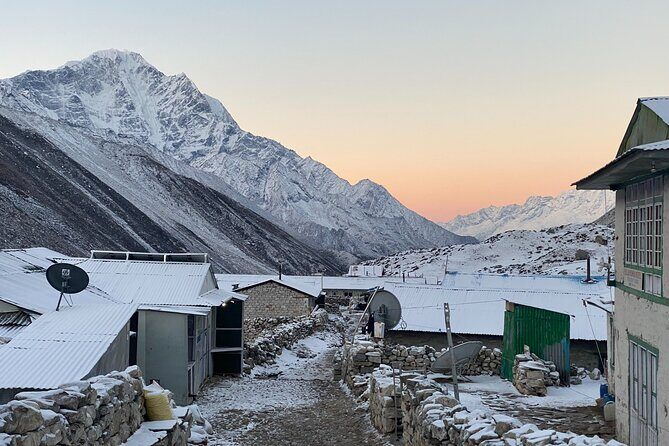
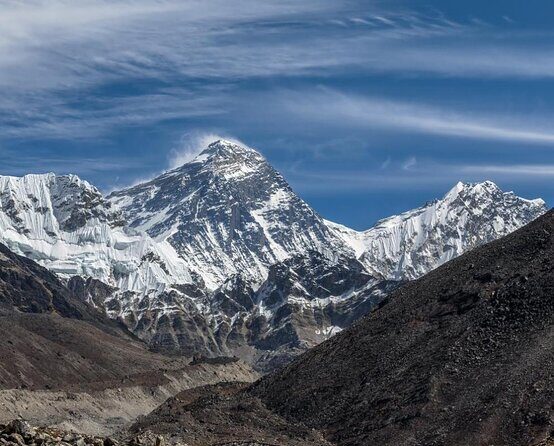
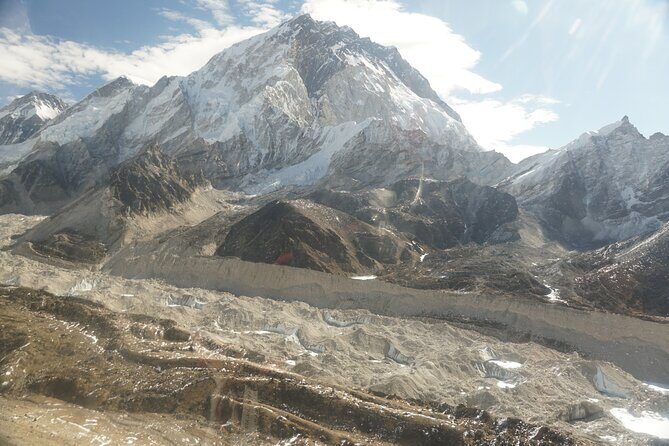
Also, you’re not looking at Everest in isolation. From this route, you should get views of Everest plus other Himalayan peaks as the helicopter climbs and tracks along the Everest region. That matters because you’re not just buying one view—you’re buying a moving panorama that you can’t recreate from a single viewpoint in Kathmandu.
A few more Kathmandu tours and experiences worth a look

Timing From Kathmandu: The Early Morning 4-Hour Rhythm
This is a morning-first activity. The scheduled start time is 6:00 am, and hotel pickup happens by car/van. In practice, pickup can be a bit earlier depending on your exact hotel location, so I’d treat early as the default and set your alarm like you mean it.
Total duration is about 4 hours. That sounds short because the helicopter flight itself is only 3 to 4 minutes—but don’t ignore the rest of the day timeline. Your time is spent getting transported to the airport area, boarding, waiting for the flight plan, and then returning to Kathmandu.
You also have a planned stop for breakfast opportunity on the way back or during the sequence (at Syangboche Marg). That stop is about 1 hour, and it’s optional in the sense that breakfast costs extra. Even if you skip the meal, that hour is part of the flow, so build your schedule around being tied up for half the morning.
The Helicopter Ride Details: Eurocopter 350 B3 and Shared Flights
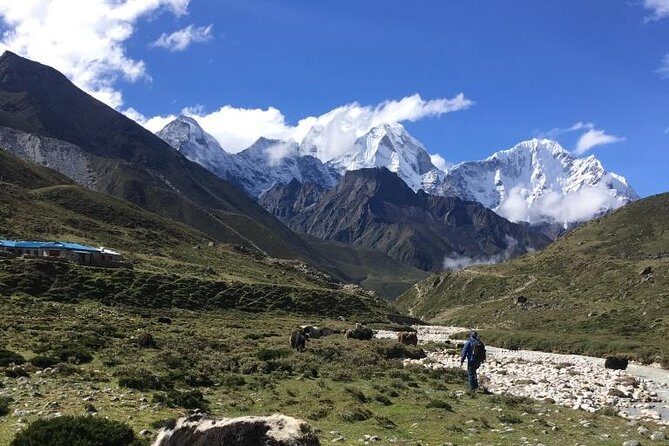
You fly on a Eurocopter 350 B3 helicopter, and the flight is a group sharing format with about 5–6 people in a helicopter.
Why that matters: shared flights help keep the cost closer to what most people are willing to pay for one big bucket-list day. It also tends to make the logistics smoother because the company can plan weight, seating, and routing more efficiently.
There’s also a hard reality check: there’s a total passenger weight limit of 276 lbs per person. If you’re close to that number, don’t assume it’ll be fine. Ask your operator ahead of time and plan accordingly.
One more detail: you’re not dealing with a huge chaotic crowd. The activity notes a maximum of 135 travelers, but the flights themselves are small—so you’re not packed in like a bus. Still, early morning means everyone is waiting at once, and it pays to show up calm and ready so the schedule stays smooth.
The Itinerary Stops That Matter (and What Each One Feels Like)
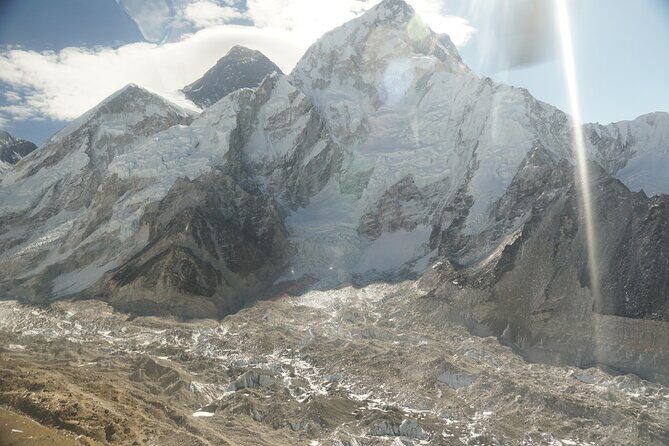
Here’s how the day typically breaks down, in plain language.
Stop 1: Kathmandu pickup and transfer to the airport
You start with hotel/Airport pickup and drop-off by car/van. It’s straightforward: get from your hotel area to the flight point, then board when your group is called.
Admission ticket for the initial step is listed as free, but that doesn’t mean you can ignore extra fees later. I’d keep your budget open for the local charges that come after.





Quick fuel stop, then fly toward the Everest Base Camp area
There’s a quick fuel stop and then the helicopter heads toward the Everest zone. This isn’t the scenic part for photos—it’s part of the operational reality of flying in remote terrain. Think of it as the behind-the-scenes step that makes the whole thing possible.
Fly over Base Camp only (no landing)
This is the part where you get the classic “I can see it” moment without stepping onto the ground. You’ll fly over Everest Base Camp, which is valuable because it gives you a clear sense of how it sits in the valley and how huge the surrounding slopes look when you’re above them.
The trade-off is obvious: no landing means no on-foot time at Base Camp. If you want that specific stamp in your photos, focus on the fact you do land at Kalapathar later.
Stop 2: Syangboche Marg with a breakfast-at-the-view option
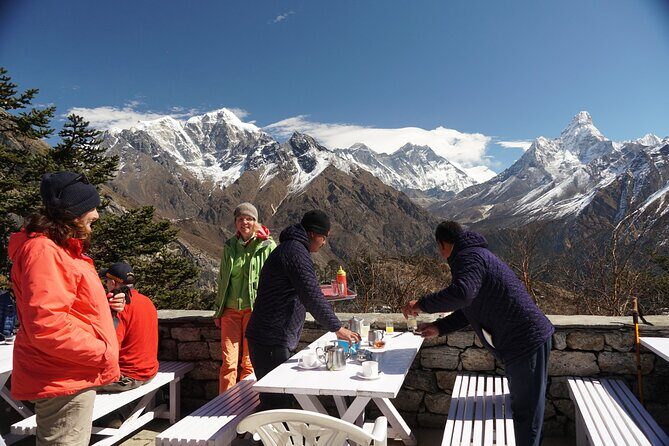
Next comes Syangboche Marg. You stop at an Everest view hotel for breakfast, and the breakfast option is $32. Breakfast isn’t listed as included, so if you want it, plan to pay on the mountain.
This stop is about comfort as much as views. Even an hour feels like a small breather after the helicopter portions, and it gives you time to warm up, eat, and soak in the vista from a more stable spot than sitting in a helicopter seat.
Return to Kathmandu
After the stop, you return to Kathmandu. The total structure keeps you grounded in a half-day format rather than a multi-day trek. That’s the real convenience: you’re buying access to the Everest region without committing to days of altitude time.
Fees That Add Up: National Park + Municipality Charges
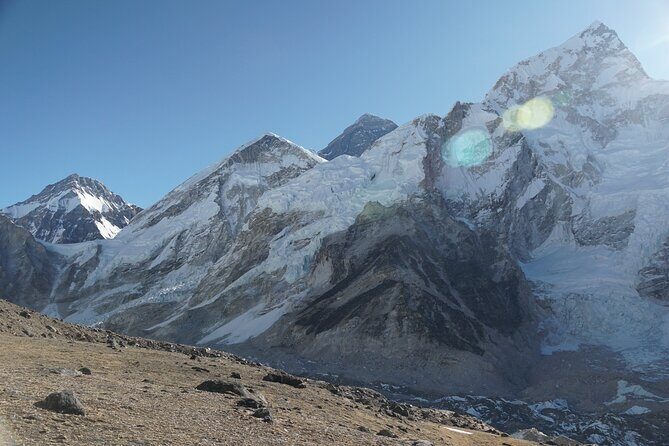
This tour has a built-in gotcha, and you’ll thank yourself for budgeting for it early. The price you pay upfront is not the full amount you’ll spend.
You need to pay national park fees and municipality fees locally: NPR 7000 per person. On top of that, breakfast (if you choose it) is $32.
There are also notes about an additional mountain national park fee. The clean way to think about this: assume there are extra local charges even when the package price looks fixed.
So what’s the practical move? When you compare options, compare the all-in total, not just the dollar headline. If you’re the kind of traveler who hates surprise expenses, this one needs a little spreadsheet time before you go.
What the Best Views Depend On (and How to Play It Smart)
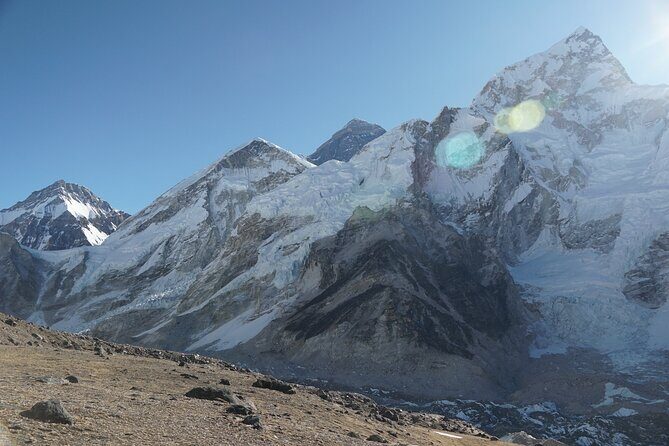
This is a weather-dependent experience. The activity states that if it’s canceled due to poor weather, you’ll get offered a different date or a full refund.
That’s not just small talk—it’s central to how you should plan your trip. Schedule it on a day where you can be flexible. If your Kathmandu itinerary is already locked solid with nonrefundable plans, you’re taking a risk.
When the day works, the payoff is big. Reviews tied to this experience highlight clear, breathtaking visibility when conditions align, and that clarity is what makes the Everest region feel so dramatic from the air. If visibility is limited, you may still see mountains, but the photos can look flatter.
My practical advice: bring patience for early waiting, and don’t assume every morning will deliver the same view. The helicopter portion is fast, so good visibility is the difference between impressive and jaw-dropping.
Down Jackets, Real Help, and the Human Side of Planning
A helicopter flight is one thing. The stress around clothing, timing, and coordination is another. This operator style has earned praise for exactly that kind of support.
In the feedback you’re working from, Buddhi Bhatta is specifically credited with being responsive and thorough, including helping with logistics like arranging a down jacket rental. There’s also mention of helpful coordination from someone named Roman (spelled as Roman/Raman in different notes).
The takeaway for you: don’t treat this as a purely mechanical flight. Ask questions early about what to wear and what your cold-weather plan should be. If the company can help you sort the basics, use that service. One good layer decision can save you from shivering through the photo moment.
Safety and Pilot Skill: Why This Matters More Than It Sounds
Helicopters feel dramatic, so it’s easy to obsess over the thrill and forget the serious part. The good news is that safety is repeatedly called out as a major consideration.
Your pilot matters. The experience notes highlight the pilot’s skill, and they also acknowledge that sometimes high winds can alter plans. When weather changes the route or timing, you want an operator that adjusts smoothly rather than improvises dangerously.
So when you’re comparing options in Kathmandu, look for an operator that talks like safety comes first—not like speed comes first. This experience is set up to be organized, with a defined flow and small shared groups, and that structure helps keep risk down while still delivering the Everest moment.
Price and Value: Is $1,598 Really Just a Helicopter Ride?
Yes, the price is steep. No, it’s not just paying for a quick flight.
You’re paying for:
- hotel-to-helicopter pickup and drop-off by car/van
- a Eurocopter 350 B3 flight in a shared group
- a route that includes a fly-over of Base Camp
- a Kalapathar landing for on-foot time and photos
- an additional Syangboche Marg stop where you can add breakfast for $32
- use of mobile ticket and structured coordination
The value hinges on two things: (1) you actually get a clear day and (2) you land at Kalapathar and get those photos. If you get foggy skies, the “close-up feeling” is less powerful. If you’re on a clear morning, the experience becomes the kind of memory you bring up for years.
Also, because it’s time-efficient (about 4 hours total), it can be cost-effective compared to multi-day treks for travelers who physically can’t do that kind of schedule. If you’re visiting Kathmandu with limited days and Everest is your main priority, this is one way to buy proximity fast.
Still, don’t ignore the added costs: NPR 7000 per person locally and breakfast if you choose it. When you add those in, make sure you’re comfortable with the all-in number.
Who This Flight Works Best For (and Who Should Skip It)
This helicopter experience makes the most sense if:
- Everest is high on your list and you want maximum impact for limited time
- you’re not looking to trek days to reach viewpoint areas
- you want a once-in-a-lifetime photo opportunity with a short landing at Kalapathar
- you prefer a coordinated, safety-minded operator over a DIY approach
It may not be the best fit if:
- you’re sensitive to weather variability and you have no flexibility in your schedule
- you need wheelchair access (this tour is not wheelchair accessible)
- your weight is near the 276 lbs limit and you’re not sure you’ll qualify
- you dislike paying add-ons once you arrive (because local fees and optional breakfast are real)
Should You Book the Everest Base Camp Helicopter to Kalapathar?
I’d book it if you’ve got a flexible morning in Kathmandu and Everest is your top priority. The Kalapathar landing is the reason this feels different from a simple “fly and wave” tour. Add in professional coordination from people like Buddhi Bhatta, and you get a day that’s both efficient and thoughtfully run.
I wouldn’t book it if your travel style is ultra-planning-equals-peace and you hate local fees. This experience has extra charges in the form of NPR 7000 per person plus an optional breakfast, so you need to go in with that mindset.
If you’re on the fence, my rule is simple: if you can handle a weather-dependent early start and you can afford the all-in cost, this is one of the fastest ways to get Everest in your camera frame and in your memory.
FAQ
What time does the tour start?
The start time is listed as 6:00 am, with hotel pickup and transfer to the airport by car or van.
How long does the whole experience take?
It’s listed as approximately 4 hours total, even though the helicopter flight time is only 3 to 4 minutes.
Do you land at Everest Base Camp?
No. You get a fly-over of Everest Base Camp, and the landing is at Kalapathar for photos.
Is breakfast included?
Breakfast at the Everest view hotel stop in Syangboche Marg is not included. It’s available for $32, paid on the mountain.
Are there additional fees beyond the tour price?
Yes. There are national park and municipality fees you pay locally, listed as NPR 7000 per person, and there is also a note about an additional mountain national park fee.
What’s included in the price?
Included features are hotel/airport pickup and drop-off, the Eurocopter 350 B3 helicopter, and a group sharing flight (about 5–6 people per helicopter).
What is the helicopter model?
The included helicopter is listed as a Eurocopter 350 B3.
Is the experience wheelchair accessible?
The experience notes that it is not wheelchair accessible.
Is there a weight limit?
Yes. The total weight per passenger is listed as 276 lbs.
FAQ
Can the tour be canceled for a full refund?
Yes—free cancellation is available if you cancel at least 24 hours in advance. If it’s canceled due to poor weather, you’ll be offered a different date or a full refund.
What should I expect if weather is bad?
The experience requires good weather. If the day can’t fly due to poor weather, you’ll either reschedule or get a full refund, based on what’s offered for your dates.