REVIEW · KATHMANDU
Everest Three Pass Trek
Book on Viator →Operated by Adventure Bound · Bookable on Viator
Three high passes. One serious Khumbu test.
This Everest Three Pass Trek is built around crossing Khongma La, Cho La, and Renjo La—each pushing past 5,000 meters—while still keeping you in the Sherpa-world flow of acclimatization, tea-house stops, and big-day mountain walking.
What I like most is the way the trip reduces decision fatigue. You get full-board meals (breakfast, lunch, dinner) during the trek plus twin-sharing lodge accommodation, so you can focus on pace and breathing instead of hunting for food and rooms. I also appreciate that park and trail admin is handled for you, including Sagarmatha National Park fees and the TIMS card, with local government tourism fees covered too.
The main thing to consider is effort and extra costs. The trip is aimed at strong physical fitness, and you’ll still need your own Nepal entry visa and travel/rescue insurance, plus tips for guides and porters are expected.
In This Review
- Key Things That Make This Trek Worth Your Attention
- Everest Three Pass Trek: What You’re Really Signing Up For
- Price and Logistics: What $2,200 Buys (and What It Doesn’t)
- Kathmandu Start: Getting Positioned for Lukla
- The Trek Rhythm: Lodges, Full-Board Meals, and Pacing
- Kongma La (Khongma La): The First Big Wall Over 5,000m
- Cho La Pass: Leaving the Familiar Track for Different Views
- Renjo La Pass: The Finishing High Gate
- Guides and Language Help: Why Licensed, English-Speaking Support Matters
- Gear Included: Down Jacket and Sleeping Bag (and What You Still Need to Plan)
- Health, Safety, and the Non-Negotiable Insurance Point
- Who This Trek Suits Best
- Should You Book the Everest Three Pass Trek?
- FAQ
- What is the duration of the Everest Three Pass Trek?
- Where does this tour start and end?
- Which high passes are included?
- Does the price include meals during the trek?
- What kind of accommodation is provided during the trek?
- What’s included in Kathmandu before the trek?
- Is a guide included, and what language do they speak?
- Is park and entry paperwork included?
- What gear is included for cold weather?
- What costs are not included?
Key Things That Make This Trek Worth Your Attention
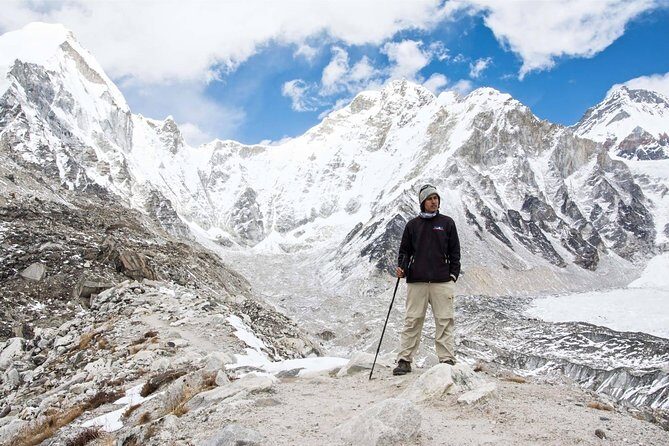
- Three high passes over 5,000m: Kongma/Khongma La, Cho La, and Renjo La are the backbone of the challenge.
- Licensed, English-speaking guide support: Adventure Bound organizes the trek with an experienced guide who can keep you steady through altitude days.
- Full-board meals and lodge beds: breakfast, lunch, dinner plus twin-share lodges during the trek reduce day-to-day logistics.
- Gear help if you need it: a down jacket and sleeping bag are included if needed.
- Admin covered: Sagarmatha National Park fees and TIMS card are included (so you’re not scrambling at the last minute).
- Private group format: it’s private, so you and your group only.
Everest Three Pass Trek: What You’re Really Signing Up For
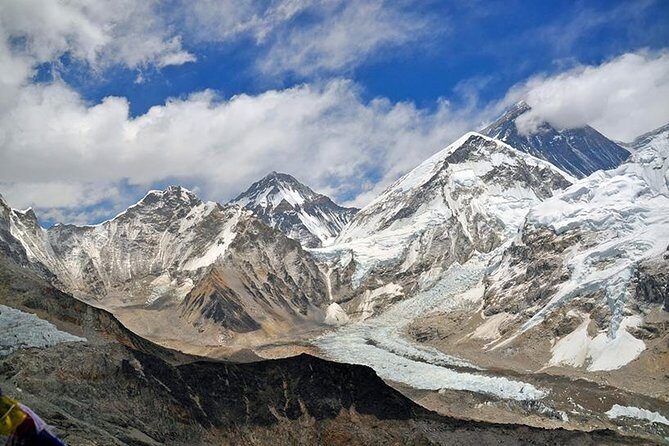
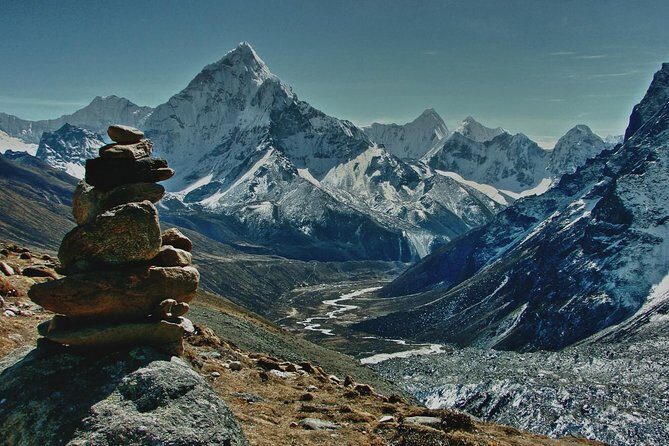
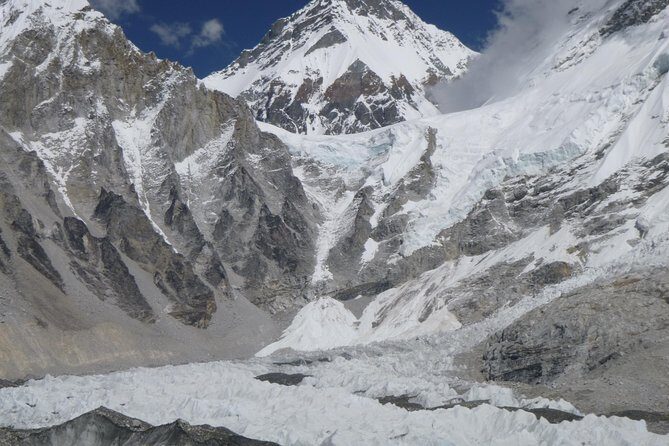
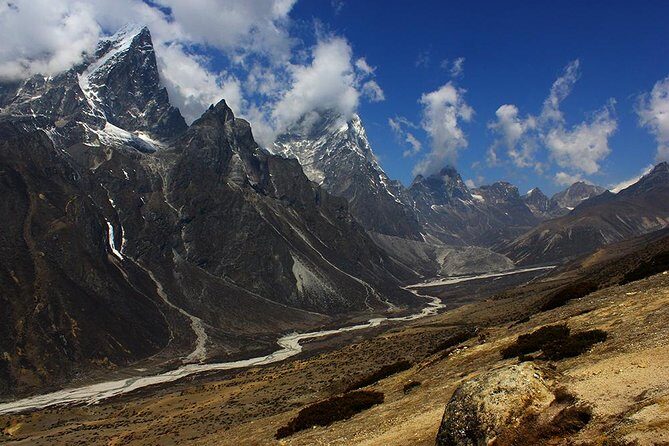
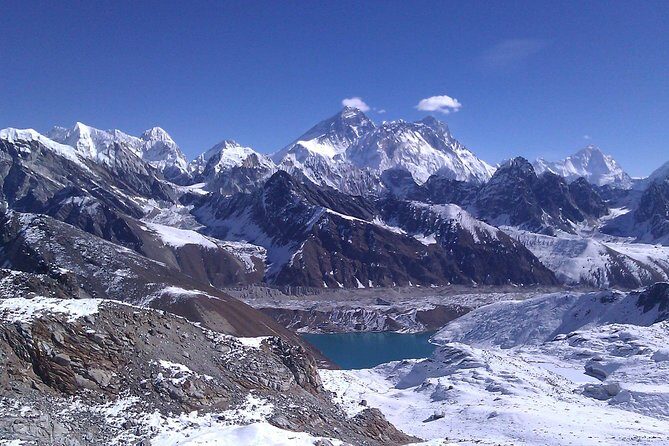
This trek is the kind of itinerary that makes you respect altitude. The route is defined by three crossings in the 5,300–5,600m range, in the Khumbu region, and that changes everything about how you plan your day. Expect snow on passes, strong weather swings, and long stretches where your legs feel fine but your lungs argue.
The description lists the pass heights with two slightly different sets of numbers: it names Khongma La around 5,555m, Cho La around 5,330m, and Renjo La around 5,345m. Elsewhere in the same overview, you’ll see rounded variations (for example, Kongma La listed near 5,535m, Cho La near 5,420m, Renjo La near 5,360m). Either way, the message is consistent: you are operating at high altitude and you should plan to move patiently.
The value of this trek isn’t only the summit-style bragging rights. It’s that you get a true sense of the Khumbu region by traveling above common routes and through multiple “big view” corridors. One review highlights the feeling of leaving the main Everest Base Camp track and seeing the Himalayas from a different angle—exactly what three-pass trekking is known for.
You can also read our reviews of more hiking tours in Kathmandu


Price and Logistics: What $2,200 Buys (and What It Doesn’t)
At $2,200 per person, this trek isn’t bargain-bin travel. But it is closer to what you’d expect for a serious guided high-altitude experience with lots of moving parts. Here’s what’s included in the price:
Included essentials that matter at altitude:
- Airport pick up/drop and ground transport in a private vehicle
- 2 nights standard hotel in Kathmandu with breakfast
- Airfare Kathmandu ↔ Lukla ↔ Kathmandu
- Twin-sharing lodge accommodation during the trek
- Full board meals (breakfast, lunch, dinner) during the trek
- Licensed English-speaking guide
- Sagarmatha National Park fees and TIMS card
- Local government tourism fees
- Down jacket and sleeping bag (if needed)
- First aid medical kit
- Government taxes & office service charge
Not included items you should budget for:
- Nepal entry visa fee
- Travel and rescue insurance (compulsory)
- Personal expenses like Wi-Fi, laundry, battery charging, hot showers
- Tips for guides and porters (expected)
If you want a practical way to judge value: included airfare to Lukla and included park/TIMS/admin are big-ticket line items in real life. And at high altitude, having meals handled daily and having a guide who can manage pacing is often more valuable than saving a little on the trek fee.
Kathmandu Start: Getting Positioned for Lukla
Most “real mountain trouble” starts before the trek begins—usually with stress and wrong timing. This itinerary helps you reduce that.
You get 2 nights in Kathmandu at a standard hotel with breakfast, and you’ll have airport pickup and drop-off, plus ground transport in a private vehicle. That means you’re not figuring out taxis and routes while your body is still adjusting to travel fatigue.
The flight segment is also important. The trek includes airfare between Kathmandu and Lukla (and back). Lukla is where the schedule can feel tight, since weather and timing can affect flights. Still, building the trek around included flights gives you a clearer plan than trying to piece tickets together on your own.
One small practical note: the tour lists a mobile ticket, so expect a more paper-light setup. That’s helpful, as long as you keep backups on your phone and offline where possible.
The Trek Rhythm: Lodges, Full-Board Meals, and Pacing
During the trek you’ll stay in twin-sharing lodges, and meals are full board: breakfast, lunch, and dinner. This matters more than it sounds. At altitude, you’re not just hungry—you’re trying to keep energy stable so you can keep walking at a safe pace.
Lodge life also gives you something you can’t rush: rest, warmth, and basic recovery time. Even if rooms are simple, you’re getting a consistent pattern—walk, eat, recover, repeat—without needing to renegotiate plans every night.
Now the biggest pacing truth: three-pass trekking doesn’t reward speed. It rewards rhythm. Your guide’s job is to help you keep altitude goals in balance with real-world conditions like fatigue and weather. In reviews, guides were praised for being patient and steady companions—names that came up include Raman, Rabin, Raj, Raji, and Jiban. One review specifically mentions a guide who entertained the group with reliable humor, which is honestly a tool at altitude: mood affects how you handle hard moments.
Kongma La (Khongma La): The First Big Wall Over 5,000m
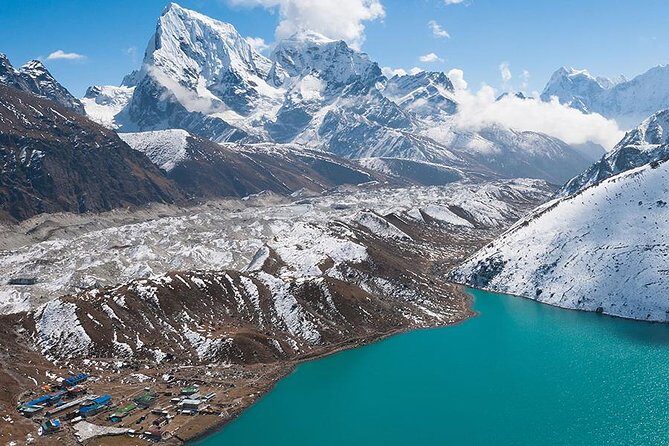
The first pass sets the tone. With Kongma La listed around 5,555m (or sometimes rounded to the mid-5,000s in the overview), you should expect snow and cold that changes how your hands work. Even if you’re not climbing ropes, high passes can feel technical because footing and weather dictate pace.
What makes this day tricky is your body’s response to altitude, not just the pass itself. By the time you’re near a major crossing, you’re already tired from trekking days. That’s why the guide and group pacing matter so much.
A practical mindset: don’t treat the pass as one “go hard” segment. Treat it like a long, slow negotiation with the mountain—short steps, steady breathing, and quick warmth checks.




Cho La Pass: Leaving the Familiar Track for Different Views
Cho La is listed around 5,330m in one part of the description and closer to 5,420m in another. Same deal: you’re stepping into serious altitude territory where the route’s character becomes the point.
This is also where the trek’s “different angle” comes alive. One review highlights the appeal of getting off the main Everest Base Camp track and witnessing the Himalayas from a different route. That’s the real win: you’re not just repeating the most common approach. You’re moving through a more varied high-altitude corridor.
If you’re the kind of traveler who likes seeing more than the headline, this segment will feel satisfying. If you want the predictability of a single popular route, three-pass trekking may feel less convenient—because it’s not trying to be convenient.
Renjo La Pass: The Finishing High Gate
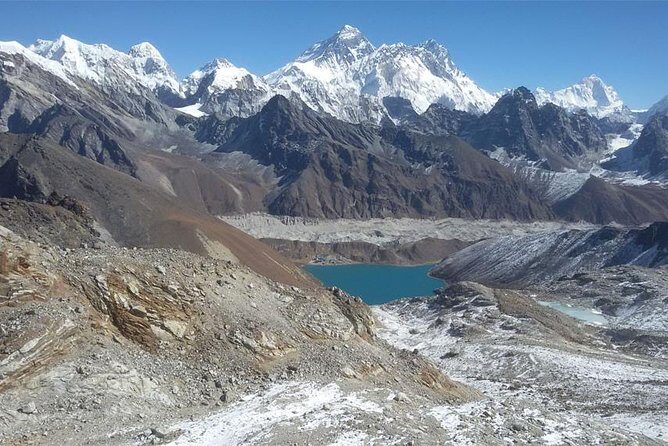
Renjo La is listed at 5,345m in the overview, with another section rounding it nearer 5,360m. By the time you reach the third pass, you’re no longer wondering whether high altitude is real. You already know.
This is where fatigue management matters most. You’re trying to finish strong while still respecting your body. The “finish” part is also emotional: you’ve lived the rhythm of days and valleys, and now you’re pushing for one more big altitude objective.
The third pass often feels psychologically heavier than the second, because you’re aware you’re already committed. Your best protection is your plan for slow and consistent movement. When the weather or footing gets awkward, panic wastes energy. Calm saves it.
Guides and Language Help: Why Licensed, English-Speaking Support Matters
This trip includes a highly experienced, licensed and English speaking guide. At altitude, that’s not a luxury. It’s risk management.
A good guide helps you interpret conditions, manage group pacing, and handle communication quickly—especially when plans need to flex for snow or weather. Reviews include details that point to how guides show up day-to-day:
- Raman is described as professional, patient, and great company, with strong cultural understanding.
- Rabin is described as entertaining a solo traveler with humor, and as very communicative even with a language challenge.
- Raj is noted as speaking Japanese very well.
- Raji (spelled that way in one review) is described as Japanese-capable and helpful with advice, helping the group finish the scheduled course.
The big takeaway for you: you’re paying for more than route knowledge. You’re paying for someone who can keep your head clear when your body is working hard.
Gear Included: Down Jacket and Sleeping Bag (and What You Still Need to Plan)
This trek offers down jacket and sleeping bag (if needed). That’s a smart inclusion for value, because buying proper cold-weather gear just for a short window can be expensive.
Still, I’d treat this as “help,” not as permission to show up unprepared. You should plan on needing layers and cold-weather readiness even if your jacket and sleeping bag are provided. High passes and nights at altitude can be colder than you expect, and the goal is to keep your comfort stable so you can sleep and recover.
If you’re deciding between packing light and packing safe: for a three-pass trek, err toward warmth and functionality. You’ll walk more comfortably when you don’t spend the day fighting the cold.
Health, Safety, and the Non-Negotiable Insurance Point
The trek includes a first aid medical kit, plus TIMS and park fees, which are part of keeping the journey compliant and supported.
But the description is clear: you must bring travel and rescue insurance—it’s compulsory and not included. This is one of those details that’s easy to dismiss until it matters. For high-altitude trekking, insurance is your safety net for the scenario you’re hoping never happens.
Fitness-wise, the trip asks for a strong physical fitness level. That doesn’t mean you need to be a mountain athlete. It means you should train for sustained hikes with elevation, and you should practice walking with a pack. If you’re coming from a mostly sedentary routine, you’re setting yourself up for a rough time on pass days.
Who This Trek Suits Best
This trek fits you best if you:
- want a high-effort trek with three major passes rather than a single long climb
- like the feeling of off-main-route scenery, not just a checklist approach
- value a guided plan with meals and lodging handled
- are comfortable with the idea that altitude demands patience
It may not fit you if you:
- want short daily hikes with lots of free time
- aren’t ready for the intensity of pass days above 5,000m
- prefer trips where almost everything is truly optional and flexible—because here, the main schedule is the route itself
If you’re a first-time trekker, it can still work, but only if your training is solid and you’re willing to follow your guide’s pacing closely.
Should You Book the Everest Three Pass Trek?
I’d say book it if you’re chasing a real high-altitude story, not just a photo stop. The included Lukla flights, full-board meals, licensed guide, and covered park/TIMS/admin make this feel organized for a difficult route. And the pass-focused design gives you variety: you’re not marching through one corridor all the way.
Hold off if you’re unsure about fitness or you can’t comfortably cover the extra required items like insurance and the Nepal entry visa, plus expected tips. Also, if cold-weather gear and long days sound like a hard sell, this trek will test you.
If you’re ready for effort, and you want a guide-led, structured way to cross three big passes in the Khumbu region, this is a strong option to take seriously.
FAQ
What is the duration of the Everest Three Pass Trek?
The trek is listed as 17 days approximately.
Where does this tour start and end?
The tour is based in Kathmandu, Nepal, and it includes airfare Kathmandu–Lukla–Kathmandu.
Which high passes are included?
The trek includes three high passes: Khongma La (listed around 5,555m), Cho La (listed around 5,330m), and Renjo La (listed around 5,345m).
Does the price include meals during the trek?
Yes. The trek includes full board meals during the trek: breakfast, lunch, and dinner.
What kind of accommodation is provided during the trek?
You’ll have twin sharing lodge accommodation during the trek.
What’s included in Kathmandu before the trek?
You get 2 nights standard hotel accommodation with breakfast in Kathmandu.
Is a guide included, and what language do they speak?
Yes. The trek includes a highly experienced, licensed, English speaking guide.
Is park and entry paperwork included?
Yes. The package includes Sagarmatha National Park fees and the TIMS card, plus local government tourism fees.
What gear is included for cold weather?
The tour includes a down jacket and sleeping bag (if needed).
What costs are not included?
Not included are Nepal entry visa fee, travel and rescue insurance (compulsory), and personal expenses like Wi-Fi, laundry, bar bills, battery charge, and hot shower, plus tips for guides and porters expected.