REVIEW · KATHMANDU
UNESCO World Heritage Sightseeing Tour in Kathmandu – 5 Days
Book on Viator →Operated by Best Heritage Tours · Bookable on Viator
Seven UNESCO sites in five days. This Kathmandu tour is built around classic temples and big-city context, then adds a mountain-morning payoff in Nagarkot.
I love the door-to-door airport welcome (including a representative holding your sign and a floral garland), because it makes arrival feel calm instead of chaotic. I also love how the route hits the seven Kathmandu Valley UNESCO sites with private transport and an official guide doing the explaining.
One thing to consider: you’ll do stairs and early mornings—Swayambhu means 365 steps, and Nagarkot viewing is best with an early start.
In This Review
- Key highlights worth planning around
- A 5-Day UNESCO sweep that actually makes sense
- Price and what $499 covers (and what it doesn’t)
- Arrival day: the airport sign and floral garland matter
- Day 2 in Kathmandu: Durbar Square to the big sacred centers
- Kathmandu Durbar Square, Kumari Ghar, and the living goddess
- Pashupatinath: temples, riverside rituals, and a huge sacred complex
- Swayambhunath’s Monkey Temple: the 365 steps test
- Day 3: Patan Durbar Square, Dakshinkali, Chobar, then Nagarkot for the night
- Patan Durbar Square: royal palace courtyards and Krishna Mandir
- Dakshinkali Temple: powerful worship with an intense tradition
- Chobar and Bagmati Valley: caves and quiet village edges
- Nagarkot check-in for the mountain morning
- Day 4: Nagarkot at dawn, then Changu Narayan and Bhaktapur’s Durbar Square
- Nagarkot sunrise views: peaks you can actually name
- Changu Narayan: carvings and one of Nepal’s oldest temples
- Bhaktapur Durbar Square: Newari architecture and a living square
- Day 5: smooth airport transfer and a farewell dinner in Kathmandu
- How the guide style makes or breaks this kind of trip
- Who should book this Kathmandu UNESCO tour
- Should you book it?
- FAQ
- Which UNESCO World Heritage Sites are included?
- Does the tour include airport transfers?
- What does the $499 price include?
- How many nights do you stay, and where?
- Are entrance tickets included for every site?
- Do you need to wake up early in Nagarkot?
- Is there a lot of walking or stairs?
- Can you cancel for a full refund?
Key highlights worth planning around
- Seven UNESCO World Heritage Sites in the Kathmandu Valley, in a tight, well-paced circuit
- Nagarkot sunrise views from about 2,100 meters, with major peaks on a clear-weather day
- Private car touring plus a guide, so you’re not stuck with slow group logistics
- Spiritual contrasts: Hindu temples, Buddhist stupas, and a visit to Dakshinkali
- Comfort-first transfers: round-trip airport transfers and hotel pick-up by private vehicle
- Stair-powered Swayambhunath at the Monkey Temple, including prayer wheels and shrines en route
A 5-Day UNESCO sweep that actually makes sense
Kathmandu can feel like a lot at first: traffic, crowds, noise, and a temple around every corner. This tour reduces the mental load. You get a private vehicle for the main movement days, a guide to connect the dots, and a schedule that clusters major sites by area so you spend less time crossing the city with your brain in gridlock.
The best part for practical travelers is the balance between big-name heritage and lived-in religion. Yes, you’re seeing UNESCO designations. But you’re also watching how people pray, where they gather, and how the city’s religious geography shapes daily life.
You also get a mountain detour that changes the mood: one night in Nagarkot, then an early morning aimed at Himalayan views.
You can also read our reviews of more historical tours in Kathmandu

Price and what $499 covers (and what it doesn’t)
At $499 per person for about 5 days, the value is mostly in what would be expensive to assemble yourself: private transfers, a guide, and multiple hotel nights in Kathmandu plus one night in Nagarkot. Your package also includes dinner(s) and breakfast, plus a farewell dinner in Kathmandu.
Here’s the part you should watch carefully: the tour includes guided Kathmandu city touring with private transport and entrance fees, but the day-by-day schedule lists several “admission ticket not included” stops. That usually means you should budget for a few entrance fees during the heritage visits outside the portion clearly covered.
So the smart way to think about the price is this: you’re paying for organization and access—not just sightseeing. If you hate negotiating taxis, figuring out entry logistics, and trying to match opening times, this package is aimed right at that pain.
Arrival day: the airport sign and floral garland matter
Day 1 is simple, and that’s a win. You’re met at Tribhuvan International Airport with a representative holding a personalized sign. You’ll also receive a floral garland before being taken to your hotel in a private vehicle.
This isn’t just a nice touch. In a new country, early confusion is tiring. Having a private transfer, plus someone who finds you fast, helps you get oriented quickly and reduces the risk of wasting your first hours.
You get free airport pickup time-wise (the schedule lists a 2-hour window). And because the meeting hours are set during the day, it’s designed to work for most typical arrival plans.
Day 2 in Kathmandu: Durbar Square to the big sacred centers
Day 2 is where Kathmandu feels like Kathmandu—dense heritage, temples everywhere, and stories that only make sense with a guide.
Kathmandu Durbar Square, Kumari Ghar, and the living goddess
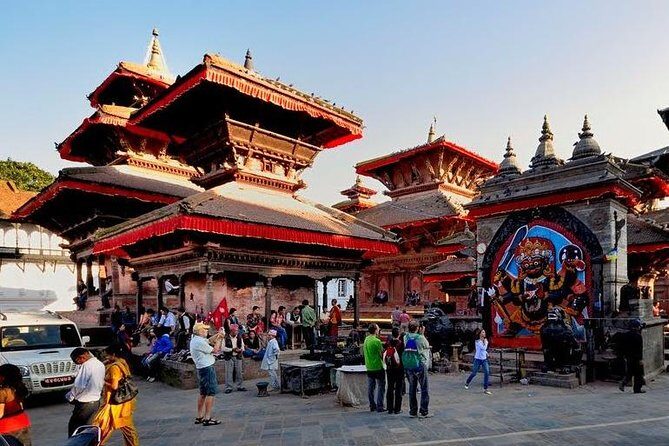
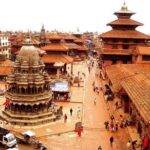
Kathmandu Durbar Square is your starting point for UNESCO heritage in the city center. It’s also one of those places where the architecture explains the era. You’ll spend time around the courtyards and historic-spiritual landmarks, and you’ll get a chance to see Kumari Ghar and Kumari Chowk, the home and courtyard of Nepal’s living goddess.
Two practical things I like about starting with Durbar Square:
- It anchors everything else. Once you see the palace-courtyard layout and the role of ritual space, the later temple visits click faster.
- It’s visually busy in a good way. You’re not waiting around for a single viewpoint. There’s always something happening—shrines, carvings, and people moving between sacred corners.
Plan for time here. The schedule gives 1 hour 30 minutes, and in places like this, that can go quickly once you start looking upward.
A few more Kathmandu tours and experiences worth a look
Pashupatinath: temples, riverside rituals, and a huge sacred complex
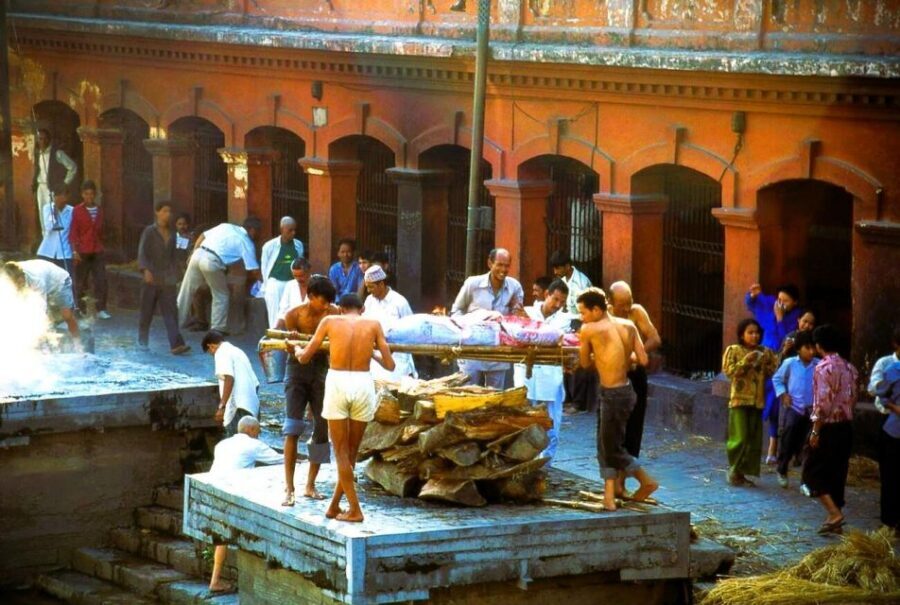
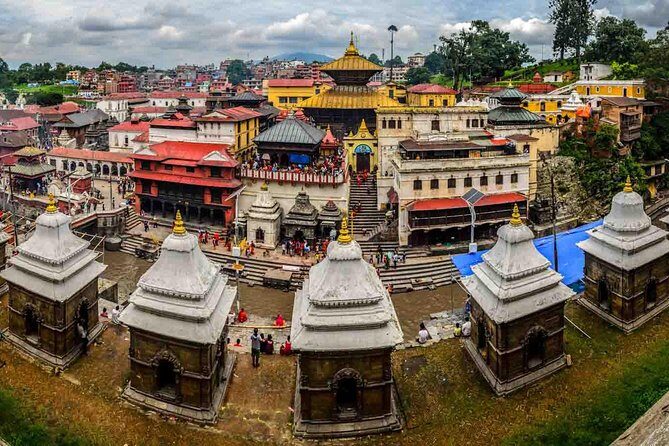
Next up is Pashupatinath Temple. The site dates back to the 5th century and saw renovations by the Malla kings. One detail that helps you appreciate the scale: the grounds house over 500 temples.
If you want a sense of Nepal’s religious life beyond postcard images, Pashupatinath is it. The river setting and the temple density create an atmosphere that feels focused and practiced—people come here with purpose.
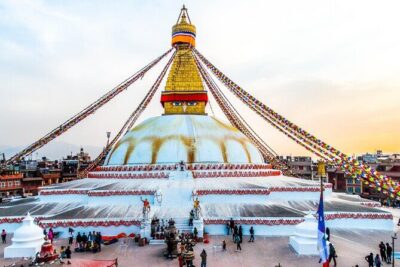
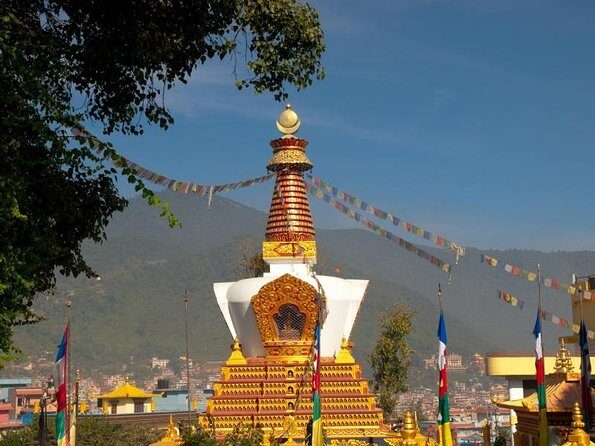
You’ll also visit the stupas of Boudhanath and Swayambhunath as part of this day’s arc. In other words, you’re not stuck in one religion’s geography; you’re moving through Kathmandu’s spiritual overlap.
Swayambhunath’s Monkey Temple: the 365 steps test
Swayambhunath—often called the Monkey Temple—is one of the most memorable stops on the itinerary. You climb 365 steps to reach the central stupa, and along the way you’ll pass shrines.
Once you’re up there, the place delivers on several fronts:
- prayer wheels lining the area
- a large Buddha statue (it’s described as the largest in all of Nepal)
- monkeys that are part of the ecosystem, part of the comedy, and part of the reason you’ll keep checking where you’re placing your hands and bag
Duration on the schedule is about 2 hours. If you’re sensitive to stairs, this is the segment to think about in advance. Even if you can manage it, the “burn” starts before the payoff.
Day 3: Patan Durbar Square, Dakshinkali, Chobar, then Nagarkot for the night
Day 3 shifts from Kathmandu’s core into a bigger arc: heritage sites, a myth-heavy temple stop, a village-side detour, and then the move to Nagarkot.
Patan Durbar Square: royal palace courtyards and Krishna Mandir
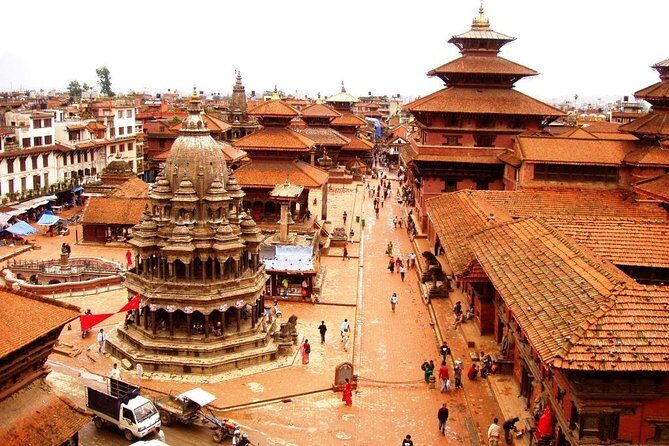
Patan Durbar Square was the royal palace area for the Malla kings. It’s UNESCO-listed and organized around distinct courtyards: Sundari Chowk, Mul Chowk, and Keshav Narayan Chowk.
You also get time for Krishna Mandir, known for its Shikhara architectural style. That matters because you start noticing patterns in Nepalese temple design. The more sites you visit, the more you’ll see similar motifs and different interpretations.
Patan is a great choice on Day 3 because you’re not repeating the same exact vibe. The stonework and courtyard geometry feel its own way, and the pacing gives your legs a break before you go into the more ritual-centered stop later.
Dakshinkali Temple: powerful worship with an intense tradition
After Patan, you head to Dakshinkali Temple, a significant site in Hindu mythology. The itinerary notes animal sacrifices—primarily goats and chickens—are conducted there.
I’m flagging this as a “know before you go” moment. If you’re uncomfortable with animal sacrifice or you get emotionally affected by it, you’ll want to talk to your guide in advance about how close you’ll go and what parts you’ll view.
This stop is not for people who want only architecture photos. It’s for people who want to understand religious practice as practice, not just as scenery.
Chobar and Bagmati Valley: caves and quiet village edges
From Dakshinkali, the tour moves toward Chobar, described as an ancient village at the edge of the Kathmandu Valley, known for caves and the Bagmati Valley scenery.
This portion is valuable because it slows the pace. You’re moving away from the densest temple squares and toward a setting that feels less like a curated museum route.
Nagarkot check-in for the mountain morning
Then you travel to Nagarkot, famous for panoramic Himalayan views. You’ll spend the night there, with the schedule listing a longer travel window (about 10 hours total for the day’s arc).
If you’re doing this for the views, the overnight matters. It gives you a chance at clearer morning light and a better chance of capturing the peaks.
Day 4: Nagarkot at dawn, then Changu Narayan and Bhaktapur’s Durbar Square
Day 4 is the “morning payoff + heritage finale” day.
Nagarkot sunrise views: peaks you can actually name
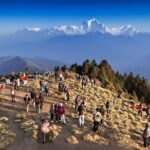
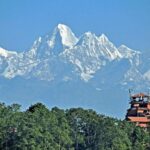
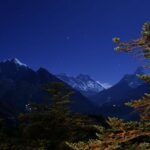
Nagarkot sits at around 2,100 meters. The big instruction is simple: rise early for the best views. On a clear morning, the schedule highlights major peaks including Everest (8,848m), Dorje Lhakpa (6,966m), Langtang (7,234m), Ganesh Himal (7,422m), Gauri Shankar (7,134m), and Rolwaling (7,181m).
Here’s the practical truth: peak visibility depends on weather. But even when visibility is limited, the altitude shift and early-morning atmosphere usually feel like a reset from Kathmandu’s day-to-day energy.
Changu Narayan: carvings and one of Nepal’s oldest temples
After the morning stop, you return toward Kathmandu with a visit to Changu Narayan Temple, another UNESCO World Heritage Site. It’s described as one of the oldest temples in Nepal and known for intricate carvings and decorations.
If you like spending time with details—faces in stone, layered ornamentation—this is a great mid-day breather. It’s not only about size. It’s about craft.
Bhaktapur Durbar Square: Newari architecture and a living square
Next comes Bhaktapur Durbar Square. This UNESCO site features historic temples, courtyards, and intricately carved gates. It’s described as a focal point for religious and cultural activities and known for Newari architecture.
Bhaktapur tends to feel more “stationary” than some other sites. People do daily life around the squares, which makes the space feel real rather than staged. The scheduled visit is about 2 hours, which is enough time to cover the main areas without turning it into a rushed checkpoint.
Day 5: smooth airport transfer and a farewell dinner in Kathmandu
Day 5 keeps things calm. You’ll be picked up from your hotel and transferred to Tribhuvan International Airport.
Your package also includes a farewell dinner in Kathmandu after the tour ends, which gives you one last organized meal instead of searching for something decent on your final night.
The overall structure—several heavy heritage days, then a quiet departure—works well if you don’t want the last day to feel like another sightseeing sprint.
How the guide style makes or breaks this kind of trip
This isn’t a “drive-by temple” itinerary. It relies on an official tour guide to explain what you’re seeing and connect architecture to culture.
In the tour’s history, the name Bimal (including Bimal Dhamala) comes up in multiple places for being friendly, professional, and helpful with comfort details. That includes being able to adjust plans for physical limitations and allergies, according to the way the team is described in customer accounts.
You’ll feel the benefit most at Swayambhunath and Pashupatinath, where the sites are complex and details matter. A good guide helps you know what to look at and when to slow down.
Who should book this Kathmandu UNESCO tour
This tour is a good match if you:
- want private transport and don’t want to spend your time figuring out routes
- care about seeing multiple UNESCO sites in one efficient plan
- enjoy mixing Hindu temples and Buddhist stupas in the same itinerary
- want at least one true mountain moment via Nagarkot
It may be less ideal if you:
- hate stairs and early mornings (Swayambhunath’s 365 steps is real, and Nagarkot wants an early wake-up)
- are strongly uncomfortable with animal sacrifice rituals at Dakshinkali
Should you book it?
If you want a well-organized Kathmandu Valley UNESCO plan with door-to-door transfers, one mountain night, and a guide to make the sites meaningful, I think this is an easy yes. The $499 price is reasonable for what you get—especially the private logistics and multiple nights of accommodation—just be ready for a few entrance fees that may not be included during every stop.
My advice: if stairs or sensitive religious traditions are a concern for you, message your operator ahead of time and ask how your route and viewing options will work. Done right, this kind of trip is one of the most efficient ways to understand Kathmandu beyond the usual photo stops.
FAQ
Which UNESCO World Heritage Sites are included?
The tour includes Kathmandu Durbar Square, Swayambhunath, Pashupatinath, Boudhanath, Patan Durbar Square, Changu Narayan Temple, and Bhaktapur Durbar Square.
Does the tour include airport transfers?
Yes. You get free round-trip transfers between Tribhuvan International Airport and your hotel, with pickup on arrival and transfer to the airport on the final day.
What does the $499 price include?
The package includes 4 nights of accommodation (3 in Kathmandu and 1 in Nagarkot), breakfast (4), dinner (including a farewell dinner in Kathmandu), an official tour guide, all tour transportation, and guided Kathmandu city touring with private transport and entrance fees.
How many nights do you stay, and where?
You stay for 4 nights total: 3 nights in Kathmandu and 1 night in Nagarkot.
Are entrance tickets included for every site?
Not necessarily. The guided Kathmandu city tour includes entrance fees, but several stops in the day-by-day schedule list admission tickets as not included. Plan to pay additional entry fees depending on the specific site.
Do you need to wake up early in Nagarkot?
Yes. The itinerary recommends rising early to see the Himalayan peaks from Nagarkot.
Is there a lot of walking or stairs?
There is at least one major stairs segment: Swayambhunath requires climbing 365 steps to reach the central stupa.
Can you cancel for a full refund?
Yes. Cancellation is free, and you can cancel up to 24 hours in advance for a full refund. If you cancel less than 24 hours before the start time, the amount paid is not refunded.