REVIEW · KATHMANDU
Kathmandu city day tour (4 world heritage sites)
Book on Viator →Operated by Third Eye Adventure P. Ltd · Bookable on Viator
Four UNESCO sites, one well-paced Kathmandu day. What makes this tour interesting is the mix: Hindu cremation grounds, a major Buddhist stupa, Patan’s carved royal-city squares, and the Monkey Temple all in one circuit. I love the licensed guide who explains what you’re looking at, and I love the order of stops, which helps you build a mental map of Kathmandu’s spiritual sides. One drawback: admission fees aren’t included, so your final cost will depend on entry tickets and any other on-site charges.
You also get practical help that matters in a city like Kathmandu: pickup is offered, the ride is in an air-conditioned vehicle, and you’ll travel with a license holder guide. In the same orbit of guiding styles, you might encounter names like Nitesh Pudasaini or Ari, who focus on culture, history, and religion, plus extra touches like sound-healing demos if you’re interested.
The day starts at 9:15 am and runs about 6 hours, moving through four UNESCO sites—Pashupatinath, Boudhanath, Patan Durbar Square, and Swayambhunath—so it’s packed, but not frantic.
In This Review
- Key things I’d clock before you go
- How this Kathmandu city tour feels in real life
- Price and logistics: what your $80 really covers
- Stop 1: Pashupatinath Temple and the Bagmati River edge
- Stop 2: Boudhanath Stupa, rooftop lunch, and daily pilgrims
- Stop 3: Patan Durbar Square and the carved royal-city feel
- Stop 4: Swayambhunath Monkey Temple for views and icon mixes
- The real value: a guide who ties the sights together
- How to time your photos, lunch, and pacing
- What you’ll actually learn (beyond “it’s a stupa”)
- Who this Kathmandu UNESCO day tour suits best
- Should you book this Kathmandu city day tour?
- FAQ
- How long is the Kathmandu city day tour with four UNESCO sites?
- What stops are included in the tour?
- Is hotel pickup included?
- Are admission tickets included for the sites?
- Is this tour private?
- Do I get a mobile ticket?
- Are there any guidance or vehicles included?
- What is the cancellation policy?
Key things I’d clock before you go
- Four UNESCO stops, one route: you see the big icons without hunting for directions.
- A licensed guide, not just a driver: explanations help the architecture and rituals make sense.
- Air-conditioned transport with pickup: easier for heat, traffic, and fatigue.
- One stupa square with prime people-watching: Boudhanath draws daily pilgrims.
- Monkeys at Swayambhunath: expect chaotic energy and a hilltop viewpoint.
How this Kathmandu city tour feels in real life
This isn’t a slow museum day. It’s a Kathmandu day of temples, squares, and holy spaces, with just enough time at each stop to get your bearings and take photos without feeling like you’re sprinting the whole route.
You’re given a clear structure: the guide meets you at your hotel, you ride in comfort, and you move stop-to-stop in a way that saves you time. That matters because Kathmandu can be confusing at street level, and you’ll waste more energy than you think trying to self-navigate—especially if you’re short on daylight.
Also, the private setup is a quiet advantage. It’s just your group, so you’re not squeezed into someone else’s pace. If your group likes questions, the guide can slow down. If your group is photo-focused, the timing can be adjusted.
You can also read our reviews of more city tours in Kathmandu
Price and logistics: what your $80 really covers
The advertised price is $80 per person for about 6 hours. That sounds like decent value for Kathmandu, because the core “heavy lifting” is included: an air-conditioned vehicle and a licensed guide.
What is not included is the part that can surprise people: all fees and taxes. The itinerary itself lists admission ticket charges as not included at each UNESCO stop. So expect your final total to be base price plus whatever entry fees apply that day, plus any other on-site charges you choose to pay.
You also start at 9:15 am. That’s smart. Early timing helps with crowd pressure and gives you daylight for views—especially at the hilltop finish.
Finally, the tour uses a mobile ticket, and confirmation is received at booking time. If you like clean, low-friction travel days, this is that kind of setup.
Stop 1: Pashupatinath Temple and the Bagmati River edge
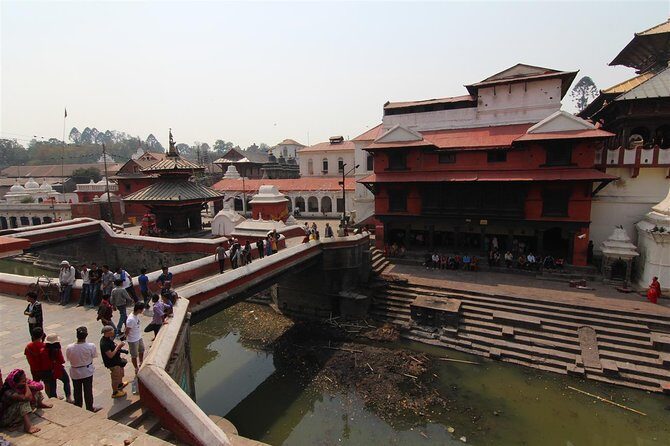
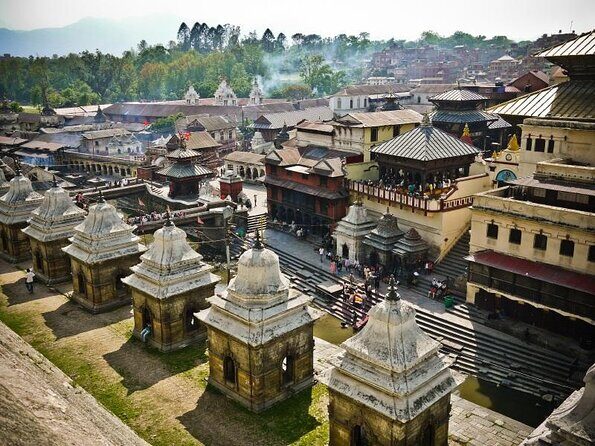
Pashupatinath is Nepal’s most important Hindu sight, and it sits right on the banks of the holy Bagmati River. The effect is immediate: you’re not just looking at a temple complex—you’re looking at a sacred riverside space that has a real, ongoing role in religious life.
Plan to spend about 2 hours here. That’s enough time to take in the architecture and to understand the site’s purpose beyond sightseeing. The itinerary notes that this location is used as a cremation ground. That detail changes the tone of the visit. It’s worth approaching it with calm and respect, since the place is meaningful whether you’re there for a photo or not.
Practical note: you’ll likely feel the pull of the riverfront and the dense scene around the temple. If your group gets distracted easily, the guide’s explanations help you focus on what you’re seeing and why it matters.
Stop 2: Boudhanath Stupa, rooftop lunch, and daily pilgrims
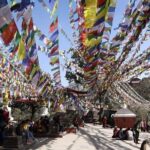
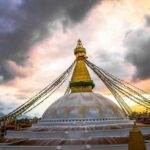
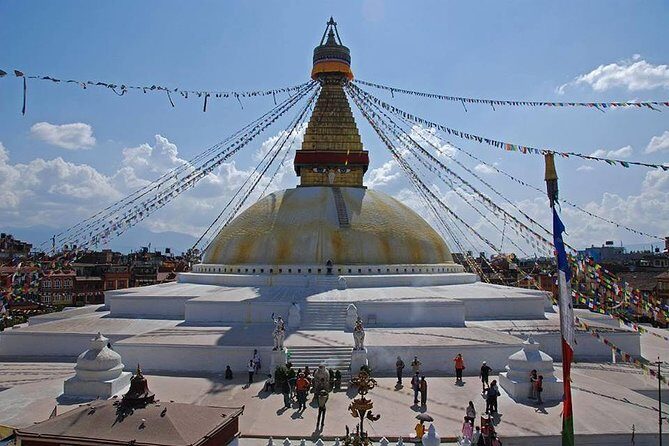
Boudhanath is the largest Buddhist stupa in Asia, and it’s one of those places where you can feel how the site works as a living center—not just a landmark.
You’ll get about 1 hour here. That’s short, but Boudhanath is built for quick immersion: the stupa dominates your view, and you can watch thousands of pilgrims gather and walk around the dome each day. Even if you’re not deeply religious, you can’t help noticing the rhythm.
The itinerary also suggests a simple, smart move: climb up to a rooftop café for lunch. This is one of those practical tourism wins. It’s not just food—it’s perspective. From above, you can see the square’s layout and how the crowd flows around the stupa.
A consideration: one hour can feel tight if you want long pauses for photos, people-watching, and a slow lunch. If you know your group will linger, ask the guide to keep lunch efficient so you don’t compress the rest of the day too much.
Stop 3: Patan Durbar Square and the carved royal-city feel
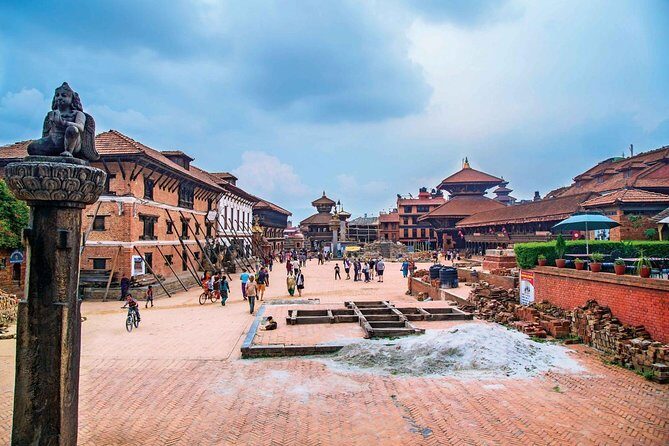
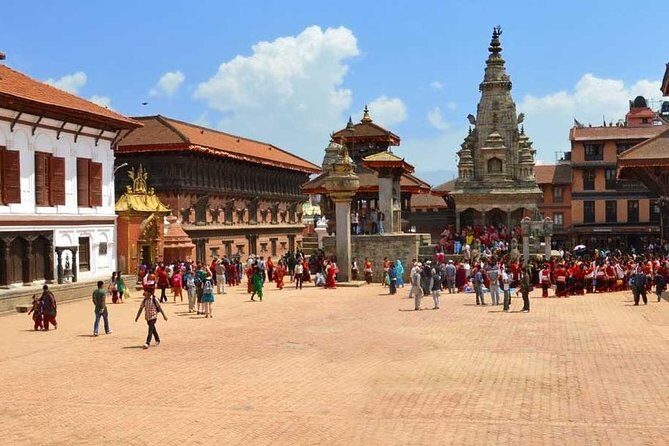
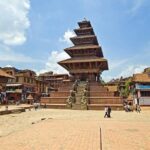
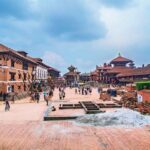
After lunch, you head to Patan Durbar Square for about 2 hours. Patan is one of three royal cities in the Kathmandu Valley, and this stop leans hard into craftsmanship: wood and stone carvings, metal statues, and ornate architecture.
What makes it special is scale. The itinerary mentions over 1,200 monuments, plus dozens of Buddhist and Hindu temples inside the Durbar Square area. That number is hard to picture until you’re there. The site isn’t one object—it’s a whole environment of details.
You’ll spend time looking at statues, carvings, and temple clusters, and the guide’s context helps you separate what’s decoration from what’s meaning. If you’re the kind of traveler who likes architecture more than crowds, this is often the most satisfying stop of the day because you can focus on surfaces and symbols.
The drawback here is also time-related: with four UNESCO stops in one day, you can only take in a portion of Patan’s square. If you want a slower, deeper exploration, this tour is more of an introduction than a final say.
You can also read our reviews of more historical tours in Kathmandu


Stop 4: Swayambhunath Monkey Temple for views and icon mixes
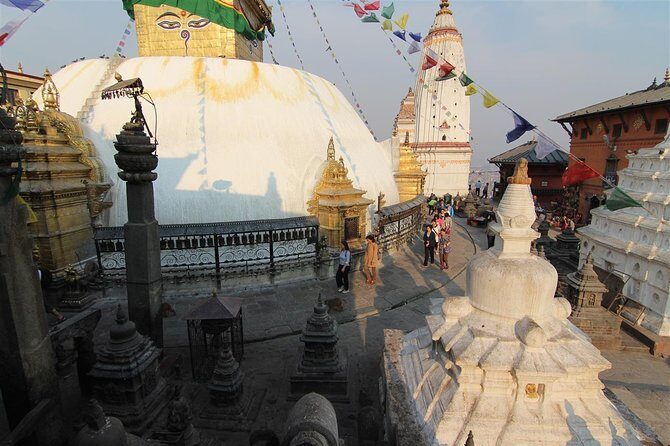
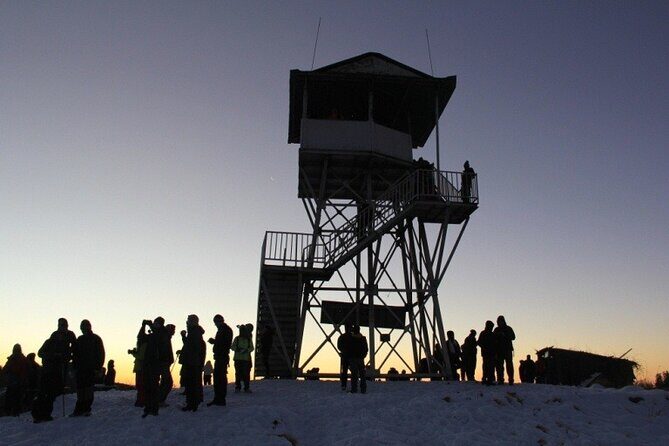
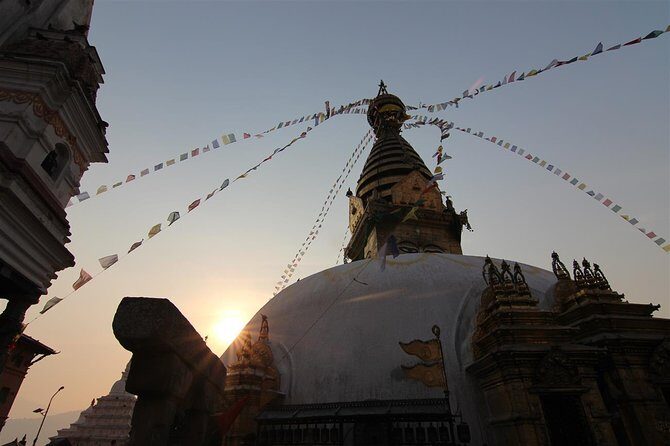
Swayambhunath, also called the Monkey Temple, is a hilltop Buddhist temple where you’ll see monkeys and a mix of Buddhist and Hindu iconography. The vibe is different from the river and stupa settings: this one feels higher, more chaotic, and more exposed to the whole city.
Expect about 1 hour. The itinerary emphasizes two things: the view and the iconography. At Swayambhunath, the viewpoint is the point. You’re finishing the loop, so your eyes have time to rest—and then you’re rewarded with city sightlines.
The day plan even suggests a possible bonus: you might catch sunset before heading back to your hotel. Whether sunset happens depends on the day and timing, but the idea is good. Finishing on a hilltop view gives the tour a clean emotional close.
One consideration: monkeys are part of the experience. Keep loose items controlled and avoid creating chaos near the animals. If your group has kids or anyone who hates surprises, mention it to the guide at the start so you can set expectations.
The real value: a guide who ties the sights together
A lot of tours “visit temples.” This one aims to make you understand them as a set.
The itinerary is structured as a story of Kathmandu’s sacred geography: Hindu cremation space at Pashupatinath, Buddhist pilgrimage movement at Boudhanath, Patan’s royal-city monuments and temple clusters, then a hilltop icon mix at Swayambhunath.
That guided explanation matters because Kathmandu’s sights can look similar to the untrained eye—stone, carvings, steps, icon panels. A strong guide helps you see what’s different and why. In past guiding experiences within Third Eye Adventure’s team, names like Nitesh Pudasaini and Ari have been called out for sharing a lot of information about temples and for connecting culture, history, and religion to what you see.
There’s also a more unusual element you may encounter: one city excursion included a sound healing demonstration when guests showed interest, and the guide was open to helping coordinate an authentic healing bowl stop during the broader Kathmandu day. If you’re into that kind of wellness add-on, it can turn a standard sightseeing day into something more personal.
How to time your photos, lunch, and pacing
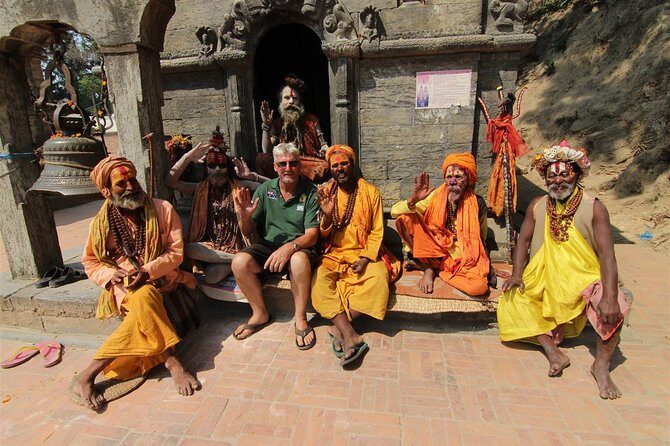
Because you’re covering four major sites, your success comes down to pacing. Here’s the approach I’d use if I wanted a smooth day:
- Treat each stop like a chapter, not a full book. Give yourself enough time to see the main areas, then move on.
- At Boudhanath, make lunch purposeful. Rooftop lunch is a viewpoint plan, not just a meal.
- Save your slowest, most detail-hunting moment for Patan Durbar Square, where you’ll be surrounded by carvings and monuments.
Also, if your group gets photo-heavy at the hilltop, it can steal time from the final push back. A good guide can help you balance photos with the itinerary rhythm, especially when it’s a private group.
What you’ll actually learn (beyond “it’s a stupa”)
This kind of tour works best when you come with curiosity. If you do, you’ll walk away with a stronger mental map of how Kathmandu blends religious life and art.
From Pashupatinath, you learn how the Bagmati River edge connects the temple complex to Hindu practice, including the reality that the site is used as a cremation ground.
From Boudhanath, you learn how a major stupa functions daily, with pilgrims gathering to walk around the dome each day. The stupa isn’t just architecture—it’s a center for repeated, everyday devotion.
From Patan, you learn how royal power and temple building left a visible fingerprint: wood and stone carvings, metal statues, ornate buildings, and a large concentration of Buddhist and Hindu monuments in a single historic square.
From Swayambhunath, you learn how layered iconography can sit together on one hilltop, plus you get the city view that turns the day into something memorable.
Who this Kathmandu UNESCO day tour suits best
This is a strong choice if you:
- Want a single-day introduction to four UNESCO World Heritage sites.
- Prefer a licensed guide who can explain meaning as you go.
- Like private-group comfort without giving up a structured route.
It’s also a decent fit for people who are okay with a busy schedule. If you love slow travel, pick one or two sites and add time. This tour is designed for coverage.
Should you book this Kathmandu city day tour?
If you want a fast, well-structured “best-of” day that mixes Hindu and Buddhist sites with a guide who helps you see meaning—not just sights—this is worth booking. The included vehicle and guide make it easier to pull off four stops without wasting half your day figuring things out.
Just be honest about the tradeoff: admission fees aren’t included, and the schedule is tight enough that you can’t linger forever. If your group accepts that, you’ll get a satisfying overview and a memorable finish at Swayambhunath.
FAQ
How long is the Kathmandu city day tour with four UNESCO sites?
It runs for about 6 hours (approx.), starting at 9:15 am.
What stops are included in the tour?
You’ll visit Pashupatinath Temple, Boudhanath Stupa, Patan Durbar Square, and Swayambhunath Temple.
Is hotel pickup included?
Yes, pickup is offered, and the guide meets you at your hotel.
Are admission tickets included for the sites?
No. Admission tickets are not included, and all fees and taxes are not included.
Is this tour private?
Yes. It’s private, meaning only your group participates.
Do I get a mobile ticket?
Yes, mobile ticket is included.
Are there any guidance or vehicles included?
You get an air-conditioned vehicle and a licensed holder tour guide.
What is the cancellation policy?
You can cancel for free. You must cancel at least 24 hours before the start time for a full refund, and changes within 24 hours aren’t accepted. If the minimum traveler requirement isn’t met, the experience may be canceled and you’ll be offered a different date or a full refund.