REVIEW · KATHMANDU
Kathmandu: Pashupatinath Evening Aarati Tour Private/Group
Book on GetYourGuide →Operated by Himalayan 360 · Bookable on GetYourGuide
Evening lights, chanting, and oil lamps line the river. This Kathmandu tour is built around one moment—Pashupatinath’s evening aarati—and it doesn’t just drop you at the gate; you get context first, then you watch the ritual unfold on the Bagmati River.
I like the way the tour blends a guided orientation of the temple complex with free time to settle in on your own. If you land with Amrit, you’ll get lots of explanations and real answers to questions before the ceremony starts. I also like the practical side: Thamel hotel pickup and drop-off and round-trip transport keeps the evening low-stress.
One thing to consider: your viewing spot is everything, and it’s not guaranteed just because you arrive early. In one case, the ceremony-focus wasn’t ideal because the group was placed awkwardly, so it helps to speak up early and ask your guide about where you’ll stand before the lights begin.
In This Review
- Key highlights at a glance
- Why Pashupatinath’s evening aarati hits differently than daytime
- Late-afternoon pickup and the drive out of Thamel
- The guided temple walk: what you gain before the ceremony
- Free time inside the complex: how to use it well
- The aarati at Bagmati: what the ceremony includes and what to expect
- Where you stand matters: get your viewing position sorted early
- Price and value: is $22 fair for this 2–3 hour experience?
- What language support looks like (and why it matters)
- Who this tour suits best
- Practical tips to keep the evening comfortable
- Should you book this Pashupatinath evening aarati tour?
- FAQ
- What time does the evening aarati start?
- How long is the tour?
- Where do hotel pickup and drop-off happen?
- What’s included in the price?
- Are entry fees included?
- Can I cancel if my plans change?
Key highlights at a glance
- Guided temple orientation so you understand what you’re looking at before the aarati begins
- Evening timing around 6 pm for the best candle-and-incense atmosphere on the river bank
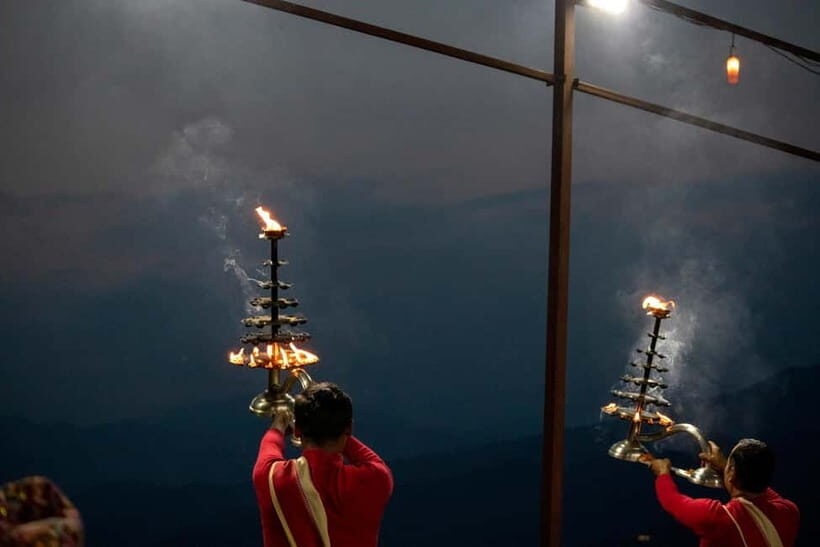
- Ritual details in full view: Vedic chanting, bells, incense, and live classical music
- Hotel convenience from Thamel plus transport to and from Pashupatinath
- A chance to explore first with free time inside the temple complex
Why Pashupatinath’s evening aarati hits differently than daytime
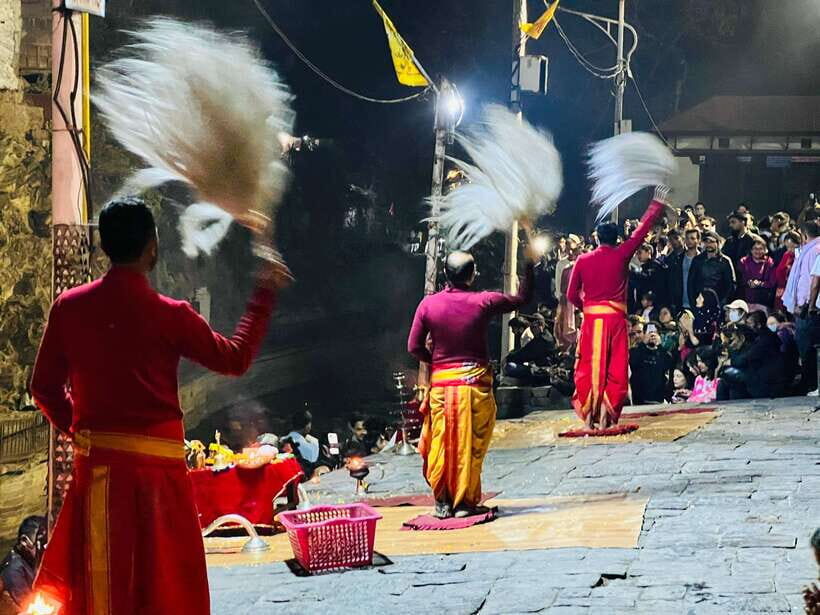
If you’ve only seen temples from the outside, this is the version where the place starts feeling alive. The evening aarati at Pashupatinath happens on the Bagmati River banks, and once the ceremony begins, the whole area shifts into a different rhythm—sound, light, movement, and devotion working together.
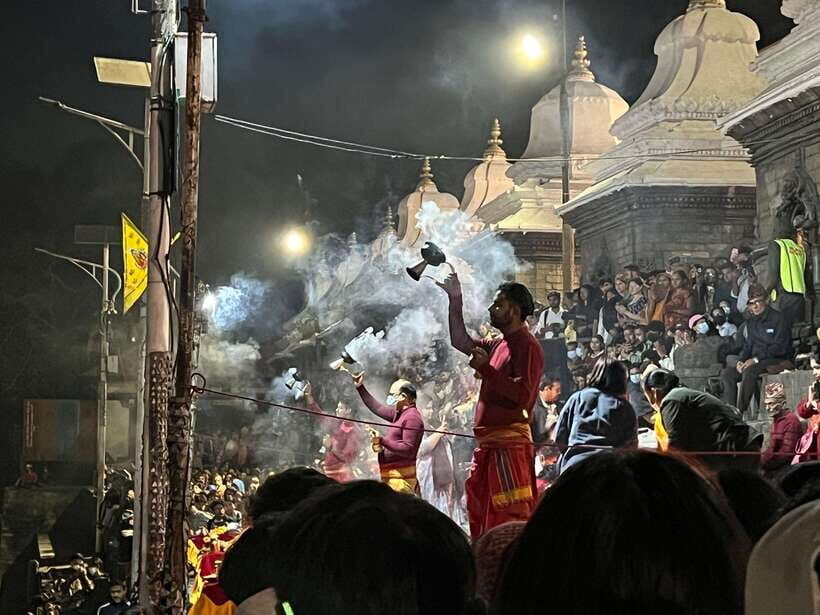
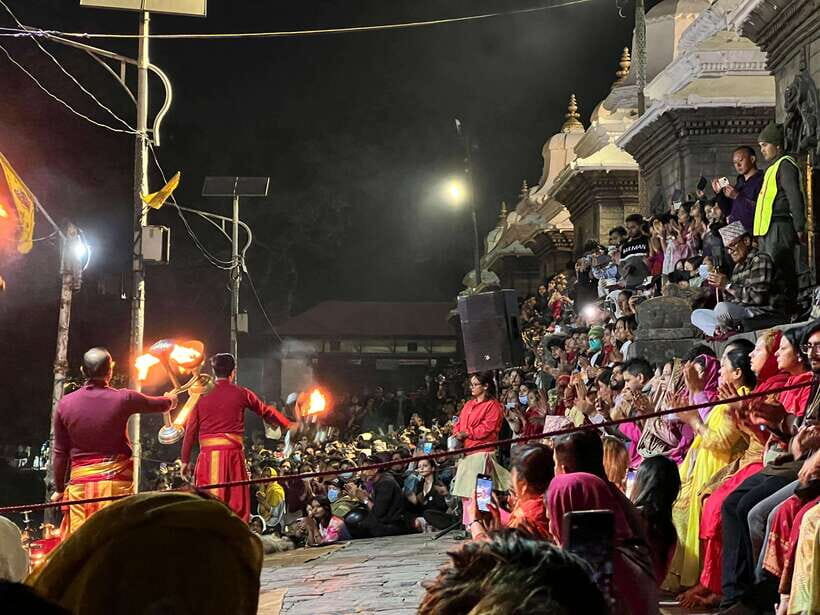
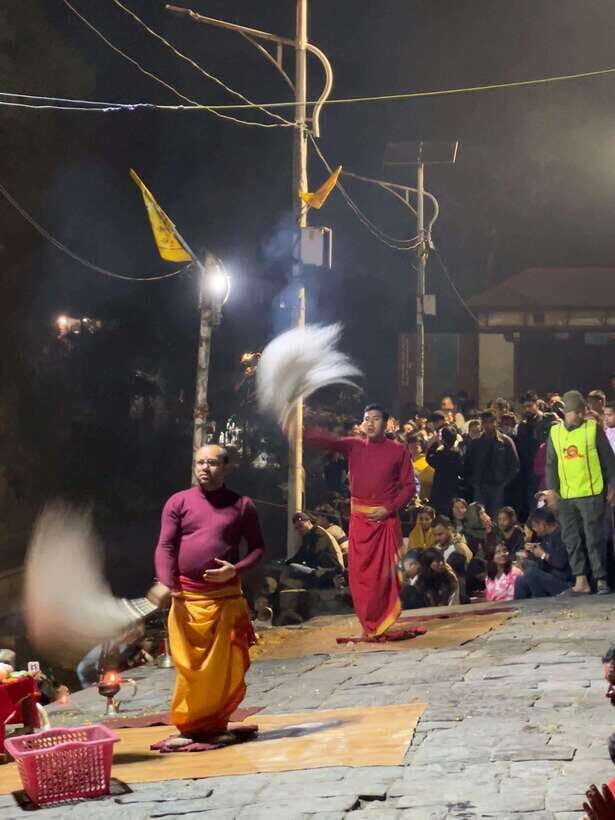
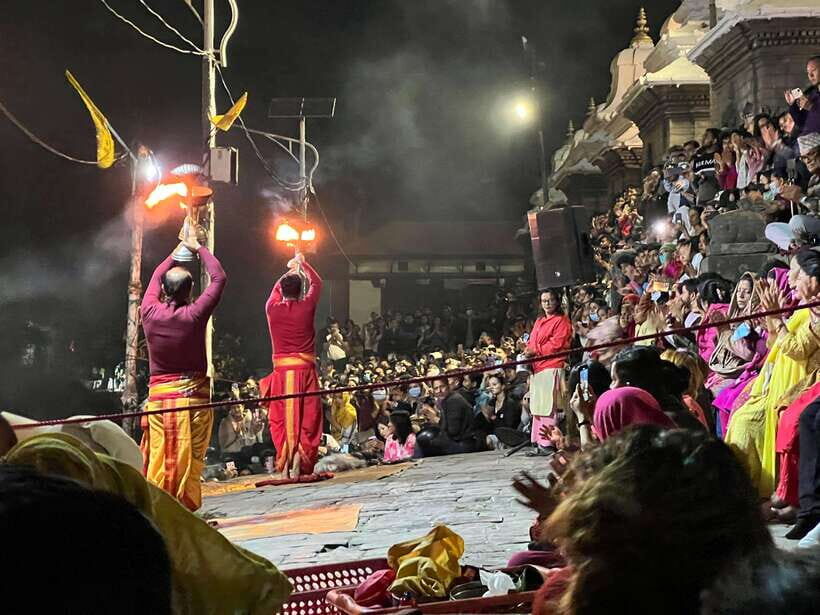
You’ll see a full sequence of ritual elements: chanting of Vedic mantras, the rhythmic ringing of bells, priests waving oil lamps in patterned gestures, burning incense, and live music with classical instruments and devotional hymns. That combination matters. It isn’t just watching people pray. It’s watching a whole system of cues—voice, bell, flame, and melody—tell you what to feel and when.
This also explains why the timing is the big deal. The tour is planned around the evening ceremony, starting at about 6 pm. That’s when the flickering lamps create the signature look people come for. Daytime visits are impressive, but they don’t usually deliver the same sensory punch.
You can also read our reviews of more private tours in Kathmandu



Late-afternoon pickup and the drive out of Thamel
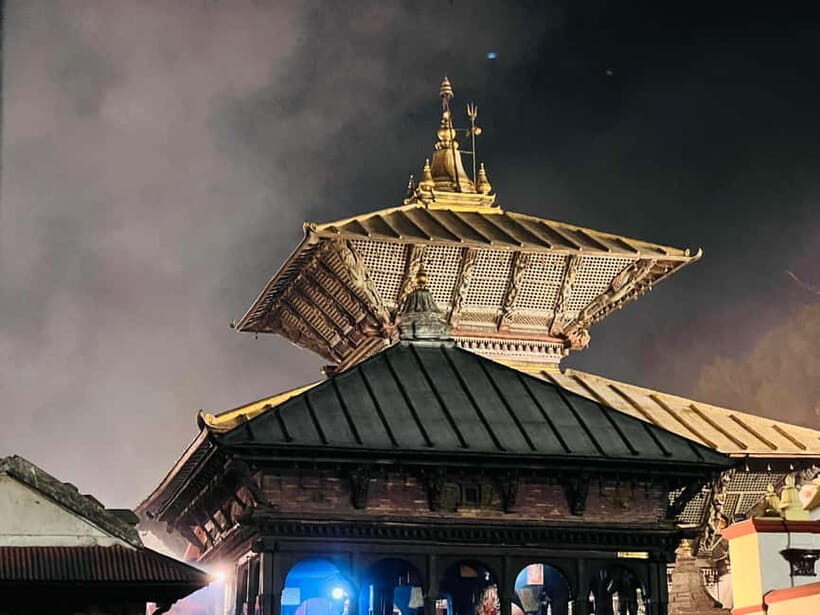
The tour starts late afternoon, with pickup from your Kathmandu location in the Thamel area (pick-up options include Thamel and Thamel Marg). You’ll drive to Pashupatinath, and the route is part of the experience. Even if you’re not a scenery-chaser, the short change in setting helps you mentally switch gears from city noise into ritual mode.
The whole tour usually runs 2 to 3 hours, so it’s not a half-day commitment. That makes it easier to fit into a busy Kathmandu schedule—especially if you’re spending your daylight hours doing other classic stops.
Practical note: hotel pickup is only from Thamel or nearby, so if you’re staying farther out, confirm your pick-up point when you book. The tour is designed to be smooth, not complicated.
The guided temple walk: what you gain before the ceremony
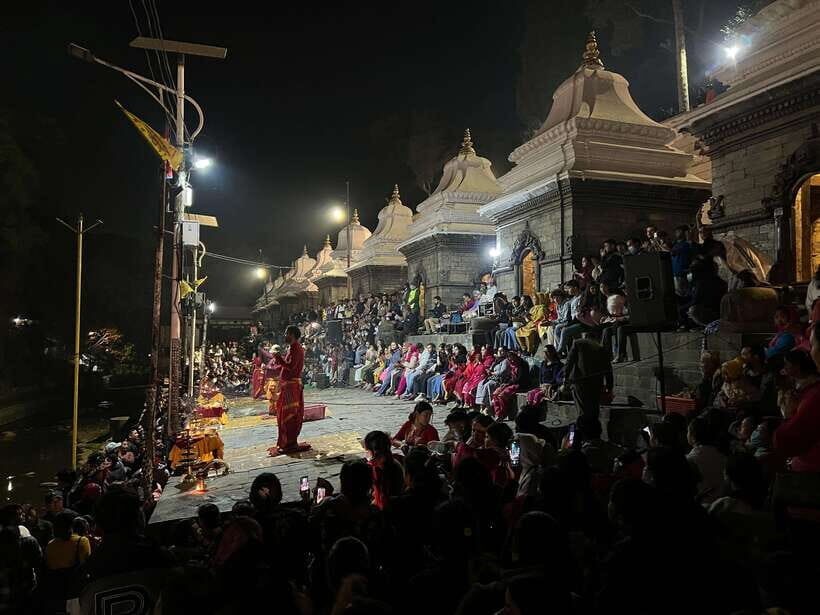
Before you reach the river bank, you do the temple complex with a licensed English-speaking guide. The guided portion is about 1.5 hours, and this is where the tour earns its keep.
A good guide turns a big, old religious site into something you can actually follow. You’ll get explanations about:
- the temple’s history and religious significance
- the architectural features you might otherwise overlook
- how the complex is laid out, so the ceremony later makes more sense
This is also your time to ask questions. The ritual at Pashupatinath is intense and specific. If you know what you’re looking for—what the oil lamps represent, why the chanting matters, how the ceremony is structured—you’ll understand more of what’s happening in real time instead of translating everything on the fly.
Free time inside the complex: how to use it well
After the guided portion, you get free time to explore the site on your own. That might sound vague, but it’s actually useful if you use it strategically.
Here’s how to make it pay off:
- Take a short walk to get your bearings. You’ll be back at the ceremony area soon, and knowing your routes saves stress later.
- Look for a viewing position that feels comfortable for you. You’ll likely be standing or moving around a bit as people shift.
- If you’re planning to take photos, use this window to test your angles and figure out where the light will hit from the river bank.
This free time also helps you avoid the common problem with evening rituals: rushing around right when the ceremony starts. You’ll be calmer if you’ve already had a chance to wander first.
The aarati at Bagmati: what the ceremony includes and what to expect
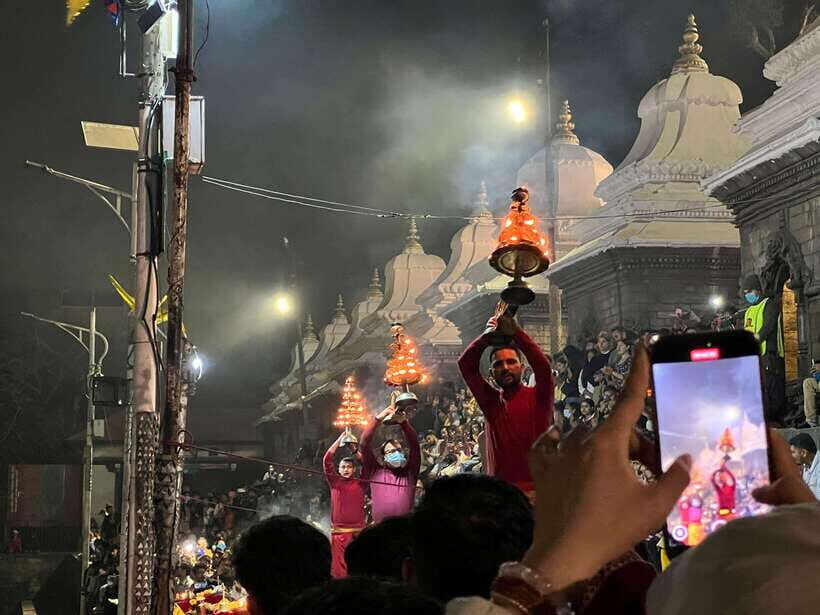
Around 6 pm, the evening aarati begins on the eastern bank of the Bagmati River. This is the moment you’ll remember.
The experience has a “layered” feel:
- Sound first: chanting and bell rhythms set the pace
- Incense and smoke: the air becomes part of the ritual, not just background
- Light and motion: priests wave oil lamps in intricate patterns
- Music support: live classical instruments and devotional hymns carry the devotion forward
As the lamps flicker, the river bank turns into a kind of living stage. It’s not silent, and it’s not casual. It’s structured and solemn, and the crowd energy reflects that—people are there to witness, not to treat it like a photo stop.
One important consideration: viewing spots matter. In one detailed booking experience, the guide selected a less-than-ideal location, and the person in the group had to interrupt a conversation multiple times to request movement. Translation: don’t assume the first place you’re assigned will be your best angle.
You can also read our reviews of more evening experiences in Kathmandu




Where you stand matters: get your viewing position sorted early
Even with a guide, you don’t control everything about the ceremony setup. That’s why I suggest you do two things as soon as you arrive for the ritual portion.
First, ask your guide where the group will be standing and how flexible it is once the ceremony starts. Second, if your priority is strictly the aarati ritual (not surrounding areas people might associate with other practices), say so clearly right away.
You don’t need to be dramatic. Just be direct and respectful:
- Tell your guide you want the focus to be the oil lamps, chanting, bells, and music.
- If you don’t like the initial placement, ask to move before things get crowded and the priests begin the main motions.
The key isn’t to argue. It’s to make sure your spot matches your goal for the evening.
Price and value: is $22 fair for this 2–3 hour experience?
At $22 per person, this tour can feel like good value if you want a guided, evening-focused ritual without having to coordinate transport or figure out logistics yourself.
Here’s what you’re getting for that price based on what’s included:
- Hotel pickup and drop-off from Thamel or nearby
- Transportation to and from Pashupatinath
- A licensed English-speaking guide
- Taxes and service charges
What you’re not getting:
- Food and drinks
- Entry fees (separate)
So the value depends on two things. If you’re staying in Thamel and you prefer not to handle transportation on your own, the included logistics are a real convenience. And if you plan your timing and budget for any entry fees, the price can feel straightforward for a guided evening ritual with transport.
What language support looks like (and why it matters)
This tour runs with an English-speaking guide, with language options that include English, Hindi, and Chinese. That’s more important than it sounds.
When you’re watching a ritual with chanting, bells, incense, and live classical music, you’ll enjoy it more if you can understand what the guide is telling you about the meaning behind the actions—especially before the ceremony starts. It also makes it easier to ask questions during the temple walk instead of trying to guess.
If you’re the type who likes to understand what you’re seeing, this language flexibility can help you get a lot more out of the same event.
Who this tour suits best
This is a strong fit if you:
- want an evening experience tied to Nepal’s Hindu spiritual life
- like guided context before you watch a ceremony
- are staying in or near Thamel and want an easy pick-up plan
- prefer a shorter outing (about 2–3 hours) rather than a long day trip
It may be less suitable if you need wheelchair access. The tour is not set up for wheelchair users, and it’s also listed as not suitable for very young children (children under 2, children under 5, and babies under 1). If you’re traveling with small kids, check carefully that the age limits work for your group.
Practical tips to keep the evening comfortable
Bring the basics and you’ll have a smoother time:
- Comfortable shoes (you’ll be walking in the temple complex and standing near the river)
- A camera if you want to capture the lamps and atmosphere
- Cash (helpful for anything you may need on-site, including entry fees since they’re not included)
Also, plan to keep your expectations realistic. This is a living religious ritual. You’re there to witness it, not to take unlimited photos or expect perfect quiet. If you go in with a calm, respectful mindset, the evening tends to feel powerful fast.
Should you book this Pashupatinath evening aarati tour?
If your goal is to see the evening aarati at Pashupatinath with a guide who helps you understand what you’re watching, I think it’s worth booking—especially because it’s short, timed well, and includes Thamel pickup and drop-off plus transport.
I’d especially consider it if you like structured experiences: a temple orientation first, then the ceremony around 6 pm. The only reason to hesitate is if you’re very picky about viewing angles. If that’s you, speak up early about where you’ll stand and keep your communication simple and polite.
FAQ
What time does the evening aarati start?
The evening aarati starts at about 6 pm, held on the eastern bank of the Bagmati River.
How long is the tour?
The tour lasts about 2 to 3 hours.
Where do hotel pickup and drop-off happen?
Pickup and drop-off are available in the Thamel area, including Thamel and Thamel Marg.
What’s included in the price?
The price includes hotel pickup and drop-off from Thamel or nearby, transportation to and from Pashupatinath, and a licensed English-speaking guide, plus taxes and service charges.
Are entry fees included?
No. Entry fees are not included.
Can I cancel if my plans change?
Yes. You can cancel up to 24 hours in advance for a full refund.