REVIEW · KATHMANDU
Kathmandu: Pashupatinath Temple Evening Aarati Tour
Book on GetYourGuide →Operated by Breakfree Adventures Pvt. Ltd. · Bookable on GetYourGuide
Sacred lamps glow over the Bagmati at dusk. The Pashupati Bagmati Aarati at Pashupatinath is one of those rare Kathmandu moments where faith, sound, and river air line up into a clear, repeatable ritual. I especially liked the Bagmati River setting right beside the temple and the way a strong English-speaking guide, like Razz (often described as kind and caring), helps you understand what you’re seeing beyond the chants. One thing to plan for: there’s an extra 1000 rupees entrance fee per person, and the area can get crowded on busy days.
This is a 3-hour evening tour with pickup and drop-off from Thamel or Boudhha, and it’s timed for the ritual start at 6 pm. You’ll get hotel pickup, a private vehicle, and a private English guide who can help you move through the crowds with less stress than you’d have on your own. The practical catch is simple: it’s religious space, so expect lines, rules, and a pace that won’t feel like a casual sightseeing walk.
In This Review
- Key things to know before you go
- Pashupati Bagmati Aarati: what you’re really watching
- Entering Pashupatinath with a private guide (and real crowd sense)
- The 3-hour rhythm: how the evening unfolds
- Watching the lamps by the Bagmati River
- Beyond the ceremony: Shiva devotion, bhajans, and the Tandav
- Price and value: is $35 actually a good deal?
- When this tour is a great match (and when it’s not)
- Should you book this Kathmandu Pashupatinath evening Aarati tour?
- FAQ
- What time does the Pashupati Bagmati Aarati start?
- How long is the tour at Pashupatinath?
- Where can I be picked up and dropped off?
- Is the temple entrance fee included?
- Will I have a guide, and is it in English?
- What’s included in the price?
- Is there free cancellation?
Key things to know before you go
- The Aarati is tied to the Bagmati River, so you’re watching worship unfold in the same spot people associate with spiritual cleansing.
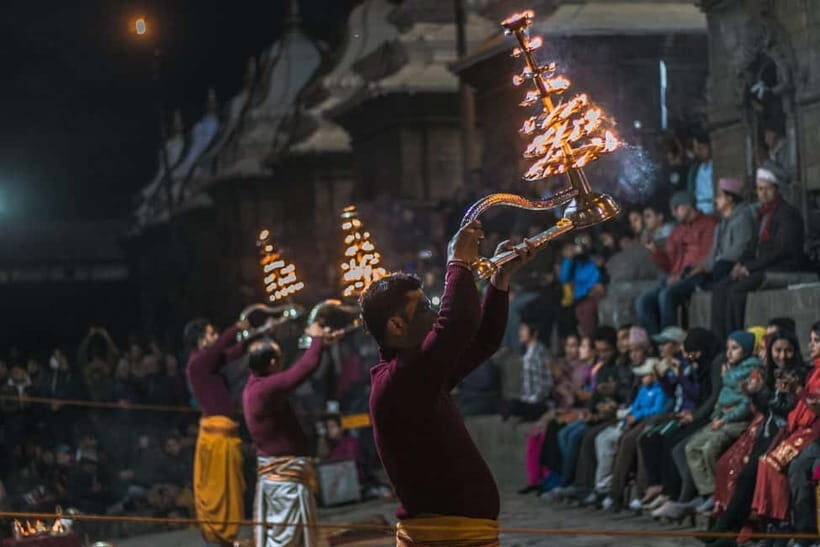
- Oil lamps move in circular motions, and priests chant while devotees sing bhajans—this is prayer you can hear.
- You can book a guided evening window, with hotel pickup from Thamel or Boudhha and a private vehicle waiting for you.
- A strong guide helps with context, including the religious meaning around the cremation process at Pashupatinath.
- Entrance isn’t included, so budget an extra 1000 rupees per person on top of the tour price.
Pashupati Bagmati Aarati: what you’re really watching
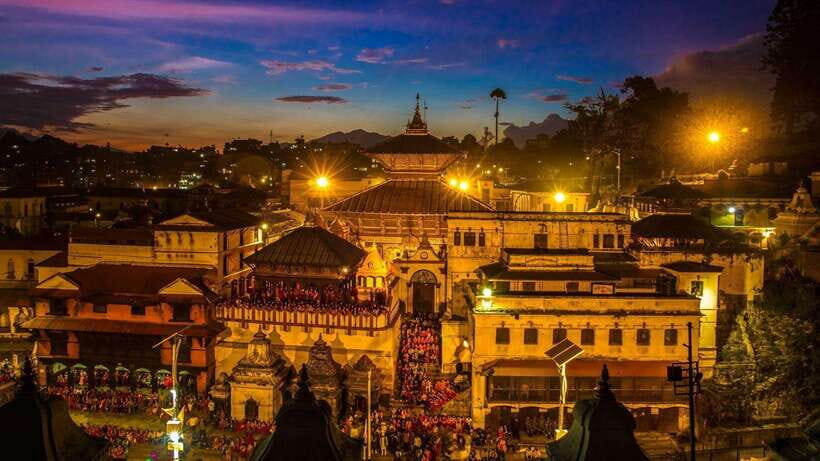
At Pashupatinath, evening worship centers on the Pashupati Bagmati Aarati beside the Bagmati River. The idea is bigger than a pretty ceremony. The river is treated as holy, and it’s believed that bathing there can wash sins, which is why the riverside area matters so much for Hindu devotees.
The ritual itself is structured and visual. Priests use oil lamps and perform worship with chanting. They move the lamps in circular motions as part of devotion, then devotees add bhajans—religious songs that keep the atmosphere steady and communal. Even if you don’t know the words, you’ll feel the rhythm: song, chant, movement, then a closing rhythm of prayer.
A couple details make this tour more meaningful than just watching a ceremony from the sidelines. The Bagmati Aarati tradition started in 2000 and became a regular practice in 2006, and it draws thousands of people each year. It also fits a Hindu belief that prayer is not only about place, but about the presence of the Divine in living beings. In other words, it’s not just a performance. It’s collective spiritual action in real time.
You can also read our reviews of more evening experiences in Kathmandu


Entering Pashupatinath with a private guide (and real crowd sense)
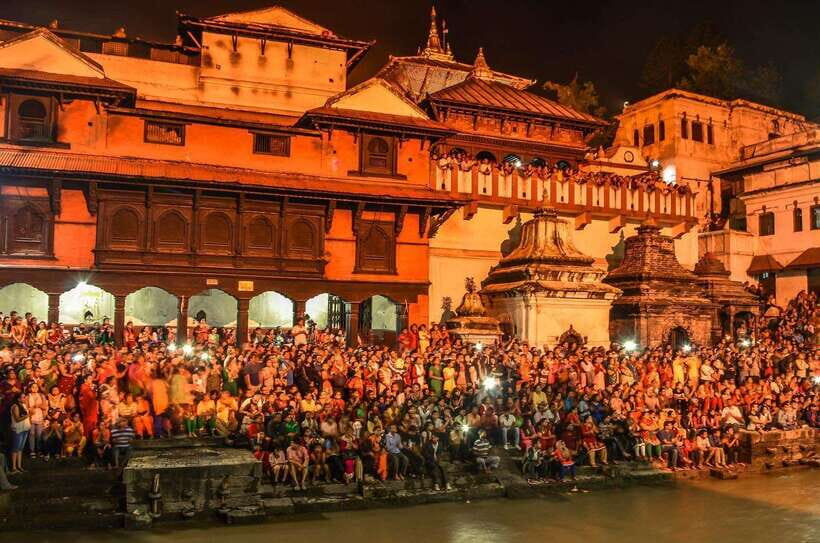
One of the best parts of this kind of tour is not the ceremony itself. It’s how you get there and how you handle the human reality of a major pilgrimage site.
You’ll start with hotel pickup in Kathmandu city center, then ride in a private vehicle toward Pashupatinath. Pickup options are Thamel or Boudhha, which helps if you’re staying in the most common tourist areas. If you’re farther out, there may be an additional fee, so it’s worth asking your operator when you book.
Once you’re at the temple complex, having a private guide in English makes a noticeable difference. The temple grounds are full of sightlines, small steps, and shifting crowds. A guide can help you understand where you are in the flow of worship and how to stay oriented while the ceremony ramps up. In particular, I found that guides who speak clear English tend to give you just enough context to make the experience click fast.
If you’re curious about the deeper side of Pashupatinath, this tour format is a good fit. The guided explanation can cover the religious significance behind the cremation process—an element of Pashupatinath that many first-time visitors find surprising until someone explains the role it plays in the broader religious story.
The 3-hour rhythm: how the evening unfolds
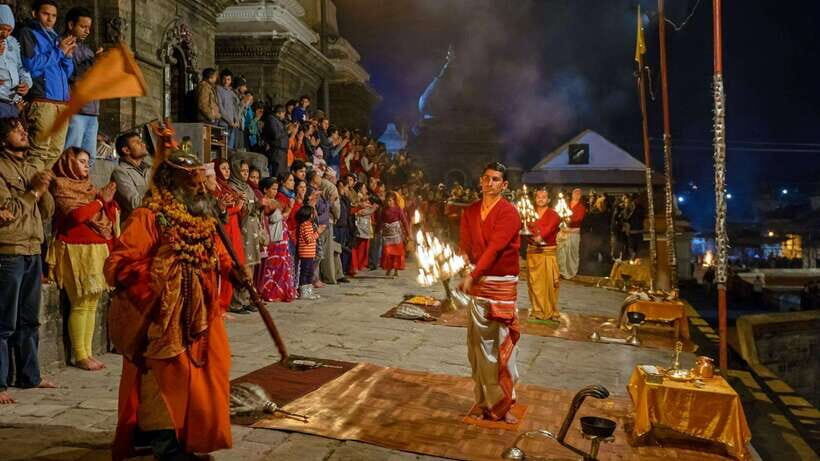
This tour is designed around a simple reality: the best part happens at the start time, and everything else supports that window. Your total time is 3 hours, so it’s not a half-day project.
The flow goes like this: you’ll pick up from your hotel, drive to Pashupatinath, then spend time with a guided visit and sightseeing before the Aarati reaches full momentum. From there, you’ll shift attention to the ceremony beside the river.
There’s a reason the tour stays compact. Pashupatinath isn’t just a museum. It’s an active religious site where people come on specific days and occasions. You’re more likely to see heavier crowds on Mondays and festivals, especially Maha Shivaratri and Haritalika Teej. Going in a tight evening window helps you experience the ritual at its fullest without turning your day into a logistical marathon.
Practical tip: if you’re the type who likes a slow, camera-friendly wander, you may feel rushed. But if you prefer to understand what you’re seeing as you see it, this structure works well.
Watching the lamps by the Bagmati River
The ceremony is centered on the riverside. That matters, because the Bagmati River isn’t a backdrop. It’s part of the symbolism, and it shapes the mood of the whole moment.
During the Aarati, priests perform worship with oil lamps. They chant sacred words and move the lamps in circular motions. The circular movement is easy to recognize even if you’re standing at a distance, and it gives the whole thing a strong visual spine. Around that, devotees sing bhajans, which helps the soundscape stay steady and human, not chaotic.
You’re also watching a specific idea of devotion. This ritual holds major significance in Hinduism and is treated as the highest form of prayer. That can sound lofty until you see how the ceremony is shared. People aren’t just passing through. They’re participating in a collective act of devotion, often with the steady patience required to stand and listen while the ritual progresses.
The ceremony also has an emotional finish. It ends with prayers for the wellness of all souls and gratitude toward God’s kindness. That closing portion is a helpful cue for understanding the ritual’s purpose: it’s not only about the moment of worship, but about what people carry forward afterward.
Beyond the ceremony: Shiva devotion, bhajans, and the Tandav
If you want context, this tour can give it to you without drowning you in theory. The key is how the ritual connects to broader Shiva devotion.
At Pashupatinath, the Aarati honors the holy river and the temple. Followers also perform a divine dance called Tandav, paying homage to Lord Shiva. You might not see everything the same way every day, but the presence of Tandav shows you that this site isn’t just about seated worship. It includes movement, voice, and ritual performance as part of honoring Shiva.
It also helps to know that Pashupatinath draws people for specific reasons and days. On holidays, Mondays, and festivals like Maha Shivaratri and Haritalika Teej, expect more visitors and more intense energy. That affects your experience directly. With more people, the crowd flow is tighter and your view can be more limited, but the atmosphere can feel more alive.
Finally, remember the belief behind the ceremony. The Aarati reflects Hindu ideas about the presence of God in all living beings and the value of collective well-being. That concept changes how you interpret what’s happening. You stop thinking only about the physical flame and start seeing how the prayer is meant to connect people and health and spiritual well-being in one moment.





Price and value: is $35 actually a good deal?
The tour price is $35 per person, and it includes hotel pickup and drop-off, a private vehicle, and a private guide. Entrance is extra: 1000 rupees per person.
Here’s how I think about the value. A 3-hour evening outing at a major pilgrimage site can easily cost you more if you pay for:
- a driver just to position you at the right time,
- a guide for context (especially when you want explanations in English),
- and the added hassle of navigating crowds on your own.
This package bundles those key pieces. The private guide is the main value driver, because the Aarati is easier to understand when someone explains what the chanting, lamp movement, river symbolism, and closing prayers mean. If you’re the kind of traveler who likes meaning (not only photos), that added context makes the price feel fair.
The biggest value check is the entrance fee. Don’t treat it as a surprise. Budget it up front so you don’t get stuck doing math mid-journey.
Also factor in location. Pickup is included from Thamel and Boudhha, but if you’re outside Kathmandu city center, there may be an additional transportation fee. That’s normal for a private car, but it’s worth confirming before you commit.
When this tour is a great match (and when it’s not)
This experience fits best if you want:
- a guided evening at a major religious site without stress,
- an English-speaking explanation that gives you context quickly,
- and a short, focused outing timed for a real ritual moment.
It’s also ideal for first-timers who feel uneasy about big religious spaces. The guide helps with rules, crowd navigation, and meaning. Based on how guides like Razz are described, you can also expect a calm, friendly approach that makes the experience feel safer and easier to process.
This tour might feel less satisfying if you want lots of variety. It’s mostly about one ritual and one site. You won’t be bouncing between multiple attractions. If you already know Pashupatinath deeply and you’re mostly chasing ceremony photos, you might decide to do it independently—though you’d still likely want an explanation for the significance of what you’re seeing.
Should you book this Kathmandu Pashupatinath evening Aarati tour?
I’d book it if you care about understanding the ceremony, not only witnessing it. The combination of a private English guide, hotel pickup, and a focused 3-hour window makes it a practical way to experience the Pashupati Bagmati Aarati without wasting time figuring things out.
You should also book it if your schedule allows a 6 pm start and you’re staying near Thamel or Boudhha, since that makes the logistics easy. Just budget the 1000 rupees entrance fee and go in expecting crowds on busy days.
If you’re sensitive to religious customs, go anyway—with the mindset of respect and observation. This isn’t a party atmosphere. It’s structured worship, and that’s exactly why it works so well in the evening.
FAQ
What time does the Pashupati Bagmati Aarati start?
The Aarati starts every evening at 6 pm.
How long is the tour at Pashupatinath?
The tour duration is 3 hours.
Where can I be picked up and dropped off?
Pickup and drop-off are available from Thamel and Boudhha.
Is the temple entrance fee included?
No. The entrance fee is 1000 rupees per person and is not included.
Will I have a guide, and is it in English?
Yes. The tour includes a private live tour guide, and English is available.
What’s included in the price?
Hotel pick up and drop off, a private vehicle, and a private guide are included.
Is there free cancellation?
Yes. You can cancel up to 24 hours in advance for a full refund.