REVIEW · KATHMANDU
Katmandu: Pashupatinath Open Cremation & Evening Aarati
Book on GetYourGuide →Operated by Holyland Adventure Tours and Travels Pvt Ltd · Bookable on GetYourGuide
Cremation by candlelight is unforgettable. I like this tour because it puts you at Pashupatinath during the most meaningful moments of the day: open cremation rituals along the Bagmati River, followed by the evening worship that brings the whole place to life.
What I really love is the evening Aarati for Lord Shiva—chanting, song, and oil-lamp light building as the sky turns dark. You get the emotional contrast right in front of you: life and death in the same spiritual space, with prayer continuing even as cremations go on nearby.
One consideration: this is not a casual sightseeing stop. The open cremation portion can feel intense and is also a walking-heavy outdoor experience, so you’ll want to be ready for discomfort and keep physical limits in mind.
In This Review
- Key things to know before you go
- Why Pashupatinath and the Bagmati River feel different
- The flow of your 3-hour outing in plain terms
- Temple entrance to Arya Ghat: what that walk actually gives you
- Watching open cremations along the Bagmati River
- The Pashupatinath Aarati for Lord Shiva: chants, lamps, and night air
- Price, value, and the fine print you should plan for
- Getting the most out of it: what to bring and how to dress
- Who should book, and who should skip
- Final verdict: should you book this Pashupatinath Open Cremation & Aarati tour?
- FAQ
- How long is the tour?
- Where does the tour take place?
- What time does the evening Aarati start?
- What time should I arrive for the best Aarati viewing spot?
- Is pickup included?
- Is a tour guide included?
- Are entry tickets included?
- What should I bring?
- Is this tour suitable for children or people with mobility issues?
- Are meals included?
Key things to know before you go
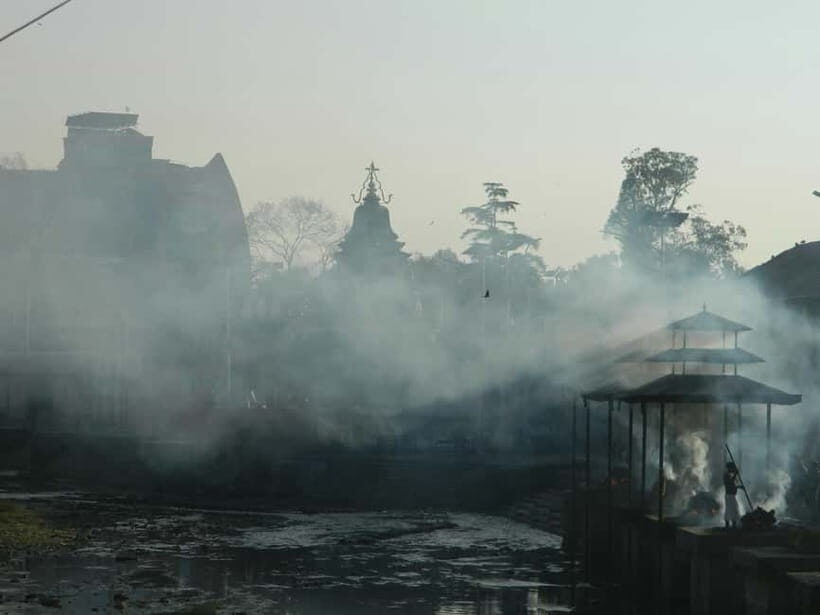
- Arya Ghat views: you’ll walk from the main temple entrance toward the sacred cremation area along the Bagmati River.
- Timing matters for Aarati: arrive by 5:30 PM so you’re not stuck watching from an awkward spot.
- A Shiva-focused ceremony: the Aarati is dedicated to Lord Shiva, with chanting, music, and oil lamps.
- Driver help, not guaranteed guiding: the tour includes assistance, but a full tour guide isn’t listed as included—quality of explanations can vary.
- Outdoor, modest, and practical: comfortable shoes and modest clothing are part of the reality of this site.
Why Pashupatinath and the Bagmati River feel different
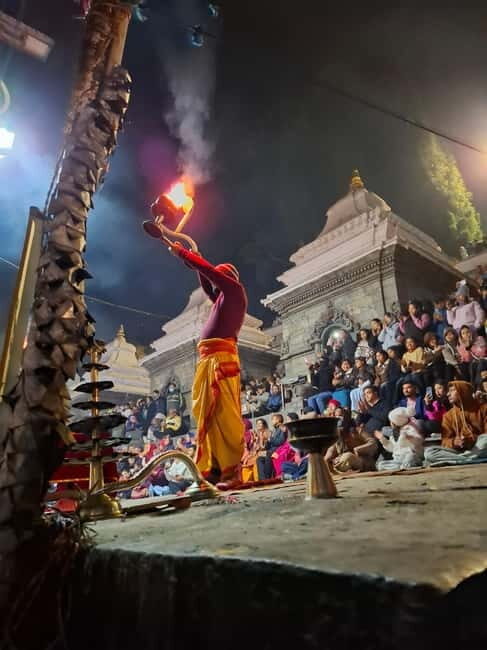
Pashupatinath isn’t a “see it and move on” kind of place. The site is built for devotion, and the river-side cremation area is part of that living system of belief. Even if you don’t share the faith, you can still understand the focus: death is treated as something spiritual, not just tragic.
I like that the tour’s structure matches what makes this place powerful. You start during temple time, then head toward Arya Ghat, where the open cremation rituals happen, and you finish with the Aarati when lamps and chants take over. The switch from solemn ritual to evening worship gives you a clearer mental picture of how Hindu spirituality holds both grief and hope in the same frame.
You can also read our reviews of more evening experiences in Kathmandu


The flow of your 3-hour outing in plain terms
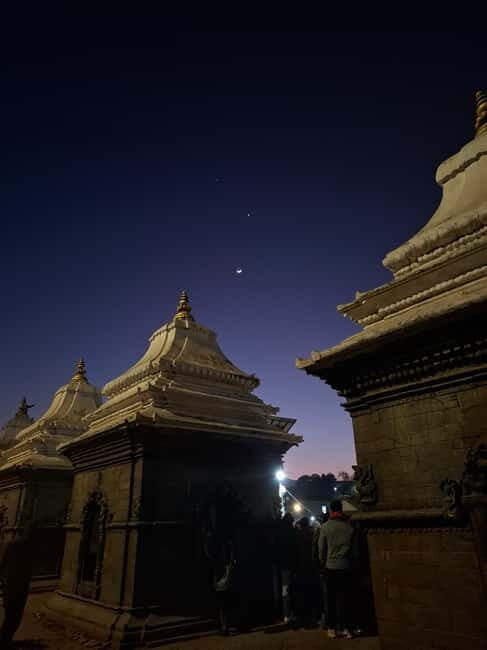
This is a pickup-based, private-group experience designed to get you to the right place at the right time—without you having to figure out timing and transport on your own. You’ll be collected in a private air-conditioned vehicle, usually with a driver arriving within a 15-minute window of the scheduled pickup time.
From there, the day is straightforward:
1) You’re dropped at the main entrance of the Pashupatinath temple complex.
2) You walk toward Arya Ghat, the open cremation site.
3) You’re set up to watch the Aarati in the late afternoon/early evening window (the ceremony starts between 6:00 and 6:30 PM).
4) After the experience, you meet your driver and return to your original pickup location.
The overall duration is listed as about 3 hours (with note it may run closer to 3–4 depending on traffic and where you’re picked up). That’s important: at Pashupatinath, the difference between an on-time arrival and a late one isn’t minor. It changes your viewing position for the Aarati.
Temple entrance to Arya Ghat: what that walk actually gives you
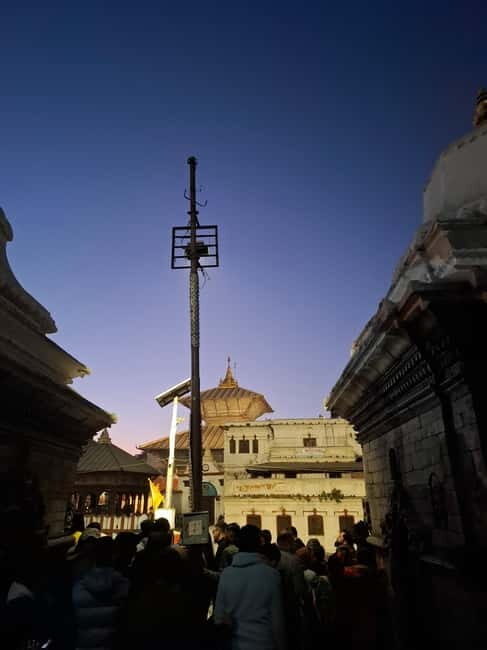
Dropping you at the main entrance sounds simple, but it’s a meaningful way to enter the site. You’re not dropped directly into the cremation area; you transition from the broader temple complex into the river-side sacred space. That pacing helps you mentally “arrive” before you face what’s happening at the cremation ghat.
Expect walking along the route to Arya Ghat, and plan for modest clothing and comfortable shoes. The tour description also notes a short briefing on do’s and don’ts. You’ll want to treat that seriously—this is an active religious place, not a museum, and your behavior affects how smoothly your experience goes.
Also note the health angle. This is not listed as suitable for wheelchair users, people with mobility impairments, or those with back problems or certain pre-existing medical conditions. Even if you’re generally fine walking, you should consider whether standing outdoors for the Aarati viewing period will be comfortable.
Watching open cremations along the Bagmati River
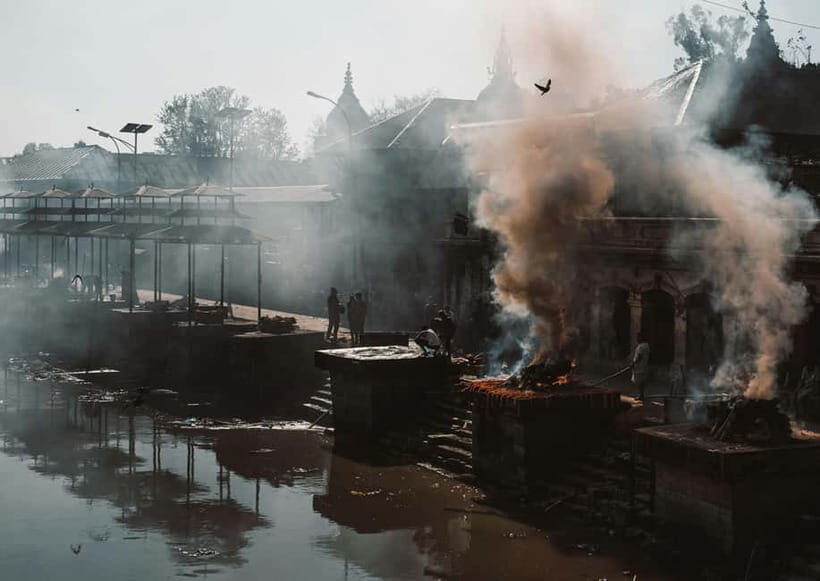
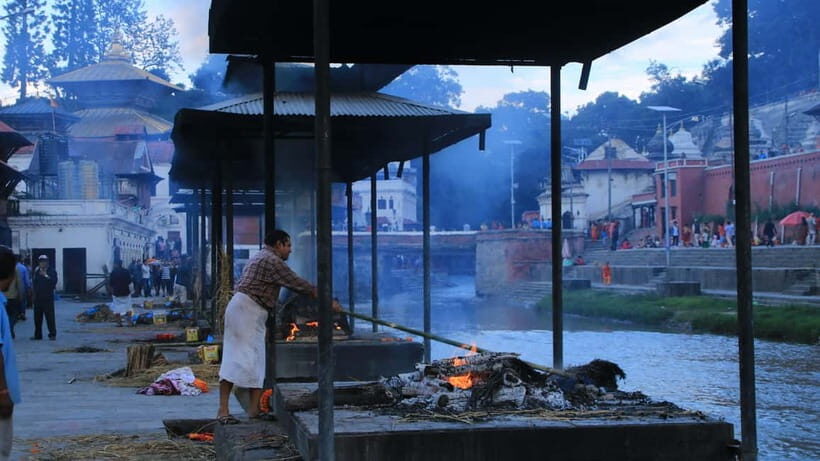
The centerpiece of this tour is the sacred open cremation ritual at Pashupatinath. The tour frames it through a key concept: cremation here is believed to grant moksha, or liberation. That’s not just spiritual talk—it helps you interpret what you’re seeing as part of a religious purpose, not random spectacle.
What you’ll likely notice is how “public” the ritual feels. Open cremations happen by the river, and the space is arranged for observation and worship. That can be emotionally confronting for people who are expecting something sanitized or distant. If you’re sensitive to scenes involving death, this is the moment that will test you.
Practical advice: keep your camera ready but don’t treat it like a photo shoot. The tour asks you to bring a camera, but it’s also a religious site with ongoing rituals. If you plan to film or photograph, be respectful and move carefully so you’re not blocking others.
There’s also a timing rhythm to understand. As evening approaches, the cremation activity may still be ongoing in the background while you shift focus to Aarati. That coexistence is part of the point: prayer continues while cremation rituals carry on.
The Pashupatinath Aarati for Lord Shiva: chants, lamps, and night air
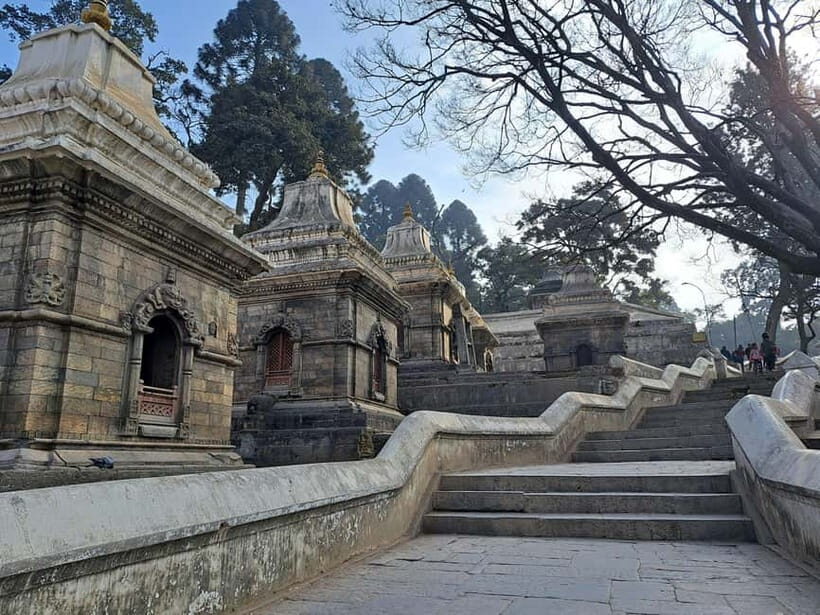
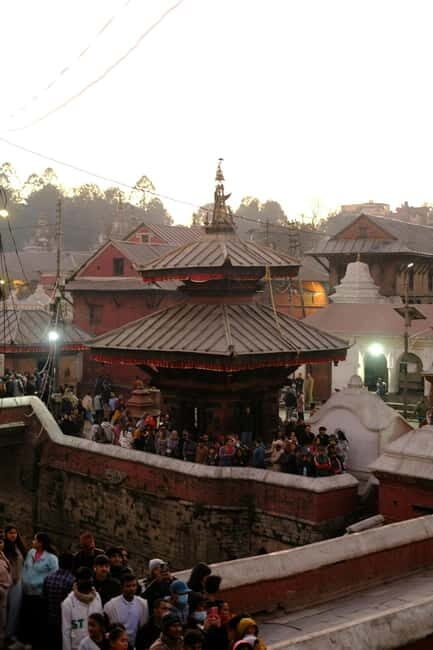
The Aarati is what many people remember most vividly after the cremation portion. The ceremony is dedicated to Lord Shiva and is described as filled with chanting, music, and the glow of oil lamps. The timing is crucial: the ceremony starts from about 6:00 PM to 6:30 PM, and you’re advised to arrive at least 30 minutes early—so by 5:30 PM—to get a good viewing spot.
Why that matters: visibility at the Aarati area depends on crowding and sightlines. If you show up late, you might spend the best part of the ceremony standing at the edge, with limited views of the ritual space.
A helpful note from real-world experience: when the right person explains what’s going on, the whole Aarati becomes easier to follow. One standout example was an English-speaking explainer, Bhum Raj Tiwari, who helped people understand why the Hindus do these rituals in plain, logic-based terms. Even if your driver’s role is described as assistance rather than a full guiding service, you should still expect some level of explanation. If you want more detailed answers during the event, ask direct questions early in the visit.
Emotionally, the Aarati can feel like a release valve. The oil-lamp light and rhythmic chanting change the mood fast—especially after you’ve just seen the seriousness of open cremation. That contrast is what makes the experience stick.






Price, value, and the fine print you should plan for
At $27 per person for about 3 hours, this tour can be good value if you want a focused, single-area experience rather than a long “hit everything” itinerary. You’re paying for three practical things:
- Pickup and drop-off in a private air-conditioned vehicle
- Access to the correct timing for the Aarati
- Time on-site for the cremation view and the Shiva ceremony
What’s not included is also part of the value equation. Entry tickets and meals are not included, and there’s no tour guide listed as included. You do get drinking water, plus experienced driver and pickup support.
So here’s how I’d think about it before booking: if your top priority is an English-speaking guide who will interpret everything in depth, you may or may not get that level of explanation depending on who’s assigned to your group. The experience can still be meaningful even without deep narration, but your satisfaction will likely depend on how much you can connect the ritual to your own questions.
One more logistics reality: pickup and comfort can vary. One traveler reported problems like a late pickup and a vehicle that didn’t match what you’d expect from a tourist-focused service. You can’t control everything, but you can reduce risk by confirming your pickup location details clearly and planning a bit of buffer time on your end so you’re not stressed if there’s a delay.
Getting the most out of it: what to bring and how to dress
This is where you can turn a stressful situation into a manageable one.
Bring:
- Passport or ID card
- Comfortable shoes (you’ll walk to the cremation area)
- Camera
- Comfortable clothes
- Cash
Wear:
- Modest clothing is recommended since Pashupatinath is a religious site.
Weather:
- It’s outdoors, so bring a light jacket if the evening cools down.
My practical tip: choose shoes that you can stand and walk in for the full window. The Aarati start time is fixed-ish, and you’ll likely be on your feet while you wait. Comfortable footwear is not optional on this one.
Who should book, and who should skip
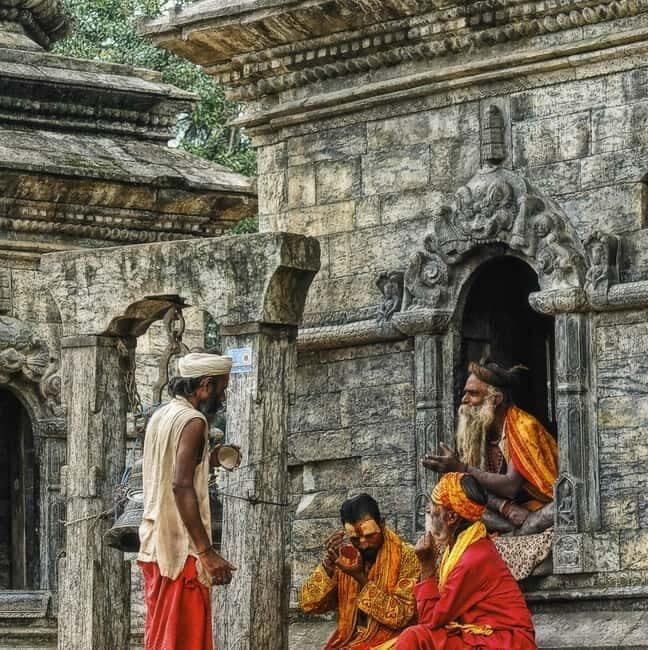
This tour is best for adults who want spiritual and cultural immersion with minimal moving around. If you’re the type who likes understanding “why” a ritual exists—moksha, devotion to Shiva, the meaning of cremation—this fits well.
It’s likely not a good match if you:
- Have mobility impairments, wheelchair use, or significant back problems
- Are bringing children under 9
- Have pre-existing medical conditions that make outdoor walking and standing risky
- Know you’ll struggle with graphic or emotionally heavy scenes
If you’re on the fence, be honest about what you handle emotionally. This is a real religious ritual tied to death, and it deserves respect. If you need a gentler introduction to Nepal’s spirituality, consider choosing an experience that focuses only on temple worship rather than cremation observation.
Final verdict: should you book this Pashupatinath Open Cremation & Aarati tour?
I’d book this if you want a compact, high-impact experience centered on one of Nepal’s most important spiritual places—and you’re ready for the intensity of the open cremation setting. The value is strongest when you appreciate the structure: temple entry, walk to Arya Ghat, and then the timed viewing of the Shiva Aarati after dark.
I’d hesitate if you need guaranteed English interpretation, if you’re worried about discomfort, or if walking and standing are hard for you. And if you’re booking close to other plans, build in breathing room. At Pashupatinath, being late can mean missing the best viewing chance.
If you’re prepared—modest clothes, comfortable shoes, calm mindset—this is one of those rare Kathmandu experiences that doesn’t feel like a standard photo stop. It feels like a spiritual moment you’ll carry afterward.
FAQ
How long is the tour?
The duration is listed as about 3 hours, with a note that it may run approximately 3–4 hours depending on your pickup location and traffic.
Where does the tour take place?
The tour focuses on Pashupatinath in Kathmandu, specifically along the Bagmati River area near Arya Ghat.
What time does the evening Aarati start?
The Pashupatinath Aarati starts between 6:00 PM and 6:30 PM.
What time should I arrive for the best Aarati viewing spot?
You’re advised to arrive by 5:30 PM so you have at least 30 minutes to find a comfortable viewing spot.
Is pickup included?
Yes. Pickup and drop-off are included, and you’ll be collected in a private air-conditioned vehicle.
Is a tour guide included?
A tour guide is listed as not included. The driver provides assistance, and you may get helpful explanation depending on who you’re assigned.
Are entry tickets included?
No. Entry tickets are not included.
What should I bring?
Bring a passport or ID card, comfortable shoes, a camera, comfortable clothing, and cash.
Is this tour suitable for children or people with mobility issues?
It’s not suitable for children under 9, wheelchair users, and people with mobility impairments, back problems, or pre-existing medical conditions.
Are meals included?
No. Meals are not included. Drinking water is provided.