REVIEW · KATHMANDU
Knife Khukuri Making Workshop
Book on GetYourGuide →Operated by I. Experience Nepal Trek And Tour · Bookable on GetYourGuide
You forge a khukuri with your own hands. In Kathmandu, this khukuri workshop puts you right beside a blacksmith with about 42 years of making blades, turning rough metal into something sharp and personal. It’s a fast, cultural, practical 4-hour session where you learn the story of the knife while you help shape it.
Two things I really like: you get real hands-on work (like hammering the iron) instead of watching from the sidelines, and the guides make sure the craft and Nepalese traditions make sense. The group stays small, and the English support helps you ask questions as you go. One possible drawback: the safety setup means the host does the sparkier blade grinding, so you won’t control every hot step.
In This Review
- Key things you’ll notice right away
- Making a Khukuri in Four Hours, Up Close
- Your Pickup, Small Group Size, and Meeting the People Behind It
- From Scratch Metal to Shape: Hammering Is the Real Hook
- Grinding, Sparks, and Why the Host Takes Over
- Understanding the Khukuri: Symbolism You Can See
- The Handle, Cover, and the Feeling of Taking Something Real Home
- Price and Value: What $73 Buys You (Beyond the Knife)
- Who Should Book This Workshop (and Who Might Not Love It)
- Should You Book the Knife Khukuri Making Workshop?
- FAQ
- How long is the Knife Khukuri Making Workshop?
- What’s the price per person?
- What parts of the knife-making process can I participate in?
- Is pickup and drop-off included?
- What should I bring?
- Is it suitable for children?
- What’s the cancellation policy?
Key things you’ll notice right away
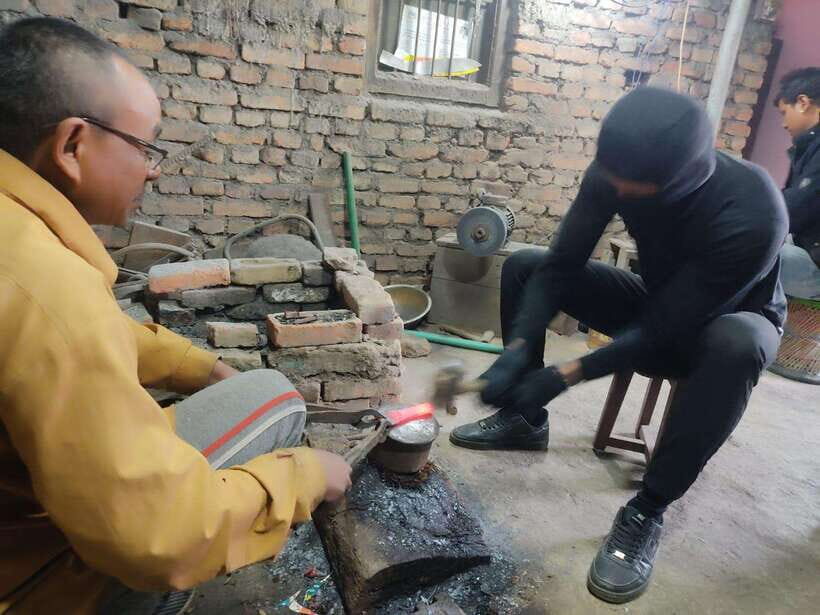
- A blacksmith with decades of experience guides the process and keeps standards high
- Hammering and first grinding are the main guest participation steps
- Small group size (up to 5) makes it easy to ask questions
- Safety comes first during grinding with sparks handled by the host
- You take home a 6-inch knife with a cover/scabbard set up for carrying
Making a Khukuri in Four Hours, Up Close
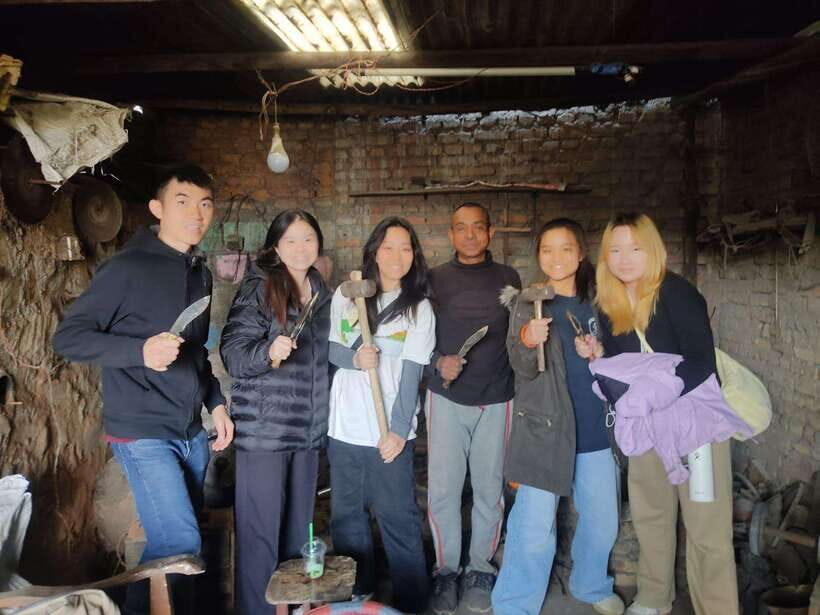
If you like hands-on travel, this is one of those rare experiences where you don’t just tour a craft—you help make it. You’ll work on a small khukuri, about a 6-inch blade, starting from a raw piece of iron and ending with a knife that looks and feels like the real thing.
The khukuri is more than a souvenir. It’s tied to loyalty and the Gurkha warrior tradition, and it’s also common across Nepal’s hill communities. During the workshop, you get the meaning behind details you’d otherwise ignore, like the curve of the blade and the nick near the handle.
A few more Kathmandu tours and experiences worth a look


Your Pickup, Small Group Size, and Meeting the People Behind It
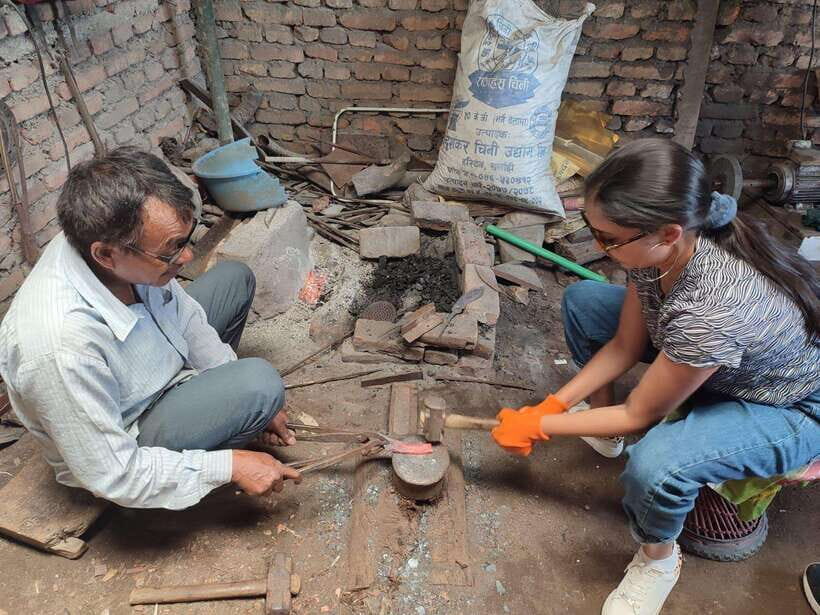
Logistically, this one is built to be easy. You get pickup and drop-off from your hotel lobby, and the ride is consistently rated very well, with 86% of reviewers giving it a perfect score. You’re also capped at five participants, which matters more than you’d think—more time with the blacksmith, fewer long waits, more time for questions.
The experience is guided in English and Hindi. In the reviews, guides like Namrata, Sajeena, and Swayam show up, and they all focus on explaining what you’re seeing as you do it. The blacksmith you meet is the star, often named Indra, with roughly 42–45 years in the craft.
This is also where the experience feels human. It’s set up as a visit with a family-run maker, not a showroom. You’ll get tea and snacks as part of the session, and in at least one case, fruit like guava came along with it.
From Scratch Metal to Shape: Hammering Is the Real Hook
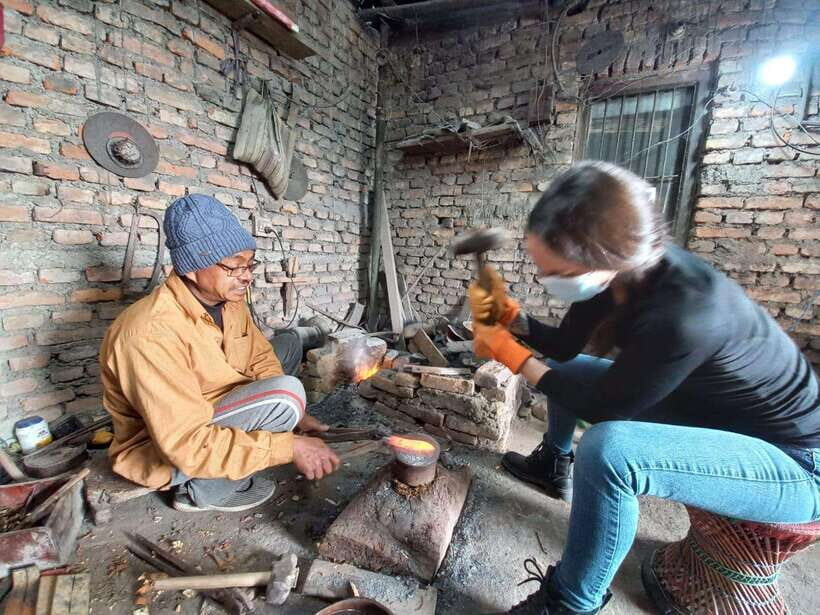
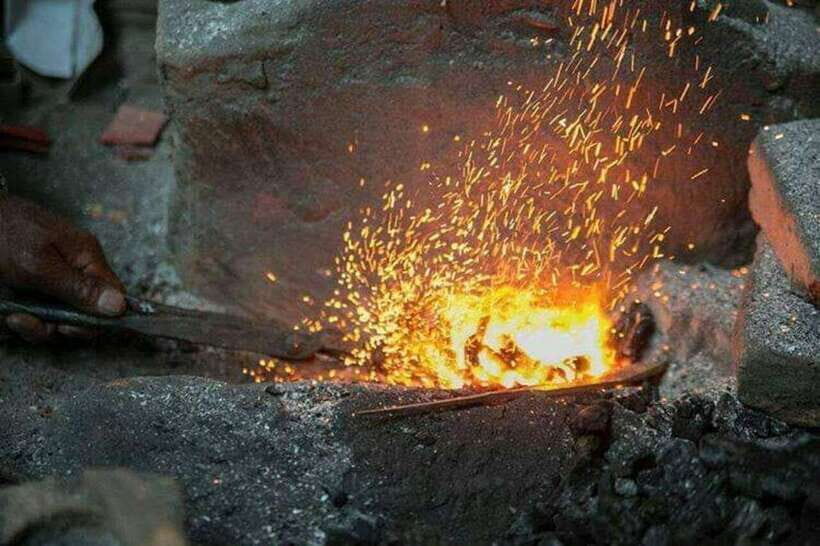
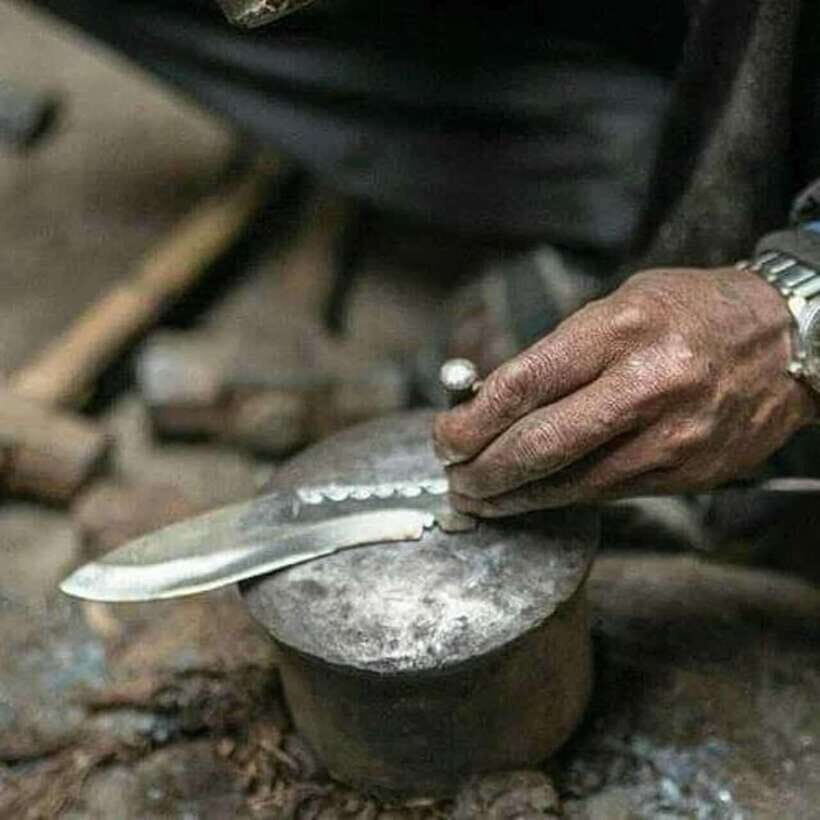
The workshop’s structure is smart: you participate in the steps that fit a short time window and still let you feel like you earned the result. The main guest activity is hammering the iron into the early shape of the blade.
That part matters because forging is physical. You’re not just copying a craft lesson—you’re learning how metal responds. You’ll see the difference between a flat chunk and a blade form, and you’ll get a clearer sense of why the khukuri’s silhouette looks the way it does.
You’ll also get guidance so you’re safe and successful. Even when your hand is doing the work, the blacksmith controls the overall process, since making khukuris takes years of skill. Think of your role as: help where you can, learn constantly, and watch where precision is everything.
Grinding, Sparks, and Why the Host Takes Over
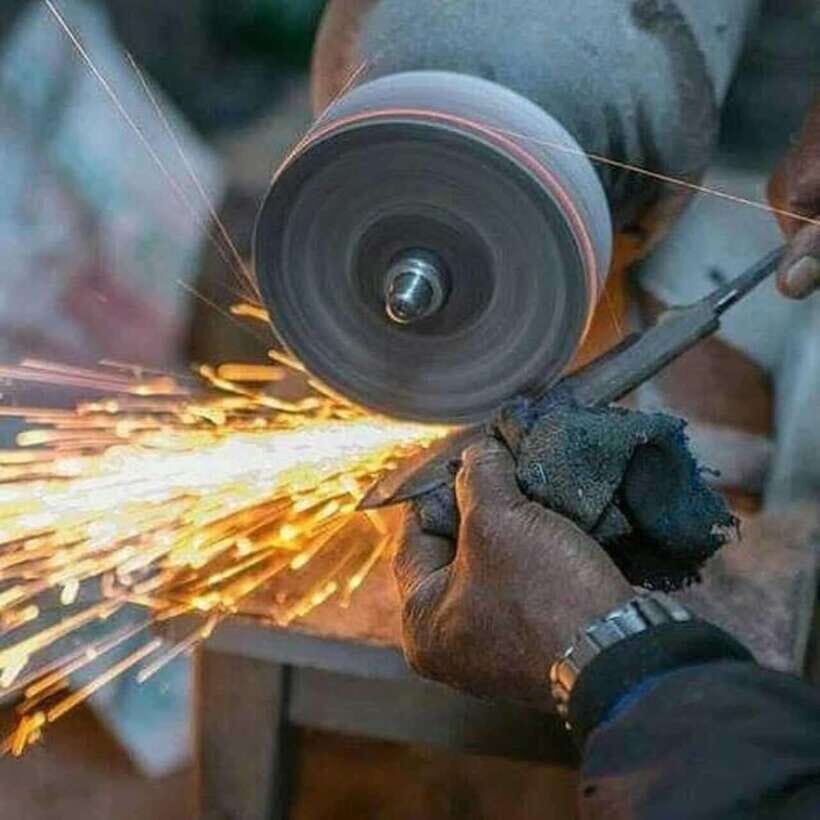
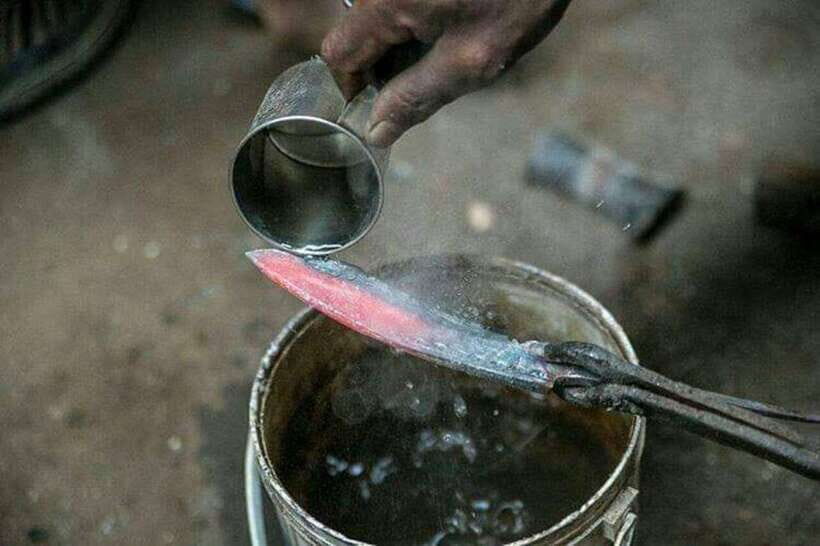
You’ll hear about grinding as part of the making process, and you’ll experience it, but with a clear safety boundary. For safety reasons, the blade grinding is handled by the host, and you’re advised to stay clear of sparks during that stage.
What you can do is the participation-focused version: you take part in the first grinding and watch the later steps. That balance keeps the workshop from turning into a safety lesson or a frustration session where you feel useless. Instead, you get to do the parts that translate well to beginners, then you see the exacting work done by someone who’s been at it for decades.
If you want the most satisfying moment, it’s often watching the transformation. The blacksmith’s control over grinding and shaping is what turns a rough shape into something that actually looks like a khukuri.
Understanding the Khukuri: Symbolism You Can See
One reason I’d recommend this to culture-minded travelers: the khukuri isn’t treated like trivia. You learn why specific features exist, and then you watch those features take form.
Here are the details the workshop explains:
- The khukuri is a symbol of loyalty, linked to Gurkha warrior tradition.
- The knife is multipurpose—used for tasks like shaping timber and chopping meat and vegetables.
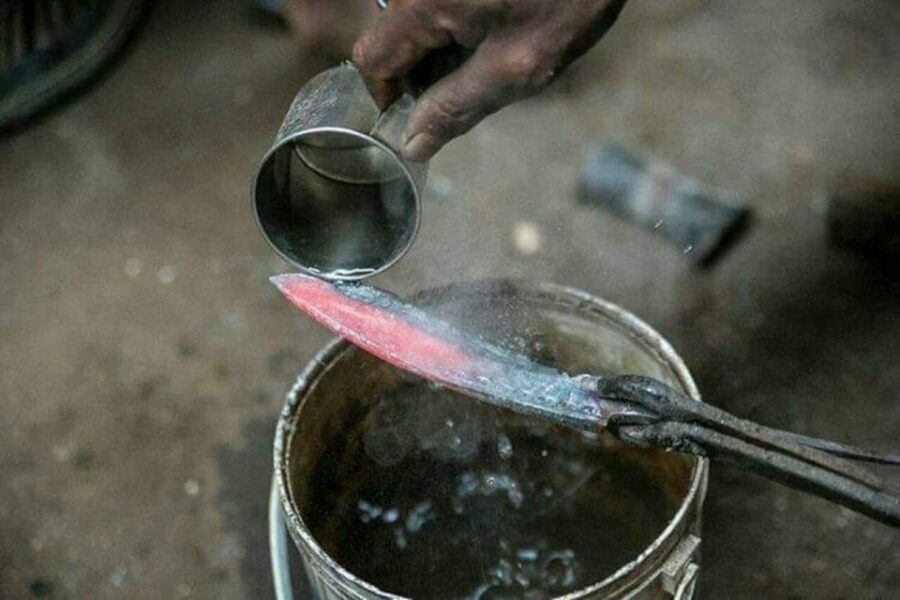
- The blade is made from tempered steel, typically slightly curved, and known for being exceedingly sharp.
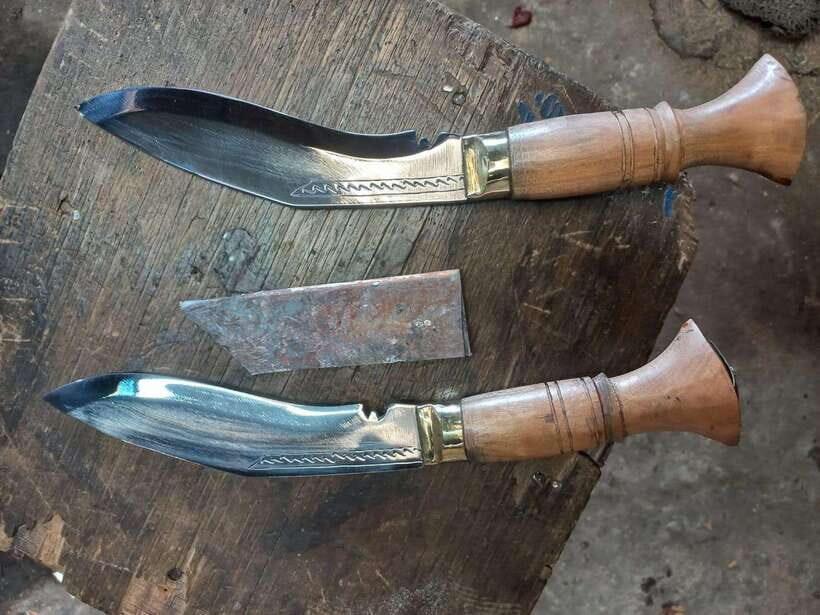
- The handle is usually wood or buffalo horn, and the scabbard is wood and leather.
- There’s a nick near the handle meant to help prevent blood from reaching the grip area, and it’s also tied to Hindu symbolism involving Brahma, Vishnu, and Shiva.
Even if you’re not into religious history, these details make the craft feel grounded in real use. You start to see the khukuri as a tool with reasons behind the design, not just an art object.





The Handle, Cover, and the Feeling of Taking Something Real Home
A big question for buyers is always the same: will I actually leave with something I can use, or will it feel like a paperweight? In this workshop, you leave with a take-home knife. The session includes a knife cover, and you’ll learn the basics of how it’s set up for carrying.
Your knife is a small blade, around 6 inches. That’s a practical choice for a workshop format, and it also means the process stays manageable within 4 hours. Still, the result feels serious. The reviews consistently point to high quality, and one key point that comes through is durability: the blades are described as using hard steel that performs better than softer steel versions sometimes sold in markets.
One add-on to know about: an extra cover option made of horn or bone can be made for an additional cost. So if you’re thinking about gifting or long-term keeping, you might consider that upgrade.
Price and Value: What $73 Buys You (Beyond the Knife)
At $73 per person for a 4-hour experience, this isn’t priced like a quick craft stop. But it also isn’t overpriced for what you get—especially because it includes more than just the blade.
Your price covers:
- All the tools required to make a knife
- Steps you participate in, including hammering and the first grinding
- Knife cover included
- Tea/water and snacks
- Pickup and drop-off
You’re also getting something harder to price: access to a seasoned maker’s process. The workshop format is designed to keep you involved while protecting you from the dangerous parts. And because it’s limited to a small group, you tend to get time with the blacksmith instead of a rushed factory-style flow.
If you’re the type who likes to bring home a story as much as an object, this has strong value. The knife becomes a conversation piece, and the process makes it feel earned.
Who Should Book This Workshop (and Who Might Not Love It)
This is ideal for you if you want:
- A hands-on craft experience in Kathmandu
- Learning with cultural context, not just watching
- A small-group feel where you can ask questions
- A take-home item that’s shaped by your participation
It’s not a match if you want to control every step. The host does the parts requiring more specialized handling—especially the sparkier grinding—so you won’t be performing all stages yourself.
It also has a clear age boundary: it’s not suitable for children under 10. If you’re traveling with older kids, it can still work well, but you should expect a structured safety approach.
Finally, bring the right basics. Wear long pants. The workshop is short, but your legs still need protection around a working forge environment.
Should You Book the Knife Khukuri Making Workshop?
Yes, I’d book it if you want an authentic craft experience with real participation. Between the small group size, the English-speaking guidance, and the fact that you help shape the blade yourself, this feels like the kind of activity that actually changes how you see Nepalese craftsmanship.
Skip it only if you’re mainly after a passive cultural stop or you want to do all grinding yourself. The host handles the dangerous steps, and that’s not negotiable. If you’re okay with that trade-off, you’ll leave with a meaningful take-home knife and a clear understanding of the khukuri’s cultural logic.
FAQ
How long is the Knife Khukuri Making Workshop?
The workshop lasts 4 hours.
What’s the price per person?
It costs $73 per person.
What parts of the knife-making process can I participate in?
You participate in hammering the iron and the first grinding. The host handles other parts of the process for safety, including blade grinding where sparks are involved.
Is pickup and drop-off included?
Yes. Pickup is included from your hotel lobby, and you’ll be dropped back after the workshop.
What should I bring?
Wear long pants.
Is it suitable for children?
It’s not suitable for children under 10 years old.
What’s the cancellation policy?
You can cancel up to 24 hours in advance for a full refund.