REVIEW · KATHMANDU
Langtang, Gosaikunda and Helambu Trek
Book on Viator →Operated by Mount Mania Treks Expedition P. Ltd. · Bookable on Viator
Three valleys, one big breath of mountains. I like how this route stitches together rhododendron and bamboo forests with wildlife and waterfalls, and I also love the high-mountain payoff of Langtang Lirung plus the holy pull of Gosaikunda. The main consideration is altitude: you’ll climb to about 4,460m relatively quickly, so plan for cold weather, slower pacing, and some breath-limited days.
You’re not just booking a path on a map—you’re traveling with a government-licensed trekking team. In past trips with this organizer, guides such as Binod, Ganesh, and Ngima Tamang have been praised for clear English, supportive guidance, and time management, and there’s a porter setup designed to keep you from feeling like you’re hauling the whole world. Still, it’s a trek where you’ll work—if you want an easy stroll, this route probably won’t match your expectations.
In This Review
- Key Highlights You’ll Feel on the Trek
- Langtang Gosaikunda Helambu: What This Route Really Delivers
- Day-by-Day Flow: Why Each Stop Matters
- Days 1: Arrival in Kathmandu (around 1,320m)
- Day 2: Kathmandu to Dhunche (2050m), about 7–8 hours
- Day 3: Dhunche to Shin Gompa (about 4–5 hours)
- Day 4: Shin Gompa to Gosaikunda (about 5–6 hours), up to 4,460m
- Day 5: Gosaikunda to Phedi (about 6–7 hours), down to around 3,600m
- Day 6: Phedi to Tharepati (about 5–6 hours), around 3,900m
- Day 7: Tharepati to Kutungsung (about 5–6 hours), down toward 2,450m
- Day 8: Kutungsung to Chisopani (about 6–7 hours), around 2,250m
- Day 9: Chisopani to Sundarijal (1,510m) and drive to Kathmandu
- Day 10: Departure
- Teahouses, Meals, and the Porter System That Changes Your Experience
- Guides, Pace Control, and What Real-World Flexibility Looks Like
- Price and Logistics: Is $850 Good Value?
- What to Pack and How to Prepare for Cold, High Days
- Who This Trek Fits Best
- Should You Book This Trek?
- FAQ
- How long is the Langtang, Gosaikunda and Helambu Trek?
- Where does the trek start and where does it end?
- What’s included in the price?
- What is not included?
- What kind of accommodation do you get during the trek?
- How fit do I need to be?
- Is this a private group or shared with strangers?
- Is there a minimum number of people required?
- How many people can be in the group?
- Is the company equipped for different weather?
Key Highlights You’ll Feel on the Trek
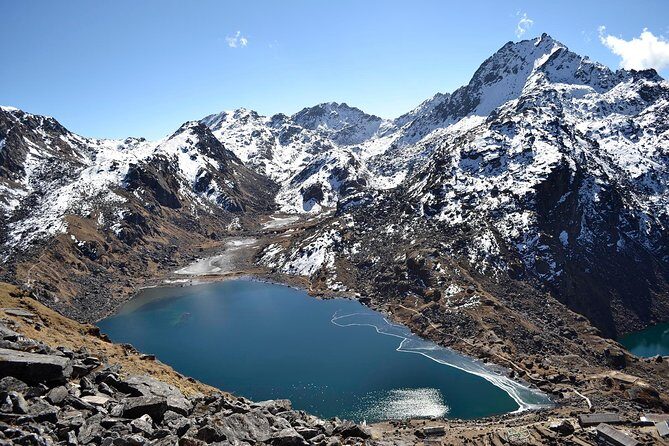
- Langtang + Gosaikunda + Helambu in one circuit north of Kathmandu, with big views all along the way
- Rhododendron and bamboo forests, plus frequent chances for wildlife sightings
- Holy lakes experience, centered on Gosainkunda, with additional sacred stops tied to Ganesh Himal and regional mountain reverence
- Teahouse nights with all trek meals included, so you’re focused on walking instead of logistics
- A structured support team, including an English-speaking licensed trek leader and porter service
- A private-group feel, so your schedule stays in the hands of your team rather than a crowded bus lineup
Langtang Gosaikunda Helambu: What This Route Really Delivers
This trek is built around three different “moods” of the high country.
First, you get the forest world—rhododendron and bamboo—where the trail feels alive with color in season and constant movement in the landscape. The payoff is not just the scenery; it’s the way the forests can make long days feel less grindy. You’re walking through living cover that changes with altitude and light, and the company of waterfalls and wildlife sightings keeps things from getting monotonous.
Second, you hit the high, sacred zone. Gosaikunda (around 4,460m) is the emotional core for many people on this route. Even if you’re not arriving with religious knowledge, it’s hard not to feel the significance of the holy-lake atmosphere at altitude—cold air, still water, and the sense that this place matters to people who live close enough to return again and again.
Third, you finish with the Helambu side of the region, where the trekking rhythm shifts from big climbs to steadier descents into more village-connected terrain. You’re still in the mountains, but the mood becomes more human—smaller stops, quieter edges, and that satisfying feeling of getting closer to Kathmandu without completely leaving the trekking world behind.
The result is a trek that feels varied without being chaotic. You’re covering a lot of distance and elevation, but it’s paced as a sequence: approach, big altitude moment, then a gradual easing back toward lower valleys.
You can also read our reviews of more hiking tours in Kathmandu


Day-by-Day Flow: Why Each Stop Matters
Here’s how I’d think about the itinerary day by day, in plain terms—what each segment gives you and what to watch for.
Days 1: Arrival in Kathmandu (around 1,320m)
You land in Kathmandu, settle into a 3-star hotel with breakfast, and you’re basically turning your body on for the trip ahead. This first day is mostly about sleep, good water habits, and keeping your plans simple.
A small but important point: your trekking success starts here. If you push late-night city plans, you’ll feel it later on the trail.
Day 2: Kathmandu to Dhunche (2050m), about 7–8 hours
This is a long day of riding, not walking. Dhunche is your jump-off into the higher valleys, and that 7–8 hour drive time means you should treat it like a transfer day: eat early, drink steadily, and don’t assume you’ll feel great right after you step out of the vehicle.
If you’re the kind of person who gets stiff on road trips, bring a small routine: walk a bit during stops, stretch gently, and keep your layers ready for temperature swings.
Day 3: Dhunche to Shin Gompa (about 4–5 hours)
This is your first trekking step into the rhythm of the mountains. The payoff of Shin Gompa is less about a single dramatic view and more about the transition. You’re moving from the road world into real trail time.
Why it matters: this day helps your legs and your breathing find a new pace before you climb toward the higher, colder sections later.





Day 4: Shin Gompa to Gosaikunda (about 5–6 hours), up to 4,460m
This is the day where the altitude becomes a headline.
Gosaikunda at 4,460m is the dramatic moment—holy-lake atmosphere, big cold air, and often the kind of weather that forces you to respect your layers. Expect that you might not feel like you’re walking fast even when you’re doing everything right.
Practical tip: if you get even slightly breathless, slow down early. Don’t wait until you feel awful to adjust.
Day 5: Gosaikunda to Phedi (about 6–7 hours), down to around 3,600m
After the emotional and physical intensity of Gosaikunda, dropping to Phedi helps your body reset. Still, it’s a long walking day, so your success depends on steady pacing and good hydration.
This segment often feels like the mental shift from climb-to-survive mode toward settle-and-enjoy mode. If the weather holds, you also get more chances for mountain panoramas as you move through changing elevations.
Day 6: Phedi to Tharepati (about 5–6 hours), around 3,900m
Tharepati is another high point—enough elevation to deliver wide views and enough cold to remind you you’re living in the mountains now.
Why it matters: this is where the trek stops being only about reaching places and starts becoming about savoring altitude viewpoints. You’re walking in terrain where seeing long-range mountain names—along with the sacred lake themes—feels more than sightseeing. It’s part of the story of the region.
Day 7: Tharepati to Kutungsung (about 5–6 hours), down toward 2,450m
Kutungsung signals a real change in tone: still trekking, but with more “down-valley” logic. Your legs will likely feel the difference, even if the day length stays similar.
This is a good day to focus on foot care—check your socks, adjust how you tie your boots, and keep your steps smooth on uneven ground.
Day 8: Kutungsung to Chisopani (about 6–7 hours), around 2,250m
Now you’re transitioning toward lower altitudes and closer-to-civilization trekking. Chisopani is the kind of stop that makes you feel you’re nearing the end without yet feeling like you’ve escaped the mountains.
Expect teahouse life to be part of your routine: warm food, simple rooms, and the daily process of charging batteries and getting ready for the next day (based on what’s available along the route).
Day 9: Chisopani to Sundarijal (1,510m) and drive to Kathmandu
This is the “we did it” day. You finish the hiking with a descent down to Sundarijal and then head back to Kathmandu.
It’s a satisfying contrast: one day you’re walking mountain air, and the next you’re back in the city where you can shower, eat freely, and sleep on a real mattress—assuming you still remember where your hotel is.
Day 10: Departure
Departure day is brief. If you have any last-minute shopping or phone errands, do them the day before so you’re not scrambling at the airport.
Teahouses, Meals, and the Porter System That Changes Your Experience
One of the best things about this trek is that it’s designed to reduce decision fatigue.
During the trek, you get teahouse accommodation and all meals (breakfast, lunch, dinner). That means fewer tradeoffs like Do I want to eat here? What’s the menu? How much will it cost? You can spend your mental energy on pacing, hydration, and enjoying the trail.
Add to that a support team:
- An experienced, English-speaking, government-licensed trek leader and assistant trek leader
- Porter service (the info lists a porter for every 2 trekkers)
- An assistant guide listed in a ratio of 4 trekkers to 1 assistant guide
What that means for you on the ground: your backpack can stay lighter, and you can spend more energy on walking than managing gear. It also improves safety because someone is watching the flow of the group, not only trekking ahead.
And yes, you’re getting farewell dinners. After days of basic meals and early nights, a planned dinner is a nice way to mark the end.
Guides, Pace Control, and What Real-World Flexibility Looks Like
The guiding team matters on a trek like this, not because they’re there to entertain you, but because they control the rhythm: when you leave, how you handle weather, and how you respond to the body’s signals.
In feedback tied to this operator, guides like Binod have been described as particularly sensitive to what people need at each point. That’s not a small thing on an altitude route—one day you need encouragement and a slower pace, and another day you might just need a practical explanation of what’s next.
Other praised support includes:
- Ganesh being described as supportive and kind
- Ngima Tamang being praised for good time management
- Rupak in Kathmandu being described as a warm welcome and smooth start
Also, there’s a pattern of flexibility in how the trek can be run depending on conditions. One example from past experience with this team: the option to help groups summit Tsergo Ri when possible. You should still remember the core reality: high mountains decide terms when weather changes, but a good guide can help you make smart choices instead of reacting late.
If you care about clear English communication (and who doesn’t?), this trek’s emphasis on English-speaking licensed leaders is a major selling point.
Price and Logistics: Is $850 Good Value?
At $850 per group (up to 15) for about 10 days, the key question is what you’re paying for beyond the walking.
You’re getting:
- Airport pickups and drop-offs in a private vehicle
- A 3-star hotel in Kathmandu with breakfast
- Teahouse lodging during the trek
- All trek meals (breakfast, lunch, dinner)
- Ground transportation throughout, plus a tourist bus service between Kathmandu and Syabrubesi (as part of the approach/return)
- A licensed guide team and porter service
- Staff costs, insurance, equipment, food, accommodation
- A medical kit carried by the trek leader
- Local and government taxes
- A mobile ticket
That’s a lot of bundled work: arranging transport, coordinating overnight stops, handling meal planning, and staffing with trained people. For many trekkers, that’s where the real value is. You’re not just buying a route; you’re buying reduced uncertainty.
The part to watch is what’s not included:
- Visa fee and international airfare
- Lunch and dinner in Kathmandu
- Travel and rescue insurance (you should plan this separately)
- Personal expenses like phone charging, bottle/boiled water, shower access, laundry, and battery recharges
So is it worth it? If you want a guided, supported trek where most daily questions are handled—plus the comfort of Kathmandu hotel logistics and a porter system—this price sits in the “reasonable for organized support” zone. If you already have strong trekking experience and want total independence, you might find cheaper self-guided options. But for most people, the included structure is what makes the trek feel like a vacation instead of a project.
What to Pack and How to Prepare for Cold, High Days
This trek operates in all weather conditions, so your packing list needs to match reality, not the forecast you hope for.
You’ll be at major altitude milestones (including 4,460m and other high sections around 3,900m), so plan for cold nights and chilly mornings. Layers matter more than fashion. I’d think:
- Warm insulating layers for mornings and lake/high points
- A rain shell or proper outer layer (weather is part of the deal here)
- Gloves and a hat (especially for high, windy, and cold lake vibes)
- Trekking poles if your knees get cranky on descents
- A system for keeping your small electronics alive in teahouses where charging can be limited
Also, bring a reasonable attitude toward pace. On altitude treks, “slow” is a skill. If you treat slow walking as a choice, you’ll have a better time.
Who This Trek Fits Best
This works best for you if you:
- Have moderate physical fitness and can handle 4–7 hour trekking days
- Want a guided route with teahouse comfort and meals included
- Like variety: forests, waterfalls, sacred lake stops, and multiple mountain-view moments
- Prefer a private-group experience with a trained leader team and porter support
It might not be ideal if you:
- Want a low-altitude trek only
- Struggle with cold weather and short-term altitude challenges
- Are looking for a purely easy stroll (this is strenuous enough that it rewards good pacing)
Should You Book This Trek?
I’d book this if you want a well-supported way to experience Langtang Valley + Gosaikunda + Helambu without having to micromanage logistics. The combination of forest trekking, holy lake atmosphere, and high-mountain views—plus the value of included meals, teahouse stays, Kathmandu hotel, transport, and porter help—makes it a strong choice for many first-time Langtang trekkers.
I’d skip it if you’re chasing an ultra-easy walk, or if altitude makes you anxious without a clear plan. In that case, choose a route with more gradual elevation or a shorter high point.
FAQ
How long is the Langtang, Gosaikunda and Helambu Trek?
It’s listed as 10 days (approx.).
Where does the trek start and where does it end?
It starts in Kathmandu and ends back in Kathmandu after trekking down to Sundarijal and driving back.
What’s included in the price?
Included are airport pickups and drop-offs, a 3-star hotel in Kathmandu with breakfast, teahouse accommodation during the trek, all trek meals, farewell dinners, ground transportation, a tourist bus service (Kathmandu–Syabrubesi–Kathmandu), a licensed English-speaking trek leader and assistant leader, porter service, a medical kit, and all government/local taxes.
What is not included?
Not included are the Nepalese visa fee, international airfare to and from Tribhuvan International Airport, excess baggage charges, lunches and dinners in Kathmandu, extra nights in Kathmandu if needed, travel and rescue insurance, and personal expenses (like phone calls, laundry, bar bills, battery recharge, bottle/boiled water, shower, and extra porters).
What kind of accommodation do you get during the trek?
You stay in teahouses during the trek, and in a 3-star hotel in Kathmandu at the start.
How fit do I need to be?
The information says moderate physical fitness is recommended.
Is this a private group or shared with strangers?
This is a private tour/activity. Only your group participates.
Is there a minimum number of people required?
Yes. A minimum of 2 people per booking is required.
How many people can be in the group?
The price is per group up to 15 people.
Is the company equipped for different weather?
The trek operates in all weather conditions, and you should dress appropriately.