REVIEW · KATHMANDU
Private Full-Day Kathmandu All 7 UNESCO World Heritage Sites Tour
Book on Viator →Operated by Breakfree Adventures Pvt. Ltd. · Bookable on Viator
Seven UNESCO sites, one practical long day. This private Kathmandu circuit strings together Kathmandu Valley’s most important heritage stops with hotel pickup and a guide who can turn quick visits into real understanding. It runs from roughly 9 to 11 hours, so you get a lot in one shot without having to figure out logistics between places.
What I like most is the private guide approach, which helps you connect the dots between temples, palaces, and stupa architecture. The other big win is that monument entrance fees are covered for the listed sites, so your budget stays calmer once the day starts.
The main drawback to plan around is time. With only about 25 to 45 minutes at several highlights, you’ll need to move with purpose, and the fact that meals and drinks aren’t included means you’ll want a simple food plan so you don’t get cranky mid-tour.
In This Review
- Key highlights that make this tour work
- A full-day UNESCO sweep through Kathmandu Valley
- Price and value: $80 that buys real time (and fewer headaches)
- The route in order: what the day feels like
- Stop 1: Swayambhunath (Monkey Temple) for a hilltop start
- Stop 2: Kathmandu Durbar Square for palace-era power
- Stop 3: Patan Durbar Square for Newari craft and design
- Stop 4: Bhaktapur Durbar Square for the longest heritage stop
- Stop 5: Changu Narayan Temple for a hilltop Vishnu shrine
- Stop 6: Boudhanath Stupa for Buddhist scale and stillness
- Stop 7: Pashupatinath Temple for Shiva at the Bagmati River
- Why the guide matters on a day like this
- What you should pack and plan (based on how this day is structured)
- Who this tour is best for
- Should you book the Private Full-Day Kathmandu UNESCO Tour?
- FAQ
- What sites are included in the Private Full-Day Kathmandu UNESCO World Heritage Sites Tour?
- How long is the tour?
- Is hotel pickup and drop-off included?
- Are entrance fees included?
- Are meals and drinks included?
- Is this a private tour or a shared group tour?
- What is the cancellation policy?
Key highlights that make this tour work
- Seven UNESCO sites in one day, including Swayambhunath, Boudhanath, and Pashupatinath
- Hotel pickup and drop-off so you’re not hunting for rides between neighborhoods
- Entrance fees included for the listed stops (Swayambhunath is free)
- Experienced private guides, with people praising guides like Shankar and Razz for clear, local storytelling
- Private vehicle with fuel, parking, and charges handled
- Flexible pacing within a long day, with stops timed from about 25 minutes to 1.5 hours
A full-day UNESCO sweep through Kathmandu Valley
This is the kind of day that makes sense when you have limited time in Nepal but still want the greatest hits. You’ll cover major spiritual landmarks and historic royal squares across Kathmandu Valley, with drives that connect very different neighborhoods and vibes in a single itinerary.
The private setup is the quiet advantage here. Instead of joining a bigger group and losing time, you get your own guide and your own vehicle. That usually means fewer delays, easier question time, and a smoother rhythm as you bounce from hilltop viewpoints to busy temple zones.
Also, the tour’s structure is practical. You’ll have set stop durations (from 25 minutes up to 1 hour 30 minutes), which helps if you don’t want an all-day wander where you’re never sure how much time you’ll have at the best places.
You can also read our reviews of more private tours in Kathmandu
Price and value: $80 that buys real time (and fewer headaches)
At $80 per person, this tour is positioned as an efficiency play. The reason it can feel like good value is what’s included: hotel pickup/drop-off, a private vehicle with fuel and parking, a professional guide, and entrance fees for the listed sites.
If you’re doing the sites yourself, you’ll still spend money on transport, pay individual entry costs, and lose time coordinating. Here, the package reduces that friction. Even better, group discounts are mentioned, so the per-person cost can drop if your group is larger.
One more small but meaningful detail: you’ll use a mobile ticket. That can save you from last-minute hassles like waiting in the wrong line or not having the right paper ticket in hand.
The route in order: what the day feels like

Your day moves through seven major stops that fall into two categories: major religious landmarks (temples and stupas) and royal city heritage squares (durbar areas). The mix matters, because it prevents your day from turning into only one type of sightseeing.
You start high and iconic, then work through the heritage core of Kathmandu and Lalitpur, push into Bhaktapur for deeper time, add a classic hilltop temple, and finish with two of the most important Hindu and Buddhist spiritual sites in the valley. The structure is designed to keep the day flowing while still giving you at least a small window to actually take things in.
Expect a long stretch in the car/van. The duration is 9–11 hours, so the comfort of private transport isn’t a luxury here; it’s part of why the schedule is doable.
Stop 1: Swayambhunath (Monkey Temple) for a hilltop start
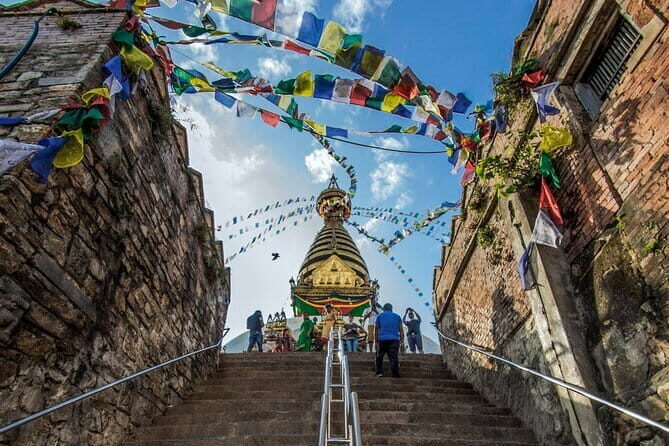
Swayambhunath is famous for good reason: it’s perched on a hill overlooking Kathmandu Valley, and it’s one of the area’s most iconic religious sites. Your visit is planned for about 45 minutes, with admission listed as free.
This first stop is smart because it gives you a broad orientation. From up on the hill, you get that immediate sense of place—how the valley sits, how the city spreads, and why these landmarks were built where they were.
What to watch for: the temple complex is the kind of place where details matter, but you’re also starting early in the day. With 45 minutes, you’ll want to prioritize what you can see from your main viewpoints rather than trying to read every plaque or chase every side corner.
Stop 2: Kathmandu Durbar Square for palace-era power
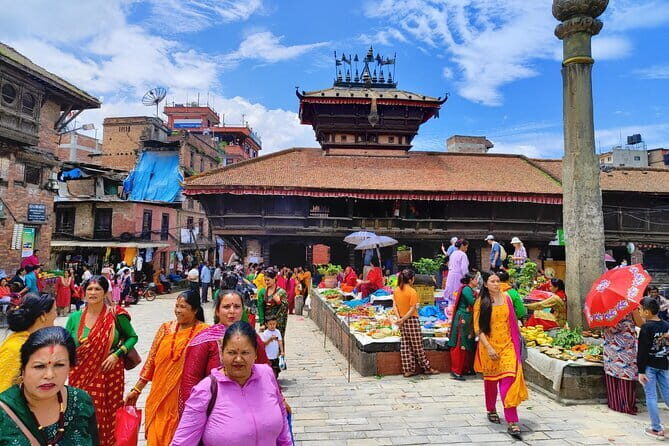
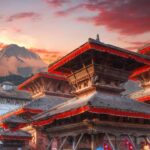
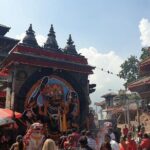
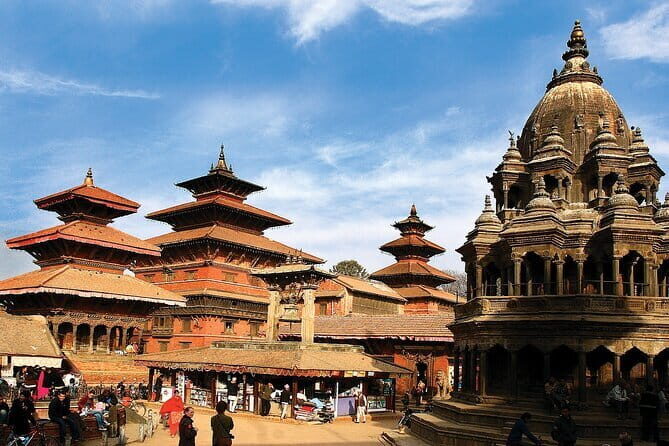
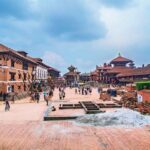
Next is Kathmandu Durbar Square, a UNESCO site that served as a historical and cultural heart of Nepal. It’s scheduled for about 45 minutes, and entrance is included.
Durbar Squares can feel like a time-travel machine. You’re surrounded by the shapes and layout that once reflected royal life—palaces, courtyards, and temples arranged in a way that shows how power and religion overlapped.
The main practical note: 45 minutes passes quickly in a busy square. If you’re the type who likes to photograph and then slow down to study architectural features, you’ll have to choose. A private guide helps because they can point you to what’s most meaningful without you getting lost.
You can also read our reviews of more historical tours in Kathmandu

Stop 3: Patan Durbar Square for Newari craft and design
Patan Durbar Square is where the day gets a bit more detailed. You’ll visit for about 1 hour, and entrance is included.
Patan is known for its artistic and architectural tradition, especially Newari craftsmanship, and the square reflects that in the way spaces and details are carved and arranged. In a single day, this is one of your best chances to feel the difference between Kathmandu and Lalitpur’s style.
The possible trade-off: with a full route, you won’t have hours to drift. Use that hour for what you care about most—ornamentation, the layout of temple structures, or the general story your guide is telling about how this square functioned historically.
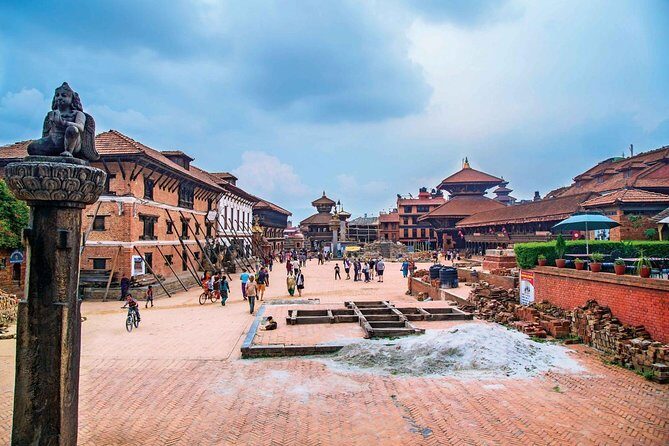
Stop 4: Bhaktapur Durbar Square for the longest heritage stop
Bhaktapur Durbar Square gets the biggest block of time on this route: about 1 hour 30 minutes, with entrance included.
That extra time matters. Bhaktapur’s durbar area tends to reward slower attention—there’s more to notice in how structures relate to each other and how the square reads as an ensemble. If you’re the kind of traveler who likes to “zoom in” after you’ve gotten the overall layout, this is your moment.
One thing to keep in mind: the longer stop can also tempt you to linger. If you want time later for Boudhanath and Pashupatinath, don’t let this become your full stop for the day.
Stop 5: Changu Narayan Temple for a hilltop Vishnu shrine
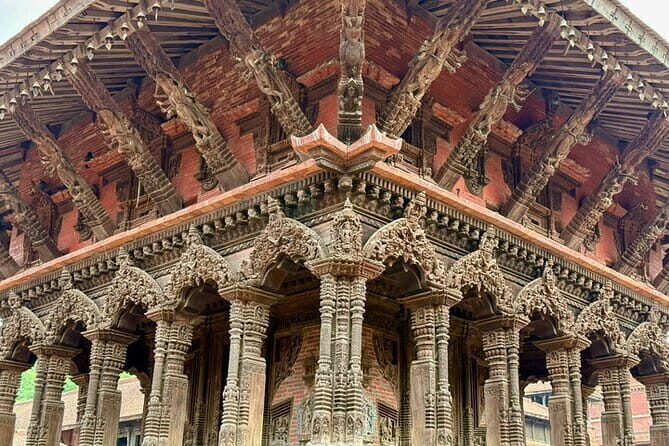
Changu Narayan Temple is scheduled for about 25 minutes, with entrance included. It’s described as the oldest temple in Nepal and is dedicated to Lord Vishnu, perched on a hilltop with views over the Kathmandu Valley.
Because your time here is shorter, your best strategy is simple: focus on the temple itself and the hilltop perspective, then accept that this is a quick hit rather than a long sit-down visit. This stop also adds variety to the day by shifting tone from royal-square wandering to a specific shrine setting.
If you’re hungry for symbolism, this is the sort of temple where your guide’s explanations can make the carved details feel less random and more meaningful.
Stop 6: Boudhanath Stupa for Buddhist scale and stillness
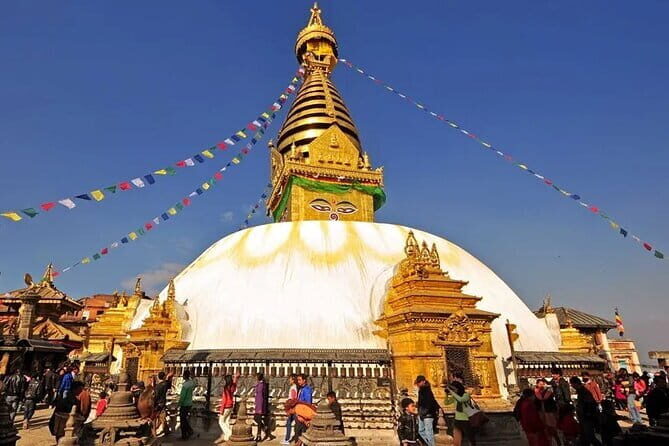
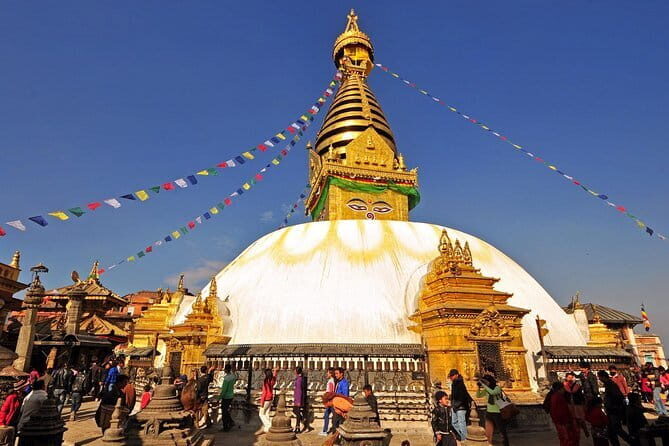
Boudhanath Stupa is one of the valley’s most striking sights, and your visit is planned for about 30 minutes with entrance included. It’s described as one of the world’s largest spherical stupas, around 36 meters tall, with a massive white dome.
This stop is a rhythm change. Durbar squares can feel busy and architectural-forward; a large stupa area tends to slow your pace. You’ll likely notice how pilgrims and locals move around the structure, how attention naturally pulls toward the central form, and how the site works as both a monument and a living religious space.
What to consider: 30 minutes is enough to appreciate scale and take a few key photos, but if you like to watch how people conduct rituals over time, you’ll wish you had longer.
Stop 7: Pashupatinath Temple for Shiva at the Bagmati River
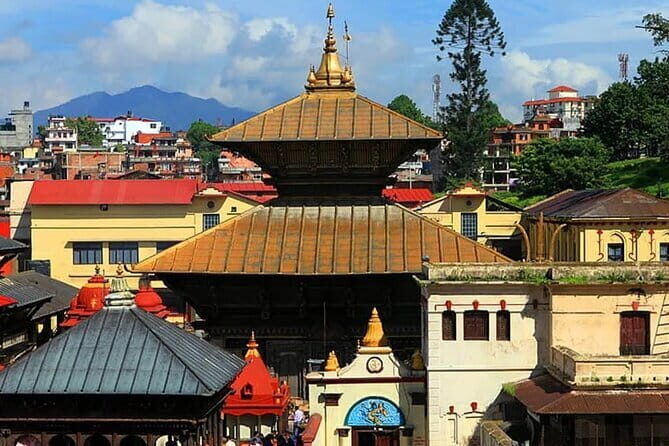
You end at Pashupatinath Temple, a UNESCO site dedicated to Lord Shiva. Your visit is about 30 minutes, with entrance included, and it’s located on the banks of the Bagmati River.
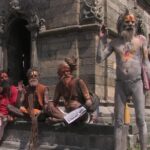
This is the most intense spiritual stop on the day. Pashupatinath is framed here as one of the most sacred Hindu temples in the world, and the river setting adds atmosphere to what you’ll see around the temple grounds.
The practical part: your time is limited, so your guide’s route and explanations matter. You’ll want to prioritize the main temple areas your guide directs you toward, because trying to see everything independently could eat into your time.
Why the guide matters on a day like this
This tour succeeds when your guide is good at translation: not just language, but history, architecture, and cultural context. The feedback you have access to strongly points to that.
Guides like Shankar and Razz are praised for being very knowledgeable and explaining history and culture in a way that helps you appreciate what you’re looking at, not just tick off a list of places. Others such as Subash are specifically mentioned for making the Pashupatinath portion feel especially clear in terms of Hindu traditions.
Punctuality and organization also come up often in the guidance style described. When your tour is a full-day sprint, a guide who keeps you on track prevents you from wasting the biggest resource you have: time.
What you should pack and plan (based on how this day is structured)
Meals and drinks are not included, so plan for it. You’re out for 9–11 hours, and several stops are relatively short, which means a full sit-down meal may not fit easily. I’d rather you bring a simple plan—snacks you can buy if needed, plus water—so you can focus on the sights instead of hunting for food at the worst moment.
Wear shoes that handle walking on uneven ground. Not every stop is “flat museum floor,” and you’re also dealing with hilltop locations like Swayambhunath and Changu Narayan. Comfortable foot support is the difference between enjoying a view and having your whole day collapse into sore ankles.
If you care about photos, decide in advance where you want your time at each stop. With fixed durations (25 minutes to 1.5 hours), you’ll get the best results if you’re intentional rather than scattered.
Who this tour is best for
This is a strong choice if you:
- have limited time in Kathmandu Valley and want a best-of day
- enjoy temples, stupas, and heritage squares more than modern museums
- like the convenience of hotel pickup/drop-off and private transport
- want a guide to connect architecture and religion into a story you can remember
It’s less ideal if you need lots of slow, unstructured time at one location. The schedule is built for coverage, so if you want to spend half a day at a single durbar square, you may find some stops feel brief.
Should you book the Private Full-Day Kathmandu UNESCO Tour?
I’d book it if your goal is clear: see major UNESCO landmarks across Kathmandu Valley in one organized day, with entrance fees handled and a private guide to explain what you’re seeing. At $80 per person, you’re paying for convenience, time, and interpretation, not just transport.
I’d think twice if you hate long days or you rely on frequent breaks for food. Since meals and drinks aren’t included and several stops are timed tightly, you’ll want to come prepared.
If you’re the type who likes having a plan but still wants the day to feel personal, this one fits nicely. Guides such as Shankar, Razz, and Subash are called out for making the stops feel meaningful, and that’s the difference between a busy day and a day you actually remember.
FAQ
What sites are included in the Private Full-Day Kathmandu UNESCO World Heritage Sites Tour?
The tour includes Swayambhunath (Monkey Temple), Kathmandu Durbar Square, Patan Durbar Square, Bhaktapur Durbar Square, Changu Narayan Temple, Boudhanath Stupa, and Pashupatinath Temple.
How long is the tour?
The duration is listed as approximately 9 to 11 hours.
Is hotel pickup and drop-off included?
Yes. The package includes hotel pick-up and drop-off.
Are entrance fees included?
Yes. Monument entrance fees for the mentioned sites are included, and Swayambhunath is listed as free admission.
Are meals and drinks included?
No. Meals and drinks are not included.
Is this a private tour or a shared group tour?
It’s private. Only your group will participate.
What is the cancellation policy?
Free cancellation is available up to 24 hours in advance of the experience start time for a full refund.